 Fang Wang
Two hours stuck on a tarmac. That is the real price of picking the wrong airport in Shandong. I watched a Melbourne couple pay it last spring — they booked a cheap seat into Qingdao Jiaodong, landed at 11 p.m., and only then found out their Mount Tai guesthouse sat four hours west by road.
Shandong is not one destination. It is a province the size of Austria with a 3,000 km coastline, four airports that genuinely matter, and a high-speed rail spine stitching them together. When you compare flights to Shandong, you are choosing your first night's bed as much as your airline.
The short version: land at Jinan Yaoqiang for Mount Tai, Qufu and the provincial capital. Land at Qingdao Jiaodong for the coast, the beer and the German-era streets. Buy an open-jaw ticket so you fly into one city and out of the other. And never plan a 7 a.m. departure assuming the airport metro will get you there.
Everything below is the detail behind that. Skim the sections you need.
Jump straight to what you need
Which Shandong Airport Should You Fly Into?
The airport you pick decides how much of your trip you spend sitting on trains. Shandong's useful airports sit on opposite sides of the province, and choosing the wrong one quietly adds a half-day of backtracking to your itinerary.
| Airport | Code | Distance to Downtown | Fly Here For | International Routes |
|---|---|---|---|---|
| Qingdao Jiaodong International | TAO | About 39 km; roughly 45 to 60 minutes by metro or taxi | Coast, beer culture, German-era architecture, Laoshan | Seoul, Tokyo, Osaka, Bangkok, Singapore, Hong Kong, Taipei; schedules shift by season |
| Jinan Yaoqiang International | TNA | About 30 km northeast of downtown | Mount Tai, Qufu, Daming Lake, provincial capital | Mostly domestic; limited Seoul and Osaka services |
| Yantai Penglai International | YNT | About 45 km from Yantai; closer to Penglai itself | Penglai Pavilion, wine estates, ferry links to Korea | Seoul, Osaka, seasonal charters |
| Weihai Dashuipo | WEH | About 30 km from Weihai city centre | Quiet northern coast, Korean business travel | Seoul and limited regional services |
| Linyi Qiyang, Rizhao Shanzihe, Jining Da'an | LYI, RIZH, JNG | Varies by city | Domestic connections and smaller regional loops | N/A |
Qingdao Jiaodong International Airport: the International Gateway
Jiaodong is the province's main international gateway and also its most misunderstood airport. It opened in 2021 and replaced the old Liuting airport, which means a lot of older blog posts still send readers to a terminal that no longer exists. Ignore those entirely.
The terminal is long. Genuinely long. If your gate sits in the far concourse, budget an extra 20 minutes of walking and possibly a ride on the internal people mover. I have sprinted it with a group of six. Not fun, and not a story I want to repeat.
Metro Line 8 links the airport to Qingdao North Railway Station, where you transfer to Line 1 or Line 3 depending on whether you are heading for the old town or the eastern beaches. Total ride into central Qingdao runs roughly an hour and costs under 10 RMB. The last trains leave around 11 p.m., so a late arrival means a taxi — expect somewhere between 150 and 200 RMB and 50 to 70 minutes on the road.
Pro Tip: Sort out your metro QR code or ticket before you walk out of the arrivals hall. The machines near the platform queue up badly whenever two wide-body flights land within twenty minutes of each other.
Jinan Yaoqiang International Airport: Best for Mount Tai and Qufu
Jinan is the smarter arrival point if your Shandong list is inland. Mount Tai, the Confucius sites at Qufu and the springs of Jinan itself all sit within roughly 90 minutes of the city by high-speed rail.
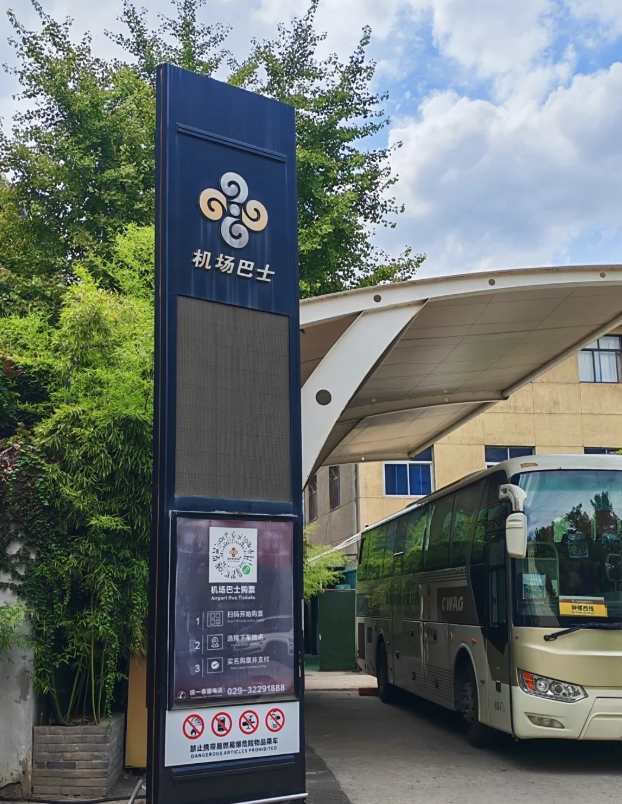
The airport sits about 30 km northeast of downtown. Shuttle buses run to Jinan Railway Station and Jinan West Railway Station — the two stations you will actually use — and a metered taxi into the centre costs roughly 120 to 150 RMB. Rail links to the airport have been expanding quickly, so ask your hotel for the current situation rather than trusting a map you downloaded last year.
Yantai Penglai and Weihai: the Quiet Northern Coast
These two airports serve the part of Shandong that foreign travelers skip, and that is exactly why I like them. Yantai Penglai International Airport sits closer to Penglai than to Yantai city, which matters because Penglai Pavilion — the legendary sea-mist viewpoint — is the reason most people come at all.
Weihai Dashuipo is small, fast to clear and drops you onto a clean, uncrowded coastline. Both airports have Seoul services and thin domestic schedules. If you are linking them with Qingdao, the coastal high-speed rail is usually faster door to door than flying, and far less hassle with bags.
How Do You Find Cheap Flights to Shandong?
Nonstop long-haul service into Shandong barely exists, so the cheapest option is almost always a one-stop connection through a Chinese hub or Seoul. Beijing, Shanghai and Guangzhou absorb most of the long-haul traffic, and from there it is a short domestic hop into Jinan or Qingdao.
Three booking habits that save real money
- Book the open jaw. Fly into Jinan and out of Qingdao, or the reverse. On a Jinan, Tai'an, Qufu, Qingdao loop this saves you a full day plus a return train ticket.
- Watch the calendar, not just the price graph. The first week of October and Chinese New Year push domestic fares up sharply and fill every hotel in Tai'an. Late April, May, September and the days after the October holiday are the sweet spots.
- Judge the connection honestly. A cheap fare through Seoul can be brilliant. If the layover is 11 hours, you have effectively paid for a night in an airport terminal.
For the domestic legs, Air China, China Eastern, Shandong Airlines and Qingdao Airlines all fly Shandong routes. Shandong Airlines is the local carrier, and its Jinan and Qingdao frequencies are the most forgiving when a flight gets cancelled and you need rebooking.
Book through the airline's own English site or an international-friendly platform such as Trip.com. Chinese-only carrier websites sometimes reject foreign cards at the payment step, which is a genuinely annoying dead end when you are trying to book at 2 a.m.
After You Land: Transit, Payment and Apps
Getting from Qingdao Jiaodong into the City
Metro Line 8 is the default choice unless you land after 11 p.m. Ride it to Qingdao North Railway Station, then switch to Line 1 or Line 3 depending on whether you are heading to the old town or the eastern beaches.
- Fastest for the old town: Line 8 to Qingdao North, then Line 3 south toward Qingdao Railway Station.
- Cheapest overall: the same metro route, comfortably under 10 RMB.
- Most comfortable with luggage: Didi or a metered taxi from the official rank. Ignore anyone approaching you inside the terminal with a special price.

Insider Advice: The taxi rank at Jiaodong is well organised, but the walk from baggage claim is long. With two large suitcases and a tired child, the airport shuttle bus into a downtown hotel zone is often less stressful than a metro transfer with stairs involved.
Money, SIM Cards and the Apps You Need Before Wheels Up
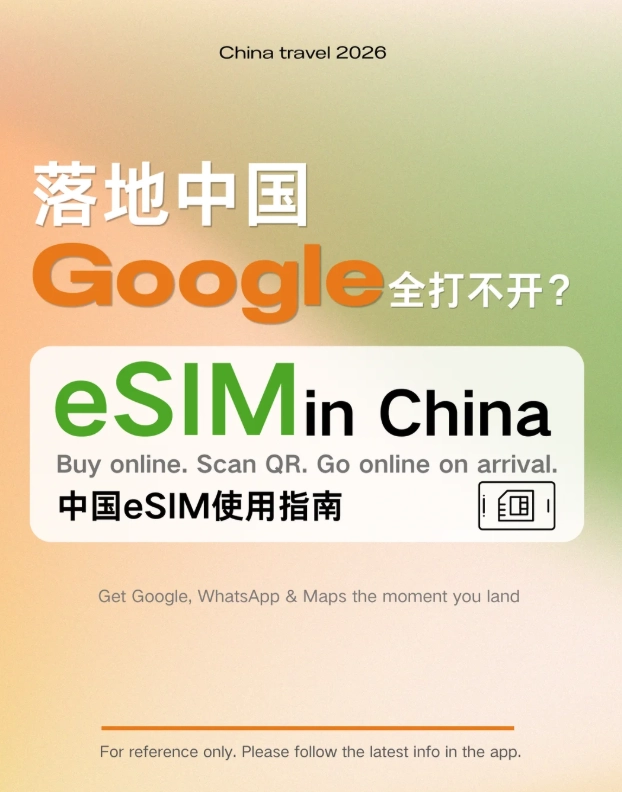
Set up Alipay or WeChat Pay with your international card before you fly, not after you land. Both now work with foreign Visa and Mastercard at most vendors, and they are the fastest way to pay for metro tickets, taxis and street food.
- Cash: still legal tender and still accepted, though small vendors may struggle to make change.
- Cards: hotels and airport counters usually take them. Noodle shops and temple ticket windows do not.
- VPN: install it and test it at home. A VPN that has never once connected will not magically work on Chinese Wi-Fi.
- Maps: Google Maps is unreliable in China. Apple Maps works reasonably well, and Amap has an English-friendly mode worth downloading.
- Translation: save offline Chinese packs for Apple Translate or Baidu Translate.

Pro Tip: Under the recent CAAC rules, power banks without a CCC certification mark get confiscated at domestic security. Check the label on yours before packing. I have watched a traveler lose a very expensive battery at 6 a.m. and there is no appeals process at the screening lane.
Visa-Free Entry to Shandong: What Foreign Passport Holders Need to Know
Shandong is covered by China's 240-hour visa-free transit policy, and that single rule is why flight prices into Jinan and Qingdao suddenly make sense for a long weekend. Eligible passport holders transiting onward to a third country can enter through designated ports and stay up to 10 days inside the permitted area.
The details that trip people up are boring, but they will kill a trip if you miss them:
- You must be travelling onward to a third country, not back to where you came from.
- You need a confirmed onward ticket and a passport with sufficient validity.
- You must enter through a designated port and remain inside the permitted region.
- Hotel registration within 24 hours of arrival is mandatory. Hotels handle it for you. Private apartment rentals often do not, and that becomes your problem at the border exit interview.
The National Immigration Administration publishes the current port list and eligible nationalities, and it is the only source I trust for this. Check it before booking, because the list has been expanding steadily.
Many European and Asian passports also qualify for unilateral visa-free entry on short stays. Confirm your own case on the official site rather than on a forum thread written three policy changes ago.
A Realistic 5-Day Shandong Route Using Flights and Rail
This route works because it never doubles back. You land in Jinan and leave from Qingdao, which is the whole point of an open-jaw ticket.
| Day | Base | Main Move | Transit Time | Cost Guide |
|---|---|---|---|---|
| Day 1 | Jinan | Land at TNA, airport bus downtown, Daming Lake at dusk | 40 to 60 minutes from airport | Bus around 20 RMB; taxi 120 to 150 RMB |
| Day 2 | Tai'an | High-speed rail to Tai'an, then Mount Tai | 20 to 25 minutes by rail | Rail 25 to 35 RMB; mountain ticket around 115 RMB peak season |
| Day 3 | Qufu | Rail to Qufu East, the Three Confucius Sites | 30 to 40 minutes | Rail 30 to 40 RMB; combined ticket around 140 RMB |
| Day 4 | Qingdao | Rail from Qufu East to Qingdao, old town walk | 2.5 to 3 hours | Rail 200 to 260 RMB |
| Day 5 | Qingdao | Brewery museum, coast, fly out of TAO | 50 to 70 minutes to airport | Taxi 150 to 200 RMB |
Day one is deliberately gentle. Jinan's Daming Lake is at its best in the last hour of light, and the springs around Baotu are quieter after 4 p.m. than the tour buses would have you believe.
Day two is the one people get wrong. Mount Tai has two practical entrances — the Red Gate at Dai Temple for the classic climb, and Tianwai Village where the shuttle bus drops you near the mid-mountain cable car. If your knees are older than your ambitions, take the bus and cable car up and walk the final stretch. The mountain holds a UNESCO World Heritage listing for good reason, and you will enjoy it far more without a limp.
Insider Advice: Half the itineraries online tell you to climb Mount Tai overnight for sunrise. Skip it unless you are acclimatised and have nothing scheduled the next morning. The summit at 5 a.m. in spring sits close to freezing, and I have had clients in shorts up there who regretted every minute. The afternoon light on the stone inscriptions is beautiful and the crowds have thinned out.
Day three in Qufu is the quietest of the big three sights at the Confucius Cemetery, and the busiest at the Temple. Go early, and buy the combined ticket rather than three separate ones.
Day four is a rail day. Book seats through China Railway 12306 or ask your hotel front desk, and remember that your passport number must match exactly. Qingdao's old town rewards walking rather than taxis — St. Michael's Cathedral, the sloping lanes behind it, and the eight passes of Badaguan all sit within a comfortable afternoon.
Day five, the Tsingtao Brewery Museum is genuinely fun and the tasting at the end is included in the ticket. Give yourself three hours before your airport transfer.
Flight Mistakes I See Travelers Make Every Season
- Flying into Qingdao for a Mount Tai trip. The rail connection is fine, but you burn half a day you could have spent on the mountain itself.
- Trusting the airport-to-city time on a booking site. Jiaodong to central Qingdao is an hour, not the 20 minutes the listing suggests.
- Booking a 7 a.m. departure and planning to take the metro. Early trains are thin. Budget for a taxi and accept it.
- Assuming the passport name on a ticket can be fixed later. Chinese domestic tickets must match the passport exactly, middle names included.
- Leaving the VPN installation until the airport. Airport Wi-Fi is often the hardest network to get a VPN running on.
- Arriving with no payment app set up. You will spend your first hour in a currency queue instead of eating dumplings.
Questions Travelers Keep Asking Me
Can I fly nonstop to Shandong from Europe or North America?
Nonstop long-haul into Jinan or Qingdao is rare and often seasonal. The realistic route is one connection through Beijing, Shanghai, Guangzhou, Seoul or Tokyo. If you spot a fare advertised as direct, check whether it is a codeshare with a stop that was never mentioned on the booking page.
Is it cheaper to fly into Shandong or take the train from Beijing or Shanghai?
Compare door to door rather than ticket to ticket. High-speed rail from Beijing to Jinan runs about two hours from the city centre, and Shanghai to Jinan is roughly three and a half. Add airport transfer time at both ends and the train frequently wins even when the ticket costs more.
How long should I leave between a domestic connection and an international departure at Qingdao?
Three hours minimum if you are rechecking bags, four if you are not. Jiaodong is a large terminal with long walking distances, and the security queue before evening international departures gets heavy fast.
Do I need a printed ticket for domestic flights inside China?
Your passport is your boarding document, so no printout is required. Use the staffed counter rather than the self-service kiosks, because plenty of kiosks still will not read a foreign passport cleanly and you will end up in the queue anyway.
What is actually included in a domestic ticket in Shandong?
Full-service carriers such as Air China and China Eastern usually include 20 kg of checked baggage in economy. Low-cost carriers charge for everything, including a carry-on above a strict limit. Power banks must travel in the cabin and must carry a CCC mark, or they stay behind at security.
How far ahead should I book flights to Shandong for the October holiday?
Two to three months out for the holiday week itself, because that is when domestic demand peaks. Outside that window, three to six weeks is usually plenty, and midweek departures consistently price lower than Friday and Sunday flights.
Verified and fact-checked by the editorial team. Airport distances, ticket ranges and transit times are given as practical estimates and should be confirmed with the airline, railway or attraction before you travel.

No comments yet.