 Fang Wang
Quick Nav — What's Inside
You land in Qingdao at 9 p.m. Google Maps spins. WhatsApp shows one grey tick — and stays there.
I've watched that exact scene unfold in the arrivals hall at Qingdao Jiaodong International Airport more times than I'd like, and it's almost never the province's fault. Shandong has genuinely strong mobile coverage — 5G in downtown Jinan, underground on the Qingdao metro, even on the upper slopes of Mount Tai. What trips people up is everything standing between their phone and the open internet.
So if you're hunting for Shandong internet access tips a week before your flight, here's the part that matters: nearly none of this can be fixed after you land. A VPN, a travel eSIM, offline translation packs, offline maps — every one of those has to be bought, installed, and tested while you're still on your home network. Arrive without them and you'll be borrowing a hotel receptionist's patience instead of using your own phone.
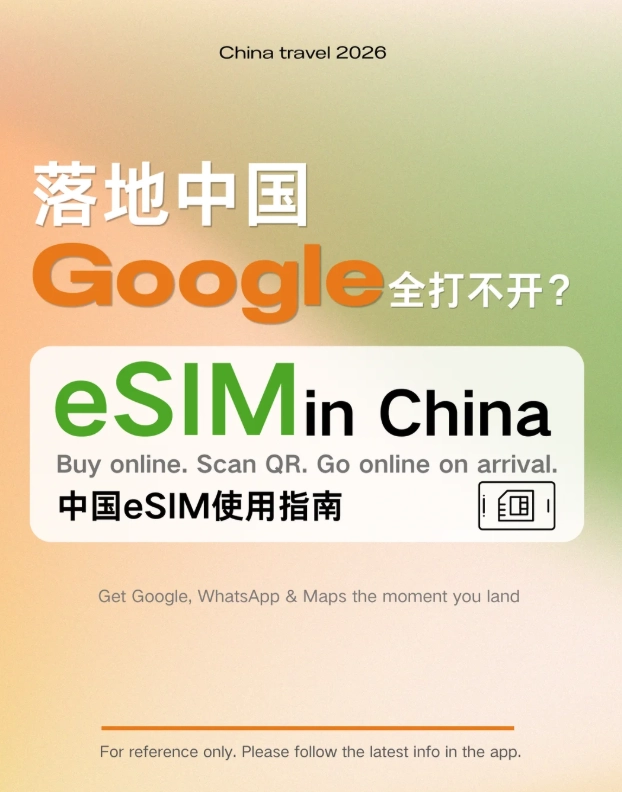
The short version? Buy a travel eSIM that routes through Hong Kong or Singapore before you fly, keep your home SIM alive as a backup line, and treat local Wi-Fi as a bonus rather than a plan. That combination has kept my groups online on the summit of Mount Tai, in Qingdao's old town alleys, and on the Jinan–Qingdao high-speed line.
Here's how it all breaks down.
What Actually Blocks Your Internet in Shandong?
The Filter Is National, Not Local
Google, YouTube, Instagram, WhatsApp, Facebook, X, and most Western news sites are blocked across all of mainland China, and Shandong is no exception. Qingdao's German-era streets look like Bavaria. The network behind them is Chinese.
Plenty of visitors assume a coastal city with a major international port would be a bit more open. It isn't. The filtering happens at the national level, far above any city government.
Some things slip through: Bing, Apple's own services, Microsoft 365, and most hotel booking platforms work fine. ChatGPT and several other AI tools don't. Wikipedia doesn't. If your work depends on a specific cloud dashboard, test it at home rather than discovering the problem at 11 p.m. in a Jinan hotel room.
One legal note worth knowing: unauthorized VPN services are restricted under Chinese regulations, which the Ministry of Industry and Information Technology oversees. In practice, foreign visitors use paid VPNs constantly and I've never seen a tourist questioned about it. Keep it quiet, use it for nothing illegal, and always have a second way online.
Why Hotel Wi-Fi Isn't the Workaround You Think It Is
Hotel Wi-Fi in Shandong is usually fast and free, and it routes through the same national filter as everything else. Connecting normally means your room number plus the name on your passport, and the front desk handles that at check-in without any fuss.
Where it gets uneven is the network itself. A handful of international-brand properties run a separate guest network for foreign visitors that isn't filtered. I've had that work beautifully at one Qingdao hotel and fail at another two streets away, so it's genuinely property by property. Ask before you book — and don't be surprised if the person you're asking doesn't actually know.
Pro Tip: Public Wi-Fi in malls, chain coffee shops, and high-speed rail stations across Shandong almost always demands a Chinese mobile number to receive an SMS code. No Chinese number, no connection. That single detail is why a local SIM is worth having even when your eSIM already works.
The Four Ways to Get Online in Shandong, Ranked by Real-World Reliability
These are the only four options that matter. Prices shift constantly, so treat the cost column as a rough guide and confirm current rates with the provider.
| Method | Needs a Chinese Number? | Google / WhatsApp Work? | Typical Cost | Best For |
|---|---|---|---|---|
| International roaming from your home carrier | No | Usually yes — traffic routes through your home network | Your carrier's daily or monthly roaming pass | Short trips, business travelers, emergency backup |
| Travel eSIM with a Hong Kong or Singapore route | No | Often yes — verify with the provider first | Roughly $5–30 depending on data volume | Most tourists staying 4–14 days |
| Local SIM from China Unicom, China Mobile, or China Telecom | Yes — that's the point | No — still filtered | Ballpark ¥100–200 for a month of data | Long stays, anyone who needs a Chinese number |
| Hotel and public Wi-Fi | Public networks usually do | No | Free | Backup, saving data |
Now, the advice you'll read everywhere else: grab a local SIM at the airport the moment you land. I'd argue the opposite. Sort out your data line first, then decide whether you actually need a Chinese number — the SIM queue at Qingdao's arrivals hall can swallow 40 minutes of your first evening, and a surprising number of travelers never use the number they bought.
Option 1: International Roaming From Your Home Carrier
Roaming keeps your data flowing through your home carrier's network path, which is exactly why Google and WhatsApp usually keep working. It's the least technical option and often just a toggle in your phone's settings.
The trade-off is price and speed. Daily passes add up fast over two weeks, and some carriers throttle you after a gigabyte or two. Check two things before flying: whether your plan covers China at all, and whether it's a daily fee or a bundle.
Where roaming really earns its keep is as a backup line. Keep your home SIM active with data roaming switched off, and your bank's SMS verification codes still reach you when you need them.
Option 2: Travel eSIM With a Hong Kong or Singapore Route
A travel eSIM is the closest thing to plug-and-play for Shandong, but only if the provider routes your data outside mainland China. Most big eSIM brands do, and travelers routinely report Instagram and Gmail working normally on them.
Verify before you buy. Message the provider and ask directly whether the China plan routes through Hong Kong or Singapore. If the answer is vague, buy elsewhere — an eSIM running on a mainland carrier gives you data and disappointment, nothing more.
Here's the detail that catches American travelers hardest, and I wish someone had flagged it to me years ago: iPhones sold in the United States since the 14 series have no physical SIM tray at all. A local Chinese SIM is physically impossible on those phones. If that's your device, eSIM plus roaming isn't one option among four — it's your entire plan.
Option 3: A Local SIM From China Unicom, China Mobile, or China Telecom
A local SIM gets you a Chinese phone number, which unlocks public Wi-Fi portals, ride-hailing, food delivery, and most booking mini-programs — but it does not unlock Google. This is the option people misunderstand most.
A Chinese number makes daily life in Shandong dramatically easier. It does nothing for the blocked sites. Those are two separate problems, and you may well need two separate solutions.
Option 4: Hotel and Public Wi-Fi
Treat Wi-Fi as a data-saving bonus rather than your lifeline. Speeds in Shandong hotels are generally good, often better than what I get at home, but the login process and the filtering both stay in place.
One quirk worth remembering: a VPN that fails on hotel Wi-Fi often works fine on mobile data, and the reverse happens too. When something stops working, switch networks before you panic and start reinstalling apps.
How Do You Buy and Activate a Chinese SIM Card in Shandong?
Where to Actually Buy One
The reliable places are the carrier counters in airport arrivals halls and official China Mobile, China Unicom, or China Telecom stores in city centers. In Shandong that means the arrivals level at Qingdao Jiaodong International Airport and Jinan Yaoqiang International Airport, plus carrier stores around Qingdao's Shinan district or central Jinan.
Convenience stores are not the answer. They sell top-up credit, not new SIM cards to foreigners, and staff rarely handle the paperwork. Skip them and save yourself the walk.
Airport counters keep limited hours. If you land after they close, don't stand around hoping — check in, sleep, and walk into a downtown carrier store the next morning with your passport. Bring the phone you intend to use; staff will install the card and test it on the spot.
Passport, Real-Name Registration, and the Tourist Plan Trap
Every SIM in China is tied to a real identity, and for foreign visitors that means your passport plus a valid entry record. The carrier photographs your passport and may ask to see your visa or entry stamp. Your entry record comes from the National Immigration Administration, and the shop is simply confirming your stay is legal. Routine step, not a red flag.
The trap is plan type. Some carriers sell data-only tourist packages that expire inside a set window and can't easily be topped up afterward. Ask two questions before you pay: how long does this plan last, and how do I add more data later? If the answer to the second one involves a Chinese bank card, walk away and buy a plan you can renew through Alipay instead.
Topping Up Without a Chinese Bank Card
Alipay and WeChat Pay both accept international cards now, and that's how most foreign visitors keep a local SIM alive. Link your card, verify your identity with your passport, and make a small test purchase before you depend on it for anything important.
Carrier mini-programs inside WeChat are in Chinese. That's the honest part nobody mentions. I've watched confident travelers spend twenty minutes tapping through menus before giving up and asking the hotel receptionist, who fixed it in ninety seconds. Just ask. Front desk staff in Shandong do this constantly and it isn't an imposition.
Which Apps Work in Shandong — and Which Quietly Fail?
Navigation
Google Maps is unreliable in mainland China — map data is offset and transit directions are frequently wrong, so switch to Apple Maps or Amap. Apple Maps runs in English on iPhone and handles walking directions in Qingdao and Jinan well enough. Amap, known locally as Gaode, has improved its English support considerably and is the stronger choice for live bus and metro timing.
Whichever you use, screenshot your hotel's name and address in Chinese before you head out each morning. Handing a driver a screen beats pronouncing a street name badly in a taxi.
Payment
Alipay and WeChat Pay are the default payment methods, and both accept foreign cards — but plenty of small vendors still can't make change for a ¥100 note. Link your card before you travel, complete passport verification, and test it with a bottle of water on day one.
Cash isn't useless. Keep a few smaller notes for markets, temple stalls, and the occasional shop where the card reader is mysteriously broken. Big hotels and chain stores take international credit cards. Street food stalls in Tai'an or Qufu almost never do.
Translation
Download offline language packs before you fly, because Google Translate without a VPN is a brick in China. Apple Translate handles offline Chinese well, and Baidu Translate's camera mode reads menus surprisingly accurately. WeChat's built-in text translation covers most messaging situations.
Shandong City by City: Qingdao, Jinan, Tai'an, and Qufu
Qingdao
Qingdao's mobile coverage is excellent — I've held a stable signal on the beach at Shilaoren and inside the old town's narrow lanes. The metro is fast and covered throughout, though the undersea stretches between the old town and the western districts will drop your connection for a minute or two.
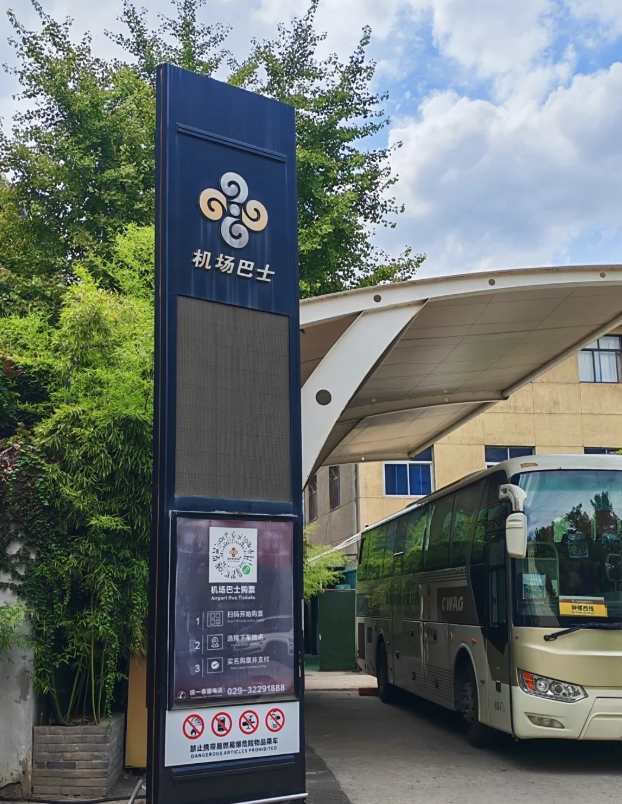
Qingdao Jiaodong International Airport sits a long way from downtown. Metro Line 8 links the terminal to the city network, and shuttle buses serve several central drop-off points. Both keep a signal for most of the ride, which is useful if you're still finalizing a hotel booking on arrival. Coffee shops around the university road area have Wi-Fi, but expect the SMS-code portal problem I mentioned earlier.
The hills and the thick-walled European-style buildings in Shinan district create indoor dead spots. Step outside and you're fine again.
Jinan
Jinan is the provincial capital and the most consistently reliable city in Shandong for mobile data, including inside the high-speed rail station. Around Daming Lake and the Baotu Spring area, coverage is strong enough to video call without stuttering.
Jinan's metro network is smaller than Qingdao's, so most trips mean taxis or Didi. Both need a working data connection, which is one more argument for keeping two lines active.
Tai'an and Mount Tai
Mount Tai has usable signal at the summit and patchy signal along the stone stairways — but the real bottleneck isn't coverage, it's thousands of people competing for bandwidth at sunrise. Download your tickets, cable car codes, and offline map before you start climbing.
Here's a small trick that has saved my groups more than once: your Alipay and WeChat payment codes are generated on your device, so they usually still display when you have almost no data. The merchant scans you, not the other way around. That's how a phone with no signal can still buy noodles at the summit.
Battery is the genuine risk. Cold wind at the top drains a phone fast, so carry a power bank. Mount Tai holds a UNESCO World Heritage listing, and the sunrise crowd is thick enough that you'll want a charged phone for meeting points if your group splits up.
Qufu
Qufu is compact and coverage is fine around the Temple and Mansion of Confucius, though thick-walled halls and the Confucius Cemetery will weaken your signal. It's a half-day stop for most travelers and I wouldn't overthink connectivity here — download what you need in Tai'an and go.
Your First 24 Hours in Shandong: A Connectivity Timeline
If you have one day in Qingdao and you're arriving cold, this is the order I'd do things in. It assumes a late-afternoon landing and a hotel near the old town or May Fourth Square.
- Before boarding, at home: buy and install the eSIM, install your VPN on two devices, download offline maps and a translation pack, screenshot your hotel address in Chinese, and add a payment card to Alipay. Test all of it while you still have your home network.
- On the plane: switch the eSIM to your data line, leave the home SIM active for SMS, and turn off data roaming on the home line so you don't get charged by accident.
- Landing, first 30 minutes: turn the eSIM on before you leave the aircraft. In the arrivals hall, connect and send one test message. If you want a Chinese number, head to the carrier counters before anything else.
- Getting to the hotel: use the ride-hailing option inside Alipay, or join the official taxi queue outside. Show the driver your Chinese address. Don't accept offers from people approaching you inside the terminal.
- Check-in: hand over your passport, ask which Wi-Fi network foreign guests use, and if a booking mini-program is fighting you, ask the receptionist to handle it.
- First evening: test everything before you need it. Send a WhatsApp message, load a Google search, open Amap, and generate a payment code at a convenience store. Ten minutes of testing saves an hour of frustration tomorrow.
- Rain or extreme heat plan: Qingdao's museums, the beer museum, and the larger malls all offer reliable indoor Wi-Fi and air conditioning. On a 35°C afternoon that beats squinting at your phone on a pier.

Shandong Internet Access FAQ
Can I install a VPN after I land in Qingdao or Jinan?
Practically, no. Chinese app stores don't list VPN apps, and the providers' download pages are blocked on local networks. Your realistic fixes once you're already in Shandong are international roaming from your home carrier or a travel eSIM with an overseas route, both of which sidestep the filter entirely. If you truly need a VPN installed on the ground, ask someone at home to send a direct download link through a messaging app that still works.
Does an international-brand hotel in Shandong give you unfiltered Wi-Fi?
Sometimes, and it's genuinely inconsistent. Some properties run a separate guest network aimed at foreign visitors that isn't filtered; others don't, and the front desk may not know the difference. Ask before you book if it matters to you, then test it the moment you check in rather than at midnight when you need to send something urgent.
Do I need a Chinese phone number to ride the high-speed train from Jinan to Qingdao?
Not for the ticket itself. Book through China Railway's 12306 platform or a foreign-friendly booking site, register with your passport number, and use your passport as your ticket at the gate. Where you'll miss a Chinese number is the station's public Wi-Fi portal and some food delivery apps. Download what you need before you reach the station and the ride itself is painless.
Is using a VPN as a tourist in Shandong actually risky?
Unauthorized VPN services are restricted under Chinese regulations, and that's the honest legal position. Enforcement against individual foreign tourists is rare in my experience, and millions of visitors travel this way every year. Keep it low-key, never use it for anything unlawful, and always have a second connection method in case your VPN stops working on a given day.
My phone is eSIM-only. Can I still get a local Chinese SIM in Shandong?
Without a physical SIM tray, no — and that rules out the entire local-SIM route. Your workaround is a travel eSIM for data plus roaming for backup, then leaning on other people's phones for the few tasks that demand a Chinese number. In practice that means asking your hotel receptionist to make the booking or the call. It works more smoothly than it sounds.
Verified and fact-checked by the editorial team. Carrier policies, eSIM routing, app availability, and payment rules in mainland China change frequently — confirm current details with your provider or hotel before you travel.






No comments yet.