 Fang Wang
Jump straight to what you need
- What Is the Shandong Visa-Free Transit Policy, in Plain English?
- Who Qualifies — And Who Gets Turned Away at the Gate
- Claiming Your 240 Hours at Qingdao Jiaodong
- Trains, DiDi and Apps That Actually Work
- A Realistic 10-Day Shandong Route
- Where to Sleep in Qingdao, Jinan and Tai'an
- Money, Maps and Language Traps
- Awkward Questions, Straight Answers
A Canadian couple got walked to the transfer desk in Qingdao last spring. Confirmed onward tickets to Bangkok. Nine hours to kill. They flew home to Vancouver anyway.
Nobody at their departure gate had mentioned the 240-hour rule. That one blank spot cost them a free ten-day trip across Shandong.
I have booked Shandong visa-free transit for clients more times than I can count, and the same three mistakes send people back to the immigration counter every single week: an onward ticket that is not actually a third country, an entry port that is not on the designated list, and a hotel booked in the wrong province.
Here is the conclusion up front. Land at Qingdao Jiaodong, Jinan Yaoqiang, Yantai Penglai or Weihai Dashuibo with a confirmed ticket to a third country and you get ten days inside Shandong province — not Beijing, not Shanghai, just Shandong. That is still 16 cities, one UNESCO-listed mountain, the hometown of Confucius, and roughly 3,000 km of coastline.
Right. Here is how to actually pull it off.
What Is the Shandong Visa-Free Transit Policy, in Plain English?
It is a 240-hour visa-free stay for transit passengers, and Shandong is one of the provinces that accepts it. The National Immigration Administration runs the scheme and publishes the rules at nia.gov.cn. It replaced the older 72-hour and 144-hour transit exemptions, which is why half the blog posts you will find online are outdated.
Ten days sounds generous. The fine print is where people trip.
- Eligible passport: the country list is long and covers most of Europe plus the US, Canada, Australia, New Zealand, Japan, South Korea and more. Confirm your nationality against the official NIA list rather than a travel forum.
- Confirmed onward ticket: a real booking with a real seat, departing within 240 hours, to a third country or region.
- Designated port of entry: you cannot walk in through any border crossing you like.
- Permitted stay area: the province you entered. More on that below, because it is the number one thing people get wrong.
One detail that saves you almost a full day: the 240-hour clock starts at 00:00 on the day after you arrive, not at the moment your passport gets stamped. Land at 11pm on a Monday and your ten days effectively begin on Tuesday morning. I have stretched that into nearly eleven usable days for clients more than once.
A separate 24-hour rule exists for pure airside connections. If you never leave the terminal, you do not need the 240-hour permit at all. The moment you walk out of arrivals, you do.
Who Qualifies — And Who Gets Turned Away at the Gate
The Third-Country Rule Nobody Reads Properly
Your onward flight must go to a country that is not the one you came from. That is the whole game, and it is where most refusals happen.
London to Qingdao to London is not transit. It is a round trip with a stopover, and the officer will send you to the visa desk. Seoul to Qingdao to Bangkok is textbook transit and gets waved through.
Here is the part almost nobody writes about: Hong Kong, Macau and Taiwan count as separate regions for this rule. So a Tokyo to Qingdao to Hong Kong routing works perfectly. I use that trick constantly for clients who want to finish a China trip in Hong Kong anyway.
Pro Tip: Print your onward booking confirmation on paper. Not a screenshot, not an email buried in your phone. Qingdao immigration officers are efficient but they are not going to wait while you fight with airport Wi-Fi to load a PDF.
Can You Leave Shandong During Your 240 Hours?
No — and this is the single most expensive misunderstanding I see. If you enter through a Shandong port, your permitted area is Shandong province. Full stop.
People book a Qingdao arrival and then plan a Beijing leg because a forum post told them the 240 hours covers all of China. It does not. You would be travelling outside your permitted area, which is an overstay in the eyes of the law, and it can end with a fine, a detention, or a very unpleasant conversation at the airport.
If Beijing is your dream, fly into Beijing and use the transit rule there instead. If Shandong is your entry point, embrace Shandong. Honestly, ten days is barely enough for it.
Which Shandong Ports Actually Count
The airports that matter for almost every foreign traveler are Qingdao Jiaodong International, Jinan Yaoqiang International, Yantai Penglai International and Weihai Dashuibo International. Several seaports in the province are also designated. The official port list changes occasionally, so check the National Immigration Administration page before you book anything non-refundable.
You do not have to exit from the same port you entered. Fly into Qingdao, ride the rails for ten days, and fly out of Jinan. That flexibility is genuinely useful and very few travelers know about it.
Claiming Your 240 Hours at Qingdao Jiaodong, Step by Step
Qingdao Jiaodong is a huge, clean, well-signed airport about 40 to 50 km northwest of the old town. Immigration is fast — usually under 20 minutes outside of peak summer arrivals.
- Fill in the arrival card before you reach the queue. There are pens and forms near the escalator down to immigration, but the pen tethers are short and everyone crowds them. Bring your own pen. It sounds trivial. It is not.
- Join the foreigner line and tell the officer you are using the 240-hour visa-free transit. Say it clearly. Have your onward ticket and first hotel address ready on paper.
- Expect a question about your itinerary. A simple answer works: Qingdao, then Tai'an for the mountain, then Jinan to fly out. Vague answers invite more questions.
- Check your entry stamp immediately. Confirm the permitted stay date is written or printed correctly before you walk away. Fixing it later means a trip to the exit-entry administration office in the city, and that will eat half a day of your ten.
- Skip the taxi touts in the arrivals hall. They will quote you 300 RMB for a ride that costs a fraction of that.
For getting into town, the metro is the sane choice. Metro Line 8 runs from the airport to Qingdao North Railway Station in roughly 50 minutes, and you transfer to Line 3 for the old town. Total fare is around 10 to 15 RMB. If you are carrying heavy luggage and landing after midnight, DiDi — the Chinese ride-hailing app, which has an English interface and accepts international cards — is about 120 to 180 RMB to the Zhanqiao area.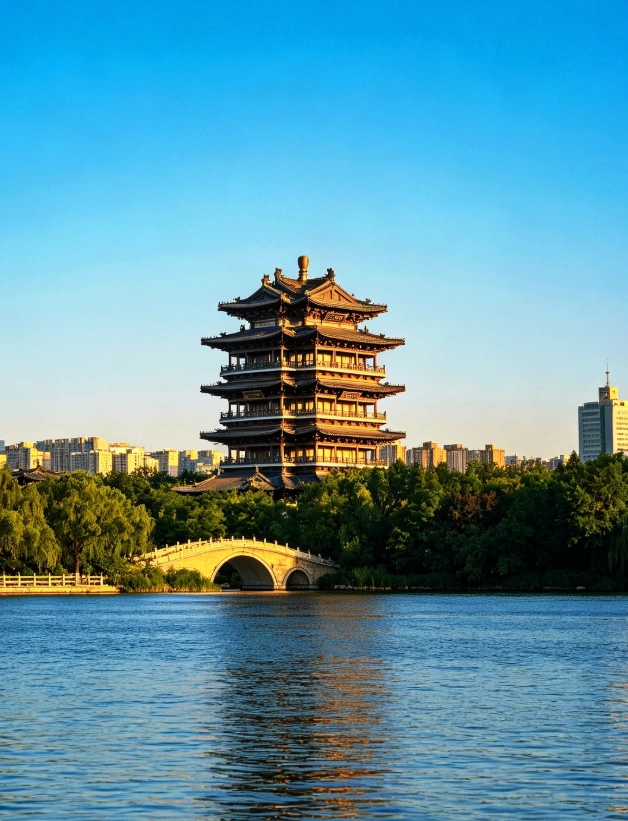
Insider Advice: The metro stops running around 10:30pm. If your flight lands at 9:45pm, do not gamble on making the last train with a queue at immigration. Pre-book a DiDi or an airport shuttle seat.
Trains, DiDi and Apps That Actually Work in Shandong
High-speed rail is the backbone of any Shandong trip, and it is genuinely excellent. Book through the official China Railway 12306 site or app, which has an English version, or through Trip.com if you want a friendlier interface and do not mind a small booking fee.
You will need your passport number to book and your physical passport to board. At the gate, foreign passports usually go through the manual lane on the far left — the automatic scanners read Chinese ID cards, not passports. Budget an extra five minutes.
| Route | Best Option | Journey Time | Approx. Cost | Notes |
|---|---|---|---|---|
| Qingdao Jiaodong Airport to Zhanqiao old town | Metro Line 8 then Line 3 | 75 to 85 min | 10 to 15 RMB | Last trains around 10:30pm |
| Qingdao to Tai'an | High-speed rail | 2h 30m to 3h | 150 to 190 RMB | Tai'an Station, not Taishan Station |
| Tai'an Station to Mount Tai Hongmen gate | Taxi or DiDi | 15 to 20 min | 15 to 25 RMB | Buses also run, slower with luggage |
| Jinan to Qufu East | High-speed rail | 35 to 45 min | 60 to 80 RMB | Qufu East is 15 km from the temples |
| Qingdao to Yantai | High-speed rail | About 1h 30m | 90 to 120 RMB | Coastal scenery on the right side |
| Anywhere in the city | DiDi via Alipay | Varies | 10 to 40 RMB typical | English interface, international cards accepted |
Two apps to install before you fly. Alipay, because it bundles DiDi, metro QR codes and payments into one place. And AMap Global, because Google Maps is unreliable in mainland China — the data is offset and transit directions are often simply wrong. Apple Maps works reasonably well for walking and driving. Baidu Maps is accurate but Chinese-only.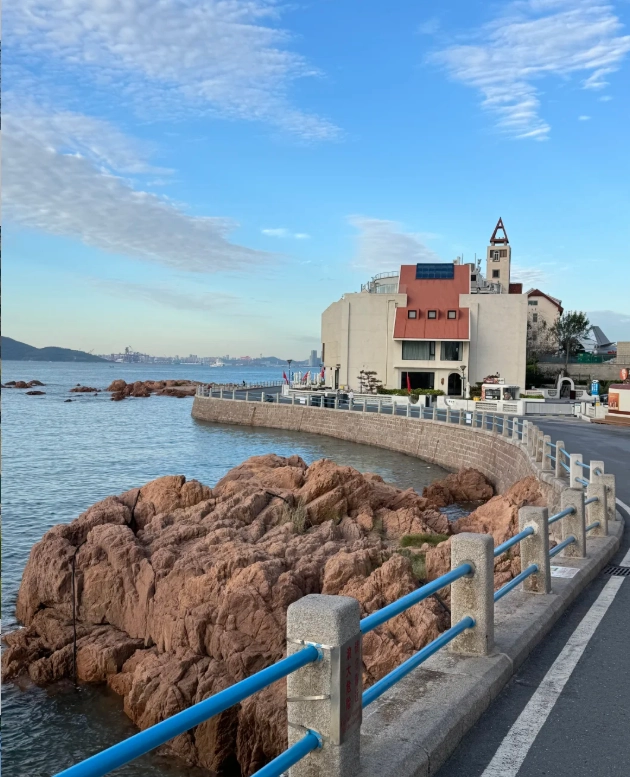
The honest bit: yes, half of these bookings run through Chinese-only WeChat mini-programs, and yes, that is a nightmare even for me. I have sat in hotel lobbies for 40 minutes wrestling with a ticket mini-program while a client watched. Do not fight it alone.
Walk to your hotel front desk, show them the attraction name in Chinese characters on your phone, and ask them to book it. Receptionists do this dozens of times a week. It takes them two minutes.
A Realistic 10-Day Shandong Route
This route assumes you enter and exit via Qingdao and want a mix of coast, mountain and history without collapsing from exhaustion. It is deliberately not a checklist sprint.
Days 1 to 3: Qingdao, Slowly
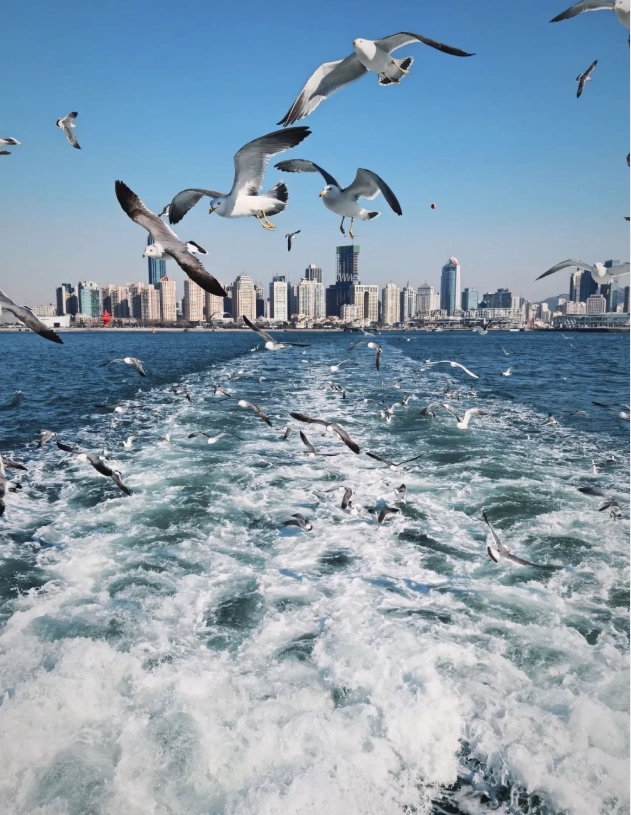
Base yourself in the old town around Zhanqiao Pier and Zhongshan Road. Everything worth seeing on day one is walkable.
Zhanqiao Pier is free and takes 20 minutes. Go at 7am. By 10am it is a wall of selfie sticks and you will hate it. St. Michael's Cathedral charges a small entry fee, roughly 10 RMB, and the plaza in front is the actual photo — the church interior takes four minutes.
Badaguan, the old European villa district, is free and gorgeous. I take every client there before 8am. The streets are tree-lined and empty, the light comes in sideways through the plane trees, and you can hear birds instead of tour groups. By noon it is a traffic jam of tour buses.
Day two: the Tsingtao Brewery Museum. It is genuinely good — the original German-era brewhouse, a tasting at the end, and an English audio guide. Tickets run around 60 RMB. Avoid weekends if you can. Day three: Laoshan, the mountain-meets-sea scenic area east of the city. It is a full day, needs a reservation, and the coastal road on the way out is worth the trip by itself.
Eat seafood on the Pichai Yuan or Taidong side streets, not on the main tourist drags. Order the clams, the grilled squid, and a bag of draft Tsingtao — yes, in an actual plastic bag. That is the local way and it costs almost nothing.
Days 4 and 5: Tai'an and Mount Tai
Mount Tai is a UNESCO World Heritage site and the most climbed mountain in China. The listing notes its role as a site of imperial worship for nearly two millennia — you can read the details on the UNESCO World Heritage Centre page.
Here is my non-consensus opinion, and I will defend it. Skip the sunrise hike. Every guide tells you to climb overnight and catch dawn from the summit. What they do not tell you is that you will be standing shoulder to shoulder with several thousand people in near-freezing wind at 4am, and that cloud cover ruins the sunrise a good half of the time. I have done it three times and seen a clean sunrise once.
Do this instead. Take the bus from Tianwaicun to the Midway Gate around 1pm, ride the cable car up, walk the summit loop, and be back down before dark. You get the same views, better light, and no crowd. If you want the sunrise badly, sleep at a summit hotel and walk out five minutes before dawn instead of hiking all night.
Tickets for the mountain are roughly 115 RMB in high season, and the cable car is a separate fee of around 100 RMB one way. Book ahead through Trip.com or ask your hotel. Bring cash for small vendors near the top — signal for mobile payments gets patchy up there.
Day 6: Qufu, the Hometown of Confucius
Qufu is small, quiet and completely unlike coastal Shandong. The Temple of Confucius, the Kong Family Mansion and the Confucius Cemetery together form another UNESCO World Heritage listing, and the scale of the temple complex catches people off guard — it is not one building, it is a walled city of courtyards and ancient cypress trees.
The cemetery is a separate site about 20 minutes away by taxi. Many day-trippers skip it. Do not. The walk down the spirit path between the tombs is the most peaceful hour you will spend in Shandong.
Allow four to five hours total, and eat the Confucius family cuisine at a local restaurant near the temple — braised dishes, gentle seasoning, nothing spicy.
Days 7 and 8: Jinan
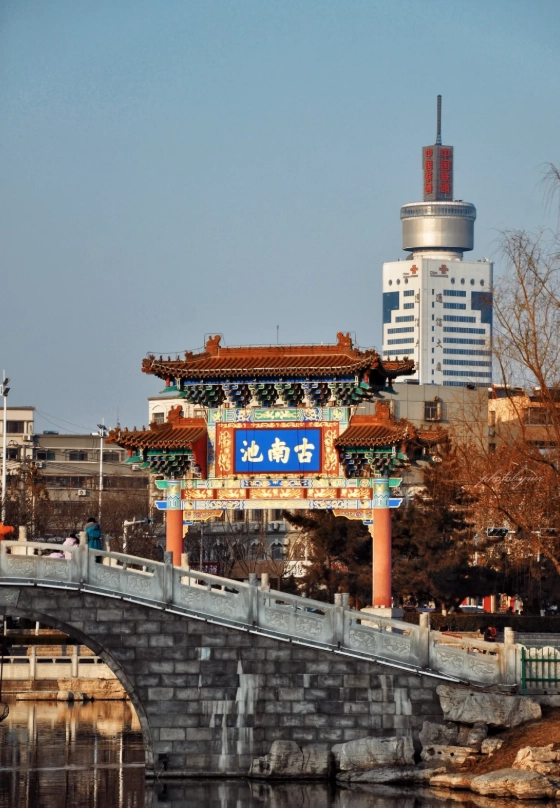
Jinan is the provincial capital and the city of springs. Baotu Spring is the headline act and costs around 40 RMB. Go early, because the park is small and fills fast.
Daming Lake is free to walk and worth two hours. Qianfo Mountain, the Thousand Buddha Mountain, gives you the best city panorama and costs roughly 30 RMB. The Shandong Museum is free but requires a passport reservation — do it through Trip.com if the WeChat system defeats you.
Days 9 and 10: Yantai or Weihai, Then Out
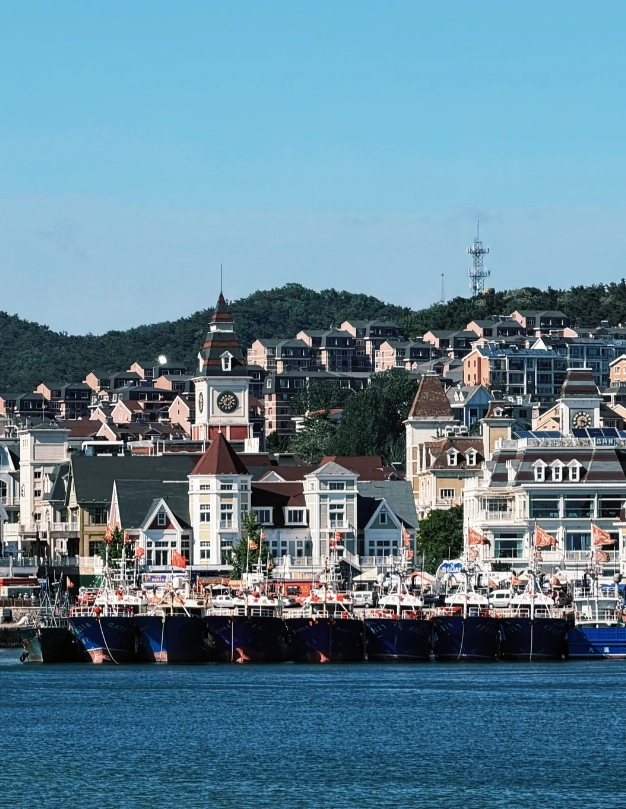
If you have the energy, ride the high-speed line east to Yantai or Weihai for two slow coastal days — wine country, fishing harbours, almost no foreign tourists. If you would rather not move again, stay in Qingdao and use the last day for the Olympic Sailing Centre and a long seafood dinner.
Then fly out from Qingdao or Jinan to your third country. Remember to leave a full three hours before an international departure.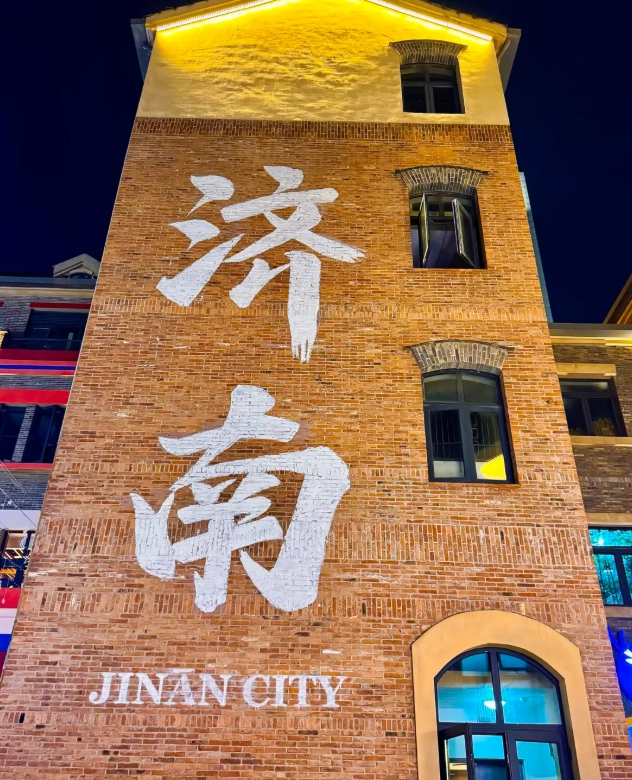
If You Only Have 24 Hours in Qingdao
Plenty of travelers only get a single day. Here is the compressed version. Land early, drop bags at a hotel near Zhanqiao, and walk the pier and the old town by 9am. Cathedral at 10. Lunch on seafood near Pichai Yuan. Badaguan and the coastal boardwalk from 2pm. Tsingtao Brewery Museum at 4pm if the line is short. Sunset at May Fourth Square, dinner at a Taidong night market stall, and back to the airport by 9pm.
It is a lot. It is also completely doable because the old town, the cathedral and the pier are within a 15-minute walk of each other.
Where to Sleep in Qingdao, Jinan and Tai'an
Book on Trip.com or Agoda rather than a Chinese-only platform. Most hotels accept your passport without issue, but small guesthouses sometimes cannot register foreign guests at all. Always message ahead and confirm.
| Hotel | Area | Est. Nightly Rate | Best For |
|---|---|---|---|
| Atour Hotel Zhanqiao | Old town, Qingdao | 350 to 550 RMB | Couples who want everything walkable |
| The St. Regis Qingdao | May Fourth Square | 1,600 to 2,600 RMB | Views, comfort, business travel |
| Hyatt Regency Qingdao | Shilaoren, Laoshan District | 900 to 1,400 RMB | Families wanting beach access |
| InterContinental Jinan | Lixia District, Jinan | 800 to 1,200 RMB | First-timers, English-speaking desk |
| Hanting Express or Home Inn | Near Tai'an high-speed station | 180 to 300 RMB | Budget hikers, one-night stops |
Rates swing hard with the season. Late July and early August along the Qingdao coast can double those numbers, and the first week of October is peak domestic travel — book weeks ahead or avoid it entirely.
Two practical checks before you pay: confirm the hotel can register foreign guests, and confirm there is an elevator. A lot of charming old-town buildings do not have one, and hauling a suitcase up four flights after a 12-hour flight is a bad start.
Money, Maps and Language Traps That Catch First-Timers
Set up Alipay and WeChat Pay before you fly, with your home card linked and verified. This is not optional. China is close to cashless, and while cash is technically legal tender, small vendors often have no change and will look at you like you handed them a foreign coin.
- Cards: international credit cards work at big hotels, airports and chain stores. They do not work at noodle shops, taxis or market stalls.
- Cash: keep 200 to 300 RMB in small notes as a backup. Useful when a phone dies.
- VPN: install and test it before departure. Google, WhatsApp, Instagram and most Western news sites are blocked on local networks.
- Translation: Apple Translate handles offline Chinese reasonably well. Baidu Translate has a camera mode that reads menus. Point it at the menu and you are fine.
- Reservations: most major attractions now require a timed booking with your passport number. Do it through Trip.com or Klook if the local mini-program is too painful.
Insider Advice: Screenshot your hotel address in Chinese characters before you leave the airport. Hand that screenshot to every taxi driver. It solves 90 percent of communication problems in ten seconds.
Shandong Visa-Free Transit: Awkward Questions, Straight Answers
My onward flight is back to my home country. Does that still count as transit?
It does not, and this is the most common reason people get refused at the counter. The onward ticket must be to a third country or region. A US passport holder flying Los Angeles to Qingdao to Los Angeles is not in transit. The same traveler flying Los Angeles to Qingdao to Seoul, or to Hong Kong, is. If your plans have you returning home, add a cheap one-way hop to a nearby country and book the long-haul from there. It costs less than a visa application and saves days of paperwork.
Do I need to register or apply for the 240-hour transit before I fly?
There is no advance application. You claim it at the immigration counter on arrival. That said, two things will make your life easier. First, the airline check-in agent at your departure airport may not know the rule and could ask for a visa — carry a printed copy of the National Immigration Administration policy page and ask for a supervisor if needed. Second, fill in the arrival card properly, including your onward flight number and your first hotel address. Incomplete cards get sent back to the back of the queue.
What happens if my outbound flight from Qingdao is cancelled and I overstay?
Go to the local exit-entry administration office the same day, with your passport, your cancelled booking and your new booking. Bring a Chinese-speaking person if you can — a hotel receptionist works. Overstaying even by a day creates a formal record and can complicate future Chinese visa applications. Do not wait until you reach the airport. Officers at the airport cannot fix a status problem on the spot, and the airline will refuse to board you until it is resolved.
Can I use the visa-free transit if I arrive by cruise ship in Shandong?
Several Shandong seaports are designated transit ports, and there are separate visa-free arrangements for cruise passengers arriving as part of an organised tour group. The rules differ from the airport version, including how your stay area is defined. Check your specific port against the official list before you commit, and confirm with your cruise line, because they carry the legal responsibility for your landing.
Is ten days actually enough to enjoy Shandong, or am I rushing it?
Ten days is comfortable for Qingdao, Mount Tai, Qufu and Jinan with time to breathe. It is tight if you also want Yantai, Weihai and Rizhao. My honest advice is to cut one city rather than speed up all of them. The travelers who enjoy Shandong most are the ones who spend three nights in Qingdao instead of one, and skip the fifth city entirely.
Verified and fact-checked by the editorial team. Policies, port lists and ticket prices change — confirm current details with the National Immigration Administration and the relevant attraction before you travel.

No comments yet.