 Tao Xu
I still remember the morning I first tasted Guilin rice noodles. Steam rising from a plastic bowl, chopsticks twirling – that was my wake-up call. Guangxi isn't just a place to see karst mountains; it's a place to eat them, if you count the rice paddies.
But let's be honest: figuring out what to eat in Guangxi as a foreigner can be overwhelming. You'll see stinky snail noodles, weird-looking herbs, and food stalls with no English. Payment apps may not work, and menus are often Chinese-only. That's why I put together this guide – to save you from the tourist traps and point you to the real flavors.
Here's the bottom line: you absolutely cannot miss Guilin rice noodles, Liuzhou snail noodles, or Yangshuo beer fish. They're the holy trinity. But there's so much more – from taro pork belly to osmanthus cake. In this guide, I'll walk you through 12 dishes, what to order, how to eat them, and where to find them without getting ripped off.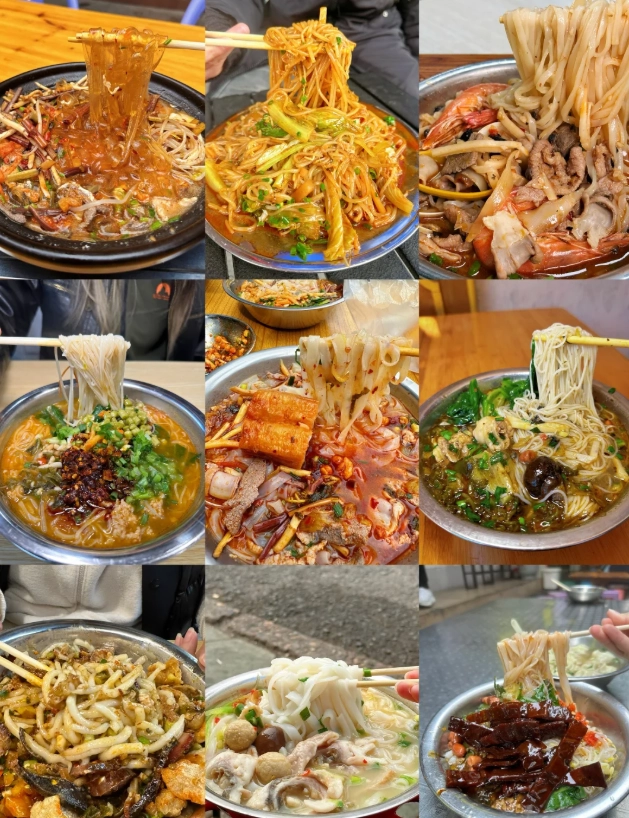
What Makes Guangxi Food Special?
Guangxi is a region of scorching summers, dramatic karst peaks, and a food culture that punches far above its weight. The foundation of Guangxi cuisine is sour and spicy, thanks to an abundance of pickled vegetables, chili peppers, and the infamous sour bamboo shoots. Rice, not wheat, plays the leading role – you'll eat rice noodles, rice cakes, and sticky rice in every possible form. And because the province is crisscrossed by rivers, freshwater fish and river snails are central to many dishes.
The local approach to flavor is bold: if something isn't sour, it's spicy; if not spicy, it's fragrant. There's a saying here, “Three foods a day, sour, spicy, and pickled.” This is a good summary of what you'll encounter.
12 Must-Try Guangxi Dishes
Here are the 12 dishes I consider non-negotiable on any visit to Guangxi. I've marked the city where each is most iconic, so you can plan your route. Check the table below for a quick snapshot, then read on for the full experience.
| Dish | Signature Flavor | Best City | Price Range (CNY) |
|---|---|---|---|
| Guilin Rice Noodles | Savory, slightly sour | Guilin | 6-12 |
| Liuzhou Snail Noodles | Spicy, sour, funky | Liuzhou | 10-20 |
| Nanning Old Friend Noodles | Spicy, garlicky | Nanning | 10-15 |
| Yangshuo Beer Fish | Fresh, malty | Yangshuo | 50-80 |
| Taro Pork Belly | Rich, savory | Guilin | 30-50 |
| Lemon Duck | Tangy, citrusy | Nanning | 30-50 |
| Stuffed River Snails | Herbaceous, umami | Guilin | 40-60 per kg |
| Guilin Osmanthus Cake | Sweet, floral | Guilin | 5-10 |
| Oil Tea | Bitter, gingery | Gongcheng | 10-20 |
| Sticky Rice Cakes | Chewy, sweet or savory | Throughout | 3-5 each |
| Sour Bamboo Shoots | Sour, pungent | Throughout | N/A (condiment) |
| Water Chestnut Cake | Sweet, crisp | Guilin | 5-10 |
Guilin Rice Noodles
Guilin rice noodles are a breakfast staple that you'll find on nearly every corner. I remember the first morning I ate them – sitting on a small plastic stool in front of a shop, watching the owner dunk a wad of noodles into boiling water for five seconds. The noodles are slippery, firm, and coated in a savory brown sauce. The standard toppings are sliced beef, peanuts, and pickled beans — tangy and a little spicy. Locals usually eat them “dry,” with a small bowl of broth on the side. You sip the broth at the end, and it's considered bad manners to drown your noodles before eating. I always order an extra “ma dan” (卤蛋, braised egg) and a sprinkle of chili oil.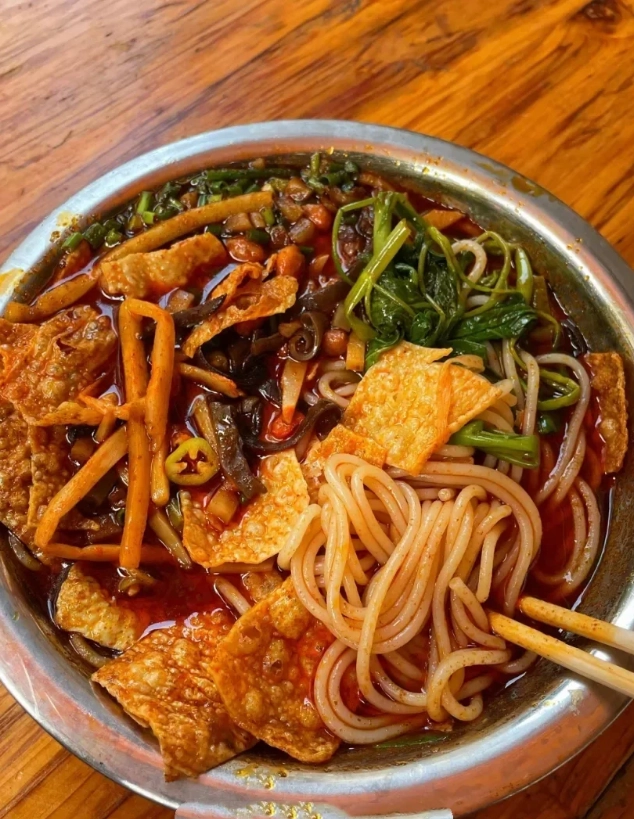
Pro Tip: Don't ask for extra broth in your Guilin rice noodles. The broth is meant to be sipped at the end, not to soak the noodles. It sounds odd, but trust me – the flavor is better that way.
Where to find: In Guilin, walk into any shop that seems busy around 7 a.m. Near Zhengyang Pedestrian Street you'll see locals queuing. Expect to pay 6–12 yuan. Most shops close by mid-afternoon, so go early.
Liuzhou Snail Noodles
Liuzhou snail noodles are the stinky king of Guangxi, and once you acquire the taste, you'll crave them. The signature smell comes from sour bamboo shoots, which ferment to create an earthy, pungent aroma. The broth is made with river snails, pork bones, and a secret spice mix. It's bold, spicy, sour, and deeply savory. The bowl comes with rice noodles, fried beancurd skin, peanuts, and greens. I tell my clients to start with “微辣” (micro spicy) because the default can be fiery. In Liuzhou, you'll see long lines at shops like Xihuan Feizai, but any packed noodle house will do.
Insider Advice: If you can't handle the smell, order fewer sour bamboo shoots – ask for “少酸笋” (shaosuan sun). You'll still get the flavor without the overpowering aroma.
Where to find: In Liuzhou, head to the night market area or just follow the nose. In other cities, look for “螺蛳粉” signs. Prices are 10–20 yuan. Be aware the smell clings to your clothing – wear something washable.
Nanning Old Friend Noodles
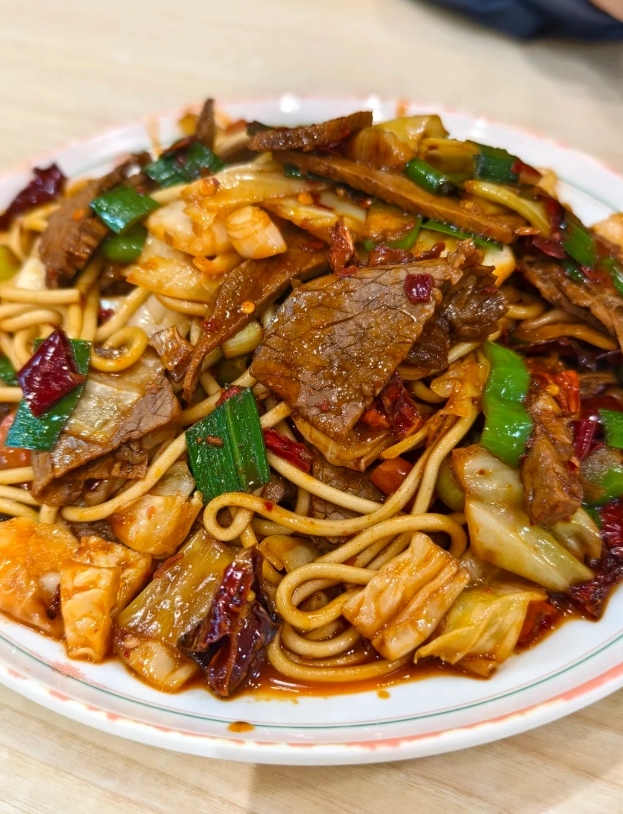
Nanning's old friend noodles, or laoyou fen, are a garlicky, spicy rice noodle soup that warms you from the inside. The dish gets its name from a story about an old friend – but the real joy is the savory, slightly tangy broth loaded with wok-fried garlic, fermented soy beans, tomatoes, and pickled bamboo. Unlike Guilin's dry noodles, this one is a soup. I love the smoky char flavor from the quick stir-fry before the stock is added. In Nanning, the famous Shuji Laoyou Fen is a local institution, but even lesser-known shops deliver a satisfying bowl.
Where to find: Most shops in Nanning are open from morning until early afternoon. A bowl costs 10–15 yuan. If you can't handle spice, say “buyao la” (不要辣) – no chili.
Yangshuo Beer Fish
Yangshuo beer fish is a tourist favorite for good reason – the fish is fresh from the Li River and braised in Guilin beer. The fish is typically carp or bone fish, cooked with tomatoes, chili, ginger, garlic, and a whole bottle of local beer. The sauce is slightly sweet, sticky, and infused with malty depth. When the clay pot arrives, it's bubbling and fragrant. One fish can easily feed two people. I remember over-ordering on my first trip – the fish was huge and the cost added up. So ask the waiter to weigh the fish first, and confirm the total price before they cook it.
Insider Advice: In Yangshuo, avoid the restaurants right on West Street if you're on a budget. Walk two blocks deeper and find where locals eat – you'll get the same dish for half the price.
Where to find: In Yangshuo, but also in Guilin. Expect 60–100 yuan per jin (500g), with a typical fish weighing 1.5–2.5 jin. It's a splurge, but worth it.
Taro Pork Belly
Taro pork belly is comfort food at its finest – layers of melt-in-your-mouth pork and taro slices steamed to perfection. This dish is often reserved for banquets and Lunar New Year celebrations, but many home-style restaurants in Guilin serve it daily. The pork belly is first fried, then braised in a mixture of fermented bean curd and soy sauce, and stacked with slices of taro. The taro absorbs the meaty juices and turns silky. I've had versions in Guilin that weren't shy with the sauce – perfect over rice.
Where to find: Look for “扣肉” (kourou) on menus. A plate typically costs 30–50 yuan. If you see “荔浦芋扣肉” (Lipu taro pork belly), that's the premium version – Lipu taro is famous across China.
Lemon Duck
Lemon duck is a Nanning specialty that uses preserved lemons to create a tangy, fragrant sauce. This is not the sweet lemon flavor you might expect; the preserved lemon is salty, sour, and deeply pungent. The duck is wok-tossed with pickled ginger, chili, and garlic, then finished with lemon. The result is a joyful contrast of crispy duck skin and sharp sauces. I always order a bowl of rice to soak up the remaining sauce.
Where to find: In Nanning, many restaurants specialize in “柠檬鸭” (ningmeng ya). A half-duck portion costs around 40–60 yuan. It's a must-try if you're in the city.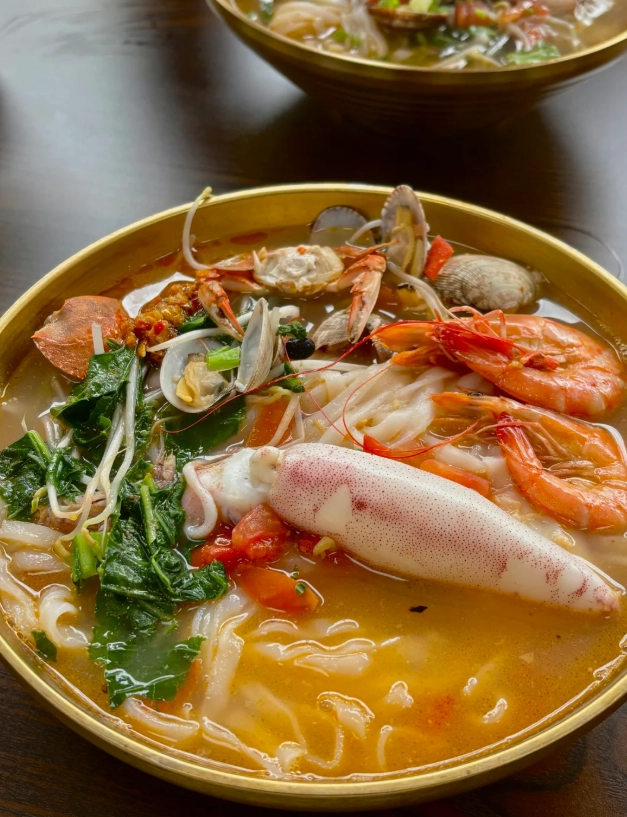
Stuffed River Snails
Stuffed river snails, or tianluo niang, are a masterpiece of labor and flavor. The snail meat is pulled out, chopped with pork, mint, and dried tangerine peel, then stuffed back into the shell and braised. Eating them is a hands-on adventure: you pick out the whole meatball with a toothpick. The texture is springy, and the herbs give it a freshness that cuts through the earthiness. I've inhaled a plate of these in Guilin without realizing how many I'd eaten.
Where to find: They appear at night-market stalls in Guilin, Yangshuo, and Hezhou. Prices are often per jin (500g), around 40–60 yuan. Make sure they're freshly made, not pre-packed.
Guilin Osmanthus Cake
Guilin osmanthus cake is a sweet, semi-transparent dessert made from osmanthus flowers and glutinous rice. The tiny golden petals are suspended in a wobbly, jelly-like cake that tastes like a bouquet. It's not overly sweet, which I appreciate after all the spicy food. In Guilin, you'll see boxes of it in gift shops, but the best version is the one sold warm from a street cart.
Where to find: Look for vendors near tourist spots or in the 两江四湖 area. A small portion costs 5–10 yuan. It's also a great souvenir if you can keep it cool.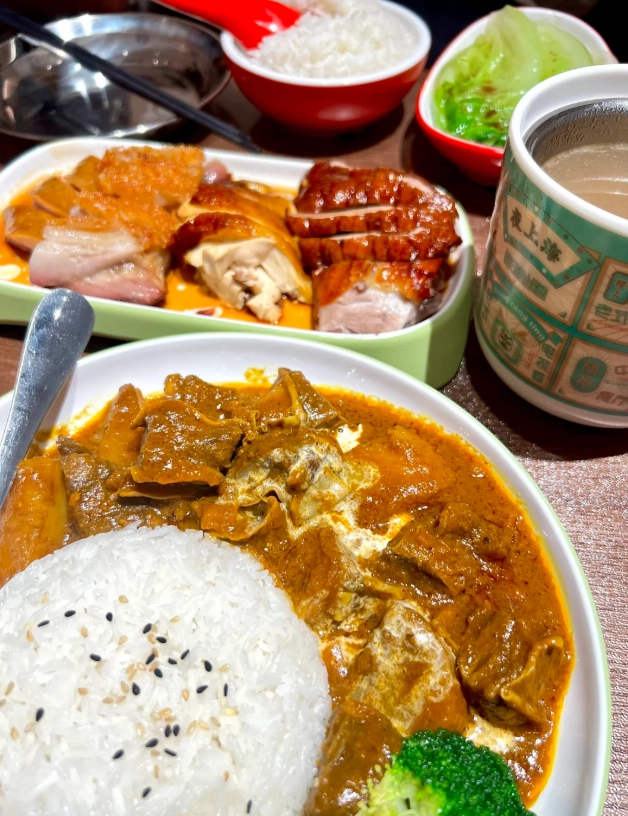
Oil Tea
Oil tea is not a drink but a meal in a bowl – a ritual in the mountain villages of Gongcheng County. Made by pounding tea leaves, ginger, garlic, and peanuts into a paste, then boiling it into a broth, it's served with puffed rice, fried dough sticks, and sometimes beans. The taste is an acquired experience: bitter, gingery, with a hint of smokiness. The locals say it helps them work through a hard day. I first tried it in a stilted house in the Yao mountains and felt an instant connection – it's like a tea soup that hugs you from the inside.
Where to find: In Gongcheng, every restaurant offers it. In Guilin city, you can find oil tea shops too, where a set with snacks costs 20–30 yuan per person.
Sticky Rice Cakes
Sticky rice cakes, or ci ba, are chewy glutinous rice patties that can be grilled, fried, or steamed. These are the street food champions. Grilled over charcoal, they puff up and develop a crisp shell. They're often dipped in sugar or stuffed with sweet bean paste. I love the smoky version – it's a simple pleasure. You'll see them in the evenings at street markets.
Where to find: In traditional market areas across Guangxi, especially on colder days. They cost 3–5 yuan each. Grab one fresh off the grill.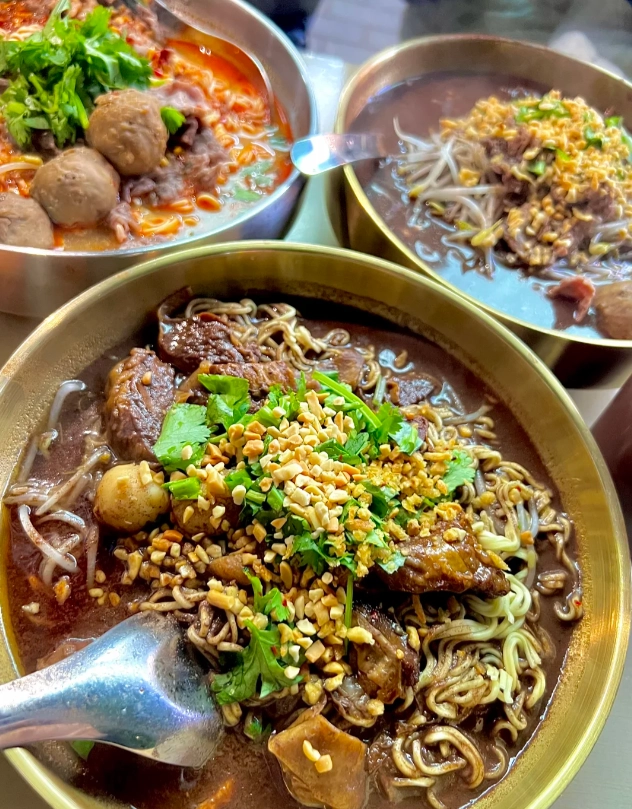
Sour Bamboo Shoots
Sour bamboo shoots are not an independent dish but a flavor bomb that defines many Guangxi specialties. They are bamboo shoots fermented in brine for weeks, resulting in a sharp, sour, and slightly funky flavor. As a condiment, they appear in almost every noodle shop and stir-fry. Try them on their own as a side dish – they're an acquired taste, but once you get it, you'll be hooked.
Where to find: At any noodle shop, as a topping. If you want a full dish, order “酸笋炒肉” (suan sun chao rou) – sour bamboo pork. Prices vary; as a topping it's usually free or a few yuan extra.
Water Chestnut Cake
Water chestnut cake, or mati gao, is a refreshing dessert made with water chestnut flour and osmanthus. This translucent brown cake is lightly sweet with a subtle crunch of real water chestnuts suspended inside. It's a nice palate cleanser after a fiery meal. I often buy it from a bakery or dessert shop, served cold.
Where to find: In Guilin, look in dessert shops or supermarkets. A small box costs 5–10 yuan. It's also sold in 早茶 (dim sum) restaurants.
Where to Eat: Practical Tips
Eating out in Guangxi is generally easy, but a few practical tips will save you from common pitfalls.
- Payment: Alipay and WeChat Pay are accepted almost everywhere. I strongly suggest linking your international card before you arrive. Carry around 100 yuan in cash for tiny stalls. International credit cards are rarely accepted, even in tourist zones.
- Navigation: Google Maps is unreliable in China. Use Apple Maps (which uses auto navigation) or download AMap and switch it to English mode. For taxis or ride-hailing apps like Didi, have your destination written in Chinese.
- Language: Download Baidu Translate or Apple Translate. Use the camera mode to translate menus – it works surprisingly well. Also learn “tui jian” (recommend), “bu la” (not spicy), and “zhao pian” (menu with photos).
- Reservations: Street food and noodle shops mostly operate on a first-come, first-served basis. For fancier restaurants, you can use Trip.com or Klook to book food experiences. If you need to reserve a table, ask your hotel concierge to call – it's easier.
- Food safety: Stick to places where the food is cooked to order and the turnover is high. Drink bottled water. Ice in drinks is generally safe from major chains, but if you're cautious, ask for “no ice” (bu jia bing).
For entry requirements and visa policies, the official information from the National Immigration Administration is your best resource. For intercity trains, the official China Railway platform is 12306.cn, which has an English version.
One thing that always surprises visitors: the late-night food scene. In cities like Nanning and Guilin, the streets transform into open-air food stalls after 8 p.m. This is when the real street food comes alive – try grilled skewers, stir-fried snails, and sweet tofu pudding.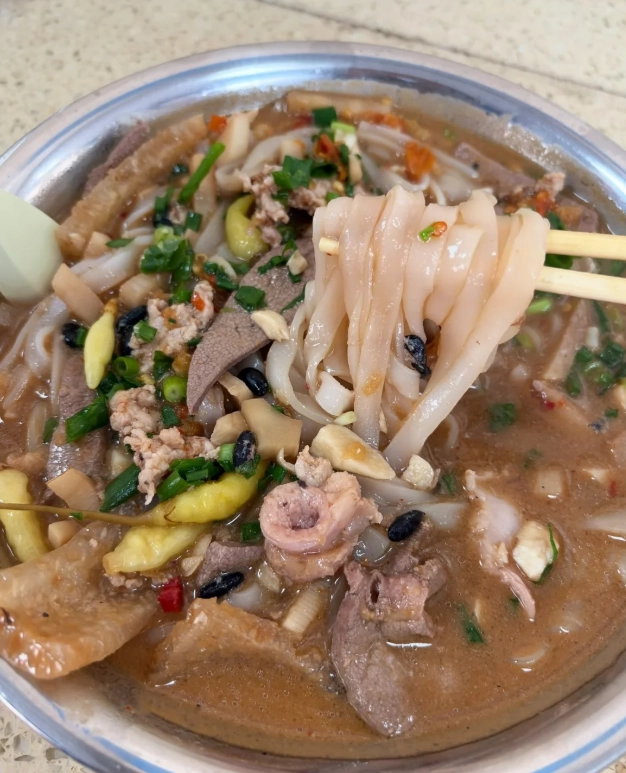
FAQs About Guangxi Food
Verified and fact-checked by the editorial team.





No comments yet.