 Qiang Huang
Jump to the good stuff
Your phone is lying to you. That blue dot on Google Maps? It's wrong. After a decade of guiding, I've watched tourists circle city blocks for 30 minutes because their map showed a road that didn't exist.
This Shanghai map guide is built from my own taxi rides, wrong turns, and annoyed locals. For the first 150 words: skip the $10 'Shanghai map apps' — they are digital snake oil. Apple Maps (or AMap Global on Android) plus a paper metro map from the airport is all you need.
Here's the secret that takes 10 seconds to do: when you open Apple Maps, switch to Walking mode. It uses AMap's backend, which is baked into the Chinese GPS grid. Google's data isn't.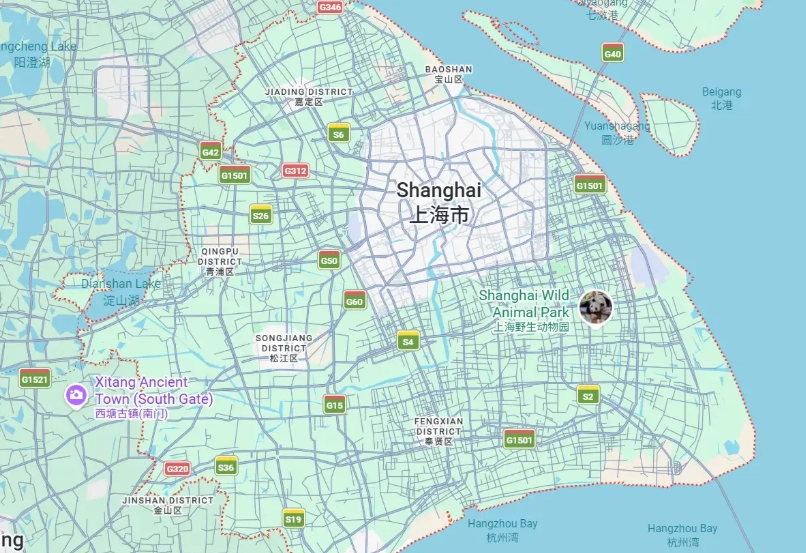
Why Phone Maps Fail in Shanghai
Chinese law mandates that all maps use the GCJ-02 coordinate system, which shifts GPS points by hundreds of meters. Foreign apps like Google Maps are blocked from this backend, so you'll see your avatar floating in the Huangpu River. It's not your antenna — it's the map.
The only maps that work in Shanghai are Apple Maps, Google Maps on a VPN (still not accurate), or AMap (高德地图) with its Global version. For English users, Apple Maps is your best bet. But here's a quirk: Apple Maps names some streets differently than old tourist guides. For example, 'Zhongshan East No.1 Road' is shown as 'Zhongshan Dong Yi Lu.' Street signs have both, but taxis don't.
For navigation, always carry a written Chinese address. I can't count how many times a cab driver has shaken his head at an English street name. Keep this line in your phone's notes:
Pro tip: Screenshot the destination card from Trip.com or the hotel's business card. Google Translate camera feature works wonders for reading maps and menus — point it at any Chinese text to get instant English.
Google Maps vs. Apple Maps vs. AMap Global
Launch Apple Maps in China and you'll notice it uses 'AMap' data for directions. This gives you turn-by-turn directions with the correct road names. Google Maps remains blocked inside China unless you have a reliable VPN, and even then it often shows the wrong 'you are here' pin due to the coordinate shift. AMap Global is available for Android (search AMap Global in the Play Store or use the Chinese version's English interface).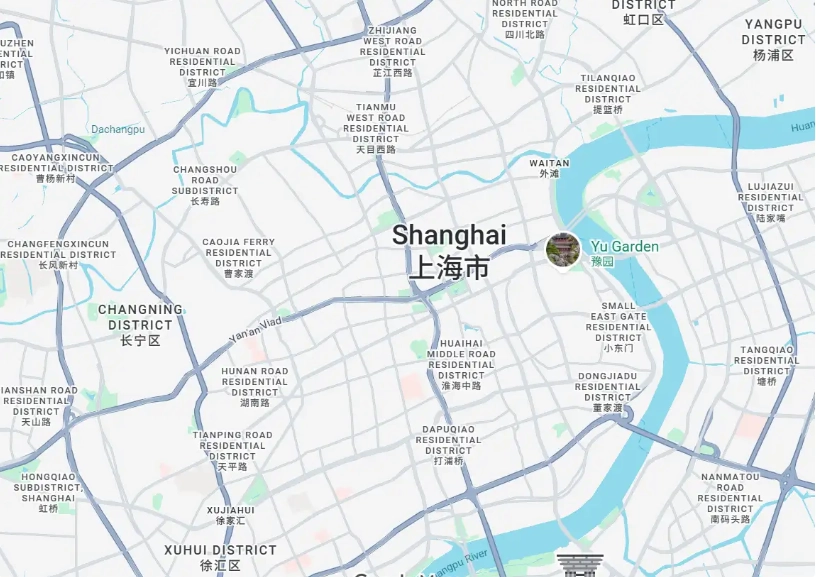
- Apple Maps — best for iPhone users; no VPN needed; consistently accurate for walking.
- AMap Global — best for Android users; has English UI; supports download of offline maps.
- Google Maps — avoid for navigation; use it only for browsing English reviews of restaurants.
- Baidu Maps — excellent, but the English version is limited; some expats use it with browser translation.
How to Set Up Your Phone for Turn-by-Turn
Make sure 'Location Services' is set to While Using the App. In your phone's Settings, enable accurate location for Apple Maps. Also, pre-download the offline area for Shanghai on AMap Global if you're using Android. This will work when your subway train goes underground and the signal drops.
One more thing: turn on the voice prompt in English. Both Apple Maps and AMap Global have decent English voices. The Shanghai metro has Wi-Fi in many stations, so directions won't cut out mid-transit.
Core Zones Decoded
Shanghai is divided by the Huangpu River. Puxi (west side) is the low-rise, colonial heart. Pudong (east side) is the futuristic skyline with skyscrapers. Most of your sightseeing is in Puxi, except the iconic towers across the river.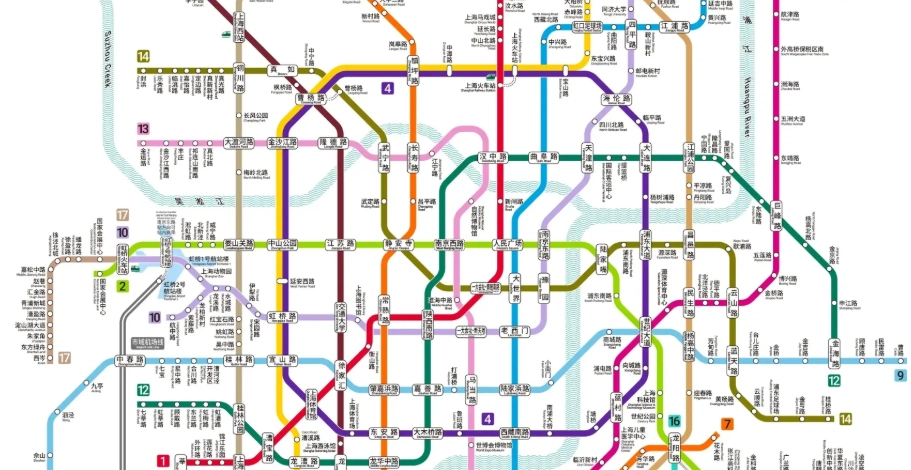
Puxi vs. Pudong: Which Side Should You Stay On?
If you want easy access to history, food, and nightlife, stay in Puxi — especially around the People's Square, Jing'an, or the former French Concession. Pudong is cheaper for hotels, but you'll cross the river constantly, and the metro rides add 30 minutes to every outing. For a short trip, Puxi wins.
- Puxi: The Bund, Yu Garden, Shanghai Museum, Nanjing Road, all the street food you want.
- Pudong: Shanghai Tower, Oriental Pearl, financial district, and the best skyline views at night.
The 5 Districts You'll Actually Visit
- Huangpu — the classic tourist center. The Bund, Nanjing East Road, People's Square. Watch for pickpockets in crowded spots.
- Jing'an — upscale shopping, Jing'an Temple, and the famous 'smart' park.
- Xuhui — the former French Concession. Wukang Road and Anfu Road. Great for cafés, boutique stores, and Instagram-worthy streets.
- Pudong (Lujiazui) — skyline, malls, the Shanghai Tower, and the Science Museum.
- Changning — more local feel, Hongqiao airport side, and the Shanghai Zoo if you have time.
But you don't need to memorize these. Here's how to read the map like a local.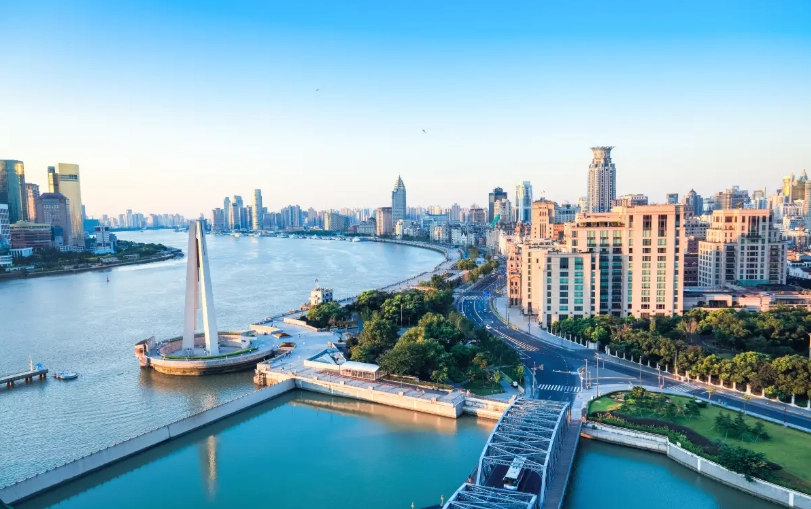
How to Use a Shanghai Tourist Map Like a Local
Why a Paper Metro Map Still Matters
Maps on phones die, batteries drain, and subway tunnels block signals. Grab the free paper metro map at the airport information desk. It's your backup and it makes good conversation with taxi drivers. Check the last train times — the metro stops around 10:30 PM, so if you're out late, keep the map to find the nearest bus stop.
Learn the metro exit numbers. In Shanghai, exits are labelled as Exit 1, Exit 2, etc., and they lead to different streets. Always screenshot the exit number from your hotel booking or attraction ticketing page. For example, the Bund at East Nanjing Road Station: take Exit 3 and follow the crowds for 800 meters. Trust me, you don't want to come up on the wrong side of the highway.
Reading the Metro Map: Lines, Exits, and Transfer Tricks
The Shanghai Metro is huge but color-coded. If you're going to the airport, take Line 2 to both airports. Line 1 is the vertical spine of Puxi. Most trips involve one transfer — the trick is to pause and look for the color-coded signs on the floor.
A common mistake: tourists get on the wrong end of Line 2 because it has branches. Always confirm the destination station name with the driver or check the highlights on the wall. And when you transfer, look for the exit number on the platform signs.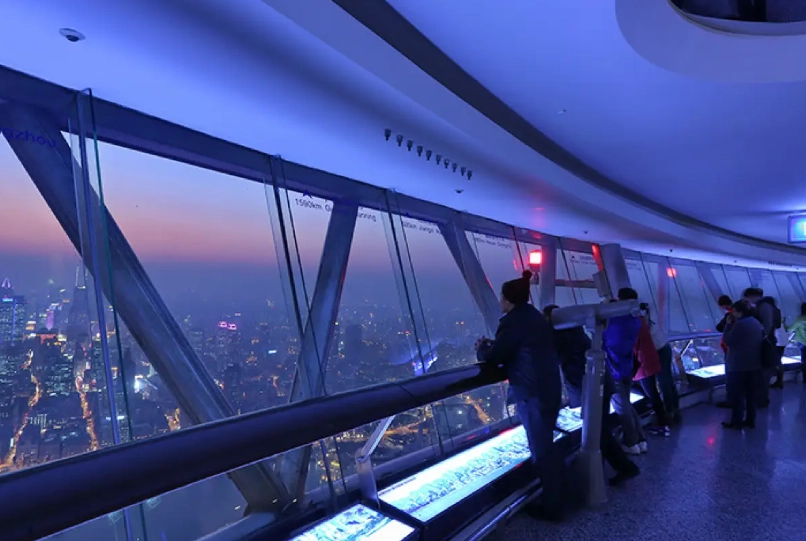
Insider advice: Download the Shanghai Metro official app or use the metro section in AMap Global. It shows live station entry screens and exit numbers.
3 Foolproof Walking Routes
I designed these so you can see the city without rushing, and know exactly where to cut the walk short if your feet hurt.
Route 1: The Bund to Nanjing Road — Evening Lights
Start at the Bund water level at sunset, walk 30 minutes southwest to Nanjing East Road, and end up at People's Square.
- Start at the Bund's north end (any metro exit, or take the bus). Watch the sunset over Pudong's skyscrapers.
- Walk along the promenade all the way to the 'Nanjing Road' arch.
- Enter Nanjing East Road — a pedestrian mall full of shops, malls, and food lines. Be careful with food vendors: Liu Jiao Wu (store) might look tempting, but the hygiene is variable. I prefer the dodgy but delicious pastry stand.
- After 45 minutes of window shopping, you'll hit People's Square. If you're tired, grab a bubble tea and watch skateboarders.
Time: 2 hours total, but easy to slow down. Note that after 10 PM, Nanjing Road turns into a bit of a wild street party. That's when I tell groups to head back to the hotel.
Route 2: Former French Concession Café Hop
Start at Xintiandi or the south end of Wukang Road — there's no right way, but this is my favorite four-stop stroll.
- Begin at Wukang Road and Huaihai Road. Walk down Wukang Road, lined with plane trees and quirky cafés.
- Stop at the 'Lan Kwai Fong' area for brunch. (Note: Wukang Road is great for photos, but the lunch line at popular spots can be 40 minutes. Try a smaller café around the corner.)
- Turn right on Anfu Road. This is my favorite shopping street for independent boutiques.
- End at the famous 'Xiaoyu's' or 'Dan's' shops — you'll spot the lines.
Total distance: 2.5 km. This route is best in the morning before the heat and crowds hit. The mid-afternoon sun is brutal — bring water.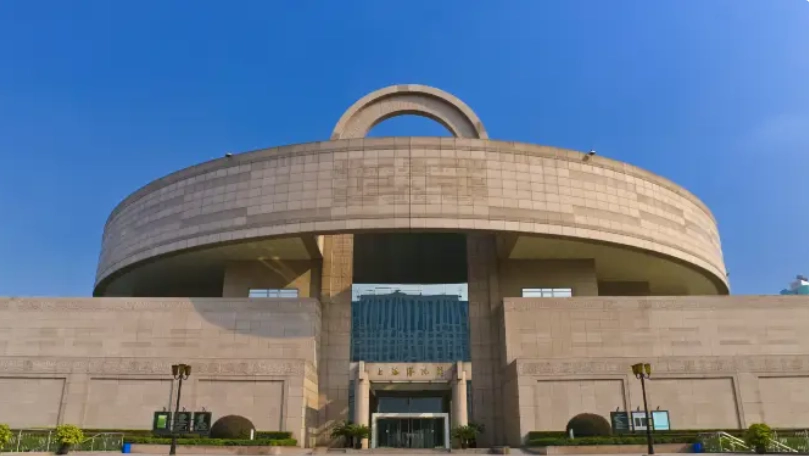
Route 3: One-Day Pudong Modernity Circuit
Take the metro to Lujiazui Station, Exit 6, and you'll emerge underground in a giant mall that connects to the Shanghai Tower.
- Visit the Shanghai Tower observation deck — it costs around 200 RMB; buy tickets in advance from Trip.com or the official site.
- Then walk south to the Oriental Pearl Tower. You don't need to go up; it's old. Instead, take photos from the Lujiazui Green Park.
- Cross the road to the finance district, where you can see the 'Sky Rise' photo spot.
- For dinner, head to the IFC mall for dozens of local and international restaurants. The food court has great view.
Time: 3–4 hours. If the weather is clear, sunset from the Shanghai Tower is unforgettable.
Booking Tickets & Payments
Must I Pre-Book Attractions with My Passport?
Yes — for popular spots like the Shanghai Tower, the Museum of Art, and the Science and Technology Museum. During public holidays (Chinese New Year, National Day) even a simple museum needs a booking slot. Some attractions won't accept walk-ins, so do it before you go. The best way for foreigners is via Trip.com, Klook, or the official WeChat account of the site. You can use your passport number to reserve tickets.
Warning: the WeChat mini-programs are in Chinese, and often require a Chinese bank card. It's easier to use Trip.com — they accept international credit cards and show English instructions. Print the QR code confirmation or keep it on your phone screen.
Alipay & WeChat Pay: How to Make Your First Payment Easier
Cash isn't dead in Shanghai, but paying with it in a taxi or a food stall is painfully slow. You'll be refused by many vendors because they don't carry change. Set up Alipay or WeChat Pay before you land. Use your international card to add money. If you're stuck at a machine, look for the 'Alipay' sign at the shop and ask to use your passport for verification.
A major blind spot: many taxi companies have gone cashless. Even if the meter shows a price, the driver might only have a QR code. I always recommend carrying 100–200 RMB in small bills for emergencies.
First time in China? Get an eSIM for your phone, download a VPN before you arrive, and install the 'AMap Global' or Apple Maps plus a translation app like Apple Translate — it works offline.
Practical Info: Hours, Crowds, Costs
| Attraction | Opening Hours | Ticket Price (approx.) | Address (English) | Booking Needed? |
|---|---|---|---|---|
| The Bund | Always open | Free | Zhongshan East No.1 Road, Huangpu | No |
| Yu Garden | 9:00–16:30 | ¥40–¥50 | 218 Anren Street, Huangpu | Yes (peak) |
| Shanghai Tower | 9:30–21:00 | ¥180–¥250 | 501 Yincheng Middle Road, Pudong | Yes |
| Shanghai Museum | Tuesday–Sunday 9:00–17:00 | Free | 201 Renmin Avenue, Huangpu | Yes (recent policy) |
| Jing'an Temple | 8:00–17:00 | ¥30 | 1686 Nanjing West Road, Jing'an | No |
| Oriental Pearl Tower | 8:00–21:30 | ¥220–¥259 | 1 Century Avenue, Pudong | No |
Prices change often — check the official websites or Trip.com for live numbers. In the table above, I've rounded to standard rates. The Bund is free, but you'll likely pay for snacks.
Best time to beat the crowds: go to the Bund at sunrise (around 5 AM) if you hate people, or at 9 PM if you want the lights. The Shanghai Tower is least crowded on weekdays right at 9:30 AM. Avoid the long queue for the elevator by booking the first time slot.
Shanghai buses are cheap but crowded — for a short trip, I'd rely on the metro, plus taxis for door-to-door. The Maglev train to the airport is a fun 8-minute ride, but the metro takes 40 minutes and is more convenient to the city center.






No comments yet.