 Peng Gao
Quick Lookup
“Wait, my phone has no signal—and I’m stuck at the airport with no Wi‑Fi.” I’ve seen that panic on dozens of new arrivals. You land in Beijing Daxing, exhausted, and the first thing you need is internet. But your home carrier wants $20 a day, and the SIM kiosk line snakes forever. I learned the hard way: a China eSIM for tourists is the only pain‑free solution. Buy it before you fly, activate it on the plane, and step off with full bars. Let me show you exactly how.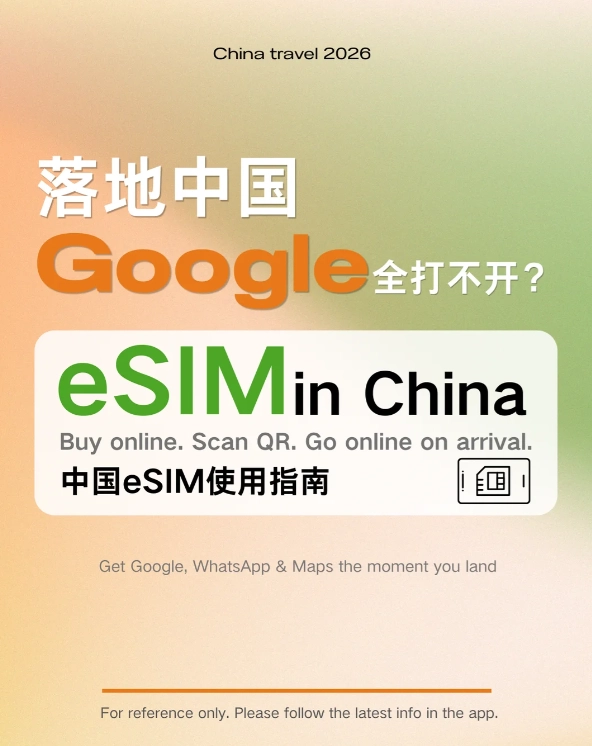
What is a China eSIM and Why You Need One
A China eSIM is a digital SIM card that lets you connect to Chinese mobile networks without a physical card. You buy a data plan online, scan a QR code, and you’re online in minutes. No plastic, no store visit, no passport photocopy. Perfect for short trips.
But why not just use international roaming? Two reasons: cost and the Great Firewall. Roaming from Western carriers often gets you throttled speeds or blocks sites like Google, WhatsApp, and Instagram. A proper China eSIM for tourists includes a local IP and, crucially, many providers offer a built‑in VPN to bypass restrictions. I always tell my clients: “Don’t rely on roaming—get a China eSIM with a VPN profile.”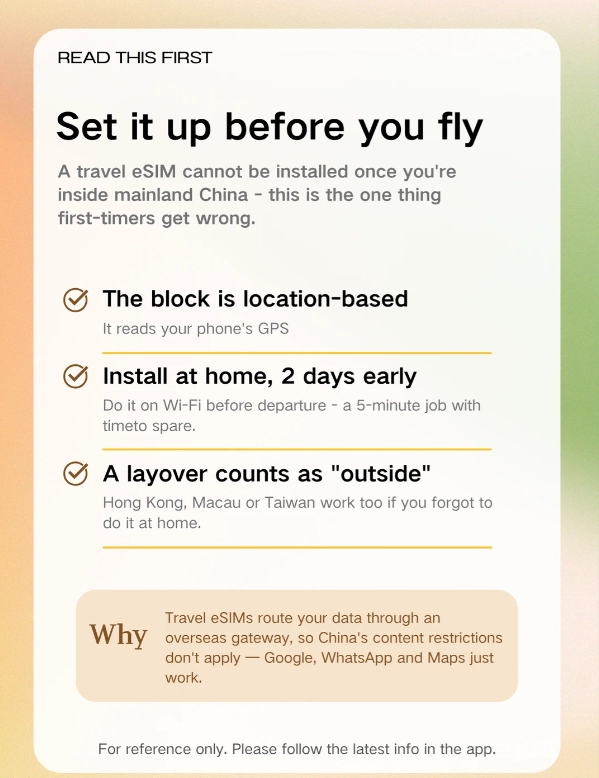
How to Choose the Best China eSIM for Tourists
Key Factors to Compare
Not all eSIMs are equal. Focus on three things: data allowance, validity period, and VPN support. Here’s a comparison of the most popular options I’ve tested:
| Provider | Data (e.g., 7 days) | Price (USD) | VPN Included | Best For |
|---|---|---|---|---|
| Airalo | 3 GB – 10 GB | $9 – $25 | Yes (with some plans) | Budget travelers, light users |
| Holafly | Unlimited (throttled after 1 GB/day) | $30 – $50 | No (use separate VPN) | Heavy social media users |
| Trip.com | 5 GB – 20 GB | $12 – $35 | Yes | Travelers who already use Trip.com |
| China Unicom (physical eSIM) | Custom (e.g., 5 GB) | $8 – $20 | No | Those arriving with Chinese ID (not for most tourists) |
Pro Tip: I recommend Airalo or Trip.com for most tourists. They’re easy to activate, include VPN access, and customer support responds in English. Avoid buying from Chinese carriers directly—their registration process requires a Chinese ID or a physical store visit.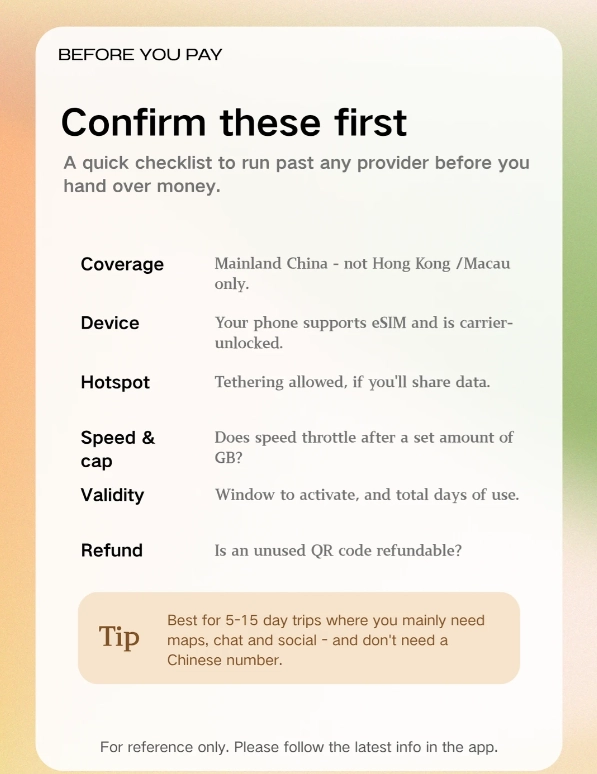
Step-by-Step: How to Buy and Activate Your China eSIM
Before You Arrive: Purchase Online
Buy your eSIM at least 48 hours before your flight. Here’s the drill:
- Go to the provider’s website or app (e.g., Airalo, Holafly, Trip.com).
- Select “China” as the destination.
- Choose a data plan based on your stay length (7, 15, 30 days).
- Pay with an international credit card or PayPal. Most Chinese platforms like WeChat may not work for foreigners.
- You’ll receive a QR code via email. Take a screenshot—sometimes the network is patchy when you land.
Upon Arrival: Activation Tips
Once you land, turn on your phone and go to Settings → Cellular/Mobile Data → Add eSIM. Scan the QR code. Important: set the eSIM as your primary data line, but keep your home SIM active for calls (if you want). Do this while still connected to airport Wi‑Fi—because after you leave the terminal, you’ll rely solely on the eSIM.
I once had a client who couldn’t activate because he scanned the QR code from a blurry photo. So save the email with the code, and also keep the PDF in your phone’s Files app.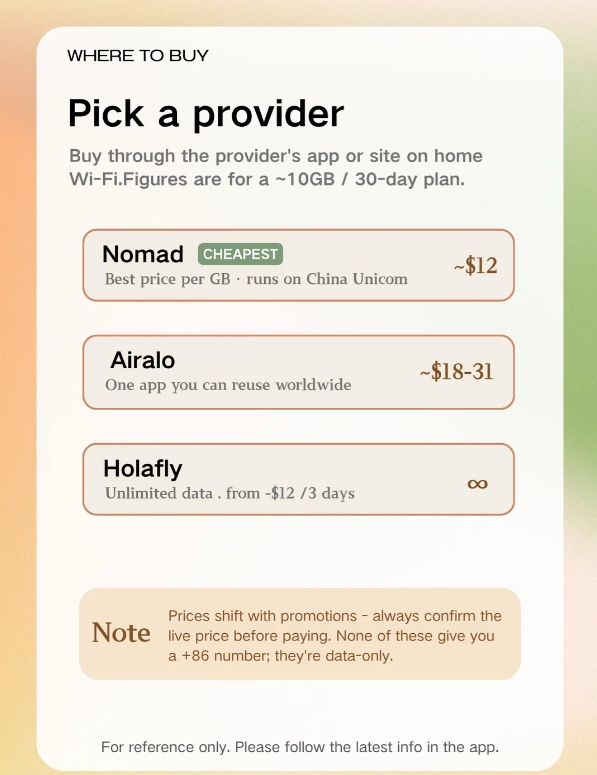
Real-World Usage: What to Expect (and What to Avoid)
Data Speeds and Coverage
China eSIMs run on the big three networks: China Mobile, China Unicom, and China Telecom. In cities like Beijing, Shanghai, and Guangzhou, you’ll get 4G/5G speeds around 30–100 Mbps. Enough for video calls, navigation, and streaming. But in remote areas (like the Great Wall sections outside the city), speeds drop—so download offline maps before you go.
Warning: Google Maps doesn’t work well in China. Use Apple Maps or download AMap (高德地图) with English support. I tell my groups to type addresses in Chinese characters or use the pinned location feature in WeChat.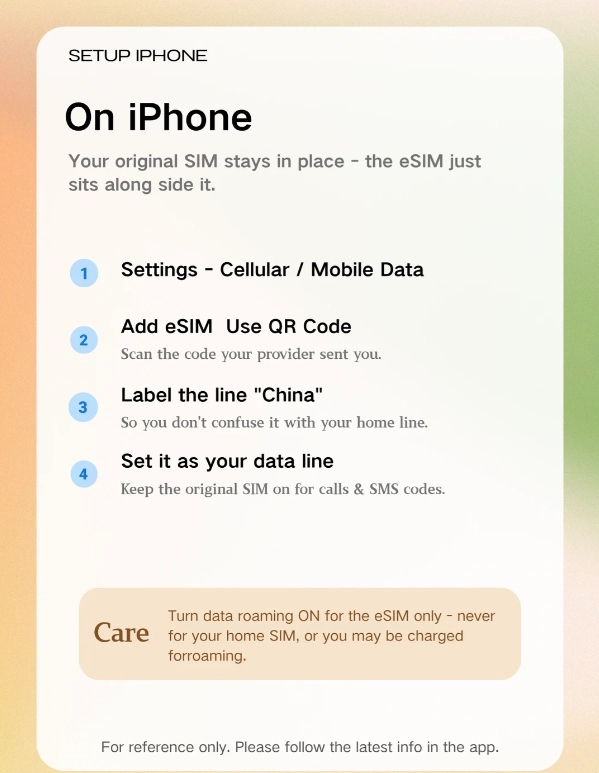
The Great Firewall and VPN
This is where many eSIMs shine. Some providers, like Airalo and Trip.com, include a VPN that automatically routes traffic outside the firewall. Without it, you can’t access Google, Gmail, WhatsApp, Instagram, or Facebook. Holafly does not include a VPN—you’ll need to set up your own (like ExpressVPN or NordVPN) before arriving. Set up your VPN at home, because trying to download a VPN app in China is nearly impossible without one already installed.
Payment and Top-Up
China is almost cashless. Alipay and WeChat Pay are ubiquitous, but they require a foreign credit card to bind. Most eSIM plans are pre‑paid, so you won’t need to top up. But if you run out of data, recharging is tricky—the eSIM portal might be blocked without VPN. My advice: buy a plan with plenty of data (10 GB for a week is safe). And always carry a small amount of cash (RMB) for backup—some street vendors still accept cash.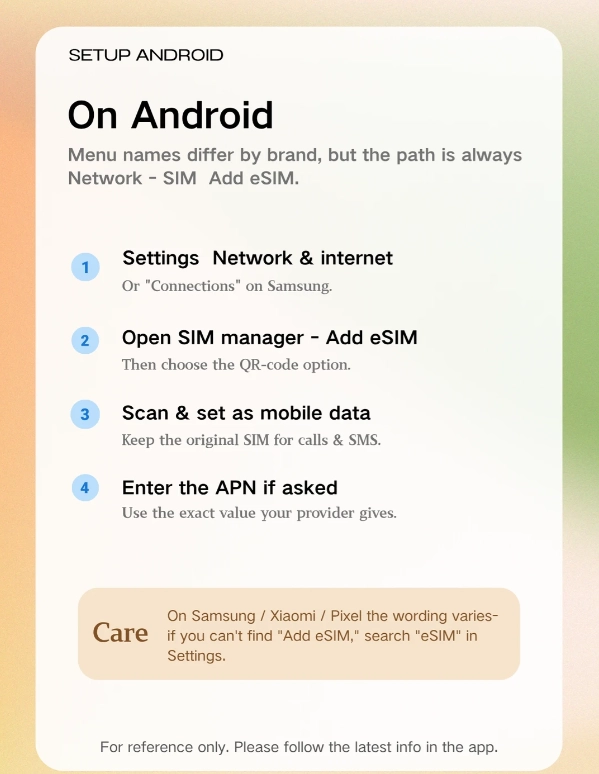
FAQs About China eSIM for Tourists
Final Verdict: Is an eSIM Worth It?
Absolutely—especially if you value your sanity. A China eSIM for tourists eliminates the airport scramble, saves money (usually $10–$30 per trip), and keeps you connected to the apps you need. The VPN integration is a game‑changer. I’ve used Airalo on my last five trips and never looked back. Just remember to buy before you fly, activate using airport Wi‑Fi, and download offline maps.
Now, the only thing left to worry about is which dumpling spot to hit first.








No comments yet.