 Peng Gao
What You'll Learn Here
Let me be honest – standing under that soaring turquoise dome, I still felt a little lost. Not because the mosque is confusing, but because most English guides online tell you almost nothing about how to actually visit it.
After bringing dozens of groups here, I've figured out the exact steps, the right timing, and the tiny mistakes that can turn a serene visit into a frustrating one. Here's my no-nonsense Id Kah Mosque English guide for foreigners.
Quick answer: You need your passport, 30-40 RMB (cash or Alipay), and you should arrive before 11 AM to avoid the midday crowds. Oh, and your Google Maps won't help – use Apple Maps or Amap.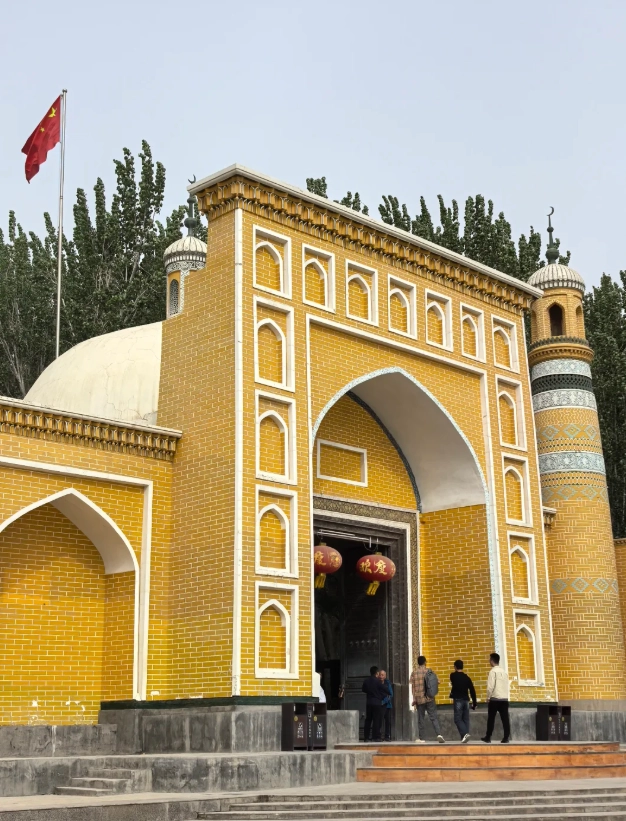
Why Visit Id Kah Mosque?
Located in the heart of Kashgar, this mosque is the largest in China and one of the most important Muslim pilgrimage sites in the country. Built in 1442, it has stood for nearly six centuries as a symbol of Uyghur culture and faith. For foreign travelers, it's a rare window into Islamic life in modern China.
I've brought countless groups here, and each time I feel the same shift – you step out of the chaotic bazaar and suddenly the air changes. The courtyard is huge, shaded by ancient trees, and the silence inside the mosque makes you forget you're in a bustling city. Even if you're not religious, the architecture is stunning: the vibrant Persian-inspired tilework, the towering minarets, and the intricate carvings on the pillars are a photographer's dream.
My verdict: If you have only one day in Kashgar, this is the landmark you cannot skip.
How to Get to Id Kah Mosque
The mosque sits on Jiefang North Road in Kashgar's historic core. Use Apple Maps or Amap (learn to say “艾提尕尔” to your driver) because Google Maps is unreliable here.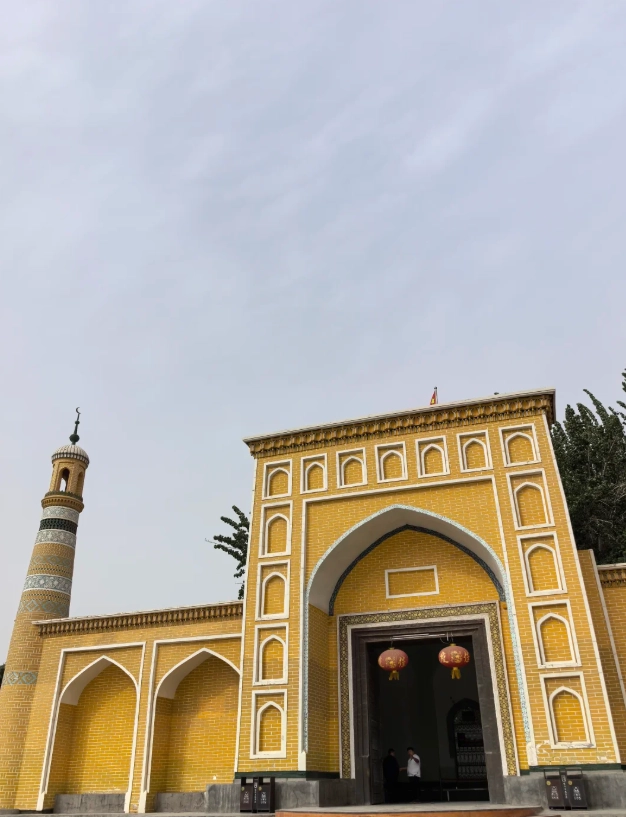
By Taxi or Ride-Hailing App
If you're coming from the airport, a taxi will take about 30–40 minutes and cost around 40–60 RMB. From the train station, it's about 20–30 minutes and 20–30 RMB. Didi is a good option – just show the driver the address in Chinese.
On Foot
Most tourists stay in the old city. The mosque is walkable from most points in the old city within 10–20 minutes. Just follow the smell of grilled lamb and the sound of pigeons – you'll find it.
By Public Bus
Take bus line 2, 7, or many others that stop at the Id Kah Square stop. Cost is around 1–2 RMB, but you'll need exact change or an Alipay QR code. I'd skip the bus unless you're really comfortable with the system.
| Transport | Duration | Cost (approx) | Notes |
|---|---|---|---|
| Taxi from airport | 30–40 min | 40–60 RMB | Use ride-hailing app |
| Taxi from train station | 20–30 min | 20–30 RMB | Same as above |
| Public bus (2/7) | 30–50 min | 1–2 RMB | Need exact change |
| Walking from old city | 10–20 min | Free | Best for exploring |
Tickets and Entry Requirements
Your passport is mandatory. You cannot enter without it. The ticket price is currently 30 RMB per adult (as of my last visit – it can change). Children under 6 or under 1.2 meters go free. No advance booking is generally needed, but you may need to do a quick real-name registration at the window.
Payment: The ticket office is old-school. It accepts cash, and sometimes Alipay/WeChat, but does not accept international credit cards. Carry at least 100 RMB cash in small bills to avoid trouble.
Opening hours: Typically 10:00–20:00 daily. Last entry is around 19:30. Important: On Fridays, the mosque is closed to tourists from around 12:00 to 16:00 for Jummah prayer. During Ramadan, hours may shift – check locally.
Pro Tip: If you arrive just after opening (10:00–10:30), you'll have the courtyard almost to yourself. Beat the tour groups that roll in around 11:00.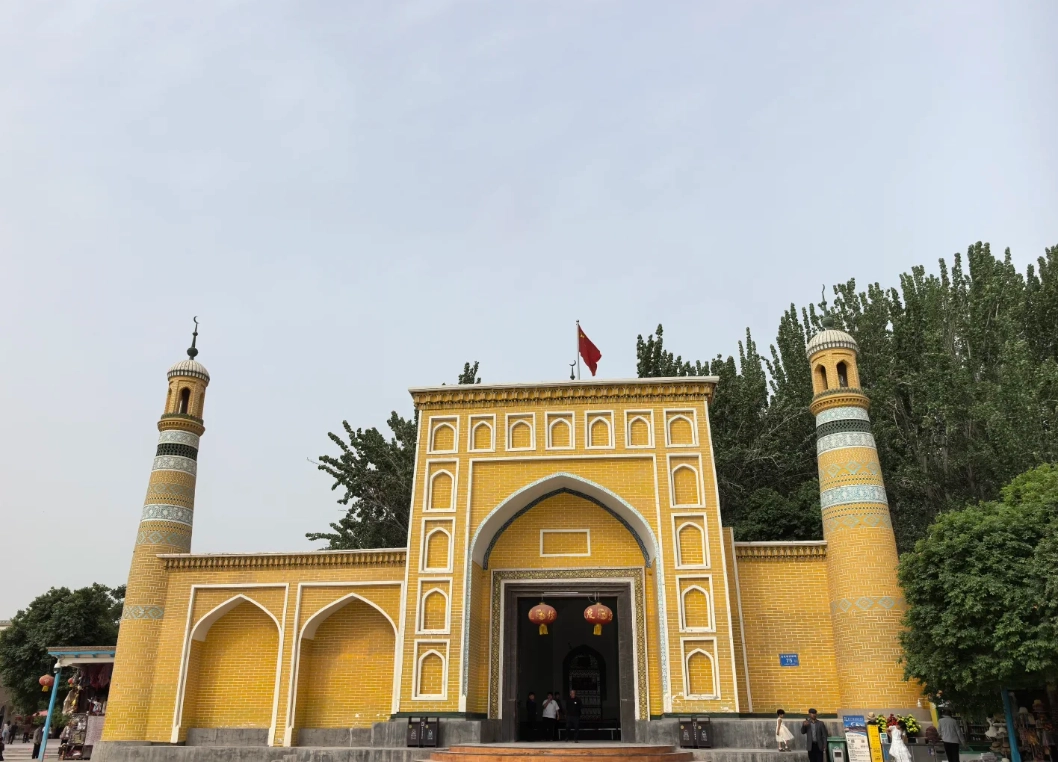
Etiquette – What to Wear, Do, and Avoid
This is a working mosque, not just a tourist site. Respect matters.
- Dress: Both men and women must cover shoulders and knees. Skintight clothes are not suitable either. If you show up in shorts and a tank top, you'll be turned away. I once had a guest who was refused entry – she had to buy an overpriced scarf from a street vendor to wrap around her legs.
- Shoes: You must remove your shoes before entering the main prayer hall. There are shoe racks near the entrance.
- Women: A headscarf is not obligatory for foreign tourists, but many women wear one out of respect. If you don't have one, borrow one at the entrance – they usually have a basket.
- Photography: You can take photos in the courtyard, but not inside the prayer hall. Respect the signboards.
- Silence: Keep your voice down. You may hear the call to prayer – it's a powerful moment, don't comment loudly.
Inside the Mosque – What You'll See
After passing through the massive gateway, you enter a large courtyard shaded by ancient poplar trees. The ground is paved with bricks, and there's a small pool in the center – a symbol of cleanliness. The main prayer hall is on your left, with its iconic golden dome.
Once you slip off your shoes and step inside, you'll notice the forest of wooden pillars – they divide the vast space into repeating arches that seem to stretch endlessly. The floor is covered in carpets, and the walls are lined with intricate arabesque tiles and calligraphy. Light streams in through the large windows, creating a peaceful, almost meditative atmosphere.
In the courtyard, you'll see elderly Uyghur men chatting on the steps, pigeons fluttering around a small tower – moments like these are what make the place feel alive. I always tell my guests to sit for five minutes and just watch. You'll see a side of China that most tourists miss entirely.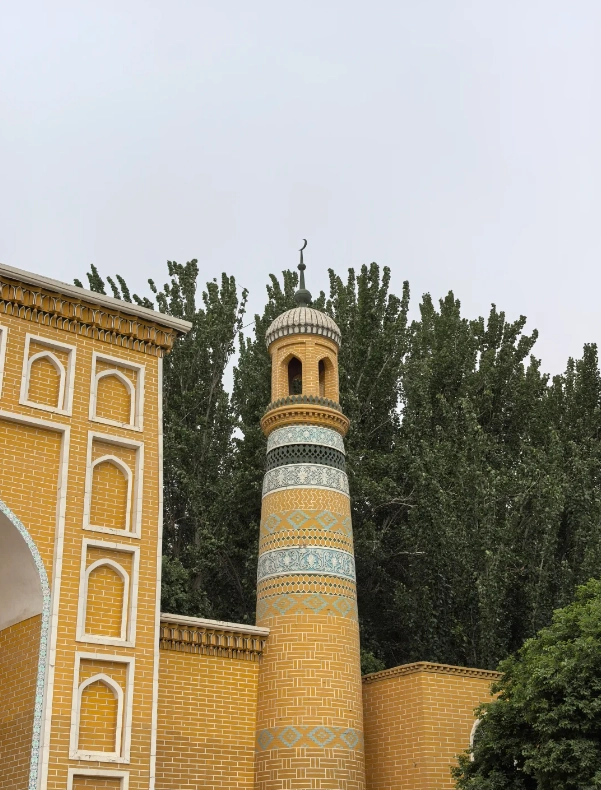
Best Time to Visit and Avoid the Crowds
Spring (April–June) and autumn (September–October) are the best seasons. The weather is pleasant and not too hot. Summer can be baking, often above 30°C, though the mosque's thick walls keep it cool inside.
Within any given day, the sweet spot is right after opening. The other chance is an hour before closing – around 18:30–19:30 – when tour groups have left and the light turns soft and golden for photography.
Avoid Chinese national holidays like the May Day or Golden Week (October 1–7). The mosque and its square will be packed with domestic tourists. Also, keep Friday afternoons free – the mosque is closed for prayer, and the square is a sea of worshippers, which is a fascinating cultural experience itself, but you won't be able to go inside.
Nearby Attractions and Food Stalls
Id Kah Square is the living room of Kashgar. On one side you have the mosque, and on the other, the labyrinthine lanes of the old city. You can easily spend half a day exploring the maze of mud-brick houses, artisan workshops, and endless food stalls.
Food recommendations: Right outside the mosque gate, there are vendors selling samsa (lamb pastries) fresh from the tandoor oven, and you'll find some of the best pilaf (risotto-like rice with lamb) in town. Try the nut-stuffed pastries that go for about 5 RMB each – I always finish one before stepping inside.
My personal must-try: a cup of sweet gunia tea from a roadside stand. It's a local blend with a faint herbal note, and it's perfect for cutting through the heaviness of the lamb dishes.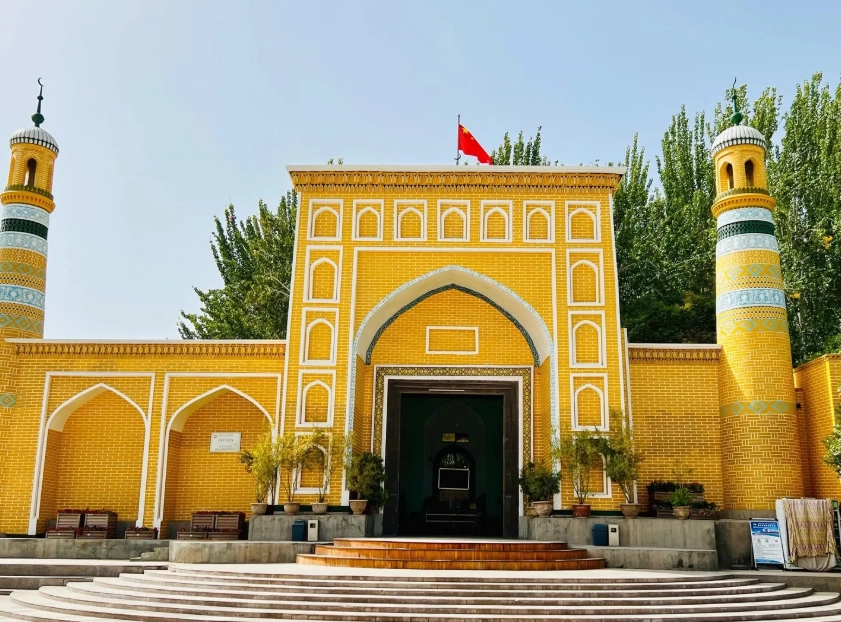
Common Mistakes to Skip
- Forgetting your passport: No passport, no entry. Even if you're with a tour guide, the guards at the gate will simply point you back to the hotel.
- Wearing shorts or sleeveless tops: Make a smart clothing choice in the morning, it saves you money and embarrassment.
- Relying on Google Maps: It's unreliable in this part of China. Use Apple Maps or an offline map. Download a translation app like Baidu Translate too.
- Not carrying cash: The ticket office might accept mobile payment, but the nearby street vendors rarely do. Have 50–100 RMB on you.
- Trying to visit during Friday prayers: You'll be turned away, so schedule accordingly.
FAQ About Visiting Id Kah Mosque
Final Verdict – Is It Worth It?
Absolutely. Id Kah Mosque is more than a photo op – it's a living piece of Central Asian history tucked inside the Chinese border. Even with the minor hassles of ticket window lines and passport checks, the experience of standing under that dome, surrounded by centuries of artistry, is unforgettable.
Spend at least an hour here. If you combine it with a slow walk through the old city and a bowl of noodle soup at the plaza, you'll leave with a real sense of Kashgar's soul.
This content has been fact-checked to ensure informational precision.





No comments yet.