 Jian Zhao
The scorching Kashgar sun was relentless. I watched a tourist in tank top and shorts walk toward the entrance of Id Kah Mosque. The guard's polite but firm 'no entry' was a wake-up call. Many visitors don't realize how important the dress code is here. Let me save you the embarrassment.
Id Kah Mosque dress code isn't just red tape — it's a sign of respect for a sacred space. Whether you're a backpacker or a luxury traveler, the rules are the same: cover your shoulders, knees, and avoid anything sheer or too tight. In short, dress like you're meeting your conservative grandmother.
Here's the catch: you can enjoy the stunning architecture and tranquil courtyard without breaking the rules. Stick with me, and I'll tell you exactly how to prepare, what to expect, and where to grab an emergency scarf if you forget.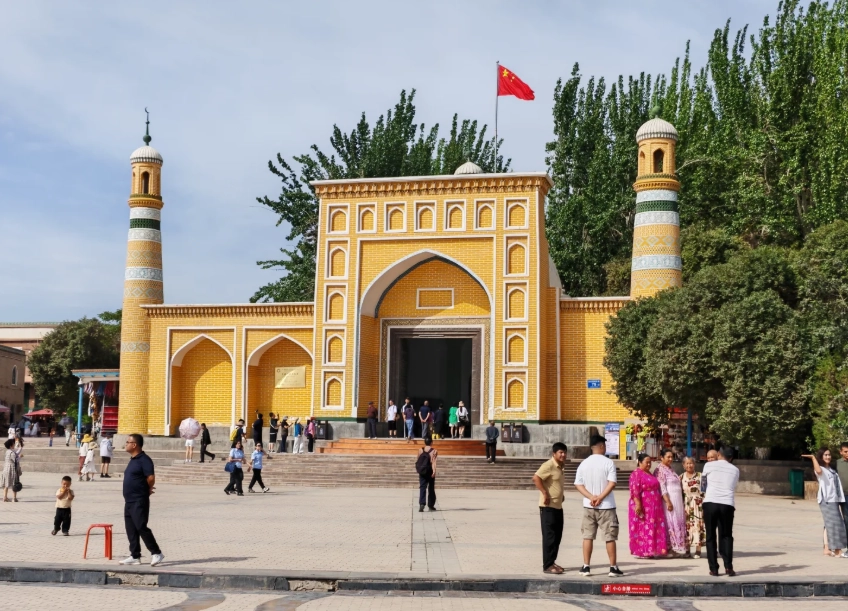
Why Does Id Kah Mosque Have a Dress Code?
Id Kah Mosque is not just a tourist attraction; it's an active place of worship. Built in 1442, it's the largest mosque in China and a center of Muslim life in Kashgar. For locals, the mosque is a link to their faith and heritage. When you visit, you're stepping into a living, breathing community.
The dress code isn't some arbitrary rule invented to confuse tourists. It's rooted in Islamic modesty, which asks both men and women to cover their bodies essentially. For many travelers, especially those from hot climates, the idea of covering up in 35°C heat sounds brutal. But trust me — cotton fabrics and loose fitting clothes make it manageable.
I've seen tourists turned away more times than I can count. And it's not just about shorts. Tight leggings, see-through fabrics, even shirts with offensive slogans can get you refused. The guards are polite but non-negotiable. Why ruin your day over a wardrobe faux pas?
What Is the Exact Dress Code at Id Kah Mosque?
Here's what you need to know before you queue up:
- Shoulders must be covered at all times. This applies to both men and women. Tanks tops, spaghetti straps, and off-shoulder tops are a no-go.
- Knees must be covered. Shorts and short skirts are not allowed, regardless of the gender.
- Clothing should not be sheer or see-through. Light linen is fine, but nothing that reveals your skin.
- Tops should not be too tight or low-cut. Modest, loose-fitting clothing is the safest bet.
- Headscarves: Not strictly required for women in the public courtyard, but if you enter the prayer hall, it's a sign of respect to cover your hair. I always suggest carrying a light scarf in your bag.
- Shoes: You must remove them before entering the main prayer hall. The tiled floor can be cold in winter, so pack a pair of thick socks.
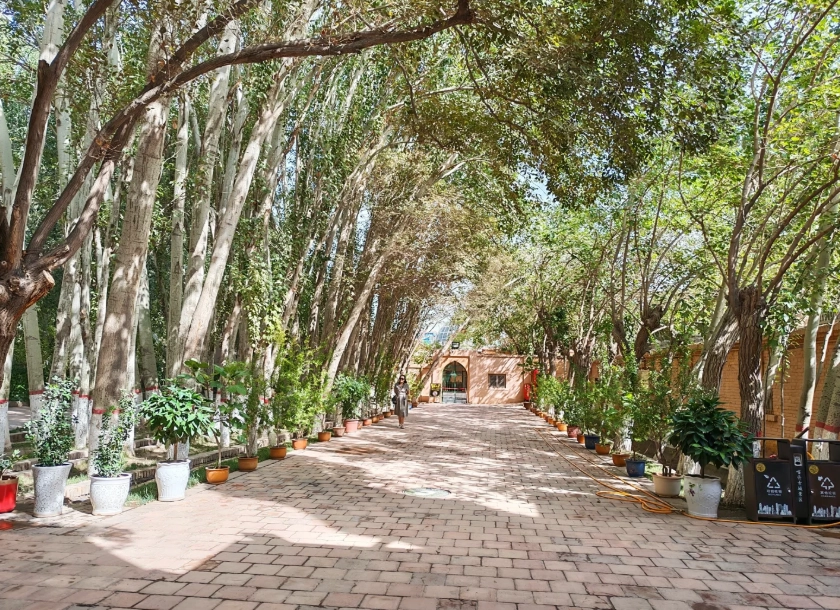
To make it crystal clear, here's a quick table:
| Item | Status |
|---|---|
| Shorts (men) | ❌ Not allowed |
| Sleeveless tops | ❌ Not allowed |
| Skirts above knee | ❌ Not allowed |
| See-through clothing | ❌ Not allowed |
| Long pants/trousers | ✅ Allowed |
| Long skirts | ✅ Allowed (past knee) |
| Long-sleeved shirts | ✅ Allowed |
| T-shirts with sleeves | ✅ Allowed |
| Headscarf for women | ⚠️ Recommended (optional) |
| Shoes | ❌ Remove at prayer hall entrance |
If you're still unsure, dress as if you're attending a formal religious service. It's better to be over-dressed than under-dressed.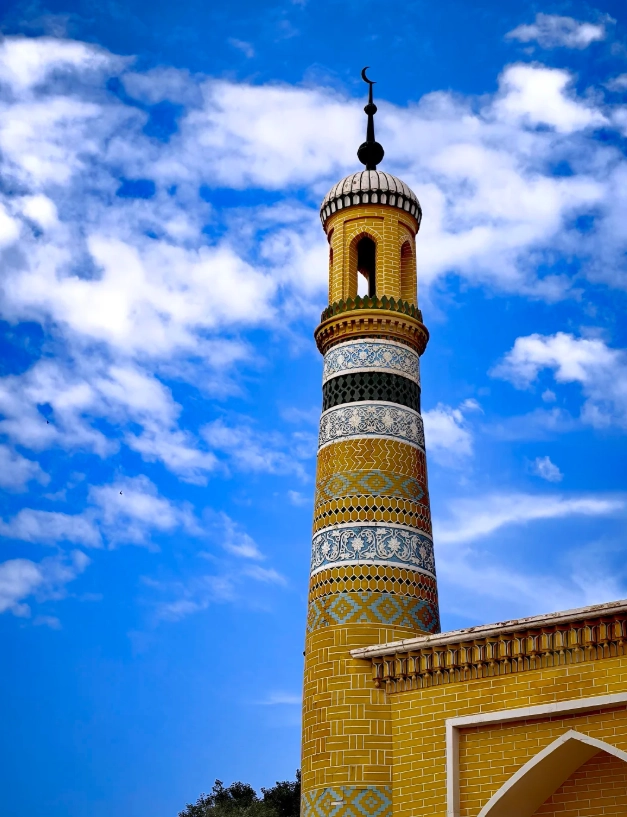
How Should Men and Women Dress Differently?
The rules are somewhat similar, but there are nuances.
For Men
Men should wear long trousers and a shirt that covers their shoulders. Cargo shorts are still shorts — leave them behind. A simple cotton shirt, a t-shirt, or a long-sleeved button-up paired with jeans or linen pants works perfectly.
For Women
Women should ensure their arms are covered to the elbow. Skirts and dresses are fine as long as they go past the knee. Pants are totally acceptable. Avoid low-cut necklines. Also, if you're planning to enter the prayer hall, bring a scarf. You can keep it around your neck and only put it on when required. I've worn a simple cotton scarf on every visit — it also acts as a sun shield in the courtyard.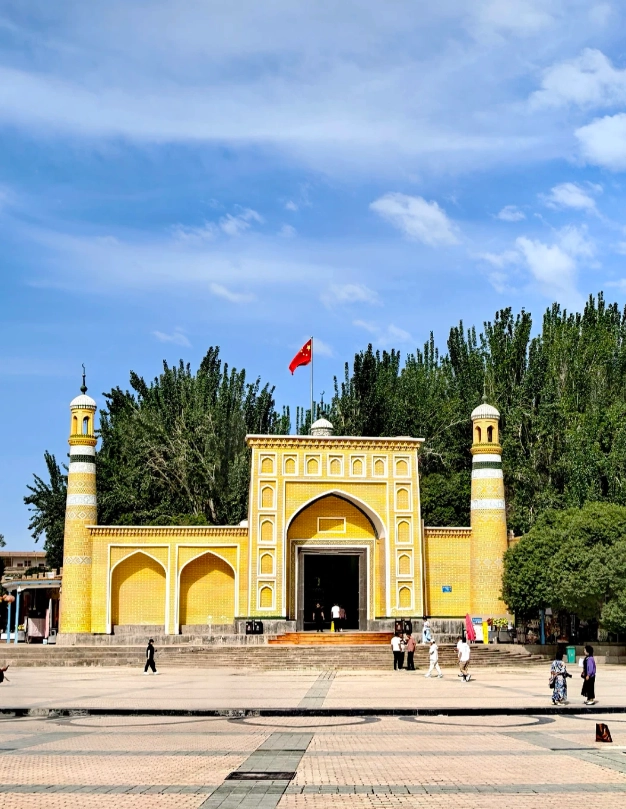
What Should You Bring or Buy Before Visiting?
If you arrive unprepared, don't panic. Kashgar's old town is a treasure trove of cheap textiles. Head to the nearby bazaar (about 200 meters from the mosque) and haggle for a scarf. Prices start around 10 yuan. I've bought dozens for my clients over the years.
Here's a packing list:
- A light, long-sleeved shirt or cardigan. Even in summer, mornings and evenings can be cool.
- Loose-fitting trousers or a long skirt. Jeans are fine.
- A scarf or shawl. Useful for women to cover hair, and for everyone to shield from the sun.
- Socks. You'll need them for the prayer hall.
- Non-slip shoes that are easy to remove.
Also, be mindful of the weather. In winter, the mosque courtyard is exposed, and the stone floors get icy. Dress in layers because the interior prayer hall can be warm in summer but chilly in winter.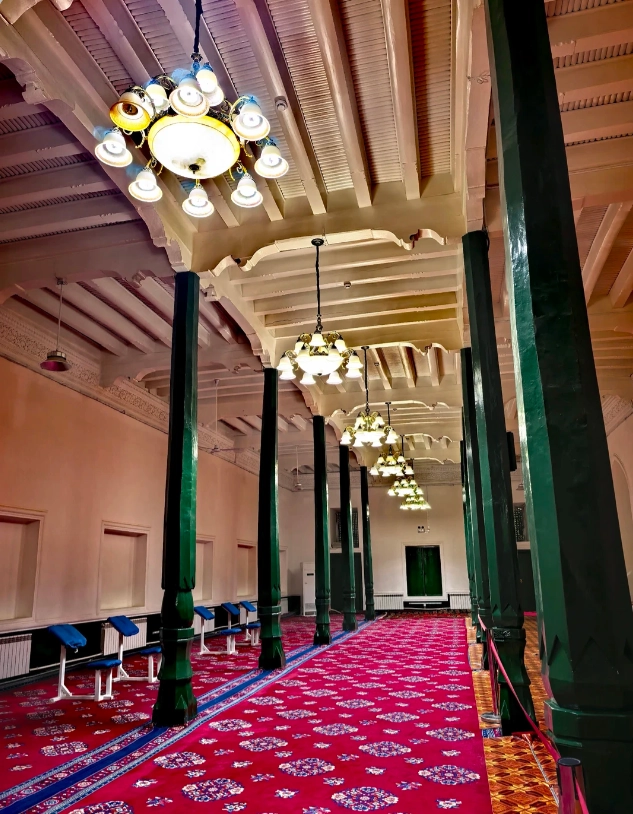
Insider Tips for a Smooth Visit
Now, let me save you from the rookie mistakes I've seen hundreds of times.
Best Time to Visit
The mosque opens around 8:30 AM and closes around sunset. I'd suggest arriving right at opening to beat the crowds. Midday sees a wave of tour groups, which can make the courtyard feel like a train station. The light in the late afternoon is also stunning for photos — it casts a golden glow on the yellow walls.
Tickets and Reservation
As of my last visit, entrance was 45 yuan for adults (children under 1.2m free). You don't generally need a reservation, but festivals and Friday prayers can draw huge crowds. If you're visiting on a Friday, note that the prayer service happens around 1:30 PM and tourists are not allowed to enter the prayer hall during that time. Actually, the entire inner courtyard might be closed. Double-check the schedule with your hotel.
Getting There
The mosque is at the heart of Kashgar's old town. Address: 9 Aidika Road, Kashgar Old City, Xinjiang. Use Apple Maps or AMap (the global version) to navigate — Google Maps simply doesn't work well in China. If you're taking a taxi, just show the driver this: 艾提尕尔清真寺 (Aídí Gǎ'ěr Qīngzhēnsì). The fare from Kashgar Railway Station is around 20 yuan. For train bookings, check the official China Railway website 12306.cn.
Payment
The ticket office accepts WeChat Pay, Alipay, and cash. But don't rely on cash for everything — some nearby shops are cash-only. For a stress-free experience, ensure your Alipay is connected to your international card. Or use a travel-friendly card that works globally.
Photography
You can photograph the courtyard, but tripods are often discouraged. Inside the prayer hall, photography is usually prohibited. Be respectful of worshippers. If they ask to be left out of shots, delete it.
Prayer Times
These change daily. If you hear the call to prayer, it's best to pause your walk and let worshippers pass. The mosque is busiest during Eid and Friday prayers, so plan accordingly.
Pro Tip: Carry a plastic bag in your backpack. When you enter the prayer hall, you'll take off your shoes. Instead of juggling them in your hands, store them in the bag. It saves you from the awkward shuffle when you're trying to photograph the gorgeous carpets.
For a fully guided tour that handles your transport and entrance tickets, check out Trip.com or Klook. I've used their services and they're reliable for foreigners.






No comments yet.