 Jian Zhao
In This Guide
Stand at the edge of Kashgar’s old city — and listen. The call to prayer echoes off sun-baked mud walls, a muffled, ancient hum. That’s your cue.
But here’s the thing: most foreign visitors mess up their trip to Id Kah Mosque completely. They show up at noon, in the oppressive heat, wearing shorts and tank tops, with absolutely no idea that the mosque respects prayer times — or that you might need to explain yourself at the entrance. I’ve seen it happen dozens of times.
The truth? The absolute best time to visit Id Kah Mosque is Friday morning, right after the morning prayer — or, any other day, before 10 a.m. That’s when the courtyard is quiet, the light is soft and golden, and you can actually soak in the calm instead of dodging selfie sticks.
Let me walk you through everything you need — from getting here to what to wear — so you feel like a guest, not a tourist.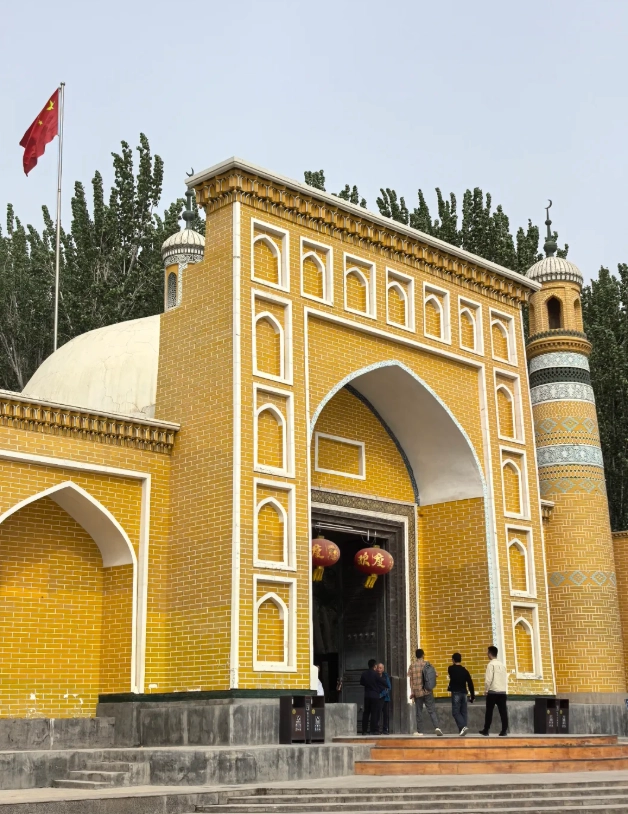
Why Visit Id Kah Mosque?
Id Kah Mosque is the largest mosque in China, holding a central spot in the heart of Kashgar's old town. It’s not just a tourist attraction — it’s a living piece of the city’s Uyghur culture. On Fridays, thousands of locals gather here for the weekly congregational prayer. The main courtyard can hold up to 20,000 worshippers, which is a sight in itself — even if you can only watch from outside.
But beyond the numbers, it’s the atmosphere that gets you. The yellow-tiled walls, the towering minaret, the ancient poplar trees — they’ve stood for centuries, watching dynasties rise and fall. For me, the mosque is the beating heart of Kashgar. I always tell my clients: if you skip Id Kah, you haven’t really seen Kashgar.
Quick Facts: Tickets, Hours, and Rules
| Detail | Information |
|---|---|
| Address | 14 Jiefang North Road, Kashgar, Xinjiang (喀什市解放北路14号) |
| Admission | Free (donations welcome) — but you may need to show your passport |
| Opening Hours | Typically 8:00 AM to 8:00 PM daily, but closed to visitors during prayer times (approx. 5 times per day). Check local sign or ask your hotel to confirm. |
| Dress Code | Both men and women must cover shoulders and knees. Women may be asked to cover their hair. |
| Photography | Allowed in the courtyard, but not inside the main prayer hall. |
Yes, it’s free — a rare thing in China’s tourist landscape. But that also means there are no ticket booths or management staff beyond the security checkpoint. The single rule that matters: do not enter the main prayer hall unless you are a Muslim or have explicit permission. It’s a strict place of worship, not a museum.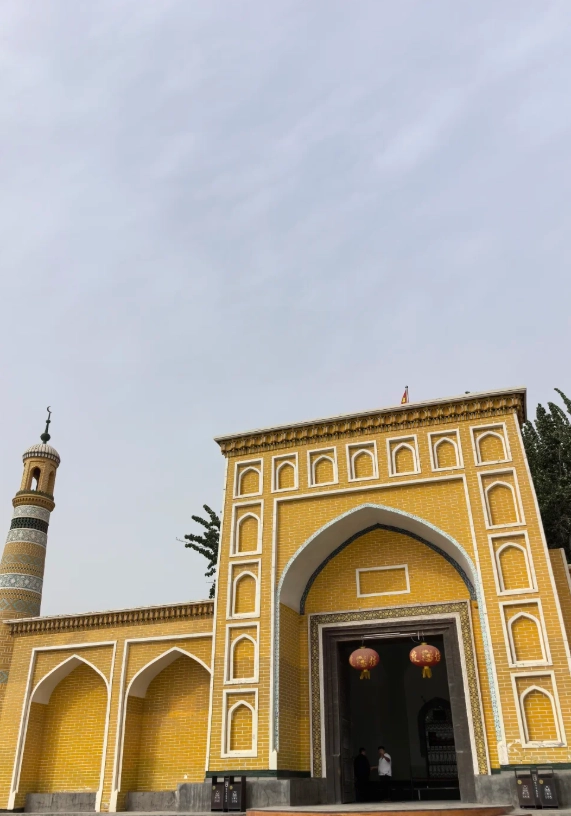
How to Get to Id Kah Mosque
From Kashgar Airport
The easiest way is to take a taxi — it’s about 20 minutes and costs around ¥30-40 (about $4-6). The airport is small, and there’s no train connection. Buses are available, but they are infrequent and don’t run directly to the old town. I always recommend a taxi for newcomers, especially if you have luggage.
If you prefer public transport, take bus line 1 or 2 from the airport and get off at the “Id Kah Mosque” stop. It’s a 5-minute walk from there. But honestly, the taxi is worth the extra yuan.
From Kashgar Railway Station
By taxi, it’s about 15 minutes, costing roughly ¥20-30. Take the exit from the station and follow the crowd of taxi drivers. There’s also a public bus (line 4) that goes to the old town, but you’ll still need to walk a bit. I usually suggest taking a taxi because the bus stop isn’t obvious and the old town can be confusing.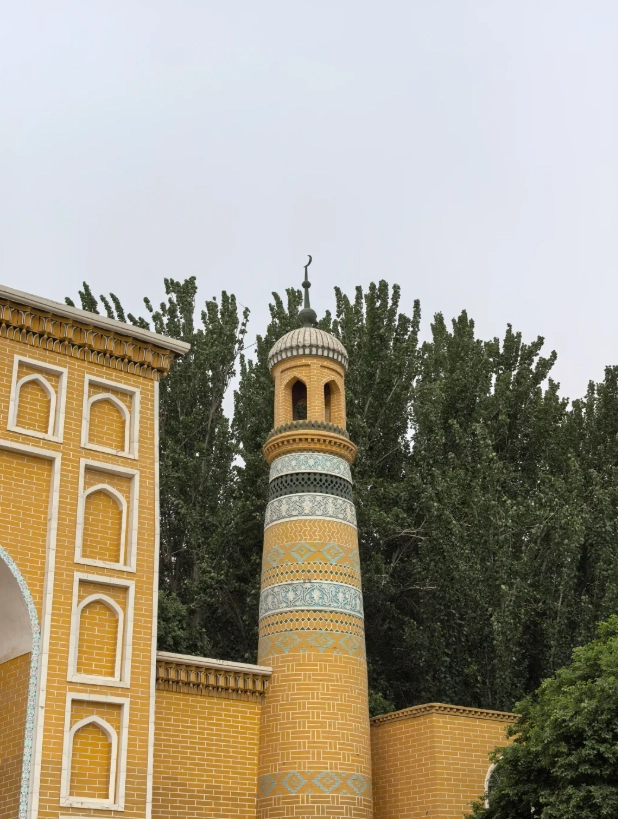
Navigating on Foot
If you’re already in the old town, the mosque is impossible to miss. Its iconic yellow-tiled facade and minaret rise above the mud-brick houses. Just head toward the sound of the call to prayer — or simply aim for the central square. Google Maps will lead you astray more than half the time in China, so use Apple Maps or AMap Global. Type in “Id Kah Mosque” and you’ll get the exact location. If you get lost, just ask a local for “Aitigar Qingzhen Si” (the Chinese name) — most people will point you in the right direction.
Best Time to Visit Id Kah Mosque
The golden rule: visit in the morning, before 10 AM, or on Friday after the midday prayer ends. On regular weekdays, the courtyard is peaceful before 10 AM — you’ll likely have the place to yourself. By noon, tour groups from China and abroad flood in, and the hustle begins.
Friday is the most special day. The weekly congregational prayer draws thousands of worshippers, and the surrounding streets become a lively bazaar. But as a non-Muslim, you can’t join the prayer — you can only watch from the edges. The best moment is right after the prayer ends, around 1:30 PM, when the crowd disperses and the courtyard empties. It’s a unique cultural experience, but be respectful and stay out of the way.
Avoid afternoons in summer — it gets brutally hot, and the stone courtyard radiates heat. For photography, the golden hour before sunset is also lovely, but you’ll be sharing it with countless selfie-takers.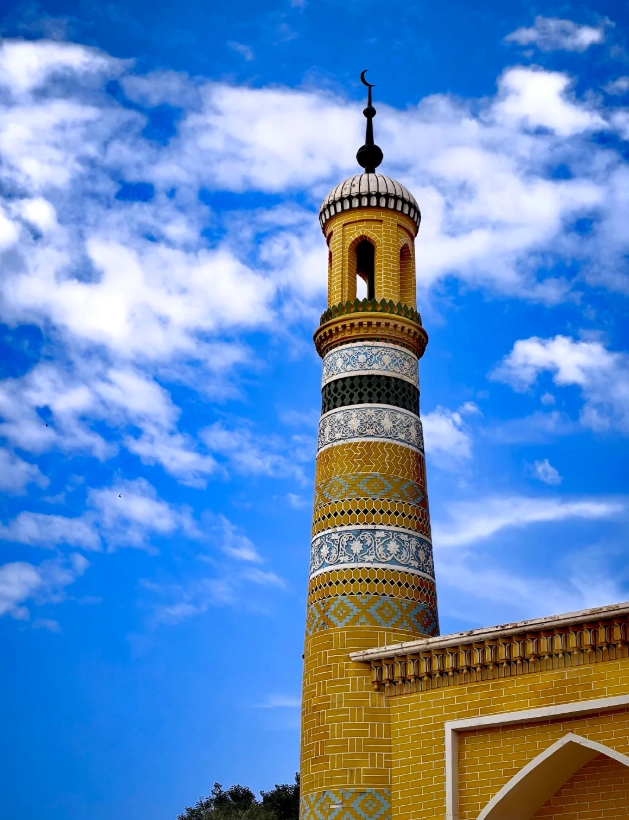
What to See Inside Id Kah Mosque
The Courtyard
The vast, tree-lined inner courtyard is the heart of the mosque. It’s paved with stone slabs and shaded by ancient poplar trees. As you step in, you’ll notice the beautiful symmetry — the east and west wings house pavilions for worshippers. Take a seat on the shaded platforms and just watch the locals come and go.
The Main Prayer Hall
This is the most striking part, but you can only view it from the outside. The hall is supported by 140 carved wooden pillars, painted in green, blue, and gold. The entrance is adorned with intricate Arabic calligraphy. Non-Muslims are not allowed inside — and I’ve seen security gently turn away curious tourists. Respect the boundary.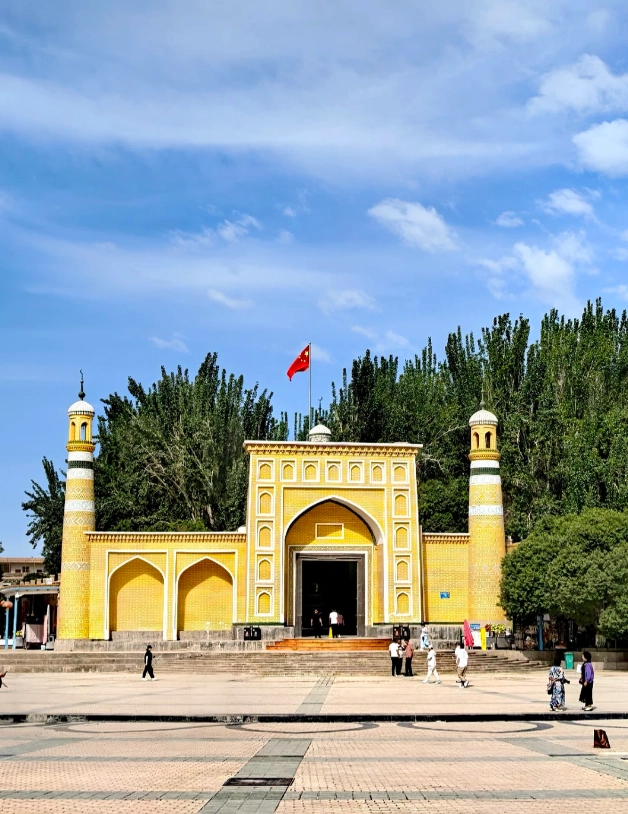
The Minaret
The 12-meter-tall minaret, visible from afar, is an iconic photo spot. From the courtyard, you can see its distinctive tower. There’s no climbing allowed, but it’s a great backdrop for photos. For a perfect shot, position yourself near the eastern gate.
Dress Code and Etiquette
Covering up is non-negotiable — even if you’re just in the courtyard. Both men and women must have their shoulders and knees covered. Women are often expected to wear a headscarf, though not strictly enforced. To be safe, I always carry a light scarf in my bag — it’s saved my clients more than once. If you show up in tank top and shorts, you’ll likely be stopped at the entrance and asked to buy a cheap scarf from a nearby stall.
Inside the mosque, keep your voice down, turn off your phone’s vibration, and never interrupt someone in prayer. When sitting, avoid stretching your legs toward the prayer hall. And leave your shoes at the designated rack if you enter a worship area — though this is less common in the courtyard.
Insider Advice: If you’re a woman, bring your own headscarf. The ones sold at the gate are flimsy and overpriced. Most hotels in Kashgar will happily lend you one if you ask.
Useful Tips for Foreign Tourists
Payments and Money
Alipay and WeChat Pay are the only accepted forms of payment in most places around the mosque. Cash is rarely used, and international credit cards are almost never accepted — even at the nearby shops. If you haven’t linked your card yet, do it before you arrive. The good news: the mosque itself is free, so you won’t need to pay at the gate. But for souvenirs or snacks, you’ll need a mobile payment setup.
I’ve seen travelers scramble to find an ATM only to realize it only accepts Chinese bank cards. Carry a small amount of cash as backup — RMB is fine — but expect to use your phone for everything.
Navigation and Translation
Download AMap Global (高德地图) before your trip — it’s the most reliable map in China. Apple Maps works okay, but AMap has better coverage for walking directions. Google Maps is blocked and inaccurate. For translation, use Apple Translate or Baidu Translate — they both work offline with downloaded packs.
English is not widely spoken in Kashgar. Even at hotels, front desk staff might struggle. Always have your destination written in Chinese on your phone. I make it a habit to save a screenshot of the mosque's name and address in both Chinese and Uyghur (the local script).
VPN and Connectivity
If you plan to use Google services or any blocked apps, you must have a VPN installed before entering China. Without it, you’ll have no access to Google, Instagram, or WhatsApp. China’s firewall is real, and after landing, downloading a VPN is tricky. Set one up before your flight, and make sure it works on both your phone and laptop. Also, buy a local SIM card or eSIM with data — most international plans don't work well in remote Xinjiang.
The WeChat Reservation Hassle
Let’s be honest — the entire process of booking attractions in China can be a digital nightmare. For Id Kah Mosque, you might be asked to show a reservation QR code on certain days, especially during holidays. Navigating the WeChat mini-program in pure Chinese is painful, even for me. Here’s the shortcut: ask your hotel receptionist to help you reserve. They do it every day and know the steps. Alternatively, book through Trip.com or Klook, which usually offer English listings for Kashgar tours that include mosque entry.
Nearby Attractions: Make a Day of It
Id Kah Mosque sits right on Jiefang North Road, the main artery of the old town. Within a 10-minute walk, you can explore:
- Kashgar Old Town — a maze of narrow alleys, vibrant bazaars, and centuries-old homes. Get lost in it.
- Zhiyuan Bazaar (Central Bazaar) — the biggest market in the region, selling everything from spices to Uyghur hats. It’s chaotic but fascinating.
- Kashgar Grand Bazaar — a short taxi ride away, this is one of the largest markets in Central Asia. Thursday is the busiest day when rural traders flock in.
I usually suggest spending half a day on the mosque and old town, then heading to the Grand Bazaar for lunch. Try the local laghman noodles or samsa (meat pies) — they’re unforgettable.
Frequently Asked Questions
Can non-Muslims enter Id Kah Mosque?
Yes, the courtyard and side buildings are open to non-Muslim visitors. The main prayer hall, however, is strictly for worshippers. Security guards are stationed at the entrance, and they will politely stop you if you try to walk in during prayer times. If you’re respectful and follow the rules, you’ll have no problem visiting.
Is Id Kah Mosque open on Fridays?
The mosque is open every day, including Friday, but Friday access is different. The main congregational prayer happens around 1:00 PM and lasts about 30 minutes. Visitors are usually asked to wait outside until the prayer concludes. The best strategy is to arrive after 1:30 PM — the crowd will have thinned, and you can explore without jostling.
Do I need to book tickets in advance for Id Kah Mosque?
In normal times, no pre-booking is required — entry is free. But during major events or national holidays, local authorities may require visitors to show a reservation code on their phone. Rather than wrestling with the Chinese app, I tell my clients to simply ask their hotel to make a reservation for them if they’re traveling during those busy periods. Better safe than sorry.
Is it safe to visit Id Kah Mosque as a foreigner?
Absolutely safe. Kashgar is a well-policed city with a heavy security presence. You’ll pass through metal detectors at the mosque entrance. The only thing to be aware of is the local cultural sensitivity — always dress conservatively and avoid political discussions. Otherwise, locals are friendly and used to visitors. I’ve walked these streets alone and with groups for years without any issues.
What is the best way to get a photo of Id Kah Mosque without crowds?
Come before 9 AM on a weekday. The courtyard opens early, and the golden morning light hits the minaret perfectly. If you take a tripod, set it up near the eastern gate — you’ll get a clear view of the yellow-tiled facade without a single tourist in the frame. In the afternoon, the sun positions directly behind the minaret, causing harsh shadows.
Verified and fact-checked by the editorial team.






No comments yet.