 Tao Xu
I’ll never forget the first time I brought a group to Friendship Pass. Two tourists spent twenty minutes bargaining for wooden flutes near the parking lot—and nearly missed the actual border gate. The pass is not just a photo stop. It’s a living piece of Chinese frontier history, and if you go without a plan, you’ll leave frustrated.
Here’s the honest truth: Friendship Pass is a half-day trip at most. You don’t need a full itinerary. You need to know which side of the gate to stand on, what to bring, and how to get here without falling for a taxi scam. I’ve done this trip dozens of times, and in this English guide I’ll walk you through everything—tickets, transport, border crossing, and the little details most visitors miss.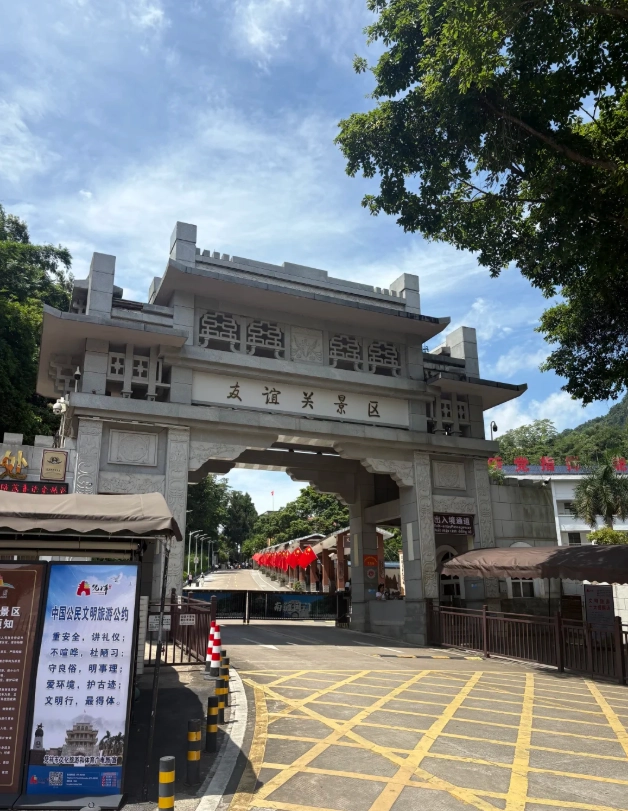
Why Visit Friendship Pass? A Historical Border Crossing with a Modern Edge
For a lot of travelers, the appeal of Friendship Pass is its raw history. It sits on the China-Vietnam border, about 18 km south of Pingxiang city. In Chinese, it’s called Youyi Guan (友谊关). For centuries, this was the main gateway between Central China and Southeast Asia. It was originally known as Zhennan Pass and has seen major conflicts, including the Sino-French War and the Vietnam War era.
But honestly, the site itself is compact. You can walk across the entire scenic area in under an hour. The main highlight is the old fortress gate with a towering arch. It may not be dramatic like the Great Wall, but standing on the actual border line—with Vietnam on the other side—is a unique experience you won’t get anywhere else.
I’ll be blunt: if you’re expecting a huge park or elaborate exhibition, you’ll be disappointed. But if you love border towns, geopolitics, or just want a day trip from Nanning, it’s well worth the journey.
The best time to visit Friendship Pass is from October to April, when the temperature is mild. Summer can be scorching, and the border plaza has no shade. I always carry a small umbrella for clients in July and August.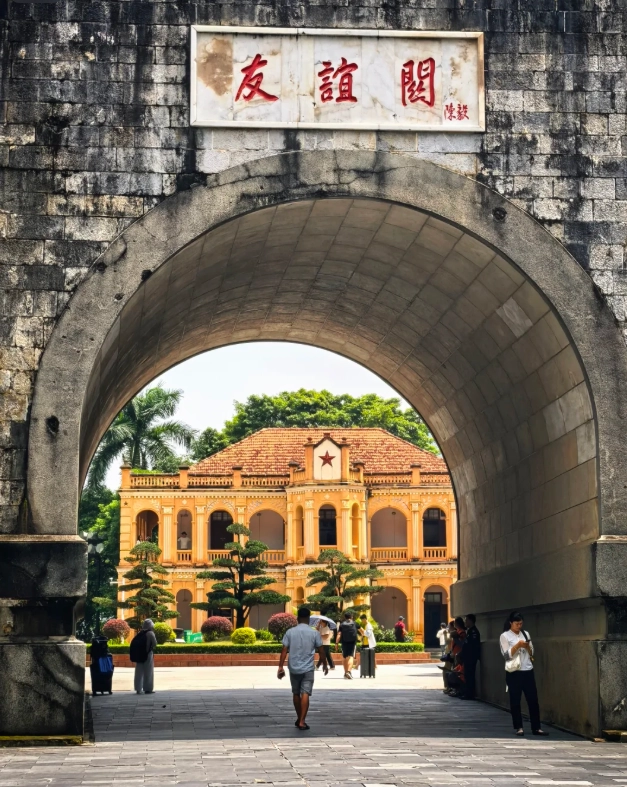
How to Get to Friendship Pass from Nanning and Pingxiang
Getting to Friendship Pass requires two legs. First you get to Pingxiang (凭祥), then you take a short trip to the border gate. Here’s how I usually tell my clients to plan it.
From Nanning to Pingxiang: Train vs Bus vs Private Transfer
The most comfortable way to reach Pingxiang from Nanning is by high-speed train. The ride takes around three hours from Nanning East Railway Station to Pingxiang Railway Station. Tickets cost about ¥100–¥150 and can be booked on Trip.com or the official 12306 app. If you’re on a budget, the long-distance bus from Langdong Station runs every hour or so and takes roughly the same amount of time — a bit longer if traffic hits. A private transfer or Didi will set you back ¥400–¥600 and saves you the hassle of carrying luggage through stations.
Here’s a quick comparison I give to clients:
| Route | Transport | Approx. Duration | Approx. Cost | Best For |
|---|---|---|---|---|
| Nanning to Pingxiang | High-speed train | 3 hours | ¥100–¥150 | Most travelers |
| Nanning to Pingxiang | Long-distance bus | 3–4 hours | ¥80–¥100 | Budget backpackers |
| Nanning to Pingxiang | Private car / Didi | 2.5–3 hours | ¥400–¥600 | Families / groups |
I always tell my clients to book the earliest train departure. Even a 9 a.m. arrival in Pingxiang leaves you plenty of time to grab lunch before heading to the pass.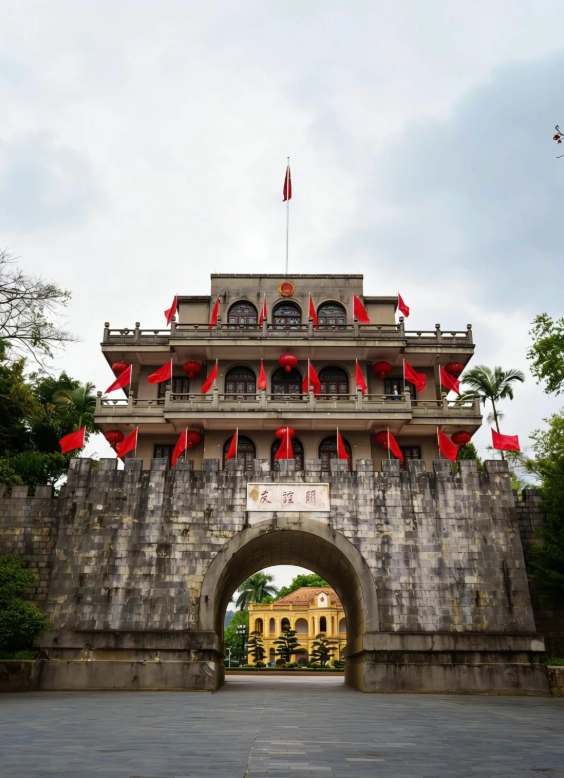
- Book a train on Trip.com or 12306 using your passport.
- Take the earliest high-speed train from Nanning East to Pingxiang Railway Station.
- Exit the station and use DiDi to quote a ride to Friendship Pass, or agree on a taxi fare not exceeding ¥60.
- Arrive at the ticket office, show your passport, and pay with cash or Alipay.
- Walk through the gate, explore the scenic area, and return to Pingxiang for lunch before catching the afternoon train back.
From Pingxiang to Friendship Pass: The Final 15 km
The easiest and safest way to cover the last 15 km is to take a taxi or use DiDi. Expect to pay between ¥30 and ¥50 for the 20–30 minute drive. You can also catch a local public bus from Pingxiang Bus Station, but the schedule isn’t announced in English and the stop is easy to miss. Unless you’re really trying to save every yuan, I’d skip the bus and just call a car.
If you land at Pingxiang Railway Station, walk out toward the main road—you’ll see a string of taxis. They know the route. Make sure the driver turns on the meter, or agree on a price before you get in. If the driver says 'fixed price' of ¥80 or more, that’s double what it should be. Just walk to the next car.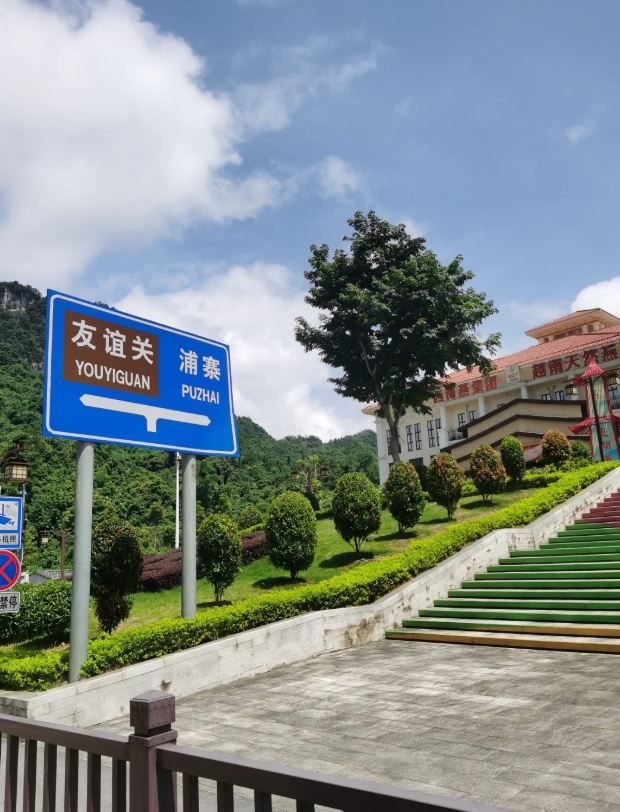
Friendship Pass Tickets, Opening Hours, and Reservation System
Here we go: the ticket process is usually a painless if you know what to expect.
Ticket Price and Payment Methods
Friendship Pass is not an expensive attraction, but the payment system can be a headache. As of my last visit, tickets are around ¥50 per person. Children under 1.2 meters and seniors over 65 enter free with a valid ID. But the ticket booth only accepts Alipay, WeChat Pay, and cash. International credit cards almost never work at the window.
So here’s the deal: bring small RMB bills (a mix of ¥10 and ¥20) with you. Even if you have Alipay set up, there’s always a chance the mobile signal or the card reader is out of order. It’s rare, but it happens.
Reservation Rules and Opening Hours
You don’t usually need a reservation on regular days, but during Chinese public holidays the system changes. The pass is open daily from 08:00 to 18:00, with last entry around 17:30. On national holidays (Chinese New Year, National Day), the government often requires pre-booked, time-slot tickets. In that case, use Trip.com or Klook to buy in advance with your passport number. At the entrance, you must show your physical passport — a photo of it won’t be accepted.
- Open hours: 08:00–18:00 (last entry 17:30)
- Regular days: walk-in tickets available
- Chinese holidays: pre-booking strongly recommended
- Required documents: physical passport
One more thing: the ticket office can have long lines during weekend mornings. If you arrive before 09:00 on a Saturday, you’ll be fine. By 10:00, expect a 15–20 minute wait.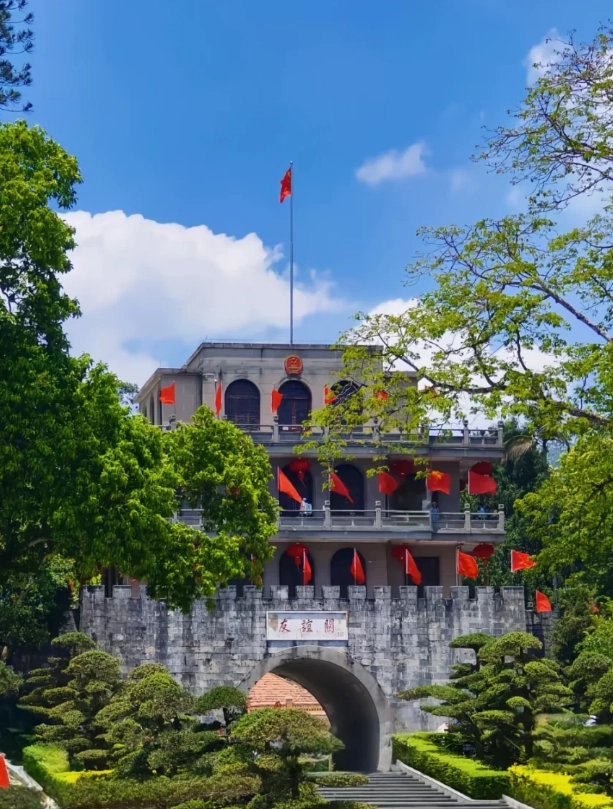
What to See Inside the Friendship Pass Scenic Area
Once you have your ticket, be ready to walk straight through the gate building. Most people stop right there for photos, but there’s a bit more to explore.
The Main Gate and Border Line
The undisputed centerpiece is the three-tiered gatehouse that forms the actual border crossing. You can stand right at the yellow line where China meets Vietnam. Guards will watch, so be respectful. Photography is allowed for the gate, but not for the military personnel or checkpoint areas. If a guard waves you off, just lower your camera. You’ll see a stone pillar with 'Friendship Pass' in Chinese characters—that’s the most famous photo spot.
Under the main arch, you’ll find a small plaque listing the historical battles. It’s worth taking a minute to read, even if the English is broken.
The Old Fortifications and a Small Museum
Behind the gate, a short flight of stone steps leads up to the old wall and a small display area. It’s not a proper museum, but you’ll see old cannons and a few bilingual plaques explaining the Sino-French War. I always take my groups up here because from the top you get a wide view of the entire pass and the Vietnamese countryside rolling away in the distance. It’s peaceful in a strange way, considering how heavily guarded it is.
I once spent twenty minutes just watching the yawning gap between the two countries from the wall. There’s something about standing at an international boundary that makes everyone stop talking. Even the loudest tourists get quiet.
The view from the top of the wall is easily the best photo spot, but the railings are low, so keep a close eye on kids.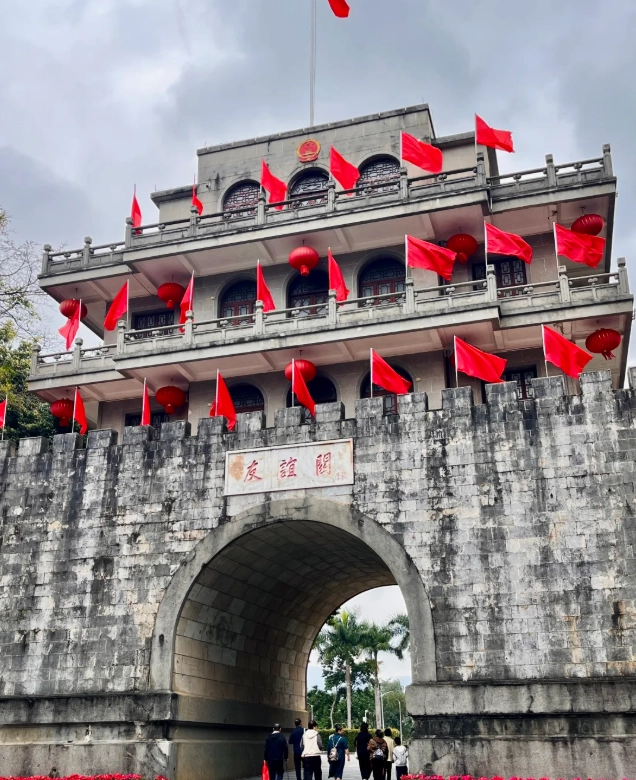
How to Cross the Border into Vietnam from Friendship Pass
So you want to actually step into Vietnam? Okay, let’s talk about what that involves.
Do You Need a Visa?
If your plan is to step into Vietnam, you absolutely need a valid visa in advance. The crossing at Friendship Pass works for pedestrians. You walk through Chinese exit procedures, cross a short covered bridge, and enter Vietnam at Dong Dang. But without a visa, Chinese exit officers will politely turn you back. They won’t let you 'just stand' on the bridge.
I don’t recommend trying a day trip to Vietnam unless you have both your Vietnam visa and your Chinese re-entry visa sorted. Check the latest visa rules for your nationality, because they change often. For many Western passport holders, Vietnam’s e-visa can be applied for online and takes about 2–3 working days.
If you just want the experience of being at the border without crossing, stay on the Chinese side and walk right up to the checkpoint barrier. You’ll be close enough to see the Vietnamese soldiers across the way. Actually, be careful with that — don’t point your camera toward the Vietnamese side. The border guards on both sides are not thrilled about that.
Accessibility Tips for Friendship Pass
The Friendship Pass scenic area is compact and mostly flat, but there are stairs to the old wall. The main gate and plaza are wheelchair accessible in dry weather. However, the stone steps to the upper fortification are steep and have no ramp. I’d suggest allowing extra time if you’re traveling with seniors or small children. There are restrooms near the ticket office, but they get dirty during peak hours. Use the restrooms at the parking lot or in Pingxiang before you come.
Insider Tips for Beating the Crowds and Getting Great Photos
Best Time to Arrive
The golden window is between 08:00 and 10:00 in the morning, before the tour groups roll in. Most group tours from Nanning arrive around 10:30, so if you get here at opening you’ll have the place almost to yourself for an hour. The light is also better for photos in the morning if you’re facing the gate from the plaza. By afternoon, you’re shooting directly into the sun and everyone squints in your photos.
Pro Tip: If you only have 24 hours in Nanning, take the earliest train to Pingxiang, drop your bag at the left-luggage office near the station, and head straight to the pass. You’ll be back in Nanning by dinner with plenty of time left over.
What to Bring and What to Avoid
Bring your passport, some cash, and a fully charged phone with an offline map. Here’s my practical packing list:
- Passport — non-negotiable for the ticket and entry.
- Cash — around ¥100 in small bills for tickets and drinks.
- Offline map — download AMap or Apple Maps in English. Google Maps will mislead you around this border area.
- Sunscreen and water — there is almost zero shade on the plaza, and it gets hot on clear days.
- VPN and translation app — Google, WhatsApp, and many online tools are blocked in China; set up a VPN before you arrive and download a translation app like Apple Translate or Baidu Translate.
And things to avoid:
- Don’t take photos of border guards, military vehicles, or the Vietnamese checkpoint. It’s not worth the risk.
- Don’t eat at the restaurants right outside the parking lot. Prices are nearly double what you’ll pay in Pingxiang town. Just wait.
- Don’t agree to 'tour packages' from unlicensed guides. I’ve seen tourists pay ¥200 for what is essentially a 20-minute walk with a guy who doesn’t speak English. Stay independent.
FAQ: Practical Answers to Your Friendship Pass Questions
Verified and fact-checked by the editorial team.





No comments yet.