 Tao Xu
What's Inside
- Why Mingshi Countryside Photography Spots Are Worth the Trip
- What Is the Best Time to Photograph Mingshi Countryside?
- Top Photography Spots in Mingshi Countryside (With Exact Locations)
- How to Get to Mingshi Countryside (and Avoid the Tourist Bus Trap)
- What Photography Gear Should I Pack for Mingshi?
- Practical Tips: Payment, Navigation, and Booking for Mingshi Countryside
- FAQ: Mingshi Countryside Photography Spots
- Final Thoughts from a Local Guide
Stuck at the gate of Mingshi Countryside photography spots with your camera? I've been there—literally. For years I've brought clients to this obscure bend of the Karst landscape in Guangxi, and the first timers almost always make the same mistake: they race to the riverbank at noon, fry their sensors, and leave with flat, hazy shots. So here's the ultimate truth: the magic happens after 4 PM, when the sun tilts and sets the rice paddies on fire. In this guide, I'll show you the exact spots that work, the times that matter, and the common pitfalls that will waste your day.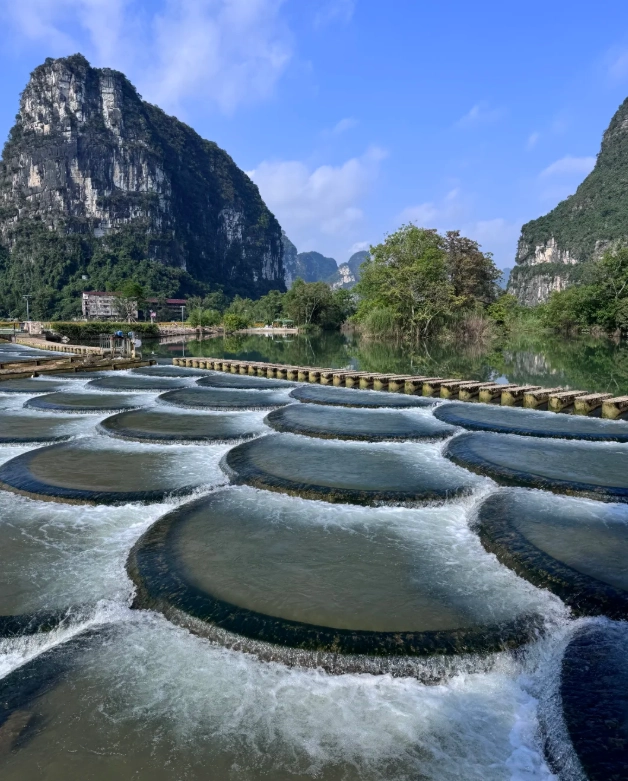
Why Mingshi Countryside Photography Spots Are Worth the Trip?
Mingshi Countryside sits in the heart of the Daxin County karst region, about 30 kilometers from the famous Detian Waterfall. Unlike the crowded Guilin or Yangshuo, this place feels like a secret—even on weekends. The landscape is a collage of conical peaks, winding rivers, and carpeted rice paddies that turn golden in the late afternoon. For photographers, it's a goldmine waiting to be shot.
But here's a catch: most photo guides focus on Detian and treat Mingshi as a stopover. That means the photography spots here are not thoroughly documented. The locals are friendly but not always helpful for camera setups. So if you want the shots that win contests, you need a plan.
What Is the Best Time to Photograph Mingshi Countryside?
If you take one tip away, let it be this: shoot early morning or late afternoon—never midday. The daylight hours between 11 AM and 3 PM are brutal. The sun sits directly above, creating harsh shadows and washed-out colors. The rice fields reflect sunlight like a mirror, and you'll lose all the texture.
In the morning, around sunrise (6:30–7:30 AM depending on the season), a soft mist hangs over the river. The peaks look layered, and the water is calm, giving you perfect reflections. This is my personal favorite time because tourist groups haven't arrived yet. You'll have the whole pier almost to yourself.
In the late afternoon, from 4:30 PM to sunset (around 6:30 PM), the light turns warm and golden. The karst peaks cast long shadows, and the river glitters. This is the time when the rice fields glow with an orange tint that looks almost unreal. But the moment the sun dips below the ridge, the light changes within minutes. So set up early, frame your shot, and wait.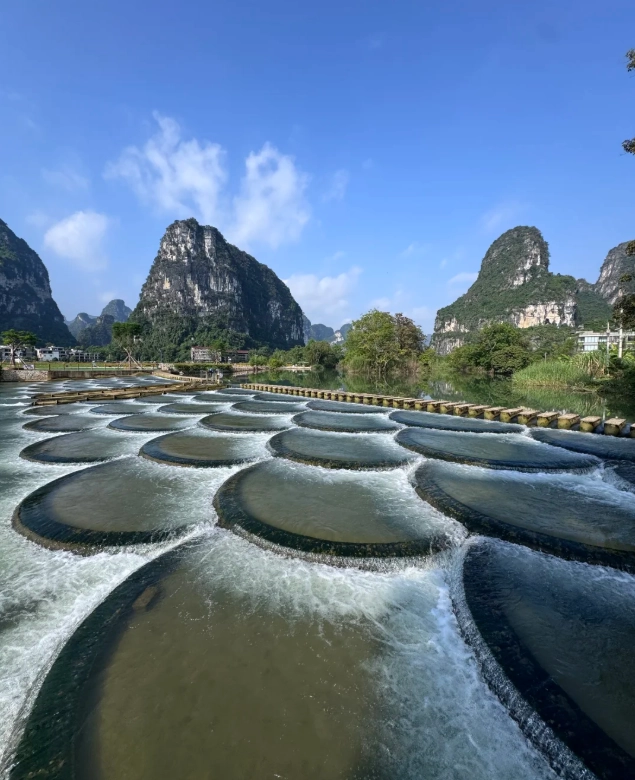
Top Photography Spots in Mingshi Countryside (With Exact Locations)
1. The Bamboo Raft Pier at Sunset
The simplest way to get a classic Mingshi shot is from the bamboo raft pier, located near the main gate. Head to the end of the wooden dock. From here, you have a straight view of the river curving between two sharp peaks. The best time is sunset, when boats return and the water is equally still. Use a narrow aperture (f/8–f/11) to keep everything sharp.
2. The Rice Field Ridge Near Bridge #2
Walk past the main scenic area and find the second bridge crossing the river—locals call it 'Bridge #2.' Right after the bridge, turn left onto a narrow dirt path that runs along the rice field ridge. This spot gives you foreground leading lines into the karst towers. In May and September, the rice is green or golden, adding a burst of color. I've had my best wide-angle shots here.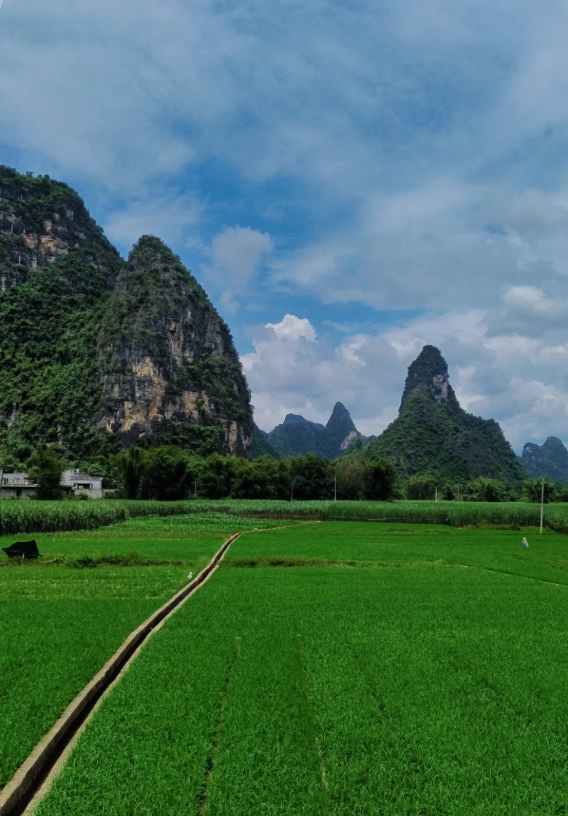
3. The Bluff Above the Village—No Hiking Required
Most visitors don't realize there's a gentle hill right behind the village guesthouses. Look for a paved lane behind the Mingshi Artist Village sign. After a 10-minute walk, you reach a flat bluff that overlooks the entire valley. This is the only spot where you can capture the full panorama of the winding river and the grid of rice paddies. Bring a telephoto to compress the layers.
Each spot is accessible without a guide. But expect mosquitoes near the river during summer, and the dirt path can be muddy after rain.
How to Get to Mingshi Countryside (and Avoid the Tourist Bus Trap)
Most guides will tell you to take a bus from Nanning to Daxin, then change to a local minibus. That process is messy, time-consuming, and will likely make you miss the golden hour. I always tell my clients to hire a private car or join a small group tour. Here's a quick comparison:
| Mode | Duration | Cost (per person) | Convenience | Best For |
|---|---|---|---|---|
| Private car from Nanning | 3.5–4 hours | Around 400–500 RMB one-way | High—door-to-door, flexible stops | Photographers needing sunrise/sunset flexibility |
| Bus + minibus | 5–6 hours | Around 120 RMB | Low—fixed schedules, crowded | Budget travelers with spare time |
| Tour from Chongzuo | 2 hours | Around 300 RMB | Medium—shared van | Solo tourists who want a guided day trip |
If you must take public transport, take a long-distance bus from Nanning Langdong Station to Daxin County (every 30 minutes from 7 AM to 6 PM). Then, transfer to a local minibus heading to Mingshi (about 40 minutes). The last minibus back leaves before 5 PM, so plan to stay overnight if you want sunset.
Address to show to the driver: 广西崇左市大新县堪圩乡明仕村 (Mingshi Village, Kanwei Township, Daxin County, Chongzuo City).
For navigation, forget Google Maps—it's inaccurate in this remote area. Use Apple Maps and search for 'Mingshi Village' or the Chinese name '明仕田园'. Better yet, download offline maps or use AMap (高德地图) which works well even with spotty signal.
What Photography Gear Should I Pack for Mingshi?
You don't need a truckload of gear. But there are a few essentials that will make a real difference:
- Wide-angle zoom (16–35mm) for the rice field ridges and panorama shots.
- Telephoto (70–200mm or even 100-400mm) to compress the layers of mountains and capture reflections from a distance.
- Sturdy tripod for long-exposure shots of the water and for sunset when light drops.
- Circular polarizer filter to cut glare off the water and boost color saturation.
- Spare batteries and memory cards —there are no camera shops nearby.
Leave your drone at home, unless you have a permit. The area is near a border zone, and local police may stop you. I've seen several drones confiscated at the entrance gate.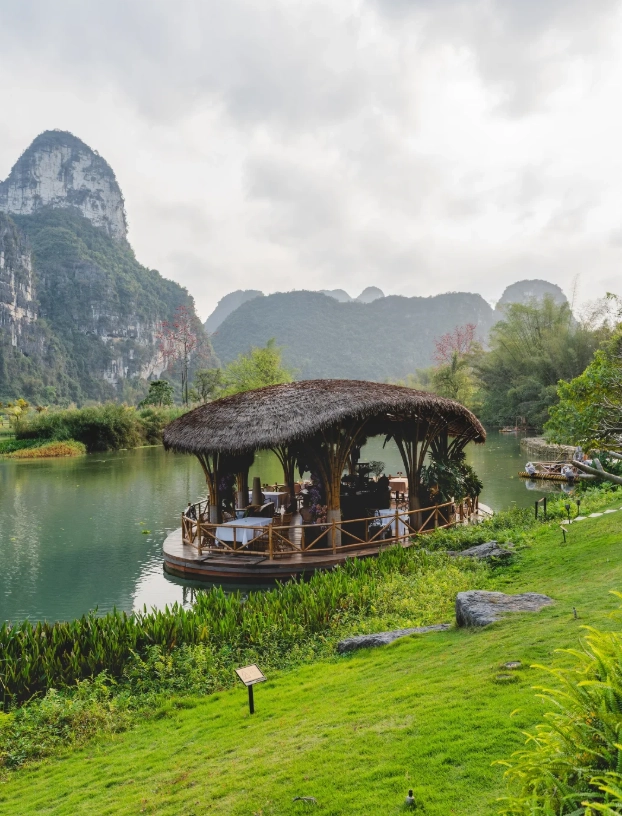
Practical Tips: Payment, Navigation, and Booking for Mingshi Countryside
Here's the thing no one tells you about remote Chinese attractions: payment is almost entirely mobile-based. Bring your Alipay or WeChat Pay linked to an international card. Cash is rarely accepted at tickets and restaurants—though you might find one or two family-run shops that take it, they won't have change for large bills. International credit cards are practically useless in the park.
For booking, you usually don't need a pre-booked ticket for Mingshi (unlike Detian Waterfall). Just walk up and pay. But in peak season (April–October), the ticket office line can get long. To save time, buy through Trip.com or Klook—they use your passport number to secure entry and you can skip the line.
Another layer of red tape: most travel apps require a Chinese phone number for WeChat Pay. If you only have Alipay, you're fine. If not, get your hotel to call the ticket office and reserve under your name—they'll usually do it for free.
Finally, don't forget a VPN. Google, Gmail, Instagram, and WhatsApp are blocked. Set up a reliable VPN before you arrive. Download an offline translation app like Apple Translate, because even the locals at the ticket booth rarely speak English.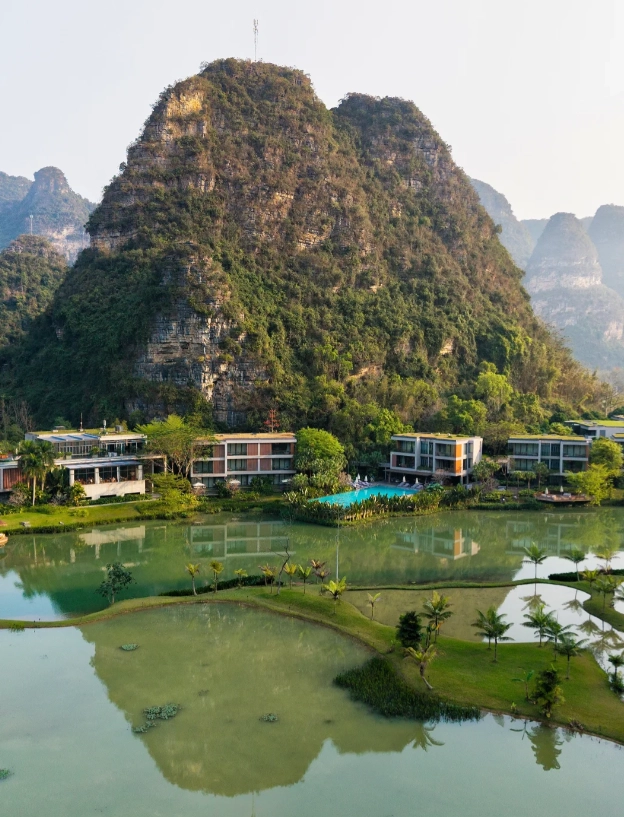
FAQ: Mingshi Countryside Photography Spots
Final Thoughts from a Local Guide
Mingshi Countryside is a place where patience pays off more than technique. The landscape is already cinematic; your job is to wait for the right light and find the less obvious angles. I've been here dozens of times, and I still discover new compositions on every visit. Don't be the person who snaps a few average shots from the main pier and leaves. Walk a little farther, stay a little later, and the photographs will thank you.
If you're planning a broader Guangxi photography trip, combine Mingshi with Detian Waterfall and the Dashiwei Sinkhole for a week-long itinerary. But honestly, Mingshi alone deserves two full days—one for sunrise and one for sunset.
Now pack your camera, download your offline maps, and make sure your Alipay is linked. The karst peaks are calling.
Verified and fact-checked by the editorial team. This content has been fact-checked to ensure informational precision.






No comments yet.