 Chen Liu
Quick Navigation: What's Inside
I've stood on both sides of these falls more times than I can count. But the morning I finally took the Ban Gioc-Detian Transnational Waterfall boat ride from the Chinese side, I almost couldn't find the dock. There's no big sign, no ticket booth with an English menu — just a row of souvenir stalls and a lazy wooden boat bobbing at the edge.
That's your first warning: this is not a polished Disneyland-style attraction. It's raw, misty, and spectacularly unorganized. Now, let me save you the hours I spent figuring things out. The boat ride itself doesn't require a visa or a border crossing stamp — you're on the river, not entering a new country. But you do need to carry your passport to buy entrance tickets on either side. And the actual boarding process is completely different depending on which country you start from.
If you're planning a trip, here's the short version: book the China-side boat via WeChat or Trip.com, bring cash and a waterproof phone case, and get there before 9am to avoid the tour buses. For the Vietnam-side boat, just show up at the dock in Cao Bang province with Vietnamese dong.
Now let's dig into the details.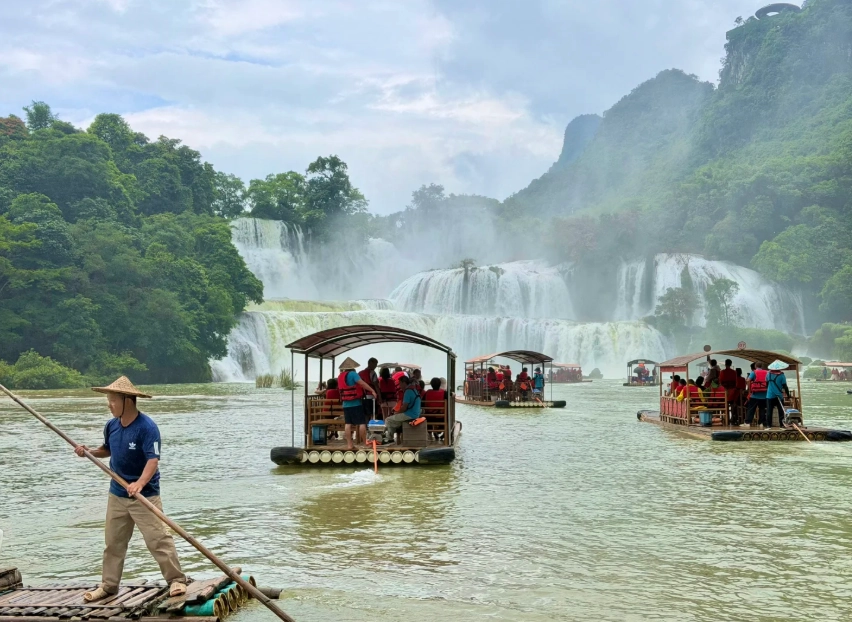
Why the Boat Ride Here Is Unlike Any Other
I've taken plenty of waterfall boat rides — Iguazu, Niagra, you name it. But Ban Gioc-Detian is the only one where the boat crosses an invisible line between two socialist republics. One moment you're in China, the next you're in Vietnam, and you don't even need a stamp. The waterfall itself spans the border, and the river below is neutral territory.
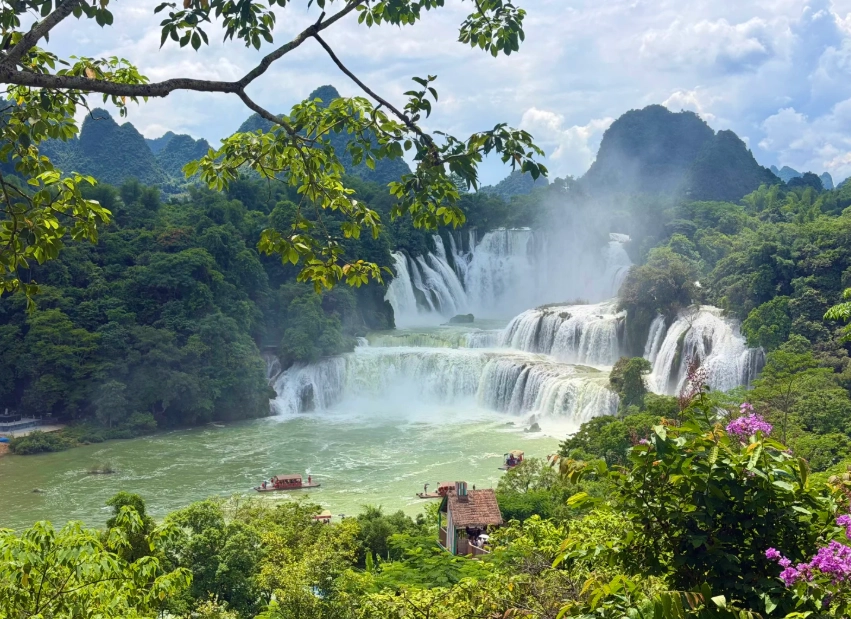
The Chinese call it Detian Waterfall; the Vietnamese call it Ban Gioc Falls. Together they form a 300-meter-wide cascade that thunders over three tiers into the Quây Sơn River. The boat ride takes you right to the base of the main drop, where the spray feels like a tsunami and the roar swallows your thoughts.
You'll also see a small concrete boundary marker on a rock in the middle of the river. If the water is low, your boatman might let you jump out and stand with one foot in each country — a gimmick, but one that makes for an epic photo.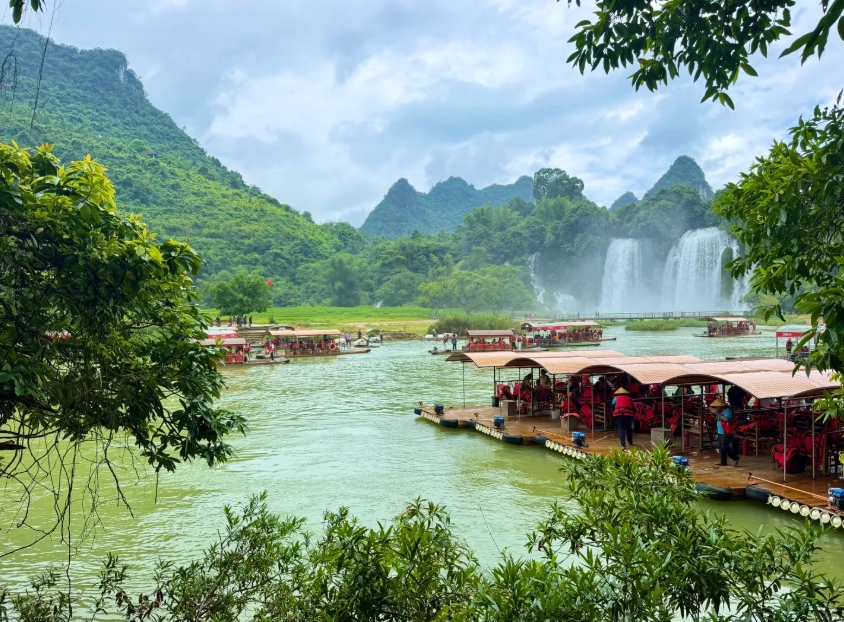
Insider Advice: The Vietnam-side boat tends to get you closer to the falls, while the China-side boat offers a more sweeping panorama. If you have time, it's worth doing both — they start from different angles and feel completely different.
How to Book the Ban Gioc-Detian Transnational Waterfall Boat Ride
Here's the part that confuses most travelers. The "boat ride" is not a single booking — it's two separate experiences, each managed by a different country. You can't buy one ticket that works for both sides. Let me walk you through each.
Booking the Detian Boat Ride: China-Side Process
On the China side, the boat ride is an add-on to the Detian Waterfall Scenic Area entrance ticket. First, you must buy a park entrance ticket — roughly 80 yuan per adult, though it's often discounted online. You can book it in advance on Trip.com or via the official WeChat mini-program "大新德天跨国瀑布景区" (Daxin Detian Transnational Waterfall Area). The mini-program is in Chinese only, so if you're not comfortable with it, ask your hotel or a local friend to help. Trip.com is the easiest foreigner-friendly option.
Once you're inside the park, walk toward the river and you'll see a small wooden dock. There, you buy a boat ticket for about 30 yuan per person. This is a separate fee, and it's paid cash or via WeChat/Alipay. International credit cards won't work. If you don't have WeChat Pay or Alipay, bring exact change in yuan — the boatmen have barely enough English to count money, let alone make change for large bills.
Pro Tip: The boat tickets are sold by local co-op members, not the park. That's why the process feels disorganized. If the "official" ticket window is closed, just wave to the boatman — he'll take you directly. This isn't a scam; it's how they run things here.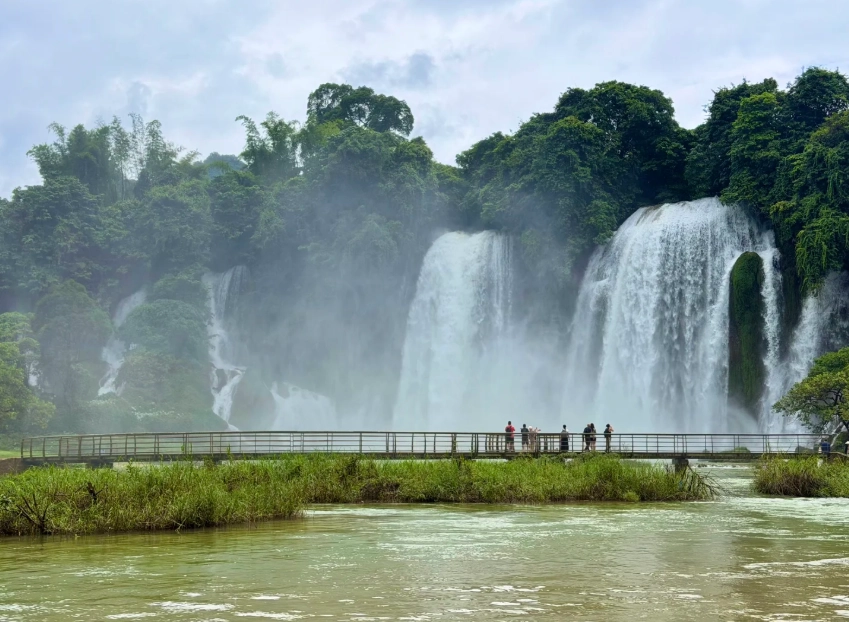
Booking the Ban Gioc Boat Ride: Vietnam-Side Process
On the Vietnam side, it's more laid back. You show up at the Thác Bản Giốc dock, which is part of the Ban Gioc Falls Tourist Area. There's a gate where you pay an entrance fee of around 20,000–30,000 VND per person. Then you walk to the river, where individual boat owners shout for your business. A standard 20-minute sightseeing trip costs about 50,000–80,000 VND per person, but the price depends on how many people are in your group. You can negotiate if you're friendly.
Cao Bang city has plenty of tour agencies that can bundle the boat with a day trip from the city. If you're not up for managing logistics yourself, that's your best bet. You can also book on Klook, though the pickup options are limited.
What to Expect Onboard: Route, Duration, and Views
The ride itself is short and sweet — about 20 minutes on the water. But those 20 minutes feel like a lifetime because you're completely enveloped by the falls. Here's how it unfolds: you board a flat-bottomed wooden boat (often old and creaky), put on a life jacket if you're lucky, and the boatman pushes off with a wooden pole. The engine sputters to life, and within two minutes you're surrounded by mist.
On the China side, the boat loops counter-clockwise. First, you'll see the wide, short second tier of the falls, then the main two-tier drop on the right. The boatman will hold the position for a few minutes in the strongest spray to let you take photos — expect to get soaked from head to toe. On the Vietnam side, the route is more direct: you cut straight across the river to the middle of the main falls, then drift along the base for a while before heading back.
There's no guide on board, so you're free to enjoy the noise and the wild water. The boat is usually shared with other tourists, but if you go early or late, you might get a private boat for no extra cost.
One thing that shocked me: the boatmen don't do much. They just steer and let the current do the work. When you get to the spray zone, have your camera tied to your wrist — I lost a GoPro to the falls once. Not joking.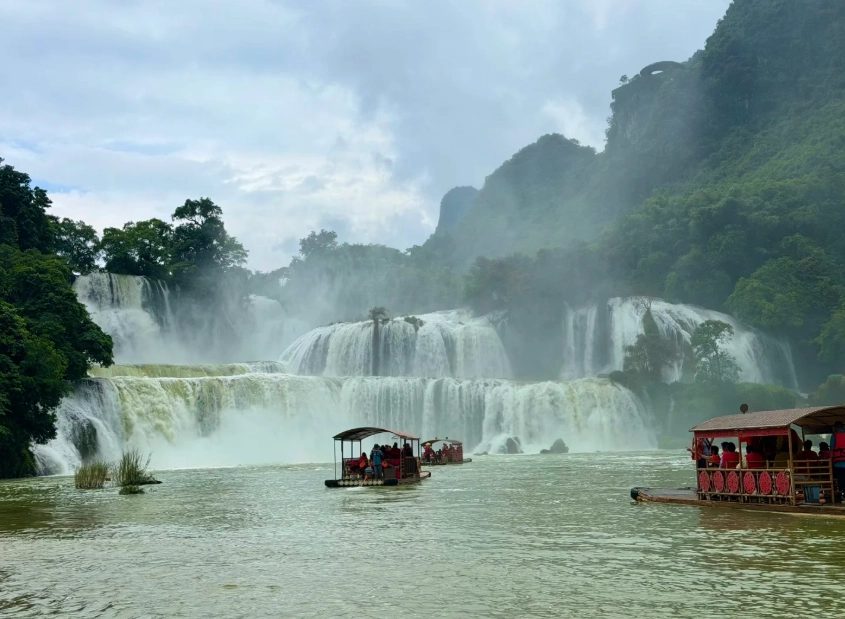
Best Time for the Transnational Waterfall Boat Ride (and When to Avoid)
If you want full, roaring falls, come between April and October. That's the rainy season, and the water volume can be spectacular. November to March is drier, and the falls shrink to a series of smaller cascades — still pretty, but not the jaw-drop moment you see in the brochure.
For the light, go at 8–9am or 3–5pm. Morning light hits the falls straight-on from the east, and the mist often creates a small rainbow. Afternoon light is golden, but from the Vietnam side you'll be shooting into the sun. The middle of the day is pure chaos — tour buses arrive with hundreds of loud visitors, and the wooden dock gets backed up.
If you're coming on a weekend or a Chinese public holiday, expect to wait 30 to 40 minutes for a boat. I always tell my groups: make this your first stop of the day. The gate opens at 8:00, and the first boat leaves at 8:15. By 9:15, the line is already forming.
Insider Advice: The waterfall is even more magical in the late afternoon when the tour groups thin out. On clear days, you'll get a full rainbow and a golden spray. Hang back, grab a Vietnamese coffee at the shore, and wait for the 17:00 boat — you might have the entire falls to yourself.
How Do You Get to the Boat Dock (From China and Vietnam)?
Getting to this border waterfall is half the adventure, but it's also where most foreigners get lost. Google Maps is unreliable in this region — I've seen it direct people to a road that doesn't exist. Use Apple Maps or Amap, and download the offline map of the area before you arrive. Also, set up a VPN before you leave the city — coverage is spotty at the falls, and you'll need it for translation apps.
From Nanning/Chongzuo to Detian Waterfall
The China-side dock is inside the Detian Waterfall Scenic Area, located in Shuolong Town, Daxin County, Chongzuo City, Guangxi Province. The address in Chinese is: 广西壮族自治区崇左市大新县硕龙镇德天瀑布景区. If you're driving, set your GPS to "德天瀑布景区".
The nearest big city is Nanning. From Nanning, it's a 4-hour drive (about 260 km). There are direct buses from Langdong Bus Station in Nanning to Shuolong, but they only run in the morning and the ride takes nearly 5 hours. Honestly, the best way is to hire a driver through your hotel or book a private day tour on Trip.com. The road winds through karst mountains, and the last 30 km are on a narrow, potholed county road — don't rely on public transport to be on time.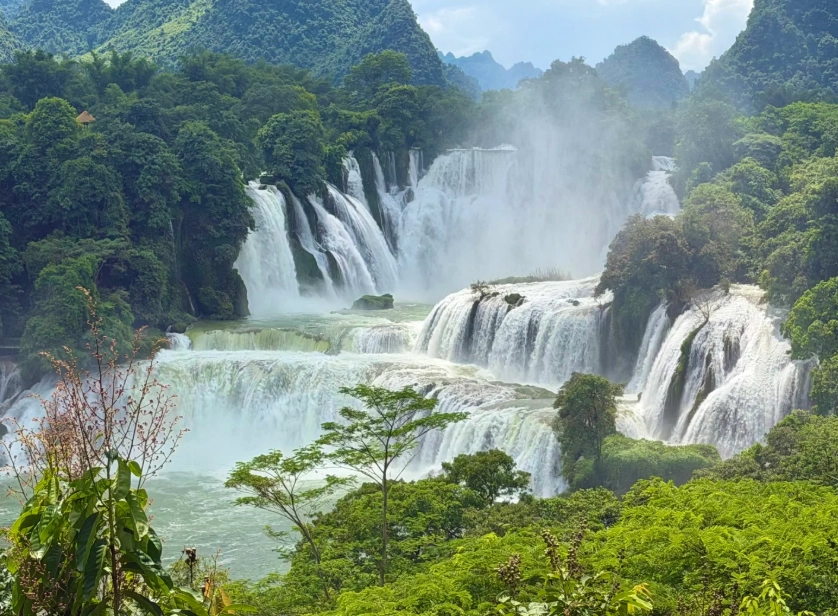
From Cao Bang to Ban Gioc Falls
The Vietnam-side dock is at Thác Bản Giốc, in Dam Thuy village, Trung Khanh district, Cao Bang province. The Vietnamese address is: Thác Bản Giốc, Đàm Thủy, Trùng Khánh, Cao Bằng. It's about 60 km from Cao Bang city — a 2-hour motorbike or taxi ride through rice paddies and up a mountain pass.
Public buses from Cao Bang to Trung Khanh are rare and don't have a fixed schedule. A taxi will cost around 500,000 VND each way. Many hotels in Cao Bang can arrange a shared van for about 200,000 VND per person, including a stop at Nguom Ngao Cave on the way — a decent bonus.
| Item | China Side (Detian) | Vietnam Side (Ban Gioc) |
|---|---|---|
| Address | Detian Waterfall Scenic Area, Shuolong Town, Daxin County, Chongzuo, Guangxi | Thác Bản Giốc, Đàm Thủy, Trùng Khánh, Cao Bằng |
| Entrance Fee | ~80 CNY (children under 1.2m free) | ~30,000 VND |
| Boat Ride Fee | ~30 CNY | ~50,000-80,000 VND |
| Operating Hours | 8:00-18:00 (last boat ~17:00) | 6:00-17:30 |
| Payment | WeChat Pay / Alipay / cash (CNY) | Cash only (VND) |
| Language | Chinese only | Vietnamese only, a few words of English |
| Best For | Panoramic views, easy access via park boardwalk | Close-up experience, more adventurous feel |
Insider Tips for the Ban Gioc-Detian Boat Ride
Over the years, I've seen every possible mistake — here's my no-bullshit checklist to make sure you don't repeat them.
- Bring a waterproof pouch for your phone and camera. The spray is relentless, and even if your phone claims to be "water resistant," the on-the-water mist will test it. I use a $10 dry-bag and it's saved my gear every time.
- Wear shoes that can get wet. Flip-flops might fly off when you step off the boat onto a floating dock. I recommend water sandals with a strap.
- Use the restroom at the parking lot before you descend. The toilets near the China dock are squat style, no paper, and often have a line of 15 people. It's the kind of thing that seems small until you're stuck there.
- Don't bring a drone. The area is near a border, and drone restrictions are enforced. I've seen a traveler with a DJI get chewed out by security on the China side.
- Learn the phrase "không cảm ơn" (no thanks). On the Vietnam side, locals will try to sell you snacks and raincoats. The raincoat is actually useful — it comes with a hood — but the honey is overpriced and heavy.
- Keep your passport dry and safe. You won't need it during the ride, but you will need it to re-enter some areas if you cross the river island.
FAQ: Transnational Waterfall Boat Ride, Answered
Final Verdict: Is the Ban Gioc-Detian Transnational Waterfall Boat Ride Worth It?
If you've already traveled 4 hours to get here, yes — take the boat. The view from the water is completely different from the viewing platforms. You'll feel the power of the falls, you'll get drenched, and you'll tell the story for years. But don't expect a calm river cruise. It's a rustic, chaotic ride that fits the rugged border landscape perfectly.
I've done it a dozen times, and I still get a rush when the boatman gun the engine toward the spray. Is it the world's most comfortable boat ride? No. Is it the world's most unforgettable one? Absolutely.
Now stop reading and go book it. If you have more questions, drop them in the comments — I check in every few days. Happy travels.








No comments yet.