 Tao Xu
Jump to the Good Stuff:
Hands up if you’re tired of the same “picturesque karst” blurbs. I’ve guided countless travelers through Mingshi Countryside in Guangxi, and almost every first-timer makes one big mistake: they show up at noon, skip the walking trails, and snap a few rushed photos before the tour bus drags them away. This is the guide I wish every visitor had.
Think of a Mingshi Countryside guided tour not as a standard sightseeing stop, but as a slow-motion boat ride through traditional rice paddies, towering limestone peaks, and backwater villages that haven’t changed much in decades. The key is planning—and I’m going to give you the exact moves to pull it off without the usual headaches.
Here’s the straight truth: book your visit for the first available morning slot, skip the overpriced hotel package, and enter through the west gate (more on that below). Do that, and you’ll have the place nearly to yourself while tour groups are still stuck in traffic.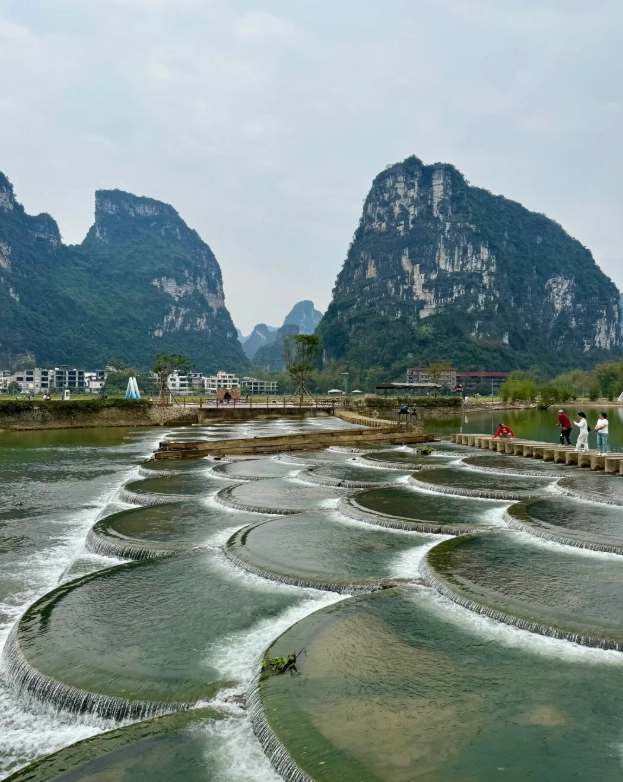
Why Take a Mingshi Countryside Guided Tour?
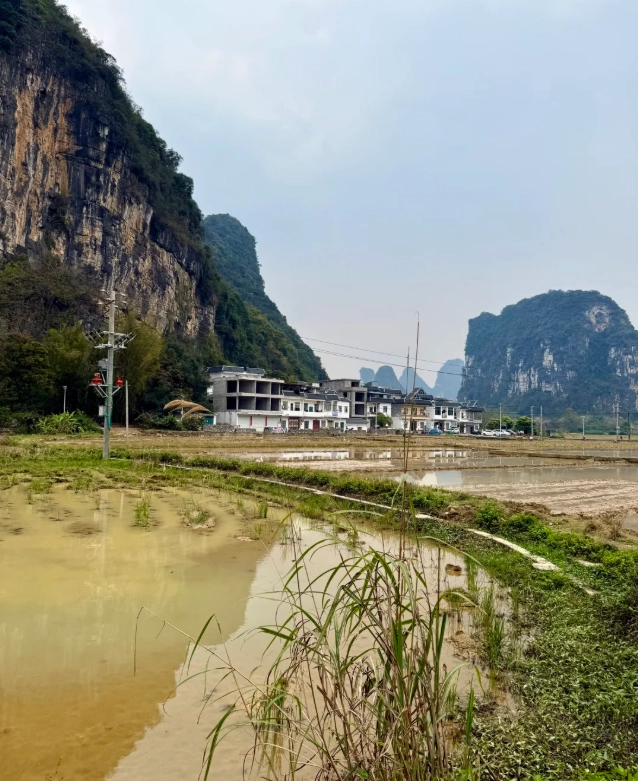
Mingshi Countryside is one of the few places in China where a “guided tour” actually adds value without feeling like a leash. Unlike the urban sprawl of Nanning or the crowded boardwalks of Guilin, this is a quiet, spread-out valley where the real magic hides in the details—the reflection of a farmer’s hut in the river, the angle of the sun on that one peculiar peak, the rhythm of a bamboo raft poling past.
I always tell my clients: don’t come here for a checklist. Come here to see. A good guide (or a well-planned self-guide) helps you read the landscape like a local.
What Makes Mingshi Different from Guilin or Yangshuo?
If Guilin is the famous movie star, Mingshi is the underrated indie film. Yes, the karst mountains are similar, but Mingshi feels more intimate—think rice fields instead of Li River cruises, village lanes instead of West Street bars. Many travelers who are short on time use Mingshi as a peaceful alternative to the tourist-packed Yangshuo. And honestly, it’s a better base if you’re also planning to see the Detian Waterfall.
How to Book Your Mingshi Countryside Guided Tour
Booking a Mingshi Countryside tour is easy if you know which platform to use—and which to avoid. Most Chinese online travel agents require a local phone number and WeChat Pay, which can be a wall for foreign visitors. Here’s the workaround I use with all my international clients:
- Use Trip.com or Klook for English-friendly booking. Both sell tickets for the scenic area and many activities (bamboo raft, sightseeing bus, bicycle rental). You’ll need your passport details for entrance.
- If you’re already in China, ask your hotel front desk to book for you. They can often get you a better price and even arrange a driver.
- Avoid the WeChat mini-program—it’s entirely in Chinese and even for me it’s a pain to navigate. If you really want to try, use the translation features in WeChat, but honestly, there’s no discount worth the headache.
Pro Tip: Always book at least one day in advance during public holidays and weekends. The scenic area caps daily visitor numbers to protect the rice terraces, and midday slots frequently sell out.
What’s Included in a Standard Ticket?
Standard admission covers the main walking loop and observation decks. Expect to pay around 80 RMB for adults (half-price for children under 1.2m and seniors over 60). The sightseeing bus and bamboo raft rides are extra—usually 30–50 RMB each. You can buy these a la carte or as a combo, but I recommend walking the southern loop first, then taking the raft if you have time.
Getting to Mingshi Countryside: From Nanning and Chongzuo
Mingshi Countryside sits in Daxin County, about 70 km west of Chongzuo city and 180 km from Nanning. There’s no airport or train station right at the site, so you’ll need to connect by road. Here are the three smoothest options:
| Option | Time | Cost (Approx.) | Notes |
|---|---|---|---|
| Nanning to Mingshi (direct bus) | 3.5–4 hours | 100–150 RMB | Buses from Nanning Langdong Station run daily to Daxin County; then transfer to a local bus or taxi. |
| Nanning High-Speed Rail + Taxi | 4 hours | 250–350 RMB | Take a bullet train to Chongzuo South Station (1h), then a taxi or private transfer to Mingshi (1.5h). |
| Private Transfer from Chongzuo | 1.5 hours | 150–250 RMB | Flexible—you can stop for photos en route. Ask your hotel to arrange. |
Google Maps is unreliable in China. I can’t stress this enough. Use Apple Maps or the app AMap (Gaode Maps), which has an English version called “AMap Global.” For taxi drivers, always have the destination written in Chinese: 明仕田园景区.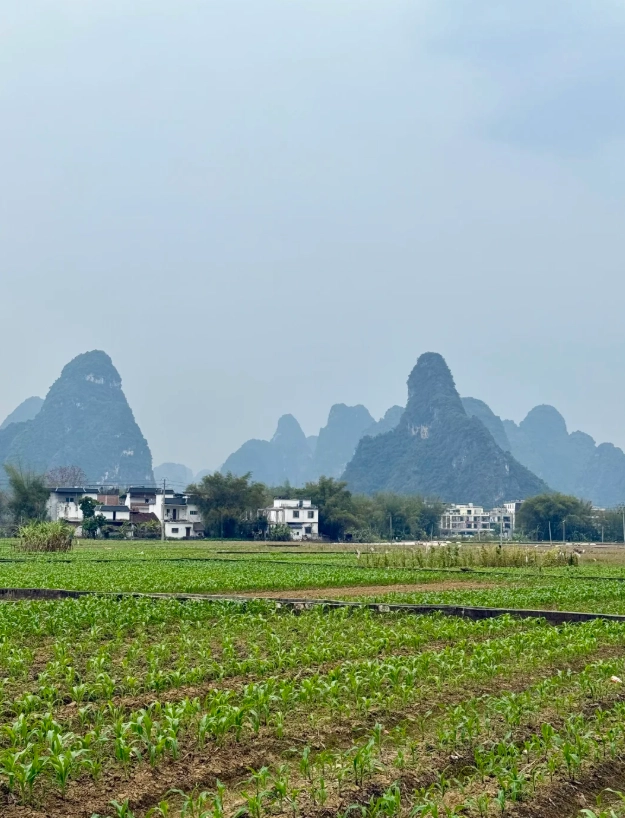
Driving Yourself? Reality Check
If you’re comfortable with Chinese driving habits, renting a car can be freeing. However, parking at Mingshi is limited on weekends, and the last stretch of road passes through several narrow village lanes. I’ve seen many travelers white-knuckling it after dark. If you’re not used to driving in China, just take the train and taxi—your nerves will thank you.
On the Ground: Tickets, Routes, and Photo Spots
The west entrance is your secret weapon. Most tour buses drop off at the east gate, so the west gate is significantly quieter—even at 10 AM, I often find myself alone with the buffalo. Here’s how the day should flow:
Morning: Walk the Southern Loop
Start at the west gate, walk towards the “Fairy Bridge” (Xianren Bridge). This is the most photogenic section—the karst peaks frame the river perfectly, and rice paddies mirror the sky. The loop takes about 1.5 hours at a relaxed pace. Watch for the small shrine half-way; it’s a fantastic spot for a silhouette shot.
Don’t be afraid to leave the main path. Farmers here are often friendly and won’t mind if you step onto the field edges for a photo—just don’t trample crops or trample on the bamboo fences.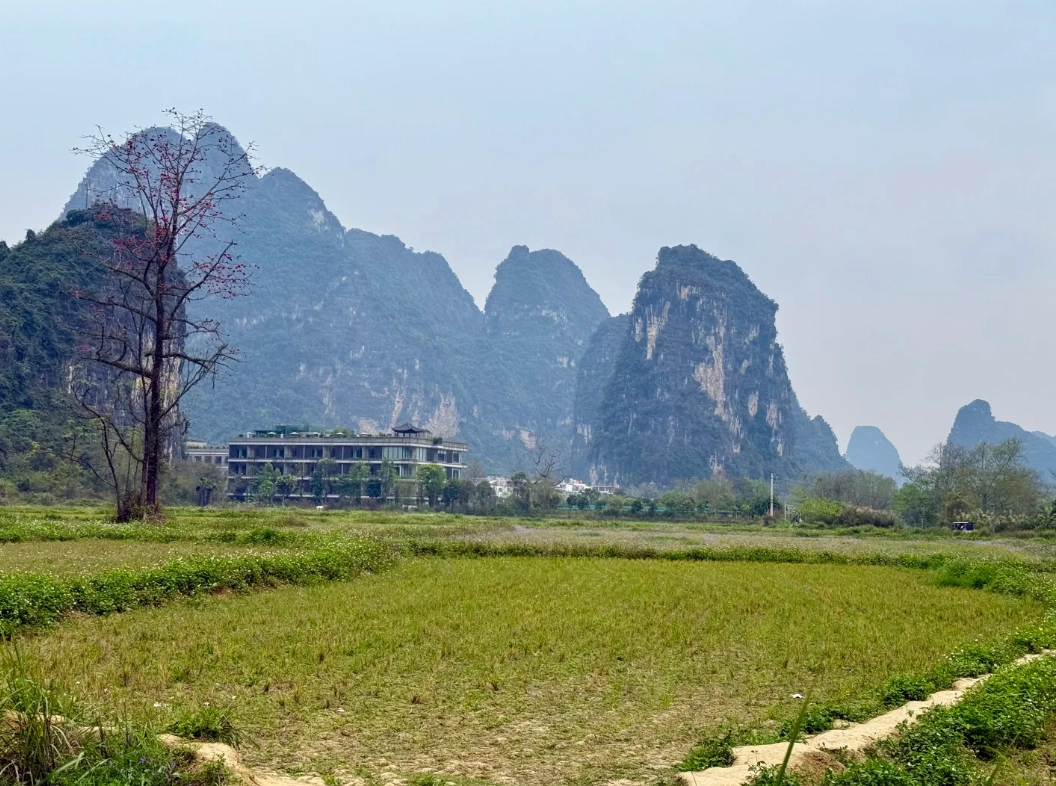
Afternoon: Bamboo Raft and Village Exploration
The bamboo raft float is the highlight for many visitors. You’ll be punted along the clear Ming River for about 30 minutes. The boatman usually lets you get off at a small island for photos. After that, rent a bicycle (20–30 RMB) and ride to the nearby Zhuang minority villages—you’ll see stilt houses and old stone bridges.
If you want a bird’s eye view, hike up to the Longshou Mountain viewpoint (about 20 minutes up steep stone steps). The view over the entire valley is worth every drop of sweat.
Golden Hour Photography
The light is best from 4:30 PM to sunset. Most photographers swarm the east gate at sunrise, but I prefer the west at dusk. The sun dips behind the peaks and the river turns golden. If you’re not staying overnight, be mindful that the area’s last shuttle leaves at 5:30 PM—set a timer.
Where to Eat and Stay Near Mingshi Countryside
For a rural area, there’s a surprising range of food options. The village has plenty of family-run restaurants serving Chinese classics and local specialties. My go-to spot is “Nong Jia Yuan” (农家院), a no-frills eatery near the west gate. I always order the fresh river fish with bean curd—it’s sweet, mild, and the fish is caught that morning. Expect to pay about 50–80 RMB per person.
For vegetarian or halal travelers, ask for “ji dan chao fan” (egg fried rice) or “qingchao shucai” (stir-fried vegetables). Most kitchens will oblige if you point to a photo on their menu. Don’t expect English menus—bring a translation app or use the picture menu.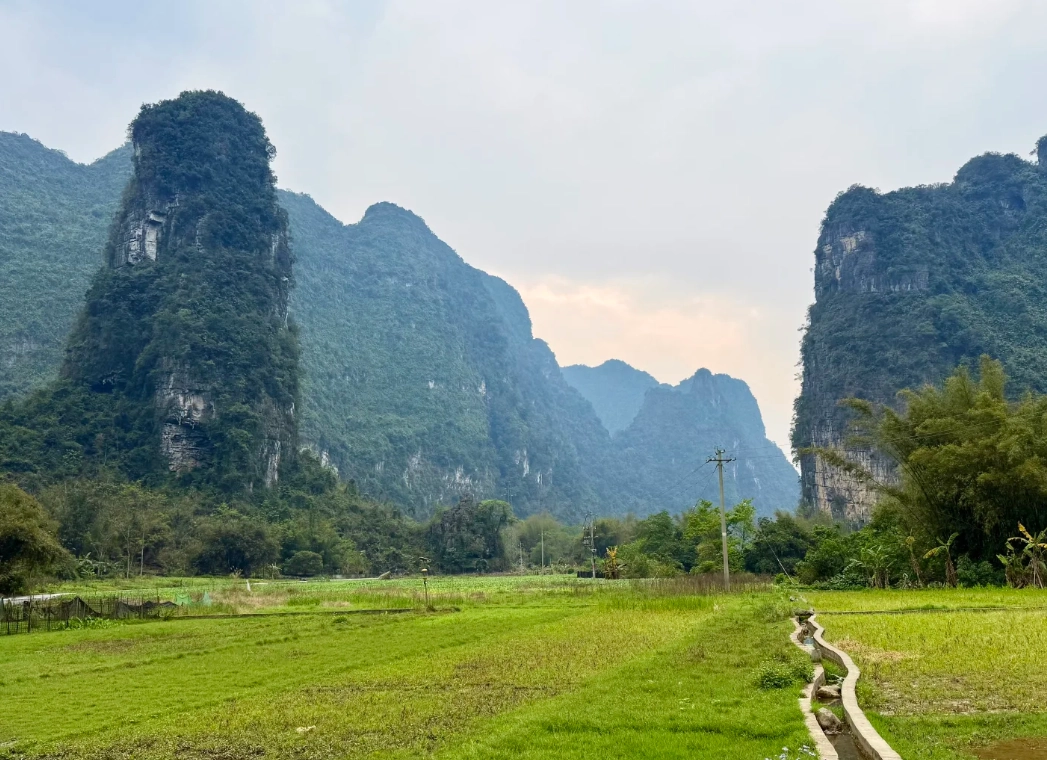
Where to Rest Your Head
Accommodation ranges from budget guesthouses to riverside resorts. I usually recommend staying one night so you can wander the morning mist without the day-tripper crowds. Here’s a quick rundown:
| Style | Examples | Price Range | Best For |
|---|---|---|---|
| Boutique Resort | Mingshi Villa (明仕山庄) | 300–800 RMB | Couples, photographers |
| Family Guesthouse | Various homestays near the village center | 100–250 RMB | Budget travelers, families |
| Countryside Bungalow | Resorts with standalone villas | 500–1200 RMB | Full immersion, peace |
All listed prices are for a standard double room and can double on public holidays. Wi-Fi quality varies; the more expensive places usually have stable connections. You’ll definitely want to confirm in advance if you need to work. The front desk staff at larger resorts usually speaks some English, but for homestays, be ready to use a translation app.
Insider Tips: Avoid Crowds and Scams
The biggest mistake I see tour guides make is rushing clients through the main entrance at 10 AM. That’s peak time for group tours. Instead, get in by 8:30 AM, or go late afternoon when most tours have left.
Be careful with “special deals” at the parking lot. Touts offering discounted tickets or “VIP raft rides” will often pay for a cheaper route and pocket the difference. Always buy tickets at the official windows or via your trusted booking platform.
One more thing: carry a small change of cash (50–100 RMB). Some village vendors don’t accept cards or mobile payment, especially elderly farmers selling fresh fruit. Your Alipay or WeChat won’t work if the network is spotty—a backup won’t hurt.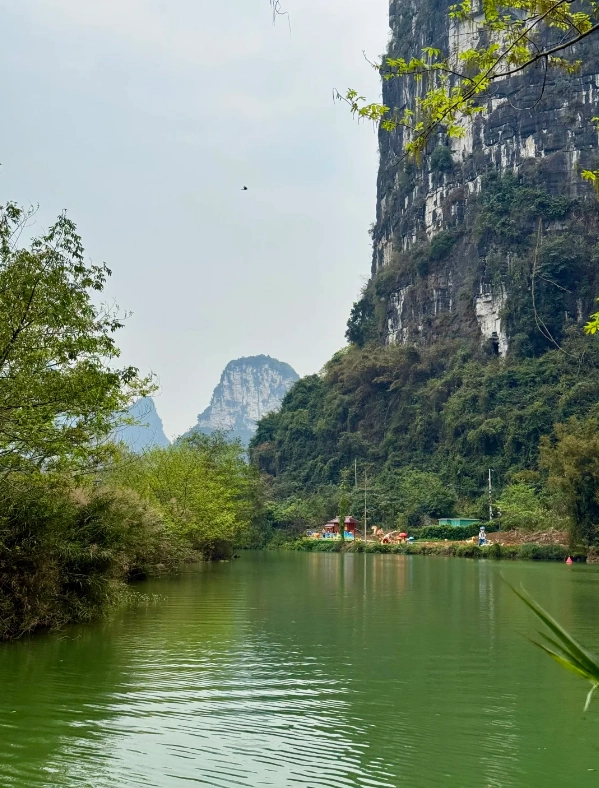
Insider Advice: If you’re combining with a trip to Detian Waterfall, stay the night in Mingshi and drive to Detian early in the morning—you’ll beat the tour buses and see the waterfall from the best viewing deck without fighting for space.
FAQ: Mingshi Countryside Guided Tour Questions
How do I get a Mingshi Countryside ticket if I can’t use WeChat or Alipay?
Use Trip.com or Klook. They accept foreign credit cards and issue instant e-tickets. Alternatively, have your hotel concierge book on site. Cash is not always accepted at the ticket office, so this is the safer route.
Is Mingshi Countryside safe to visit alone?
Very safe. The area is peaceful, and crime is virtually nonexistent. The only caution is the uneven stone paths and the occasional slippery wooden bridge after rain. Bring a flashlight if staying late.
What’s the best time of day for photography?
Sunrise (around 6 AM) and the 4:30–6 PM golden hour. The morning mist is dramatic, but the afternoon light from the west gate offers warm, direct lighting on the peaks. Carry a polarizing filter if you have one—the water reflections are stunning.
Can I visit Mingshi Countryside without a tour guide?
Absolutely. The pathways are well-marked, and you can rent bicycles or take the shuttle. A guesthouse owner or taxi driver can easily show you the main routes. That said, a knowledgeable guide will share local folklore and give you access to some hidden photo spots—it’s worth the extra cost if you’re into stories.
Verified and fact-checked by the editorial team.





No comments yet.