 Ling Wu
Rain splashed across my face as the last tourist ferry disappeared around the bend. My group was tired, but the empty riverbank turned golden -- and not a single yuan had been spent. That's the Guilin most travelers miss. You don't need a 200 RMB tour boat to fall in love with this city. After years of guiding foreign guests through Guangxi, I've mapped out the free things to do in Guilin that actually deliver: a sunrise loop around Ronghu Lake, the unguarded embankment behind Liberation Bridge, and a day trip to Xingping where you can stand on the exact spot printed on the ¥20 bill. No tickets, no forced shopping stops, no 8:30 AM queue chaos.
Now, let me save you some money. Here's the catch: some places that sound 'free' will try to charge you for the wrong thing -- a boat ride, a 'photo platform', even a restroom. So keep your passport handy, put your phone on silent, and let's separate real free Guilin from the shakedowns.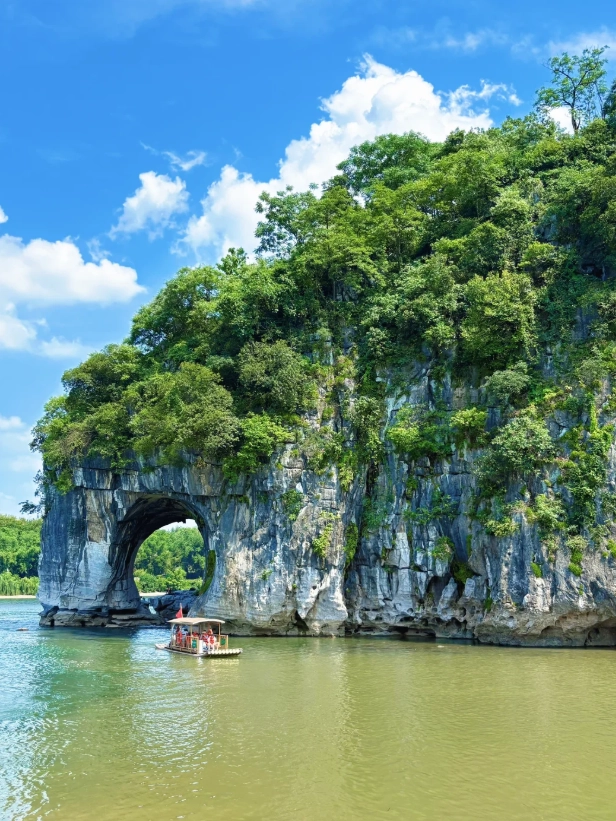
What Counts as Free in Guilin?
Free means no entrance ticket -- not no money for transport, food, or accidentally getting lost. In Guilin, the real costs hide in expectations: a boat trip, a shuttle bus, a village fee that appears out of nowhere. So I judge every recommendation by whether you can walk in (or onto the public path) without handing over cash.
You'll need to handle a few logistics before setting out. Since international cards often fail at street stalls, set up Alipay or WeChat Pay with your foreign card. Even the person selling grilled corn takes QR codes. Bring your passport. It's required for any museum booking and for train or bus tickets to Xingping or Yangshuo.
For maps, Google Maps barely works in China. Download Apple Maps or the global version of AMap before you arrive. I always tell guests to type the Chinese name into AMap, then screenshot the route -- because adding an English location to a taxi app can take time. If you want to use your home apps, install a reliable VPN first. For translation, Apple Translate's offline pack for Chinese is better than anything I've seen.
Last, be prepared for digital ticketing. Most free sites here don't need a reservation. But if you decide to visit the Guilin Museum or do a paid day-trip, you'll likely book through a Chinese mini-program. The easiest workaround for foreigners is to ask your hotel receptionist to help, or book through Trip.com or Klook where English is the default.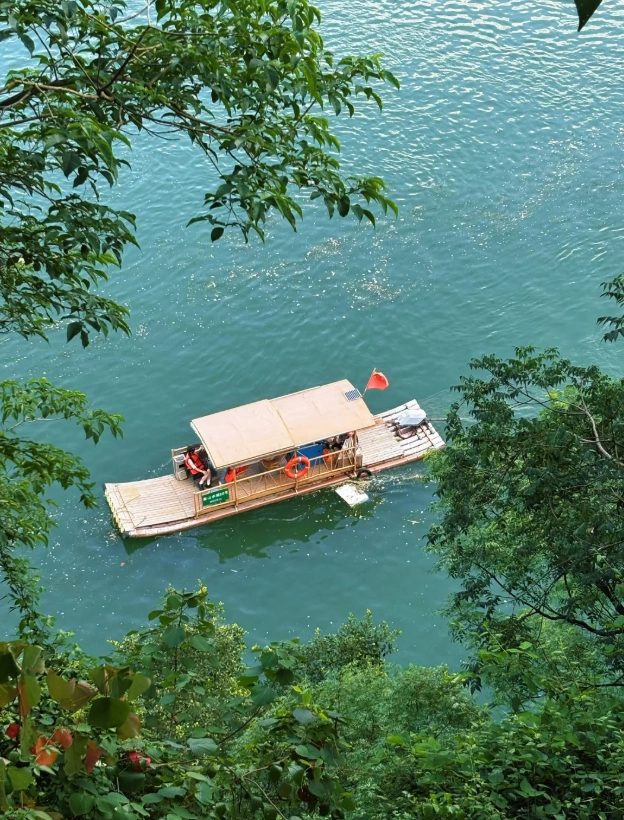
8 Free Things to Do in Guilin (No Tickets, No Crowds)
These are the locations I check on repeat visits, and the ones I recommend that guests see before spending a yuan on boat tours or staged performances.
-
Walk the Two Rivers and Four Lakes Loop
The loop around Ronghu Lake and Shanhu Lake is the city's most beautiful free walk. Start at the Sun and Moon Pagodas (they're on Shanhu Lake), then follow the water east until you hit the Li River. The full loop is about three kilometers and takes forty minutes if you're walking fast, two hours if you're like me and stop to watch a dog chase a flock of pigeons.
Best time: sunset, when the lights flicker on and the city disappears. The path is flat, shaded, and wheelchair accessible from the Ronghu side. You'll pass a Tai Chi corner around 7:30 AM -- I always steal a few minutes to watch the old masters before the crowd arrives. Search for Ronghu Lake (榕湖) on AMap; the address to show a driver is Xiufeng District, Guilin (桂林市秀峰区).
-
See the Sun and Moon Pagodas Light Up (From the Shore)
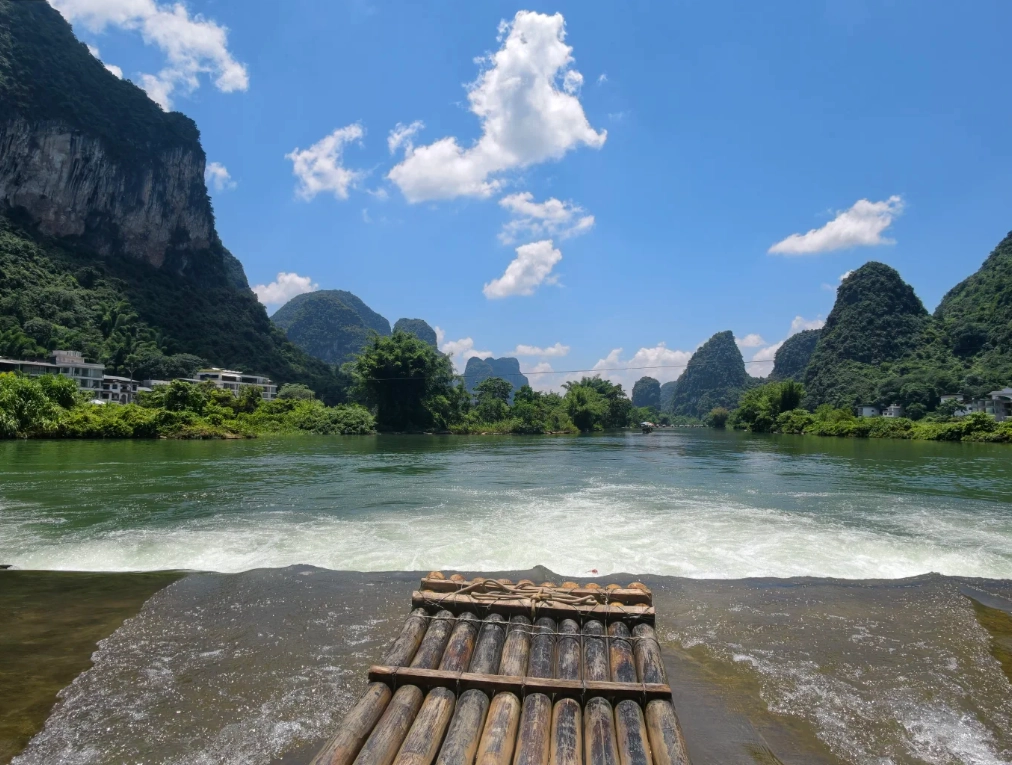
The twin pagodas become a rainbow of neon after dusk -- and the best views are completely free. Walk along the southern shore of Shanhu Lake, on the side facing Zhengyang Road. At night, there's a small crowd of local phone-wielders, so don't expect a private show. But you don't need to pay the 30+ yuan for the glass bridge that leads to the base. The classic shot is taken from the stone causeway near the water, reflected in the lake.
The pagodas sit on Shanhu Lake, next to the Zhengyang Pedestrian Street. Search '日月双塔' on AMap. There is no entrance fee for the lakeside walkway, and you can shoot the reflection from the public pier.
-
Get Lost in Zhengyang Pedestrian Street and East-West Alley
Food, architecture, and local chaos -- all free to explore. Zhengyang Road is the main pedestrian drag, and it connects to East-West Alley, a restored Ming-Qing street with crafts, snacks, and a few cafes. The alley is more atmospheric than commercialized, especially at 9 AM before the tour groups arrive. You can easily spend two hours weaving through the narrow lanes.
Insider advice: the rice noodle shops just outside the north gate of the alley have better tofu pudding than the famous ones inside. Don't order the 'Guilin snack platter' at the first stall -- overpriced and soggy. Search '正阳步行街' on AMap. The alley is at the junction of Zhengyang Road and East-West Alley, Xiufeng District.
-
Watch Sunset from Liberation Bridge Over the Li River
Of all the free viewpoints in Guilin, this is the one I never skip. Liberation Bridge (Jiefang Bridge) crosses the Li River just downstream from the Elephant Trunk Hill area. Stand on the pedestrian walkway around 6:30 PM and you'll see the river turn copper, the hills darken, and the city lights begin to flicker.
The nearest free restroom is in the small park under the east end of the bridge. Don't duck into the paid viewing tower further north -- just stay on the bridge. Use AMap to search '解放桥'; it connects Xiufeng District and Dieshan District, and you can walk there from Zhengyang Road in about ten minutes.
-
Circle the Jingjiang Princes City Wall
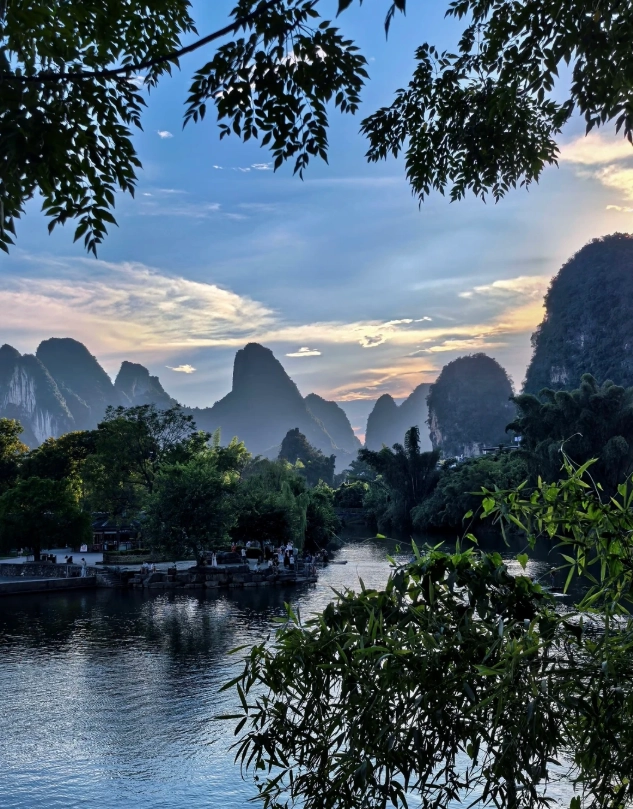
The ancient wall of the Jingjiang Princely City is free to walk around -- enter only the inner palace if you want to pay. The wall encloses a huge square, but the perimeter path along the moat is public. You'll see locals fishing, historians practicing calligraphy, and an impressive well-preserved brick structure.
Try to walk the northern stretch near Sun Yat-sen statue at sunset. The light makes the brick look crimson. Avoid the southern gate during major holidays -- the line for the paid inner area backs up right into the walkway. Search '靖江王城' on AMap; the address is 1 Wangcheng Road, Xiufeng District (广西桂林市秀峰区王城路1号). The moat loop is accessible 24/7.
-
Stand on the ¥20 Bill at Xingping Ancient Town
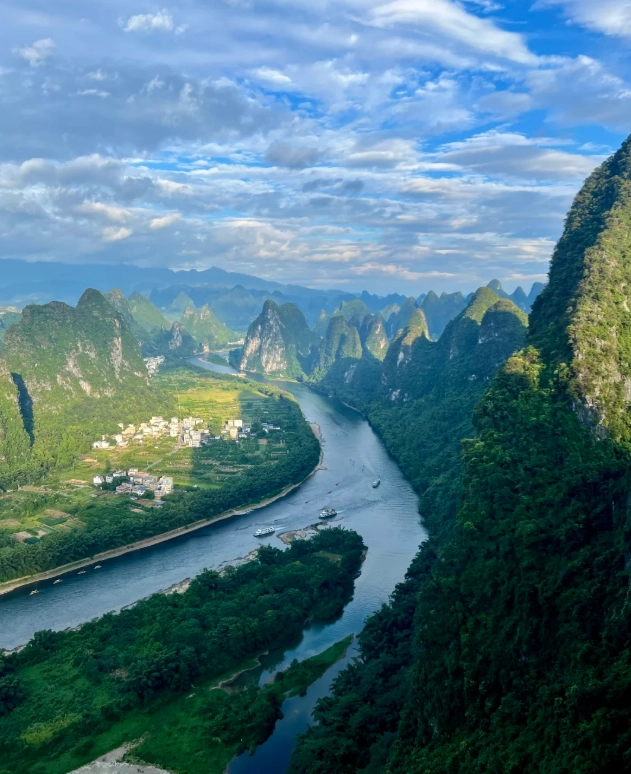
This west Guangxi village has the only free Li River viewpoint that's worth a train ride. Xingping Ancient Town is about an hour south of Guilin city. The old town itself is free to wander -- no gate, no ticket, no fences. Follow the signs along the riverbank to the '20 yuan note observation deck'. It's a public riverside path, not a gated attraction. Hold up a 20 yuan note and line it up with the mountains behind; it's cheesy but genuinely thrilling.
Getting there: take the bus from Guilin Railway Station to Xingping (roughly 10 yuan), or join a day tour that includes transport. The river cruise from Guilin to Yangshuo will cost you 300+ yuan -- skip it. The hike from Xingping along the river is just as beautiful and allows you to travel at your own pace. Search '兴坪古镇' on AMap; the ancient town is in Xingping town, Yangshuo County.
-
Follow the Yulong River Bike Path Near Yangshuo
The Yulong River valley is a mosaic of rice fields and old bridges -- and the main walking/bike trail is completely open. Start at the Gongnong Bridge (Gongnong Qiao) in Yangshuo and head north. The famous Yulong Bridge, the moon-viewing spots, and several bamboo raft piers line the route. You'll only pay if you rent a bike (about 30 yuan/day) or decide to board a raft. The path itself has no toll.
Do this at 8 AM or after 4 PM. Midday, the concrete path turns into a heat lamp and the tour groups create bumper-to-bumper electric cart traffic. If you're ambitious, walk the section from Gongnong Bridge to Yulong Bridge -- it's about five kilometers and takes two relaxed hours. Search '工农桥' on AMap; the bridge is on the southern edge of Yangshuo town.
-
Duck Into the Guilin Museum (Indoor Plan B)
Rain or heat? Head to the Guilin Museum -- it's free but you'll need your passport. It's not in the city center; you'll need a 20-30 minute taxi ride from downtown to the Lingui District. But it's the best indoor escape when the weather turns, and it tells the story of the Li River and local ethnic groups in a way no paid museum does.
Show your passport at the entrance and don't expect an English audio guide. The exhibits are mostly Chinese, so I usually bring guests here for the quiet, the air conditioning, and the small but impressive collection of minority silver ornaments. Admission is free, but you may need to register at the front desk or via a Chinese mini-program. If the mobile registration looks intimidating, ask the security guard to help -- they've seen plenty of travelers. Search '桂林博物馆' on AMap; it's in Lingui District. Check their official hours before you go because many city museums close on Mondays.
How Do You Turn These Free Guilin Spots Into a Whole Day?
Based on my test runs with real guests, here's a free plan that works without rushing.
Morning: Lakes, Pagodas, and a Rice Noodle Break
Start at 7:30 AM with the Ronghu/Shanhu loop to beat the heat and the crowds. Bring your passport and phone. After the loop, hit the morning exercise zone near the pagodas for a few minutes. Then walk north to East-West Alley and grab a bowl of Guilin rice noodles at a local shop. Budget two to three hours.
Afternoon: The Jingjiang Wall or Xingping Escape
If staying in the city, circle the Jingjiang Princely City wall and then cross to Liberation Bridge for lunch. If you're feeling adventurous, take the bus to Xingping and spend the afternoon walking the riverbank and the old town. Allocate four to five hours for the return trip.
Evening: Sunset and Night Lights
End back at Liberation Bridge for sunset, then wander to Zhengyang Road for night street food. The lights at the Sun and Moon Pagodas are best seen after 7:30 PM, so don't linger too long over dinner. If you're walking the full route, the total distance is under eight kilometers and you'll get a genuine dose of local life.
Are There Hidden Fees on These Free Guilin Activities?
Yes -- sadly, some operators try to charge for things that should be public. Here's what I watch out for, with the free versus paid alternatives.
| Free Experience | Paid Trap | Why You Can Skip It |
|---|---|---|
| Two Rivers Four Lakes loop | Boat tour from the pier | The boat ride costs around 200 RMB and shows you the same scenery from a different angle; the open path is just as pretty. |
| Sun & Moon Pagodas shore view | Glass bridge entrance | You stay dry and get a better reflection shot from the public causeway. |
| Xingping 20 yuan viewpoint | Photo platform fee near the old dock | The entire riverside path is public; any fee is a scam. Walk 200 meters downstream for the same view. |
| Yulong River bike path | Bamboo raft scenic ride | Rafting costs 150+ and gets you ten minutes of river view; the walking path runs parallel and costs you nothing but time. |
Pro Tip: If someone tries to charge you to stand anywhere public, point to the people walking past and keep moving. In tourist-heavy spots, this happens mostly around the paid boat piers.
Also, be wary of taxi drivers who 'offer to wait' because they smell a tour package commission. You don't need them. Use the ride-hailing feature on AMap or ask your hotel to call a metered cab.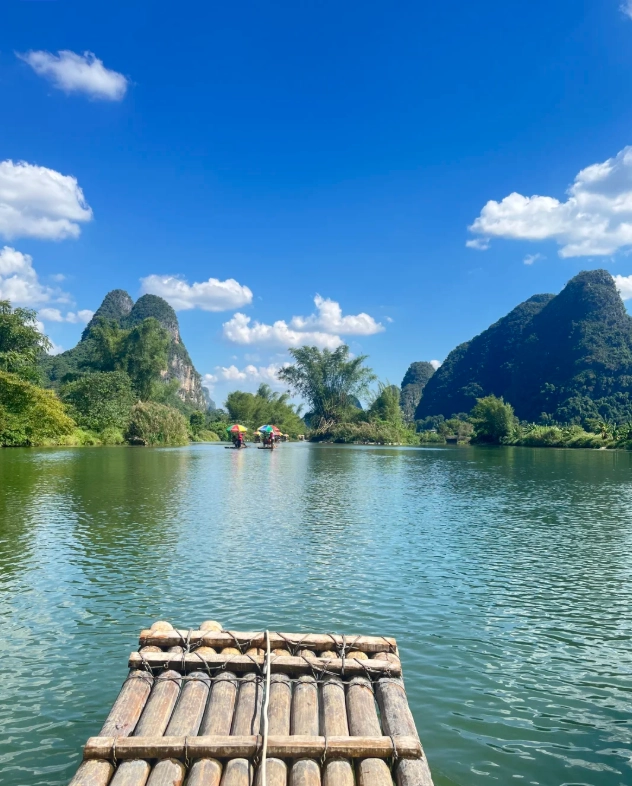
FAQ From Real Tourists
Verified and fact-checked by the editorial team.







Mixed feelings about this guide. It has a few useful tips—the free walk along the Li River is indeed beautiful. But the title oversells it. Two of the 'free' places I stopped at were actually gated with security and one claimed I needed to pay a 'village fee' to walk through. Also, the writer seems allergic to any paid attraction, which felt a bit preachy. Worth reading if you're already wandering, just don't expect the hidden gems the title promises.
Solid, helpful article. I used it for a two-day stop and the directions to the free river path were spot-on. The note about seeing the pagodas from the pedestrian bridge instead of paying to enter saved me time and money. Would have been five stars if the little map for the old-town alley walk had street names—I got turned around once. Still, a good resource for budget-conscious travelers.
Every penny I didn't spend in Guilin, I owe to this article. The tip to skip the bamboo raft touts and instead walk down to the riverbank below the bridge gave me the exact same view and a much better story. I also did the lakeside loop at night—all free, zero hassle. If you're on a budget and want to see the real city, read this before the standard tour brochures. 5/5.
As a photographer, I loved the detailed free viewpoints in this article. The exact spot for sunset at the Twin Pagodas was perfect—no crowds and no entry fee. I also caught the free open-air performance at the cultural square on Friday night, which the article mentioned. That alone was worth the trip. Highly recommend if you want real Guilin without the tourist trap circus.
Finally a guide that tells the truth about Guilin! I followed the free walking route along the Li River near the ferry pier and it was stunning—willows, fishermen, and the mountains disappearing into the mist. The article also warned me away from the overpriced 'traditional food' stalls near the pagoda and pointed me to a local breakfast market instead. I spent almost nothing and felt like I actually saw the city. 5 stars from me.
I did this on a clear Saturday and almost didn't want to write a review because it feels like such a hidden gem. Start from the south side of Shanhu Lake, skip the noisy main square, and walk toward the double pagodas. The free viewpoint from the stone bridge beats the paid boat ride — you can take the same photo without paying 80 yuan. We sat there until the lights came on, then grabbed cheap street food on Zhongshan Road. If you're in Guilin for one day, this is the one free thing I'd call essential. Five stars.
Finally a guide that doesn't tell you to find 'some uncle by the bridge' for a bamboo raft. The route along Two Rivers and Four Lakes is genuinely free and genuinely lovely. I'm a slow traveler, so I spent an entire afternoon on a bench near Banyan Lake, listening to a few local musicians who gathered under the trees. Nobody chased me away. For someone on a budget, this is worth more than any entrance ticket. Highly recommend saving this for an hour before sunset and just sitting still.
Okay, I originally planned to pay for Elephant Trunk Hill, but after following this free loop I didn't even miss it. Start at the glass bridge on Ronghu before sunset and walk toward the Sun and Moon Pagodas. The reflection looked like a painting, and there was a group of old locals doing tai chi on the steps. It felt real, not staged. I went at 7 am and the air smelled like river mud and osmanthus. My only problem? I wished I had a better camera. Best zero-yuan experience I had in a whole week in Guangxi.
Took this route on my first morning in Guilin. The free lakeside path is beautiful and easy to follow, but a few of the turn-by-turn clues in the article no longer match the streets. At one point I ended up in a parking lot and had to check my phone. Once I found the little bridge between Ronghu and Shanhu, the view was totally worth it — I stood there for maybe 20 minutes just watching cormorant fishermen in the distance. Solid 4 stars, because the general route and the advice about skipping the paid electric shuttles saved me a lot.
The article promises 'skip the tourist traps,' but half of the route still felt like a trap. Zhengyang Road is basically an outdoor mall with people yelling 'five yuan' at you, and near the banyan lake a man followed me for ten minutes trying to sell a boat ride. The lakeside path from Shanhu to Ronghu was clean and free, though, and the shade from the banyan trees made it a decent walk. I just wish the guide had warned about the touts and the construction detour that sent me into a random parking lot.