 Ting Chen
What We'll Cover in This Guide
- Why 'Free' Actually Works in Chongqing
- Top Free Things to Do in Chongqing
- Quick Comparison of Free Sights
- How Can You Get Around Chongqing Without Cashing Out?
- What Are the Best Times to Visit Chongqing's Free Attractions?
- How to Eat Cheap Near the Free Attractions
- Frequently Asked Questions
- Final Word from Your Guide
Sticky-hot, loud, and impossibly vertical. That's Chongqing for you. But here's the thing: you don't need a fat wallet to fall in love with it. I've been guiding travelers here for years, and the city's real magic — the neon-soaked riverside, the cliff-hugging alleys, the mouth-numbing noodles that cost less than a dollar — is largely free. The catch? Most visitors blow their budget on overpriced skyline cruises and cable cars that cost more than they're worth.
Let me save you some money: you can experience Chongqing's heart for zero yuan, IF you know where to look and when to go. Below is my no-nonsense guide to the best free things to do in Chongqing, plus the exact walking routes, time slots, and payment hacks I use with my own clients.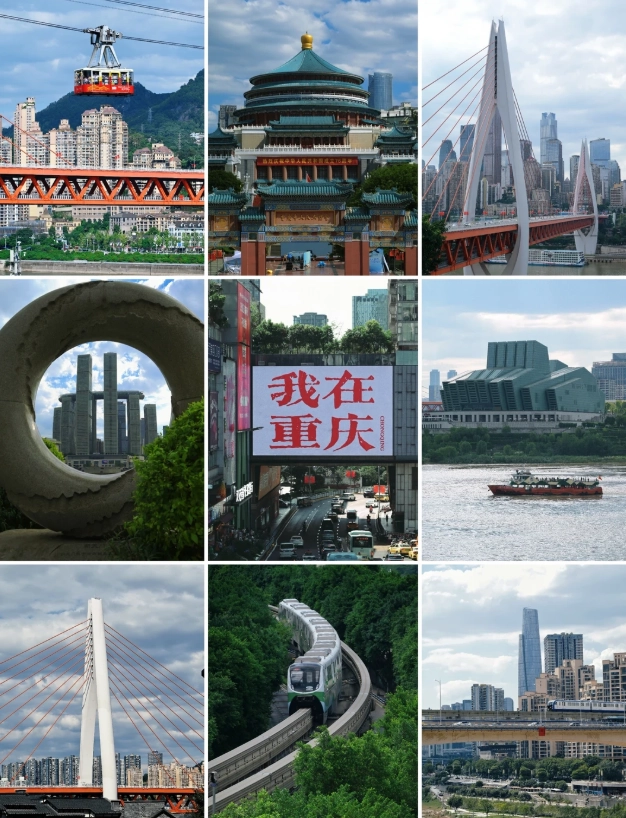
Why 'Free' Actually Works in Chongqing
Chongqing's government has poured money into making public spaces genuinely walkable and instagrammable — not just tourist traps. Many spots with epic views are outside paid venues, so you can snap the same photo as a tour group without paying admission.
Also, the old town districts like Shancheng Alley have remained free because they're residential areas. Locals still live there. So when you wander, you're seeing real life, not a set-up.
I've taken tourists who were skeptical about "free" and they often end up loving these spots more than the expensive cable car. Not to name names, but the Jiefangbei area has no entrance fee at all, and it's the heart of the city.
Top Free Things to Do in Chongqing
Here are my top picks, ranked by how much they'll blow your mind. I walk all of these with clients, so the directions are exactly what I give on tour.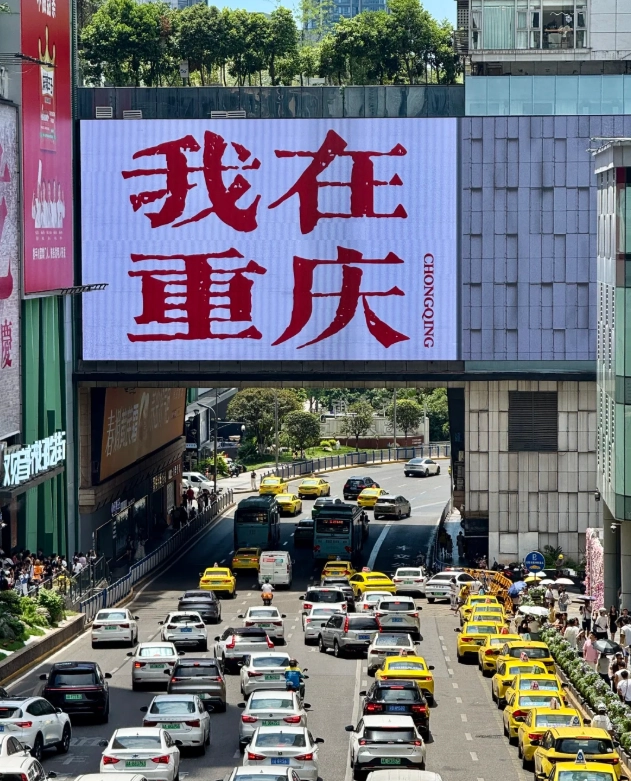
1. Jiefangbei (People's Liberation Monument) & Walking Street
Jiefangbei is Chongqing's answer to Times Square, and it's gloriously free to wander. The monument itself is a 28-meter tall obelisk from 1947, surrounded by the city's most famous shopping district. But don't focus only on the mall — turn left as you face the monument and you'll find the old Chongqing vegetable market hidden behind a modern facade. That's where you'll see locals buying pickled vegetables and live fish.
Address: Jiefangbei, Yuzhong District, Chongqing (重庆市渝中区解放碑).
How to get there: Take Metro Line 1 or 2 to Jiaochangkou station (较场口), exit 5, walk about 5 minutes. Or Line 6 to Xiaoshizi station, exit 3.
Best time: For the coolest vibe, go around 7 PM when the billboards light up. But if you want to avoid the crowds, come at 8 AM when the city is doing tai chi in front of the monument.
Cost: 0 yuan. Completely free.
Insider advice: Don't buy tickets from men offering "free" tour guides here. Some turn into forced shopping trips. Just use your map and walk.
2. Hongya Cave (Hongya Dong) — The Free View from Qianmen Bridge
The best free thing to do with Hongya Cave is not to go inside the cave, but to stand on the Qianmen Bridge and look at it. This is where every professional photo you've seen is taken. From the bridge, the stilted buildings look like they're on fire with neon lights, and the river below reflects everything.
The cave itself is a commercial area with no entrance fee, but you'll need to reserve a time slot on a Chinese-only app to get past security. Honestly, the internal mall is just packed with souvenir shops. I tell my clients to skip the interior and save the time for the skyline.
Address for the bridge: Qianmen Bridge (千厮门大桥), connects Yuzhong and Jiangbei districts. The view point is on the middle of the bridge, accessible via pedestrian walkway.
How to get there: From Jiefangbei, walk 10 minutes towards the river to the bridge ramp. Or take Metro Line 6 to Grand Theater Station (大剧院站), exit 3, then walk 10 minutes to the bridge.
Best time: Between 7:30 PM and 10 PM, when the lights are fully on. I recommend you arrive at 7:00 to kick out a spot at the railing.
Cost: Free.
Pro Tip: The bridge is windy. Bring a light jacket even in summer. And if you're scared of heights, stay near the shore side — the middle is a bit dizzying.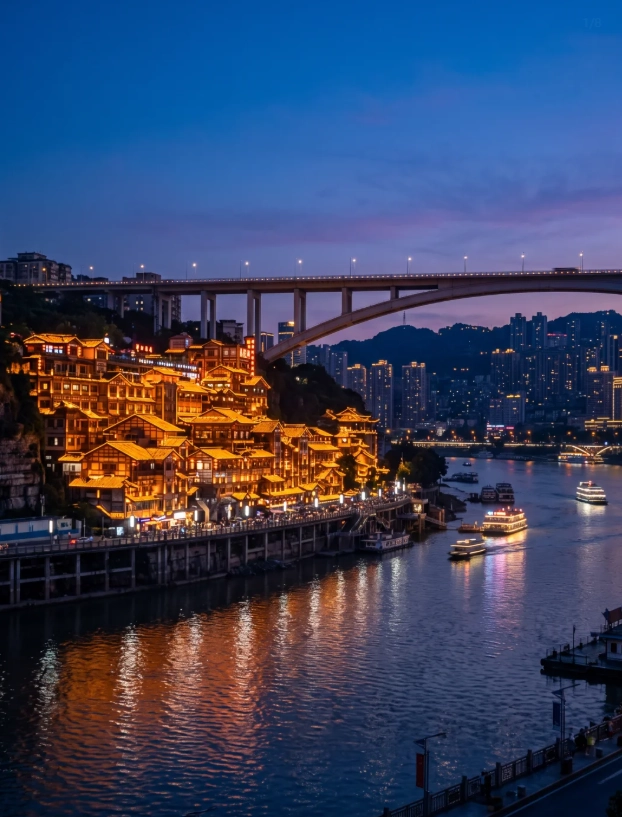
3. Shancheng Alley (Mountain City Trail)
Shancheng Alley is the hidden staircase that most tourists miss, and it will blow your mind. This is a network of elevated stone paths that connects the downtown with the river area. It's a 3.5 km walk through old Chongqing neighborhoods, where you'll see laundry hanging from windows, aunties playing mahjong under bamboo trees, and, occasionally, a tiny household shrine.
This is the perfect free activity for those who like to feel sweat on their backs — because it's all stairs. But the views from the halfway point are worth it: you get down to Quanshan River? Actually the south bank view of the skyscrapers is fine.
Address: Shan Cheng Xiang (山城巷), Yuzhong District, Chongqing. It starts near the intersection of Zhongshan 1st Road and starts going down.
How to get there: Metro Line 1 to Jiaochangkou, exit 8. Walk straight for 5 minutes to the intersection, then you'll see the stone sign at the entrance.
Best time: 9 AM to noon or after 4 PM to avoid the heat. The path is in shade a lot, but still.
Cost: Free.
My tip: Wear non-slip shoes. The stone steps get polished by rain and can be slippery. And if you need a bathroom, there's an old public toilet halfway down, but carry your own paper — it's rare.
4. Eling Creative Park (鹅岭二厂)
Eling Creative Park is a repurposed industrial site turned into a hipster paradise, and entry costs zero yuan. This old mill from 1952 now hosts art galleries, coffee shops, and a famous rooftop lounge. The industrial decay mixed with modern pop-up installations makes for some very unique photos.
The best free experience here is the rooftop terrace at the top of the park. You can climb up via the fire escape (it's public) and get a panoramic view of the Yangtze and Jialing Rivers meeting. The park's open-air areas are free, while individual indoor exhibitions sometimes charge 20–30 yuan.
Address: 1 Eling Zheng Jie (鹅岭正街1号), Yuzhong District, Chongqing.
How to get there: Take Metro Line 1 to Eling Station (鹅岭), exit 1. Then it's a 10-minute uphill walk — or use a DiDi, which takes 3 minutes and costs about 8 yuan (a barely noticeable amount).
Best time: Late morning for light and fewer crowds, or 5 PM for golden hour on the rooftop.
Cost: Free to enter the park; some galleries may charge a small fee. I always check what's on before I visit.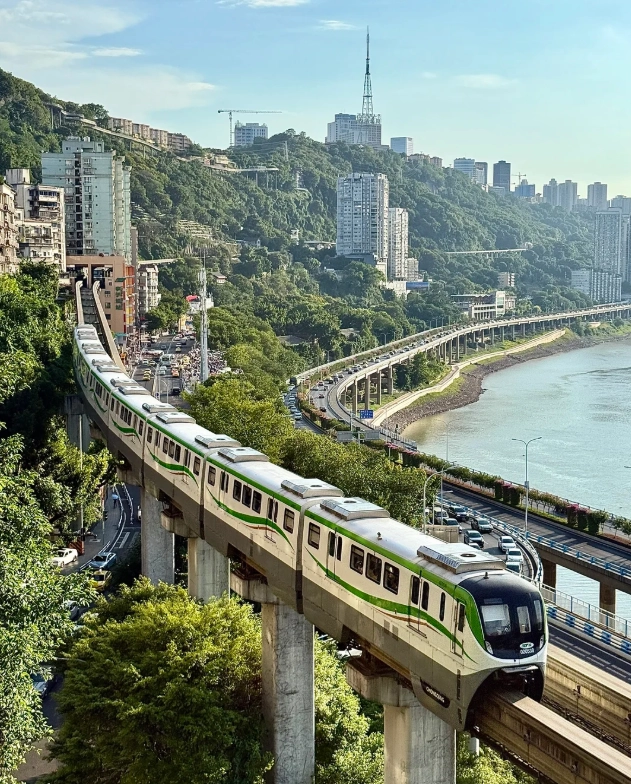
5. Huangjueping Graffiti Art Street (黄桷坪涂鸦街)
This one is for the art lovers — the entire street is covered in colorful graffiti, and it's 100% free. The project started around 2007 when the local art college (Sichuan Fine Arts Institute) convinced hundreds of artists to cover over 20 buildings with murals. It's now the largest graffiti street in China, stretching about 1.25 km.
You don't need any tickets. Just wander and look up. Some of the paintings contain famous Chinese movie characters or political messages that were later whitewashed once, but it keeps changing.
Address: Huangjueping Zheng Jie (黄桷坪正街), Jiulongpo District, Chongqing.
How to get there: From Metro Line 2 to Yangjiaping (杨家坪) station, exit 15, then take bus 229 or 441 to Huangjueping station. Or just take a DiDi from the metro, about 5 km for 10 yuan.
Best time: Early morning (around 8:30) to have the street almost to yourself. There's also a small park nearby where locals practice calligraphy with water.
My tip: Combine with a visit to the Sichuan Fine Arts Institute's old campus (now a museum) on the same street — it's free, but you need to register with your passport at the gate.
6. Nanbin Road Waterfront Park (南滨路)
Nanbin Road offers the postcard-famous view of the city's skyline across the river, and the promenade is entirely free. It's a 6 km long waterfront park on the south bank of the Yangtze. The best part is the broad pedestrian path with gardens, food stalls, and a view of the city lights.
No tickets, no reservation, just walk in and sit on the steps. The opposite side shows the Yuzhong Peninsula with Hongya Cave on the left and the corporate towers on the right. Many tour groups stop here for 5 minutes, but you can take your time.
Address: Nanbin Road (南滨路), Nan'an District, Chongqing.
How to get there: From Jiefangbei, take the bus 151 from Xiaoshizi to Nanbin Road stops, or take the Yangtze River cableway (a paid attraction) and then walk. I'd just take a DiDi from Jiefangbei across the river — it's about 15 minutes and 20 yuan.
Best time: Sunset around 7 PM, and then the lights come on about 20 minutes later. You'll see both orange sky and neon skyline.
Cost: Free.
Insider tip: The famous "Chongqing National Finance Square" is right behind, but the best free viewpoint is actually from the steps near the cableway station.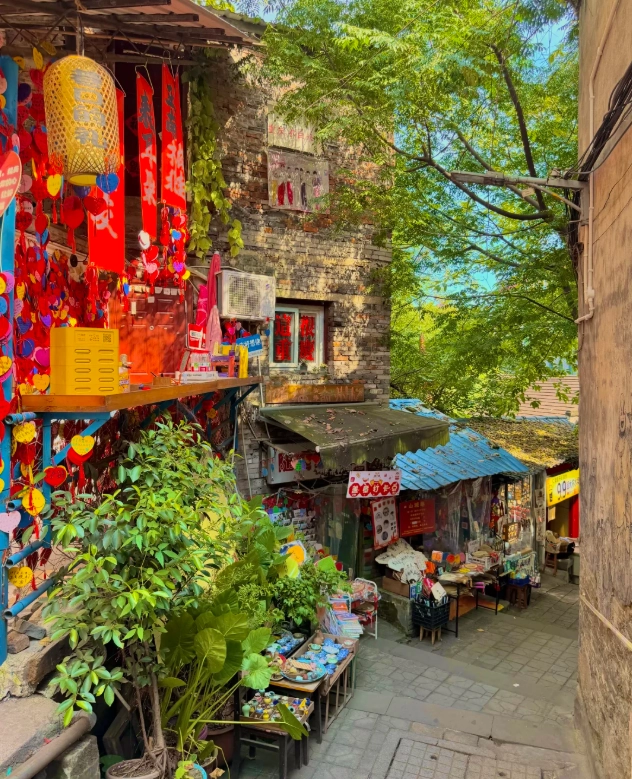
Quick Comparison of Free Sights
| Attraction | English Address | Approx Opening Hours | Best Time | Reservation Needed |
|---|---|---|---|---|
| Jiefangbei | Jiefangbei, Yuzhong District | Open 24 hours | Evening for lights | No |
| Hongya Cave (view) | Qianmen Bridge, Yuzhong/Jiangbei | View anytime | Night after 7 PM | No (view) |
| Shancheng Alley | Shancheng Xiang, Yuzhong District | Open 24 hours | Morning or late afternoon | No |
| Eling Creative Park | 1 Eling Main St, Yuzhong District | 10 AM - 10 PM (approx) | Late morning or sunset | No |
| Huangjueping Graffiti | Huangjueping Main St, Jiulongpo | Open 24 hours | Morning | No |
| Nanbin Road | Nanbin Road, Nan'an District | Open 24 hours | Sunset | No |
How Can You Get Around Chongqing Without Cashing Out?
Chongqing's metro is cheap, clean, and rarely jammed except at rush hours. A single ride costs only 2–4 yuan, and you can pay with Alipay or WeChat Pay directly on the ticket machine (scan your QR code). No cash is needed, but if you only have cash, go to the manual counter — some machines don't take bills.
Navigation catch: Google Maps is famously unreliable here. It often shows routes that don't exist or outdated exit numbers. Use Apple Maps (which has decent local data) or AMap (Gaode) — you can switch it to English in the settings. When you call a DiDi, the driver will use AMap, so trust its navigation.
If you're coming from other cities, the official train booking site is Trip.com or 12306.cn — but 12306 is Chinese-only, so I usually tell my clients to use Trip.com for English interface.
For the free attractions listed above, you'll mainly need Metro lines 1, 2, 6, and the ring line. All signs are bilingual Chinese-English, so navigating is easier than you think.
Money hack: Buy a Chongqing public transport card? Not necessary unless you're here for a week. Alipay's "Transport" function works on all metro gates.
What Are the Best Times to Visit Chongqing's Free Attractions?
Timing is everything in Chongqing — not just for lighting, but for crowds. Here's my cheat sheet based on years of guiding:
- Jiefangbei: Peak at 7 PM to 10 PM. If you hate crowds, go before 9 AM. You'll see cleaning crews and the occasional tai chi group.
- Hongya Cave view: The bridge gets packed after 7:30 PM. Go at 7:15 PM to secure a spot. By 8 PM, photographers with tripods will crowd the rails.
- Shancheng Alley: Most tour groups arrive between 10 AM and 3 PM. Start at 8 AM and you'll have the alleys almost to yourself — plus morning light is great.
- Eling Creative Park: It opens around 10 AM. The weekend afternoons are crazy with locals taking selfies. Come on a weekday morning or before 12 on weekends.
- Huangjueping Graffiti: The street is busiest on Sunday afternoons when students are out. Weekday mornings are quiet, but you may see the occasional artist touching up a mural.
- Nanbin Road: Sunset around 7 PM is ideal, but watch out — the food stalls start calling you with spicy smells. If you want a clear view, walk a bit farther from the cableway station to where the tour groups don't go.
How to Eat Cheap Near the Free Attractions
Free attractions don't fill your stomach. But to eat well without spending much, head to the eight alleys behind Jiefangbei. A bowl of Chongqing noodles (xiǎo miàn) costs around 10–15 yuan, and it's arguably the best meal in the city. Look for a storefront with the most locals, not the one with the biggest sign. My go-to: "Hu Xiao Mian" on Minquan Road, but even the nameless stalls are usually solid.
Near Hongya Cave, avoid the restaurants inside the cave — they're tourist-priced. Instead walk to the Liangan Garden Alley (between Zhongshan 1st Road and the river) for local hot-pot restaurants that serve a single-person "little hotpot" for 30 yuan.
Remember: payment anywhere but street vendors requires Alipay or WeChat. Carry a bit of cash for the tiny stalls that don't have QR codes, though most do.
Frequently Asked Questions
Are the free attractions in Chongqing safe at night?
Yes, the central areas like Jiefangbei and the bridge are well-lit and have police patrols. However, Shancheng Alley has many unlit staircases and uneven steps — I'd avoid going alone after 9 PM. Also, watch for pickpockets in crowded night views, but that's the same in any big city.
Do I need to book entrance tickets for the free sites in advance?
Most of the spots I covered don't require any booking because they're public spaces. The only exception is Hongya Cave's interior, which needs a passport-based reservation on a Chinese WeChat mini-program. Just skip the inside and you won't need to book. For the Sichuan Fine Arts Institute campus, you'll register at the gate with your passport.
What's the biggest mistake tourists make when planning free Chongqing activities?
Trying to see all of them in one day. Chongqing is shaped like a 3D maze, and the steps alone will exhaust you. I always tell clients to split between "west-side old city" (Jiefangbei, Shancheng Alley, Eling) and "east-side view" (Hongya Cave, Nanbin Road) into two separate days. And always upload the offline map of Chongqing on AMap before you arrive.
Can I use cash instead of mobile payment for transportation to these free spots?
Technically, you can buy metro tickets with cash at service windows, but some newer self-service machines only accept QR codes. DiDi drivers rarely carry change. So you'll miss a lot if you rely solely on cash. Set up Alipay with an international credit card, or use a prepaid tourist card sold at Chongqing Jiangbei Airport.
Final Word from Your Guide
I've watched travelers empty their wallets on gimmicks like the "Luxury River Cruise" (which costs 200+ yuan) only to realize the view from the bridge was better. Chongqing isn't about expensive attractions; it's about the maze of layers. The city rewards those who walk, climb, and get lost at street level.
So take these free things to do in Chongqing, plan your route, and save your money for the beer garden on Nanbin Road. You'll leave with a full camera roll and a lighter wallet — in a good way.
Verified and fact-checked by the editorial team. This content has been fact-checked to ensure informational precision.





Not bad, but I expected more hidden local gems. The list was okay — Jiefangbei and Hongya Cave are already mentioned on every blog about Chongqing. I did enjoy the graffiti street suggestion, but the rest felt a little generic. Also, the author didn’t mention that some of the ‘free’ viewpoints are blocked by construction right now. Double-check before you go.
Great roundup and the photos made me want to go. I tried the free things around Liziba and Jiefangbei and ended up having a lovely, cheap day. I just wish the article had included a simple map or more info about which exits to take, because a few spots were tricky to find even with my phone. Still, definitely useful and it saved me money.
Finally a list that doesn’t only talk about hotpot. I’ve been living in Chongqing for a year, and this roundup mostly hits the right spots. Hongya Cave is touristy but still worth seeing at night, and the article honestly says you don’t need to pay anything to enjoy it. My favorite find was the Shancheng Trail — a quiet path of stairs that winds through the old city and costs nothing. The directions are clear, and the local tips ring true.
As a budget traveler, this guide is gold. I loved the part about Huangjueping Graffiti Street — it’s a whole lane of colorful walls and little art studios, and it didn’t feel touristy at all. The metro directions were easy to follow, and the tip about watching the Liziba monorail pass through the building from the platform below was spot on. Even the ‘misty evening walk’ suggestion was perfect; the fog made the skyline look like a sci-fi movie. Already shared this with my travel group.
This article nailed exactly what I was looking for. I spent three days in Chongqing and didn’t pay a single entrance fee. The suggestion to walk down from Jiefangbei to the river through the old stairways was amazing — I passed laundry hanging over railings, grandpas playing Chinese chess, and got a view of the cable cars crossing overhead. My phone was full by the end. If you want to see the real Chongqing without spending money, just follow this guide.