 Ting Chen
Stop planning your Anshun trip the wrong way.
I've dragged more sweaty, exhausted travelers through this city than I care to count. And every time, the same mistakes happen — showing up at noon, fumbling with tickets in Chinese, and getting ripped off by the shuttle bus. Let me fix that for you.
Here's the truth: Anshun is more than Huangguoshu Waterfall, but if you don't plan ahead, you'll waste hours in queues and never see the good stuff. Below are hard-won tips from years of guiding international visitors — no fluff, just what works.
Quick Guide (Skip to What You Need)
- When Is the Best Time to Visit Anshun?
- How to Get to Anshun Without Stress
- Huangguoshu Tickets: Online Booking Made Easy
- Inside Huangguoshu: My Secret to Avoiding Crowds
- Beyond Huangguoshu: Longgong Cave and Tunpu
- Essential Apps for Stress-Free Anshun Travel
- Where to Eat in Anshun (and What to Order)
- Where to Stay in Anshun: Hotels for Every Budget
- Frequently Asked Questions
When Is the Best Time to Visit Anshun?
Most guidebooks will tell you to come from May to October because of the rainy season. But here's the catch — that's exactly when the waterfall is massive and the crowds are worse. If you only care about photography, come in April or November. The water flow is still respectable, but you'll actually have room to breathe.
I always tell my clients to avoid Chinese national holidays (especially the first week of October and late September). Not only do ticket prices spike, but you'll literally be squeezed on the viewing platform like sardines. If your schedule is flexible, aim for a Tuesday or Wednesday — weekends are packed with domestic tourists.
Pro Tip: The best time of day to hit Huangguoshu is right at opening time (around 7:30 AM). The morning mist makes the waterfall look otherworldly, and you'll have the main viewpoints almost to yourself for a glorious 45 minutes.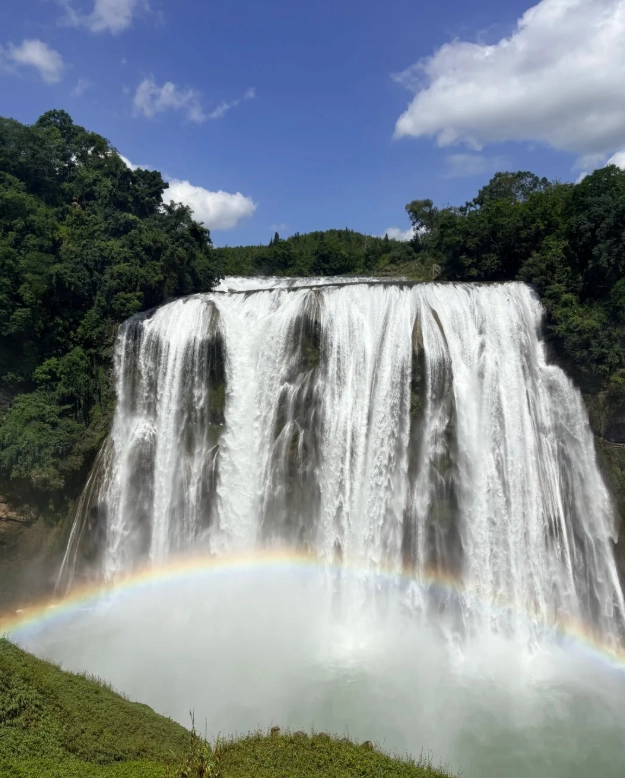
How to Get to Anshun Without Stress
First, fly into Guiyang Longdongbao International Airport (KWE). From there, take a direct high-speed train from Guiyang North Station to Anshun West Station. The journey takes about 30 minutes and tickets cost around 45-80 RMB depending on seat class. You can book through Trip.com or the official 12306 app (create an account with your passport).
Once you're at Anshun West Station, don't fall for touts offering inflated taxi rides. Instead, head to the official taxi stand on the ground floor. To reach the Huangguoshu scenic area, you have two decent options:
- Tourist bus — leaves regularly from the station, around 22 RMB, takes about 1 hour. Look for the sign that says “黄果树” (Huangguoshu).
- Private taxi or Didi — roughly 120-150 RMB, direct to the scenic area entrance. If you're in a group of 3-4, this is worth it.
Insider Advice: Tell your driver to drop you at the Huangguoshu Scenic Area Visitor Center (not the eastern ticket gate). The visitor center is where buses to the actual waterfall depart, and you'll skip a useless 10-minute walk.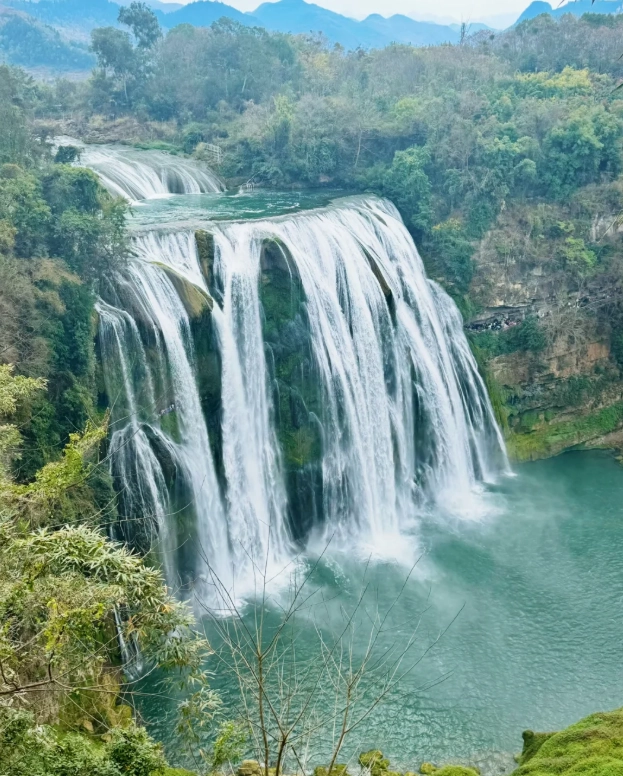
Huangguoshu Tickets: Online Booking Made Easy
Here's what nobody tells you: you must book online in advance, even off-season. The ticket counter is technically there, but they'll often refuse same-day entry to foreign passport holders because they can't process international IDs. Yes, it's absurd, but let's work around it.
The easiest path for international visitors is to book on Klook or Trip.com. Both have English interfaces and accept international credit cards. You'll get a QR code sent to your email — show it at the gate along with your passport.
Ticket prices: Around 160-180 RMB for adults, children under 1.2m are free. Seniors over 60 get a discount, but you'll need to request it on-site. The price includes the entire Huangguoshu complex, which covers three separate attractions: the main waterfall, Doupotang (陡坡塘), and Tianxingqiao (天星桥).
| Item | Detail |
|---|---|
| Opening Hours | 7:30 AM – 6:00 PM (last entry 5:00 PM) |
| Adult Ticket | ~160-180 RMB (confirm on official site) |
| Discounts | Children under 1.2m free; seniors 60+ discounted |
| Booking Platforms | Klook, Trip.com (English supported) |
Note: The price sometimes changes, so always confirm the exact amount at checkout. And yes, they may randomly require you to show your passport at the entrance. Don't leave your hotel without it.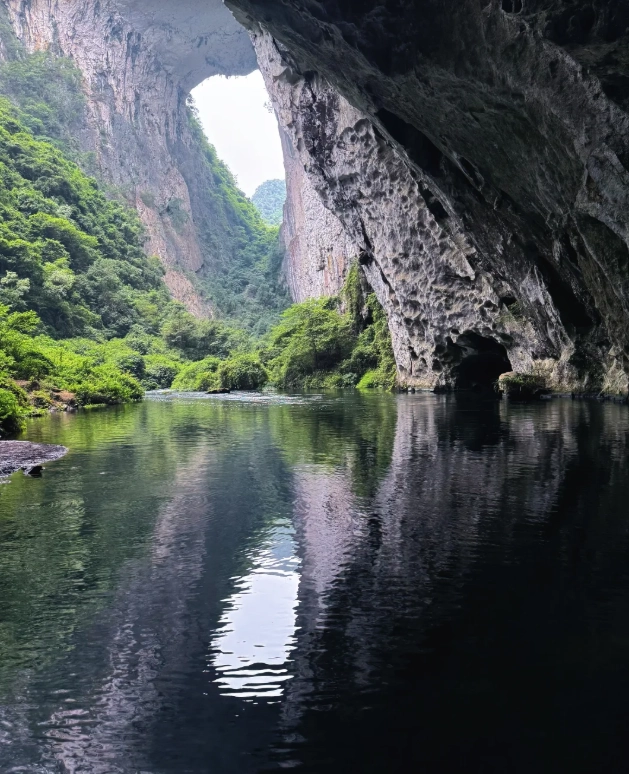
Inside Huangguoshu: My Secret to Avoiding Crowds
Most tourists make a beeline for the main waterfall and then leave, completely missing the underrated sections. My secret route starts with taking the sightseeing bus directly to the end stop — Tianxingqiao. Visit that while everyone else fights for selfies at the main waterfall. Then, work your way backward to Doupotang and finish at the main waterfall around 1:30 PM when the tour groups are eating lunch.
Here's the trade-off: the main waterfall will be more crowded than you want, but the panoramic view is still spectacular. If you hate crowds with a passion, skip the elevated viewing platform and go down to the Waterfall Cave (Shuiliandong). It's less crowded and you'll feel the spray on your face — unforgettable.
Physical note: There are a lot of steep stairs, especially at Tianxingqiao. Wear grip-soled shoes; the stone paths get slippery. I've seen sandals end in tears. There are also glass-bottom observation decks near the waterfall, but I honestly think they're overpriced — the free viewpoints are just as good.
Insider Advice: The sightseeing bus inside the park costs about 50 RMB extra. You might be tempted to skip it, but the sections are kilometers apart. Take it. You're saving energy for the stairs, not walking flat roads.
Beyond Huangguoshu: Longgong Cave and Tunpu
If you have a second day, Anshun has two more gems worth your time: Longgong (Dragon Palace) Cave and the Tunpu villages.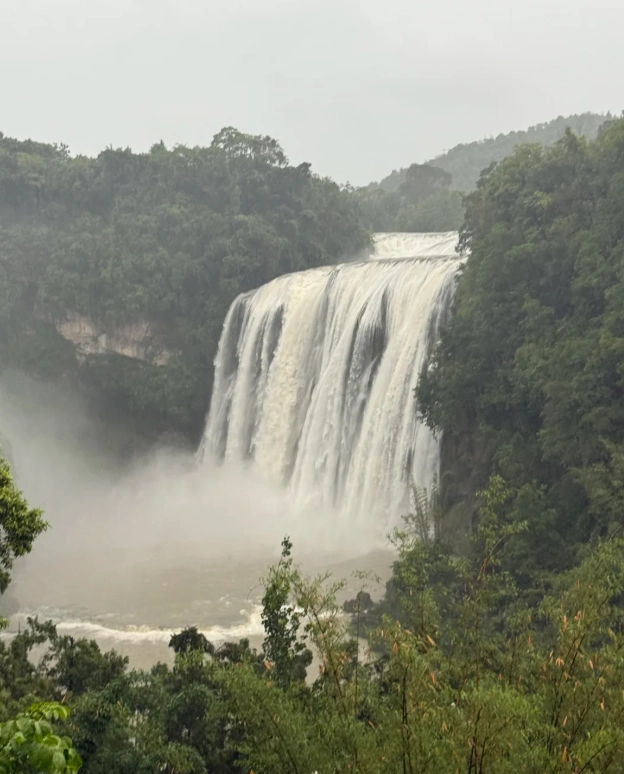
Longgong Cave — A Boat Ride Through a Karst Wonderland
Longgong is a massive limestone cave system where you literally ride a boat through underground rivers. It's about 30 minutes by car from Anshun city center. Tickets are around 120 RMB and you'll need another 20 RMB for the boat ride inside. Don't book online last-minute; use the same platforms as Huangguoshu to avoid ID issues.
The cave is stunning, but be prepared for damp and slippery stairs. The lighting can be dim, so keep your phone flash on. The whole visit takes about 2-3 hours. Cash and mobile payments work here, but bring some cash as backup — international credit cards are not accepted inside the cave.
Tunpu Villages — A Step Back into Ming Dynasty
If you're interested in culture, the Tunpu (屯堡) villages are the most underrated part of Anshun. These stone-built villages were founded by soldiers sent to guard the border over 600 years ago. The most accessible is Benxia Tunpu (本寨) — about 11 kilometers from Anshun city. Entry is free, but the real value is getting lost in the narrow alleys and seeing the traditional “dixi” (地戏) masked opera performances. I always tell my clients to hire the local guide near the entrance — they're usually elderly villagers who speak a bit of Mandarin and their stories make the stones come alive. A small tip of 20 RMB is fine.
Essential Apps for Stress-Free Anshun Travel
Before you even pack, make sure these apps are on your phone:
- VPN (like Astrill or ExpressVPN) — Google, WhatsApp, Instagram and many Western sites are blocked. Set this up at home; it's harder to do in China.
- Alipay or WeChat Pay — Connect your international credit card. Nearly all vendors accept QR code payments. Carry a little cash (100 RMB or so) for emergencies, but don't rely on it.
- Apple Maps or AMap Global — Google Maps is unreliable in China. Apple Maps actually works okay for English speakers, but AMap (with its English interface) is more accurate for local navigation. You'll also want to save screenshots of addresses in Chinese — just show these to taxi drivers.
- Translation app — Apple Translate (offline pack) or Baidu Translate — Essential for menus, bus signs, and when your hands need to be free.
The moment you arrive, connect to Wi-Fi at your hotel and download an offline Chinese map. It will save you when you're between data signals in the mountains.
Where to Eat in Anshun (and What to Order)
Anshun street food is a delicious assault on the senses. The signature dish is Anshun 裹卷 (guǒ juǎn) — soft rice rolls stuffed with spicy vegetables and peanut sauce. Also try 肠旺粉 (changwang fen), a noodle soup with pork blood and intestines. It sounds scary, but trust me — it's a local comfort food you'll crave later.
My personal go-to spot is Taiping Street (太平街) near the city center. Head there in the evening when the food stalls come alive. The first stall on the left after the archway sells amazing guo juan — the family has been doing this for decades. Look for the crowd; that's your sign.
Payment: Almost all stalls accept Alipay/WeChat. Some take cash, but not all. Don't expect to use a foreign credit card. If you're not comfortable with spicy food, ask for “不辣” (not spicy) or “微辣” (mild).
One thing that surprises most tourists: breakfast is big in Anshun. Locals love rice noodles with beef or fried dough sticks. Don't skip it — grab a bowl at any busy noodle shop. A hearty bowl costs just 10-15 RMB.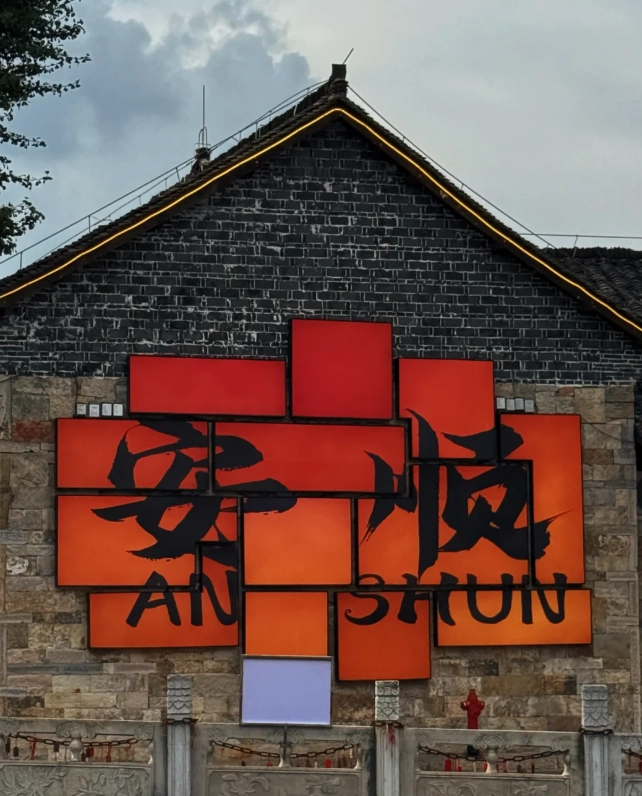
Where to Stay in Anshun: Hotels for Every Budget
Choosing the right base depends on your itinerary. If you only have one day and want to be close to Huangguoshu, there are boutique guesthouses at the foot of the scenic area — but they're overpriced and isolated at night. I'd rather stay in Anshun city center, where you're 10 minutes by taxi from good food and 40 minutes to the waterfall.
| Hotel Name | Distance to Huangguoshu | Est. Price/Night | Best For |
|---|---|---|---|
| Anshun Jialu Hotel | 40 min drive | 250-400 RMB | Mid-range, reliable Wi-Fi |
| Hanting Express (Anshun Center) | 45 min drive | 150-250 RMB | Budget, family rooms |
| Huangguoshu International Hotel | 10 min walk to entrance | 400-600 RMB | Luxury, early conquering |
All the options above have stable Wi-Fi and English speaking staff at the front desk (to some degree). But ask directly if the front desk speaks English — don't assume. Also, if you're a light sleeper, request a room away from the street. In older buildings, noises bleed through the windows.






I'm stingy with 5-star reviews, but this one deserves it. The tips are simple, up-to-date, and they actually work. We arrived at 7:40, used the ticket link in the article, and skipped every line. The thunder of Huangguoshu in the quiet morning was incredible—I genuinely felt emotional standing inside the cave. Without this article, we would have been stuck in the midday crowd rush and humidity. It's just a short read, but it made our entire visit stress-free. Five stars.
Finally, an Anshun guide that gets the details right. The warning about not stopping at the first photo spot made a big difference—we kept going down and found a quieter viewpoint. Doing the route in reverse meant we had the Water Curtain Cave almost to ourselves. The spray from the waterfall soaked my face, but the article even mentioned that, so I had my poncho ready. Every tip felt practical and accurate. It was the best half-day we spent in Guizhou. Highly recommend this article.
This article changed my trip. I followed every tip, especially the 7 a.m. entry and the route order, and walked straight onto the first shuttle with zero wait. Standing on the lower platform with only the waterfall's roar and the morning mist around me was unreal. By 9:30 the place was swarming, but we were already heading out with the best photos. If you're going to Huangguoshu, read this first—then ignore every other guide and just follow this one.
This is a good article, but I had to give it 4 stars because of a few gaps. The early-morning advice worked beautifully—we got in before the tour groups and had the main viewpoint almost to ourselves. Huangguoshu in the early light was everything I imagined: huge, thundering, rainbows in the spray. However, the directions to the Water Curtain Cave were a bit vague, and we took a couple of wrong turns. It also doesn't mention how slippery the cave walkway gets. Still, following this article saved us from the worst of the crowd chaos. Worth reading before you go.
I expected more from this article. The main advice is basically 'go early,' which is fine, but the route description sent us the long way around and we missed the quiet window anyway. We followed the so-called reverse route, ended up at a locked gate near the gorge, and had to backtrack. The waterfall itself was magnificent—the roar hit you before you saw it—but our morning felt rushed and confusing. The article needs clearer maps and updated shuttle times. Not useless, but not as helpful as I'd hoped.