 Ting Chen
What's Inside This Guide
I still remember the exact moment I got soaked at Huangguoshu. Not from the waterfall spray — from a rogue wave of tourists shoving for a selfie at noon. That's the thing about 4 days in Anshun: it rewards early risers and punishes anyone who trusts outdated travel blogs. Most foreigners rush here, snap a photo, and leave. They miss the caves, the secret hiking paths, and the rice terraces that make Guizhou one of China's most underrated provinces. So let me save you the trouble. This is the itinerary I actually use for my clients, honed over years of guiding.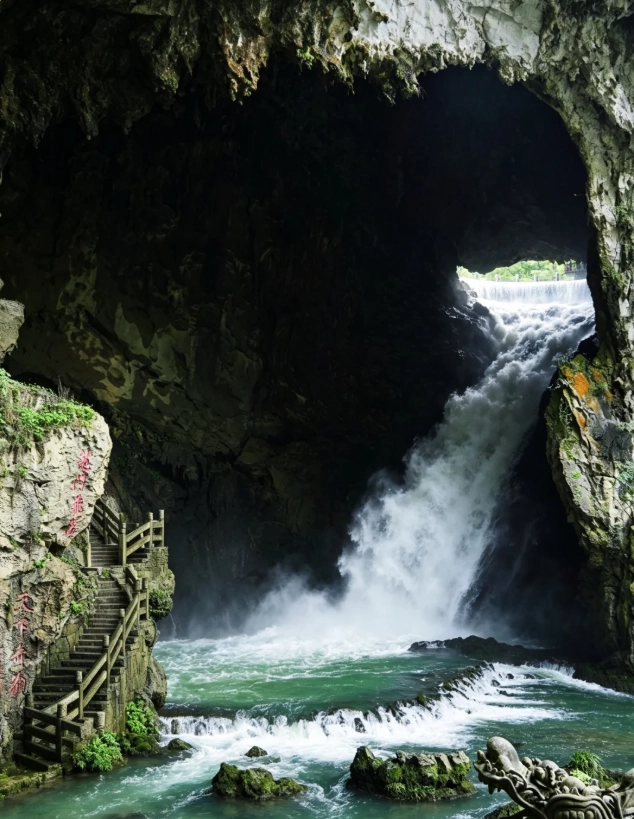
Why Anshun Deserves 4 Days
Anshun is a prefecture-level city in central Guizhou, sitting on the edge of the Yunnan-Guizhou Plateau. It's the gateway to two of China's most spectacular natural wonders: the Huangguoshu Waterfall (Asia's largest) and the Dragon Palace (a massive karst cave system). But beyond these big names, Anshun is surrounded by ancient Tunpu villages, where descendants of Ming Dynasty soldiers still live in stone fortresses.
Most tourists arrive on a day trip from Guiyang, tick off the waterfall, and disappear. The result? They miss the cave's bizarre underground lakes, the eerie beauty of twilight over abandoned rice paddies, and the region's soul-stirring sour food. Over the years, I've learned that a 4-day Anshun itinerary is the perfect sweet spot—short enough for a week-long China tour, long enough to make you feel like you've actually seen Guizhou.
But a detailed plan only works if the fundamentals are in place. Let's talk about the things nobody mentions.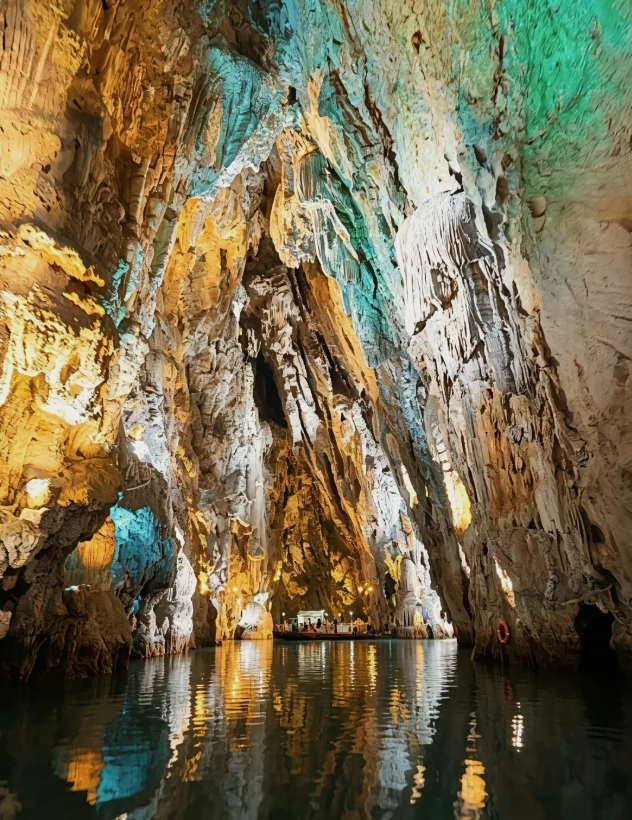
Before You Go: The Practical Starter Kit (Don't Skip This)
Foreign travelers lose time every day to avoidable friction. Here's what you need to handle before you arrive:
| Item | What You Need to Know |
|---|---|
| Payment | Alipay or WeChat Pay linked to a foreign card is king. Cash is rarely accepted at major attractions, but small street vendors still take coins. Bring at least ¥200 in smaller bills as a backup. |
| Navigation | Google Maps is a paperweight in China. Download Apple Maps (works surprisingly well) or the AMap Global app (also called 高德地图 in Chinese) for accurate walking, driving, and public transport. |
| Booking | Most tickets require a passport for real-name registration. Use Trip.com or Klook for a hassle-free English interface. If you're comfortable with Chinese, WeChat mini-programs are the fastest and often cheaper. |
| Language | Nobody outside tourist centers speaks English. Download Apple Translate or Baidu Translate. Learn "bu yao gang jiao" (don't be polite) is a lie—nobody will understand. Actually, learn "piao wu li" (no tip) to avoid awkwardness, and "zhe ge duo shao qian" (what's the price). |
| VPN | The internet is filtered. Set up a reliable VPN before you land, and test it at home. I've seen many travelers arrive and realize they can't access their email, work inbox, or even WhatsApp. |
| Power | China uses 220V with two-pin sockets (no three-pin). Bring a universal adapter. |
Pro tip: Take a screenshot of your passport page and keep it on your phone. Most scenic spots will need the number, and you'll be asked for it far too often to keep fishing out the physical document.
Day 1: Huangguoshu Waterfall Without the Chaos
Huangguoshu Waterfall is the poster boy of Anshun tourism. It's 77.8 meters tall and 101 meters wide, and during the rainy season (June-August) it roars with terrifying power. I've watched tourists get so overwhelmed by the mist they can't speak.
To beat the crowds, you absolutely must start your day at 7:00 AM. Anshun city is about 45 kilometers from the waterfall, so a morning taxi will cost around ¥120-150. Alternatively, head to Anshun East Bus Station and take the tourist bus to Huangguoshu—about 70 minutes and only ¥22, but it leaves at a fixed time. I recommend booking a private car for 4 days (more on that later) if you're not comfortable with Chinese bus signs.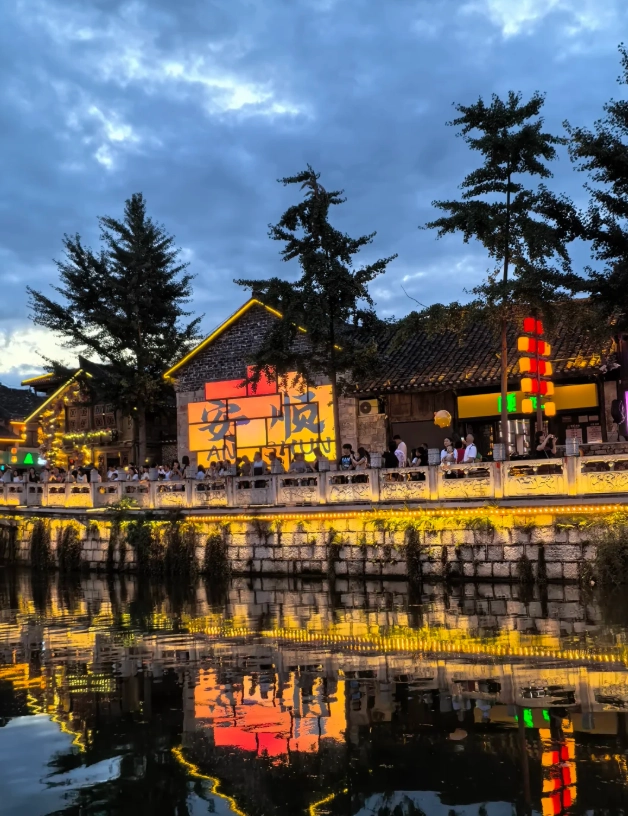
When you arrive at the ticket office, have your passport out. The staff will scan it to buy a real-name ticket, then you'll board the mandatory shuttle bus to the core area. The main ticket (with shuttle) is around ¥160-200 depending on the season. You should check the exact price on Trip.com before you go. Expect to pay around ¥160-200 depending on the season. Actually, the official price is ¥160 for the waterfall area plus ¥50 for the shuttle, but I've seen prices go up during holidays. To avoid misleading you, I recommend checking the current rate on Trip.com or the official WeChat account.
Once inside, first stop: the Waterfall Viewing Platform. Take the shuttle directly to the "Dengshan" stop, then walk down the stone path. You'll hear the roar before you see it. The view from the viewing platform is postcard-perfect, but by 10 AM it's already shoulder-to-shoulder.
Here's my secret: skip the platform and go directly to the Water Curtain Cave (shuilian dong) first. It's a cave path that runs behind the waterfall—you can literally touch the falling water. If you go there first, you'll be nearly alone. By noon, the queue to enter the cave can snarl for an hour. I once saw a tourist nearly panic during a 30-minute standstill inside, surrounded by dripping walls and no escape. Not fun.
Timing: Start at the Water Curtain Cave at 8:30 AM, then circle around to the Dalongtan pool and the lower observation points. By 11 AM, you've seen the best. Then you can either hike up to the "Tianxing Bridge" (a scenic bridge area) or head back to town. The whole Huangguoshu park takes 4-5 hours.
Insider advice: Pack a light raincoat or a cheap poncho. The mist from the waterfall will drench you — especially in the cave. I always carry a ziplock bag for phones and a small towel to dry glasses. No one talks about this, but it's the difference between a pleasant visit and a miserable one.
Day 2: Dragon Palace (Longgong) — A Cave Adventure That Beats the Crowds
Dragon Palace, or Longgong, is the other must-see attraction near Anshun. It's a massive karst landscape with caves, waterfalls, and a hidden underground river. The highlight? You take a boat ride through a dark cave with almost psychedelic rock formations. It's an experience you won't forget.
The site is about 30 kilometers from Anshun. You'll need to take a taxi (about ¥100 each way) or join a small group private tour. A bus also runs from Anshun East Station to Longgong directly—just say "Longgong" in Chinese and you'll be pointed to the right bay. The ride takes about 45 minutes.
Ticket prices are similarly passport-dependent. Plan on around ¥120-150 for the main cave, which includes a boat ride. There's also a "Longgong Cableway" and an additional "Quzhou Lake" area, but the main cave is the centerpiece. Book via Trip.com to avoid the language barrier.
When you get in, you'll first walk to the cave entrance through a gorgeous forest path. Then you'll board a small boat (it holds about six people) and drift into the pitch-dark water. The lamp-lit stalactites reflect on the water like a mirrored ceiling. It's eerie, humbling, and honestly, far more impressive than I expected.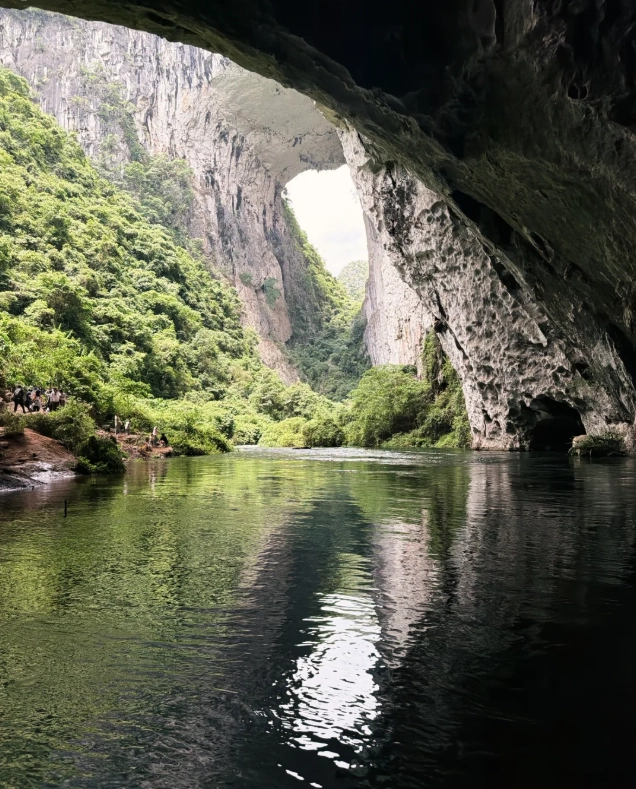
Pro tip: The temperature inside the cave is around 10-12°C year-round. Even in July, you'll want a light jacket or long sleeves. I always carry a fleece, even on scorching days—nobody enjoys shivering through the 30-minute boat ride.
After the boat stops, you can walk through a series of "halls" (there are three giant caverns) before taking a shuttle back to the exit. The whole experience takes 3-4 hours. Around 2 PM, head back to Anshun and take a nap or wander the local parks.
One thing I love about Longgong: it's wildly underrated in the West. I've seen English travel forums dismiss it as a "poor man's Huanglong." That's nonsense. Longgong has a raw, mysterious atmosphere that you simply don't get from photos. Bring a headlamp if you have one—the cave's darkest corners are unreachable with just a phone light.
Day 3: Tunpu Villages & the Secret Culture of Ming Dynasty Descendants
Tunpu villages are one of Guizhou's hidden gems, and they're rarely visited by foreigners. These are fortified stone villages built more than 600 years ago by soldiers loyal to the Ming Dynasty. After the dynasty fell, many soldiers stayed and formed a distinct subculture that today seems frozen in time.
The most accessible Tunpu village is Tianlong Tunpu (also known as "Tianlong Township"), about 23 kilometers from Anshun. It costs around ¥40-60 and takes about 30 minutes by taxi. A slightly less commercial option is Baojia Tunpu, which is smaller but has more authentic street life. If you only have time for one, I'd pick Tianlong for its preserved fortifications and the Dixi opera shows (where they wear carved masks).
What to do there: Walk the stone alleyways, visit the "Common Ancestral Hall," and climb the watchtower for panoramic views of nearby rice terraces. The buildings have a distinctive gray-slate roof and whitewashed walls—it's easy to see why they've survived centuries.
Pro tip: Go on a sunny weekday. Villagers often gather in the square for a casual game of chess, and they're curious about visitors. A few words of basic Mandarin will get you far. I've had some of my best experiences just sitting on a stone bench, watching the village unfold.
For lunch, join a local "Tunpu-style" farmhouse meal. They serve "sour soup" (not to be confused with the Dong sour soup), which is a mild, fermented broth, plus dishes like "du-si" (a weird crossword) and the famous "changwang" (a kind of fermented tofu). I know it sounds strange, but it's delicious. Order with a local: they can point you to the best family-run spot. Expect to pay ¥30-50 per person for a full meal.
If you're lucky, you might catch a Dixi (地戏) performance—a ritualistic dance with drums, masks, and clashing spears. Shows are not always scheduled; ask your hotel or the village ticket office for the day's schedule.
In the late afternoon, return to Anshun. If you're feeling adventurous, visit the Old Town area around "Miao Yuan" or "Hongshan Lake" for a relaxed evening walk. Alternatively, find a local tea house that serves "three-bean tea"—a traditional snack tea that comes with puffed rice, peanuts, and fried beans. It's the perfect end to a cultural day.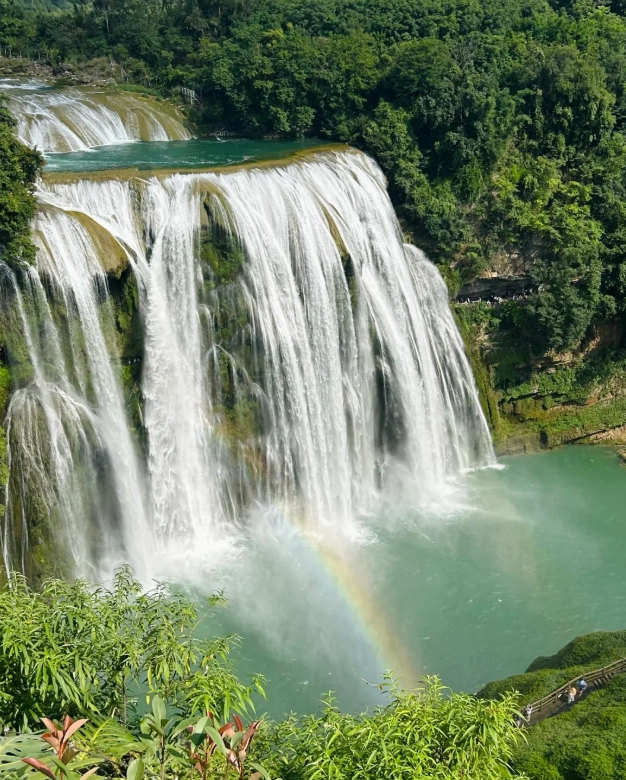
Day 4: Slow Morning, Local Markets, and Getting Out of Anshun
Your fourth day is a buffer. It's for sleeping in, wandering, souvenir hunting, and getting to your next destination.
If you're leaving Anshun by high-speed rail (which connects to Guiyang in about 30 minutes), plan your train for early afternoon. Use the morning to explore Anshun's people's market near the train station. You'll find fresh dragon fruit, chili paste, pickled vegetables, and the city's famous "Huaxi" beef noodles. The market opens at dawn, but even at 9 AM there's a frenzy of haggling. Bring cash and a smile—vendors will be amused by a foreigner trying to buy five half-kilos of chilies.
Instead of doing a prepared activity, I always recommend travelers do what the locals do: grab a bowl of changwang noodle (肠旺面) from a brambled street stall, then walk along Hongshan Lake or visit the Anshun Museum if the weather turns sour. These unscripted moments often turn into the most cherished memories.
If you have an extra half-day (say, a flight in the evening), consider visiting the Ganlian Ancient Town (甘莲古镇) — a less-polished waterfront settlement that's perfect for photographers. It's about 10 km from the city center and honestly doesn't need more than 2 hours.
When to leave: If you're going onward to Guiyang, book a high-speed train ticket in advance. The station here can be chaotic, and seat availability disappears quickly. If you're heading to Kunming or Guangzhou, Anshun has direct trains as well. I prefer to use Trip.com to book rail tickets—it's reliable and shows English station names.
Where to Stay in Anshun (And Where to Avoid)
Anshun isn't a huge city, and the accommodation scene is surprisingly varied. You have three main options: stay near the train station (convenient for arrival/departure), stay in the old city (more interesting for food), or stay in a luxury resort closer to Huangguoshu (best for nature).
| Area | Pros | Cons | Best For |
|---|---|---|---|
| Near No. 2 Bus Station / East Station | Easy access to buses to Huangguoshu and Longgong; many cheaper options | Not walkable to nightlife; less charming | Budget travelers, day-trippers |
| Old City (near Hongshan Lake) | Lively local markets, street food, closer to Tunpu villages | Rooms may be dated, some lower-end hotels have noise | Travelers who want culture and food |
| Huangguoshu resort area | Immediate proximity to the waterfall; stunning views | Expensive, isolated, far from other sites | Luxury travelers, honeymooners |
My personal pick for a 4-day trip: stay in the Old City. My favorite spot is the Swissotel Anshun (you'll see it near the lake) — it has a stable Wi-Fi, a reliable breakfast spread, and English-speaking staff. For a budget fancy, look for a local Binguan (guesthouse) near the East Bus Station. Expect to pay ¥200-400 per night for a mid-range hotel on the mainland, but the rates can double during Chinese holidays, so book early.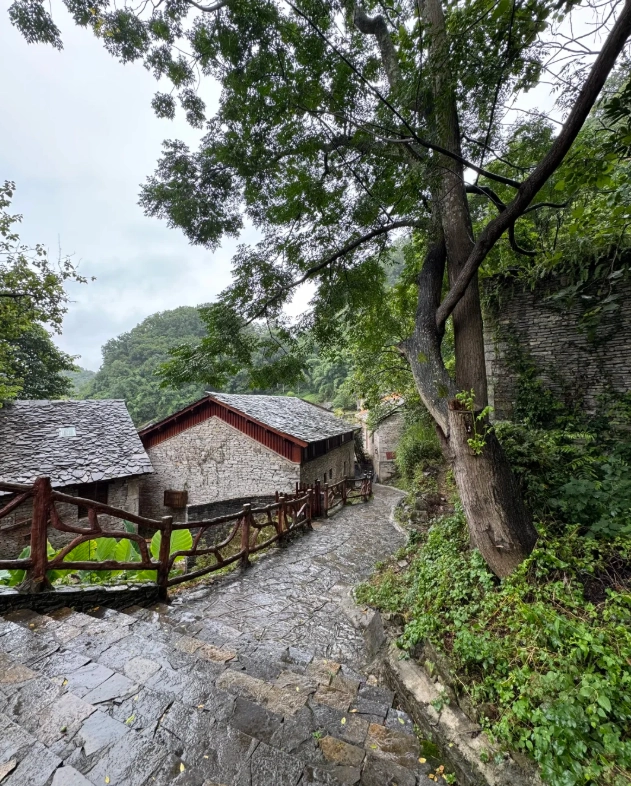
Pro tip: If you pick a guesthouse, confirm that it has a lift (elevator). Many older buildings in Anshun do not, and carrying suitcases up to the 5th floor in 30°C heat is a brutal experience I've endured once. Never again.
What to Eat in 4 Days: From Sour Soup to Noodles
The food in Anshun deserves its own paragraph. Guizhou cuisine is known for sour and spicy flavors, and Anshun is no exception.
- Changwang Noodles (肠旺面): A specialty of this region—alkaline noodles topped with pig's blood, dried tofu, and numerous chili crisps. It sounds intense, but it's an addiction. Every local has a favorite stall; I like the one on "Zhonghua West Road" near the old city.
- Sour Soup Fish (酸汤鱼): This is a hotpot-style dish where the fish is simmered in a sour broth made from fermented rice and tomatoes. It's tangy, fragrant, and the ultimate comfort food. Go to "Huaxi, Anshun" area for the best.
- Tunpu Noodles (屯堡蛋面): A specialty of the Tunpu villages. It's a yellow egg noodle with a broth of pork and pickled vegetables; the taste is so unique you'll dream about it.
- Three-Bean Tea (三豆茶): A snack beverage made by pouring hot water over roasted beans, peanuts, and rice. It's more like a light soup with crunch. Perfect for a rainy afternoon.
- Niuqi (Milk Cake): A Tang dynasty-era dessert made from milk, butter, and flour. Not every restaurant has it, but ask around—it's a local pride.
Where to eat: Anshun's street food scene is chaotic, but that's part of the fun. Go to the night market along Hongshan Lake (it doesn't have a single English name, just ask for "Hong Shan Hu" to a local). Note that most vendors are cash-only. But they're used to bargaining, so carry small bills.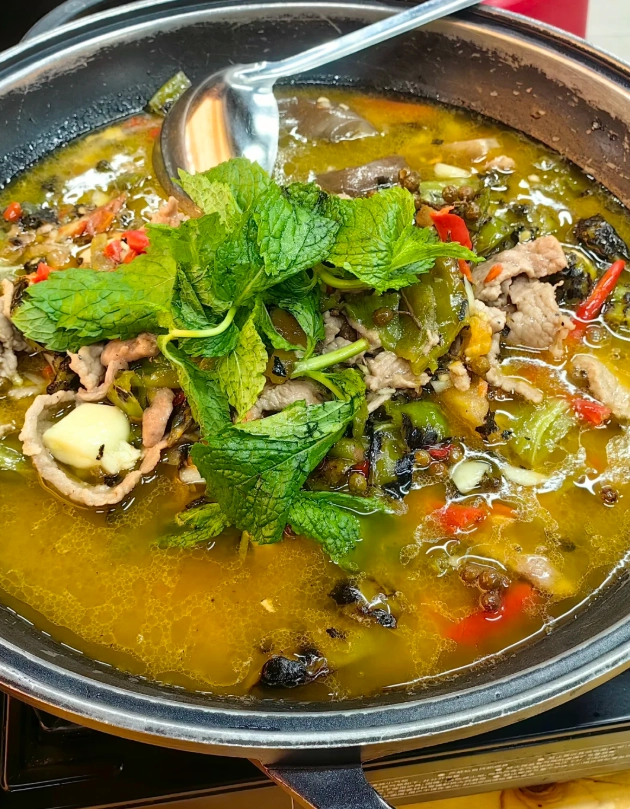
Getting Around: Transport, Payments, and My Biggest Culture Shock
Transport in Anshun is manageable but requires some resilience.
From Guiyang International Airport to Anshun: The best way is a direct high-speed train from Guiyang North to Anshun West (about 30 minutes, ¥45). From the airport, you can take a taxi to Guiyang North Station (about 30 minutes, ¥80-100). Alternatively, there's a direct shuttle bus from the airport to Anshun—but it takes 2.5 hours and isn't much cheaper. My recommendation: always take the train.
Within Anshun: The city has a decent taxi network. Didi (China's Uber) is the cheapest and easiest — install the app and link your Alipay. Don't expect the driver to speak English; simply show your intended destination in Chinese characters. This is why I always carry a printed card with my hotel's name in Mandarin.
Getting to the attractions: Each major sight has its own bus line from Anshun East Station. But for a 4-day intensive itinerary, I strongly suggest hiring a private car and driver for the entire trip. It costs roughly ¥800-1,200 for a day-long rental, including fuel and tolls. Split among four people, it's not bad. In my experience, drivers who work with tourists are cheap, safe, and often know the best times to visit each site. You can arrange this through your hotel or via Trip.com's "Private Transfers" option.
The biggest culture shock: Crossing the road. In Anshun, crosswalks exist, but drivers don't fully respect them. You must walk slowly, assertively, and keep eye contact with the driver (they'll stop, but only if you're confident). Jaywalking is the norm, so don't wait for a green light—just go with a group of locals.
FAQ: Your 4-Day Anshun Questions, Answered
Final Thoughts
4 days in Anshun is a rare chance to see a less-traveled side of China. The combination of epic nature, ancient culture, and honest, soul-warming food is hard to beat. I've done this route dozens of times—as a guide, as a friend, and as a solo traveler—and it never gets old.
If you're willing to wake up early, hand over your passport a few times, and practice a little patience with the digital hiccups, you'll leave with memories that outshine many of China's more famous destinations.
Safe travels, and maybe I'll see you out there.
Verified and fact-checked by the editorial team.






No comments yet.