 Tao Xu
Quick Navigation — Skip to the Part You Need
The first time I drove a minivan toward the Vietnam-China border, my GPS went dead. The second time, a water buffalo blocked the road — and a tour bus nearly clipped my rental's mirror. By my tenth visit, I had the routine down. This is how to visit Ban Gioc-Detian Transnational Waterfall without the chaos.
Most foreign travelers assume that booking a ticket to the waterfall is the same as getting there. It isn't. You may need a border permit, a VPN, or a driver who speaks zero English. I've watched travelers panic when their cash didn't work, couples argue over which side to visit, and touts triple prices for a 10-minute boat ride. I've also stood in awe as the limestone cliffs disappeared into mist. This guide squeezes a decade of border experience into a single page.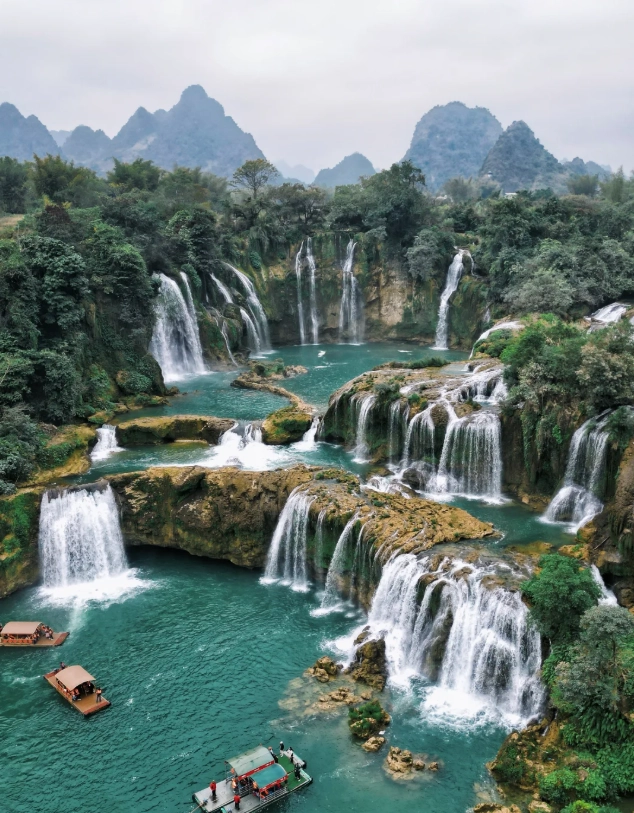
Here is the short version: if you only have one day, visit the Chinese side — it's easier, safer, and still jaw-dropping. The Vietnam side offers a wilder view but demands a permit, a long drive, and plenty of patience. Keep reading, because the two sides are not interchangeable.
Why Ban Gioc-Detian Transnational Waterfall Is a Must-See
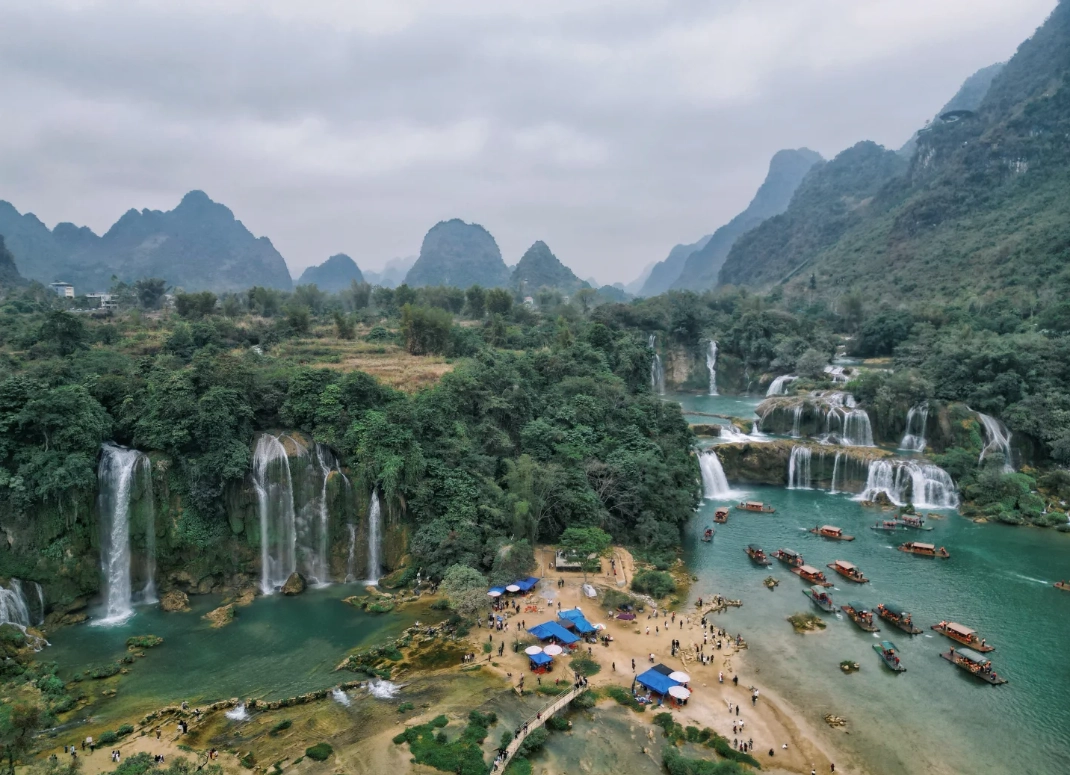
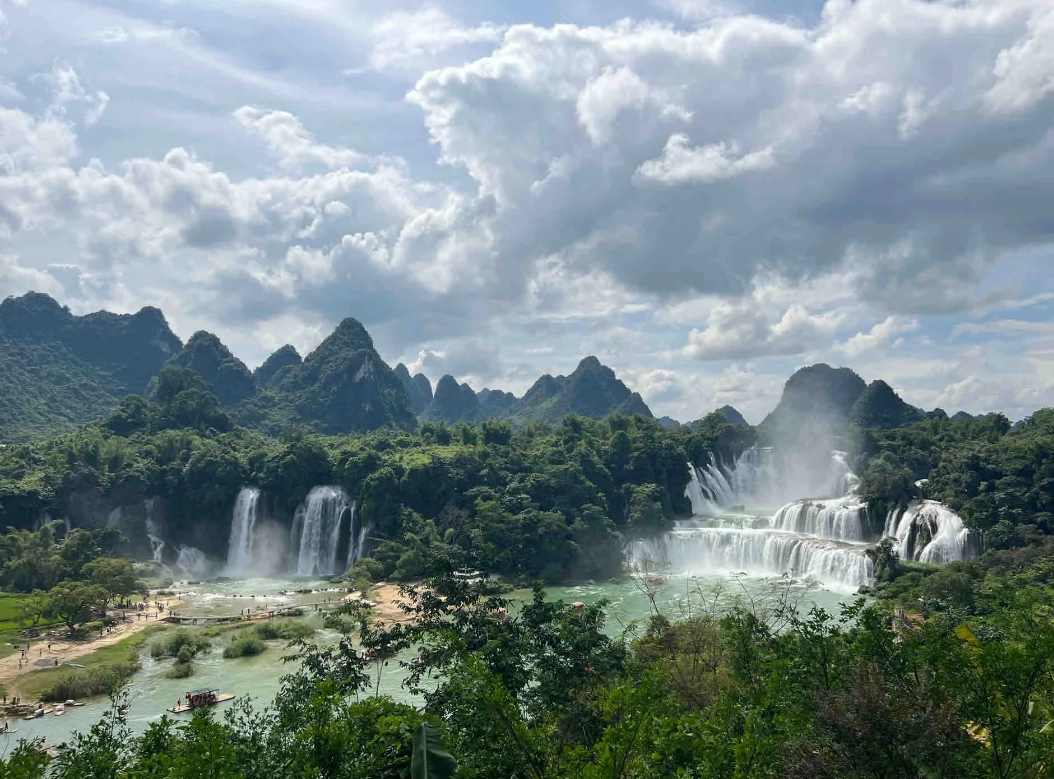
I've guided dozens of travelers to this spot, and not one has left disappointed. The waterfall is one of the widest cross-border falls in Southeast Asia. The water drops over a series of limestone ledges, creating a wide curtain that thunders in the wet season. On the Vietnamese side, it's called Thác Bản Giốc; on the Chinese side, Detian Waterfall (德天瀑布). You don't need to pick one — but most visitors do.
I always tell my clients to come in the late summer or early autumn. The volume peaks after the rains, and the surrounding karst mountains look impossibly green. In winter, the falls shrink but the mist can create moody shots.
How to Reach Ban Gioc-Detian Transnational Waterfall
From China: The Easier Route
Starting from Nanning, the capital of Guangxi, is your smoothest option. The distance is roughly 200 kilometers, about a 3-hour drive through scenic mountains. You can fly into Nanning Wuxu International Airport (NNG) from major Asian cities, then either join a day tour or arrange a private driver. Direct public buses are scarce; a tour package saves you the headache of coordinating local minibuses.
I recommend booking a day trip on Trip.com or Klook in advance. These platforms are English-friendly, accept international cards, and include the park entrance and round-trip transport. Expect to pay between $40 and $70 per adult. The bus usually leaves around 7:30 a.m. and returns around 6:30 p.m. — a long day, but doable if you sleep on the way.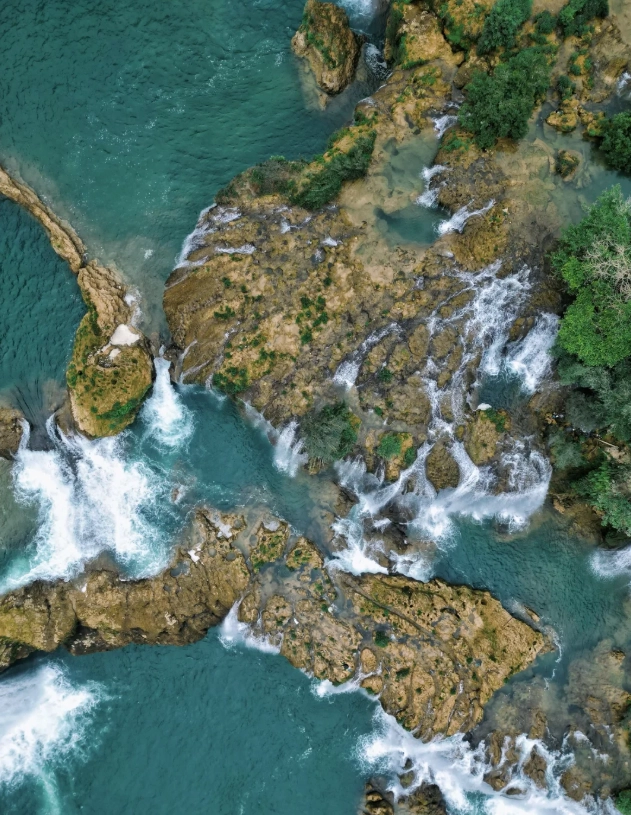
From Vietnam: The Wild Side
The Ban Gioc side in Vietnam is not a simple DIY destination. It sits in Trung Khanh District, Cao Bang Province, about 280 kilometers and six winding hours from Hanoi. Because the area is a border zone, foreign travelers must obtain a permit issued through a licensed tour operator. You cannot just rent a motorbike and drive up.
Your best bet is to book a multi-day tour from Hanoi via Klook or a local agency. The package usually covers the permit, a guide, transport, and sometimes a homestay in Cao Bang. Prices hover around $100–$150 per person, excluding hotel nights. The upside? You get a raw, unpolished experience with much fewer tourists.
China vs. Vietnam: Which Side Wins for Your First Visit?
If your time is limited, choose China. If you crave adventure, choose Vietnam. Here's a breakdown to help you decide: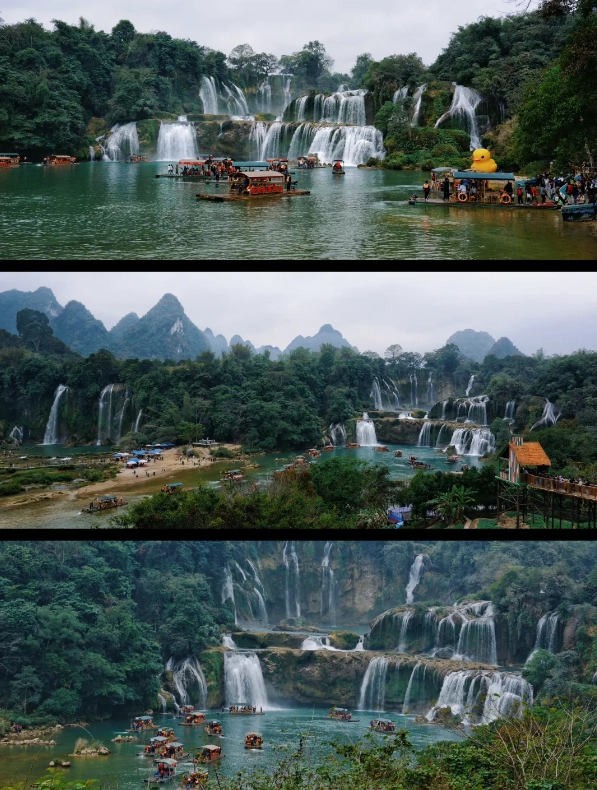
| Aspect | China (Detian) | Vietnam (Ban Gioc) |
|---|---|---|
| Ease of access | High | Low — permit required |
| Visa requirement | China visa (or visa-free entry) | Vietnam visa + border permit |
| Typical cost (day) | $40–$70 | $100–$150 |
| View from | Walkways and organized boat | Closer to the base, rustic |
| Crowds | Busy after 10 a.m. | Quieter |
| Best for | First-timers, families | Backpackers, photographers |
Step-by-Step: How to Visit Ban Gioc-Detian from China
Follow this sequence to avoid the rookie mistakes I made. I've organized this as a countdown rather than a list, because timing is everything.
- Secure your China visa or confirm visa-free entry. Check the Chinese embassy website for your nationality. Without a valid visa or the correct visa-free status, you won't board the plane.
- Fly into Nanning Wuxu International Airport (NNG). Book a hotel in the city center. I like the area near Chaoyang Square because it's close to food streets and bus terminals.
- Book your day tour at least 3 days in advance. Use Trip.com or Klook. Search for “Detian Waterfall Day Trip from Nanning.” The tour will pick you up at 7:00–7:30 a.m. near your hotel.
- Bring your passport (or a clear copy) and the booking confirmation. The park gate sometimes scans your passport for admission. Have paper copies in case of trouble.
- Pack the day-bag: water, snacks, a rain jacket, and a compact umbrella. Mist from the falls will soak you faster than you expect.
- At the gate, take the shuttle bus (usually included) to the main viewpoint. The shuttle runs every few minutes. The line looks long but moves fast.
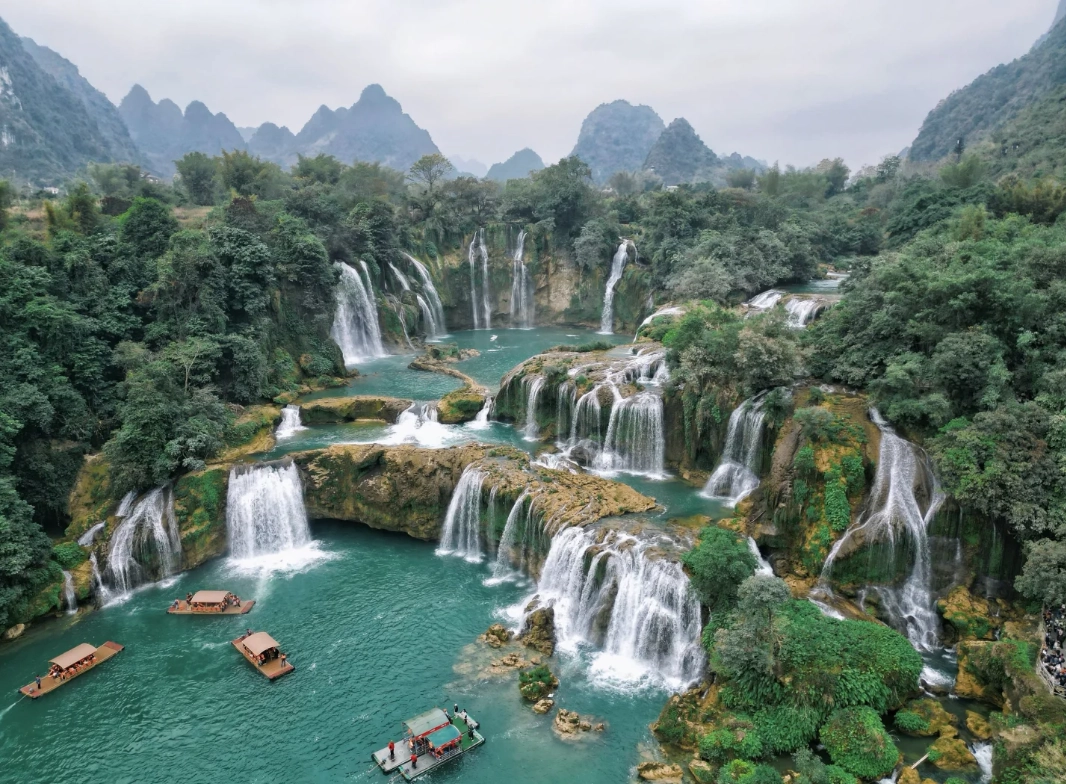
- Walk the upper boardwalk first, then go down to the dock. The lower deck gives the classic wide view. The boat ride (~30 RMB cash) takes you to the base of the falls — worth it once.
- Be back at the parking lot 15 minutes before the group departure. Chinese tour buses leave exactly on time, and there's usually only one afternoon bus back.
Practical Tips for Foreigners: Payment, Maps, and the VPN Question
Let's deal with the three things that scare every foreign visitor.
- Payment: The Chinese side of the waterfall is in a rural area. The park ticket office and most vendors accept Alipay or WeChat Pay. Cash (RMB) is sometimes accepted but changes are hard to get. I always carry 200 RMB in small notes for the boat ride and restrooms. International credit cards are rarely accepted outside hotels.
- Maps: Google Maps is not accurate in China. Use Apple Maps (which works with local navigation) or download the AMap Global app before your trip. Save the Chinese name 德天瀑布 (Détiān Pùbù) on your phone to show drivers. On the Vietnam side, Google Maps works okay, but download offline maps because mountain roads often lose signal.
- VPN: If you fly into China, your messaging apps, Instagram, and Google services will be blocked without a VPN. Install one before you arrive — many popular VPN apps won't work if you try to download them inside China. On the Vietnam side, you won't need a VPN.
- Translation: Download the Baidu Translate app with the Chinese and English offline packages. It helps with signs and bargaining.
- Network: For Chinese eSIM, buy an international data roaming plan from your home provider. It usually routes through a whitelisted server and works without a VPN. For Vietnam, a Viettel SIM is cheap and reliable.
Pro Tip: If you're coming from Vietnam, don't rely on hosted VPNs to access Chinese services. Instead, cross into China through the airport after your Vietnam trip and use the day-tour method above.
Hidden Viewpoints and Photo Secrets
You can take the same shot as every tourist — or you can steal these angles I've discovered over the years.
- Go to the upper walkway at 8 a.m. The light is soft, and the misty karst background looks like a Chinese painting. By 10 a.m., the sun turns harsh and the humidity rises.
- Don't shoot from the main platform. Instead, walk about 100 meters upstream along the wooden path. You'll find a spot where the waterfall splits into multiple cascades. This is where locals take their own family photos.
- If you take the boat ride, sit on the left side facing the falls. The captain will rotate gradually, but the best and widest view comes to the left as you approach.
- Bring a wide-angle lens or a phone with 0.5x mode. The waterfall is wide, and you'll want to include the cliffs and the river. Also, a polarizer helps cut glare off the wet rocks.
Frequently Asked Questions (FAQ)
Verified and fact-checked by the editorial team.





Honestly one of the best border crossings I've ever visited. The waterfall spans both countries and looks incredible from the wooden walkway. We went in the late afternoon when the tour groups were leaving, and it felt like a different world. The mist made a tiny rainbow near the middle cascade, and we just sat there for half an hour taking it all in. Parking was cheap, and the food stall near the entrance had great grilled corn. If you're coming for photos, bring a waterproof bag for your camera. I'd rate it 10/10 if I could.
Decent visit, but definitely a few frustrations. Getting here by motorbike from Cao Bang was a bit rough with potholes, and once we arrived the staff at the ticket booth were not super helpful in English. The waterfall itself is spectacular and the border backdrop is unique. We paid for the shuttle to the upper viewpoint and felt that was worth it. Just not the smoothest experience overall—especially if you're expecting clear directions or signposts. Maybe better with a guide.
This place is a hidden gem if you plan it right! We followed the cost-cutting tips and stayed in a homestay about 20 minutes away instead of splashing out on a hotel nearby. Woke up at 6am, reached the entrance just as it opened, and had the whole viewing deck almost to ourselves. The sound of the water rushing was so loud and calming at the same time. We didn't do the bamboo raft because it felt a bit pricey, but the free walking path gave us more than enough epic photos. Highly recommend, just bring cash for the shuttle.
It's a beautiful waterfall, no doubt. But I was honestly a bit disappointed with the lack of clear signs once you get to the Detian side. We ended up wandering around and missing the view platform because guides online made it sound easier than it was. Also the ticket price felt a little high for what you get if you're not doing the boat. The scenery is still amazing, but I'd say manage your expectations and give yourself extra time to figure out the route.
Went here last week after reading a similar guide, and honestly it saved us a ton of money. We parked at the Vietnam side and walked across the border crossing early before the tour buses showed up. The waterfall is absolutely stunning, but the real win was avoiding the midday crowd. By 10am it was packed, so go as early as you can. The mist from the falls soaked us, so bring a poncho. We spent about 4 hours total including a quick boat ride near the base. Totally worth it and way cheaper than the organized tours we saw.
This article gave us decent expectations but missed some key logistics. We followed the public bus advice from Cao Bang and ended up waiting over an hour for a connection that never came. Finally paid for a private ride and arrived at Ban Gioc with only 45 minutes before the last boat left. The waterfall itself was beautiful, but we couldn’t take the raft and the viewpoint was already half in shade. The cost-saving tips are okay for drivers, not so much for budget travelers relying on public transport. Go with careful planning and extra time.
The guide is helpful overall, but I wish it had mentioned that the border checkpoint closes by 17:00 and can get surprisingly busy on weekends. We entered from the Vietnam side, paid the small entrance fee, and the view of the falls was phenomenal — the mist was so heavy my glasses fogged up. But the last 30 minutes I kept glancing at my phone because we worried about getting back to the gate. It didn’t ruin the trip, but I wouldn’t say the planning info was 100% complete. Still a solid 4 stars.
Read this before my trip from Hanoi and the advice about choosing a weekday turned out to be the golden ticket. I arrived on a Wednesday late morning, and maybe there were only ten other people around. The water was so clear and turquoise close to the waterfall, and the limestone karsts mirrored in the pool. The article also warned about touts but I didn’t get bothered at all. It was honestly one of the most magical places I’ve visited. Save the article, thank me later.
Ok I’m normally too lazy to do research, but this guide made it stupidly easy. The money-saving tips are legit: we shared a private car from Cao Bang with two other travelers and the cost came out way below any package. The article said not to skip the boat ride, and wow — being near the multi-tiered falls feels like standing in an open-air shower. Bring a dry bag for your phone. I’m going to recommend this page to every backpacker I meet.
This article was spot on for beating the crowds. I followed the advice to arrive at the Cao Bang side right when the ticket booth opened and had the main viewing platform nearly to myself for a solid 20 minutes. The waterfall thundering and the spray hitting my face before the tour buses rolled in — exactly the experience I wanted. The cost breakdown in the article saved me from paying for a day tour; I just rented a motorbike in Cao Bang and paid the entrance fee plus a quick bamboo raft ride. If you only read one guide before going, let it be this one.