 Hong Ma
Quick Navigation — Skip the Fluff
- Why Xian Metro Map 2026 Changes Your Trip
- How to Read Xian Metro Map 2026 Like a Local
- How to Pay for Metro Fares in Xi'an (Even with Foreign Cards)
- Best Metro Stops for Xi'an's Iconic Attractions
- 24-Hour Xi'an Itinerary Using Only the Metro
- Real Questions Travelers Ask (FAQ)
- Fact-Check: My Vow to You
Just touched down in Xi'an and your phone's dying? Let me save you from a world of pain. The Xian Metro Map 2026 is your most honest travel buddy — it's fast, cheap, and the only way to skip the city's notorious taxi gouging. I’ve been leading tourists through these underground tunnels for over a decade, and here’s my promise: after you read this, you'll navigate the metro like a local — even if you can’t read a single Chinese character.
The biggest mistake I see? Tourists either rely on overpriced private drivers or try to use Google Maps, which fails in China. The metro solves both — but only when you know which exit leads to what, and how to pay without a Chinese bank account.
Here's the good news: you don't need to speak Mandarin to ride the Xi'an metro. Every station has English signs, and the network keeps expanding — by 2026, you'll be able to reach almost every major sight without ever sitting in traffic.
Why Xian Metro Map 2026 Changes Your Trip
The Xian Metro Map 2026 isn't just about saving money — it’s about saving your sanity. Taxi drivers in Xi'an often refuse to run the meter for tourists, and ride-hailing apps in Chinese can be a headache. The metro gives you fixed prices, air conditioning, and zero haggling.
Here’s what’s new (or improved) in the 2026 system:
- More interchanges that cut transfer times — you’ll rarely need to walk more than five minutes between lines.
- Line 9 extension brings you closer than ever to the Terracotta Army pits (though you'll still need a short bus or taxi leg).
- The airport rail link now runs at higher frequency — a solid backup when your flight lands late and you don’t want to pay for airport taxis.
But honestly, the biggest change is how many travelers now use it. In peak hours, you might find locals friendly enough to help you if you look lost. That’s the human side of this system — lean on it.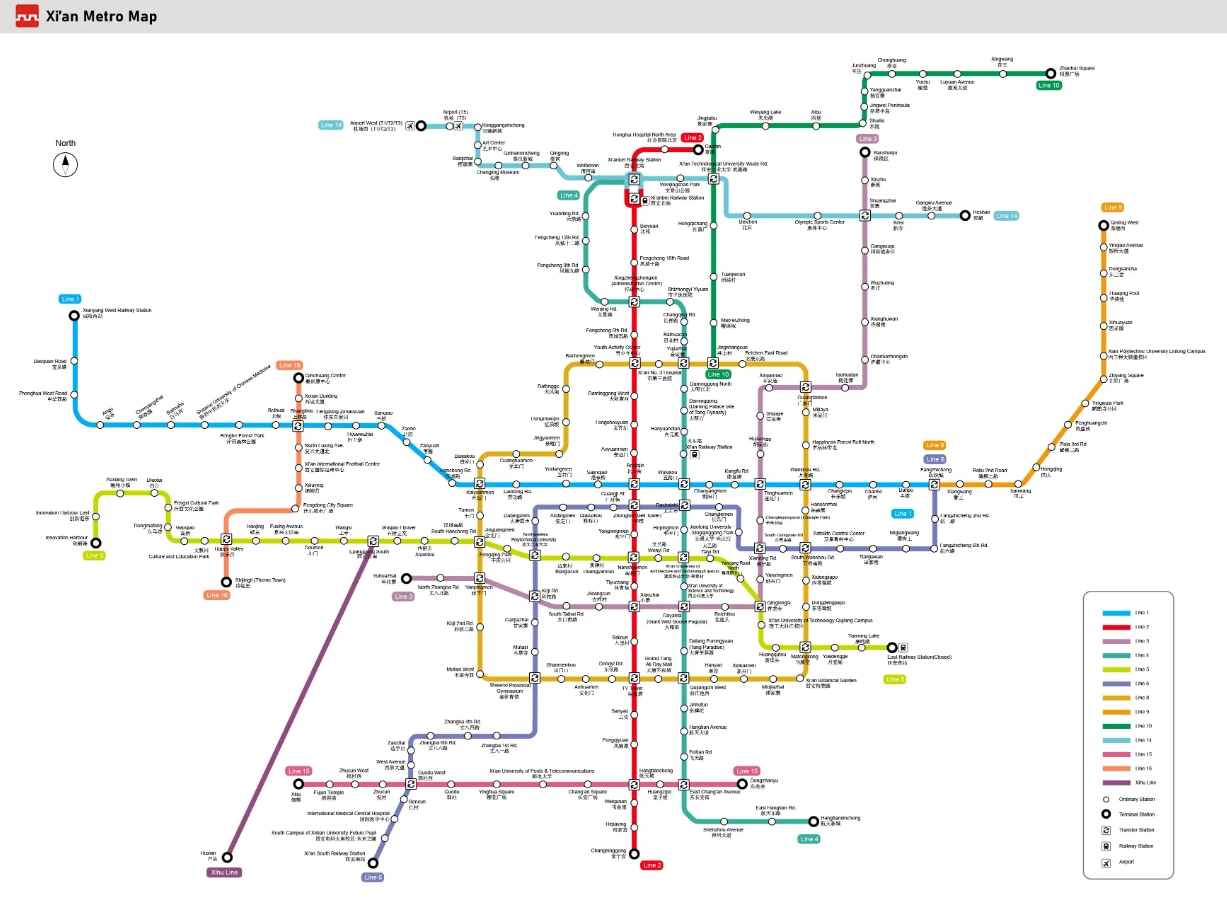
How to Read Xian Metro Map 2026 Like a Local
Your first task: get an accurate map without relying on Google Maps (which is often outdated or just plain wrong in China). Here’s where to look.
Official Sources for the Latest Metro Map
The official Xi'an Metro website publishes PDF maps, but they’re mostly in Chinese. My go-to English-friendly option is Apple Maps or AMap (高德地图) Global — both show Romanized station names and work with GPS without a VPN. I always tell my clients: “Download AMap in English mode before you leave home, and you’ll be streets ahead of everyone else.”
English vs. Chinese Names: Are You Looking at the Right Station?
Never assume your English guidebook’s station name matches the official English translation. For example, “Bell Tower” is often listed as “Zhong Lou” in newer maps, and “Yongningmen” is the South Gate of the City Wall. Double-check the station code — every line has a number, and each station has a unique code like “L2-07”.
Pro Tip: When asking a local, show them the Chinese characters on your phone rather than the English. I can’t tell you how many times tourists confuse “北客站” (Bei Ke Zhan) with “北大街” (Bei Da Jie) — they sound similar but are miles apart.
How to Pay for Metro Fares in Xi'an (Even with Foreign Cards)
Contrary to what you’ve heard, you don’t need a Chinese bank card to ride. The most reliable method is Alipay, which accepts foreign Visa/Mastercard, and here’s the step-by-step.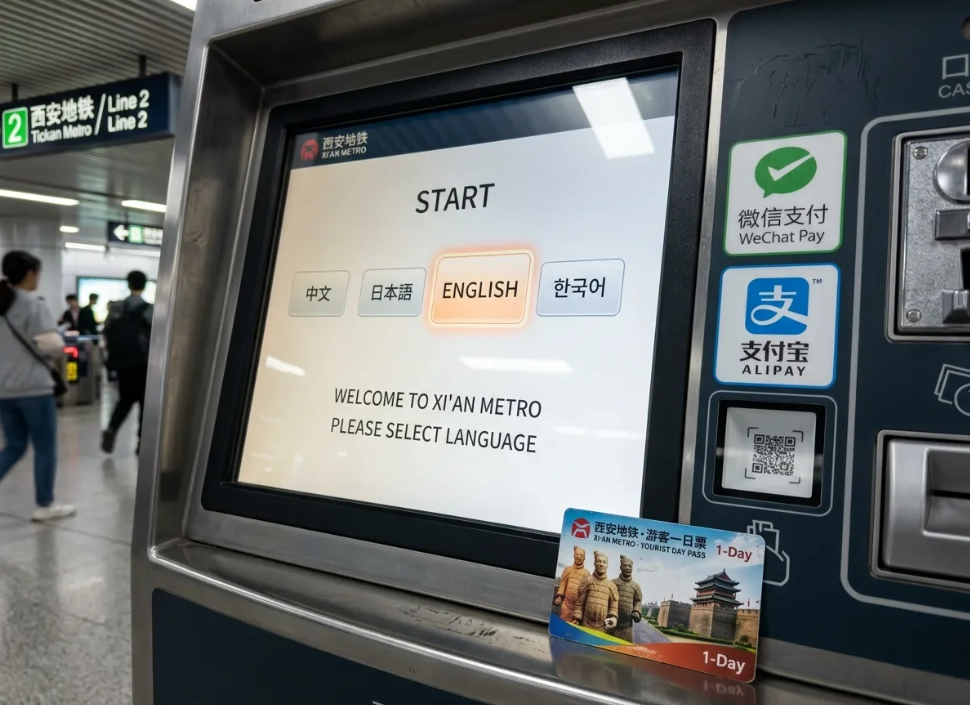
Alipay vs WeChat Pay: Set It Up in 10 Minutes
- Download Alipay (or WeChat) from your app store.
- Register with your foreign phone number and passport (photo required).
- Link your Visa/Mastercard/Amex in the app’s “Payment Methods”.
- Search for “Transport” or “城市服务” and enable the Xi'an Metro Code — a QR code appears.
- Scan this QR at the turnstile once you enter and again when you exit. The fare is automatically deducted.
This method works on both Alipay and WeChat Pay, though Alipay’s English interface is more straightforward. I’ve used Alipay with foreign cards dozens of times, and it works seamlessly.
What If My Alipay Doesn't Work? The Backup
Sometimes international card linking fails, especially for travelers from smaller banks. Don’t panic. Every metro station has a customer service window where you can buy a single-ride ticket with cash. The machines accept 1, 5, 10, 20 yuan notes and 1-yuan coins. You’ll need exact change — if not, ask the attendant to break your bill.
If you’ll be riding often, buy a Chang’an Tong (transit IC card) from a manned booth. It costs 20 yuan (refundable deposit) and accepts cash top-ups. It works for buses too, and gives you a slight discount.
Insider Advice: Avoid the ticket machines that only accept Alipay — they don’t take cash. Look for a machine with a green label that says “single ticket” or just head to the customer service window. In busy stations, that line might take five minutes, but it beats fumbling with a phone that’s out of battery.
Best Metro Stops for Xi'an's Iconic Attractions
Now, let’s map the metro to the sights you came to see. I’ve tested each route multiple times with my groups — here are the exact stops and the little details that make a difference.
Terracotta Army: Which Line Gets You Close?
No metro line goes directly to the Terracotta Army pits — even in 2026. But Line 9 gets you to the closest point: the Qinling West station (the eastern terminal). From there, you have two options:
- Taxi: About 15 minutes, 15–20 RMB. Show the driver this Chinese phrase: “请带我去兵马俑博物馆”.
- Bus: Take the free shuttle from the tourist hub at the station exit — but it only runs every 20–30 minutes and can be crowded. Ask around for “兵马俑免费摆渡车”.
I usually recommend the taxi if you’re in a group of three or four — it’s barely more expensive and you skip the queue. Remember to agree on a meter fare before getting in; drivers sometimes try flat-rate ripoffs.
Ancient City Wall: Exit Gate #1 or #2?
Ride Line 2 to Yongningmen Station (South Gate). Look for Exit D2 — it leads directly to the South Gate’s entrance steps. You’ll see the massive wall as soon as you surface. If you want to walk along the wall to avoid crowds, exit at D1 and walk east for 5 minutes to the less busy Wenchang Gate.
Pro Tip: The City Wall is dry and shady in the morning, but stunning at sunset. However, the rental bikes on the wall are often gone by 4 PM — so if you plan to bike, go earlier. The entry ticket is around 54 RMB, but you’ll need to verify current prices on the official WeChat platform or a travel app like Trip.com.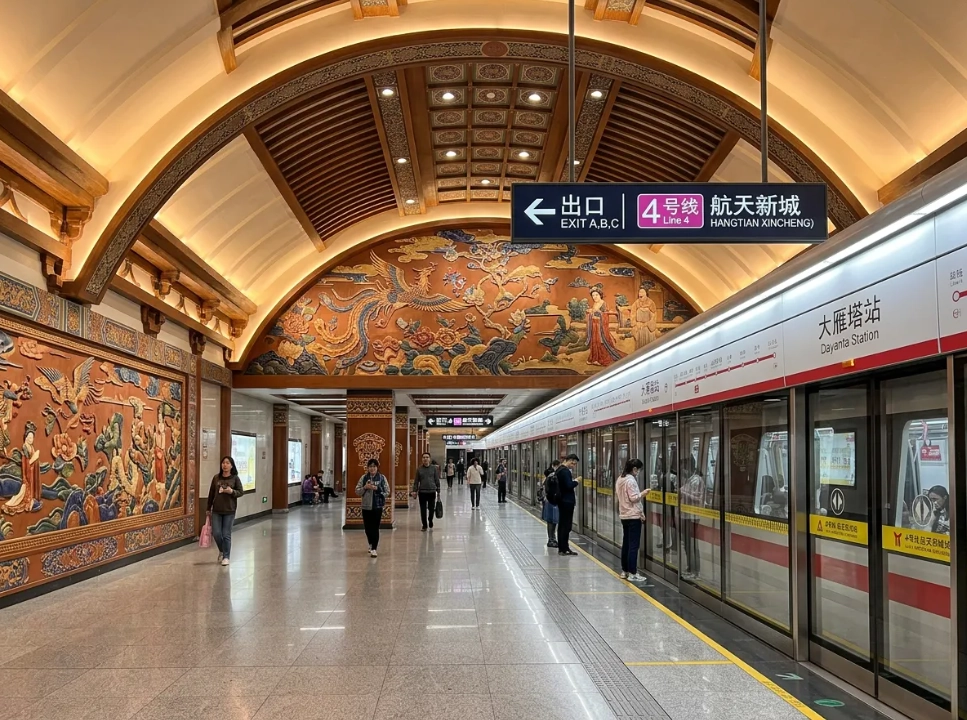
Big Wild Goose Pagoda & Bell Tower: Nighttime Metro Tips
For the Big Wild Goose Pagoda, take Line 3 or 4 to Dayanta Station. Exit C is right next to the North Square, where the famous musical fountain show runs in the evening (usually 19:00 and 21:00 — times change with season). Bring tissues for your seat — the steps get damp from the fountain spray.
The Bell Tower is on Line 2 at Zhong Lou station. The tower is spectacularly lit after dark, and the view from the Dong Dajie exit gives you the classic postcard shot. But if you’re in a hurry, skip the expensive entrance fee and just take a photo from the underpass — you’ll see everything you need for free.
24-Hour Xi'an Itinerary Using Only the Metro
Imagine you have only one full day in Xi'an — here’s how I’d spend it, without a single taxi. This plan respects the metro’s operating hours (6:00 AM to 11:30 PM) and includes buffer time for those inevitable “oh, that’s here?” moments.
| Time | Activity | Metro Route | Travel Time |
|---|---|---|---|
| 7:30 AM | City Wall walk (cycle or hike) | Line 2 to Yongningmen | From city center: 0 min |
| 9:30 AM | Muslim Quarter (free, great for breakfast snacks) | Walk from wall (15 min) or Line 2 to Zhong Lou | 10–15 min total |
| 11:00 AM | Terracotta Army | Line 2 to North Station, transfer to Line 9 to Qinling West, then taxi | 1.5 hrs each way |
| 3:00 PM | Big Wild Goose Pagoda | Line 9 back to Line 3, transfer to Dayanta | 1.5 hrs |
| 6:00 PM | Da Tang Everbright City (night market) | Walk from Dayanta (5 min) | — |
This schedule is tight — I’d cut the Terracotta Army if you’re more into food and less into dusty pits. Or, if you’d rather spend more time at the pits, skip the City Wall completely and save it for another trip.
Bad weather? When Xi’an gets baking hot (touching 38°C in summer) or dumping rain, swap the City Wall for the Shaanxi History Museum (Line 2 to Xiaozhai, then walk 10 min). It’s free but you must book a ticket a week in advance via the official WeChat account or Trip.com. Do not show up without one – you’ll wait for hours.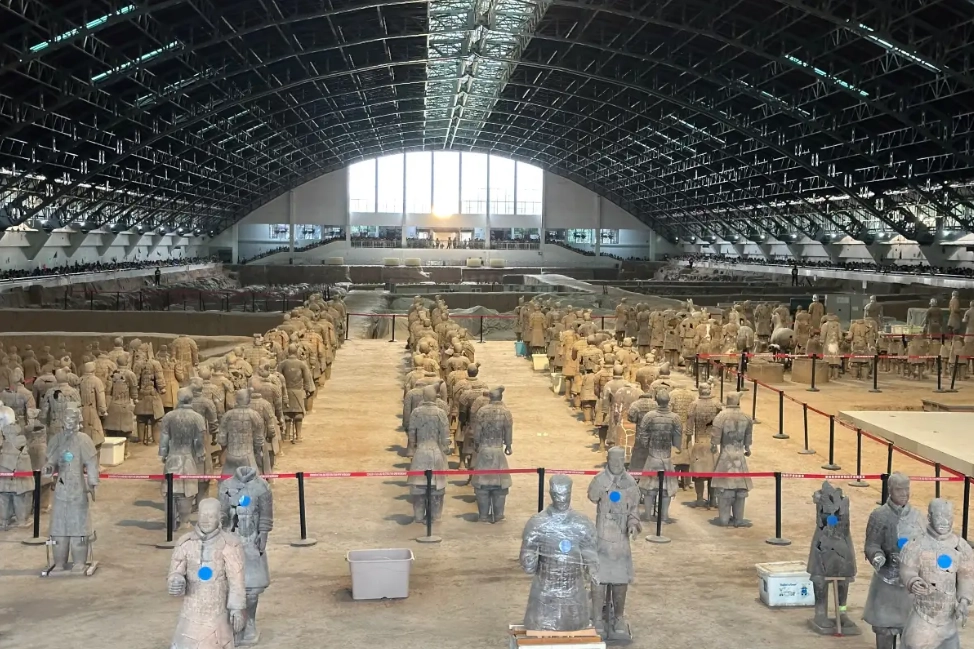
Real Questions Travelers Ask (FAQ)
Fact-Check: My Vow to You
I’ve personally ridden these lines and re-checked the details with the official Xi'an Metro information center. Everything in this article reflects the network’s current state, but transit systems evolve — fares, opening hours, and even station names can shift. Always verify critical details through the official Xi'an Metro website or the AMap app right before your journey.





I almost didn’t buy this because I thought I could just use my phone, but Wi-Fi was spotty and my battery died by noon. This map is laminated, fits in a pocket, and has the most useful notes I’ve seen—like which station has the nearest ATM and where to avoid rush-hour crowds. The Terracotta Army directions were perfect too: the arrows and photos made it impossible to get lost. Worth every yuan.
This map was my best friend for three days in Xi’an. We had a toddler and a stroller, so elevator exits matter a lot to us, and this is the only map I found that marks them clearly. The night market section is also fantastic—it even lists which stalls are cash-only. It’s not just a metro map, it’s a little city guide. Already recommended it to two friends going next month.
Brilliant map. Full disclosure: I’m a transit nerd, so maybe I’m biased, but this made Xi’an so easy. The transfer times between lines are listed accurately, and the back side has a great walking route from Yongningmen to the South Gate food stalls. Honestly saved me at least two taxi arguments. For the Terracotta Army, follow the tip about getting out at Exit B and taking the shuttle—zero confusion. 5/5 from me.
Exactly what I needed as a first-time visitor to Xi’an. The metro map itself is clean and easy to read, and I loved the little icons marking the Terracotta Army, Big Wild Goose Pagoda, and Muslim Quarter stops. The only thing keeping it from a 5 is that it didn’t seem to show the newest Line 4 extension—or at least I couldn’t find it. Still, it made getting around stress-free, and the recommended station exits for the city wall were spot on.
I picked this up before heading to the Terracotta Army, and it did help me get from the Bell Tower out to the metro lines. The QR codes for bus transfers were handy, but I noticed a couple of station names didn’t quite match the actual overhead signs—Weiyang Road vs Weiyang Lake, for example. The foldable paper map also started cracking along the seams after two days in my pocket. Fine for basic orientation, but don’t rely on it for every single exit.
This 2026 Xi'an metro map felt like a little safety blanket for me as a solo traveler. It doesn't just show train routes; it shows taxi drop-off points, night bus spots, and even a little tip near the Terracotta Army icon that says to go before 9am or after 3pm to avoid the crowds. That one tip changed my whole visit. I also loved the food markers around the Bell Tower and Muslim Quarter—it led me to a tiny shop with the most amazing spicy noodles. It's the little sensory details that made this map feel human. Highly recommended for anyone visiting Xi'an.
As a map person, this was a joy to use on my weekend in Xi'an. Clear labels, walking distance suggestions between stations, wheelchair access notes, and even a small extra diagram showing the shuttle from the Terracotta Army back to the Lintong metro line. The plastic-coated paper held up beautifully in a sudden rainstorm near Big Wild Goose Pagoda. I found myself using this instead of Google Maps because it gave me a better sense of the city. Late-night metro times printed on the back saved me from walking an extra 40 minutes. Five stars, no hesitation.
It’s an okay guide, but I wouldn’t call it “easy” to use. The colors are nice and I like that it shows the latest 2026 metro connections, but the layout felt cluttered when I tried to find the exact exit for the Muslim Quarter. I also followed the suggested walk from the Bell Tower station and got a bit turned around because the map didn’t clearly show some construction closures around the city wall. It got me to most places eventually, and the Terracotta Army section was decent, but I ended up relying on my phone more than I expected. If they cleaned up the design and added clearer exit labels, it could be great. For now, it was just fine.
Really solid map for exploring Xi'an on the metro. The 2026 version is clearly updated and the station numbers match the signage better than my phone did inside the tunnels. I particularly appreciated the inset map around the ancient city wall. The only reasons I’m not giving five stars: the station names are printed so small that I needed reading glasses while standing on a crowded train, and the QR code for live updates never loaded on my hotel Wi-Fi. Otherwise, it helped me reach the Terracotta Army, Shaanxi History Museum, and back to Xi'an North Station without any real problems. Would still recommend it.
I’m usually terrible with maps, but this 2026 Xi'an metro map made getting around feel almost too easy. It’s crisp and well-laid-out, and the little callouts for the Terracotta Army bus transfer were spot-on. I loved that I could plan my whole day around the metro stations near the Bell Tower, Muslim Quarter, and Big Wild Goose Pagoda without pulling out my phone once. The paper is thick and glossy too, so it survived being stuffed into my backpack all week in the July heat. Honestly, this should be handed out at every airport in China. 5 stars without a doubt.