 Ling Wu
I’ve stood at that ticket booth many times, watching first-timers stumble off the wrong bus. Don’t be that person. The Friendship Pass, or Youyiguan, is barely 8 kilometers from Pingxiang, but the last stretch can trip you up if you don’t know the drill. Here’s the short version: grab a taxi for around 20 yuan, don’t fall for the selfie-stick touts, and show up before 9 a.m. to beat the tour groups. Now let me break down every route, every trick, and every mistake I’ve seen in a decade of guiding.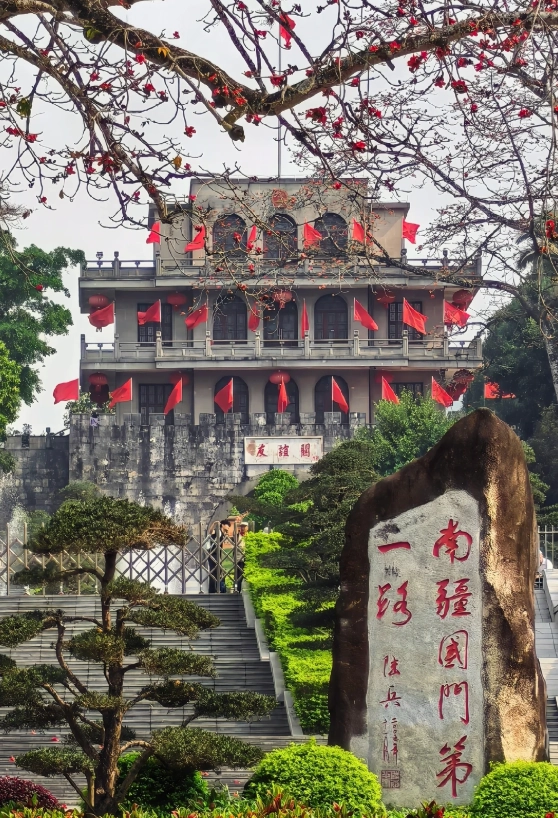
Why Friendship Pass Is Worth the Trip
Most first-time visitors think Friendship Pass is just another border gate. They’re wrong. This stone fortress on the China–Vietnam border has watched over trade routes since the Han dynasty. Standing next to the towering rectangular city wall, with weathered cannon slots and faded Chinese characters, you can almost smell the history. I remember the first time I brought a group of American students here — one of them pulled me aside and said it felt like walking into a Chinese period drama. That sold me.
Beyond the history, it’s a functioning international crossing. That means you’ll see groups of Vietnamese porters hauling fruit, Chinese traders haggling over rubber boots, and border police with serious faces. It’s not a polished tourist trap; it’s real, gritty, and fascinating.
The best part? You can spend two hours there and still get back to Pingxiang for a proper lunch. So if you’re debating whether to fit it in — do it.
Transportation Options from Pingxiang to Friendship Pass
Here's the deal: the distance is only 8 kilometers. You're not booking a multi-stop adventure. But the way you choose matters — because the wrong choice can cost you an hour or expose your wallet to unnecessary scams.
Taking the Bus from Pingxiang Bus Station
The bus is the cheapest option, but it's also the least reliable for foreigners. Pingxiang Bus Station sits right next to the railway station. Ask for the bus to 友谊关 (Youyiguan) — the driver will understand. It runs sporadic departures, roughly every 30 to 40 minutes during daylight hours. The fare is about 5 yuan, and the ride takes around 20 minutes. If you're on a tight budget, this works. But here is my advice: unless you can read Chinese or have a translation app ready, the taxi is worth the extra money. I’ve seen tourists miss the stop because they couldn’t understand the announcer, then ended up at the border village with a confusing walk back.
If you do take the bus, tell the driver "Youyiguan" clearly, and show him the Chinese characters. Also, save a screenshot of the ticket price on your phone to avoid overpaying.
Pro Tip: Sit on the left side of the bus. You'll catch the first glimpse of the fortress walls as the road curves — it’s a nice payoff.
Taxi or DiDi: The Fastest Way
A taxi from the center of Pingxiang to Friendship Pass costs roughly 15–20 yuan and takes 10 to 12 minutes. There are always taxis waiting near the Pingxiang Railway Station and the hotel district. If you ride DiDi (the Chinese Uber), it can be even cheaper — around 12 yuan. Just book the destination as 友谊关 or, better, have your hotel reception type it in Chinese. Don’t expect the driver to speak English; showing the destination name on your screen is the universal language.
One caution: some taxi drivers may quote you 50 yuan or more, especially if they see you're foreign. Politely say “don't be silly, I know the price,” or walk away — another driver will happily take the ride. I always tell my clients to wave down any taxi with a visible meter, and if the meter isn't running, negotiate before getting in.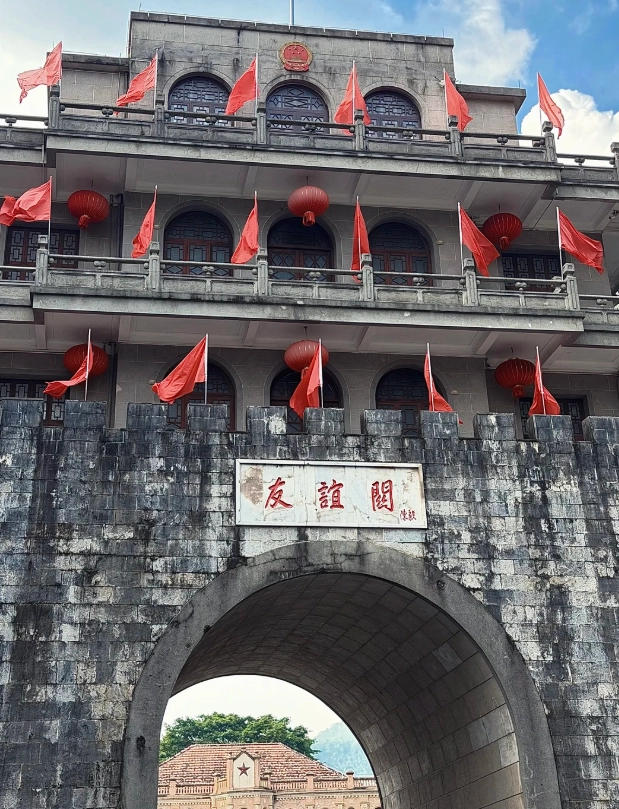
Private Driver for a Stress-Free Ride
If you're staying at a nicer hotel, ask the front desk to arrange a private driver — the rate is usually 100–150 yuan per half day, including waiting time. They'll drive you to the main entrance, wait while you explore, and bring you back. For families with kids or older travelers who don't want to deal with hailing taxis, this is the most comfortable option.
I used this once with a retired couple who wanted to take photos at every angle. The driver knew the best photo stops along the approach road and even helped me carry a tripod. That saved a lot of hassle.
Comparison Table
| Transport | Cost | Time | Convenience | Notes |
|---|---|---|---|---|
| Bus | about 5 yuan | 20-25 min | Low | Sporadic, easy to miss stop |
| Taxi | 15-20 yuan | 10-12 min | High | Get in only with meter on |
| DiDi | ~12 yuan | 10-12 min | High | Need Chinese app or hotel help |
| Private Car | 100-150 half-day | 10 min | Very High | Best for groups/families |
Pick whichever fits your budget. For 90% of visitors, I recommend the taxi. It's cheap, fast, and stress-free.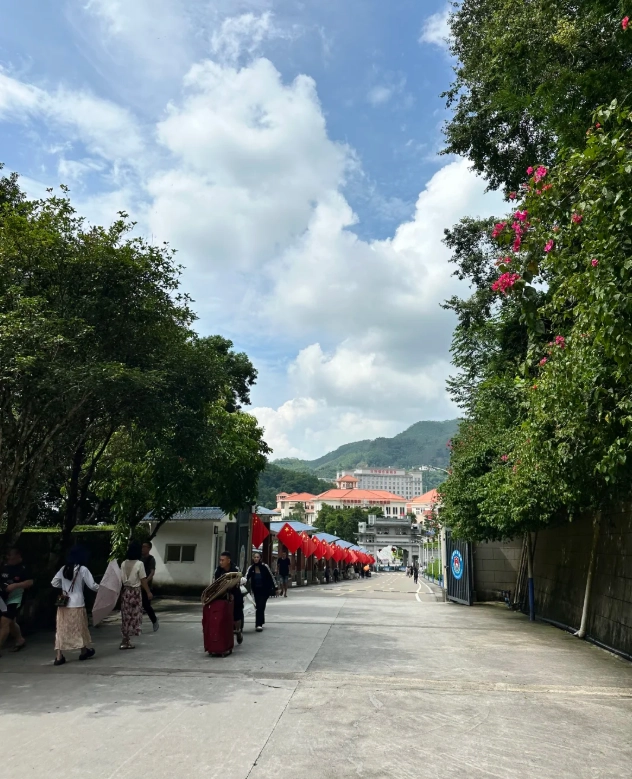
Step-by-Step: A Simple One-Day Itinerary
Let me give you a realistic plan that I've tested with hundreds of guests. This assumes you're staying in Pingxiang for one night.
- 7:30 a.m. — Breakfast at your hotel or a local noodle shop. Try the "sour bamboo noodle soup" (酸笋粉) — it's a Pingxiang specialty.
- 8:00 a.m. — Grab a taxi from your hotel to Friendship Pass. Arrive around 8:15.
- 8:20 a.m. — Buy your ticket (have your passport ready!). More on that below.
- 8:30 a.m. — Enter the fortress and climb the main wall. This is your golden hour for photos — morning light hits the stone facade perfectly, and the organized tour groups from Nanning don't arrive until 10 a.m.
- 10:00 a.m. — Explore the side corridor and the small exhibition room about the border history. It’s hit-or-miss, but decent on a rainy day.
- 11:00 a.m. — Walk to the border crossing observation point. You'll see Vietnamese porters carrying goods on both sides. It’s a great cultural spectacle.
- 11:30 a.m. — Head back to the exit. Take a taxi to Pingxiang for lunch. I always recommend the "Friendship Road Restaurant" (友谊路餐厅) near the train station for decent local dishes.
If you have only half a day, skip the exhibition room and linger on the wall instead. If it rains heavily, the site offers thin shelter, so bring an umbrella and be prepared to do the indoor sections first.
Border Crossing Tips at Friendship Pass
This is where most guides stay quiet. Let me fill in the details.
- Entry requirements: If you're just visiting the Friendship Pass scenic area, you need your passport with a valid Chinese visa. Chinese citizens use their ID cards. No separate border pass is needed for the scenic area.
- If you plan to cross into Vietnam: You must have a Vietnamese visa (usually arranged beforehand from your home country or via an agency) and your Chinese visa must allow multiple exits if you want to return to China. Don’t rely on landing visa at this crossing — it's not as smooth as the central airports.
- Don't walk into the restricted zone: The signs are in Chinese and Vietnamese. There's a marked observation point for tourists. Don't wander beyond the red line or guards will whistle at you, and you'll attract attention.
- Security checks: There are metal detectors at the entrance. You'll see police with machine guns near the actual border crossing terminal — that's normal, not a threat. Keep your camera tucked away when you're near the terminal, as photos of military installations are prohibited.
Insider Advice: If you plan to cross over to Vietnam, arrive early (before 9 a.m.) to avoid the long queues of local merchants with large backloads. The border opens at 7 a.m., but the tourist path is smoother after 8:30.
What to See and Do at Friendship Pass
The fortress wall is the highlight, but there are a few other details worth your time.
- The Main Gate: The stone archway with the words “Friendship Pass” written by Premier Chen Yi in the 1950s. It’s the classic photo spot.
- The Fortified Wall: You can climb to the top of the wall for a panorama. It’s a bit steep, but the view over the border hills is worth every step.
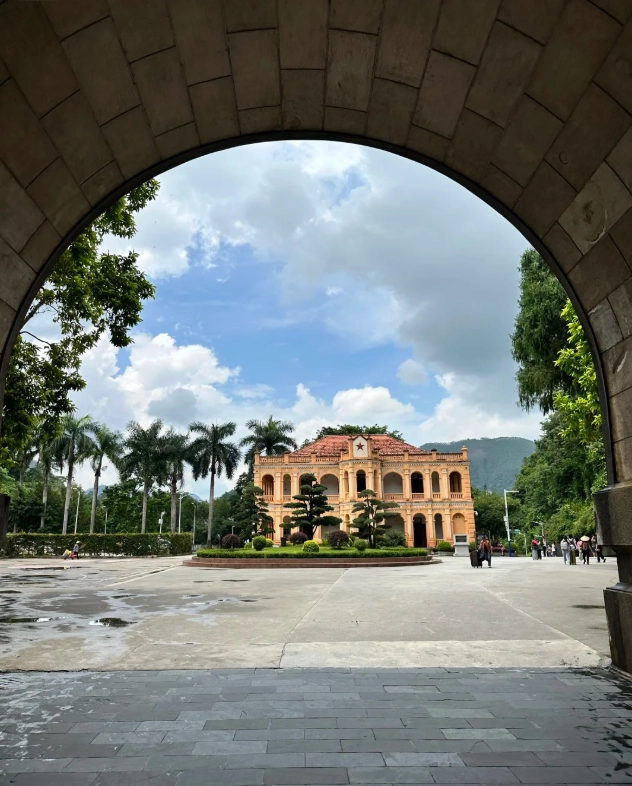
- The French-Era Buildings: You’ll notice a row of French-inspired yellow buildings, left over from the French Indochina period. They’re now used as a small exhibition and an administrative office. Peek in if the door is open – the old timber ceiling is gorgeous.
- The Cannon Battery: On the west side of the wall, there are old cannons pointing toward Vietnam. It’s a reminder of the site’s military past.
- The Border Trade Market: Just outside the scenic area, there are small stalls selling Vietnamese snacks, coffee, and trinkets. Feel free to browse, but don’t buy anything without bargaining – they start at three times the local price.
Allow around 2.5 hours to see everything at a relaxed pace. If you're pressed for time, skip the exhibition room and the market; the wall and the gate are the main draws.
Practical Tips for Foreign Travelers
Payment and Cash
The scenic area ticket booth accepts major mobile payment apps, but cash is the safest backup. You'll still need cash for smaller vendors outside, and the restroom attendant might ask for 1 yuan. Most official tourist spots in China now accept Alipay and WeChat Pay, even for foreign cards if you've linked them. However, the internet connection at the border can be spotty, so don't be caught without physical yuan.
Pro Tip: Before leaving Pingxiang, withdraw about 100 yuan from an ATM and split it between your pockets and a hidden money belt. The area is generally safe, but pickpockets do operate around crowded bus stops.
Navigating with Maps
Apple Maps works better than Google Maps in this region; alternatively, download AMap (高德地图) before you arrive. Google Maps often shows wrong locations or no public transport info. For a direct trip like this, just use Apple Maps and type in "Friendship Pass" in English — it usually gets you to the right area. But since the road is straightforward, you won't need to navigate much. The main issue is confirming you're on the right route, which a taxi driver already knows.
Language and Connectivity
Don't rely on Wi-Fi at the site — there is none. Buy a local eSIM or use a Chinese SIM card with a VPN on your home phone. English is not spoken at the ticket booth or by taxi drivers. Have your hotel write down key phrases in Chinese: "请带我去友谊关" (Please take me to Friendship Pass) and "多少钱?" (How much?). A translation app like Pleco or Apple Translate will be your best friend.
If you absolutely cannot communicate, just show the Chinese characters 友谊关 to anyone. It's a well-known place, so people will point you in the right direction.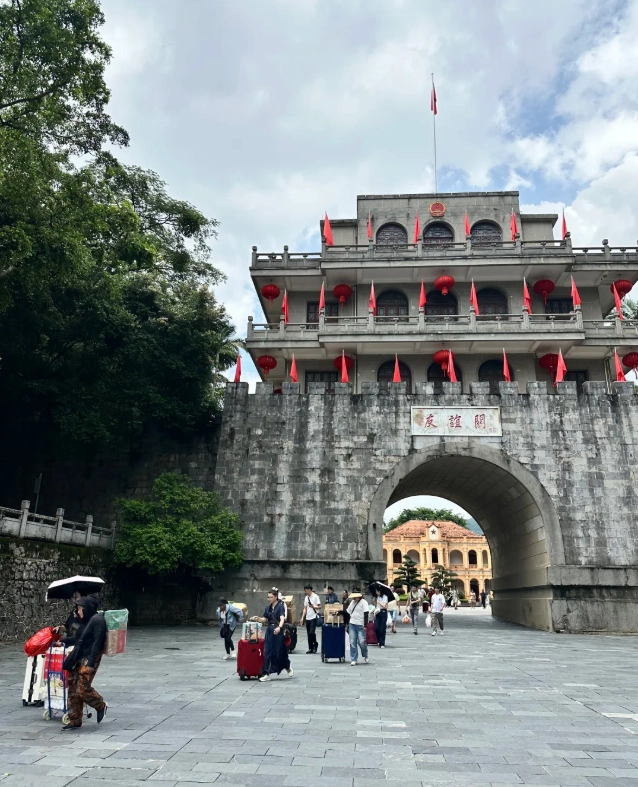
FAQ About Getting to Friendship Pass
Here are the questions my clients ask most often, answered straight.
Final Thoughts
A trip to Friendship Pass is a half-day well spent. The scenery is dramatic, the border dynamic is unforgettable, and the logistics are actually simple once you know the drill. The most common mistake I see is tourists trying to wing it without cash or relying on freelance guides at the entrance — ignore them, buy a bottle of water beforehand, and you'll be fine.
My last piece of advice: don't rush. Sit on the stone bench under the banyan tree for five minutes and just watch the border trade. That moment will stick with you longer than any photograph.
Verified and fact-checked by the editorial team.





This is the way to do it. We took the early bus and had zero drama. The driver was waiting for us at the turnoff, loaded our bags, and drove us past all the honking minibus touts straight to the Friendship Pass arch. The van was clean, the AC blessed, and he helped us get the exit stamp process sorted. Price was a little higher than a public bus, but the time saved and peace of mind made it absolutely worth it.
As a solo traveler, this was a lifesaver. I was worried about getting ripped off at the station, but the bus was waiting with my name on it, and the taxi driver at Friendship Pass spoke just enough English. The ride felt safe, the roads were okay, and the scenery of the karst hills on the way was gorgeous. Genuinely the smoothest border transfer I've had in Southeast Asia. Five stars.
Absolutely stress-free. I booked the bus-taxi combo and the entire thing went like clockwork. The minibus had cold AC and comfortable seats, and our driver actually walked me right up to the border entrance after helping me scan the customs code. He even pointed out the best spot to change money before crossing. By far the fastest I've ever done the Pingxiang-to-Friendship Pass run. Worth every yuan.
Solid option if you don't want to deal with border-town touts. The bus leaves when they say it does, and the shared taxi leg was quicker than I expected. Only downside: the driver picked up two extra passengers on the way and squeezed us in, so the back seat was a bit tight. Still, clean windows, decent driving, and I made it from Pingxiang to the Friendship Pass gates in about 45 minutes. Would use again for the convenience.
I really wanted to like this because the bus part from Pingxiang station was on time. The taxi handoff at Friendship Pass, though, was messy. Our driver pulled into a random parking lot and pointed at a line of cabs; no one knew our booking. After 30 minutes of phone calls, a guy took us for the last stretch, but the car smelled like stale cigarettes and the AC barely worked. It got us there, but 'fastest' felt like overselling it.
I’m usually skeptical of these 'fastest bus & taxi' claims, but this one genuinely was. Booked through my hostel in Pingxiang, the van came on time, the driving was smooth but quick, and the AC felt amazing after walking around the city all morning. The driver stopped at a small shop so I could get water, and he communicated the border process despite the language barrier. A really stress-free ride to Friendship Pass. Highly recommend it.
Used this for an early morning border run. The name says 'fastest' and it delivered. The taxi arrived 10 minutes early, spotless inside, and the driver knew exactly where to drop us for the exit stamps. He also pointed out a shortcut through the souvenir hall to the Vietnam side. It saved us at least an hour compared to the local bus. Worth every yuan.
Honestly this was the easiest way to cross into Vietnam. The bus from Pingxiang cost almost nothing and was so fast that I blinked and we were already at Friendship Pass. The AC was blasting—great because it was 35 degrees outside. The driver even helped me lift my big backpack into the hold. I made it to the border gate in 25 minutes. Brilliant service for budget travelers.
Good option if you need to get from Pingxiang to Friendship Pass quickly. I took the shared taxi and it was clean and newer than I expected. The driver was efficient, though a bit silent. We arrived in under half an hour. Just note that the ride ends before the actual border gate, so you still have a short walk through the duty-free shops. Not a problem, but worth knowing. Overall solid and reasonably priced.
Took the bus from Pingxiang station to Friendship Pass. It was quick, about 40 minutes, but the minibus was packed and the driver kept honking the whole way. The 'fastest' part is true, but don't expect any comfort. Also, no one told us where to get off for the border crossing—only figured it out because other passengers started grabbing their bags. Fine if you're in a hurry, but it’s not the smooth experience I was hoping for.