 Chen Liu
What You'll Get From This Route
I still remember my first trip to Guangxi. I planned everything wrong. I tried to cram Guilin, Yangshuo, and Longji into four days and ended up staring at bus schedules instead of karst peaks. After a decade of guiding travelers through Guangxi multi-city itineraries, I can tell you the exact route that works: start in Guilin, go up to Longji, drop down to Yangshuo, and finish in Nanning. Do it in that order, and you'll save hours of backtracking.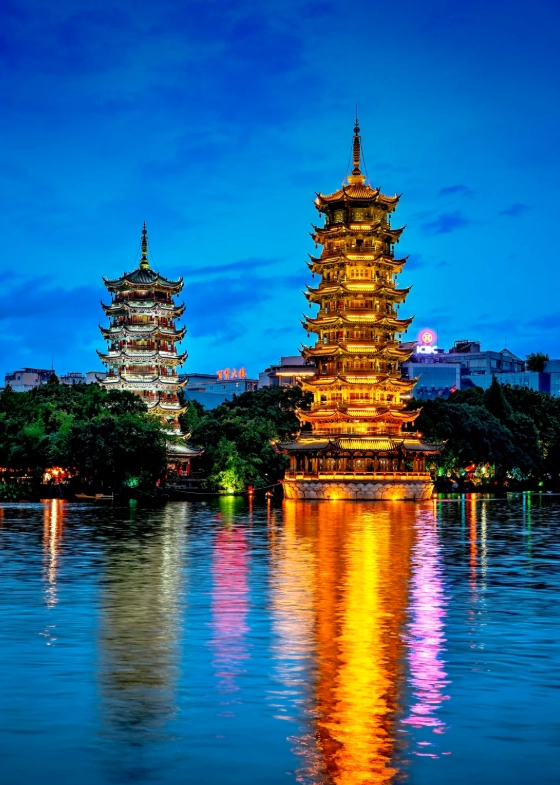
Why a Multi-City Route Works Best in Guangxi
Here's the thing about Guangxi: its highlights are scattered across a postcard-perfect landscape that spans over 200 kilometers. You could base yourself in Guilin and day-trip to Longji and Yangshuo, but you'd burn at least three hours each way in transit – and miss the whole point of watching the sunset over the rice terraces. A proper multi-city itinerary lets you sleep closer to the action, catch the golden light, and avoid the rush of half-day tour groups.
Pro Tip: Don't fall for the 'Guilin + Yangshuo 3-day package' you see online. It's usually a bus race. The magic of Guangxi unfolds slowly – you need nights in the countryside to really feel it.
I've taken countless first-timers on this exact loop. The combination of karst mountains, ancestral rice terraces, and modern city food makes Guangxi the perfect region to experience both natural and urban China without flying between provinces.
How to Link Guilin, Longji, Yangshuo & Nanning in One Trip
Before the day-by-day breakdown, let me save you the biggest headache: figuring out transportation. The good news is Guangxi's high-speed rail network is excellent. The bad news is not every station is where you think it is. Here's the deal:
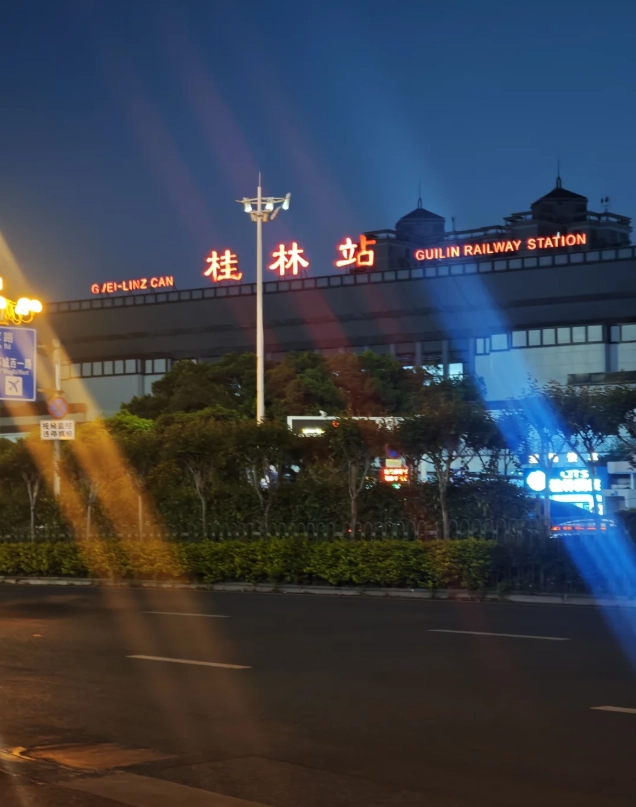
- Guilin has two main stations: Guilin North (桂林北) and Guilin Railway Station (桂林站). Most high-speed trains stop at both, but foreign tourists often land at the North station – it's roughly 20 minutes from the city center by taxi.
- Longji isn't on the rail line. You'll bus from Guilin, about 1.5 to 2 hours depending on whether you go to the Ping'an or Dazhai viewpoint.
- Yangshuo is about 1.5 hours south of Guilin by bus or private car. The high-speed rail stops at Yangshuo Station, which is still 40 minutes outside town – factor that into your planning.
- Nanning connects directly to Guilin via high-speed rail (roughly 2.5 hours) and is a fantastic gateway for onward travel to Vietnam or Beihai.
Transportation Comparison Table
| Route | Best Option | Time | Cost (RMB) | Good to Know |
|---|---|---|---|---|
| Guilin → Longji | Bus from Guilin Bus Station | 1.5–2 hrs | ~30–60 | Buses leave when full; get the first morning bus. |
| Guilin → Yangshuo | Li River Cruise or Bus | 4 hrs (cruise) / 1.5 hrs (bus) | ~180–350 (cruise) / ~30 (bus) | Cruise only runs in the morning, book via Trip.com. |
| Yangshuo → Nanning | High-speed rail from Yangshuo Station | 2.5 hrs | ~120–200 (second class) | Station is outside town; allow 40 min taxi transfer. |
For most travelers, I recommend booking trains through Trip.com – it's English-friendly and accepts international cards. Bus tickets can be bought at the station, but don't expect English signs. If you're not confident, just use your hotel's tour desk or a local agency to arrange the Longji leg.
The 7-Day Guangxi Multi-City Itinerary
This plan is built for a steady rhythm. I've included buffer time for weather and those moments when you just want to sit and stare at a rice terrace. You can trim it to 5 days by cutting Nanning, but I'd honestly keep it – the food scene is worth it.
Day 1 – Guilin: Arrival and Two Lakes Elegance
Land in Guilin, check into your hotel (I'll share suggestions below), and fight the jet lag with a gentle evening walk. The Two Rivers and Four Lakes area is the city's showpiece. The walk from the Sun and Moon Towers around Lake Shanhu is free and utterly photogenic. Skip the boat ride – it's overpriced and you'll see the same reflections from the shore.
- Ticket: None for walking; boat tours cost around 200 RMB – I'd pass.
- Address: Shanhu North Road, Xiangshan District (search '日月双塔' on AMap).
- When to go: Sunset, before the floodlights turn on.
- Pro Tip: Bring mosquito repellent – the lake edges are magnet for them at dusk.
For dinner, slurp down Guilin rice noodles at a local joint. My favorite spot is Lao You Fang Rice Noodles (老友粉) – but actually that's Nanning's dish. For Guilin noodles, look for a shop with a queue at breakfast. The locals eat them for every meal except lunch with rice.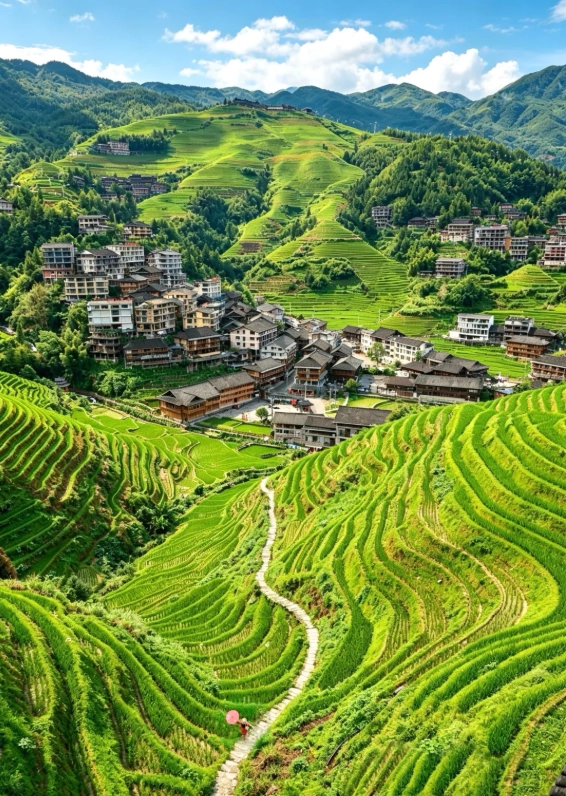
Day 2 – Longji Rice Terraces: The Dragon's Backbone
Wake up early and get on the 8 a.m. bus from Guilin Bus Station to Longji. The ride is scenic, but the last 30 minutes are a winding mountain road – if you get carsick, take motion-sickness pills beforehand. You'll arrive at the ticket gate, then transfer to a shuttle or walk up to your guesthouse.
The Ping'an village is the classic spot. Drop your bags and hike to the Seven Stars with Moon viewpoint. The trail is well-marked but steep – good shoes are essential. Budget at least 2 hours for the round trip. The views are the reason everyone comes: terraced fields carved into the hillside like giant golden-green steps.
- Ticket: 80 RMB per person, includes both Longji villages.
- Booking: You don't need to book in advance; pay at the entrance (cash or WeChat). Keep the ticket – you'll need it at the second viewpoint.
- Overnight: Stay in Ping'an for a sunrise session. It's worth the early alarm.
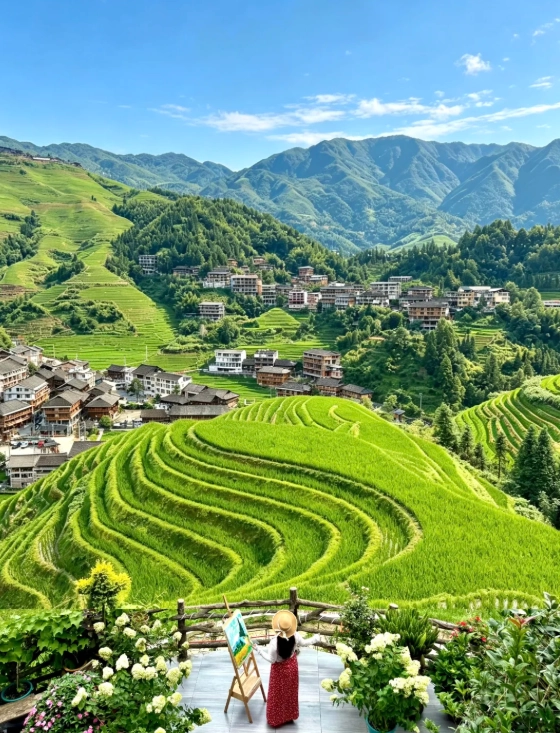
Insider Advice: Many travelers skip Longji because of the 2-hour drive. Don't. The rice terraces are unlike anything you'll see in Yangshuo – they're a masterpiece of human engineering over centuries. And if you can time it in late May/June, the terraces are flooded and mirror the sky.
Day 3 – Guilin to Yangshuo by Boat or Bike
This is the day you've been waiting for. The bus from Longji back to Guilin, then hopping on the Li River cruise to Yangshuo is the classic route. The cruise takes 4 hours and sails through the most dramatic karst scenery – those peaks you've seen in Chinese paintings. It's the most famous river journey in China, and for good reason.
If you're on a tighter budget, grab the ordinary bus from Guilin to Yangshuo (1.5 hours) and then do a bamboo raft ride on the Yulong River (about 2 hours, 150–250 RMB) the next day. But honestly, the cruise is a one-time experience. Book it via Trip.com or your hotel, not on the street – you'll get a better deal and avoid fake tickets.
- Cruise Departure: 9:30 a.m. from Zhujiang Pier, arrives Yangshuo around 2 p.m.
- Cost: ~350 RMB for standard seats.
- Address for Pier: Zhujiang Pier, Xiangshan District (search '竹江码头').
- Caution: Sit on the left side of the boat – you'll get the best cliff faces and avoid glare.
After arriving in Yangshuo, settle into your guesthouse and take a nap. In the evening, walk along West Street (西街) – it's touristy, but the energy is infectious. Grab a beer at a rooftop bar and listen to live music.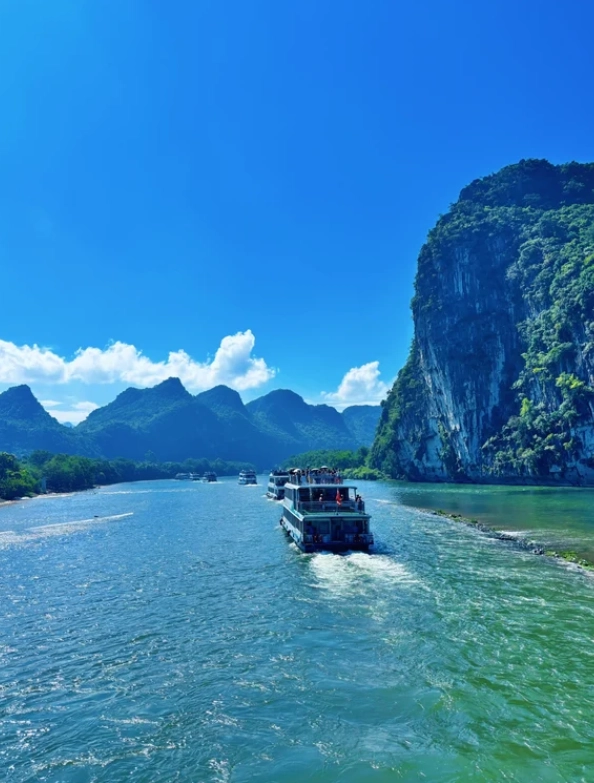
Day 4 – Yangshuo: Countryside and Adventures
Rent a scooter (motorcycle) for the day – about 50 RMB with a full tank. Start early to beat the heat and traffic. Head towards the Moon Hill area, and don't skip the quieter village of Gongnong Bridge. The scenery is classic Yangshuo: emerald paddies and limestone peaks.
If you're into rock climbing, the crags near Moon Hill are world-class. Several climbing schools offer half-day introductory sessions for around 300 RMB, including equipment. Not your thing? Do a cooking class and learn to make beer fish (啤酒鱼) – the local specialty.
- Address for Moon Hill: North Yulong River, Yangshuo (search '月亮山').
- Duration: Half-day climbing or countryside ride.
- Best time: Morning, before 11 a.m., or after 3 p.m. to avoid tour bus crowds.
In the late afternoon, take a bamboo raft on the Yulong River. The raft is actually a motorized bamboo boat, but the ride is gentle and serene. Sit at the front for uninterrupted views. Always negotiate the price before boarding – a typical ride from Yulong Bridge to Gongnong Bridge is about 200 RMB per boat.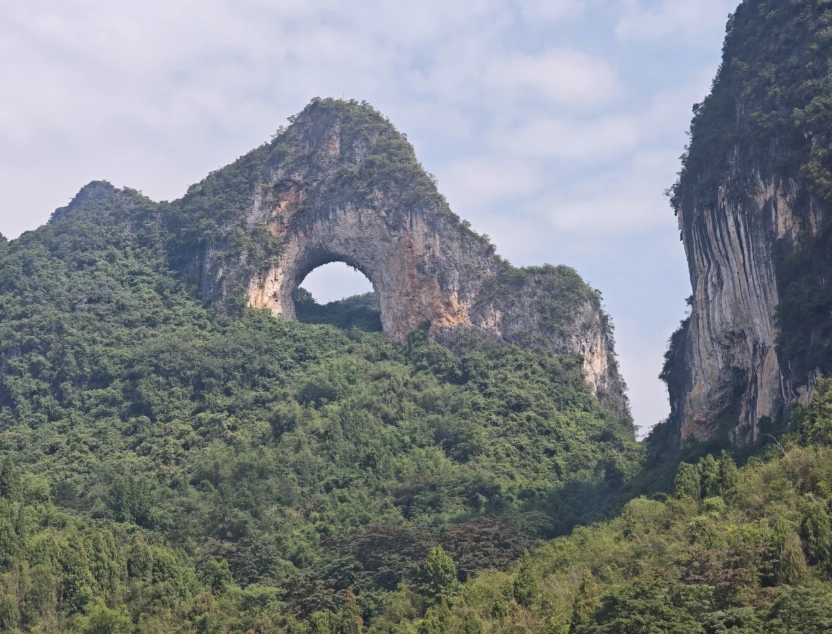
Day 5 – Yangshuo to Nanning: The High-Speed Trail
You'll leave Yangshuo in the morning. Take a taxi (20 minutes) or a local bus to the high-speed rail station. The ride to Nanning takes about 2.5 hours. Once you arrive, you're in the vibrant capital of Guangxi – think food, street art, and a more laid-back vibe than the big coastal cities.
Drop your bags at a hotel near Chaoyang Square or Minsheng Road. In the evening, dive into Nanning's food scene. The Zhongshan Road Food Street is the classic spot for street eats – try the sour bamboo shoots hotpot (老友粉) and the grilled oysters. It gets busy around 7 p.m., so go early.
Day 6 – Nanning: City Break and Great Food
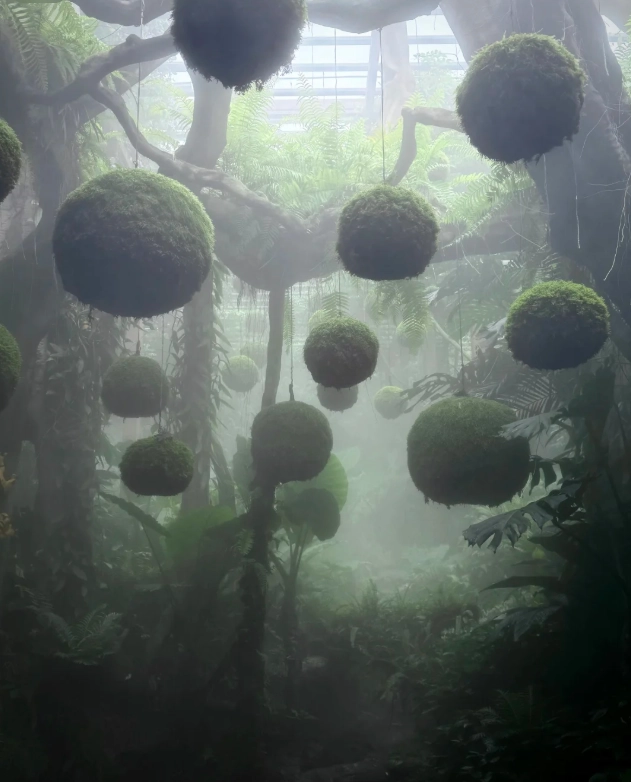
Nanning isn't famous for tourist attractions, but here's what locals do: visit the Qingxiu Mountain (青秀山) in the morning – it's a huge park with subtropical plants and a pagoda you can climb. In the afternoon, explore the Guangxi National Museum (free) to understand the Zhuang minority culture. Sunset at the Yongjiang River banc is a dream.
- Qingxiu Mountain: Ticket 20 RMB, open 6 a.m. to 6 p.m. Take bus 32 or taxi.
- Museum: Free with passport registration; closed on Mondays.
Day 7 – Departure or Add-on to Beihai
If you're flying out, Nanning Wuxu Airport has direct domestic flights. But I'd suggest a detour to Beihai – a coastal city about 1 hour away by high-speed rail. The Silver Beach (银滩) is underwhelming, but the old town Beibuwan Squ is charming. Only go if you have two extra days.
Practical Tips for Every Leg: Payments, Navigation, and Prebooking
Now let me save you from the digital minefield that is travel in China. Here's what I've learned after years on the road:
Payments
Cash is nearly dead in Guangxi. Most street vendors, bus tickets, and even some small guesthouses skip cash entirely. You'll want Alipay or WeChat Pay linked to an international card. Set these up before you arrive – it takes a few minutes and can be done in the app.
- For the Li River cruise, book through Trip.com and pay with your card.
- For local shops, always have at least 100 RMB in small bills as a backup – but don't expect change.
Navigation
Google Maps is unreliable here – you'll miss half your turns. Download Apple Maps (it works reasonably well) or use Amap (高德地图) with the English interface. Amap Global is a lifesaver for finding exact subway exits and bus stops.
Pro Tip: When hailing a taxi, always have the Chinese name of your destination written down. Most drivers don't speak English, and showing them a Chinese character cuts through 10 minutes of charades.
Booking and Reservations
Almost every attraction in China now requires a passport number and often an advance reservation. For popular sights like the Longji terraces, pre-booking isn't mandatory, but it helps skip lines. Use Trip.com or Klook for English-language booking. For the high-speed rail, both platforms sell tickets, but you must pick them up at the station with your passport.
Language and VPN
You'll need a VPN to access Google, Instagram, and your email. Buy one before you land. For translation, Apple Translate works offline for Mandarin – download the language pack ahead of time. A simple phrasebook on your phone is also handy for bargaining.
Where to Stay Along the Guangxi Route
Here are my go-to picks for each stop, based on a mix of budget and comfort. Prices are approximate and can double during Chinese holidays – always book early.
| City | Budget | Mid-range | Best For |
|---|---|---|---|
| Guilin | Harbour Guesthouse – dorm beds from 40 RMB | Shangri-La – luxury, river views from 600 RMB | First-time visitors wanting a quiet walk to the lakes |
| Longji | Green Spirit Private Lodge – authentic family-run, from 100 RMB | Lonely Mountain Boutique – modern with terrace, from 350 RMB | Sunset and sunrise photographers |
| Yangshuo | Yangshuo Village Inn – hostels and private rooms from 50 RMB | See You Inn – beautiful courtyard, from 250 RMB | Backpackers and couples |
| Nanning | City Inn – central and cheap | Regal Airport Hotel – convenient for flights | Food lovers and fast transit |
Longji Guesthouse Advice
Stay in Ping'an village rather than Dazhai – it's more convenient for the main viewpoints. My clients love Green Spirit because the hosts cook family-style meals and will even guide you on a sunrise hike. Ask for a room with a view of the terrace – it costs a little more, but worth it.
What to Eat in Guangxi: A Local Guide
Guangxi's cuisine is a love letter to rice, rivers, and spice. Here's what you absolutely cannot miss:
- Guilin Rice Noodles – flat rice noodles in a meaty broth, topped with peanuts and pickles. Eat it for breakfast at any busy noodle shop.
- Beer Fish – fish simmered in beer with tomatoes and peppers. The version in Yangshuo is the most famous.
- Old Friend Noodles (老友粉) – a sour and spicy soup from Nanning, often with pork and bamboo shoots. The sourness is unique and addictive.
- Stuffed Snails – tiny snails stuffed with pork and mint. A classic street snack.
FAQ: Your Guangxi Multi-City Questions
How many days do I need to see Guilin, Yangshuo, Longji, and Nanning?
Seven days is my sweet spot. You get a full day in each place without rushing. Cut it to five by dropping Nanning, but you'll regret missing the food.
Do I need to book the Li River cruise in advance?
Yes – absolutely. The cruise is one of the hottest tickets in China, especially during national holidays. Book via Trip.com at least three days ahead. Walk-up tickets are rarely available.
Is it safe to use my credit card in Guangxi?
Don't rely on credit cards. Hotels and big stores accept them, but the rest is mobile-only. Link your Visa or Mastercard to Alipay and you'll be fine.
What's the best time of year for this route?
April to June and September to October offer the best weather and lower crowds. The rice terraces are flooded in May and golden in October – both are magical.
Can I use Google Maps for driving directions?
No – Google Maps is blocked and often inaccurate. Apple Maps works, but Amap Global is your best friend. Download it before you land.
Final Thoughts on Your Guangxi Multi-City Itinerary
There's a reason Guangxi keeps surprising even seasoned travelers. It's a region that demands a bit of patience – the buses might be late, the menu might be in Chinese only, and the weather might throw a tantrum. But the moment you stand on a rice terrace as the sun slips behind the karst peaks, every missed connection feels worth it. Take your time, eat everything, and don't rush. That's the real Guangxi.
Verified and fact-checked by the editorial team.






Wow wow wow. The 7 days flew by but every single memory is vivid. Highlights: watching the fog slip over the karst peaks from our room in Guilin, tasting the most amazing cold noodles at Longji, and cycling through rice paddies with the buffalo pulling out of the mud. Our group only had 12 people so it was easy to move around. The rice terraces are steep—bring good soles—but the view from the top made me tear up. I've done many trips in China and this one captures the raw beauty of the south. 10/10 and worth every penny.
Okay, so this wasn't what I expected. The itinerary in the title sounds perfect, but the reality for us was a lot of sitting on a minibus. We went in late May and the terraces weren't that 'mirror-like' yet—just patchy green and brown. The Li River boat was packed with tour groups and announcements kept ruining the calm. Our guide was efficient but not passionate; felt like he was just ticking boxes. All the 'local specialty' lunches were same-ish and at the Yangshuo hotel the AC unit rattled all night. Not terrible, but i'd probably plan my own trip and skip the group if I had to do it again.
This was my first solo tour experience and I couldn't have wished for better. Every morning started with a view that made me catch my breath—especially at the Seven Star Cave and the overlook near Xingping. Our guide May helped me negotiate for a scarf at the West Street market and even took a family photo for me with the old cormorant fisherman. The rice terraces were breathtaking, and the comfort food at every lunch (try the beer fish in Yangshuo!) made this a perfect trip. Don't miss the sunset bicycle ride along the Yulong River. I'm already planning to return!
Really enjoyed the itinerary! Longji Rice Terraces exceeded my expectations, especially taking the path from Ping'an to the viewpoint at sunset. The misty mountains looked like a traditional painting. Only reason I'm not giving a 5 is that the schedule felt a bit rushed on the Yangshuo day—we only had an hour at the Yulong River bamboo raft before being herded back for the lunch stop. I'd add another night there if possible. Still, the bus rides were comfortable and hotels were conveniently located. Solid 4 stars.
Honestly one of the best trips ive taken in China! The 7-day route from Guilin to Yangshuo and up to the Longji Rice Terraces is perfectly balanced. Hiking around Dazhai before dawn was magical—the clouds sat low in the valley and when the sun came up, the layered rice terraces glowed gold and green. The Li River cruise is touristy but the karst peaks rising straight out of the water are even more surreal in person. Also our local guide knew every great photo spot and the homestay dinner of bamboo rice and river fish was unforgettable. Highly recommend!
I took my family (two teenagers) on this trip and it was a huge win. The pace was comfortable—never felt like we were on a death march between sights. The bamboo rafting on the Yulong River was the kids’ favorite part, and honestly mine too. The rice terraces were breathtaking, and our little hotel there served the best breakfast of the whole tour. Even the long bus ride to the terraces was broken up with interesting stops. For a first-timer in China, this itinerary covers a lot without being overwhelming. Absolutely worth it.
This trip got the balance just right. Cycling along the Yulong River at golden hour was pure magic—sunlight bouncing off the water, kids waving from the bamboo rafts, farmers walking with water buffalo. The itinerary also took us to less crowded parts of the Longji terraces, which I really appreciated. Our guide was local and knew exactly where to stop for photos without crowds. Each night I slept like a log. I came back with a memory card full of stunning pictures and a huge craving for Guilin rice noodles. Highly recommend.
I wanted to love this, but the itinerary felt a little disjointed. We spent forever transferring between spots, and by the time we reached some viewpoints we had roughly 20 minutes before being herded back to the van. Heavy fog covered the karst peaks on our Li River day, so we basically stared at grey sky—not the operator’s fault, but the lack of backup plan didn’t help. The Longji portions were good, though the village felt more touristy than I expected. For the price, I think you could book it yourself and have a better time.
Overall a really solid week. The scenery around Xingping and the Yulong River is every bit as dramatic as the photos, and I loved the cycling day through the countryside—so quiet and green. The rice terraces were magnificent even in the drizzle. I’m giving 4 stars because a couple of the days felt a bit rushed; I would’ve traded the extra temple stop for another hour at the second terrace viewpoint. But communication with the guide was excellent and all the accommodation was clean and comfortable. A well-rounded trip.
Waking up at the Longji rice terraces was the highlight of my entire trip. The view from our guesthouse balcony literally made me stop and just stare for ten minutes—layer after layer of green terraces disappearing into the mist. Our local host cooked bamboo rice and free-range chicken that I still think about. The Li River cruise was stunning too, but the real magic happened in the mountains. The itinerary mixed hiking, local culture, and just enough lazy time. I’d recommend it to anyone who wants to see the real Guangxi.
This itinerary is a photographer's dream and honestly one of the best trips I've done in China. The mix of rivers, karst mountains, and rice terraces is unbeatable. I loved that it included both the classic Li River cruise and the quieter bamboo rafting on the Yulong River—they're completely different vibes. The sunset at the Longji Rice Terraces was surreal, and the guide's suggestion to stay overnight in a wooden guesthouse made it even more special. Seven days felt like a full journey, not a checklist. If you're hesitating, just go and use this plan. Five stars from me!
As a solo traveler, I was a bit nervous about getting around rural Guangxi, but this guide laid out every transfer in detail. The bus from Guilin to Longsheng was a little chaotic, but the directions helped me find the right stop. The terrace hike between Ping'an and Dazhai was the highlight—quiet, misty, and so green. Then the bicycle ride through the Yulong River valley from Yangshuo was exactly the relaxing end I needed. The only reason it's not a perfect 5? My phone died and I wished I'd downloaded the offline maps. But the itinerary itself? Brilliant. Would absolutely use it again.
Just got home and I'm still buzzing! This itinerary was perfect for my first trip to Guangxi. The timing of each day felt really well thought out—we caught the golden light at Longji Rice Terraces in the late afternoon and it was absolutely unreal. The karst peaks around Yangshuo looked like a painting, and climbing to the Xianggong Hill viewpoint at sunrise was the best decision I made. I never write reviews, but this guide made everything so easy: clear directions, honest about how much walking to expect, and great local food spots. I followed it almost exactly and had the trip of a lifetime. Highly recommend!
A solid outline for a week in Guangxi, and I definitely saw most of the highlights—Guilin, the Li River, Yangshuo, and the rice terraces. The logistics were pretty clear, especially the bus and ferry connections. My only real complaint is that it packs a lot into seven days, and by day five I was exhausted. I would have swapped one of the city stops for an extra night in Yangshuo, honestly. But if you're mobile and don't mind moving around, this itinerary works. The tips on when to visit the terraces to avoid crowds were spot on.
I really wanted to love this itinerary, and there are some great ideas in it, but I felt like the pacing was off. We spent way too much time on buses and not enough actually soaking in the places. The day in Yangshuo was nice, but by the time we checked in and got lunch it felt rushed. The Longji Rice Terraces section was the biggest letdown for me—only a half day after a long drive, and we couldn't even hike to a higher viewpoint. The hotel suggestions in Guilin were also a bit far from the old town. Still, the Li River cruise tip was useful, and the food recommendations were decent. Just wish it had been more realistic about travel times.