 Wei Zhang
What's Inside
- Why Google Maps Won't Cut It Here
- How to Download the Right Map Before You Go
- Navigating from Shangri-La Old Town to the Monastery
- Inside the Monastery: A Step-by-Step Walking Route
- Best Time to Visit: When the Light (and Crowds) Work in Your Favor
- Ticket Booking: The Digital Maze (and How to Beat It)
- Insider Tips: What Most Tourists Miss
- FAQs About Ganden Sumtseling Monastery Map and Visit
Let me paint you a scene. I'm standing at the entrance of Ganden Sumtseling Monastery, watching a couple from Germany stare at their phone, swiping desperately. Google Maps is loading a blank tile—a classic China problem. They're lost, and it's only 9 AM. I've been guiding here for seven years, and I've seen this happen almost daily. So here's the raw truth: you cannot rely on Google Maps inside China. But don't worry—I'll give you the exact map strategy I use with my own groups, plus a walking route that even the official leaflets skip.
This guide covers everything from digital navigation hacks to ticket buying without WeChat Pay. By the end, you'll move through the monastery like a local—no stress, no getting lost, and no missing the hidden corners.
Why Google Maps Won't Cut It Here (and What to Use Instead)
China blocks Google services. Google Maps shows garbled streets or no data at all in Shangri-La. I've watched travelers walk in circles near the bus station—painful.
The Two Apps That Work
Apple Maps (using AutoNavi data) actually works surprisingly well for English speakers. It gives turn-by-turn directions in English and shows accurate public transit info.
AMap (Gaode) Global — this is my go-to. The international version has English interface and point-of-interest search. Download it before you arrive, and make sure your phone has a VPN because some features may need it. You can search "Ganden Sumtseling Monastery" and get precise directions.
Pro Tip: Even with these apps, the internet in high-altitude Shangri-La (3,300m) can be flaky. I always tell my clients to download offline maps of the area inside Apple Maps or AMap before leaving the hotel Wi-Fi.
How to Download the Right Map Before You Go
Here's a step-by-step that I walk my guests through at the hotel lobby:
- Connect to hotel Wi-Fi (stable and fast).
- Open AMap Global. Search for "Ganden Sumtseling Monastery". Tap the name, then tap "Download offline map". Select the rectangular area that includes the monastery and the surrounding hills.
- Alternatively, in Apple Maps, scroll to the monastery location, then swipe down and tap "Download Offline Map". Choose a radius of at least 5 km.
- If you prefer paper, buy a Shangri-La tourist map at the airport or your hotel front desk (about 10 RMB). It shows walking paths that digital maps sometimes miss.
Insider Advice: The monastery is perched on a hill, and many paths are narrow stairs. Offline maps on your phone are great, but I also recommend taking a photo of the map at the ticket office—it's surprisingly detailed and marks restrooms and exit gates.
Navigating from Shangri-La Old Town to the Monastery
You're probably staying in Dukezong Old Town. The monastery is about 4 km north. Here are your options:
| Method | Time | Cost (RMB) | Best For |
|---|---|---|---|
| Taxi / DiDi | 15 min | 20–30 | Convenience; avoid if traffic heavy |
| Bus #3 | 25 min | 2 | Budget travel; frequent but crowded |
| Walking | 40–50 min | 0 | Scenic but uphill; bring water |
My recommendation: Take a DiDi (Uber equivalent) to the south gate. Show the driver this Chinese text: 噶丹·松赞林寺 (gā dān sōng zàn lín sì). The south gate is less crowded than the main east gate, and you'll enter near the impressive white stupa.
⚠️ Heads up: DiDi is connected to Alipay or WeChat Pay. If you don't have them, ask your hotel to call a taxi—cash is accepted but the driver might not have change for large bills. Always carry 50 RMB notes.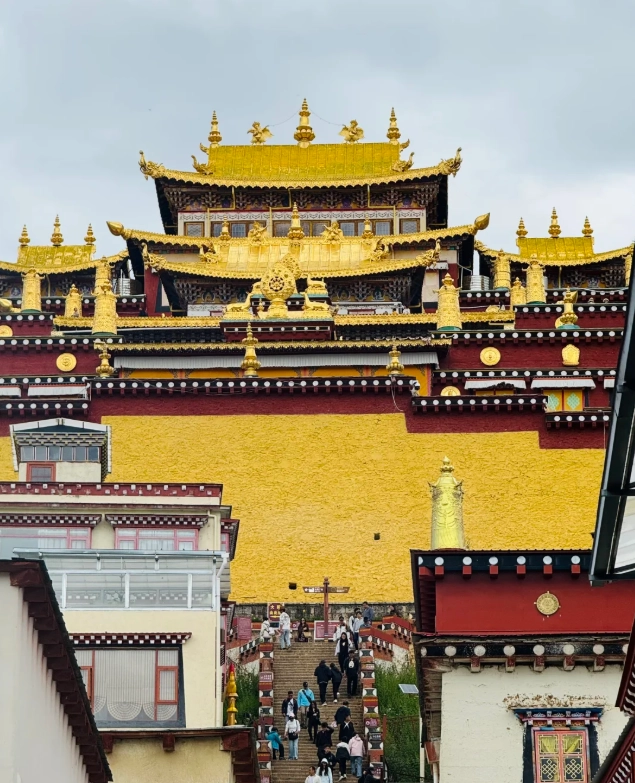
Inside the Monastery: A Step-by-Step Walking Route
Once you're through the ticket gate, you'll face a stunning lake reflection (Lamu Bayangcuo) on your left. Most tourists rush straight to the main hall. Don't. Here's my tested loop that takes about 2.5 hours and avoids 80% of the crowds:
- Start at the Reflection Lake (拉姆央措湖) — Take the wooden boardwalk around the eastern shore. The monastery silhouette against the water is iconic. Best light: before 10 AM or after 4 PM (yes, I know most guides say go in the morning—but I've seen too many squinting tourists. Afternoon light is softer and golden.)
- Climb to the White Stupa (白塔) — Follow the stone steps up. It's a bit steep; catch your breath at the top. Turn around for a panoramic view of the entire valley.
- Visit the Main Hall (扎仓大殿) — This is the largest building. Enter from the west side—the east entrance often has a long queue. Inside, you'll see four giant Buddha statues. No photos allowed. Keep your hat off and voice low.
- Explore the Zhacang and Bakuo (扎仓与八大康参) — Eight smaller temples circle the main hall. Most visitors skip the ones on the northern side. Go there—you'll find elderly monks chanting in near silence, and the murals are older and more detailed.
- Exit via the East Gate — The path downhill passes a row of prayer wheels. Spin each one clockwise (from the side of the monk on a t-shirt? No—just walk left to right).
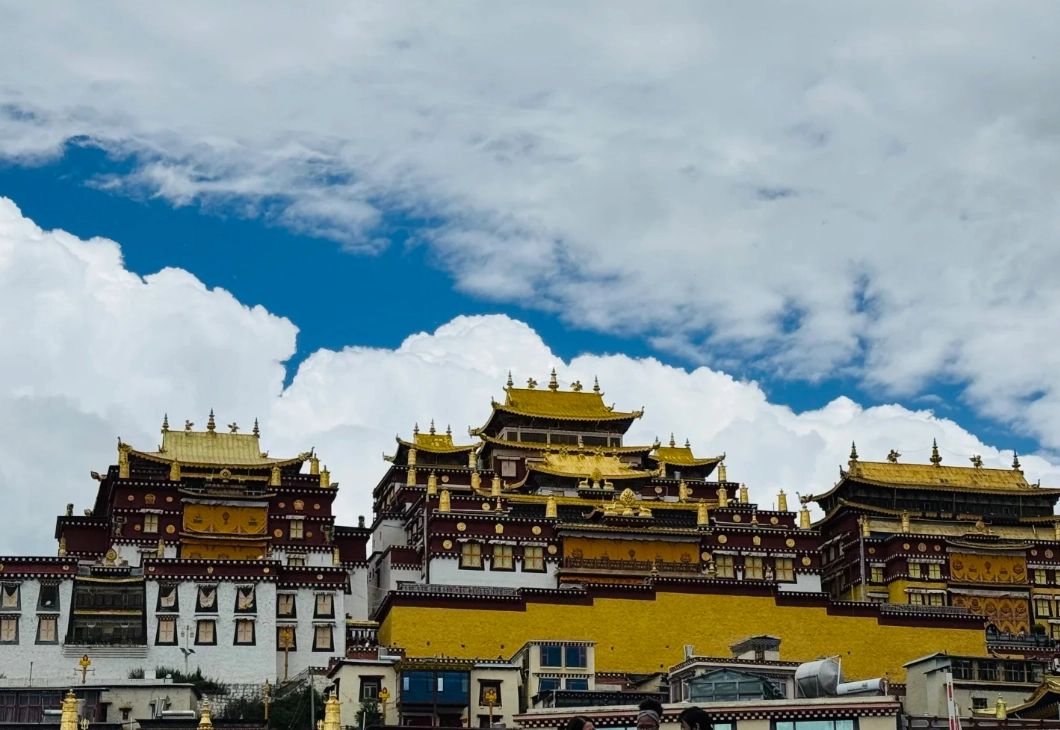
"I bring every group here around 3:30 PM. The light hits the golden roofs, and the tour buses have left. It's peaceful, and you can actually hear the monks chanting."
Best Time to Visit: When the Light (and Crowds) Work in Your Favor
Most online articles say "go early morning." That's generic. Here's the granular reality:
- 7:00 – 8:30 AM: Sunrise light is pretty, but the monastery opens at 7:30. You'll share the grounds with photographers and serious pilgrims. Decent for photos but cold (bring gloves).
- 8:30 – 11:00 AM: Tour buses start rolling in. The main hall gets packed. If you must come now, head straight to the northern temples first.
- 11:00 AM – 2:00 PM: Harsh overhead sun, harsh crowds. This is when I personally avoid the site unless I'm paid to be there. The reflection lake turns into a glare.
- 2:00 – 4:00 PM: The crowds thin as groups leave for lunch. Good time for the inside halls.
- 4:00 – 5:30 PM (my golden window): Soft golden light, long shadows, fewer people. The ticket office stops selling entry at 5:30 PM (last entry at 5:30, but you can stay inside until about 6:30). This is when I take all my clients for the postcard shot.
Closed dates: The monastery is open year-round, but the main hall sometimes closes during major Buddhist ceremonies (check with your hotel). Also, during winter (Nov–Mar), some side halls may be locked. No worries—still worth visiting.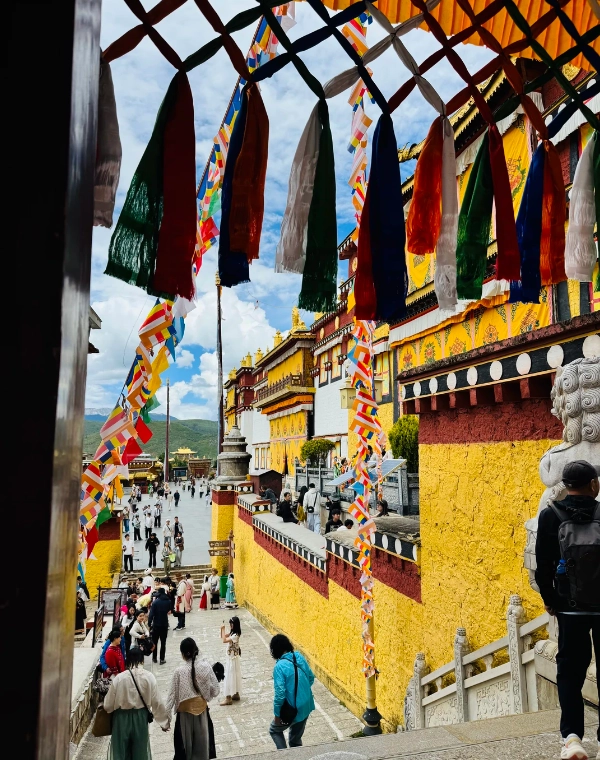
Ticket Booking: The Digital Maze (and How to Beat It)
Official ticket price: 90 RMB (adult, includes entrance to all halls). Students and seniors over 60 get half off with valid ID (passport accepted). Children under 1.2m free.
Do you need to book in advance? In shoulder seasons (Apr–Jun, Sep–Oct) you can usually buy at the window. But during summer (Jul–Aug) and Chinese National Holiday (Oct 1–7), the monastery limits daily visitors to about 10,000. Pre-booking is required.
How to book as a foreigner? The official WeChat mini-program is only in Chinese. Nightmare. Instead, use Trip.com or Klook—they have English interfaces and accept international credit cards. Search "Shangri-La Songzanlin Monastery" (alternative name). You'll need to enter your passport number—this is mandatory for entry. The QR code they send you will be scanned at the gate.
Payment: At the on-site ticket office, they accept WeChat Pay, Alipay, and cash (Chinese yuan). International credit cards are not accepted. So keep some cash handy, or better yet, book online to secure your slot.
"Yes, the WeChat mini-program in pure Chinese frustrates even me. That's why I always tell my guests: use Trip.com, pay with Visa, and you're done in 2 minutes."
Insider Tips: What Most Tourists Miss
- The toilet situation: The public restroom near the ticket office is often crowded and smelly. Use the one at the entrance of the main hall (cleaner, though still squat). Better yet, go at the Shangri-La bus station before you come. I'm not joking.
- Bring a power bank: Your phone will die faster at altitude plus constant offline map usage. The monastery has no charging stations.
- VPN is essential: If you need social media or WhatsApp, install a reliable VPN (like ExpressVPN or Astrill) before you leave your home country. China's Great Firewall blocks them once you land.
- Translate app: Download Baidu Translate or Apple Translate. The monastery monks speak limited English. I once had a traveler who needed medical help for altitude sickness—Baidu Translate saved the conversation.
- Don't buy the 'VIP fast pass' from touts near the gate. It's a scam. There's no such thing. Just follow the normal entry.
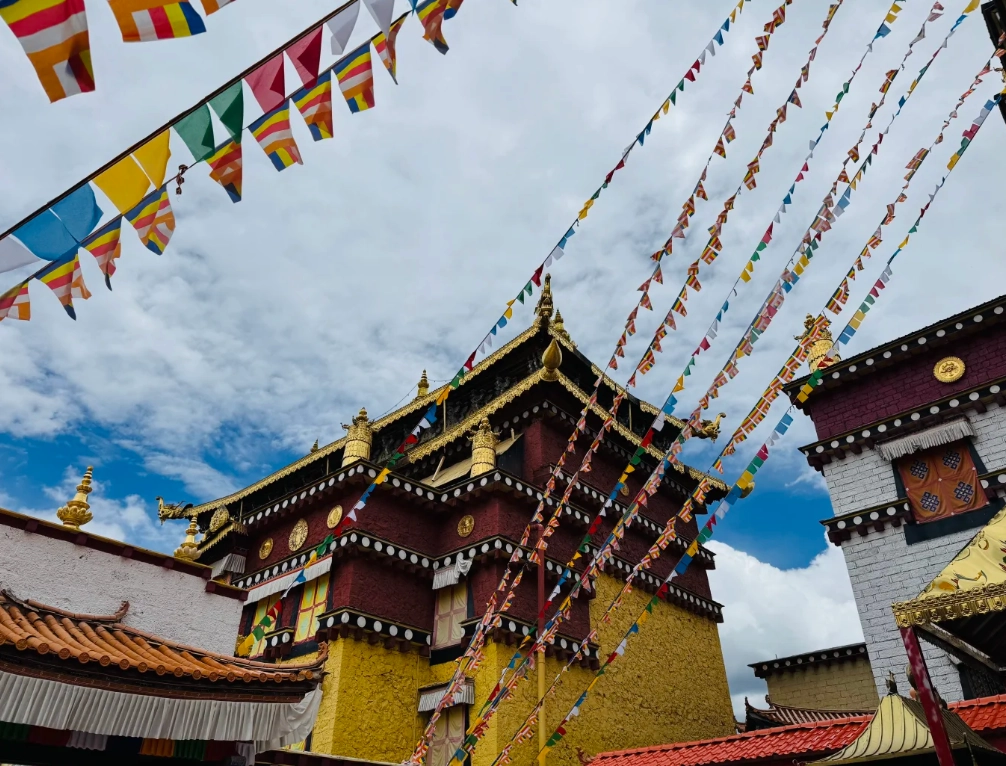







As someone who lives in Kunming and visits Shangri-La often, I wish this existed years ago. This map article is clearly written by someone who actually walked every staircase. The instructions for finding the quiet corner behind the secondary assembly hall gave me the most peaceful moment of my whole visit — no tour group had gone in there. It even lists the best times to reach the golden roof for sunlight, and I timed it perfectly. I’ve already sent it to three friends. Absolutely worth the download.
Solid guide overall. It marks the scenic photo points well and explains the meaning of the thangkas inside, which I appreciated. I followed it from the entrance to the rooftop terrace without any real problems. The only reason I’m not giving five stars is that the walking times felt optimistic — I’m fairly fit, but at 3,300m I needed way more breaks than the guide suggested. Also, the section on the sutra hall could have gone deeper into the murals. Still, I’d recommend it to anyone planning a trip.
The layout is nice and the historical background is interesting, but I had a few issues. The guide says to start from the main entrance plaza, but when I visited in late October there was construction blocking the usual path and I had to backtrack. The embedded Google Maps link also wouldn't open properly on my phone, which was annoying. That said, the advice on avoiding crowds near the prayer hall was useful and the print quality was good. It just didn't feel as ‘navigate like a local’ as promised during off-season.
This is the only guide you need for Ganden Sumtseling. I normally hate following a set route, but the local context made it feel like a friend showing me around, not a dry map. The marker for the hidden courtyard with the old incense burners was brilliant — I would have walked straight past it. They also tell you where to find clean toilets and which tea house doesn’t overcharge, which is more than any official leaflet gives you. Five stars, no hesitation.
I grabbed this before a long weekend in Shangri-La and it honestly made Songzanlin so much easier to navigate. The walking route is explained in a really sensible way, from the main gate up through the yellow halls, and the little notes about steep staircases and where to stop for a breather at high altitude were spot on. I loved the tip near the prayer wheel terrace — that view over the whole complex is exactly where the guide said it would be. Even with light drizzle I never felt lost. Worth every yuan.