 Yan Zhou
What You’ll Find Here
I’ve guided hundreds of foreign travelers through China’s transit visa rules, and the 240-hour (10-day) exemption is by far the most misunderstood. You don’t need to apply for a visa in advance, but showing up unprepared? That’s a fast track to a denied entry. Here’s exactly how to use this policy without stress.
Who Qualifies? The 4 Golden Rules
You qualify if you check all four boxes:
- Nationality: Citizens of 53 countries (US, UK, Canada, Australia, most EU, Japan, South Korea, etc.). Full list at the National Immigration Administration website.
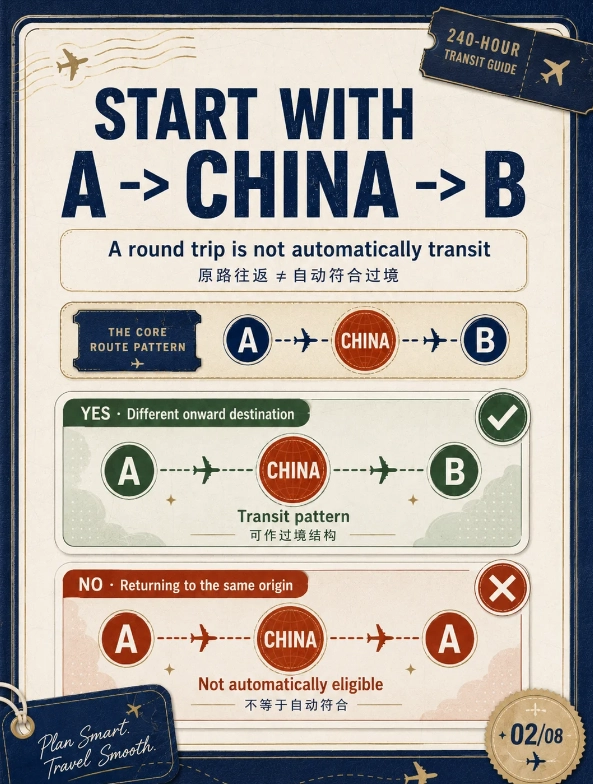
- Transit: You must have a confirmed onward ticket (plane, train, or ship) to a third country or region (not your home country if it’s the same as origin). Example: London → Shanghai → Tokyo works. London → Shanghai → London does not.
- Port of Entry & Exit: You must enter and exit from designated ports in the same city or region. For example, for Shanghai’s 240-hour policy, you can fly into PVG and depart from SHA or a cruise terminal, but you cannot enter in Shanghai and exit in Beijing.
- Stay Within the Permitted Area: You are restricted to the specific administrative region (e.g., Shanghai municipality, Jiangsu province, Zhejiang province for the Shanghai 240-hour zone). You cannot travel to other cities outside the designated area.
Which Cities Allow 240-Hour Transit?
As of the latest expansion, the following ports offer 240-hour (10-day) visa-free transit. Each has its own permitted activity zone:
| City / Region | Permitted Area | Main Ports |
|---|---|---|
| Shanghai | Shanghai, Jiangsu, Zhejiang | PVG, SHA, Cruise terminals |
| Beijing | Beijing, Tianjin, Hebei | PEK, PKX |
| Guangdong (Guangzhou/Shenzhen) | Guangdong province | CAN, SZX, ports |
| Chengdu | Chengdu, Leshan, Deyang, etc. | CTU, TFU |
| Xi’an | Xi’an | XIY |
| Hangzhou | Hangzhou, Ningbo, other Zhejiang cities | HGH |
I always tell my clients: pick one region and stick to it. Trying to “see it all” in 10 days within one zone is doable, but don’t attempt to cross to another province—immigration tracks your exit.
How to Apply at the Airport (No Paperwork Beforehand)
There’s no online pre-approval. When you arrive at the designated port, follow these steps:
- Don’t go to the regular “Foreigners” queue. Look for signs saying “24/144/240-Hour Transit Without Visa” or ask an officer. Usually it’s a separate counter.
- Fill out the arrival card (they’ll provide one). You’ll need your passport, the next flight/train/ship booking, and the address of your first hotel in the zone.
- Answer basic questions: “Where are you going? How long? Do you have your onward ticket?” Stay calm and consistent.
- Get a stamp on your passport showing the allowed stay period (240 hours from the next day’s 00:00, not from the moment of entry).
- Proceed to baggage claim and exit.
Common Mistakes That Get You Denied at Immigration
I’ve seen travelers turned away for these avoidable errors:
- Wrong port combination: You must enter and leave from the same region. If you fly into Shanghai and have a flight out of Beijing, the system rejects you. There’s no flexibility.
- Going to Hong Kong/Macau/Taiwan: Those are considered “third regions.” If your itinerary is US → Shanghai → Hong Kong, you are eligible, but only if you have a ticket to Hong Kong. Sometimes travelers try to show a bus ticket without a confirmed booking—that fails.
- Overstaying by even one hour: The 240-hour countdown starts at midnight after you enter. If you land at 10:00 PM on Monday, your 240 hours start at 00:00 Tuesday and expire at 24:00 Thursday 10 days later. You must depart before that deadline—no extensions.
- Using a passport with less than 6 months validity: Officers strictly check this. Ensure your passport is valid for the entire stay plus six months.
Sample 10-Day Itinerary – Shanghai & Beyond
Here’s a realistic plan using the Shanghai 240-hour zone (Shanghai + Jiangsu + Zhejiang). I use this with my groups.
Days 1-4: Shanghai
Day 1: Arrive PVG morning. Settle in hotel (I recommend The Bund Hotel or JW Marriott Shanghai for central location). Walk the Bund at sunset (go to the north end near Baidu Bridge for fewer crowds).
Day 2: Yu Garden (buy tickets on Trip.com or Alipay – avoid the ticket booth queue). Then head to French Concession for coffee and small streets. Insider tip: Siming Road near Yongkang Road has great local food stalls.
Day 3: Shanghai Museum (free but reserve via WeChat mini-program; if you can’t navigate it, ask your hotel’s front desk to help you). Afternoon: Huangpu River cruise.
Day 4: Zhujiajiao Water Town (take metro Line 17 to Zhujiajiao station, then bus or taxi 15 minutes). Stay overnight there for a quieter experience.
Days 5-6: Suzhou & Nanjing (Jiangsu)
Day 5: High-speed train from Shanghai Hongqiao to Suzhou (30 min). Visit Humble Administrator’s Garden and Pingjiang Road. Stay at Suzhou Marriott Hotel.
Day 6: Take train to Nanjing (1.5 hr). See Confucius Temple and the Yangtze River Bridge. Beware: Ming Xiaoling Mausoleum requires climbing many stairs – go early morning.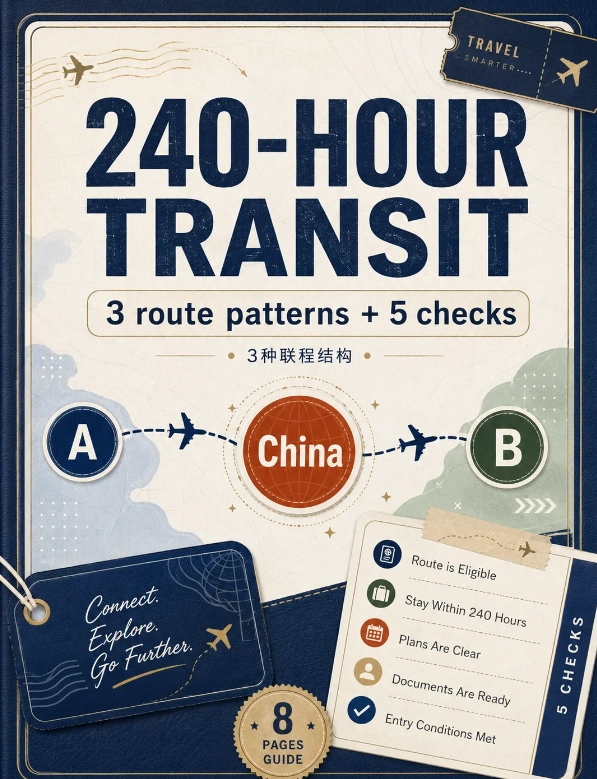
Days 7-9: Hangzhou (Zhejiang)
Day 7: High-speed train from Nanjing to Hangzhou (1.5 hr). Spend afternoon by West Lake – rent a bike and cycle the Su Causeway. Best photos: Leifeng Pagoda at dusk.
Day 8: Longjing Tea Plantations (take bus 27 to Longjing Village). Visit a tea farm and have lunch there.
Day 9: Lingyin Temple (booking needed). Return to Shanghai in the evening via high-speed rail (1 hr).
Day 10: Departure
Fly out from PVG or SHA before midnight of your 10th day. Double-check your flight time—your 240 hours end at 24:00 on day 10.
Payments, SIM Cards & Navigation – The Practicals
China is almost cashless. As a traveler without a Chinese bank account, here’s your survival kit:
- Alipay (绑国际信用卡): Download Alipay and link your Visa/Mastercard. Most merchants accept it. Carry small cash (100-200 RMB) for street vendors or emergencies—I’ve seen rideshare drivers who can’t process international Alipay.
- SIM Card: Buy a tourist SIM at the airport (China Telecom/Unicom) with VPN included or pre-load a VPN app before you arrive. Many apps are blocked (Google, Instagram, WhatsApp). Without VPN, you’re in trouble.
- Navigation: Google Maps is unreliable. Use Apple Maps (works decently in cities) or download Baidu Maps with English interface. For taxis: DiDi app (available in English) is a lifesaver; link your card to Alipay or PayPal.
- Translation: Use Apple Translate or Microsoft Translator. For menus, Waygo app does real-time camera translation.
- Booking attractions: Most major sites need a reservation with your passport number. Use Trip.com (English) or ask your hotel concierge to book via WeChat – it’s often easier than struggling with Chinese mini-programs.
Frequently Asked Questions
Verified and fact-checked by the editorial team. This content has been fact-checked to ensure informational precision.





This 240-hour visa exemption made my trip to Kunming unforgettable. As a first-time solo traveler to China, I was nervous about the rules, but the 10-day stopover guide laid everything out clearly—from which ports to use to the exact documents needed. The Yunnan scenery, from Stone Forest to Dianchi Lake, was breathtaking. Customs in Kunming was friendly and fast. Honestly, I'm spreading the word to all my backpacker friends. 5 stars!
Did the 240-hour city stopover in Chengdu. Wow, just wow. The visa exemption let me dive into panda sanctuaries, spicy hotpot, and the incredible Wenshu Monastery without any visa paperwork. One pro tip from the guide that saved me: carry a printed flight itinerary for each leg. I passed through customs in maybe 3 minutes. Already planning a repeat stopover in Xi'an next year. Totally 5-star experience.
Couldn't recommend this more! Flew into Guangzhou for a 9-day stopover under the 240-hour visa exemption. The airport staff were super efficient, processed my exemption in under 5 minutes. Then I spent a week exploring Cantonese food, temples, and even a quick train to Shenzhen. The guide's tips on mandatory hotel registration and leaving only via certain ports were spot-on. Absolute game-changer for short trips to China.
Used the 10-day stopover in Beijing and honestly, it was a solid experience overall. The city is incredible and the visa exemption saved me a ton of hassle. Only downside: the official guidelines online are a bit confusing—I almost missed the requirement to keep a printed copy of my itinerary. Had to scramble at the airport. 4/5 because the actual trip was amazing, but the prep info needs updating.
The 240-hour transit visa exemption is a fantastic deal for layovers, but my experience in Shanghai was a bit mixed. The guide mentioned seamless transfers, but the immigration officer spent an extra 15 minutes checking my onward ticket and hotel bookings—felt like I was being interrogated. Once I got out, the city was great, but the process could be smoother. Still worth it if you have patience.