 Bo Wu
Bo Wu
Skip to what you need
I'll never forget the look on Mark's face — a British tourist in Beijing — when he tried to swipe his Visa at a street stall. The terminal just beeped red. He pulled out crisp ¥100 bills, and the vendor waved them away. “No change,” she said in broken English. Mark was stuck. No QR code, no cash accepted, no card. This is China's payment reality, and I've rescued hundreds of tourists from the same panic. Let me show you exactly how to pay in China as a tourist — no fluff, just steps that work.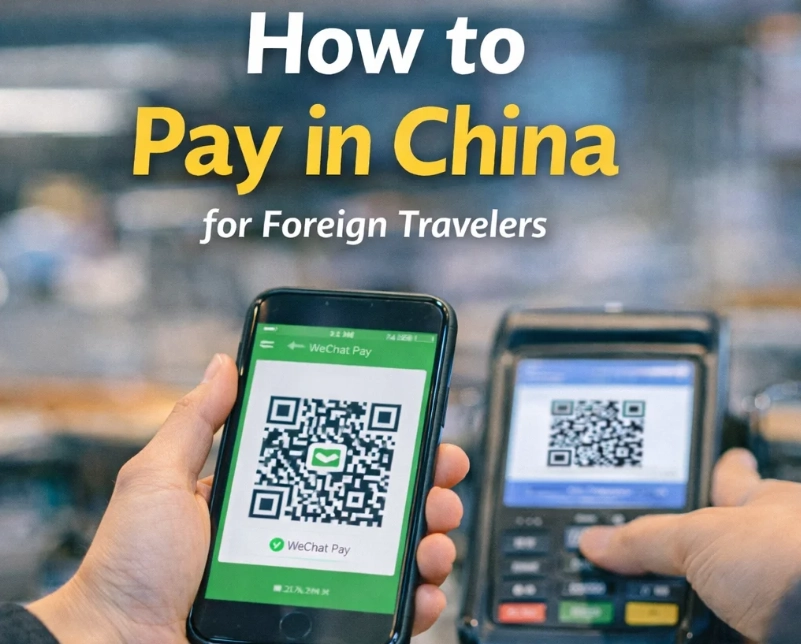
Why Your Card Won't Work (And What Will)
Here is the catch: China skipped plastic. Most shops, restaurants, and even taxis don't accept foreign-issued credit cards. Even if they have a terminal, it's often locked to Chinese UnionPay. Alipay and WeChat Pay rule the streets. But you're a foreigner — how do you get them? And what about cash?
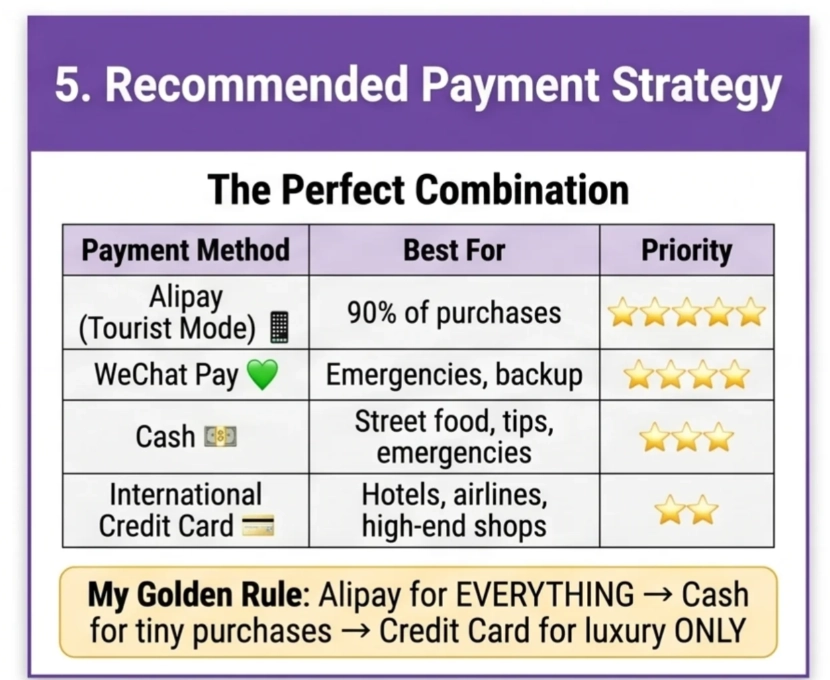
Quick verdict: Get Alipay with your international card. It works in 90% of places. For the rest, keep some cash (¥200-500) for emergencies.
Set Up Alipay the Right Way
Alipay now allows tourists to link Visa, Mastercard, or Amex directly. I've tested it with a US-issued Chase card — smooth. Here's the walkthrough:
- Download Alipay (App Store or Google Play).
- Register with your foreign phone number (you can use your home number).
- Find the “Tourist Pass” or “International” section — usually on the home screen.
- Add your card. Expect a small verification charge (refunded).
- Done. You can scan QR codes to pay instantly.
One headache: Some merchants use a specific “merchant QR” that only works with Chinese bank accounts. But this is rare — maybe 1 in 20 small stalls. When that happens, I always pull out cash or switch to WeChat.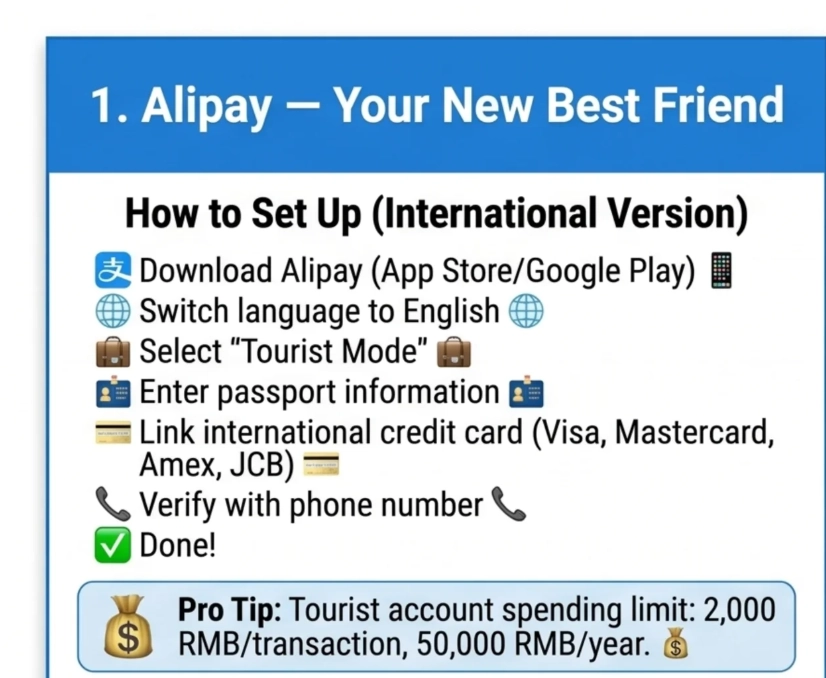
WeChat Pay: Is It Worth It?
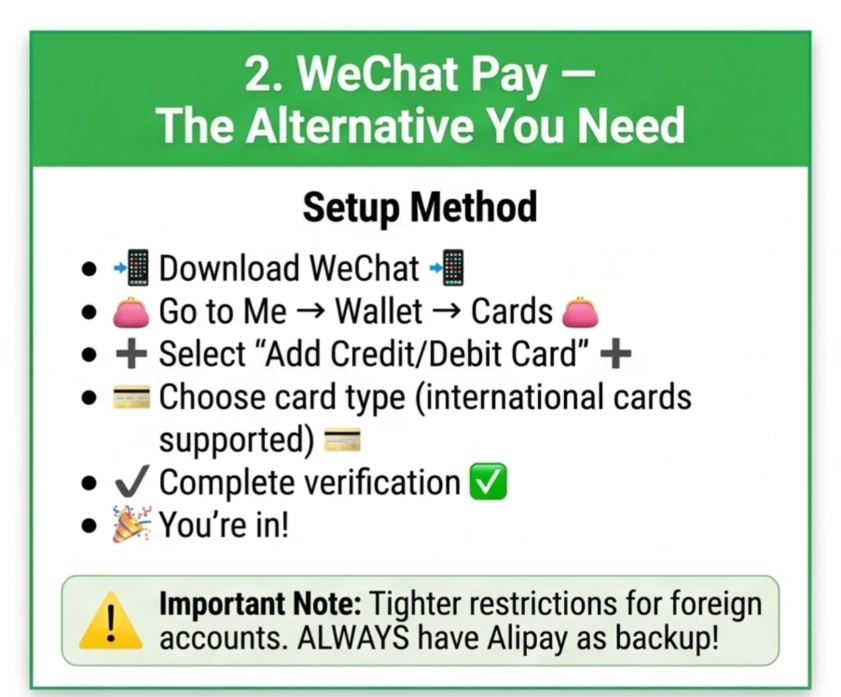
WeChat Pay is more sticky — most Chinese use it for everything. But setup for tourists is less straightforward. You can link an international card, but the process is buried in menus. I usually tell my clients: “Stick to Alipay first, install WeChat Pay as backup.” If you want both, here's the trick:
- Open WeChat, go to Me > Pay > Wallet > Add Card.
- Scan someone's personal QR code once to trigger a “red envelope” test — that'll activate the payment function.
- Yes, it's quirky. But once set, it works like Alipay.
Personal experience: I've had days where Alipay's server was slow, but WeChat saved me. So having both is ideal, but not mandatory.
UnionPay: The Hidden Savior
If you happen to have a bank card with UnionPay logo (many Asian and Australian banks issue them), you can use it at ATMs and some POS terminals directly. But for most Western tourists, this isn't an option. However, you can apply for a UnionPay virtual card via Alipay's “Tourist Card” feature — a prepaid card you top up with your foreign card. That way you bypass the international card acceptance issue entirely.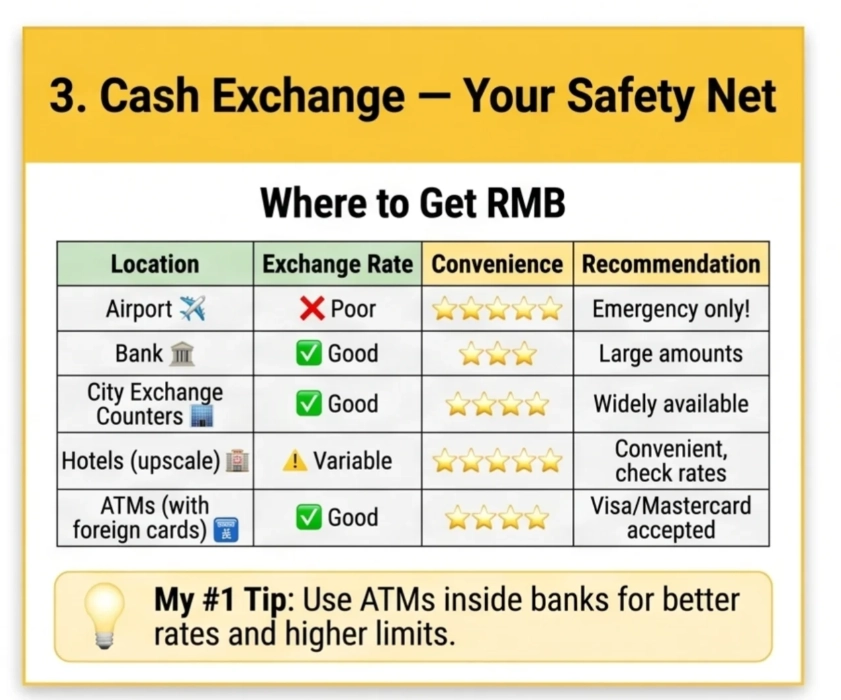
Cash Still Matters (Sometimes)
I always carry ¥300 in small bills (¥5, ¥10, ¥20). Why? Street food vendors, some taxi drivers (especially older ones), and remote temple donation boxes. But here's the nuance: vendors often don't have change. So pay with exact change or use ¥5-10 notes. I've seen tourists hand over ¥100 for a ¥12 bottle of water and get turned away. Break your bills at a convenience store (FamilyMart, 7-Eleven) first.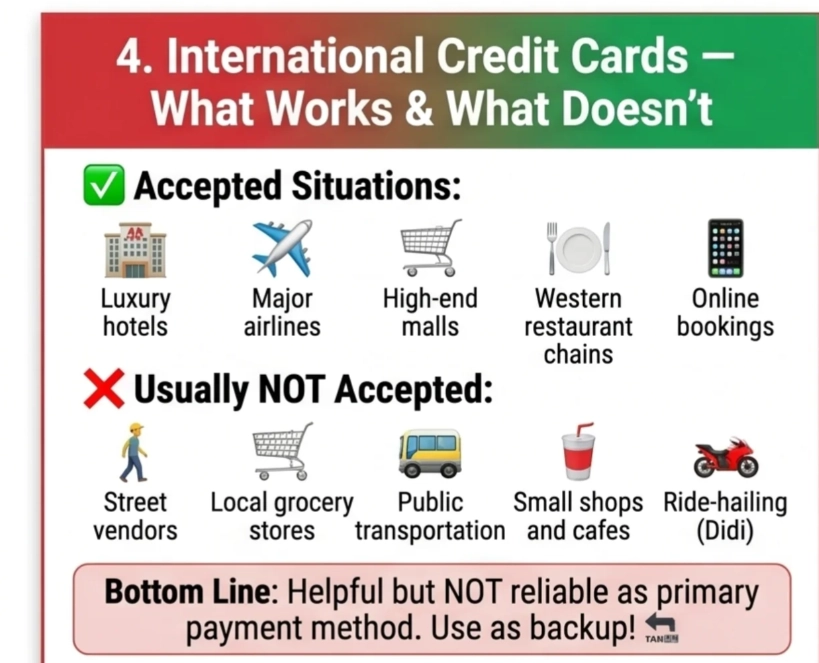
Pro tip: When paying cash, say “No change needed” if you underpay slightly (like giving ¥15 for a ¥12 item). It builds goodwill and saves you the coin hassle.
FAQ: Your Payment Nightmares Solved
Verified and fact-checked by the editorial team.








Read this in the airport lounge before my flight to Beijing and it completely changed my mindset. The writer explains the psychology of “card panic” so well—I went from anxious to excited. Once I landed I set up Alipay in 10 minutes and paid for everything with a smile. Even the taxi driver was impressed I knew how to scan his code. Perfect 5-star resource for anyone worried about China’s digital payment system.
I found the article a bit too optimistic about card acceptance. The author says “almost everywhere takes card,” but in my experience small vendors in Chengdu only took WeChat or cash. I ended up panicking a few times until I figured out the QR code thing on my own. The vocabulary list at the end was helpful, but honestly the guide felt a little rushed. 3 stars from me—it’s okay but not the magic bullet it claims to be.
This is exactly the kind of info I was hunting for before my trip. The article breaks down each payment method perfectly—even mentions the backup cash strategy which saved me when my phone battery died in a tiny noodle shop. I’ve been recommending it to everyone in my travel group. If you’re nervous about cashless China, read this. Absolute lifesaver.
Good article overall, but I felt it downplayed how tricky it can be to set up WeChat Pay as a tourist. The guide says “just follow the prompts,” but my app kept asking for a Chinese bank card that I don’t have. Alipay worked fine after a few tries though. I’d give it a 4 because it still got me through most situations, just wish it included more troubleshooting for common errors.
I read this article right before my trip to Shanghai and honestly, it saved me a lot of headache. The step-by-step on linking Alipay to my foreign card was super clear, and I was able to scan QR codes at street food stalls without any issues. The only thing missing was a tip on what to do when your card gets declined unexpectedly—happened to me once at a subway ticket machine. Still, highly recommend this guide for any first-timer in China.
Absolute game-changer. I was dreading the payment situation after reading old forums, but this guide was spot-on. I downloaded Alipay, linked my Mastercard, and paid for everything – even a ¥3 bottle of water from a granny on the street. No card panic at all! The only thing: make sure your bank doesn’t block foreign transactions, mine did and I had to call them. After that, smooth sailing. 5 stars for peace of mind.
Honestly, I was frustrated. The article makes it sound like a breeze, but as a tourist in Chengdu, I spent 20 minutes in a convenience store trying to add my Visa card to Alipay – it kept rejecting it. The clerk couldn’t help because of the language barrier. Eventually I just paid cash, but then I had to find an ATM with high fees. I also heard horror stories about frozen accounts. Maybe it works for some, but for me it was a hassle.
Solid experience overall. I used a mix of Alipay and cash. Alipay worked flawlessly at larger restaurants and chain stores, but I ran into trouble at a small noodle shop near the Great Wall – the owner only took WeChat Pay and I didn’t have that set up. Also, some taxi drivers assumed I’d scan their QR, but my app glitched. Helpful tip: keep ¥100-200 in cash for backup. 4 stars because it’s not 100% smooth everywhere.
WeChat Pay was a lifesaver in Shanghai! Every shop, from the fancy dumpling house to the random souvenir stall, had a QR code. The best part? Splitting bills with new friends was instant. I will say the initial setup with a foreign phone number was a bit finicky, but once it’s done, you’re golden. Definitely do this instead of carrying cash everywhere.
Loved how easy it was to use Alipay once I figured it out. I linked my foreign card and paid for street food, subway tickets, and even a taxi without any hassle. The app’s mini-programs saved me a ton of time. Only downside: my friend couldn’t get their card to work and had to rely on cash, which some smaller vendors didn’t accept. Still, 5/5 for convenience – I’d recommend tourists set it up before arriving.