 Qiang Huang
Quick Navigation
I've been leading photography walks through these narrow lanes for years. And honestly? First-timers almost always leave with the same generic shots—crowds, overpriced souvenirs, and noisy backgrounds. But Tianzifang is a goldmine if you know where to point your lens. Here is exactly what I do.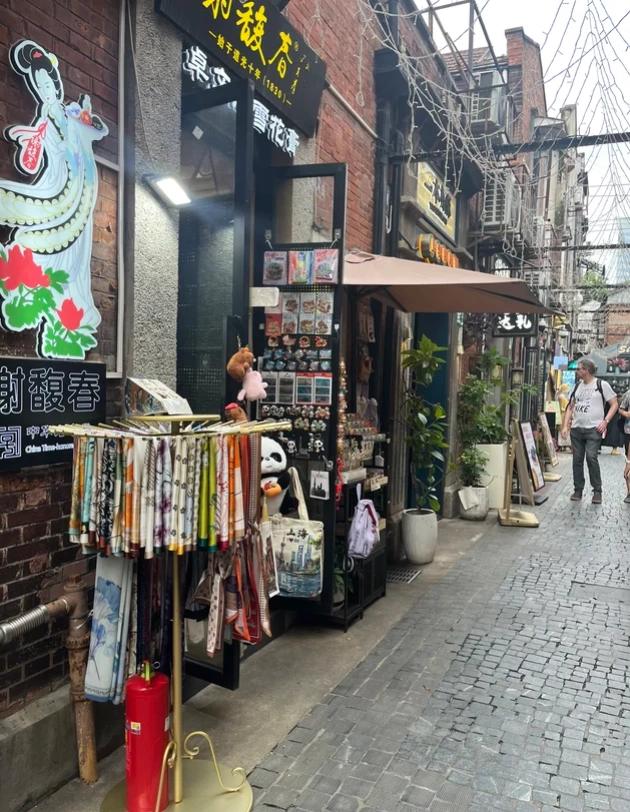
Why Most Tourists Get Boring Photos (And How You Won't)
Here is the catch: everyone follows the main alley, Taikang Road, like a magnet. You end up with shoulder-to-shoulder shots and vendor signs screaming for attention. The trick? Disappear into the side lanes. I always tell my clients: if the alley is wider than two meters, you're in the wrong place.
Your biggest enemy is the 11:00–15:00 rush. That's when tour groups flood in, and the sun turns the narrow gaps into harsh contrast zones. I've seen people wait 20 minutes for a clear frame—only to give up. Don't be that person. Instead, target early mornings (before 9:00) or late afternoons (after 16:30). The light gets buttery, and the crowds thin out dramatically.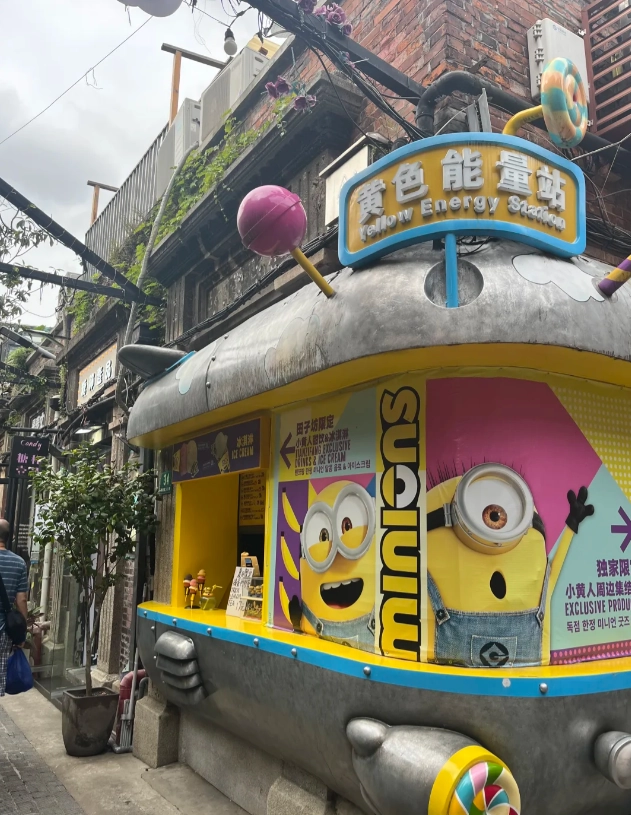
The 5 Must-Use Tianzifang Photography Spots
I've mapped the district end to end. These are my personal go-to locations for unique, crowd-free shots.
1. The Main Alley Balcony View
Location: Near No. 210 Taikang Road, look for a narrow staircase beside a fabric shop. Climb to the second-floor balcony (public access until 18:00). Best time: 16:00–17:00 for warm light on the red lanterns. What to shoot: Downward angle on the flowing crowd—use a slow shutter (1/15s) to blur motion while keeping the architecture sharp.
One pain point: the balcony can get cramped with 3–4 people. I usually go on a weekday, right at 16:00. If you find it full, wait 10 minutes—most snap-and-go tourists leave quickly.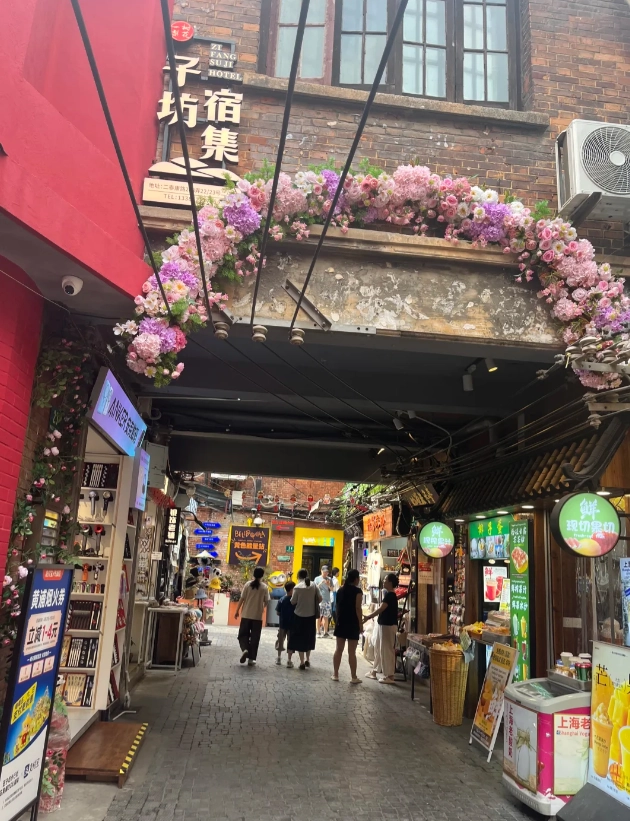
2. The Hidden Courtyard near No. 248
Location: Lane 248, about 30 meters in from the main road. There's a tiny archway covered in ivy—most people walk right past it. Best time: 09:00–10:00 for soft side lighting on the old brick walls. What to shoot: Portrait with the textured wall as background; or a still life of the communal water faucet with potted plants.
Here is a tip I learned the hard way: this courtyard is a residential area. Keep your voice down and respect the locals. I've seen guides get yelled at for being too loud. If you're polite, residents might even let you peek into their tiny art studios.
3. The Vintage Barber Shop Window
Location: Alley behind Lane 274, look for a red-and-white barber pole. The shop itself is a working barber (10:00–20:00, except Mondays). Best time: Midday (12:00–13:00) when the sunlight hits the mirror inside, creating a warm glow. What to shoot: Reflection of the barber at work, or a detail shot of old-fashioned scissors and combs.
I always ask the barber, Mr. Chen, for permission before shooting. He's usually happy if you're quick. Last year, he let me stand inside the doorway to capture the perfect reflection. That's the kind of access you can't get from a guidebook.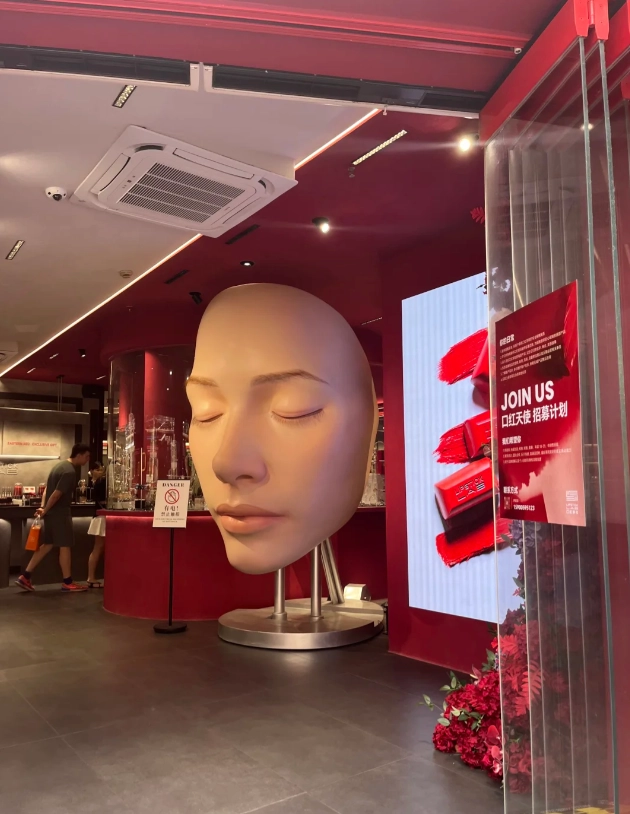
4. The Green Wall at Lane 210
Location: At the dead end of Lane 210, a three-story wall completely covered in creeping fig. Best time: 15:00–16:00, when the greenery creates dappled shadows. What to shoot: Full-body portrait with the wall as a natural backdrop; or a macro shot of dew on the leaves (if you visit after rain).
This spot is my secret weapon for editorial-style shots. The contrast between the lush green and the gray concrete is stunning. One warning: after rain, the ground can be slippery. Wear non-slip shoes.
5. The Skybridge at Sunset
Location: Near the south exit of Tianzifang, there's a pedestrian bridge crossing over the lane. Best time: 17:30–18:15 (depending on season). What to shoot: Looking down the lane as lights begin to turn on—capture the transition from day to night.
This is my favorite for a dramatic skyline. I set my camera to aperture priority (f/8) and let the auto-exposure handle the tricky mixed lighting. If you have a tripod, even better—you can blend exposures for the neon signs against the twilight blue.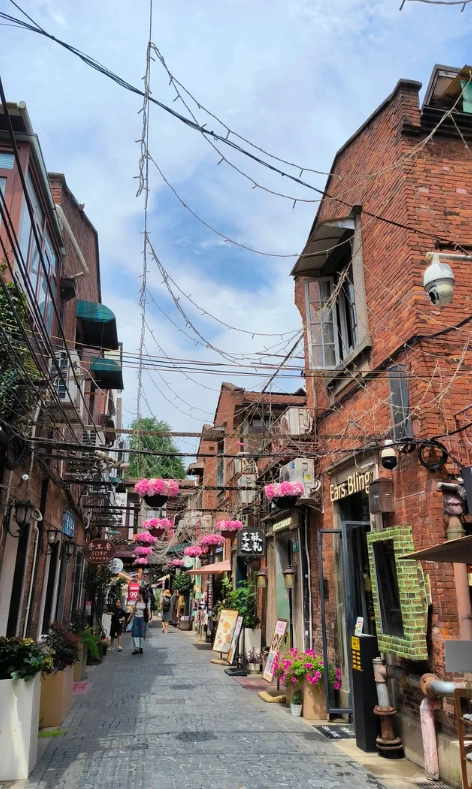
The Exact Gear and Settings I Use
You don't need a heavy DSLR. In fact, most of my best shots come from a mirrorless camera with a 35mm prime lens. Here is my kit and why:
| Item | Why I Use It | Budget Alternative |
|---|---|---|
| Camera: Sony A7 III | Excellent low-light performance for dusk shots | Any smartphone with manual mode (like iPhone Pro or Huawei P series) |
| Lens: 35mm f/1.8 | Perfect for narrow lanes; wide enough for context, tight enough to avoid distortion | Smartphone wide-angle (0.5x) mode |
| Polarizing filter | Cuts glare from windows and wet surfaces | Not needed for phone; just angle your phone slightly |
| Small tripod (Gorillapod) | For long exposures on the skybridge or low-light interiors | Rest camera on a wall or use a small beanbag |
| Spare battery | Tianzifang has limited charging spots; you'll drain fast if shooting video | Power bank (at least 10,000 mAh) |
My go-to settings: Aperture priority, f/2.8 for portraits, f/8 for architecture. ISO capped at 1600 to keep noise low. White balance set to cloudy for a warm tone. And I always shoot in RAW—huge help when pulling shadows later.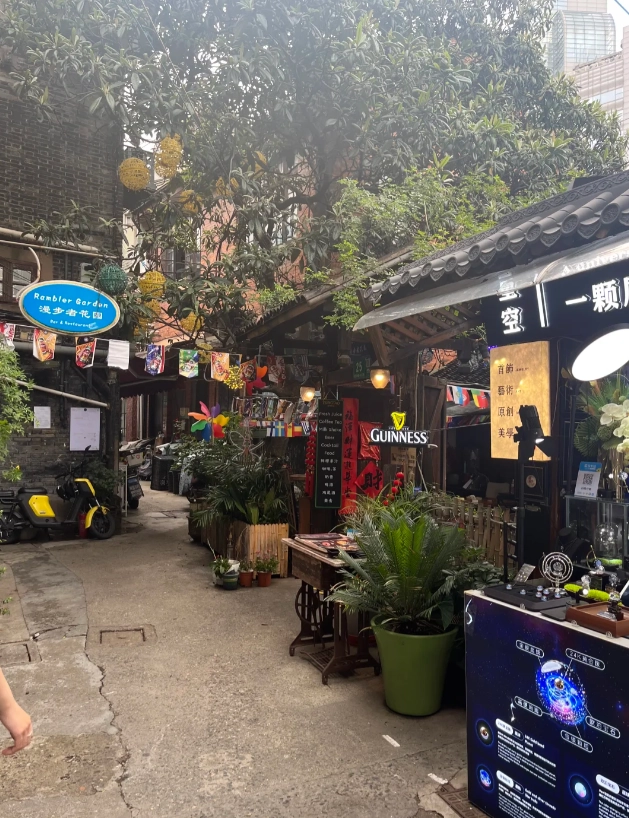
How to Avoid the Crowds (Time & Tactics)
Look, I know the guidebooks say "arrive early." But early to Tianzifang means before 9:00 AM. Most shops don't open until 10:00, so the lanes feel dead. Not ideal for street photography. My sweet spot is 16:30–18:30. The light drops low, the tourist groups have moved to dinner, and the shop lights create this magical atmosphere.
Here is a tactical trick: Enter from the south gate (near No. 210) instead of the main north entrance. The north gate is where tour buses drop people off. The south gate is quiet, and you'll hit the hidden courtyard first.
Also, avoid weekends entirely if you can. Saturday afternoon? Nightmare. I once spent one hour to get one clean shot. If you must visit on a weekend, go before 10:00 AM or after 18:00. And forget about Mondays—many small shops close for rest, but the lanes are still open and less crowded.





I was excited to try these secret angles, but honestly, the experience was frustrating. Half the spots were swarmed with tourists, and one of the “secret” locations turned out to be a private studio that asked me to leave. The article makes it look easy, but in reality you’d need to go at 7 AM on a weekday. Not worth the hype for me.
Most of the angles work great—I especially loved the one by the green vine wall. However, a couple of the spots mentioned seem to have changed (a shop closed, a new sign blocking the view). Would be nice if the article could be updated. Still, got some nice photos and it’s a fun way to explore the alleys. 4/5 overall.
Brought my wife and 8-year-old here after reading this. Even my kid had fun hunting for the secret angles, and the shots we got are now our phone backgrounds. The guide is practical, not just theory. The only downside was the crowd, but that's Tianzifang for you. Still, absolutely worth it—thanks for the tips!
As a travel photographer who’s been to Tianzifang multiple times, I thought I’d seen it all. But this article opened my eyes to a few spots I’d completely overlooked—especially the rooftop angle that frames the labyrinth of rooftops. The instructions are clear and the photos in the guide are inspiring. Five stars from me!
Absolutely loved this guide! I spent an entire afternoon at Tianzifang following the 7 secret angles, and my camera roll has never looked better. The one near the old stairwell with the hanging lanterns gave me the perfect mix of shadow and color. Already planning a second visit with a friend who's into street photography. Highly recommend!