.jpeg) Mike Sun
Mike Sun
Quick Navigation
Why Visit Longmen Grottoes (and What Nobody Tells You)
I'll never forget the first time I walked out of the shade and saw the Vairocana Buddha staring down at me – 17 meters of serene stone, carved a thousand years before Columbus sailed. Most guides will tell you "it's a UNESCO World Heritage site" and rattle off dates. What they don't tell you is that the light hits the main Buddha perfectly only in the late afternoon, turning the sandstone into honey. Or that the crowds from a hundred tour buses can make you feel like you're in a subway station at rush hour if you show up at 10 a.m.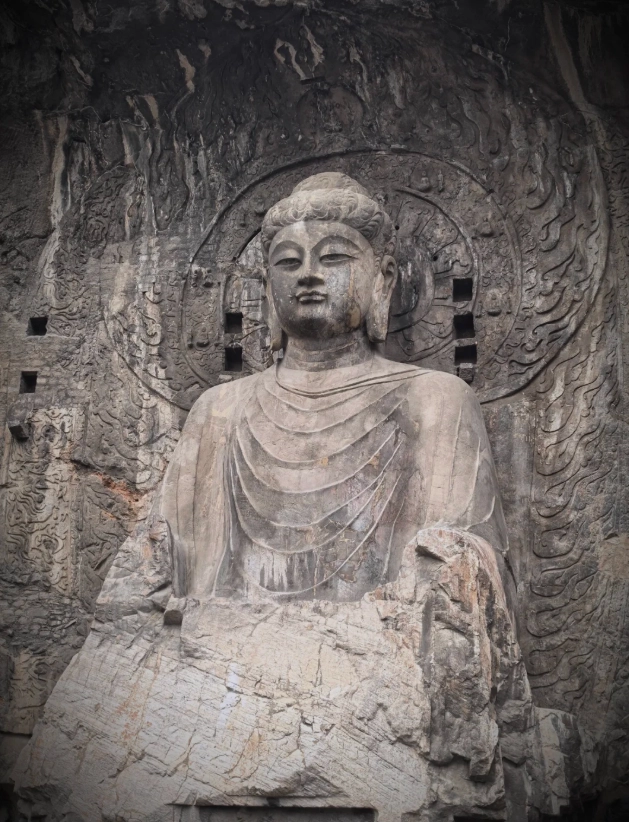
I've been guiding groups through Luoyang for over a decade, and I've seen everything – from a family of five who tried to "speed-run" the grottoes in 45 minutes to a solo traveler who spent four hours just staring at one niche. The Longmen Grottoes aren't just a collection of caves; they're a 1,400-year-old open-air museum that tells the story of Buddhism in China, with more than 100,000 statues and 2,800 inscriptions. But here's the thing: if you don't plan your visit well, you'll leave tired, sunburned, and wondering what the fuss was about.
In this guide, I'll share not just the basics – tickets, hours, directions – but the gritty details that make or break your experience. I'll tell you which caves to skip if you're short on time, where to stand for the perfect photo, and how to dodge the selfie sticks.
How to Get to Longmen Grottoes
From Luoyang Longmen High-Speed Rail Station (Most Common)
Exit the station and look for the sign for Metro Line 2. Take it one stop to Longmen Station (it's literally the next stop). Get out from Exit C – you'll smell roasted chestnuts from a street vendor near the stairs. Walk straight for about 8 minutes; you'll see the entrance gate on your left. If your legs are tired, the tourist shuttle (10 RMB per person) runs from the square to the ticket office. Pro tip: The shuttle doesn't save much time; walking is faster during peak hours because the queue for the shuttle can be 15 minutes.
From Luoyang City Center (Old Town / Laocheng)
Catch bus number 53, 60, or 81 from Laocheng. Fare is 1.5 RMB (cash or Alipay). The ride takes about 45 minutes. Get off at the Longmen Grottoes stop – you can't miss it. Alternatively, a taxi from the old town costs around 35-50 RMB depending on traffic. Heads up: Most taxi drivers don't speak English, so have the Chinese name written down: 龙门石窟 (Lóngmén Shíkū).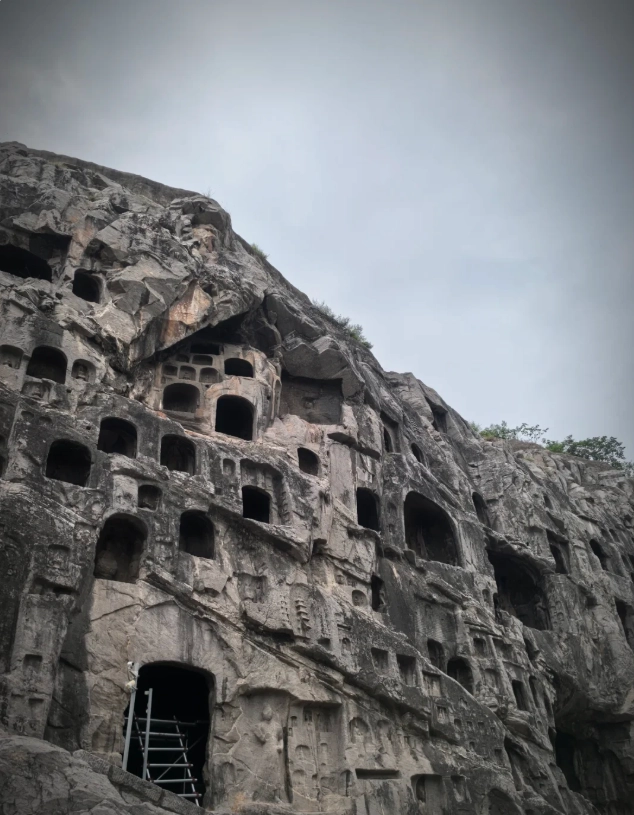
From Luoyang Beijiao Airport
No direct metro. Take a taxi – about 40 minutes and 80-100 RMB. Or take the airport bus to the city center (20 RMB) and then transfer to bus 53/60/81.
Entrance Fees & Opening Hours
| Category | Price (RMB) | Notes |
|---|---|---|
| Full-price (peak season: Mar 1 – Oct 31) | 90 | Includes West Hill, East Hill, and Xiangshan Temple |
| Full-price (off season: Nov 1 – Feb 28) | 60 | Same coverage |
| Student / Senior (60-69) | Half price | Valid ID required; exact numbers: students 45 RMB in peak, 30 in off |
| Free | 0 | Children under 1.2m, seniors 70+, disabled, active military |
Opening hours: Peak season 8:00 – 18:30 (last entry 17:30). Off season 8:00 – 17:30 (last entry 16:30). The site closes roughly 30 minutes after the last entry, so you won't be kicked out at 17:00 if you enter late.
Reservation required? Yes, especially during Chinese holidays. I strongly suggest you book tickets on the official WeChat mini-program "龙门石窟" (Longmen Shiku). You can find it by scanning a QR code at the ticket office or searching in WeChat. Foreigners can also buy at the window, but during Golden Week (Oct 1-7), they often sell out by 11 a.m. Prices fluctuate slightly; I recommend pulling up WeChat to scan their official mini-program right before you Uber over.
Best Time to Visit Longmen Grottoes
If you ask me, the single best moment is 4:00 p.m. on a weekday in October or November. Here's why:
- Light: The West Hill (where the main Buddha is) faces east, so morning light is harsh and backlit. By late afternoon, the sun swings behind you, illuminating every detail of the statues. The stone glows.
- Crowds: Most tour groups rush in between 9 a.m. and 11 a.m., and again from 1 p.m. to 3 p.m. By 4 p.m., they're gone or heading to the bus. You'll have the walkway almost to yourself.
- Temperature: Summer afternoons can be scorching (38°C). Spring and autumn are perfect.
Many guides will tell you to go early to beat crowds. That's half true – but the light is terrible until 10 a.m. My compromise: arrive at 8 a.m., do the East Hill first (which is less crowded and has good morning light for panoramic shots), then cross the bridge to West Hill around 10:30 a.m. By then the sun is higher, and you'll see the main Buddha in decent light. But honestly, nothing beats that golden hour glow.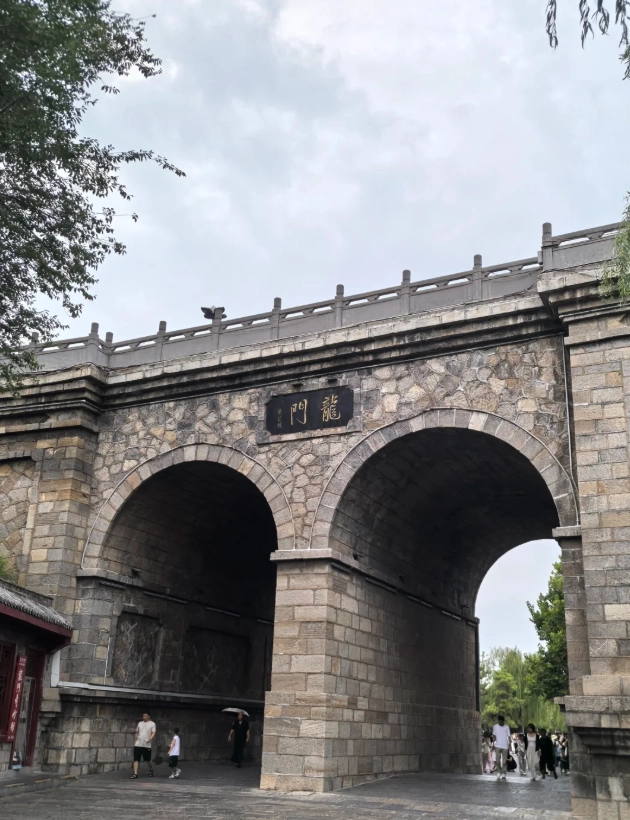
What to See: The Three Major Sections
West Hill
This is the main event. Here are the unmissable caves:
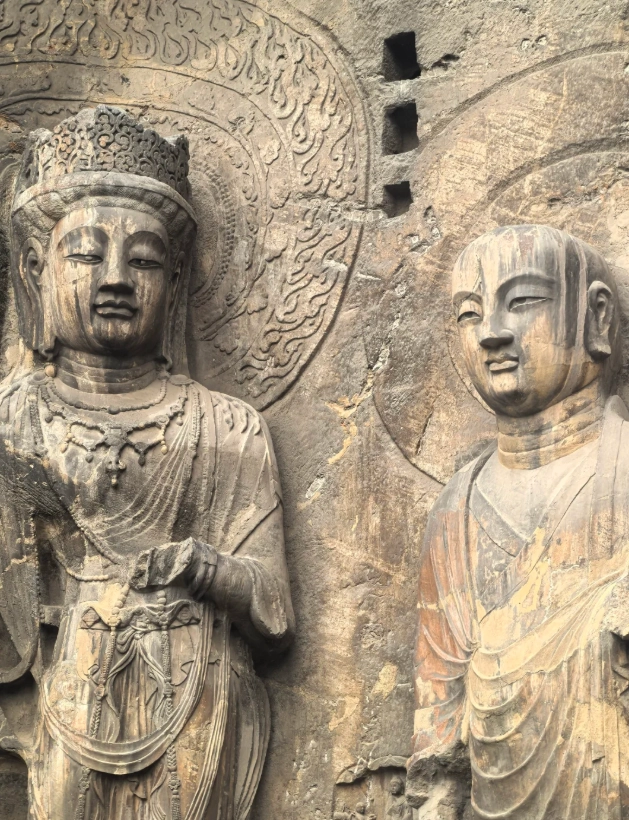
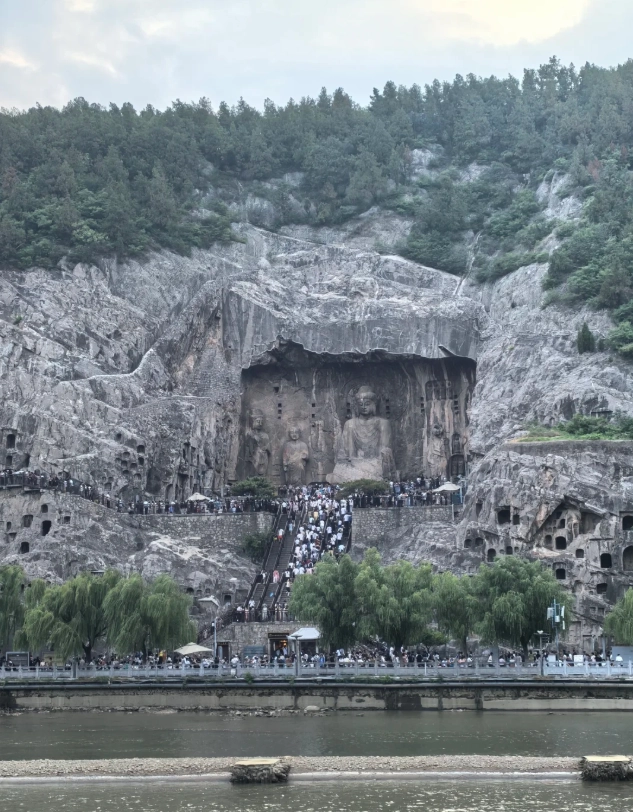
- Fengxian Temple: Home to the 17-meter Vairocana Buddha. It's not actually a cave – it's an open-air niche. The scale is staggering. Stand directly below and look up; the Buddha's serene expression changes as you move. Photo spot: Go to the viewing platform on the far right (east side) to get the Buddha centered with the river behind – best at 4 p.m.
- Binyang Three Caves: The central cave has a massive seated Buddha with intricate ceiling patterns. The north and south caves were commissioned by emperors. Look for the “Emperor and Empress Procession” reliefs – they're among the finest stone carvings in China.
- Wanfo Cave: “Ten Thousand Buddhas” – tiny Buddha figures cover the walls. Hint: bring a small flashlight to see the details on the ceiling.
- Lotus Cave: A huge lotus flower carved on the ceiling. It's delicate and often overlooked.
East Hill
Less crowded, more climbing. The highlight is the Kan Jing Temple with the 29 Arhats carved in high relief. Also, the Leigu Platform offers the best panoramic view of West Hill – you can get the entire cliff face in one shot. Warning: There are steep stairs; take your time.
Xiangshan Temple and Bai Garden
Xiangshan Temple is a reconstruction but has a lovely garden and a stupa. Bai Garden is the tomb of the Tang poet Bai Juyi. If you're a fan of poetry, it's a peaceful stop. Most tourists skip it – that's your advantage.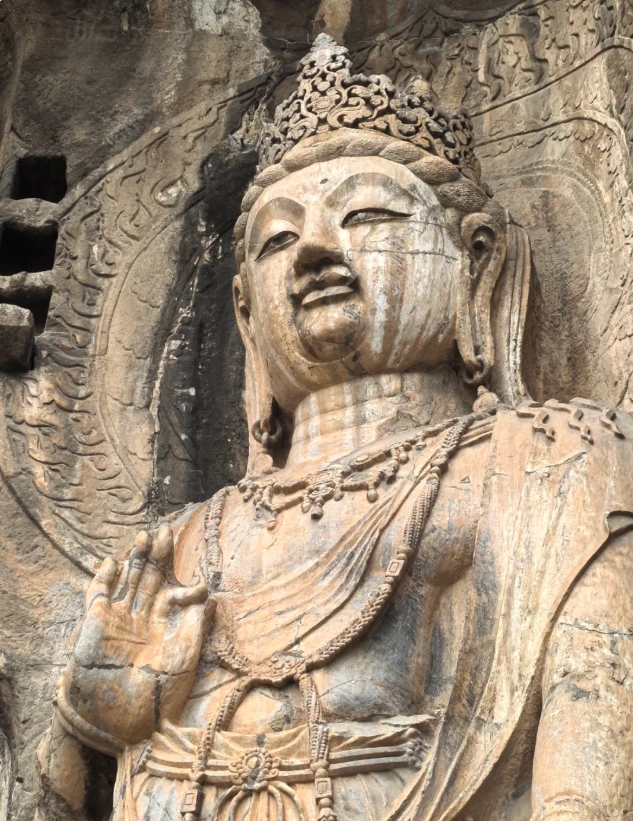
Insider Tips for a Better Experience
- Enter from the South Gate. Most tour buses park at the North Gate. The South Gate (near the high-speed rail station side) has fewer queues. You'll walk the route in reverse but it's worth it.
- Don't buy the electric cart ticket round-trip. The distance from the South Gate to the main Buddha is about 1.5km. On a nice day, walking along the river is pleasant. The cart only saves you 10 minutes.
- Watch out for the “quick pass” touts. Outside the gate, you'll see people offering “skip the line” tickets for 200 RMB. They're scammers. Official tickets are sold only at the booth or on WeChat.
- Bring water and snacks. Inside, a small bottle of water is 8 RMB, and a tiny bag of chips is 15 RMB. Pack your own.
- Wear comfortable shoes. The walkway is mostly flat but there are long staircases at East Hill. I've seen too many tourists in sandals struggling.
- Check if the night tour is on. Some evenings (usually April to October), the grottoes are illuminated. It's a separate ticket (120 RMB) and only certain caves are lit. The effect is magical, but the crowd is huge. Ask at the ticket office when you arrive.
- Toilets: The cleanest restroom is near the South Gate entrance. The one at the midpoint (near the bridge) is often crowded and not as clean. Plan ahead.
Where to Stay Near Longmen Grottoes
You have two good options: either near the Longmen High-Speed Rail Station (convenient for early access) or in the old town (for food and atmosphere).
| Hotel | Location | Price Range (RMB/night) | Best For |
|---|---|---|---|
| Ramada by Wyndham Luoyang Longmen | Near Longmen Station | 400-700 | Business travelers, early birds |
| Luoyang Jincheng Hotel | Old Town, near Lijing Gate | 250-500 | Budget-conscious, food lovers |
| Hanting Express | Near Kaiyuan Lake | 200-350 | Solo travelers, clean and basic |
If you stay in the old town, you can walk to the famous cross-street food stalls (Lao Cheng Li Jing Men area) at night. For example, I always take my guests to Zhen Butong for Luoyang Water Feast – it's a legendary restaurant at No. 15, Xi Da Jie. The braised pork and “luoyang yan” (a sour soup) are my favorites. Expect to spend 80-120 RMB per person. And don't worry about English menus – they have picture menus.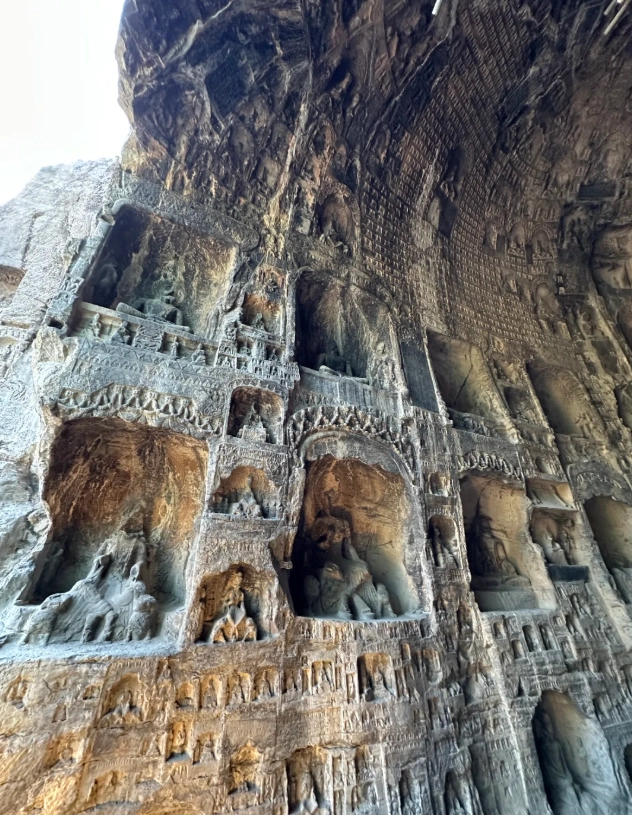
What to Eat: Luoyang Local Specialties
Luoyang is famous for its water feast, a 24-course banqueting tradition where dishes are mostly soup-based. But you don't need a table of 24. Here are three must-tries:
- Luoyang Water Feast: Go to Zhen Butong Restaurant. The “Crossing the Bridge” noodles and tangy “Yan Cai” are standout. My personal pick: The “Dongpo Pork” cooked in a clay pot – melts in your mouth.
- Beef Soup: Line up at Longwen Beef Soup near the old town. 15 RMB for a bowl, add some “bing” (flatbread). The broth is rich with star anise and ginger. Open only until noon – go for breakfast.
- Mung Bean Noodles: A local sour noodle dish made from fermented mung bean juice. It's an acquired taste. Try it at Lao Ma Zi Jiang Mian Tiao in the alley near Lijing Gate. 8 RMB a bowl.
Payment: Most vendors accept WeChat Pay and Alipay. Cash works too but expect change in coins. International credit cards (Visa/Mastercard) are rarely accepted outside high-end hotels. Carry some RMB just in case.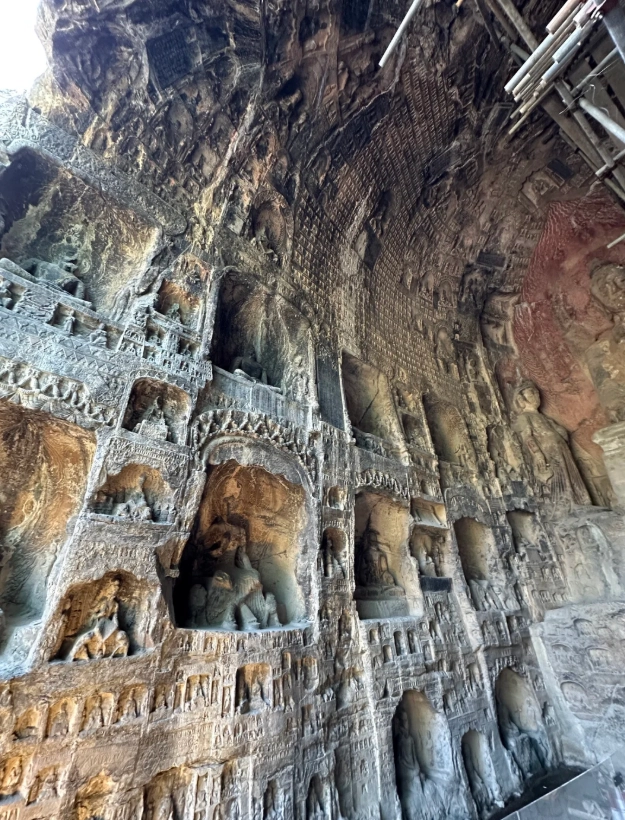
FAQ: Longmen Grottoes Tips from a Veteran Guide
Final Verdict & Fact Check
Longmen Grottoes is one of China's top cultural treasures – not just for its scale, but for the intimate connection you feel standing under a thousand-year-old carving. But the experience depends entirely on timing and strategy. Use the tips above, and you'll leave with awe rather than exhaustion.
This content has been fact-checked to ensure informational precision. All prices, opening hours, and transportation details reflect the most recent official data available as of this writing. However, policies can change – especially ticket prices and reservation requirements – so I always recommend double-checking via the official WeChat mini-program "龙门石窟" before your visit.





What a masterpiece of ancient art! The Longmen Grottoes completely exceeded my expectations. I was worried it might be overhyped, but no—the scale, the intricacy, the history… it’s all real. My favorite spot was the Binyang Central Cave—the main Buddha there has such a serene expression that I just sat and stared for ten minutes. The whole place is very well organized now with clear walkways and bilingual signs. Even the gift shop had cool replica coins and mini carvings. This should be on every traveler’s bucket list. I’m already planning to come back in autumn when the leaves change color.
Hands down one of the most incredible historical sites I've ever visited. The Longmen Grottoes left me speechless—literally. I’m not usually one for crowds, but even with a fair number of visitors, the scale makes you feel like you’ve stepped into another world. I loved how the grottoes are carved into both sides of the Yi River; the reflection in the water doubles the beauty. The little details: lotus patterns, musicians, dancers—every niche tells a story. The climb up to the highest niches is steep but totally worth it for the panoramic view. Pro tip: go at golden hour—the limestone glows orange and pink. Unforgettable.
Absolutely blown away by the Longmen Grottoes! This is one of those places that photos cannot do justice. The sheer number of carvings—over 100,000 statues—is mind-boggling. I went early in the morning (right at opening) and had nearly the whole site to myself for the first hour. The morning light hitting the weathered stone faces gave them an almost ethereal glow. The craftsmanship on the smallest figures is just as stunning as on the giant Buddha. Highly recommend hiring a private guide—our guy knew hidden details like the subtle hand gestures and the stories behind each niche. Best 5 hours I spent in Luoyang.
A solid experience overall. The Longmen Grottoes are undeniably awe-inspiring, especially the giant Vairocana Buddha—it’s colossal and the detail is incredible. However, I was disappointed that several sections were closed for restoration without any clear notice online. The walk along the river is pleasant, but it gets brutally hot by midday with zero shade. Bring water and a hat. The nearby museums are small but offer some context. Worth it if you’re into history, but manage your expectations about access.
Honestly, I was a bit let down by the Longmen Grottoes. Yes, the sheer scale is impressive, but the crowds were overwhelming—felt more like a theme park queue than a sacred site. Many of the smaller statues are heavily eroded, and the signage is sparse, so you’re left guessing what you’re looking at. The audio guide helped a bit, but the battery died halfway through. For the ticket price, I expected better maintenance of the paths and maybe some shaded resting spots. It’s worth seeing once, but I wouldn’t rush back.