 Gang Zheng
Minus twenty-two. That was the number on my phone screen in Harbin. I had left Dalian that same morning in a light jacket, and by dinner the air hurt to breathe.
I have run this Dalian and Heilongjiang route with clients more times than I bother counting. I have booked the rail legs, stood in the foreign-passport lane, and watched a family from Melbourne panic because their phone died at 40% battery in the middle of an ice park.
Here is the problem nobody addresses. Almost every itinerary for this region was written for domestic travelers holding a Chinese ID card and a fully loaded WeChat wallet. You have neither. That one fact reshuffles the entire trip — how you book, which station you get off at, and what time of day you walk into the ice sculptures.
The short version: fly into Dalian, give it two nights, ride the high-speed train from Dalian North to Harbin West, give Harbin three nights, and enter Ice and Snow World after 3 p.m. rather than at opening. Then choose one northern extension. Not three.
Your 60-Second Route Map
- What This Route Actually Is — and Who Should Skip It
- How to Get from Dalian to Heilongjiang
- My 9-Day Itinerary, With Transit Times
- Ice and Snow World: Tickets and the 4 p.m. Rule
- What to Eat Along the Way
- Where to Stay: Areas, Not Just Hotels
- What It All Costs
- Packing for -25°C Without Buying a New Wardrobe
- Payments, Maps, and Passport Rules
- Questions I Get Asked Every Winter
What This Route Actually Is — and Who Should Skip It
Dalian sits at the southern tip of the Liaodong Peninsula in Liaoning Province, facing the Yellow Sea. Heilongjiang is China's northernmost province, and Harbin is its capital. As the crow flies it is roughly 900 kilometers between them. On the ground, it is a jump between two completely different winters.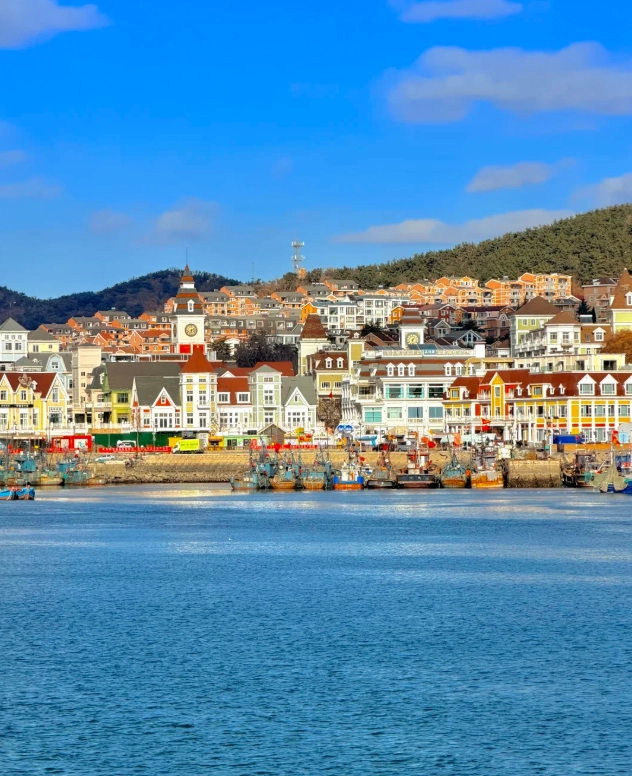
Dalian in January hovers somewhere around -5°C to +3°C, with a damp sea wind that makes the waterfront feel colder than the number suggests. Harbin in January typically sits between -15°C and -25°C, and a cold snap can push it lower. You are not visiting one winter. You are visiting two.
Now, the opinion that gets me argued with. Most travelers do this route in reverse — Harbin first, Dalian second — and most of them regret it. They land after a ten-hour flight and walk straight into the coldest weather of their lives with jet lag and no gear. Doing Dalian first gives you two days to acclimatize, buy anything you forgot in a mild city, and get your payment apps working before you actually need them.
Who should skip Dalian entirely? Anyone with six days or fewer. Fly straight to Harbin. Adding a coastal city to a short winter trip just means two half-days lost to transit and a lot of standing in stations.
One thing to check before you book anything: the visa-free transit policy covers a long list of nationalities, and both Dalian and Harbin appear among its approved entry ports. But the permitted travel area is tied to the port you enter through, so a Dalian entry followed by a train into Heilongjiang may push you outside the allowed zone. I have seen travelers turned around at check-in over exactly this. Confirm your specific port and permitted region on the National Immigration Administration site before you pay for rail tickets.
How to Get from Dalian to Heilongjiang: Trains, Flights, and the Booking Order That Works
High-speed rail from Dalian North to Harbin West
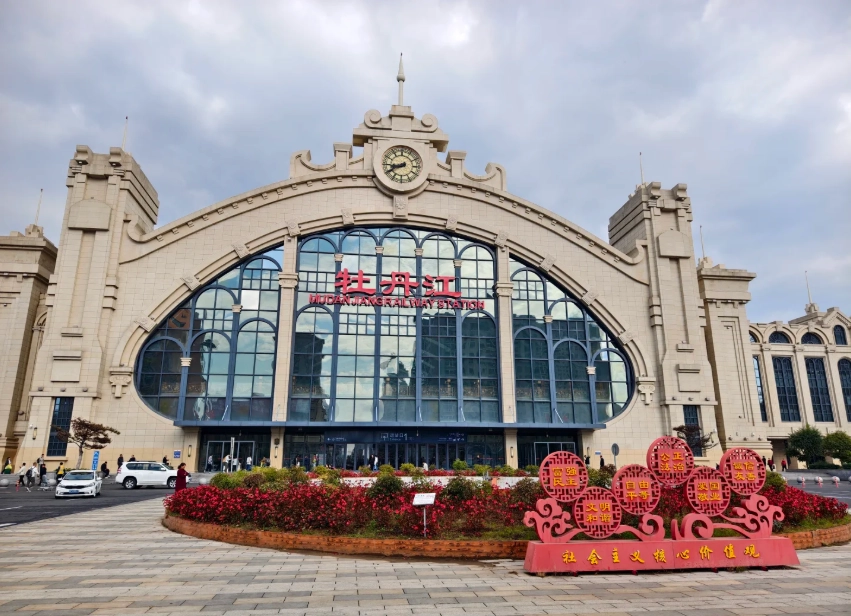
The high-speed rail is the default choice, and it runs roughly four to five hours depending on how many stops your train makes. The departure station is Dalian North, not the central Dalian Station — they are different buildings about half an hour apart, and I have met more than one traveler who found this out at the wrong moment.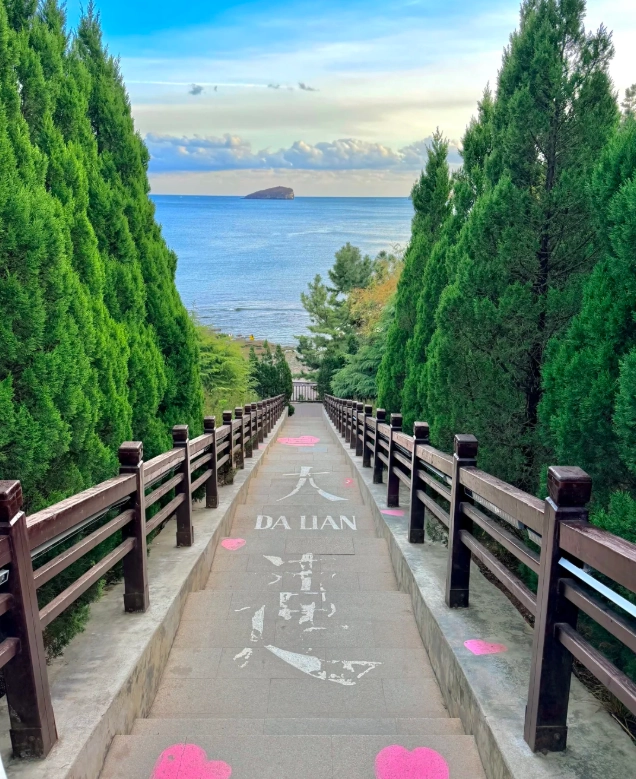
Trains leave through the day. Second class has historically landed in the mid-hundreds of RMB for the full run; first class costs more and buys you a quieter carriage. On a five-hour winter ride with luggage, that upgrade is worth considering.
Book through China Railway 12306 or through Trip.com, which is friendlier if you do not read Chinese. Your passport number has to match your document exactly — one wrong digit and the ticket will not scan. At the gate, foreign passports go through the staffed lane on the side, not the automated turnstiles. Budget an extra ten minutes for that.
One practical note: the onboard trolley is limited and overpriced. Buy noodles, fruit, and a thermos of hot water at the station convenience store before boarding.
Flying Dalian to Harbin
The flight is about an hour and a half in the air, but door-to-door it rarely beats the train. Harbin Taiping International Airport sits well outside the city, and in snow, the drive in can stretch past an hour. There is an airport bus into town, but for a first arrival with luggage, a taxi or DiDi is the lower-stress option.
Which one I book for clients
The train, almost every time in winter. Not because it is faster — it is not, once you count station time. I book it because Harbin's airport is the single most common place my clients get stranded by weather, and a rail delay is measured in minutes while an airport delay can eat a whole day. The train also drops you at Harbin West, which connects directly to the metro.
My 9-Day Itinerary, With Transit Times
Days 1 to 3: Dalian, the acclimatizing city
Use Dalian to warm up — literally and logistically. From Dalian Zhoushuizi Airport, Metro Line 2 runs into the city center in about 30 minutes. Check in, then walk the Donggang waterfront in the evening if you have any energy left.
Day 2 is the coast. Start at Xinghai Square in the morning, then take a taxi 15 minutes around to the Binhai Road boardwalk. This cliffside path is the best walk in the city and almost no foreign itinerary mentions it. Tiger Beach Ocean Park sits along the same stretch — if you have done serious aquariums elsewhere, skip it and stay on the boardwalk.
Day 3, pick one. Metro Line 3 from Dalian Station runs to Jinshitan in about 50 to 60 minutes, where the coastal rock formations are genuinely strange and worth the ride. Or stay central: Zhongshan Square and the Russian Street quarter make an easy half day, and the seafood around there is excellent.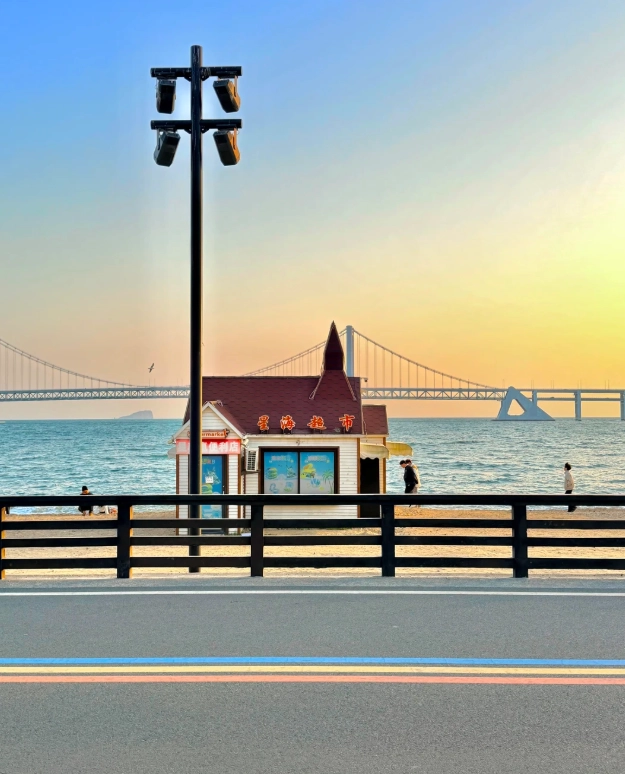
Days 4 to 6: Harbin, where the trip gets serious
Arrive, drop bags near Central Street, and go straight out — the cold is easier to handle when you are moving. Central Street is a pedestrian stretch of cobblestone roughly 1.4 kilometers long, and Saint Sophia Cathedral is a short walk off it. The cathedral interior is a museum now, with a small ticket and an early evening closing time. Check the day's hours at the door rather than trusting a listing.
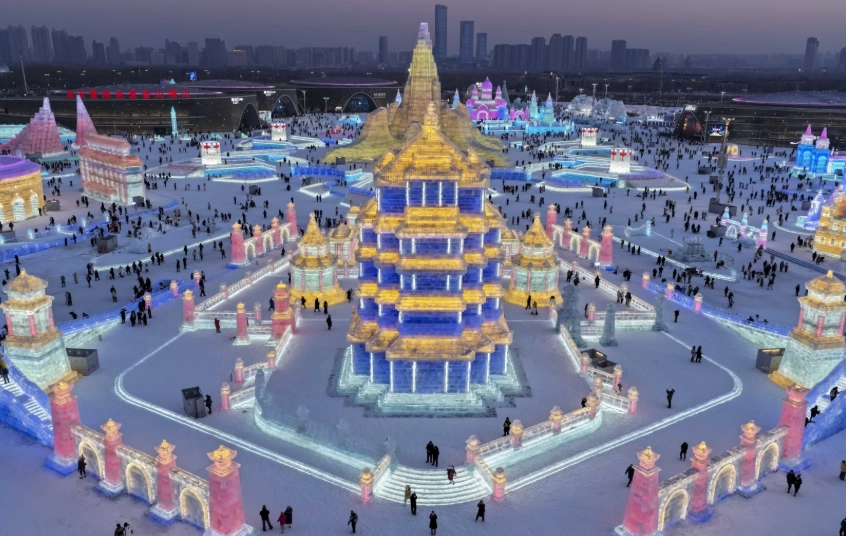
Day 5 belongs to Ice and Snow World in the late afternoon and evening. Keep the morning light: the Songhua River, then either the Sun Island snow sculpture area or Zhaolin Park for the smaller ice lantern display.
Day 6, head to the Old Daowai district for the China Baroque architecture and a local breakfast. If you want something heavier, the Unit 731 museum is in the city — it requires advance booking and it is a difficult few hours. I do not take families with young children there.
Days 7 to 9: Yabuli, Snow Town, or Mohe — choose one
Three extra days is enough for exactly one northern extension, and picking two will ruin both. Here is the honest breakdown.
- Yabuli — high-speed rail from Harbin takes roughly an hour and a half. China's largest ski area, real town, reasonable food. My default recommendation.
- China Snow Town — in Hailin, near Mudanjiang. The bus from Harbin eats five to six hours each way. The most photographed viewpoint is shoulder-to-shoulder by mid-morning, and peak-period guesthouse pricing gets aggressive. Go midweek or not at all.
- Mohe — China's northernmost town. The aurora marketing is mostly just marketing; sightings are rare. The overnight train from Harbin is long. Only worth it if you have three spare days and genuinely love extreme cold.
Blizzard, -30°C, or a closed attraction: your Plan B
Build one indoor day into every winter itinerary here, because you will probably use it. In Harbin, that means the Heilongjiang Provincial Museum, the Harbin Grand Theatre if you care about architecture, or simply camping out in a Central Street coffee shop with a window seat. In Dalian, the natural history museum and the big indoor malls around Xinghai Square do the job.
One warning worth repeating: if temperatures climb above freezing for a stretch, Ice and Snow World can close for safety. Refunds run through whichever platform you booked on, so keep your booking confirmation accessible offline.
Ice and Snow World: Tickets and the 4 p.m. Rule
Walk in between 3 and 4 p.m., not when the gates open. This is the single piece of advice I repeat most. The sculptures read best in daylight, the lighting switches on around dusk while you are already inside, and you completely sidestep the late-morning crush of families and tour groups.
On tickets: adult pricing in recent seasons has sat north of 300 RMB, with discounts for children, students, and seniors. Confirm the current figure and the exact operating dates on the official channel or on Trip.com before you travel — the park's opening dates shift with the weather, not the calendar.
Here is the part that catches foreign visitors. The official booking runs through a Chinese-language WeChat mini-program that sometimes wants a mainland phone number. Trip.com accepts foreign passports without drama, so start there. And if you get stuck mid-flow, do not fight it — ask your hotel front desk to help. I have done this for clients more times than I can count, and it takes them two minutes.
Inside the park, remember it sits on the riverbank, where wind is noticeably stronger than downtown. Heated rest pavilions exist, lockers are paid, and the food is expensive and mediocre. Eat a proper meal before you go in.
Pro Tip: If you are traveling with small children or older relatives, skip Ice and Snow World entirely and do Zhaolin Park instead. It is smaller, cheaper, far easier to exit when someone gets cold, and you can be back in a warm restaurant within twenty minutes.
What to Eat Along the Way
Dalian is a seafood city, and the single most useful thing I can tell you is to confirm the price per jin before anything goes in the wok. Point at the tank, ask for the number, and get a nod before you agree. The bill shock stories almost always trace back to this one skipped step.
Order sea urchin, scallops, and a plate of menzi — a chewy starch jelly that is a genuine Dalian thing and not a tourist dish. The streets around Tianjin Street work for casual eating; for a sit-down seafood meal, the blocks near Xinghai Square are more comfortable. Skip the fixed "seafood banquet" packages. Order two things you recognize and one thing you do not.
Harbin is a different cuisine entirely, shaped by Russian and Jewish history. Guobaorou — sweet and sour pork — is the signature, and the Harbin version leans vinegary rather than ketchup-sweet. Laochujia is the classic name for it. Huamei Western Restaurant on Central Street is a genuinely old institution with a dated interior and respectable borscht. And you have to eat Modern ice cream outdoors in -20°C at least once. It is a local ritual and it is oddly enjoyable.
For souvenirs that survive the flight home: Qiulin red sausage and dalieba, the big round Russian-style bread.
Where to Stay: Areas, Not Just Hotels
In this region, the neighborhood matters more than the brand on the door. Winter days are short and you will be walking in the cold, so being five minutes from your room is worth more than a nicer lobby.
| Area | City | Typical Nightly Range | Best For | Walkability Notes |
|---|---|---|---|---|
| Xinghai Square and Binhai Road | Dalian | Mid to high | Couples, sea views | Steps from the waterfront boardwalk; about 20 minutes by taxi to Zhongshan Square |
| Zhongshan Square and Russian Street | Dalian | Mid | First-timers, architecture | Restaurants on foot; Metro Line 2 nearby for the airport |
| Dalian North Station area | Dalian | Budget | Early train departures | 5 to 10 minutes on foot to the station; dining thins out after 9 p.m. |
| Central Street and Sophia Cathedral | Harbin | Mid to high | First-timers, no transit needed | Everything on foot; weekend nights get loud on the street side |
| Harbin West Station area | Harbin | Budget to mid | Early departures to Yabuli | Metro Line 3 at the doorstep; roughly 20 minutes to Central Street |
| Songbei and Sun Island | Harbin | Mid to high | Ice and Snow World access | Quiet, but you will be taking taxis downtown for meals |
Two things to verify before you pay, especially at budget properties. First, ask directly whether they register foreign guests — not every small hotel is set up for it, and the ones that are not will turn you away at the desk. Second, ask about the elevator and whether the front desk handles English at night. A fifth-floor walk-up with luggage in -20°C is a bad surprise.
Mid-range and up properties in both cities generally have stable Wi-Fi and staff who can manage basic English. If you are arriving after midnight, message the hotel in advance — night shifts are often thinner.
What It All Costs
Treat this as a planning range, not a quote, and re-check anything you are about to book. January pricing in Harbin swings hard around the school holiday peak.
| Item | Rough Cost Per Person | Notes |
|---|---|---|
| Dalian to Harbin high-speed rail, second class | Several hundred RMB | Varies by train and class; book early for holiday dates |
| Harbin to Yabuli high-speed rail | Low hundreds RMB | About 1.5 hours each way |
| Ice and Snow World adult ticket | 300 RMB and up | Confirm current season pricing and dates |
| Budget hotel night | Low hundreds RMB | Cheapest outside the winter peak |
| Mid-range hotel night | Several hundred RMB | January rates climb sharply near Central Street |
| Local meal | Tens of RMB | Seafood in Dalian is the wild card |
| DiDi across Harbin | Tens of RMB | Most cross-city trips run under 30 minutes |
Packing for -25°C Without Buying a New Wardrobe
The cold is survivable. The wind is what breaks people. Layer for wind and you will be fine.
- Base layer in merino or synthetic — cotton against your skin is a mistake
- Mid layer fleece, then a long down coat that covers your thighs
- Boots sized half a size up so thick socks do not restrict circulation
- Two glove layers: thin liner plus insulated outer
- A hat that covers your ears and a neck gaiter for the wind
- A power bank, and your phone kept in an inside pocket
- Sunglasses — snow glare is genuinely painful
- Lip balm and unscented moisturizer
- Disposable heat packs for pockets and boots
The counterintuitive one: tight boots with thick socks make your feet colder, not warmer. Restricted blood flow beats insulation every time. Size up, not down.
Battery behavior also surprises people. At -20°C, a phone showing 40% can drop to zero in minutes if it is sitting in an outer pocket. Keep it against your body and it behaves normally.
And if you packed badly, do not panic-buy at a tourist stall. Buy your heavy coat in Dalian before you head north — Chinese domestic down brands are cheaper than what you would pay at home, and the malls around the central districts have plenty of options.
Payments, Maps, and Passport Rules Foreign Travelers Get Wrong
Set up your payment apps before you fly, not after you land. Alipay and WeChat Pay both accept international cards, and once linked they cover the overwhelming majority of situations on this route.
- Google Maps is unreliable in mainland China for walking and transit. Use Apple Maps, which handles English addresses well in both Dalian and Harbin, or Amap for more precise transit detail.
- DiDi, the ride-hailing app, is available inside Alipay with an English interface. It is far easier than flagging taxis when you cannot pronounce the destination.
- Carry a few hundred RMB in cash. Smaller guesthouses, rural buses, and some older restaurants still run cash-only.
- Hotels register foreign guests with the local police automatically. You do not need to do anything, but keep your passport with you — some attractions check it at the entrance.
- Install and test a VPN before departure. It will not work reliably once you are inside the country if you have not set it up in advance.
Insider Advice: Yes, navigating the Chinese-language booking mini-programs is a nightmare even for someone like me who has done it dozens of times. Do not waste an evening on it. Hand your phone to the hotel front desk with the page open and ask for help. It is a normal request here and it works.
On the weather side, winter travel in Northeast China gets written about a lot — you will find plenty of general cold-weather coverage from outlets like CNN Travel — but almost none of it mentions that the wind on the Songhua River bank is a different animal from the wind in the city streets.
Questions I Get Asked Every Winter
Does the visa-free transit policy actually cover a Dalian-to-Heilongjiang route?
It depends entirely on your entry port. Several nationalities qualify for transit without a visa, and ports in both Liaoning and Heilongjiang are on the approved list — but the permitted travel zone is attached to the port you enter through. Entering via Dalian and then riding the train into Heilongjiang can put you outside that zone, and I have watched travelers discover this at the check-in counter with their bags already packed. Verify your port and permitted region on the National Immigration Administration site before booking the rail leg, not after.
Should I split my trip between Dalian and Harbin, or just fly straight to Harbin?
If your total trip is six days or fewer, fly straight to Harbin and forget Dalian. It earns its place when you have nine days or more, or when you want a gentle landing before the deep freeze. There is a second, less obvious reason: Dalian is where you can buy cold-weather gear in a mild city, calmly, instead of panic-buying at a Harbin tourist stall at double the price.
How cold does it really get, and what do people get wrong about dressing for it?
Harbin in January usually sits between -15°C and -25°C, and Ice and Snow World sits on the riverbank where wind hits harder than downtown. The mistake I see most often is tight boots paired with thick socks. Restricted circulation makes feet colder than thin socks ever would. Size up half a size, use a liner sock, and you will be comfortable for hours.
Can I pay with a foreign card in Heilongjiang's smaller towns?
Card terminals essentially disappear once you leave Harbin and Dalian. Alipay or WeChat Pay linked to an international card covers most of what you will need, but keep a few hundred RMB in cash for rural guesthouses, small buses, and the occasional market stall that has never seen a terminal. Cash is still legal tender everywhere, so nobody will refuse it.
Is the China Snow Town detour worth three of my days?
Usually not, and I say that knowing exactly how many photos you have seen. The bus eats most of a day in each direction, peak-period pricing is aggressive, and the most photographed viewpoint is packed by mid-morning. Yabuli gives you skiing, a much shorter ride, and an actual town with normal restaurants. If Snow Town is on your list for a specific reason, go midweek and go with realistic expectations.
Verified and fact-checked by the editorial team.





No comments yet.