 Hua Sun
- What Makes Heilongjiang a Different Kind of Safety Challenge?
- How to Survive Extreme Cold in Heilongjiang Without Frostbite
- Heilongjiang Safety Tips for the Harbin Ice Festival Crowds
- Border Zones, Trains, and Getting Around Heilongjiang Safely
- Payment, Connectivity, and Language Safety Nets
- What Are the Emergency Numbers and Medical Options in Heilongjiang?
- Snow Town and Mohe: The Two Trips That Break Travelers
- Heilongjiang Safety FAQ
Minus thirty-four. That is what the bank sign outside Harbin Railway Station read. My phone shut down in four minutes. And that was the moment I understood why so many Heilongjiang safety tips online fail people — they get written by folks who have never actually stood outside in a real January here.
I have guided foreign travelers through Harbin's Ice and Snow World, up Yabuli's ski runs, and all the way north to Mohe, where the thermometer sometimes refuses to show a number at all. The dangers in Heilongjiang are not dramatic. They are small, boring, and cumulative. A damp glove. A dead phone. One careless step on polished ice.
So here is the conclusion first. The single most important safety rule in Heilongjiang is this: treat every outdoor surface as ice, and every minute outside as a drain on your body and your battery. Get that into your head and you will be fine. Nearly every injury I have witnessed came from someone who overestimated their jacket and underestimated the wind.
The rest — frostbite prevention, border permits, payments, hospitals — is detail. Useful detail, but detail. Let's walk through it.
What Makes Heilongjiang a Different Kind of Safety Challenge?
Heilongjiang is China's northernmost province, and it shares a long border with Russia along the Amur River, which locals simply call the Heilongjiang. That geography shapes almost everything about traveling here safely.
Distance is the first trap. Harbin to Mohe is more than a thousand kilometers. Harbin to Snow Town is a five-hour drive in good weather, and winter weather is rarely good. Travelers routinely book three cities in four days and then wonder why they are exhausted, frozen, and stranded at a bus station after dark.
Cold is the second trap. Not the cold you see in a forecast app. The cold you feel on exposed skin at six in the morning while waiting for a shuttle that is late.
The border is the third trap. Certain zones near the Russian frontier require permits for foreign visitors. I will cover that in detail below.
International coverage of the Harbin Ice Festival, including from BBC Travel, has turned a regional event into a global bucket-list item. That is exactly why the crowds now require real planning instead of luck.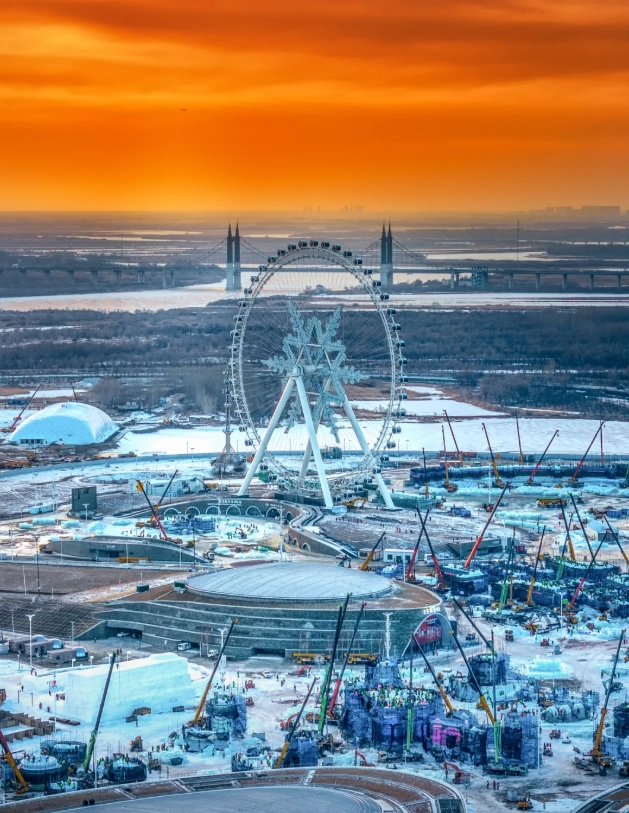
How to Survive Extreme Cold in Heilongjiang Without Frostbite
The Temperature Ranges Nobody Warns You About
Harbin in deep winter typically sits between minus 15°C and minus 30°C, but wind chill on the Songhua River can push the felt temperature ten degrees lower. Mohe, China's northernmost city, regularly drops past minus 35°C, and I have stood in minus 42°C there.
Here is what nobody tells you: the number on the app matters less than wind and humidity. A still minus 25°C day in central Harbin feels gentler than a windy minus 15°C night at the Ice and Snow World, because that site sits on open ground with zero windbreaks.
Frostbite risk zones, in order of how fast they go: fingertips, earlobes, nose tip, cheekbones, toes. If any of those turn white and waxy, you are working in minutes, not hours.
Layering That Actually Works — and the Mistakes I See Every Week
The rule that saves fingers and toes: cotton kills, wool warms, and down insulates. Cotton traps moisture against your skin and then freezes it. Swap every cotton item before you fly.
My standard layering stack for clients:
- Base layer: merino wool or a synthetic thermal, top and bottom
- Mid layer: fleece or a light down jacket
- Outer shell: windproof and water-resistant, ideally with a hood that fits over a hat
- Legs: thermal leggings plus insulated snow pants. Jeans alone are the mistake I see most often
- Feet: one pair of wool socks, boots with a thumb-width of wiggle room. Tight boots cut circulation and cause frostbite faster than thin boots
- Hands: mittens beat gloves. If you need dexterity for your phone, wear thin liner gloves inside the mittens
- Face: balaclava plus ski goggles. Goggles stop your eyelashes from freezing together
- Head: a hat that covers your ears, always
Now the details that only show up on the ground:
- Contact lenses freeze. I am not exaggerating. Switch to glasses for outdoor days and carry anti-fog wipes
- Your phone will die. Keep it in an inner chest pocket, not a coat pocket. Bring a power bank and keep that inside too
- Camera batteries drain in minutes. Carry two spares against your body
- Glasses fog instantly when you walk indoors. Pause in the entryway for 30 seconds before stepping in
- Metal railings and ice sculptures will burn your skin. Never touch them with a bare hand. This is a real burn, not a figure of speech
Pro Tip: Buy a cheap pair of Chinese cotton-padded gloves at any convenience store for around 20 RMB. Wear them over your good gloves when you need to grab handrails. Toss them when you leave. It is the cheapest safety upgrade in Heilongjiang.
Heilongjiang Safety Tips for the Harbin Ice Festival Crowds
Harbin Ice and Snow World: Timing, Tickets, and Ice Traps
The Ice and Snow World is not a walking tour. It is a five-hour outdoor endurance event on ice, and you should plan it like one.
Location: on the north bank of the Songhua River in Harbin. Most visitors take a taxi or DiDi from the city center, roughly 20 to 30 minutes depending on traffic. In peak season the road to the main gate backs up badly after 5 p.m.
Tickets: you must book in advance, and you must register with your passport. The official WeChat mini-program is entirely in Chinese and honestly a nightmare to navigate even for me. Use Trip.com or Klook instead — they handle the passport registration for you and issue an e-voucher. Print it or screenshot it. Your phone may be dead by the time you reach the gate.
Best timing: arrive around 3:30 to 4 p.m. You get daylight photos of the sculptures, then the lights come on and you get the famous glow shots without fighting the 6 p.m. crush. By 7 p.m. the queue for the big ice slides can run past an hour.
Slip hazards: the site is polished ice everywhere. Walk like a penguin — short steps, weight forward, arms slightly out. Handrails are your friend. I have watched grown adults go down hard within 50 meters of the entrance.
Warming huts are scattered around the site, but they fill up fast. Use them every 40 minutes whether you feel cold or not. Feeling fine is not the same as being safe.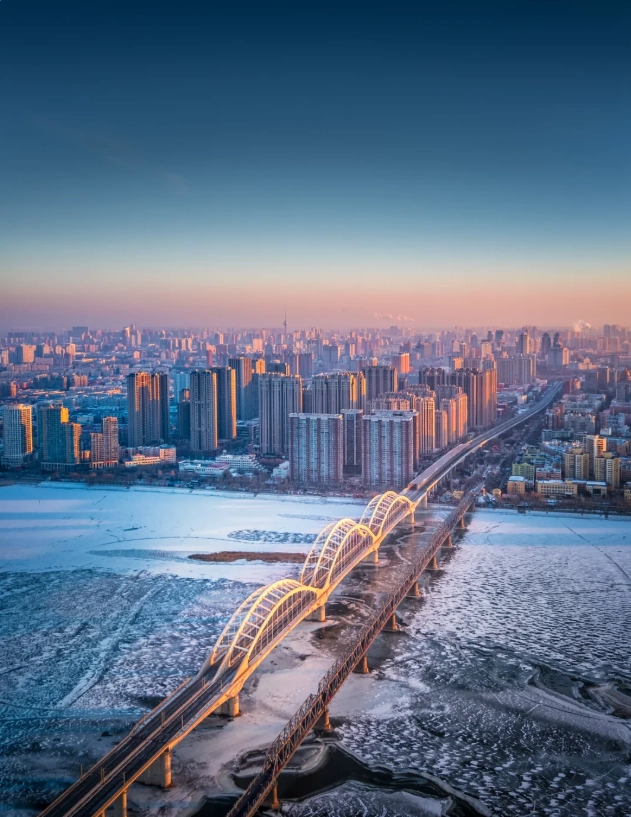
Border Zones, Trains, and Getting Around Heilongjiang Safely
What Foreign Travelers Get Wrong Near the Russian Border
Heilongjiang shares a border with Russia, and certain frontier zones require a special permit for foreign nationals. The rules shift over time, so confirm current requirements through the National Immigration Administration before you book anything near Heihe, Suifenhe, or the smaller river towns.
A few practical rules that apply regardless:
- Always carry your passport. Random checks do happen
- Do not photograph border posts, patrol boats, or anything that looks military
- Cross-border day trips to Russia require a Russian visa and a valid Chinese visa for re-entry
- Ferries and bridges across the Amur operate seasonally. Never assume a crossing is open
Train vs. Plane in Deep Winter
High-speed rail is more reliable than flying in Heilongjiang's winter, but you must book early and you must book on the right platform. The official booking site is 12306.cn, which now has an English interface and accepts foreign passports.
| Route | Best Mode | Est. Time | Typical Cost Range | Winter Notes |
|---|---|---|---|---|
| Harbin to Yabuli | High-speed rail | About 1.5 hours | Economy class, low hundreds of RMB | Direct train, rarely delayed by snow in my experience |
| Harbin to Snow Town | Private car or tour bus | 5 to 6 hours | Shared shuttle or private transfer | Mountain roads can close after heavy snow |
| Harbin to Mohe | Flight or overnight train | 2 hours by air, 15+ by rail | Wide range depending on class | Flights cancel often in blizzards; trains are slower but steadier |
| Harbin to Heihe | Flight | About 1.5 hours | Varies by season | Border city, bring your passport and check permit rules |
Book train tickets the moment they open, usually about two weeks ahead. Peak Ice Festival weeks sell out fast, and standing for five hours in a crowded carriage is its own kind of safety risk.
Payment, Connectivity, and Language Safety Nets
Assume you will pay by phone, and prepare for the moment your phone is frozen. Alipay and WeChat Pay both accept international cards now, but not every small vendor will take them.
- Cash still works. Carry a few hundred RMB in small notes for street food and rural shops
- Physical international credit cards are accepted at big hotels and chain stores, rarely anywhere else
- Keep a backup payment method on a second device if you travel with one
- Screenshot your QR payment code so it works even without signal
On connectivity: Google Maps does not work reliably in mainland China. Download offline regions on Apple Maps, or install Amap Global, which has an English mode. Save your hotel address in Chinese characters — taxi drivers will not read Pinyin.
A VPN is essential if you want to use Gmail, WhatsApp, or Instagram. Set it up before you fly. Once you are inside China, downloading a VPN gets much harder.
For translation, Baidu Translate and Apple Translate both handle offline Chinese. Point the camera at menus, signs, and medicine labels.
Insider Advice: Write your hotel's name and address on a physical card in Chinese. Show it to drivers. I have seen too many travelers waving a dead phone at a confused taxi driver at minus 25°C.
What Are the Emergency Numbers and Medical Options in Heilongjiang?
China's emergency numbers work nationwide, and English-speaking operators are available on 110 for police and 120 for ambulance, though wait times vary. Save these before you land.
| Service | Number | Notes for Foreign Travelers |
|---|---|---|
| Police | 110 | Basic English support, slower at night |
| Ambulance | 120 | Payment expected on arrival, keep cash or a working payment app |
| Fire and rescue | 119 | Also handles rescue from ice and water incidents |
| Traffic accidents | 122 | Call this instead of 110 if nobody is hurt |
| Medical emergency in a hotel | Front desk first | Hotel staff can translate and direct the ambulance |
For hospitals, Harbin has several large teaching hospitals. The First Affiliated Hospital of Harbin Medical University is the one I send clients to for anything serious. Bring your passport, your insurance policy number, and cash or a working payment app. Most hospitals do not bill international insurance directly — you pay first and claim later.
Buy travel insurance that explicitly covers winter sports and frostbite. Read the fine print. Many standard policies exclude skiing and anything below a certain temperature, and that clause is exactly the one that matters here.
Snow Town and Mohe: The Two Trips That Break Travelers
Snow Town and Mohe are the two Heilongjiang destinations where unprepared travelers get into real trouble.
Snow Town, or Xuexiang, is a small mountain village known for snow that piles meters high on rooftops. It is genuinely beautiful. It is also a place where I have watched travelers get ripped off on food and accommodation prices. Check every price before you order. Book accommodation through a platform with reviews and a real address, not through a driver who offers you a great deal on the way in.
Mohe sits at China's northernmost tip. It is the coldest place most travelers will ever stand. Do not go in January unless you have proper gear — a real down parka, insulated boots rated well below freezing, and a face mask. The Arctic Village and the northernmost post office are the main stops. Aurora sightings are rare and unpredictable, and no guide can honestly promise you one.
For both destinations, add a buffer day on each end. Weather closes roads and cancels flights, and that buffer is the difference between a stressful trip and a good story.
Heilongjiang Safety FAQ
Verified and fact-checked by the editorial team. This content has been fact-checked to ensure informational precision.





No comments yet.