 Gang Zheng
Your Quick Platform Map
Six sections. Skim the one you need, then go pack the boots.
- Harbin Station vs Harbin West: What Is the Difference?
- How to Book Heilongjiang Train Tickets as a Foreigner
- Heilongjiang Train Routes Worth Planning a Trip Around
- What Actually Happens Inside a Heilongjiang Train Station
- Winter Survival on Heilongjiang Trains
- Heilongjiang Train Station Questions I Get Every Week
Minus 27 degrees. Snow squeaking under my boots. My client's ticket says Harbin West, and the taxi is pulling into Harbin Station.
That mistake cost us forty minutes and a fare I would rather forget, in weather that flattens a phone battery in ten minutes. It happens to almost every foreign traveler I meet up here, because Heilongjiang's biggest city spreads its trains across four stations with names that blur together on a booking confirmation.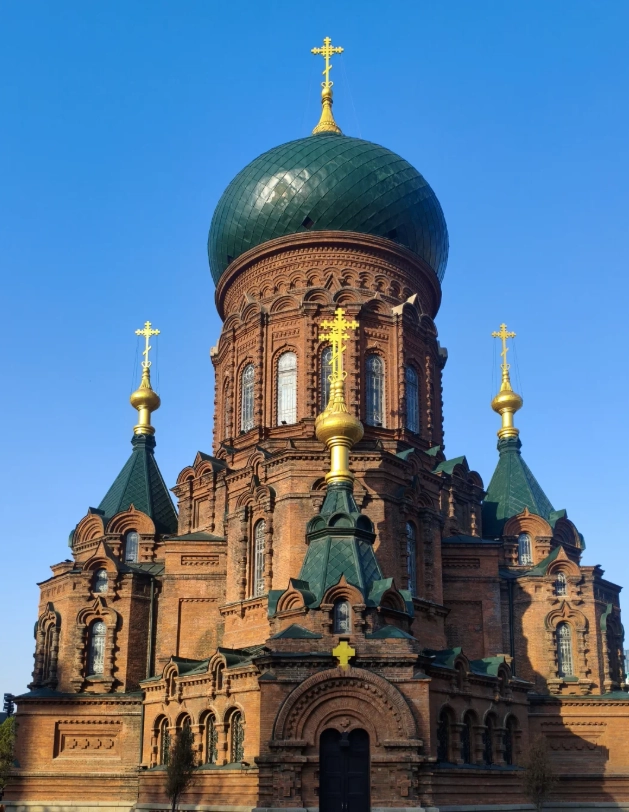
I have navigated these halls in January slush, in April mud, and in the crush of Spring Festival. The trains themselves are excellent. The station choice is where people lose money.
So here is the conclusion before anything else. Your ticket is tied to a station, not a city. Match the station name on your booking to the station on your driver's map the night before, not in the back seat.
What follows is the platform map I hand to every client who books a Heilongjiang rail trip with me.
Harbin Station vs Harbin West: What Is the Difference?
Most travelers book a train to "Harbin" and assume that is the end of the story. It is not. Four stations carry the city's name, and two of them handle the overwhelming majority of foreign visitors.
Harbin Railway Station, the central one
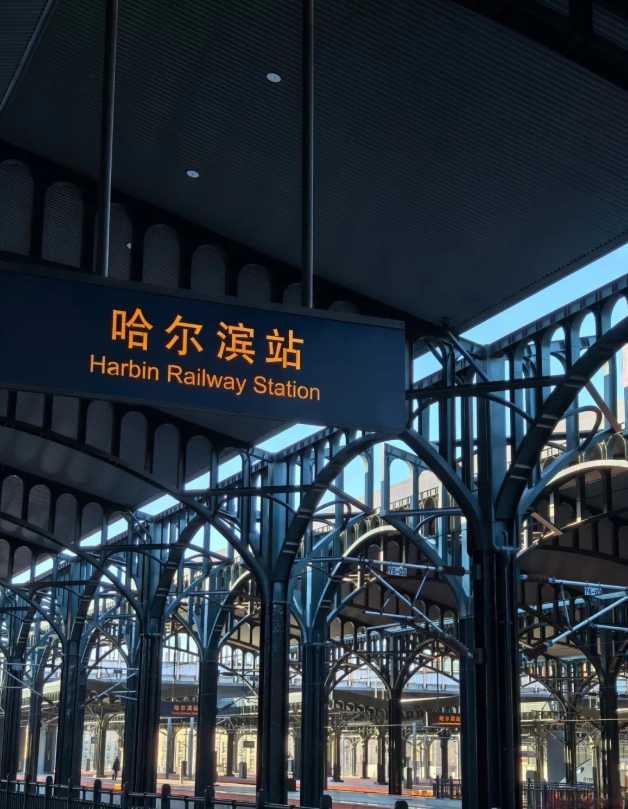
Harbin Railway Station sits in Nangang District at No. 1 Tielu Street, and it is what locals mean when they say "Ha Zhan." Metro Line 2 stops directly beneath the concourse, so you can follow the train-station signs from the platform and surface inside the building without ever seeing daylight.
The hall was rebuilt into a tall vaulted space with bilingual signage, which makes it the easiest of the four to navigate cold. High-speed services run from here toward Qiqihar, Mudanjiang and Jiamusi, alongside a long list of conventional trains.
Now the part that trips people up. Harbin Station has a south square and a north square, and they are not a two-minute walk apart. Get dropped on the wrong side and you are looking at a long loop around the outside of the building.
Pro Tip: Tell your driver 南广场, the south square, unless your hotel is clearly north of the tracks. The south side is where the clock-tower facade sits and where most city hotels cluster. That loop around the outside is maybe 800 meters on a map. In January it feels like three times that.
Harbin West, where the Beijing trains leave
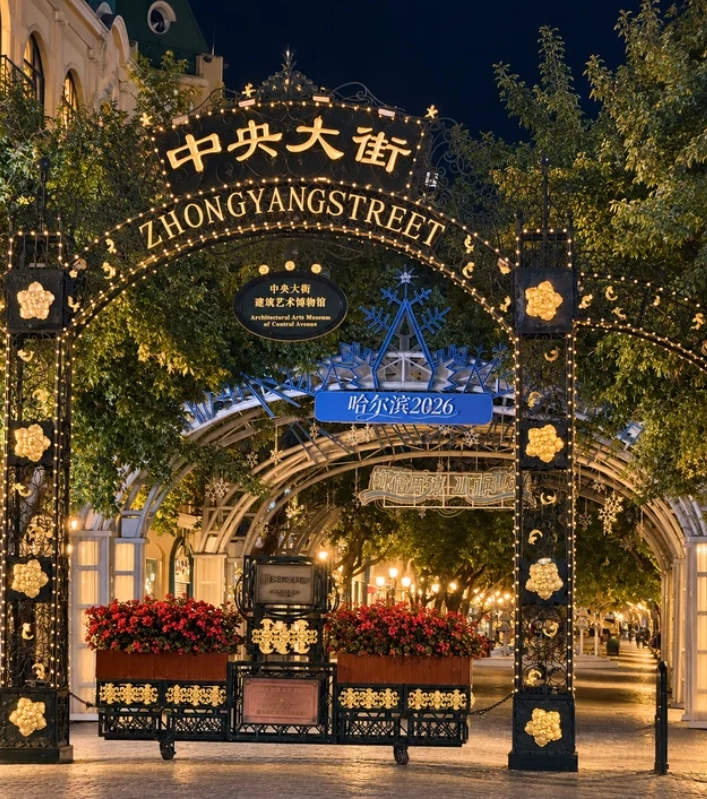
Harbin West handles nearly every G-series train toward Beijing, Shenyang and Dalian, so if your route touches the capital, this is your station. It sits in the newer Haxi district, a wide-road area with Metro Line 3 nearby and a taxi ride to Central Street, known locally as Zhongyang Dajie, that usually lands in the 25 to 40 RMB range depending on traffic.
Layout note: departures are upstairs, the taxi drop-off is below, and the connecting ramp is open to the wind. I have watched people in fashion sneakers regret that ramp at minus 20. Wear the boots. Carry the nice shoes in your bag.
Harbin East and the minor stops
Harbin East serves slower conventional trains toward Jiamusi, Hegang and Suihua, and it has no metro connection, so plan on a taxi. The building is older, English signage is thinner, and staff are less likely to speak any. If your ticket says 哈尔滨东, give yourself extra time and screenshot everything.
Two more names can appear on bookings. Harbin North, 哈尔滨北, and Xiangfang, 香坊, are minor stops used by regional services. If you see either one, you are almost certainly on a short-distance train, and neither is a place to arrive at the last minute.
| Station | Chinese Name | Best For | Metro | Biggest Trap |
|---|---|---|---|---|
| Harbin Railway Station | 哈尔滨站 | High-speed trains to Qiqihar, Mudanjiang, Jiamusi; central location | Line 2, directly below the concourse | North and south squares are far apart |
| Harbin West | 哈尔滨西站 | High-speed trains to Beijing, Shenyang, Dalian | Line 3 nearby | Long, wind-exposed ramp from the taxi drop-off |
| Harbin East | 哈尔滨东站 | Conventional trains to Jiamusi, Hegang, Suihua | N/A | Older building, limited English signage |
| Harbin North | 哈尔滨北站 | Regional services in Songbei | N/A | Minimal facilities; not a place to arrive late |
How to Book Heilongjiang Train Tickets as a Foreigner
Two routes work reliably, and they solve different problems.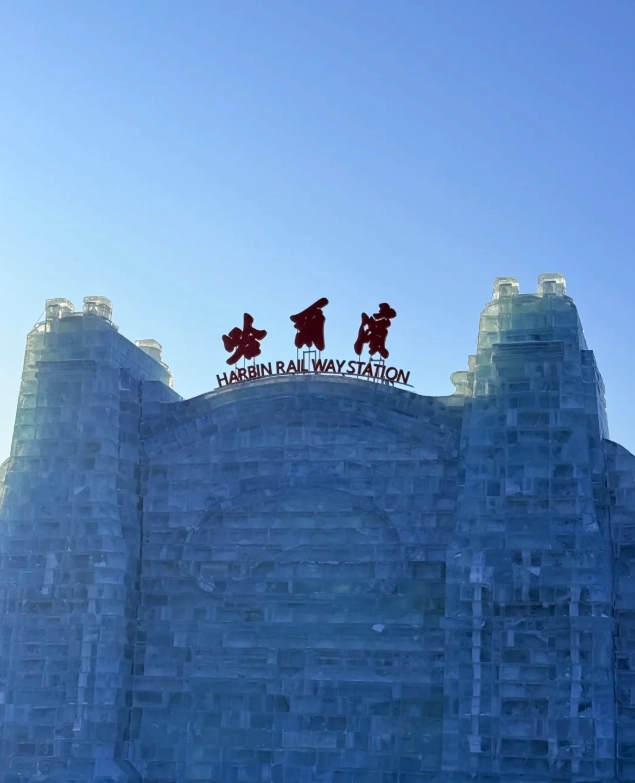
12306, the official China Railway channel
The official portal at 12306.cn has an English interface, accepts foreign passports, and is the only place where you see every seat on every train. Register with your passport details exactly as printed, then add yourself as a passenger. Name order and document number have to match, or the gate will reject you at the worst possible moment.
Tickets generally open for sale roughly 15 days before departure. Confirm the current window on the site itself, because it has been shortened and extended more than once in recent years and travel blogs are frequently out of date.
If your train shows as sold out, use the waitlist function, 候补. It clears more often than people expect, especially in the final 24 hours when cancellations land.
Trip.com and Klook, the low-friction route
Trip.com resells the same seats with a small service fee and full English support, which is what I suggest to anyone whose first China trip already feels like a lot. Klook covers a number of the same routes. Both issue e-tickets tied to your passport, and neither forces you to fight a Chinese-language interface at 11 pm after a long flight.
Passport verification, the step nobody warns you about
Your passport is your ticket, but the automatic gate may simply refuse to read it, and that is normal rather than a crisis. Every bank of gates has a manned lane, usually at the far end. Hand over the passport and you are through in seconds.
For your first ride in the province, arrive twenty minutes earlier than you think you need. Before you fly, check the National Immigration Administration for current entry and visa-free transit rules, since that list changes more often than any other part of a China trip. UN Tourism is a useful second source when you are tracking how those policies affect inbound travel more broadly.
Seat classes, decoded
| Class | Chinese | What You Get | Best For |
|---|---|---|---|
| Second class | 二等座 | Standard reclining seat, 3+2 layout | Short hops and budget travel |
| First class | 一等座 | Wider seat, 2+2 layout, quieter car | High-speed runs over three hours |
| Business class | 商务座 | Lie-flat seat, meal service, lounge access | Long runs when you are badly jet-lagged |
| Hard seat | 硬座 | Bench-style seat, no reservation | Short daytime regional trips only |
| Hard sleeper | 硬卧 | Six berths in an open bay, three high | Overnight travel on a budget |
| Soft sleeper | 软卧 | Four berths in a closed cabin with a door | Overnight comfort and privacy |
| Deluxe soft sleeper | 高级软卧 | Two berths and a private washroom | Couples on the Mohe run |
Payment is where foreigners get stuck. Alipay and WeChat Pay with an international card linked work almost everywhere, ticket windows take RMB cash, and international credit cards are a coin flip. Carry a few hundred yuan in cash as your safety net and you will never be stranded at a counter.
Heilongjiang Train Routes Worth Planning a Trip Around
Harbin to Mohe, the northernmost station in China
The overnight train to Mohe is the most requested sleeper in the province, and it sells out weeks ahead in January. K-series trains take roughly 15 to 19 hours depending on the train number, with hard sleepers in the 250 to 400 RMB band and soft sleepers above that. Verify the exact fare on 12306 before you budget.
Mohe Station is not Arctic Village. The village sits about 80 kilometers away and is reached by pre-booked shuttle or shared taxi. Agree the price before the doors close, because there is no meter and no renegotiating once you are moving.
Flying Harbin to Mohe takes under two hours and costs more. The train costs less and saves you a hotel night. I usually push clients toward the sleeper on the way north and the flight on the way back. Keep your camera near the window in the final hour, because the birch forest outside is the real attraction.
Harbin to Yabuli West and Snow Town
Yabuli West is roughly an hour and ten minutes from Harbin on the Mudanjiang high-speed line, and it is the fastest route to China's largest ski area. From the station, resorts are 20 to 40 minutes by shuttle, and several hotels run free pickups, so ask before you book a taxi at the exit.
Snow Town, the famous 中国雪乡, has no station at all. You reach it by road from Yabuli or Mudanjiang in roughly two hours, and heavy snow closes those roads a few times each winter. Do not plan a same-day train-to-Snow-Town connection. Build in the buffer or you will spend a night in a town you did not choose.
The short hops: Qiqihar, Mudanjiang, Jiamusi, Yichun, Daqing
These five are the easy wins, all reachable in a morning and cheap enough to justify a spontaneous detour.
- Qiqihar South, around 1.5 hours: the base for Zhalong Nature Reserve and its red-crowned cranes. Best from May through September.
- Mudanjiang, around 2 hours: gateway to Jingpo Lake and the Russian-border town of Suifenhe.
- Jiamusi, around 2.5 hours: eastern wetlands and a genuinely untouristed city.
- Yichun, around 2 hours: forest country in the Little Khingan range, newly reachable by high-speed rail.
- Daqing West, around 1 hour: the oil city, and a sensible place to break a long journey.
| Route | Fastest Time | Approx. Fare, 2nd Class or Sleeper | Why Go |
|---|---|---|---|
| Harbin to Qiqihar South | About 1.5 hours | RMB 100 to 130 | Zhalong cranes, May to September |
| Harbin to Yabuli West | About 1 hour 10 minutes | RMB 90 to 120 | China's biggest ski area |
| Harbin to Mudanjiang | About 2 hours | RMB 120 to 160 | Jingpo Lake and the Russian border |
| Harbin to Jiamusi | About 2.5 hours | RMB 130 to 170 | Eastern wetlands, few tourists |
| Harbin to Yichun | About 2 hours | RMB 120 to 150 | Little Khingan forest country |
| Harbin to Daqing West | About 1 hour | RMB 60 to 90 | Convenient break in a long journey |
| Harbin to Mohe | 15 to 19 hours overnight | RMB 250 to 400 sleeper | China's northernmost station |
| Harbin to Beijing | About 5 hours | RMB 500 to 600 | Direct high-speed link to the capital |
Fares shift with train type, season and booking class, so confirm on 12306 before you set a budget. The numbers above are planning bands, not quotes.
What Actually Happens Inside a Heilongjiang Train Station
How early should you arrive?
Forty minutes is comfortable for a high-speed train, sixty in deep winter or on a weekend, and ninety during Spring Festival. The security line is your bottleneck, not the ticket check.
- Bags go through X-ray, and expect to take a sip from any open bottle.
- Power banks are capped at roughly 100Wh, about 20,000 mAh. Keep yours labeled and modest to avoid a debate at the scanner.
- ID is checked at the gate rather than the entrance, so you can walk into the hall without your passport in your hand.
The gate that will not read your passport
When the automatic gate flashes red at your passport, do not re-queue. Step sideways to the manned lane. Boarding typically starts 15 to 20 minutes before departure, and gates close three to five minutes before the train leaves. Miss that window and your ticket is worth nothing.
Keep a screenshot of your booking showing the train number and the station name in Chinese characters. Showing a phone screen works far better than pronouncing "Harbin" three different ways to a station attendant.
Left luggage, toilets and the small stuff
Left luggage counters exist at both Harbin Station and Harbin West, cost roughly 10 to 20 RMB per bag per day, and require your passport.
- Waiting-hall toilets get rough by mid-morning. Once you are through the gate, the platform-side facilities are usually cleaner.
- Charging sockets in waiting halls are scarce. On the train they are plentiful, so bring a short cable and a multi-plug, because one socket gets shared by six people.
- Newer stations have lifts and ramps. Older ones do not. The service desk, 服务台, can arrange wheelchair assistance if you ask ahead.
- Ignore anyone outside the exit offering tickets or a cheap taxi. Use DiDi in the app or join the official taxi queue.
And yes, booking a Heilongjiang sleeper through a Chinese-language mini-program is a headache even for me. If a WeChat mini-program defeats you, walk to your hotel reception and ask them to do it. It takes them ninety seconds and costs you nothing.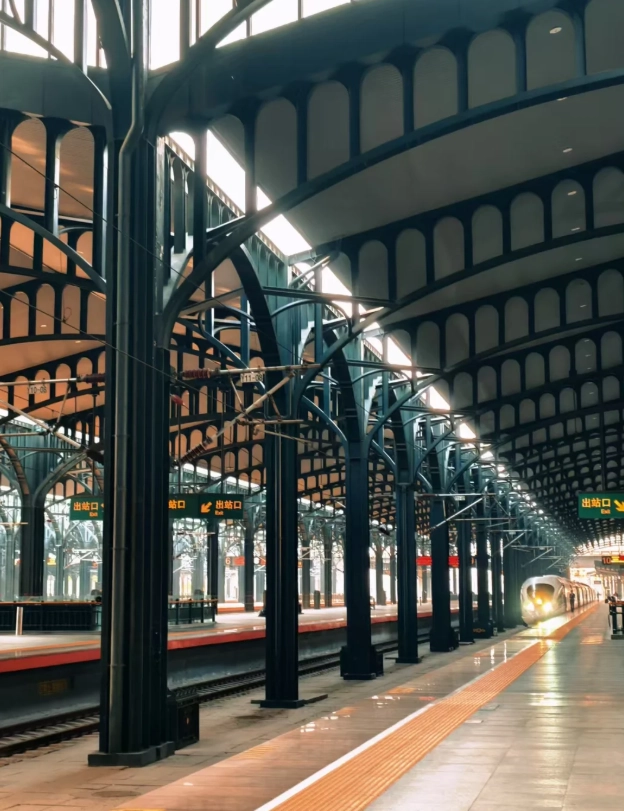
Winter Survival on Heilongjiang Trains
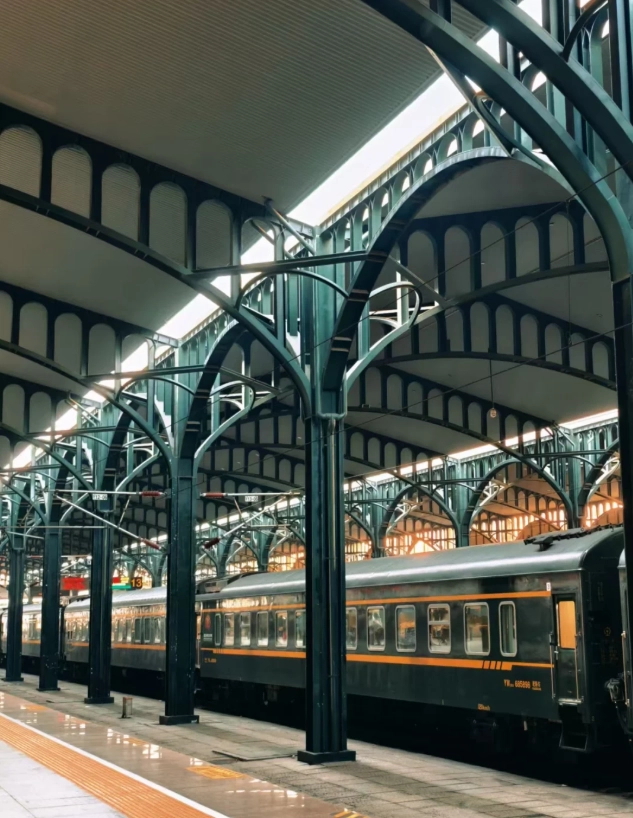
The carriage is heated to roughly 20 to 25 degrees Celsius while the platform outside can sit below minus 25, so dress in layers you can strip off in seconds.
- A packable down jacket plus a thin base layer beats one heavy coat you cannot remove.
- The step from platform to carriage ices over. Hold the handrail and do not rush. I have seen more injuries on that single step than anywhere else on the network.
- Bring a thermos. Hot water dispensers sit at the end of every carriage.
- Slippers and a sleep mask make an overnight berth feel civilized.
- Conductors sometimes collect your ticket and hand it back before arrival. Set your own alarm anyway.
- Skip the tap water and use the dispenser.
- Instant noodles are the local ritual. The trolley takes Alipay and WeChat Pay, and cash works but change comes slowly.
One honest frustration. Announcements on smaller Heilongjiang services are often Chinese-only, so you will not hear your stop called in English. Set a phone alarm for twenty minutes before your scheduled arrival and start watching the platform signs.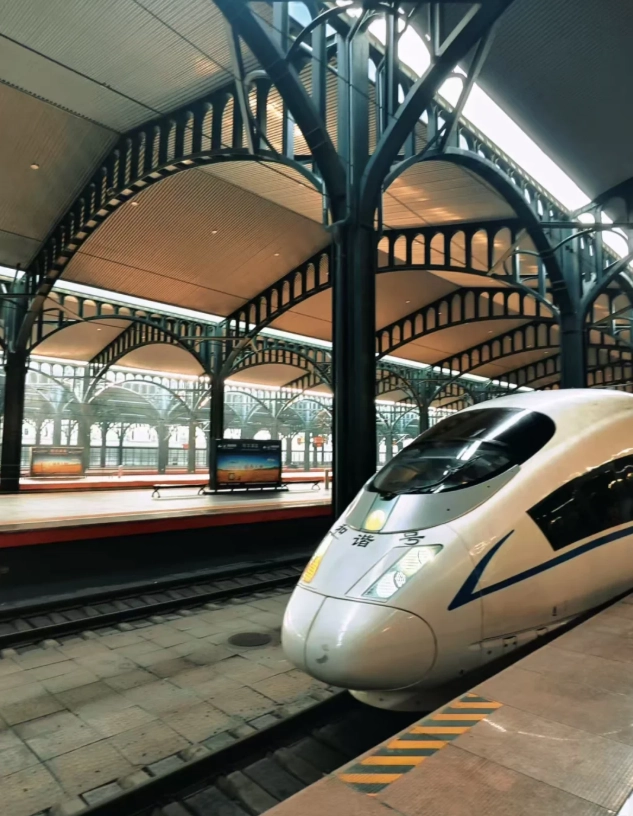
Heilongjiang Train Station Questions I Get Every Week
Can I board a Heilongjiang train with just my passport, or do I need to collect a paper ticket?
Your passport is the ticket. E-ticketing has been standard for years, so there is nothing to collect at a counter. Scan the passport at the gate, and if it fails, use the manned lane beside it. The one habit worth keeping is a screenshot of your booking with the train number and the Chinese station name, because a phone screen solves language problems faster than any phrasebook.
My 12306 payment keeps failing with a foreign card. What now?
Stop fighting it and switch payment methods. Alipay or WeChat Pay with your international card linked clears most transactions that a direct card entry rejects. If both fail, buy through Trip.com, pay the small fee, and move on with your day. The fee is a few dollars, and the hour you save is worth more than that.
Are overnight sleeper trains to Mohe safe for a solo female traveler?
Soft sleeper is the answer if safety is your main concern, because it means four berths in a cabin with a door that closes and locks from the inside. In a hard sleeper, take an upper berth. Nobody walks past your feet at eye level, you get the most privacy of the six beds, and the window shelf becomes your personal locker. Keep your passport and cards in a money belt rather than under the pillow.
Do trains in Heilongjiang run on time during snowstorms?
High-speed services generally hold their schedule, though extreme cold sometimes forces reduced speeds. Conventional overnight trains are the ones that slip, occasionally by hours. If an international flight waits at the other end, give yourself a full buffer day rather than a two-hour connection.
Is it worth taking the train to Mohe instead of flying?
Take the train north and fly back. The sleeper saves a hotel night, the winter forest outside the window is the actual attraction, and arriving by rail into China's northernmost station is the kind of thing you remember. Coming back you will be tired and cold, and that is the day to spend the extra money on a two-hour flight.
What if my Chinese is nonexistent and I get lost inside Harbin West?
Signage at Harbin West is bilingual, so follow the English. The real risk is ending up on the wrong level, since departures are upstairs and the escalators near the taxi drop-off fill up fast. Ask a uniformed staff member and show your booking screenshot. Pointing at a train number works in every province.
Verified and fact-checked by the editorial team.





No comments yet.