 Hua Sun
Twelve degrees at noon. A hard wind coming off the Songhua River. And a man from Brisbane in a thin hoodie, shivering on Central Street by four in the afternoon.
I have watched that exact scene play out more times than I can count, because almost nobody who books a Heilongjiang autumn itinerary understands that this province runs on boreal-forest weather, not city weather.
Heilongjiang is bigger than Germany. Its color window at any single spot lasts about ten days. Miss it and you get bare larch and grey rock, which is still pretty but not what you flew across the world for. Worse, most English guides tell you to base everything in Harbin and pop up to Mohe on a whim. That advice will eat three of your days in transit.
So here is the verdict before anything else: give it eight days, go between mid-September and the first week of October, and lock your Harbin-to-Mohe transport before you book a single hotel. Get that one leg wrong and the whole plan collapses.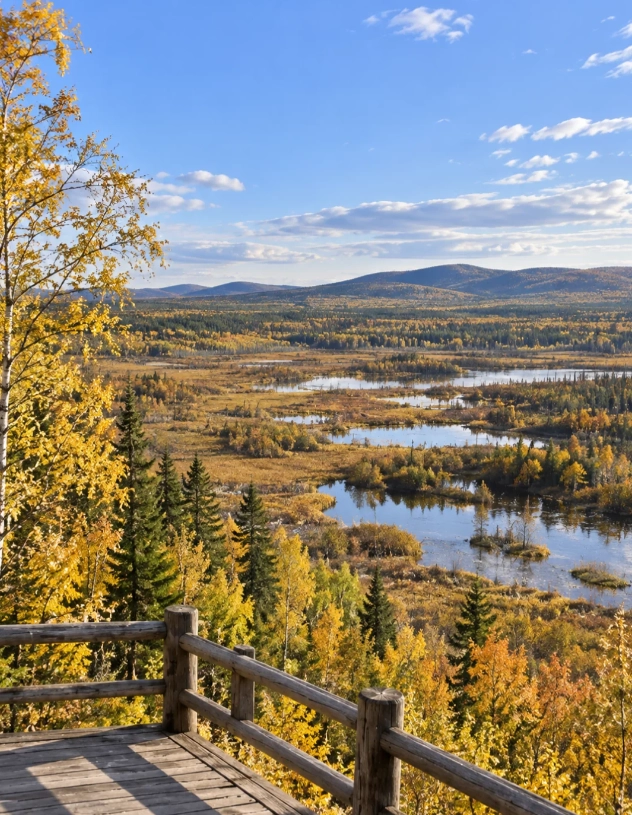
Start Here: My Quick Route Map
- What Actually Makes a Heilongjiang Autumn Itinerary Different
- How Do You Time a Heilongjiang Autumn Itinerary Around Peak Foliage?
- The 8-Day Heilongjiang Autumn Route, Stop by Stop
- How Do You Get Between These Places Without Burning a Day?
- What to Eat in Heilongjiang When the Temperature Drops
- Where to Sleep: Picking Your Base in Each Town
- What Should You Budget for a Heilongjiang Autumn Trip?
- Payments, Bookings and the Digital Hoops Nobody Warns You About
- Heilongjiang Autumn Itinerary: The Questions I Get Asked Most
What Actually Makes a Heilongjiang Autumn Itinerary Different
Heilongjiang's autumn is gold and copper, not red, and that single fact changes how you plan.
If you are picturing the crimson maple postcards of Kyoto, adjust your expectations now. This is boreal forest. Larch turns amber, birch goes pale yellow, and Korean pine stays deep green underneath the whole canopy. The palette is warm, dusty and enormous. It looks less like a manicured garden and more like a fire moving slowly across a hillside.
Two things surprise first-timers.
The first is the temperature gap. I have had clients eat lunch outdoors in Harbin at 18°C and then stand at a mountain viewpoint in Yichun the next morning at 1°C. Bring layers you can strip in thirty seconds, not one heavy coat you are stuck inside all day.
The second is distance. Mohe sits roughly 1,100 km north of Harbin. That is not a day trip, and anyone who tells you otherwise has never done the drive.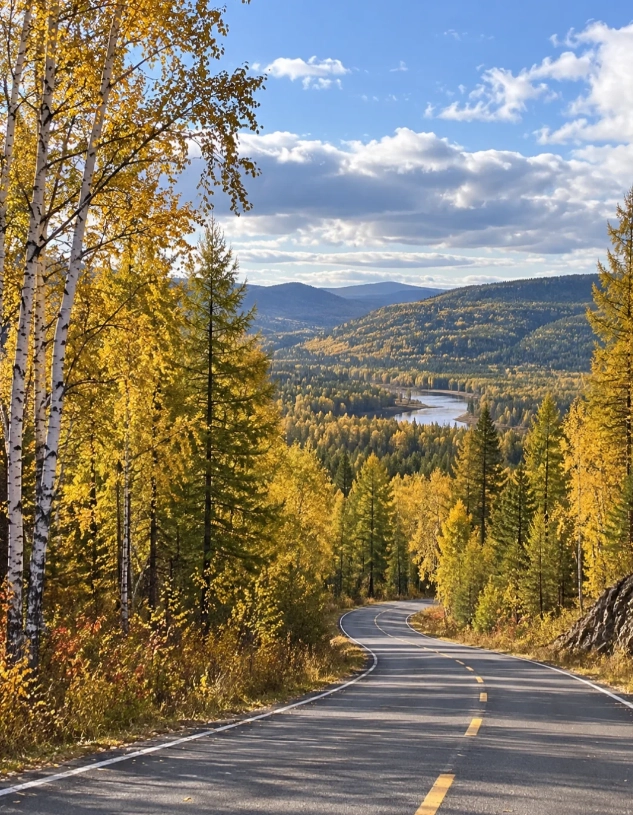
Insider Advice: Every autumn, people message me asking which night is best for the aurora in Mohe. I tell them the truth. Northern lights here are rare and unreliable. Book Mohe for the forest, the river and the border silence. If the sky performs, treat it as a bonus.
How Do You Time a Heilongjiang Autumn Itinerary Around Peak Foliage?
Peak color rolls from north to south, so the far north burns first and Harbin is last.
That is the opposite of what most travelers assume, and it is the most useful planning rule I can hand you. Mohe can be past peak while Harbin is still green. Build your route north-first, or accept that you will catch the tail end in one region and the full show in another.
| Region | Typical Peak Color | Daytime Range | Crowd Pressure |
|---|---|---|---|
| Mohe and the Greater Khingan Range | mid-September to 1 October | 5-12°C | Low |
| Yichun and Wuying | late September to 8 October | 8-15°C | Moderate |
| Wuchang Fenghuang Mountain | 1-15 October | 10-18°C | High during National Day |
| Harbin city and Songhua River | 5-20 October | 12-18°C | Moderate |
| Jingpo Lake, Mudanjiang | 1-12 October | 10-17°C | Moderate |
Now, let me save you some money and some misery. China's National Day holiday runs 1-7 October, and half the country is on the road during it. Hotel prices in Harbin and Wuchang roughly double, and the shuttle buses at Fenghuang Mountain turn into a queue that swallows two hours of your morning. If your dates are even slightly flexible, shift your trip to start around 8 October. You lose a little color in the far north and gain a completely different province.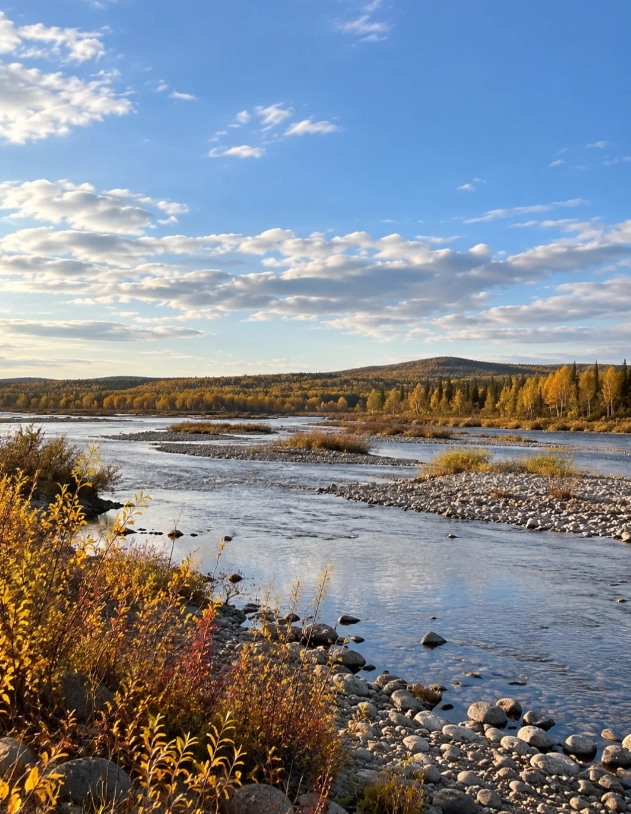
The 8-Day Heilongjiang Autumn Route, Stop by Stop
This is the sequence I run with clients who have a normal amount of vacation and no desire to spend it in transit. It moves south to north first, then flies you back over the boring middle.
Days 1-2: Harbin, Where You Acclimatize and Eat
Harbin is a warm-up city, not the main event, and treating it that way makes it far more enjoyable.
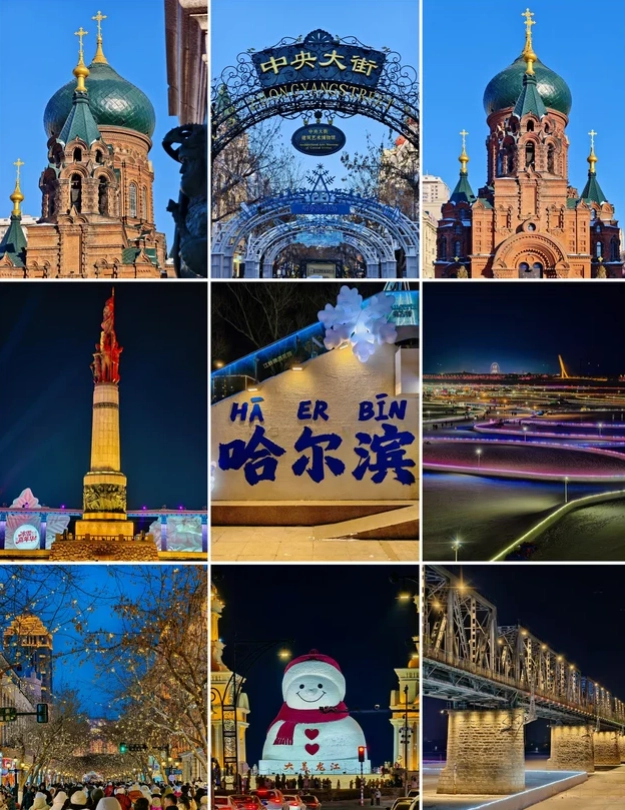
Walk Central Street in the Daoli District before 9 a.m. The pedestrian strip is free, it runs down to the Songhua River, and the morning light on the European facades is clean. By 11 a.m. the tour groups arrive and the same street feels like a conveyor belt.
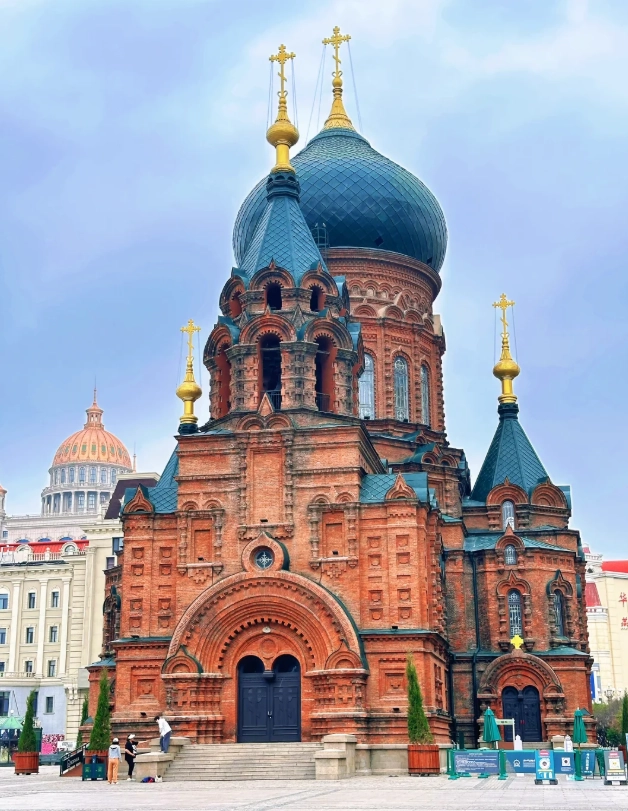
Saint Sophia Cathedral sits a few minutes off the strip at 88 Toulong Street. The square outside is free to enter. There is a small admission charge if you want to go inside the building itself, and the current price changes, so confirm at the door. I always tell clients to shoot the front facade in mid-morning. After lunch the square is packed and you will be photographing strangers' heads.
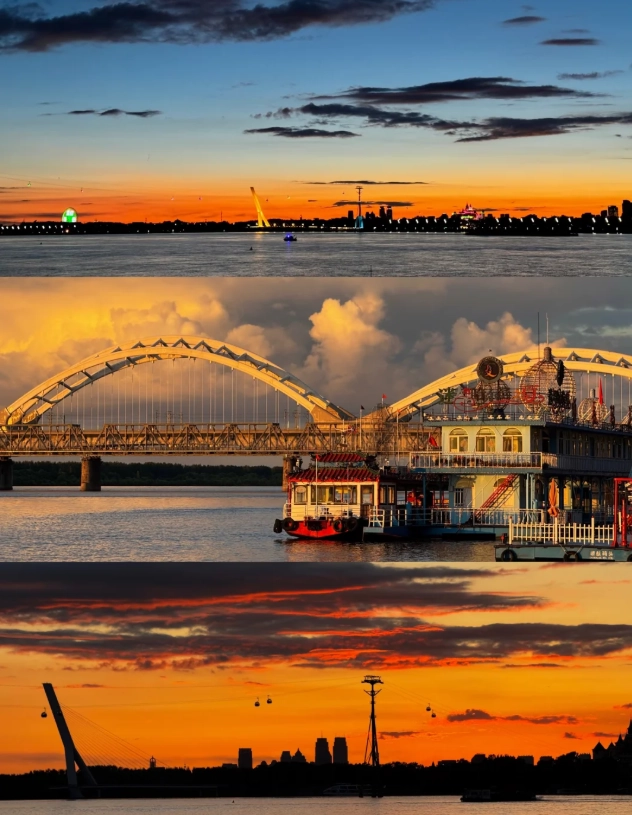
From the river, ride the cable car across to Sun Island. In autumn the park is quiet and free to walk through. The ticketed snow sculpture zone that everyone has seen on Instagram does not exist yet. That is a winter build, and I have met more than one disappointed traveler who booked Harbin in September expecting ice palaces.
Days 3-4: Wuchang and the Datudingzi High Country
This is where Heilongjiang's highest ground sits, and almost no foreign traveler goes.
Wuchang is about 2.5 hours south of Harbin by car, and the Fenghuang Mountain scenic area is the draw. The province's highest point, Datudingzi Mountain, sits just under 1,700 m, and the alpine meadow above the treeline is the reason photographers drive down here at 4 a.m.
Arrive at the gate between 6:30 and 7:00 if you want the sea of clouds. It usually burns off by 9:30. You cannot drive your own vehicle up; the park uses a shuttle plus a cable car, and you pay a combined ticket at the entrance. Prices shift by season, so check Trip.com the night before rather than trusting an old blog post.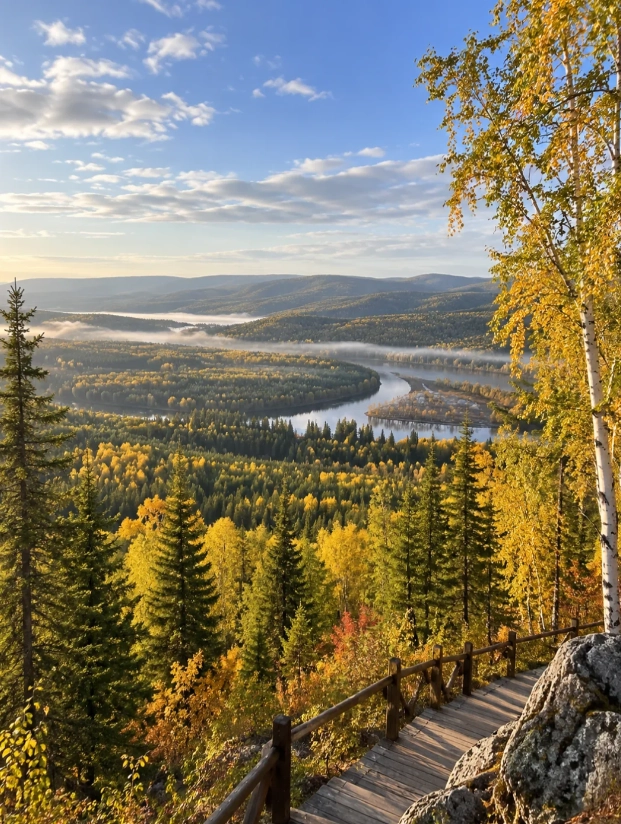
Pro Tip: The summit runs six to eight degrees colder than the valley and the wind is constant. I watched a woman in a denim jacket last forty minutes up there before she gave up. Bring a windproof shell and gloves even if the valley feels warm.
Days 5-6: Yichun and Wuying, the Quiet Forest
Yichun is what people actually imagine when they say forest, and the high-speed rail from Harbin takes about two hours.
Wuying National Forest Park is the classic stop, a Korean pine forest with a famously old specimen known as the Pine King. Tangwang River Stone Forest gives you granite pillars rising straight out of the trees, which is a strange and very photogenic combination. Both parks are best walked between 8 and 11 a.m., when the low sun cuts sideways through the trunks.
From Yichun city, Wuying is roughly 1.5 hours by local bus or hired car. Buses thin out sharply after 5 p.m., so do not plan a late afternoon run unless you have a car arranged.
Days 7-8: Mohe, Beiji Village and the Real Northernmost Point
Fly, do not train, unless you genuinely want the overnight ride.
Harbin to Mohe Gulian Airport takes about 1 hour 45 minutes. The overnight train takes 13 to 15 hours. I have done both. The train is atmospheric and slow, and if you lose a day to it you lose a day of forest.
Beiji Village, the so-called Arctic Village, is the marketed northernmost point, complete with a marker stone and China's northernmost post office. It is genuinely pretty and genuinely touristy. Beihong Village, about two hours further by road, sits further north, has almost no commercial development, and is where I send anyone who wants silence. Guesthouses there are basic. Ask about hot water before you pay.
One thing nobody tells you: Mohe often sees its first snow in late September. Pack gloves for an autumn trip. It sounds absurd until you are standing in it.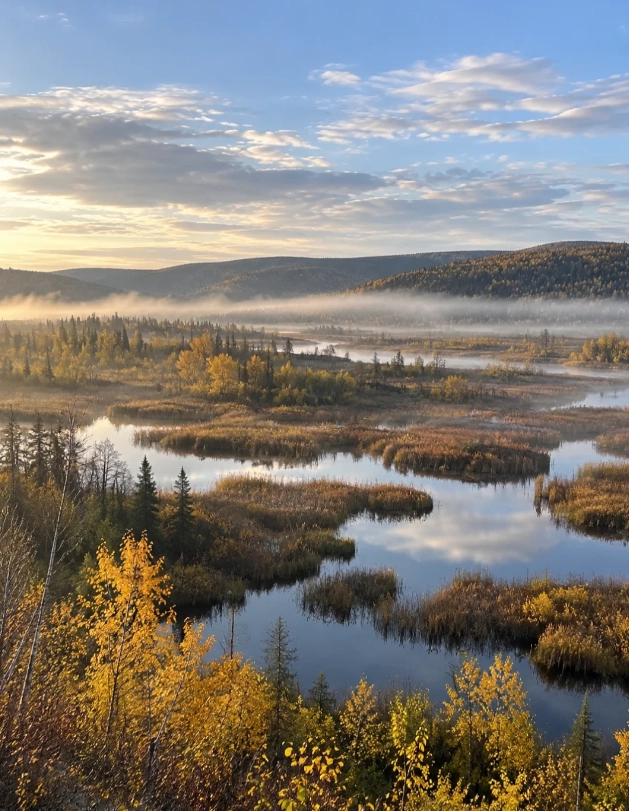
Alternative route: If you have two extra days and want less driving, swap Mohe for Jingpo Lake near Mudanjiang. It is a volcanic dammed lake with a waterfall and an underground forest in the surrounding geopark. Fewer flights, more trains, much shorter distances.
How Do You Get Between These Places Without Burning a Day?
Almost every wasted day on a Heilongjiang autumn itinerary comes from underestimating one leg of the journey.
| Route | Best Option | Time | Rough Cost | Notes |
|---|---|---|---|---|
| Harbin to Yichun | High-speed rail | About 2 hours | ¥150-200 | Book through 12306 or Trip.com with your passport number |
| Harbin to Mohe | Flight | About 1 h 45 m | ¥600-1,200 | Weather delays are common in October |
| Harbin to Mohe | Overnight train | 13-15 hours | ¥200-500 | Sleeper berths sell out first |
| Harbin to Wuchang | Private car or coach | About 2.5 hours | ¥400-600 per car | No convenient high-speed service |
| Yichun to Wuying | Local bus or hired car | About 1.5 hours | ¥50-80 by bus | Few departures after 5 p.m. |
| Mohe Airport to Beiji Village | Pre-booked car | About 1.5 hours | ¥200-300 | Agree the fare before you get in |
Fares and schedules move around, so treat these as planning ranges rather than fixed numbers and verify the day before on China Railway's 12306 platform. The site has an English interface, and you need your passport details exactly as they appear on the document, including middle names. Get that wrong and the ticket will not scan at the gate.
What to Eat in Heilongjiang When the Temperature Drops
The food here is built for cold weather, and the portion sizes are not a joke.
- Modern Ice Cream, 89 Zhongyang Dajie, Harbin. Roughly ¥10-25 for a popsicle. Google Maps sits around 4.3. My order is always the original milk bar, eaten outdoors in the cold like a local. Cash and mobile pay only.
- Guo bao rou. Sweet and sour fried pork slices, the dish every Harbin family argues about. Expect ¥40-70 per plate at a mid-range restaurant. It is closer to candy than most foreigners expect, and that is the point.
- Tieguo dun. Iron pot stew, usually pork ribs with pickled cabbage, simmered at the table. ¥80-150 for two people. This is the meal you want at 5°C after a day in the forest.
- Harbin beer. ¥8-15 a bottle in most restaurants, and yes, it tastes different from the export version.
- In Mohe. Look for wild blueberry products and river fish. Menus are Chinese-only in most village restaurants, so a translation app with camera mode is essential.
Payment reality check: assume mobile pay or cash. International credit cards work at big Harbin hotels and almost nowhere else. I have watched travelers stand helplessly at a Wuchang noodle shop while the owner pointed at a QR code they could not scan.
Where to Sleep: Picking Your Base in Each Town
In Harbin, where you sleep matters more than which hotel you pick.
| Area or Town | Best For | Est. Price Per Night | Trade-off |
|---|---|---|---|
| Harbin, Daoli District near Central Street | First-timers who want to walk everywhere | ¥350-900 | Noisy on weekends and holidays |
| Harbin, Songbei riverside | Families and light sleepers | ¥400-1,100 | 20-30 minutes by taxi to Central Street |
| Yichun city center | Base for forest day trips | ¥200-500 | English-speaking front desk staff are rare |
| Wuying town guesthouses | Early park entry | ¥150-400 | Thin walls, bring earplugs |
| Beiji Village, Mohe | First visit to Mohe | ¥250-700 | Tourist pricing, book well ahead |
| Beihong Village, Mohe | Quiet seekers | ¥150-350 | Very limited food options nearby |
Before you confirm any small-town guesthouse, ask three questions directly: is there an elevator, is the Wi-Fi stable in the room, and do you store luggage after checkout. Older buildings in Yichun and Wuying frequently have no lift, and hauling a suitcase up four flights after a day of hiking is a specific kind of regret. Homestays usually hold bags for free, but you should still ask rather than assume.
What Should You Budget for a Heilongjiang Autumn Trip?
Plan on ¥700-1,200 per person per day if you are moving between cities, and considerably less if you stay put in Harbin.
- Accommodation: ¥300-800 per night for a comfortable double room
- One internal flight plus one high-speed rail leg: ¥800-1,400 total
- Park tickets, shuttles and cable cars: ¥100-300 per park
- Food: ¥120-250 per day without trying hard
- Cash to carry: ¥500-1,000, because small vendors in Wuying and Beihong may not handle card payments at all
Payments, Bookings and the Digital Hoops Nobody Warns You About
Your biggest obstacle in Heilongjiang is not the cold. It is the booking system.
Start with entry paperwork. Rules for visa-free transit and unilateral visa-free entry change often, so check the National Immigration Administration before you book flights rather than relying on a forum post from last season.
For trains, the official channel is China Railway's 12306 platform. The pre-sale window shifts from time to time, so check the current one and set an alarm for the morning tickets open. For attractions, assume advance reservation with real-name passport registration is required. Trip.com and Klook are far friendlier for foreign passports than Chinese-language mini-programs.
Pro Tip: Yes, navigating a Chinese-language mini-program to reserve a forest park ticket is a nightmare even for me. Do not fight it. Hand your phone to the hotel receptionist with the park name typed out in Chinese and let them do it. It takes them about ninety seconds and saves you an hour of guessing.
On the ground, Google Maps is unreliable in mainland China. Use Apple Maps, or Amap, which has reasonable English support for navigation. Download your VPN before you arrive, not after, because you cannot install it from inside the country without one. Apple Translate and Baidu Translate both handle offline Chinese reasonably well.
If you want background on how quickly the northeast rail network is expanding, CNN Travel has covered the region's new lines, which is useful context for understanding why a route that took two days a decade ago now takes an afternoon.
Heilongjiang Autumn Itinerary: The Questions I Get Asked Most
Can I squeeze a Heilongjiang autumn itinerary into five days?
Cut Mohe, not Harbin. Five days works if you do Harbin plus Wuchang, or Harbin plus Yichun. The mistake I see constantly is people trying to bolt Mohe onto a short trip and losing two of their five days to transport. A five-day version based in Harbin with one forest overnight is genuinely satisfying. A five-day version with Mohe in it is a blur of airports.
Is Harbin's Ice and Snow World open during autumn?
No. The ice city is built and opened in the depths of winter, and the site in September and October is essentially a construction yard or an empty riverside plot. This trips up a surprising number of travelers who book Harbin in autumn assuming they will see ice sculptures. Book Harbin in autumn for the architecture, the food and the river, then come back in January if you want the ice.
Do I need a visa to enter Heilongjiang, and can I do it visa-free?
It depends entirely on your nationality and your entry point, and the rules have been liberalized repeatedly in recent years. Some passport holders can enter visa-free for short stays, and transit through major hubs can qualify for extended visa-free transit. Verify your specific case on the National Immigration Administration site before purchasing anything non-refundable. Do not rely on airline check-in staff to interpret the rules for you.
Is Mohe safe for solo travelers, given the Russian border?
Very safe, but carry your passport at all times. Roads in the Mohe area pass through border checkpoints, and officers may ask to see identification. I have been waved through in seconds and I have also been asked to open my bag. It is routine, not hostile. Do not wander onto the frozen river or into marked restricted zones to get a better photo of the far bank. That is the one mistake that turns a pleasant day into a very long conversation.
What happens if it snows in the middle of my autumn trip?
In Mohe and Yichun, it can and does. Snow rarely shuts parks, but it can cancel the small-aircraft flights into Mohe, which is exactly why I tell clients to fly north early in the trip and keep a rail backup in mind. Have a Plan B that does not depend on a flight: a museum day in Harbin, the forest museum in Yichun, or simply shifting your Wuchang leg earlier. Build one flex day into any eight-day plan and the weather stops being a crisis.
Verified and fact-checked by the editorial team. This content has been fact-checked to ensure informational precision.





No comments yet.