 Jing Song
Minus 28°C. My eyelashes froze together. Then my phone died.
That was Harbin at four in the afternoon, and I still had a forty-minute walk back to Central Street. Six winter seasons of guiding groups through this province have taught me more than any itinerary ever could — and the lesson is never about money. It's about the cold.
So when travelers ask me how to do Heilongjiang budget travel without burning a thousand dollars, I don't hand them a brochure. I hand them my receipts. I've watched foreigners pay ¥3,000 for a China Snow Town tour they could have assembled for ¥900, and I've watched their international credit cards bounce at the ticket window while two hundred people sighed behind them.
Here's the blunt version: the cheapest window is the lull between New Year's Day and Chinese New Year. Hotel rates drop by roughly a third, the ice park is fully built, and the domestic tour groups haven't landed yet. Book your train the moment sales open on 12306 or Trip.com, and buy the Harbin Ice and Snow World ticket through Trip.com with your passport — the official WeChat mini-program is a wall of Chinese that will defeat you at eleven at night.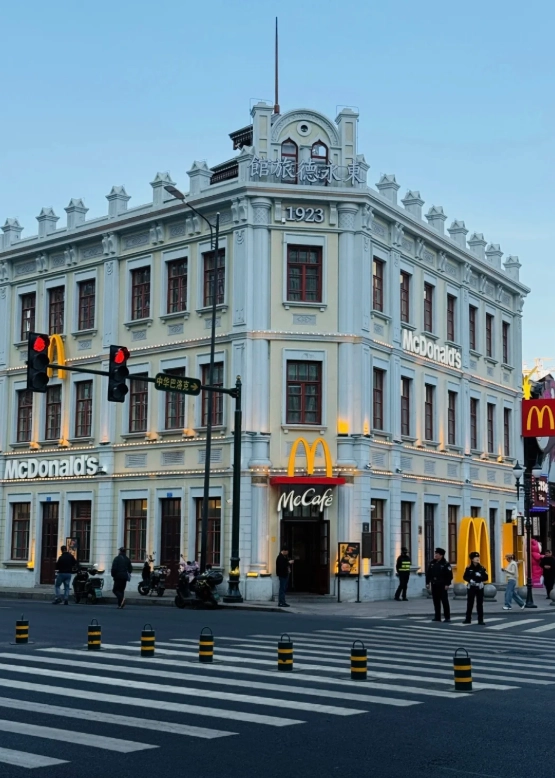
Let's talk numbers.
What's Inside This Route Plan
- Why Heilongjiang Is China's Cheapest Cold-Weather Destination
- What Heilongjiang Budget Travel Really Costs
- How to Reach Heilongjiang Without Overpaying
- Harbin Ice and Snow World — Timing Beats Discounts
- Three Harbin Traps I Tell My Groups to Skip
- China Snow Town on a Budget: An Honest Breakdown
- Where to Sleep Cheap in Heilongjiang
- Eating Well for Under ¥100 a Day
- A 4-Day Heilongjiang Budget Itinerary
- Winter Gear: Rent It, Don't Buy It
- Heilongjiang Budget Travel FAQ
Why Heilongjiang Is China's Cheapest Cold-Weather Destination
Heilongjiang is the rare place where the weather does your budgeting for you. Nobody lingers outdoors long enough to spend money on extras, and the province has built its entire winter economy around a single short season, which keeps competition for your yuan fierce outside the two big names.
Compare it to Beijing or Shanghai. In Harbin, a dorm bed near the main pedestrian street costs less than a bowl of ramen in Tokyo. Metro rides are ¥2 to ¥5. A plate of guo bao rou — sweet-sour fried pork, the city's signature dish — feeds two people for the price of one coffee in Copenhagen.
Then there's the free stuff. Central Street, Stalin Park, the frozen Songhua River, the Chinese Baroque lanes of Old Daowai, the flood-control monument. All of it costs nothing. On a clear morning at minus 20, that river walk is worth more than any ticketed attraction I've paid for.
What surprised me most on my first season here was the bathhouse culture. A 24-hour sauna complex in Daoli or Nangang charges roughly ¥80 to ¥150 for entry, a sleeping pod, hot tea and sometimes fruit. Travelers on a tight budget genuinely sleep there instead of a hotel. It's not luxurious. It is warm, safe and deeply local.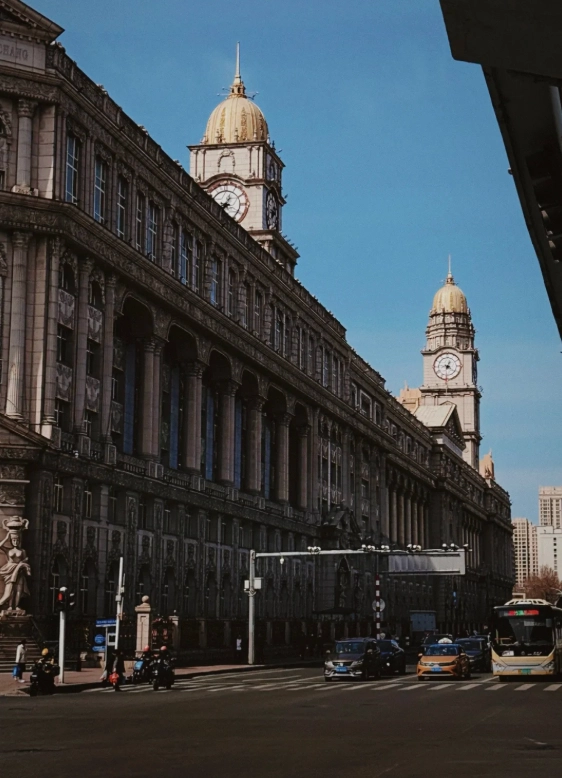
What Heilongjiang Budget Travel Really Costs
Ranges below come from what my groups have actually paid across recent winters. Prices shift during the ice festival and roughly double over Chinese New Year, so treat these as planning brackets, not fixed quotes.
| Item | Budget Range | Practical Note |
|---|---|---|
| Hostel dorm bed | ¥60–120 per night | Daoli District, walkable to Central Street |
| Private budget room | ¥180–350 per night | Roughly triples during Chinese New Year |
| 24-hour bathhouse entry | ¥80–150 | Includes a sleeping pod and hot drinks |
| Ice and Snow World ticket | ¥330–390 adult | Confirm current pricing on Trip.com before booking |
| Metro ride | ¥2–5 | Alipay transport QR, or ¥5 and ¥10 notes at machines |
| Airport Bus Line 1 | ¥20 | Runs to the city center, about 50 minutes |
| High-speed train Harbin–Mudanjiang | ¥130–160 second class | Book via 12306 or Trip.com with your passport number |
| Breakfast market meal | ¥10–20 | Cheapest food in the province, hands down |
| Restaurant dinner | ¥50–90 per person | Guo bao rou portions are built for sharing |
| Thermal gear rental | ¥50–100 per day | Cheaper in the city than at the park gates |
How to Reach Heilongjiang Without Overpaying
Flights vs Trains to Harbin
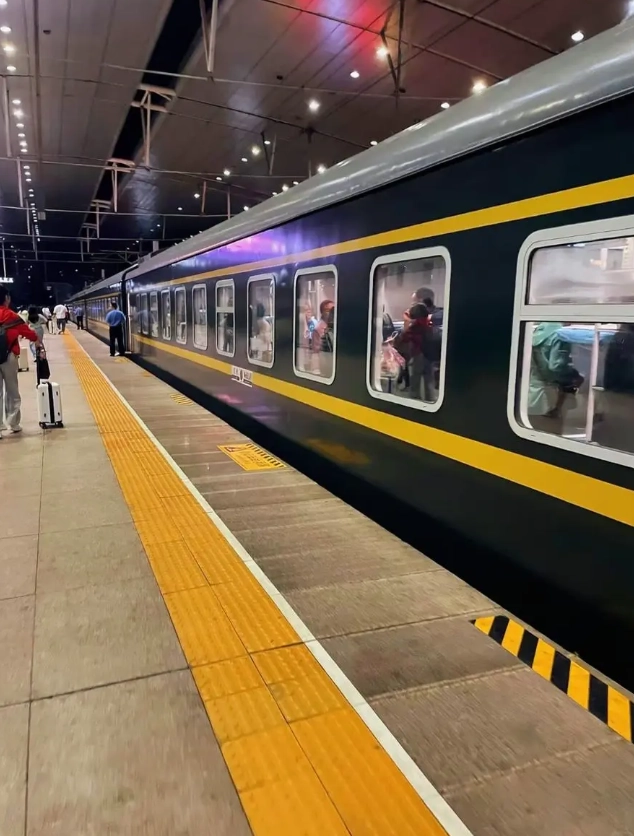
Flying into Harbin Taiping International Airport is the fastest option, but the sleeper train from Beijing is the one that saves real money. A hard sleeper on the overnight service runs a fraction of a last-minute flight and drops you in the city at a civilized hour.
Book long-distance rail through the official China Railway 12306 platform, which has an English interface, or through Trip.com if you'd rather pay a small service fee for a smoother checkout. Tickets typically release about two weeks ahead, and seats on Harbin routes vanish fast around the New Year holiday. Your passport number is the booking identity — there is no way around the real-name registration.
Flights: watch prices three to six weeks out. Early-morning departures are consistently the cheapest, and a 6 a.m. arrival in Harbin means you can nap in a hostel common room before check-in officially opens.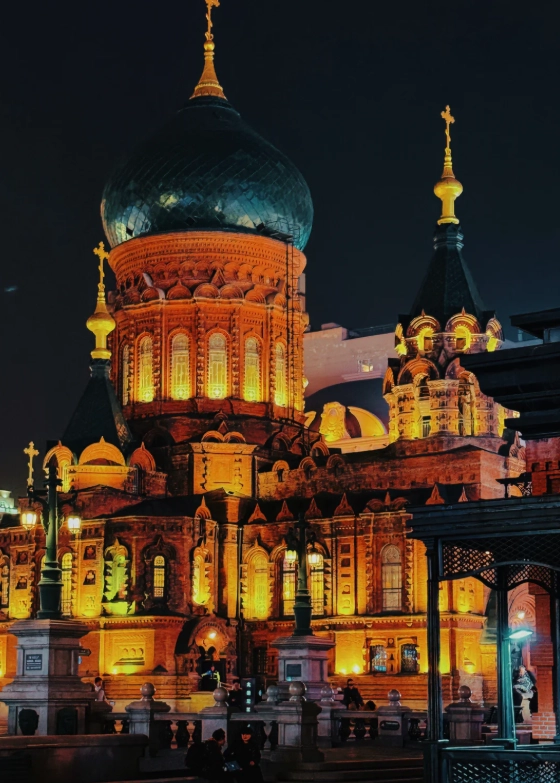
Getting Around Harbin on a Budget
The metro is your default, and Didi is your backup — taxis are your last resort. Line 2 links the main railway station area to the ice park side of town, and a single ride costs less than a bottle of water.
- Ticket machines take ¥5 and ¥10 notes. They do not take foreign cards, and the coin slot is fussy in cold weather.
- The Alipay transport QR code is the smoothest option if it loads for Harbin on your phone. If it doesn't, walk to the staffed window and point at the station name on your screen.
- Didi has an English interface and lets you pay through Alipay. Save your hotel's Chinese name in your phone notes — drivers rarely speak English and will call you.
- As of my last trip, the metro still doesn't reach Taiping Airport. Take Airport Bus Line 1 for ¥20, or a Didi for a flat-ish fare that varies with traffic.
Pro Tip: Ignore anyone at Harbin Station or the airport who approaches you offering a "cheap" ride. Walk past them to the official taxi rank or order a Didi inside the terminal. I've peeled too many frustrated travelers out of those cars.
Harbin on a Budget: What's Worth Paying For
Harbin Ice and Snow World — Timing Beats Discounts
Arrive between 2:30 and 3 p.m., not at opening. The park is a different place after dark, and a full-price ticket covers both versions. Walk in while the sun is still up, watch the blocks glow as the lights come on at dusk, and you've effectively seen two attractions for one price.
The entry fee sits in the ¥330–390 range for adults in peak season, with reduced rates for young children and seniors. Booking on Trip.com with your passport is the most foreigner-friendly route — it generates a QR code you scan at the gate. Bring the physical passport too. Staff do check.
Metro Line 2 stops at the Ice and Snow World station, and the walk from the exit to the gate takes about ten minutes. That ten minutes is the coldest part of your entire trip, because you're standing still in an open wind corridor with nothing to block the wind. Taxis drop you closer, but the exit road turns into a slow-moving parking lot after 9 p.m., so the metro usually wins on the way home.
- The big ice slide queues can run well over an hour. Go there first if it matters to you.
- Food inside is expensive and lukewarm. Eat a real dinner before you go, or carry nuts and chocolate.
- There are heated rest stops scattered through the park. Use them every 45 minutes or so, especially with kids or older relatives.
- Rental stalls inside sell padded coats and boots at a premium. Rent in the city instead.
The Free Harbin Most Tourists Miss
Old Daowai is the best photography in the city and it costs nothing. The Chinese Baroque facades along Jingyu Street and its side lanes look best between 8 and 10 a.m., when low sun rakes across the peeling plaster and there's almost nobody in frame.
Central Street is the postcard, but I'd argue it's better at 8 a.m. than at noon. By midday the pedestrian flow becomes a slow human river, and every photo has thirty strangers in it. Walk it early, grab a Madie'er ice cream bar for a few yuan, and eat it outside — that's the local ritual, and yes, eating ice cream at minus 20 is genuinely pleasant.
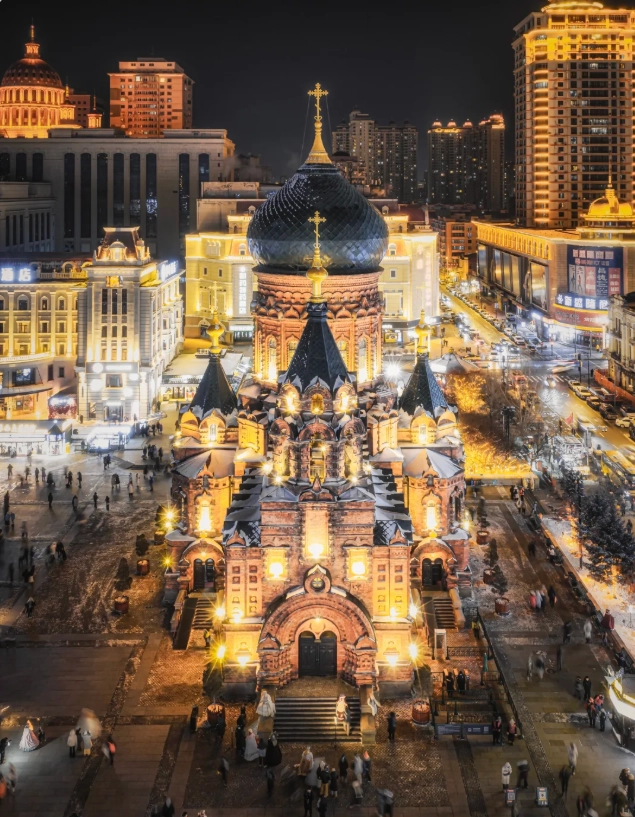
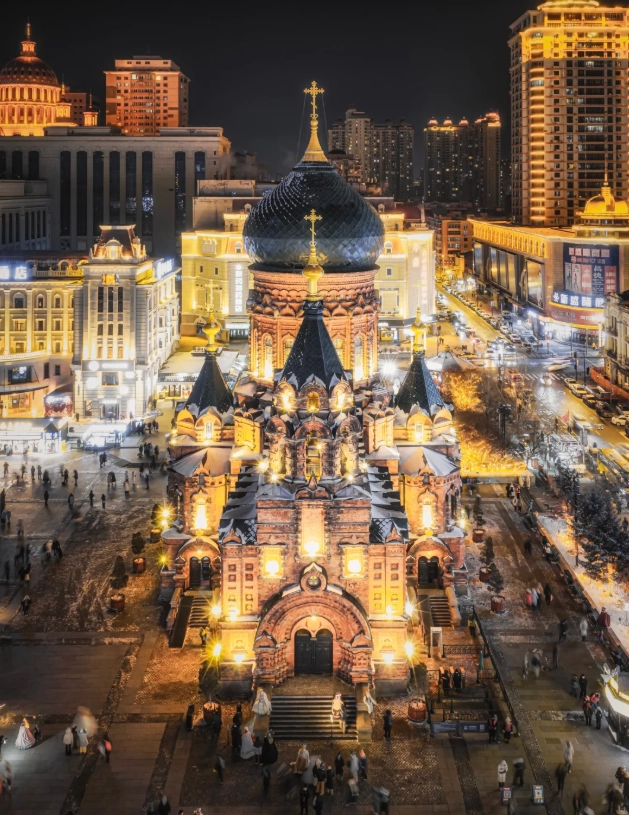
St. Sophia Cathedral charges a small entry fee, usually around ¥20, for the interior gallery. The plaza outside is free and is where the good photos actually happen. Note that the light hits the front facade in the afternoon, so plan accordingly if you want the classic shot.
Three Harbin Traps I Tell My Groups to Skip
Not everything here deserves your money, and I'd rather you hear it from me than discover it at the gate.
- Sun Island Snow Sculpture Expo runs ¥200 and up. If you're already doing the ice park, this is a very similar evening for a second full ticket. Skip it unless snow carving specifically fascinates you.
- The "Russian goods" shops lining Central Street mark up chocolate, vodka and nesting dolls by two to three times. Buy the same items at Qiulin or any large supermarket and save the difference for a train ticket.
- Horse-drawn sled rides on the frozen river are priced for tourists, and I've watched operators get stuck in slush more than once. Ice bumper cars on the river cost far less and are honestly more fun.
China Snow Town on a Budget: An Honest Breakdown
China Snow Town sits in Hailin, under Mudanjiang's administration, and getting there independently is doable but fiddly. Two main routes exist. The cheaper one is a high-speed train from Harbin to Mudanjiang, roughly an hour and a half to two hours, then a local bus or shared car onward. The simpler one is a direct tourist bus from Harbin that takes five to six hours door to door.
The village entry ticket plus the internal shuttle typically adds up to well over ¥100, and the shuttle is effectively mandatory because private vehicles are stopped at the gate. Confirm current pricing when you arrive — this is one of those places where rates move around, and I'd rather you check than trust a number I gave you a season ago.
Here's my non-consensus take: one night is enough. Most itineraries push two, and by the second morning you've photographed every angle of Snow韵 Street and you're just burning accommodation money. The famous snow-capped roofs look best between 7 and 8 a.m., before the tour groups spill out of their buses.
If the village prices feel absurd in peak season, which they often do, look at Erlanghe, a smaller settlement about forty minutes away. Fewer crowds, cheaper beds, and honestly a more peaceful snow experience.
Insider Advice: Some group tours from Harbin advertise a low headline price and then add the entry ticket, the shuttle and a mandatory shopping stop on top. Ask three questions before you pay: is the village ticket included, is the shuttle included, and are there shopping stops.
Where to Sleep Cheap in Heilongjiang
Peak pricing runs from mid-December through late February. Chinese New Year week is a separate universe — book that window two months out or accept whatever is left.
| Type | Area | Est. Peak Price | Best For |
|---|---|---|---|
| Hostel dorm | Daoli, near Central Street | ¥60–120 | Solo travelers who want to walk everywhere |
| Budget chain hotel | Nangang, near Harbin Station | ¥180–350 | Couples and small families |
| 24-hour bathhouse | Scattered across Daoli and Nangang | ¥80–150 | Curious budget travelers, late arrivals |
| Snow Town village guesthouse | Inside China Snow Town | ¥400–800 | Families wanting the heated kang bed |
| Erlanghe homestay | About 40 minutes from Snow Town | ¥150–300 | Quiet seekers and tight budgets |
A few things I always check before recommending a place in winter. Does the room have a radiator you can actually control, or is it central heating that shuts off at midnight? Is the shower hot at 7 a.m., when everyone in the building wants it at once? And does the front desk speak enough English to help you book a ticket on a Chinese mini-program?
That last one matters more than the Wi-Fi. Hotel receptionists here are the single best workaround for the entire Chinese app ecosystem, and a good one will save you an hour of frustration.
Eating Well in Heilongjiang for Under ¥100 a Day
The Hongzhuan Street breakfast market in Daoli is the best value meal in Harbin, full stop. Get there before 8 a.m. Ten yuan buys you fried dough sticks, warm soy milk and a tea egg, and you eat standing up with locals in padded jackets. The stalls pack away by mid-morning.
- Madie'er ice cream on Central Street — a few yuan per bar, and the queue moves fast. Order the classic milk flavor.
- Guo bao rou — sweet, vinegary, crackling-crisp pork. Expect ¥40–60 a plate at most mid-range restaurants, and it easily feeds two. Ask for it "suan tian" if you want the classic profile.
- Shangwei Hongchang on Hongqi Street — the sausage queue here is legendary and can run 30 to 60 minutes. Buy vacuum-packed ones as gifts; they survive the flight home.
- Sha zhu cai — pickled cabbage, pork and blood sausage in a bubbling pot. ¥40–70 per person and the single best thing to eat after a day at minus 25.
- Dalieba — a dense Russian-style sourdough loaf from Qiulin, ¥20–30. Buy one for the train.
On payment: Alipay and WeChat Pay linked to an international card work almost everywhere, and cash is still accepted without drama. Physical foreign credit cards are a different story — most small restaurants simply cannot process them. Keep two or three hundred yuan in small notes as backup.
English menus are rare outside hotel restaurants. Apple Translate's camera mode handles Chinese menus well enough, and pointing at what the next table ordered is a strategy with a perfect success rate.
A 4-Day Heilongjiang Budget Itinerary
Costs below are per person and exclude accommodation. Times are built around the actual metro and train schedules I use with groups, not ideal-world estimates.
| Day | Plan | Main Transit | Est. Cost |
|---|---|---|---|
| Day 1 | Land at Taiping, drop bags, Central Street at dusk, Madie'er ice cream, dinner in Old Daowai | Airport Bus Line 1, ¥20, then walking | ¥150 |
| Day 2 | Hongzhuan Street breakfast market, St. Sophia, frozen Songhua River, Ice and Snow World from 3 p.m. | Metro Line 2 to Ice and Snow World station | ¥450 |
| Day 3 | Morning train to Yabuli for skiing, or high-speed rail to Mudanjiang for Snow Town | Train, ¥60–160 | ¥300 |
| Day 4 | Return to Harbin, indoor museum if the cold wins, souvenir run at Qiulin | Metro and walking | ¥120 |
The Day 2 sequence is the one I'd defend hardest. Metro from Central Street to the ice park takes about half an hour plus a ten-minute walk. A taxi is roughly 25 minutes and ¥30–40, but between 5 and 7 p.m. the roads around the park crawl, so the metro is faster when it counts.
If you're traveling with children or anyone over 70, swap Day 3 for a slower version. Two hours at the ice park is plenty for small kids, and the heated rest stops become the main attraction.
For extreme weather days — and Harbin does get blizzards that shut outdoor sites — the Heilongjiang Provincial Museum is free, requires your passport at the door, and closes on Mondays. Gogol Bookstore is another warm indoor fallback with no entry fee. Both beat standing in a frozen queue.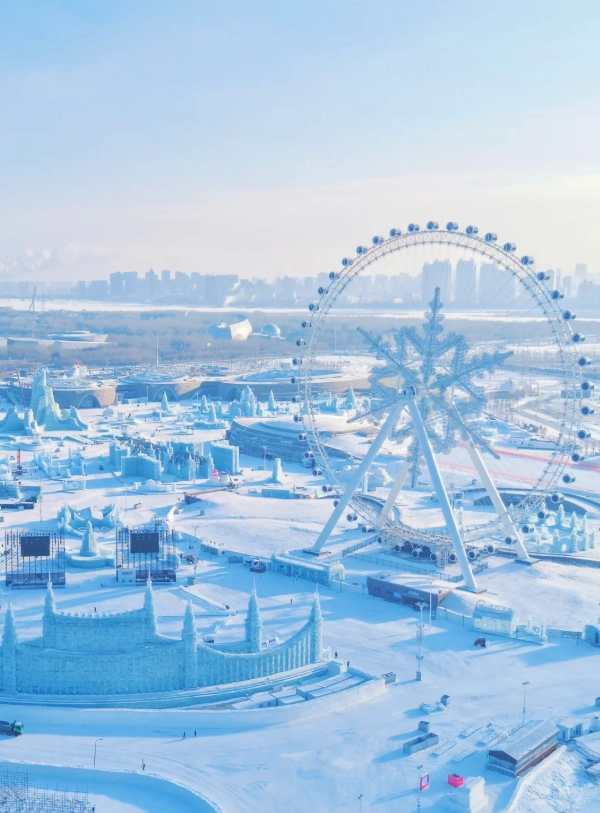
Winter Gear: Rent It, Don't Buy It
Rental shops around Central Street and most hostels will outfit you for ¥50–100 a day, which is far less than buying a parka you'll wear four times. Boots rent separately for around ¥30–50.
The rental stalls inside the ice park charge more and the queues are worse, so sort your gear the day you arrive, not the hour you need it.
- Thermal base layers, wool socks, glove liners and a neck gaiter do more work than any single expensive jacket.
- Hand warmers cost about ¥15–20 for a pack of ten at any convenience store. Stuff them in your boots, not just your pockets.
- Keep your phone in an inner pocket and your power bank inside a sock. Batteries die in minutes at these temperatures, and a dead phone means no Didi and no translation.
- Don't over-layer for the metro. Indoors runs around 25°C, and sweating before you step outside is how people get genuinely cold.
Pro Tip: The restroom beside the ice park's main ticket hall develops a long queue after 6 p.m. Use the facilities at the metro station before you walk over.
Heilongjiang Budget Travel FAQ
Is early December or January cheaper for a Heilongjiang budget trip?
January wins, but not the first week. The sweet spot is the gap between New Year's Day and Chinese New Year. Hotel rates fall by roughly a third compared to the holiday weeks, the ice park is fully constructed by then, and the domestic tour buses haven't arrived in force. Early December looks cheaper on paper, but the ice park sometimes opens late or partially, and you'd be paying for a half-finished experience.
Can I use a Visa or Mastercard in Harbin restaurants and shops?
Assume no. Small restaurants, markets and ticket windows generally can't process foreign plastic. Link your international card to Alipay or WeChat Pay before you fly, and carry a few hundred yuan in cash as a safety net. Larger hotels can usually take a card at the front desk, but that's the exception, not the rule.
Do I need a visa to visit Heilongjiang, and does Harbin airport qualify for transit-free entry?
Eligibility depends entirely on your nationality and your route. China's visa-free transit policies have expanded significantly and cover a specific list of entry ports, so check the official National Immigration Administration guidance for your exact situation rather than trusting a forum post. If you're entering on a standard tourist visa, nothing about Heilongjiang changes the rules — just carry your passport everywhere, because you'll need it for hotels and attraction tickets.
Is it safe to travel solo in Heilongjiang in deep winter?
Street crime is not the risk here — ice and cold are. I've seen more injuries from polished marble steps and black ice on sidewalks than from anything else. Wear boots with real tread, hold the handrail on every staircase, and avoid long walks after drinking. Frostbite creeps up on ears, fingertips and cheekbones before you feel it. Also keep a paper copy of your hotel's Chinese name and address in your pocket, because your phone will die at the worst possible moment.
How do I reach China Snow Town without booking a tour?
Take a high-speed train from Harbin to Mudanjiang, then a local bus or shared car onward to the village, or catch a direct tourist bus from Harbin that runs five to six hours. It's cheaper on paper, but factor in the transfer time and the hassle of buying the second leg in Chinese. If you're traveling solo, a two-day group tour from Harbin can land within a few hundred yuan of the DIY version once you add the village ticket and shuttle — just confirm those two items are included, and ask directly whether there are shopping stops.
Verified and fact-checked by the editorial team. Prices, schedules and ticketing rules in Heilongjiang shift with the season, so confirm current details through official booking channels before you travel.





No comments yet.