 Gang Zheng
Start Here — My Solo Route Cheat Sheet
- Why Heilongjiang Works So Well for Solo Travelers
- What Is the Best Heilongjiang Route for a Solo Traveler?
- How Much Does a Heilongjiang Solo Trip Cost?
- Harbin Solo Travel: Tickets, Timing, and the Ice World Trap
- How Do You Get Around Heilongjiang Without a Car?
- Where Should a Solo Traveler Stay in Harbin?
- Eating Alone in Heilongjiang
- Solo Safety in Extreme Cold
- Heilongjiang Solo Travel FAQ
Minus twenty-eight degrees. My phone died in four minutes. I have stood at Harbin West Railway Station watching a solo traveler miss her train because Alipay would not load and she carried no paper cash. That is the honest reality of winter in China's far northeast.
I have done Heilongjiang solo travel twice — once shadowing a group for work, once completely alone with a backpack and a very cold nose. It is far easier than the forums suggest, as long as you fix two things before you land. Book your Harbin Ice and Snow World entry on a platform that accepts a passport. And stop believing the five-day Harbin–Snow Town–Mohe loop that keeps getting copied between blogs. That itinerary will grind you down.
The single most valuable thing I can hand you: buy the Ice and Snow World ticket through Trip.com or the official WeChat mini-program, then walk in around 3:30 p.m. on a weekday instead of at opening. You catch daylight on the big ice structures, you catch the floodlights the moment they snap on, and you dodge the two-hour security crush that builds at the main gate after dark.
Everything else is below.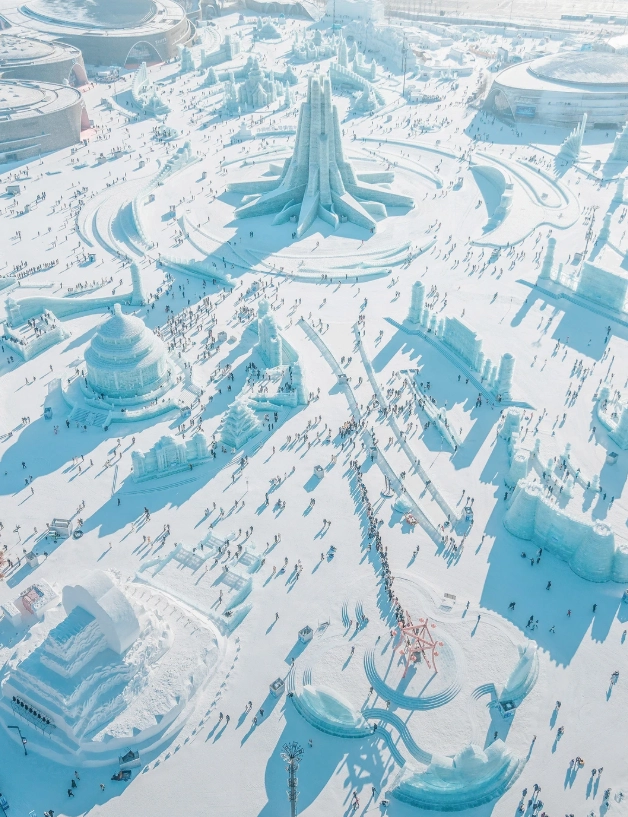
Why Heilongjiang Works So Well for Solo Travelers
This is the one province in China where being alone is a tactical advantage. Everything here is built at a scale that punishes groups. The ice park is the size of a small town. The food portions are absurd. The metro is cheap enough that nobody needs to split a fare. You simply move faster than any tour flag.
The solo advantage nobody talks about
Groups lose their day in the deciding, not the doing. I once watched a six-person family stand in the middle of Ice and Snow World for twenty minutes arguing over which slide to queue for. You will pick one and walk. Dinner works the same way — Harbin portions are sized for sharing, so one main dish plus a bowl of rice feeds a solo traveler extremely well for under 50 RMB.
There is a social factor too. Harbin has a long Russian-influenced history, a big university population, and a steady flow of domestic tourists from warmer provinces. Nobody stares. Nobody asks why you are alone.
Where solo travel in Heilongjiang actually gets hard
The hard part is not the cold or the language. It is the booking layer. Almost every attraction, train seat, and ski pass in China now runs through a WeChat mini-program in Chinese, and identity verification expects a mainland ID number. Your passport works fine — the interface just will not hold your hand.
Pro Tip: Yes, wrestling a Chinese-only mini-program at midnight is a nightmare even for me, and I do it every week. Do not fight it alone. Write the attraction name down in Chinese, walk to your hotel front desk, and ask the receptionist to book it on their account. In my experience they almost always will, and they rarely charge extra for it.
For everything else, Trip.com and Klook run English interfaces, accept international cards, and let you type your passport number directly. That is where I send every solo traveler I advise — Ice and Snow World tickets, Snow Town shuttles, and Yabuli ski passes all live there.
What Is the Best Heilongjiang Route for a Solo Traveler?
The five-day Harbin–Snow Town–Mohe loop is the most common mistake I see. It is technically possible. It is also twenty-plus hours of night trains, two rushed towns, and zero margin for a delayed connection at minus thirty. Alone, that margin is everything.
Give Heilongjiang eight to ten days, or cut a destination. Do not do both.
Base yourself in Harbin for four nights
Harbin is not a two-day city, and treating it as a transit hub is how people end up miserable. Four nights in Daoli District near Central Street gives you one full day for Ice and Snow World, one for Sun Island and the frozen Songhua, one for the old Daowai lanes and the Unit 731 museum, and one buffer day for the morning you inevitably spend thawing out.
Metro Line 2 links Central Street, Sun Island, and the Ice and Snow World complex on the north bank. A single ride costs a couple of yuan. Learn that one line and you have solved half of Harbin.
The overnight train to Mohe — commit or skip it
Mohe is not a day trip. It is a fifteen to seventeen hour overnight train from Harbin, and it is the coldest place most travelers will ever stand. You go for Arctic Village, the border marker on the Heilongjiang River, and the specific feeling of your eyelashes freezing together.
Book the hard sleeper or soft sleeper through the official China Railway platform at 12306.cn, or through Trip.com if you want an English interface. Soft sleeper is a four-berth compartment with a door. Hard sleeper is an open six-berth bay. Solo, I would pay the difference for the door every time — you can actually sleep, and you arrive functional instead of wrecked.
Train numbers and departure stations rotate by season, so verify the current schedule rather than trusting a screenshot from an old blog post.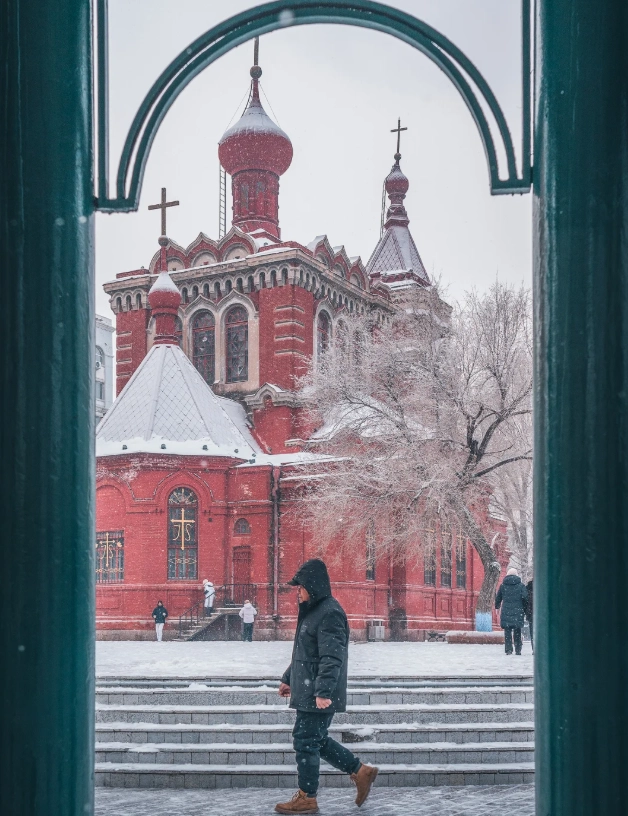
Is China Snow Town worth the detour?
It is genuinely beautiful. It is also the most commercially aggressive place in the province. Expect paid photo platforms, paid snow activities that quietly land on your bill, and lodging prices that multiply during the peak weeks.
Two days maximum. Go, take the photos, leave. If you ski, Yabuli is a better use of the same window — a real resort with rentals and a rail connection from Harbin.
How Much Does a Heilongjiang Solo Trip Cost?
Harbin is cheap by any Western standard, and the winter markup is concentrated in one place: accommodation during the peak ice weeks. Everything else stays reasonable.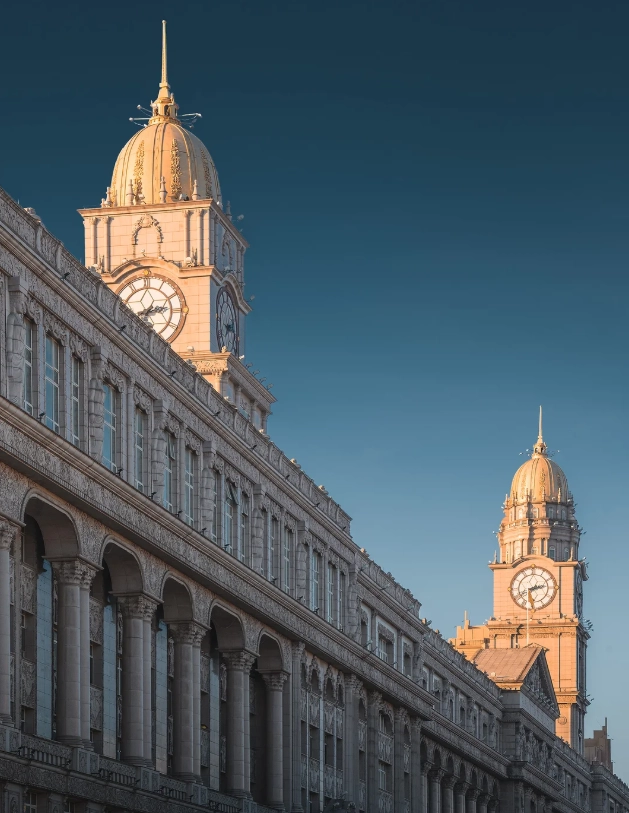
| Cost Item | Budget Solo | Mid-Range Solo | Notes |
|---|---|---|---|
| Hostel dorm bed, per night | 60–120 RMB | 120–200 RMB | Private hostels cluster near Central Street |
| Chain hotel private room, per night | 250–400 RMB | 500–900 RMB | Rates spike hard during peak ice weeks |
| Street food and noodles, per day | 40–70 RMB | 120–200 RMB | Harbin food is genuinely inexpensive |
| Sit-down restaurant dinner | 40–80 RMB | 150–300 RMB | One main dish is usually enough for one person |
| Metro and bus, per day | Under 20 RMB | 30–60 RMB | Line 2 covers most of the headline sights |
| DiDi across the city | 20–40 RMB | 60–100 RMB | Cheaper than a single European metro ticket |
| Overnight train, Harbin to Mohe | 200–300 RMB | 400–600 RMB | Hard sleeper versus soft sleeper |
| Major attraction tickets | 100–400 RMB each | 100–400 RMB each | Budget 800–1,200 RMB for the big ones |
All figures are approximate planning envelopes, not quotes. Winter pricing in Heilongjiang shifts with demand, so confirm current rates on the booking platform before you commit.
Where your money quietly leaks
- Airport taxis at odd hours. The official shuttle bus is a fraction of the price and drops near the main railway station. Take it unless you land past midnight.
- Renting padded coats and boots on site. Buying a decent down jacket and a pair of insulated boots in Harbin costs roughly the same as three days of rental, and you keep them.
- Non-refundable hotel bookings. A delayed train plus a no-refund room is the classic solo winter loss. Pay slightly more for free cancellation.
- Roaming data. Buy a local eSIM before you fly. It is cheaper and it survives the cold better than a foreign SIM hunting for a signal.
Harbin Solo Travel: Tickets, Timing, and the Ice World Trap
Harbin's winter attractions are not equally good, and they are not equally timed. Getting the order wrong is the difference between a great day and a frozen, miserable one.
| Attraction | Approx. Ticket | Booking Channel | Best Arrival | Solo Notes |
|---|---|---|---|---|
| Harbin Ice and Snow World | 300–400 RMB peak evening | Trip.com or official WeChat mini-program | Around 3:30 p.m., weekday | Passport required; buy in advance |
| Sun Island Snow Sculpture Expo | Around 200 RMB in season | Trip.com or on-site | 9–10 a.m. | Daylight only; snow reads grey under floodlights |
| Zhaolin Park Ice Lantern Fair | Under 100 RMB | On-site | After dark | Small, 60–90 minutes, most foreigners skip it |
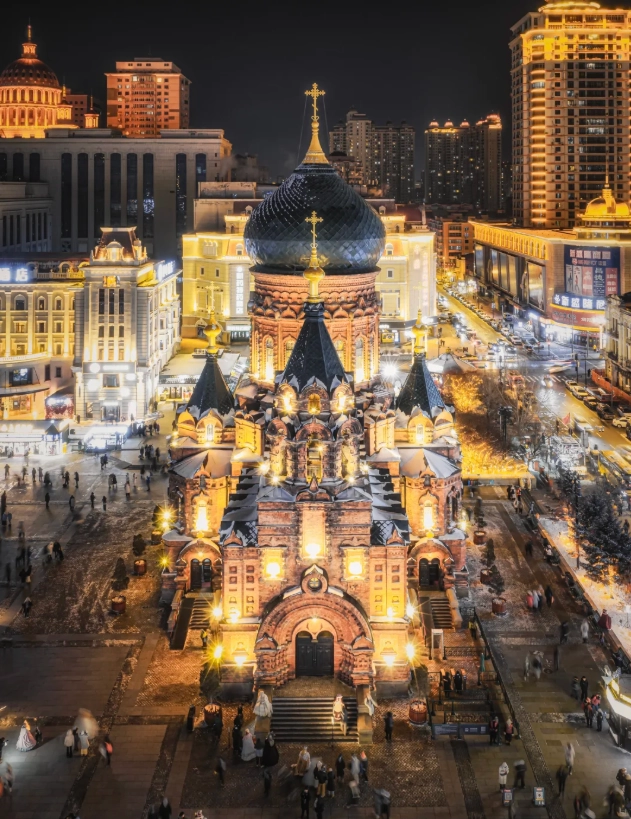
| St. Sophia Cathedral | Around 20 RMB for the interior | On-site | 8:30 a.m. | Exterior is free; the square fills by late morning |
| Unit 731 Museum | Free | Reserve ahead with passport | Morning | Closed one day a week, typically Monday; verify first |
| Siberian Tiger Park | Around 100 RMB plus bus fee | Trip.com or on-site | Midday | The feeding bus costs extra and is worth it |
Ticket prices and opening days change seasonally in Harbin. Treat these as ranges and confirm on the booking platform the day before you go.
Harbin Ice and Snow World — the timing trick
Go on a weekday, enter in the mid-afternoon, and leave before the exit stampede. The park is enormous and the light changes everything. Arrive in daylight and the ice blocks look milky and translucent; stay through dusk and the whole complex turns into a neon cathedral. One ticket, two completely different parks.
Here is the catch that most guides miss. The main gate queue peaks between roughly 5 and 7 p.m., and it is not a queue you want to stand in at minus twenty-five with no shelter. Being inside before it forms is the entire strategy.
Insider Advice: Take Metro Line 2 out to the Songbei side rather than arriving by taxi. When the park empties, the taxi rank outside becomes a forty-minute ordeal in the cold, while the metro keeps running and costs pocket change. I have watched people cry at that taxi rank. I am not exaggerating much.
Inside, the big ice slide has the longest line of the night. If you want it, do it in your first thirty minutes. Later, it is not worth the wait. Also — the toilets near the main plaza are the busiest in the park. Use the ones deeper in, near the far performance area.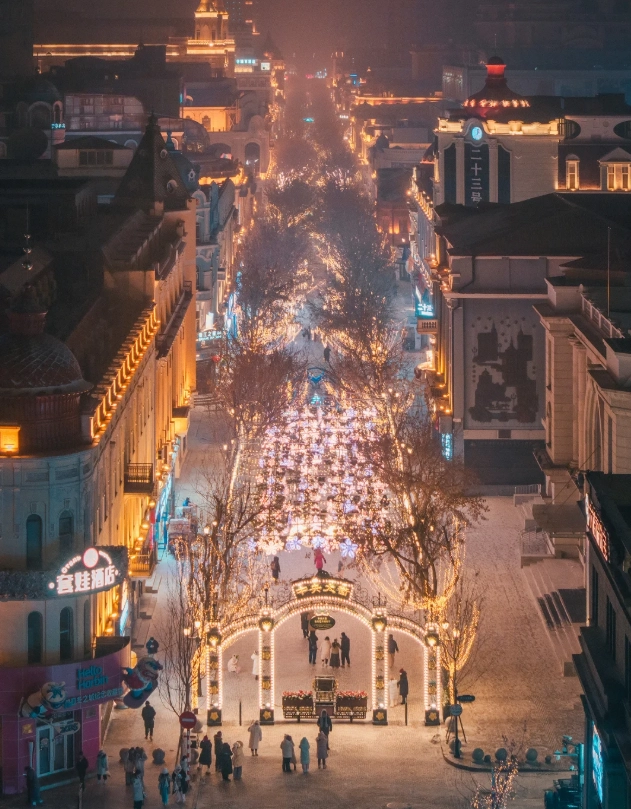
Sun Island versus Zhaolin Park — pick one
These two get confused constantly, and they are not interchangeable. Sun Island is a snow sculpture expo — huge carved snow works, best in clean morning light. Zhaolin Park is a small, older ice lantern fair in the city center, cheap, walkable, and quietly charming.
My honest take: if you only have one evening free, do Zhaolin. It takes ninety minutes, it costs almost nothing, and almost no foreign traveler goes. Sun Island, by contrast, needs a half day and a clear morning. Snow sculptures under evening floodlights look grey and flat, which is why I never send anyone there after 3 p.m.
Central Street, St. Sophia, and the frozen Songhua
Central Street is a pedestrian mall, which means it is at its best before the shops open. Shoot between 8 and 9 a.m. The light is low and clean, the cobbles still have frost on them, and the tour flags have not arrived. By noon it is shoulder-to-shoulder.
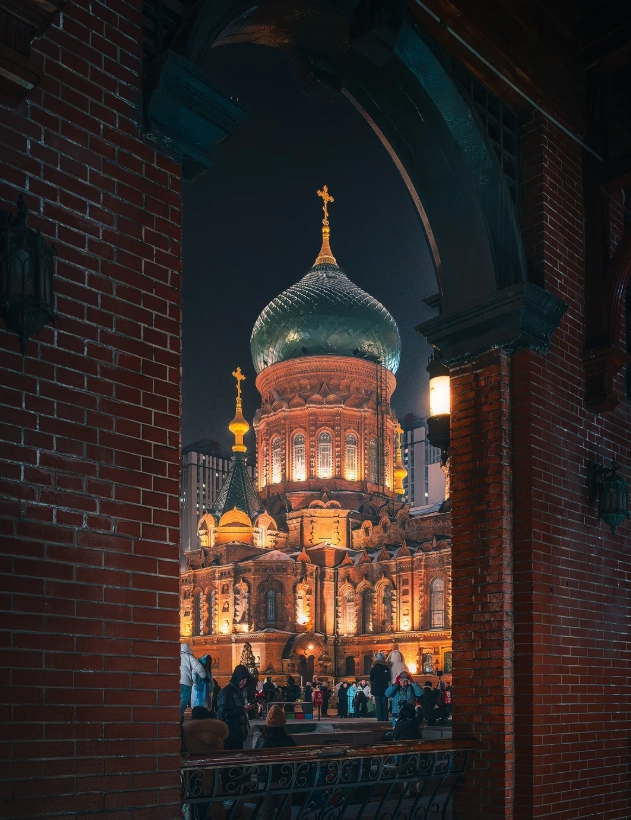
St. Sophia Cathedral sits a short walk away on Toulong Street in Daoli District. The interior is now a small gallery of old Harbin photographs and costs around 20 RMB. Go early. The square outside is one of the most photographed spots in China, and by late morning there will be at least thirty people in every frame you take.
The frozen Songhua River is the sleeper highlight. Locals walk out onto it, and so can you. Cross to the Sun Island side on foot if the ice is thick enough and the area is marked as open. Just remember one thing — the wind in the middle of that river is the coldest air you will breathe all trip, colder than anything in Mohe, because there is nothing to block it.
How Do You Get Around Heilongjiang Without a Car?
You do not need a car. The rail network is good, the metro in Harbin is cheap and clean, and DiDi covers everything else.
| Route | Best Mode | Journey Time | Approx. Cost | Solo Tip |
|---|---|---|---|---|
| Airport to Central Street | Airport shuttle bus or DiDi | 40–60 minutes | Around 20 RMB bus, around 100 RMB DiDi | The bus drops near the main railway station |
| Central Street to Ice and Snow World | Metro Line 2 | 25–35 minutes | A few RMB | Fastest option when the park closes |
| Harbin to Mohe | Overnight K-series train | 15–17 hours | 200–600 RMB | Book soft sleeper if your budget allows |
| Harbin to Yabuli | High-speed rail plus shuttle | 2.5–3 hours | 100–200 RMB | Ski and board rental available at the base |
| Harbin to China Snow Town | Direct coach or private transfer | 5–6 hours | 150–400 RMB | Coaches leave early; sleep on the bus |
| Harbin West Station to Central Street | Metro or DiDi | 20–30 minutes | 20–30 RMB | Ignore the taxi touts at the exit doors |
Journey times assume normal winter conditions. Heavy snow can add significant time to road transfers, so never book a tight connection on the same day.
Trains and the 12306 reality
China's rail system is superb, but the passport verification step is where solo travelers get stuck. The 12306 platform does have an English interface now, and it works — you just need to complete identity verification with your passport before you can buy anything. Do it at home, not at the station.
If that process frustrates you, Trip.com sells the same seats with a small service fee and no verification headache. At the station, bring your passport, arrive thirty minutes early, and expect a security check. Some stations let you scan straight through with your passport; others want you to collect a paper ticket first. Ask at the information desk if the gate rejects you — it happens.
DiDi, taxis, and the airport
DiDi is the single most useful app you will install for Heilongjiang. It has an English mode, it accepts international cards through Alipay, and it removes the entire negotiation problem. In a city where almost no driver speaks English, that matters more than the price.
The one place I would avoid hailing off the curb is outside Harbin West Railway Station. Touts work that exit, and the price they quote bears no relation to the meter. Order a DiDi instead, or walk to the metro.
Always carry your destination written in Chinese characters. Show it to the driver rather than trying to pronounce it. Google Maps is unreliable across mainland China, so lean on Apple Maps or the English-friendly Amap Global for walking directions.
Where Should a Solo Traveler Stay in Harbin?
The area matters more than the hotel. Pick wrong and you will spend your evenings commuting.
| Option | Area | Price Band | Best For | Solo Notes |
|---|---|---|---|---|
| Modern Hotel | Daoli, on Central Street | 600–1,200 RMB | History lovers | The building is the attraction; rooms are older |
| Sofitel Harbin | Daoli, city centre | 700–1,300 RMB | Comfort seekers | Walkable to Central Street; stable Wi-Fi |
| JI Hotel chain | Multiple branches including Daoli | 300–500 RMB | Solo travelers wanting consistency | Small but clean rooms; 24-hour front desk |
| Independent hostels near Central Street | Daoli | 60–200 RMB | Backpackers on a budget | Check for an elevator and luggage storage |
| Songbei district hotels | North bank | 400–900 RMB | Ice World proximity | Quiet at night but 30–40 minutes from dinner |
Rates swing enormously during peak ice weeks. Book with free cancellation and confirm the front desk speaks at least some English if you plan to rely on them for bookings.
The area decision that matters more than the hotel
Stay in Daoli near Central Street, not in Songbei next to Ice and Snow World. I understand the temptation — waking up beside the ice park sounds efficient. It is not. Everything else you came for, from the dumpling shops to the metro interchange to the main railway station, is on the south bank. Songbei is a thirty to forty minute commute every time you want dinner.
Daoli also puts you within a three-minute walk of convenience stores, pharmacies, and a metro entrance. For a solo traveler in extreme cold, that proximity is worth more than a nicer room.
Hostel or hotel as a solo traveler?
Chinese hostels are clean and cheap, but the social scene is thinner than in Europe. Domestic travelers tend to keep to themselves, and the common areas are often quiet. If you are choosing a hostel purely to meet people, temper that expectation.
What a hotel gives you instead is a 24-hour front desk that can book attractions, call a DiDi, and explain why your Alipay is failing. In winter, that is genuinely valuable. If you go the hostel route, confirm they offer luggage storage — you will want it on the day your overnight train leaves at night.
Eating Alone in Heilongjiang
Nobody cares that you are eating alone. Harbin's food culture is loud, fast, and completely indifferent to your table size. Walk in, point at a dish, eat, leave. It is one of the least awkward cities in China for a solo diner.
What to order
- Guo bao rou (锅包肉) — the Harbin signature. Crisp battered pork in a glossy sweet-sour sauce with a sharp vinegar bite. It is sweeter than most foreigners expect, and it is enormous. One order is a full meal.
- Harbin red sausage — smoked, garlicky, dense. Buy it from the Qiulin shops in Nangang rather than the tourist stalls on Central Street. Half the price, twice the quality.
- Lieba (列巴) — Russian-style sourdough rye bread. Heavy, slightly sour, excellent with soup.
- Madieer ice cream — sold on Central Street. Eating it outdoors at minus twenty is a local ritual and you should absolutely do it once.
- Borscht and Russian-style dishes — the historic Western restaurants along Central Street serve a decent bowl. Comforting after a cold day.
- Dumplings — the safest solo meal in the city. Order a mixed plate, get twelve to fifteen pieces, pay under 40 RMB.
I always order the guo bao rou at a Lao Chu Jia branch and a bowl of plain rice. I have never once finished it. Go with an appetite or bring a friend you have not met yet.
One thing to skip: the big iron pot stews. They are wonderful but they are built for four people. Ordering one alone is a waste of money and refrigerator space.
Paying, tipping, and menus
Set up Alipay or WeChat Pay with your international card before you fly, and keep a small cash reserve as backup. Cash is legal tender and vendors must accept it, but small street stalls may genuinely not have change for a 100 RMB note. Carry tens and twenties.
Tipping is not a thing. Do not leave anything on the table.
English menus are rare outside Central Street. Use the camera mode in Apple Translate or Baidu Translate on the menu, or simply point at what the next table ordered. That last method has never failed me.
If you are vegetarian, the phrase to remember is 素 for vegetarian. Buddhist restaurants near the larger temples are your safest bet, and they are used to dietary requests. Halal options are widely available too — look for the Arabic script on the storefront.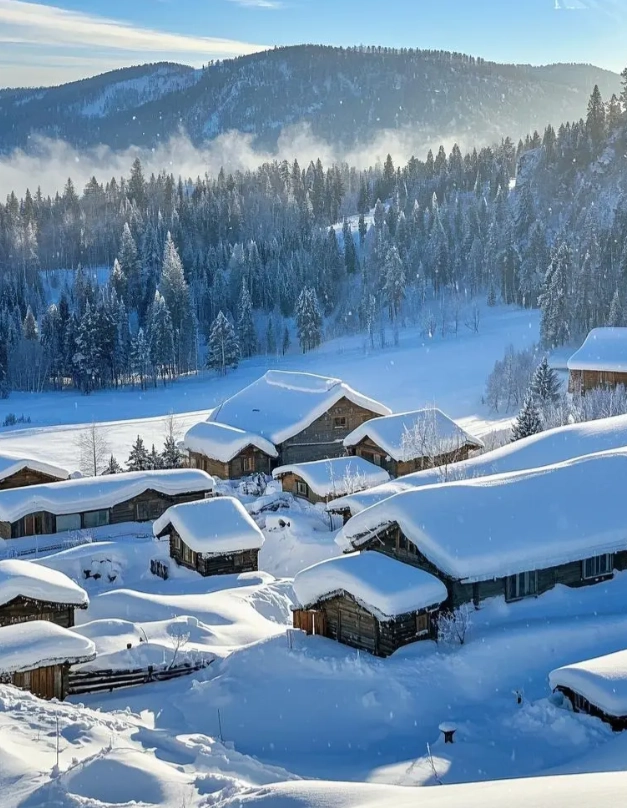
Solo Safety in Extreme Cold
Heilongjiang is a safe province. Violent crime against foreigners is vanishingly rare, and walking alone at night in central Harbin feels fine. The real risk here is the weather, and it is not a small one.
Frostbite, and the wind on the Songhua
The coldest place in Harbin is not Mohe — it is the middle of the frozen Songhua River when the wind picks up. I have seen a traveler's cheekbone go white and waxy in under fifteen minutes out there. He did not feel it happening.
- Cover your face. A neck gaiter pulled over the nose is not optional on windy days.
- Two pairs of gloves. Thin liner gloves for using your phone, thick mittens over the top.
- Never touch metal with bare skin. It will take skin with it.
- Check your own face in a mirror or phone camera every hour. Frostbite is painless at first, which is exactly what makes it dangerous.
- Warm up from the inside. Duck into a café or convenience store for fifteen minutes rather than pushing through.
Buy chemical hand warmers in Harbin rather than packing them. They are cheap, sold in every convenience store, and easy to replace.
Phone batteries, power banks, and the VPN reality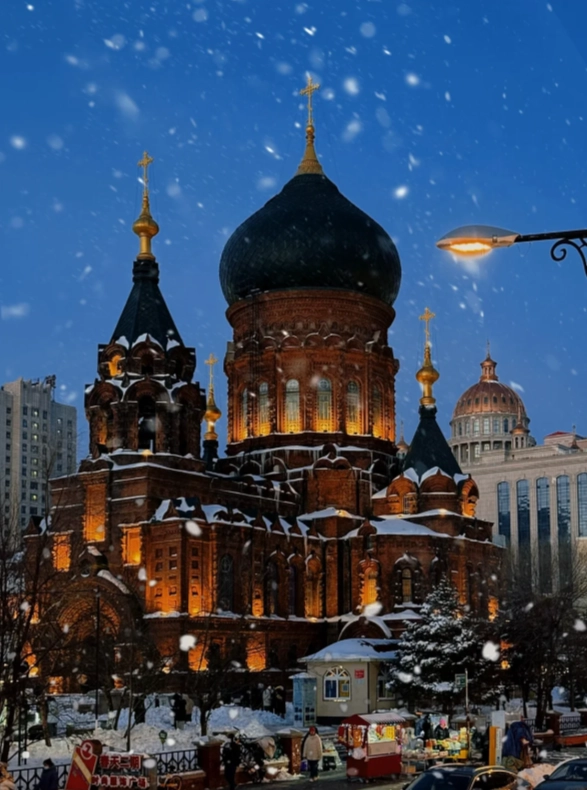
Your phone will die. Plan for it, or you will lose your map, your translator, and your payment method at the same time. Lithium batteries drain fast in deep cold, and four minutes is a realistic number once the wind hits.
- Keep the phone in an inside chest pocket, not an outer coat pocket.
- Keep your power bank warm too. A cold power bank delivers almost nothing.
- Download offline maps for Harbin and Mohe before you leave home.
- Carry your hotel's name and address written in Chinese on a physical card.
On connectivity: you need a VPN to reach Google, Gmail, WhatsApp, and Instagram, and you should install and test it before you arrive, because the download itself may be blocked. Here is the part most guides leave out — in the far northern border areas around Mohe and Heihe, some VPN connections get noticeably less stable. Download everything you need in Harbin before you board that night train.
For visa and entry policy, the National Immigration Administration publishes the current rules, including the transit visa-free arrangements that many nationalities now qualify for. Read it directly rather than trusting a forum post. Harbin's ice festival has been covered widely by outlets such as CNN Travel, but the practical logistics rarely make it into those features.
Heilongjiang Solo Travel FAQ
Is Heilongjiang safe for a solo female traveler in deep winter?
Personal safety is genuinely not the concern — Harbin is calm, well-lit, and locals are helpful. The concern is exposure. A woman traveling alone gets far more unsolicited advice than harassment here. My rule for female clients: never be outside your hotel on foot for more than ninety minutes without a warm indoor stop built into the plan, and always tell the front desk roughly when you expect to be back. That single habit covers the actual risk in this province.
Can I book Harbin Ice and Snow World tickets without a Chinese phone number?
You can, and the easiest route is Trip.com, which accepts foreign cards and lets you enter a passport number directly. The official WeChat mini-program is cheaper but expects a Chinese-style account setup, which is where most foreigners give up. If the mini-program defeats you, do not spend an hour on it — hand the attraction name in Chinese to your hotel reception and let them book it. Bring your physical passport to the gate either way, because that is what gets you in.
What is the realistic minimum time for a Heilongjiang solo trip?
Seven days is the floor if you want Harbin plus one other destination, and nine or ten is comfortable. The mistake I see constantly is people squeezing Harbin, Snow Town, and Mohe into five days and spending most of it on trains. If you only have five days, drop Mohe entirely and do Harbin properly with a Snow Town overnight. A rushed trip in this climate is not a memory you will enjoy.
How do I handle the overnight train to Mohe on my own?
Book a soft sleeper, not a hard sleeper, and treat the difference as money well spent — a door means you can sleep, and a door means you can change clothes without an audience. Bring your own snacks and a bottle of water, because the dining car is basic. The berths are narrow and the heating is aggressive, so dress in layers you can peel off. Set two alarms for your arrival station; the announcements are in Chinese only, and missing your stop at the far end of the line is a genuinely bad night.
Does a VPN work near the Russian border in Heilongjiang?
It works, but it is less reliable than in Harbin. Around Mohe and Heihe, some connections drop more often, especially at night. The practical fix is simple: download your maps, translations, tickets, and offline entertainment while you are still in Harbin, and treat the border region as a low-connectivity zone. If you need to make an important call or booking, do it before you board the northbound train, not after.
This content has been fact-checked to ensure informational precision. Ticket prices, train schedules, booking channels, and entry policies in China change frequently — verify current details through official channels before you travel.





No comments yet.