 Jing Song
Jump Straight to What You Need
- What This Heilongjiang 5-Day Itinerary Actually Looks Like
- How Cold Does Heilongjiang Get, and When Should You Go?
- The 5 Days, Hour by Hour
- What You Must Book Before You Fly
- Where to Sleep in Harbin, Yabuli and Snow Town
- What to Eat and What to Skip
- Money, Maps and Language
- Winter Gear That Actually Works at -25°C
- Heilongjiang 5-Day Itinerary FAQ
Minus 27. My phone died before we reached the gate. My client's eyelashes had frost on them by the time we joined the ice slide queue — and we had been outside for fifteen minutes.
That was night two of a Heilongjiang 5-day itinerary I have now run eleven times, and it taught me the rule I repeat to everyone: in this province, timing beats packing. I have booked these five days for skiers, for a family with a nine-year-old, and for one couple who nearly quit at Yabuli because an international card failed at a counter that only accepted WeChat Pay.
So here is the shortcut, before anything else. Sleep both of your first two nights in Harbin. Ride Metro Line 2 to the Ice and Snow World at 13:30, not at 17:00. Take the morning high-speed train to Yabuli on Day 3. And stop treating China Snow Town as a Harbin day trip — it sits five hours south in Mudanjiang and needs its own overnight.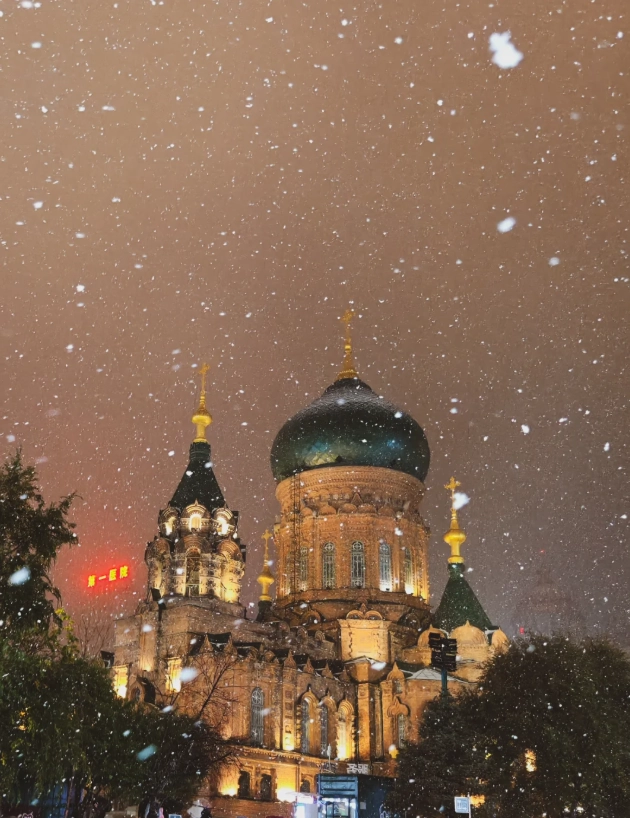
Everything below is the version I actually hand to clients.
What This Heilongjiang 5-Day Itinerary Actually Looks Like
Heilongjiang is bigger than Germany, and in winter the usable road network narrows to two corridors — so five days only works if you commit to one and stop trying to see everything.
First-timers land in Harbin and immediately try to bolt on Mohe, Wudalianchi, Jingpo Lake and Snow Town in the same week. That is a two-week trip compressed into five days, and it collapses the moment a snow front shuts a highway.
| Route Shape | Night Split | Getting Between Stops | Best For | The Trade-Off |
|---|---|---|---|---|
| Classic Harbin plus Yabuli plus Snow Town | 2 Harbin, 1 Yabuli, 1 Snow Town | Metro, high-speed rail, private van | First-timers who want ice, skiing and snow scenery in one trip | Two transfer-heavy days; Snow Town is remote and weather-dependent |
| Harbin deep dive plus Yabuli | 3 Harbin, 2 Yabuli | Metro and high-speed rail only | Families, slower travellers, anyone with kids under eight | You skip Snow Town's landscapes entirely |
| Harbin plus Mohe Arctic add-on | 3 Harbin, 2 Mohe | Domestic flight of about two hours | Aurora chasers and extreme-cold bucket-listers | Flights cancel in heavy snow; -40°C limits outdoor time to short bursts |
My honest read after eleven runs: the classic corridor is the right call for a first visit. You get the ice city, real skiing and the snow-village photographs without a single wasted day.
The Mohe add-on is a different trip, not an extra stop. Fly it, never train it — the overnight rail journey eats two of your five days. And if you do go north, accept that Mohe is a town of guesthouses and one very cold river, not a resort.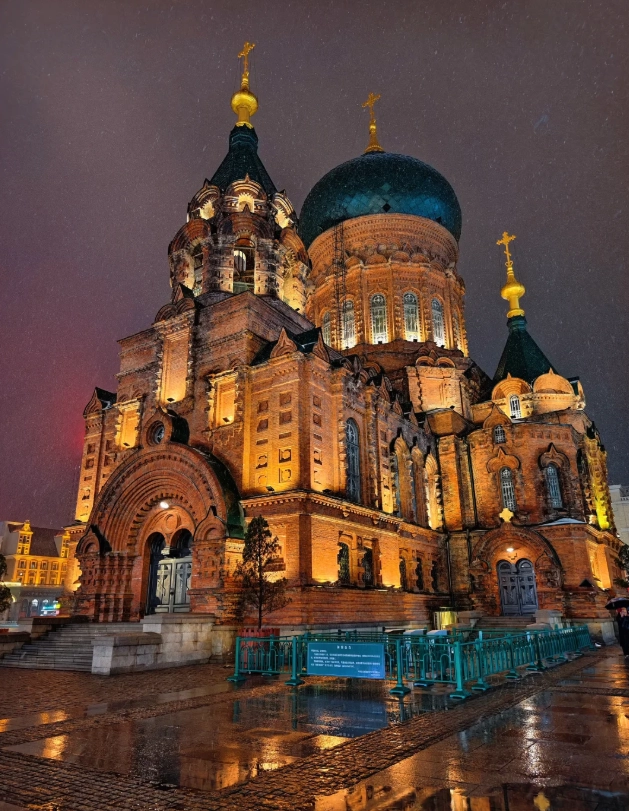
How Cold Does Heilongjiang Get, and When Should You Go?
Harbin in January averages around -18°C and drops past -30°C on the worst nights; Mohe, another 600 km north, regularly hits -40°C.
The numbers matter less than the wind. I have watched people in expensive parkas shiver on the Songhua River at -15°C because the wind came straight down the valley, and I have watched a guy in a cheap padded jacket stay perfectly happy at -28°C in still air. Still air is your friend. Wind is the enemy.
- Late December: the ice park opens, prices spike, crowds are heavy.
- Early January: the official festival opening. Maximum chaos, maximum light installations.
- Late January: the coldest stretch, and Chinese New Year travel peaks on top of it.
- Mid to late February: my preferred window. Fewer people, hotel rates often drop by a third, and the sun stays up roughly an hour longer.
Daylight is the detail that wrecks photo plans. Sunset in Harbin sits around 16:00 in late December and drifts past 17:00 by late February. If you want the classic blue-hour shot of the ice buildings, you need to be inside the park by 15:30, not arriving at it.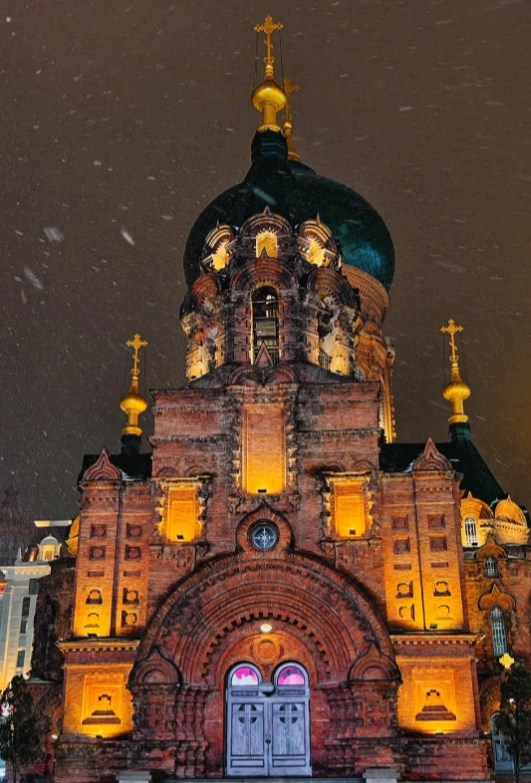
I always tell my clients: book your outdoor block for 09:30 to 15:30 and your indoor block for 16:00 onward. Harbin after dark belongs to the ice park and to dinner, nothing else.
BBC Travel's reporting on Harbin's winter festival gives you a sense of the scale, but the practical takeaway is simpler: those ice blocks are cut from the Songhua River each January, which is exactly why the park's opening date shifts with the weather every season.
The 5 Days, Hour by Hour
Distances and transfer times below assume normal winter conditions. Add 30 percent to every road journey if it is actively snowing.
Day 1 — Land in Harbin, Central Street, Saint Sophia
Treat Day 1 as an acclimatisation day, not a sightseeing day. Your body needs about eight hours outdoors before it stops treating the cold as an emergency.
- Airport bus Line 1 to Harbin Railway Station: about 20 RMB, 50 to 70 minutes depending on traffic.
- DiDi or a metered taxi to Daoli District: roughly 100 to 130 RMB, 45 to 60 minutes. There is no metro line to Taiping Airport.
Pro Tip: ignore anyone who approaches you inside the arrivals hall offering a ride. Walk outside, follow the taxi signs to the official rank, or open DiDi in the app and match the plate number before you get in.
Drop your bags and be on Central Street by 15:30.
Central Street, or Zhongyang Dajie, is a 1.4 km pedestrian strip in Daoli District running from Jingwei Street down to the Songhua River flood monument. Metro Line 2 stops directly underneath it at Central Street station, and the signage and announcements are in English — which makes it the easiest orientation point in the whole city.
Buy a Madier ice pop from one of the counters along the street. Five to ten RMB, and eating ice cream outdoors at -20°C is a genuine local ritual rather than a tourist stunt. The main storefront queue can run fifteen minutes; the smaller counters move faster.
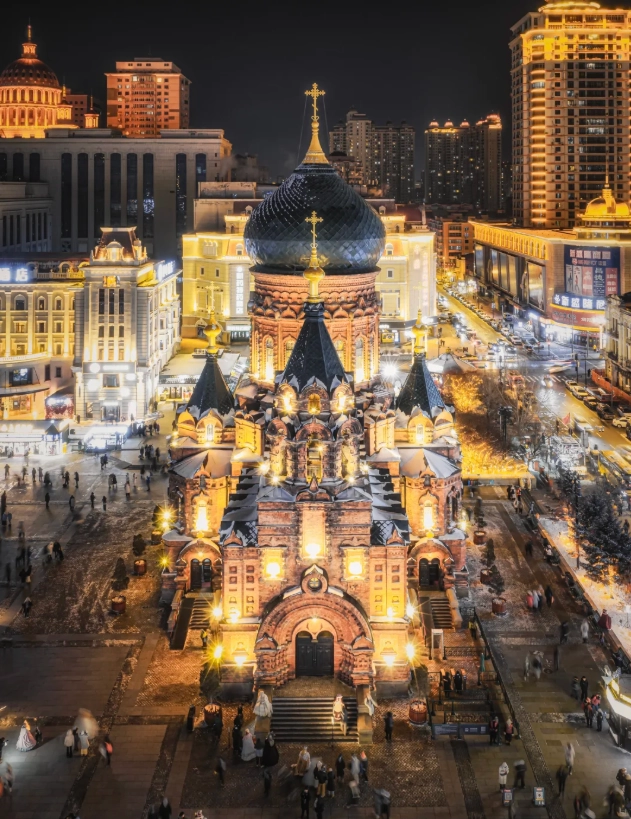
From the north end of Central Street, walk about twelve minutes east to Saint Sophia Cathedral at 88 Toulong Street, Daoli District. The exterior is free and photographs best just after dark, when snow is falling and the square is still half empty. Interior entry, now a small architecture museum, costs roughly 20 RMB and closes earlier than the square does.
For dinner, order guobaorou — crisp pork in a pale sweet-sour glaze. The Harbin version is vinegar-forward and deliberately not ketchup-red, and locals will argue about it for an hour if you let them. The old-school versions live in the Laodaowai historic district in Daowai District, a short taxi ride from Central Street.
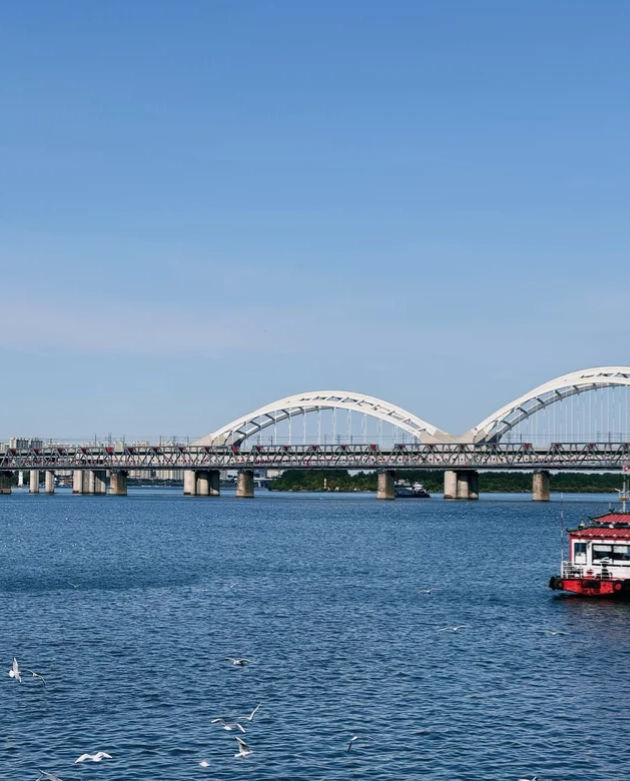
If you still have energy, walk out onto the frozen Songhua River. Locals do it all winter. Stay away from the bridge piers and from anywhere you see darker, slushy ice — that is usually where current or warm discharge keeps the surface thin.
If You Only Have 24 Hours in Harbin
Land at 10:00, fly out the next evening. This is the compressed version I give clients who are transiting through Heilongjiang on the way somewhere else.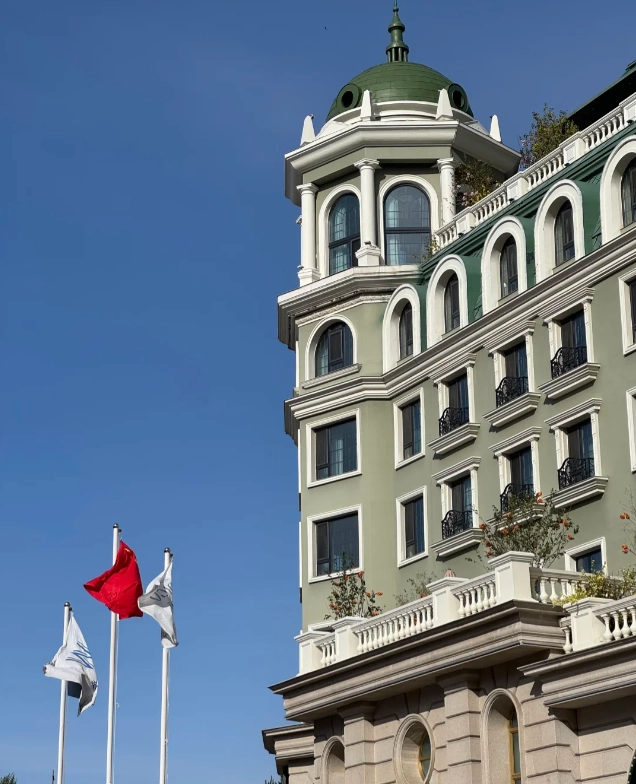
- 11:30 — drop bags at a Daoli hotel, walk Central Street, eat lunch at Huamei Western Restaurant.
- 14:00 — Saint Sophia Cathedral, then the Songhua River ice.
- 16:30 — Metro Line 2 to Ice and Snow World for the lights. Stay until 19:30.
- Next morning 09:30 — Sun Island snow sculptures.
- 13:00 — Laodaowai for guobaorou, then head to the airport.
It is rushed and you skip Yabuli entirely, but it beats trying to bolt a ski day onto a 24-hour window.
Day 2 — Sun Island by Morning, Ice and Snow World at 13:30
Almost every blog tells you to enter the Ice and Snow World at dusk. I take clients in at 13:30, and the reason is a single queue.
Start at the Sun Island Snow Sculpture Art Expo. Take Metro Line 2 to Sun Island station; tickets have run roughly 200 to 300 RMB. Budget three hours, because the walk from the gate to the main sculptures takes 20 minutes on its own. Snow sculptures read best in flat, even light, so 09:30 to 12:00 is the window.
Eat lunch on the Songbei side or back at Central Street, then head one more stop on Line 2 to Ice and Snow World station.
Here is the queue logic. The 500-metre ice slide is free with your ticket but needs a timed slot reserved inside the park's mini-program. Before 15:00 that queue moves in 15 to 25 minutes. After dark it can stretch past 90 minutes, and the day's slot allocation disappears fast. Scan in, open the mini-program, book the slide first, then wander.
Sunset lands around 16:00 in late December. That is the moment the ice shifts from grey-blue to deep teal, and roughly half an hour later the LED installations come alive. Stay until 19:00 if your feet can take it, then leave while the evening crowd is still streaming in.
Insider Advice: the warming halls nearest the entrance fill first. Walk to the ones at the back of the park — same heating, no fight for a seat.
Plan B for brutal weather: if wind chill pushes past -35°C or the park closes for safety, swap to the Harbin Grand Theatre in Songbei for architecture photographs, the Heilongjiang Provincial Museum, or an indoor ice bar on Central Street. None are a substitute. None will freeze your face either.
Dinner on Day 2 should be tieguodun — an iron pot of stewed fish or chicken with cornbread pressed against the rim. Order it for two people minimum. It is the single best cold-weather meal in the province.
Day 3 — High-Speed Rail to Yabuli and Your First Ski Afternoon
The Harbin to Yabuli West train takes about 70 to 90 minutes and costs roughly 90 RMB in second class. It is the easiest transfer on this entire route.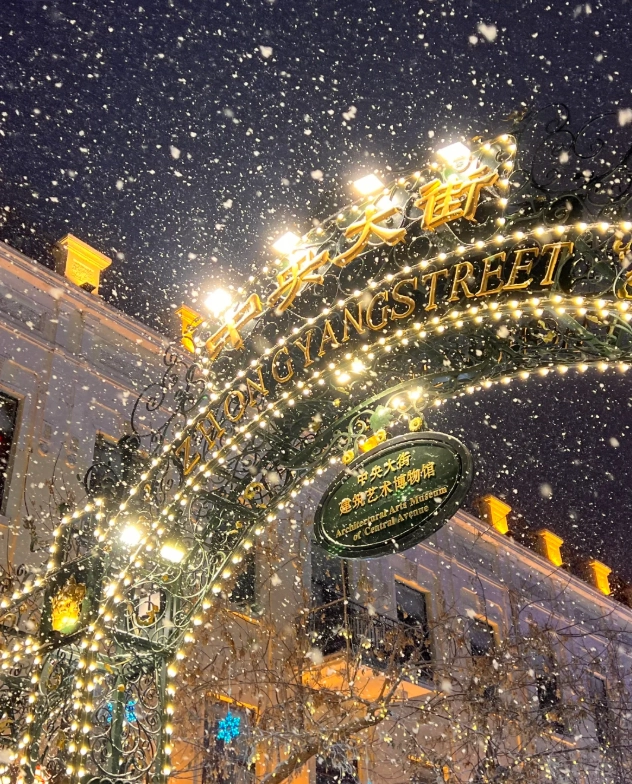
Book through China Railway's official site, 12306.cn, which has an English version, or through Trip.com for a small service fee. Your passport is your ticket. Scan it at the staffed gate rather than the automatic ones — the auto gates reject foreign passports more often than not, and there is usually a small queue of confused travellers learning this at 07:20.
Take a departure between 07:30 and 08:30 so you get a full afternoon on the slopes.
Now, the catch. Yabuli West station sits well outside the resort cluster, roughly a 25 to 30-minute drive. Most hotels run a shuttle; confirm the pickup time with them before you arrive, because there is no English-signed taxi rank waiting at the exit. A local taxi should run 50 to 80 RMB.
Yabuli's main base is the Sun Mountain area, with several resort clusters spread along the valley. A day lift pass has run roughly 300 to 600 RMB in recent seasons depending on the resort and the date. Rentals cost extra — skis and boots around 100 to 200 RMB, jacket and pants another 50 to 100 RMB each.
Beginner lessons are bookable on site, but English-speaking instructors are limited. Arrange one through your hotel a few days ahead rather than at the rental counter, where staff are busy and the conversation happens in Chinese.
Now, let me save you some money: skip the ski-plus-snowmobile-plus-hot-spring combo packages. The snowmobile track is a five-minute loop and the hot spring is an indoor pool. Buy the lift pass and nothing else.
For dinner, the resort restaurants are expensive and honestly mediocre. A taxi into Yabuli town, about 20 minutes, gets you farmhouse cooking — stewed chicken, potatoes, pickled cabbage — at roughly half the price.
Day 4 — Yabuli to China Snow Town
This is the transfer day, roughly 2.5 to 3 hours by road, and it is the part of the itinerary most likely to go wrong.
DiDi will not reliably cover this route. Your Yabuli hotel arranges shared vans daily in season for around 150 RMB per person, or a private car for 600 to 900 RMB. Book it when you check in, not the night before.
China Snow Town is the Shuangfeng Forestry Farm in Hailin, Mudanjiang — not a Harbin suburb. Scenic area entry is roughly 120 RMB, and you keep the physical ticket because it gets checked at the internal gates.
Arrive by 14:00 so you catch the golden hour and a full evening.
Now the part I wish more people knew. Xuelai Street, the famous snow-mushroom street, is jammed between 10:00 and 14:00 with tour groups. The good frames — empty street, thick snow caps on the wooden roofs, nobody in your shot — happen from 07:00 to 08:30 and again after 16:00 when the buses leave. Set an alarm. It is worth losing an hour of sleep.
Sleep in a kang guesthouse, where the bed is a heated brick platform. Expect 200 to 600 RMB. Many have shared bathrooms, the walls are thin, and cash is preferred. Book ahead; winter weekends sell out weeks in advance.
Food here is the weak point. It is overpriced, fairly bland, and the menus are Chinese-only. A hot pot dinner is the safe bet, and I would carry snacks up from Harbin.
Day 5 — Snow Town Back to Harbin
There are two ways back, and I would take the second: a 5 to 6-hour direct drive, or Snow Town to Mudanjiang by road and then the high-speed train into Harbin.
The Mudanjiang option takes about 2 hours by car plus roughly 1 hour 45 minutes on the train, and it is far less exposed to weather closures than the mountain road. If you are flying home the same evening, neither option leaves much slack — give yourself a buffer night in Harbin.
With a spare afternoon back in the city, two stops are worth your time. The Siberian Tiger Park costs roughly 100 RMB plus a small bus fee, and the bus ride through the enclosures is the actual attraction rather than the walking path. The Unit 731 Evidence Museum is free, requires a passport booking, closes on Mondays, and is genuinely heavy — I do not take children there.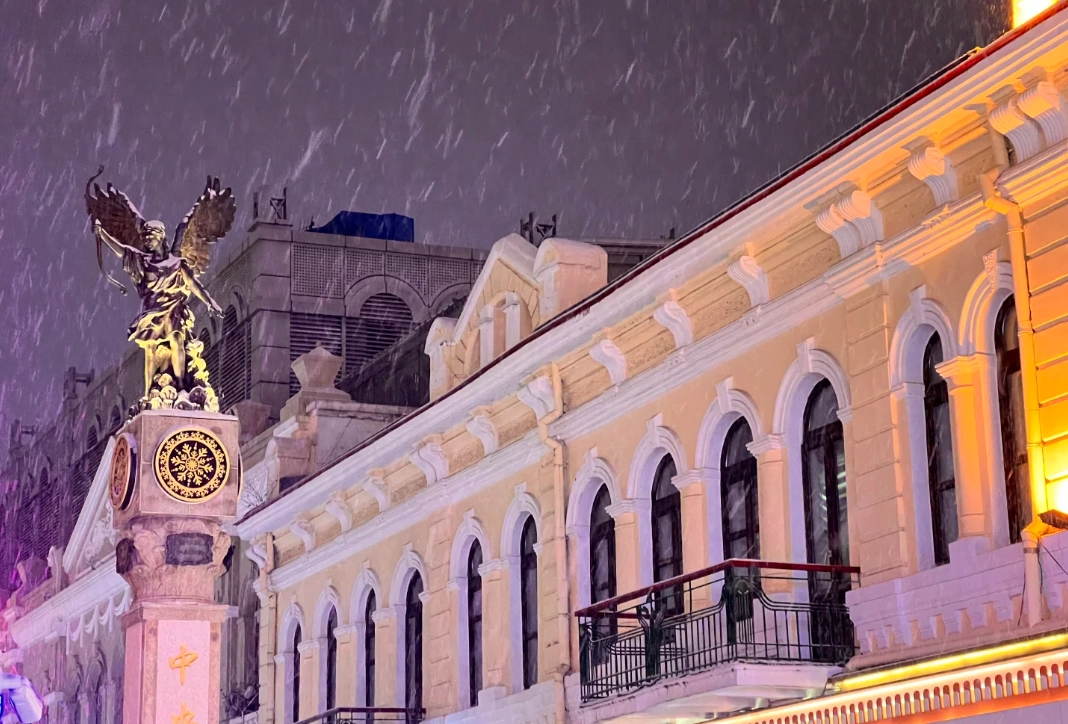
If a snow front closes the road on Day 5, and it happens, the fallback is a night in Mudanjiang and a morning train. Build one flexible buffer day at the end of any long-haul trip out of Harbin.
What You Must Book Before You Fly
Three things sell out in Harbin's peak weeks: Ice and Snow World tickets, Yabuli hotels on weekends, and high-speed rail seats on the Harbin to Yabuli line.
Prices shift every season and sometimes mid-season, so treat the ranges below as planning figures and confirm on the official channel the day before you go.
| Attraction | Typical Adult Price | Best Channel for Foreign Passports | Passport Required | Notes |
|---|---|---|---|---|
| Harbin Ice and Snow World | 300 to 400 RMB | Trip.com or Klook | Yes | Timed entry; ice slide slot booked inside the park |
| Sun Island Snow Sculpture Expo | 200 to 300 RMB | Trip.com or on-site counter | Yes | Daytime only, closes late afternoon |
| Saint Sophia Cathedral interior | About 20 RMB | On-site counter | No | Exterior and square are free |
| Siberian Tiger Park | About 100 RMB plus bus fee | On-site or Trip.com | Yes | The bus route through the enclosures is the main event |
| China Snow Town scenic area | About 120 RMB | On-site or through your guesthouse | Yes | Keep the physical ticket for internal gates |
| Yabuli lift pass | 300 to 600 RMB | Your hotel or Trip.com | Yes | Equipment rental costs extra |
How to Book Heilongjiang Trains Without Reading Chinese
China Railway's official English site works, but Trip.com is smoother for foreign cards and adds only a small fee.
- Your passport name must match the booking exactly, middle names included.
- Arrive 40 minutes early; security screening happens at the station entrance, not the platform.
- Use the staffed gate. Automatic gates frequently reject foreign passports.
- Screenshot your booking. Station Wi-Fi is unreliable and your phone battery drains fast in the cold.
The WeChat Mini-Program Problem, and How to Sidestep It
Most Heilongjiang attractions sell their timed slots through Chinese-only mini-programs, and yes, navigating one at -20°C with your gloves off is a nightmare even for me.
Hand your phone to the hotel front desk. They will book it in two minutes and it costs you nothing. If you are not staying somewhere with a 24-hour desk, Trip.com and Klook list the same inventory in English. Just remember that the booking name has to match the passport you hand over at the gate, or the staff will send you back to the ticket office.
Where to Sleep in Harbin, Yabuli and Snow Town
Location matters more than star rating here. A mid-range room inside the Daoli District beats a luxury suite 40 minutes away, because every winter taxi ride is a negotiation with ice.
| Area or Property | Location | Typical Nightly Rate | Best For | Watch Out For |
|---|---|---|---|---|
| Shangri-La Harbin | Youyi Road, Daoli District, a short walk to the river end of Central Street | 800 to 1600 RMB | Couples and travellers who want English-speaking staff | Not walkable to Ice and Snow World |
| JW Marriott Harbin River North | Songbei District, close to Ice and Snow World | 700 to 1500 RMB | Families doing the ice park | Quiet district, very few restaurants outside the hotel |
| Boutique hotels and hostels around Central Street | Daoli District, along and behind Zhongyang Dajie | 200 to 600 RMB | Solo travellers and budget stays | Small rooms; confirm there is an elevator |
| Club Med Yabuli | Yabuli ski area, Shangzhi | 1500 to 3000 RMB all-inclusive | Families and first-time skiers | Books out months ahead in January |
| Resort hotels at the Yabuli ski base | Sun Mountain area | 500 to 1200 RMB | Skiers who want slope-side rooms | Thin food options; bring snacks |
| Kang guesthouses in China Snow Town | Xuelai Street area, Shuangfeng | 200 to 600 RMB | Photographers staying one night | Shared bathrooms, thin walls, cash preferred |
Wi-Fi is generally solid in Harbin hotels and patchy in Yabuli and Snow Town. Ask two questions before you pay: is there an elevator, and does the front desk speak any English. In older Harbin buildings, the answer to the first one is often no, and hauling a suitcase up four flights at -25°C is a memorable experience for all the wrong reasons.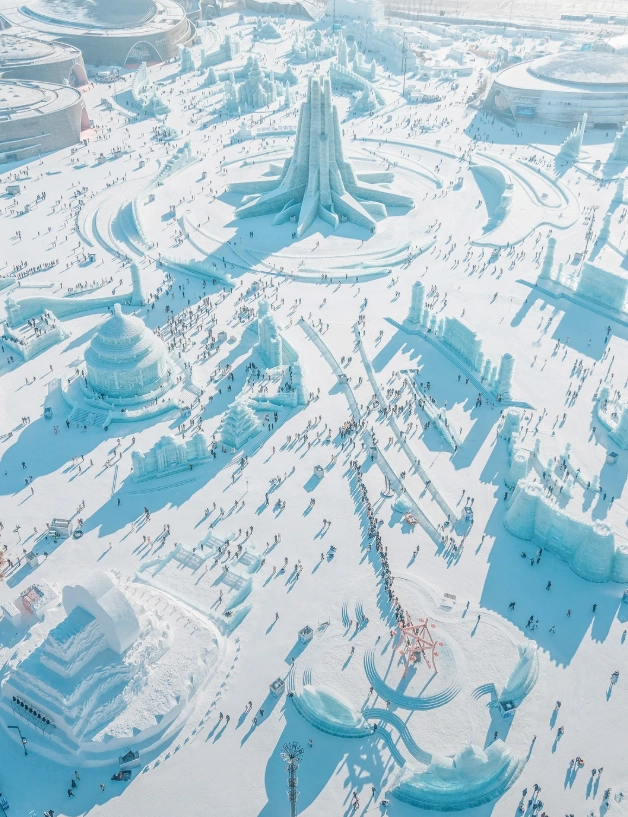
What to Eat and What to Skip
Heilongjiang food is heavy, sour and built for -25°C, and it tastes nothing like the Chinese food you have had at home.
- Guobaorou: the province's signature dish. Crisp pork, sweet-sour glaze, no ketchup. Best in the Laodaowai historic district, Daowai District, or in any mid-range local restaurant.
- Madier ice pop: five to ten RMB on Central Street. Buy from the counters along the street rather than the main door queue.
- Russian-influenced cooking: Huamei Western Restaurant on Central Street, Daoli District. Borscht, black bread, and a dining room that has not changed since the 1980s. Roughly 100 to 200 RMB per person, and there is usually a dinner queue, so go at 11:30 instead.
- Harbin red sausage and dalieba bread: buy vacuum-packed at any Qiulin store in Nangang District. It travels home well.
- Tieguodun: an iron cauldron of stewed fish or chicken with cornbread on the rim. 80 to 150 RMB per person and best shared.
- Vegetarian travellers: it is doable, but you will repeat "no meat, no fish, no chicken broth" in your translation app at every meal. Buddhist restaurants near Jile Temple in Nangang District are the reliable fallback.
What to skip: the themed ice restaurant inside Ice and Snow World. You pay a premium to eat while shivering. Eat a proper meal before you go in.
Money, Maps and Language
Payments in Heilongjiang
Set up Alipay or WeChat Pay with your international card before you fly, because verification needs an SMS to your home number and roaming in China is unreliable.
- Both apps work at most Harbin shops, metro ticket machines, taxis and chain restaurants.
- Cash is still accepted everywhere by law, but small vendors in Yabuli and Snow Town may not have change for a 100 RMB note. Carry 300 to 500 RMB in small bills.
- Physical foreign credit cards work at international hotels and larger restaurants, and rarely anywhere else.
Pro Tip: if a taxi driver tells you the meter is broken, get out and open DiDi instead. The app has an English interface, shows the fare upfront, and removes the entire argument.
Navigation That Actually Works
Google Maps is unreliable in mainland China — it shows outdated roads and no usable transit data. Use Apple Maps in English or Amap with its English mode, and download offline maps before you leave the airport.
Screenshot every Chinese address you plan to visit. Handing a driver a screen beats trying to pronounce Zhongyang Dajie through a scarf.
Language and Internet
Install and test a VPN before you arrive, since Google, Instagram and WhatsApp are blocked. Download offline Chinese packs for Apple Translate or Baidu Translate. Hotel front desks at international brands speak English; small guesthouses and taxi drivers usually do not, and there is no shame in typing rather than talking.
Visa Basics for Heilongjiang
Many nationalities now enter China visa-free for short stays, and the 240-hour visa-free transit policy covers eligible travellers arriving at Harbin Taiping Airport. Rules change often, so verify your own passport against the National Immigration Administration at nia.gov.cn before you book anything non-refundable. Heilongjiang also borders Russia at Heihe and Suifenhe, but crossing there requires a Russian visa arranged in advance — it is not a spontaneous border hop.
Winter Gear That Actually Works at -25°C
The travellers who suffer most are the ones who dressed for an Alpine ski resort rather than for dry continental cold with wind.
- Layering beats bulk. Thermal base layer, fleece mid-layer, windproof down shell. Two thin layers outperform one enormous coat when you duck in and out of heated buildings all day.
- Feet first. Insulated boots with a thick sole and room for two pairs of socks. Rental ski boots at Yabuli run narrow, so bring your own if your feet are wide.
- Mittens, not gloves. You will take them off constantly for your phone, so bring a thin touchscreen liner pair as well.
- Phone battery. At -25°C an iPhone can lose 40 percent of its charge in an hour outdoors. Keep it in an inside pocket and carry a power bank.
- Face and hands. A neck gaiter plus lip balm. Frostbite shows up on cheeks and earlobes first, and it arrives faster than you expect.
- Sunglasses for snow glare, and sunscreen. Winter sun bouncing off snow is brutal.
- Buy locally what you forgot. Heat packs, cheap hats and gloves cost a fraction of airport prices at any Harbin supermarket.
Heilongjiang 5-Day Itinerary FAQ
Can I run this Heilongjiang 5-day itinerary without speaking any Chinese?
You can, and you will lean on three things: a translation app with offline Chinese, DiDi's English interface, and your hotel front desk. Metro Line 2 in Harbin has English signage and English announcements, which covers the two hardest days. The friction shows up in Yabuli and Snow Town, where menus are Chinese-only. Photograph the dish you want at a neighbouring table and point at the picture. It works every single time.
Is the China Snow Town detour worth giving up a second ski day at Yabuli?
Depends entirely on what you came for. Skiers should stay at Yabuli, because Snow Town has no real skiing, just a small sledding hill. Photographers and anyone chasing the snow-mushroom postcard should go, but as an overnight and never as a day trip. Accept the risk too: heavy snow occasionally closes the mountain road for hours, so do not schedule a flight home the same evening.
How do I book Ice and Snow World tickets if the official mini-program is Chinese-only?
Trip.com and Klook both list it in English with the same timed-entry slots. Buy there and screenshot the QR code, because park scanners struggle with a dim screen at -25°C. The name on the booking must match your passport exactly, middle names included, or the gate staff will send you back to the ticket office while your group waits in the cold.
What do first-time visitors underestimate most about the Heilongjiang cold?
Wind, not temperature. A -20°C day with no wind is comfortable in proper layers, while a -15°C day with wind off the Songhua River feels far worse. The second thing is time. Everything outdoors takes twice as long when you are peeling layers on and off. I build 30 percent extra buffer into every winter day, and clients still run late.
Do I need a visa for Heilongjiang, and can I cross into Russia from here?
Check your nationality first, because a growing list of countries now has visa-free entry and the 240-hour visa-free transit policy applies at Harbin Taiping Airport for eligible passport holders. Confirm current rules on the National Immigration Administration site at nia.gov.cn before booking flights. Crossing into Russia from Heihe or Suifenhe is possible, but it needs a Russian visa arranged in advance and it is not something you decide at the border.
Verified and fact-checked by the editorial team. This content has been fact-checked to ensure informational precision.





No comments yet.