 Hua Sun
My Field Notes — Jump Straight In
- Why Heilongjiang Breaks Most First-Timers
- Harbin Ice and Snow World: Tickets and Timing
- How Do You Get Around Heilongjiang Without Chinese?
- Snow Town: Worth the Hype or a Tourist Trap?
- What to Wear at -30°C: A Layering System That Works
- What to Eat in Heilongjiang and Where Locals Go
- FAQ: Heilongjiang Travel Tips Nobody Posts Online
Frozen eyelashes. Phone dead in three seconds. Welcome to Heilongjiang.
I still remember the first time I stepped off the train in Harbin at 6 a.m. in January — the kind of cold that doesn't bite, it just presses against your face like a frozen towel. I've since guided dozens of foreign travelers through this province, and almost every one of them made the same three mistakes before they even landed.
If you're here hunting for Heilongjiang travel tips, you already know this is not a normal winter trip. What you probably don't know is that most of the advice floating around online was written by people who visited once, in a warm van, and never stood outside for two hours waiting for a bus.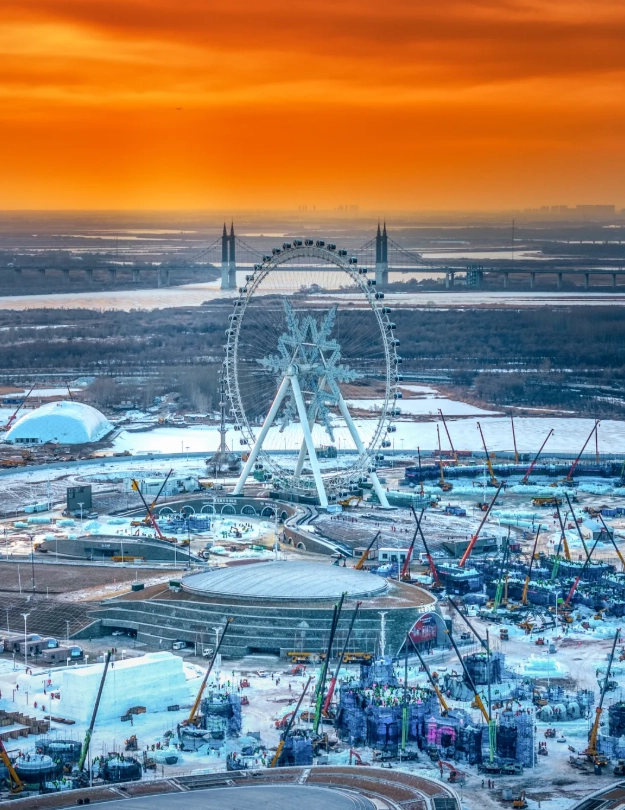
So here's the bottom line up front: go between January 5 and February 10, base yourself within walking distance of Central Street in Harbin, and book every single attraction ticket on Trip.com or the official WeChat mini-program before you fly. That one sentence solves 80% of the problems I see tourists create for themselves.
Everything else — the layering system, the train booking quirks, the food you shouldn't miss — is below.
Why Heilongjiang Breaks Most First-Timers
The single biggest error foreign visitors make is treating Heilongjiang like a weekend city break. It isn't. Harbin alone deserves three full days, and the province is roughly the size of Germany and Poland combined.
People book two nights, sprint through the Ice and Snow World, catch a cold, and fly home thinking they "did" the region. That's not travel — that's a cold shower with extra steps.
Here's the real geography you need to hold in your head. Harbin sits in the south of the province and acts as the transport hub. Snow Town is roughly 280 km southeast. Yabuli ski resort is about 190 km east. Mohe — the northernmost point in China — is a 12 to 15 hour train ride north, and it gets colder than Harbin by another 10 degrees.
Don't try to chain all of them in one week. Pick two, maximum three.
What is the actual best month to visit Heilongjiang?
Mid-January to mid-February is the sweet spot — the ice is thick, the festival is in full swing, and the days are slowly getting longer. December works, but the Ice and Snow World sometimes opens late if temperatures haven't dropped enough. March is a gamble; some sculptures start melting by the third week.
Before you book flights, double-check your visa situation. If you're eligible for the transit visa-free entry, the National Immigration Administration publishes the current policy details in English. For standard visa categories, the Ministry of Foreign Affairs is the source to check.
Pro Tip: Avoid Chinese New Year week — usually late January or early February, depending on the lunar calendar. Hotel prices in Harbin triple, trains sell out weeks in advance, and the Ice World becomes a shoulder-to-shoulder crush. I've had clients pay 1,800 RMB for a room that normally costs 400.
Harbin Ice and Snow World: Tickets and Timing
Arrive around 3:30 p.m., not 7 p.m. This is the single piece of advice I repeat more than any other, and it's the opposite of what most blogs tell you.
Everyone says go at night when the lights come on. That's true — the lights are spectacular. But here's what they leave out: the queue at the main gate between 6:30 and 8:00 p.m. can run 45 minutes in -25°C. Standing still in that cold is brutal. I've watched grown adults crying.
Go at 3:30. The entry lines are short. You get daylight shots of the sculptures, then you watch the sun drop and the whole park switch on around 4:45 p.m. By 7 p.m., when the crowds surge in, you're already on the metro back to your hotel with warm feet.
| Item | Details | Foreigner Note |
|---|---|---|
| Location | Songbei District, north bank of Songhua River, Harbin | Metro Line 2, "Ice and Snow World" station, Exit 3 |
| Adult Ticket | Roughly 300–330 RMB — verify current pricing | Book via official WeChat mini-program or Trip.com |
| Child / Senior Discount | Usually discounted or free under certain heights/ages | Bring passport; age verification is strict |
| Opening Hours | Typically late morning to around 9:30 p.m. | Last entry often 1 hour before close |
| Booking Requirement | Advance reservation with real-name registration | Passport number required at checkout |
| Suggested Duration | 3 to 4 hours | Longer than that and you'll lose feeling in your toes |
How do I book Ice World tickets as a foreigner?
Use Trip.com or Klook if the WeChat mini-program feels impossible — and it often does. The official mini-program is entirely in Chinese and requires real-name verification that sometimes rejects foreign passport formats. Yes, it's a nightmare even for me. The workaround: ask your hotel front desk to book it for you. They do this daily and it takes them two minutes.
Whatever you do, don't buy from touts outside the metro station. I've seen fake tickets sold for 400 RMB. They scan as invalid at the gate and you have zero recourse.
How Do You Get Around Heilongjiang Without Chinese?
Metro and high-speed rail will cover 90% of your trip; DiDi fills in the rest. The tricky part isn't the transport itself — it's the booking systems, which are built around Chinese ID cards.
For trains, China Railway's official 12306 portal accepts foreign passports, but the English interface can glitch during peak season. In practice, I tell my clients to book through Trip.com instead. It costs a small service fee and saves you the verification headache.
How to use DiDi without speaking Mandarin
DiDi has an English interface inside Alipay, and it's the most foreigner-friendly way to hail a car. Open Alipay, search "DiDi," and the mini-program will auto-detect English. You type your destination in English or paste the Chinese address, and the driver gets the pin.
The catch: your driver will almost certainly call you. They can't read the in-app messages fast enough. Let it ring, then send the canned message "I'm at the pickup point" from the app's quick replies. Nine times out of ten, that's enough.
- Airport to Central Street: Airport shuttle bus line 1 runs to the city center for about 20 RMB; DiDi costs roughly 100–130 RMB and takes 45 minutes in normal traffic.
- Harbin to Yabuli: High-speed rail, roughly 1 hour 20 minutes. Book the morning departure so you get a full ski day.
- Harbin to Snow Town: No direct train. Either a long-distance bus from Harbin's Nangang bus station or a shared van arranged through your guesthouse — plan on 5 to 6 hours door to door.
- Metro fares: 2–5 RMB depending on distance. Use the Alipay transport QR code; cash is accepted at machines but the lines are long.

Insider Advice: Google Maps is effectively useless in China — the data is shifted and walking routes are wrong. Download AMap (高德地图) or use Apple Maps, which is surprisingly accurate here. Save your hotel's Chinese address as a screenshot before you leave Wi-Fi, because you'll need to show it to drivers.
Snow Town: Worth the Hype or a Tourist Trap?
Go for one night, not two, and manage your expectations about the "authentic village" angle. Snow Town — officially China Snow Town, in Hailin, Mudanjiang — is genuinely beautiful. The snow piles two meters high on the roofs and the night lighting is cinematic.
It's also fully commercialized. Every house is a shop or a guesthouse. Prices for meals run two to three times Harbin rates. If you come expecting a quiet mountain hamlet, you'll be disappointed. If you come expecting a snow-themed resort village, you'll enjoy it.
My honest take: it's worth one night for the photography. Two nights and you'll be bored and broke.
What's the smartest way to reach Snow Town?
Take the high-speed rail to Yabuli first, then a local car for the final two hours. Direct buses from Harbin exist but the ride is rough and the departure times are inconvenient. Splitting it up means you can ski in Yabuli, sleep there, then continue to Snow Town the next morning feeling human.
Book your Snow Town guesthouse through Trip.com rather than arriving and knocking on doors. Winter weekends fill up completely, and the walk-up prices are worse than online rates.
What to Wear at -30°C: A Layering System That Works
Cotton kills. That's the rule. If you wear a cotton base layer, your sweat soaks in, then freezes against your skin. I've had clients ignore this and spend day two shivering indoors.
Here's the layering system I use personally, tested over many winters.
- Base layer: Merino wool or synthetic thermal top and leggings. Never cotton.
- Mid layer: Fleece or a thin down vest. This is your insulation.
- Outer shell: A proper down jacket with 200g+ fill and 600+ fill power. Length matters — hip-length minimum.
- Legs: Thermal leggings under fleece-lined trousers. Skip jeans entirely.
- Feet: Wool socks plus waterproof snow boots sized one full size up. Tight boots cut circulation and that's how toes get frostbitten.
- Head: A hat with ear flaps or a balaclava. Your ears will hurt within ten minutes without coverage.
- Hands: Thin liner gloves inside waterproof outer mittens. Mittens beat gloves for warmth every time.
- Face: A neck gaiter you can pull up over your nose when the wind picks up.
How do I keep my electronics alive in extreme cold?
Keep your phone in an inside chest pocket, not a coat pocket, and accept that battery life will drop by half. Below -20°C, most phones shut down within minutes of being exposed. The heat pack trick above works. So does a small power bank kept in the same warm pocket.
Camera batteries: carry two spares and rotate them between your pocket and the camera. Condensation is the other killer — when you come back indoors, leave your gear in your bag for an hour before opening it, or you'll get fog inside the lens.
What to Eat in Heilongjiang and Where Locals Go
Heilongjiang food is hearty, sour, and built for cold weather. This is not the delicate cuisine of the south. It's pork, cabbage, pickled vegetables, and serious portions.
The signature dish is guo bao rou — sweet-and-sour fried pork slices. Harbin claims it as a local invention. The version here has a thinner, crunchier batter than what you'll find in Beijing or Shanghai, and the sauce is sharper.
Where should I actually eat in Harbin?
Skip the Central Street restaurants with photo menus in the window and walk one block off the main drag. That's where the prices drop by half and the food improves dramatically.
- Lao Chu Jia (老厨家) — Xishidao Street, Daoli District. Claims to be the birthplace of guo bao rou. Expect 80–120 RMB per person. Go before 5:30 p.m. or wait 40 minutes. No English menu, but the picture menu on the wall works fine. I always order the guo bao rou plus a plate of suan cai dumplings.
- Madier Western Restaurant (马迭尔西餐厅) — 89 Central Street. Old-school Russian-influenced menu. The borscht is thinner than the Russian version and slightly sweeter. Around 150 RMB per person. Cash accepted; international cards are not.
- Modern Ice Pop (马迭尔冰棍) — sold from a window on Central Street. 5–8 RMB per stick. Yes, you eat it outdoors in -25°C. That's the tradition. The line moves fast.
- Hongchang (红肠) — Harbin red sausage, smoked and garlicky. Buy from Qiulin or Harbin Meat Processing. Around 30–50 RMB per vacuum-sealed pack, and it travels well if you want to bring some home.
One thing I tell every client: portion sizes are enormous. Two dishes between two people is plenty. Ordering four is how you end up leaving half the table untouched and feeling guilty.
Pro Tip: Restaurants in Harbin are busy from 6:00 to 7:30 p.m. If you want a table without waiting, eat at 5:00 p.m. or after 8:00 p.m. Locals think an early dinner is normal — nobody will look at you strangely.






No comments yet.