 Fang Wang
Quick Jump-Off Points
Fed up with itineraries that feel like math homework? — Yeah, me too. During my years dragging suitcases through Fujian, I've seen the exact panic when travelers realize their international credit card means nothing at a glorious food stall.
Here's the first thing to know about what to do in Fujian: it's not one place, it's five distinct worlds bundled into one province. The green tea hills of Wuyi, the colonial ruins of Gulangyu, the earthen fortresses of the Tulou, the mosaic of shipwrecked saints in Quanzhou, and Fuzhou's old lanes that whisper history.
Now let me save you the trouble I've watched a hundred tourists go through: the best time to do the Tulou is 4 PM, not 9 AM. The tour buses roll out by then, and the light turns golden. And no, you don't need to join a cramped package tour.
Below you will find the exact routes, ticket hacks, and food fuels I share with my own friends.
Why Fujian Should Be on Your China Travel List
Fujian is one of the most culturally polyglot provinces in China, a subtle counterpoint to the flashy metropolises of Shanghai and Beijing. It sits across the Strait from Taiwan, and its history of maritime trade left a layer cake of influences: Spanish colonial verandas, Islamic minarets, and the signature red brick of indigenous Fujianese architecture. The province gave birth to many 'overseas Chinese' communities in Southeast Asia, which is why its coastal towns feel so fused and open.
Most foreign visitors start and end in Xiamen, which is a safe harbour but a tiny fraction of the story. The province is threaded by fast trains that make it possible to combine vastly different landscapes in a single week - from the oceanfront cafés of Xiamen to the misty gorges of Wuyishan and the time-warped earthen fortresses inland. The Tulou are, in fact, listed on the UNESCO World Heritage Centre official registry, and you will be walking through living villages, not just museum set-pieces.
How to Get Around Fujian: Trains, Taxis and the Brutal Truth About Driving
The backbone of any Fujian itinerary is the high-speed rail network. I always push my clients to avoid internal flights - they're often delayed by weather, and the train stations are far more efficient for navigation. The main stations are Xiamen (厦门站) and Fuzhou (福州站). From Xiamen, you can reach Quanzhou in about 35 minutes, Fuzhou in 1.5 hours, and Wuyishan North in roughly 3 hours. Book tickets on the official China Railway system at 12306.cn - the English site exists, but if the app gives you trouble, almost any hotel concierge can book for a small service fee.
| Route | High-Speed Rail Time | Approx. Ticket Price | Private Transfer Cost |
|---|---|---|---|
| Xiamen ↔ Quanzhou | 35 min | 35-50 RMB second class | 300-400 RMB |
| Xiamen ↔ Fuzhou | 1.5 hr | 100-150 RMB | 500-600 RMB |
| Fuzhou ↔ Wuyishan | 1.5 hr | 100-130 RMB | 400-500 RMB |
| Xiamen ↔ Wuyishan | 2.5-3 hr | 180-220 RMB | N/A (long transfer) |
Driving in Fujian's hinterland is not for the faint-hearted. The mountain roads to the Tulou are winding and often slick. I always arrange a private driver with a licensed shuttle van. It's about 500-700 RMB from Xiamen for a full day, including waiting time. If you're used to driving in the US, note that you'll need a temporary Chinese license, which is a bureaucratic black hole. Honestly, hiring a car with a local driver is cheaper and safer - plus they know the best photo stops.
Now, about rideshare: Didi works in English, and it replaces Uber for all practical purposes. You'll need a Chinese number and a payment method set up. In Xiamen, you can use the regional rail system, but in most other cities, Didi is your best bet.
What to Do in Fujian: Top 4 Unmissable Experiences
1. Ride the Ferry to Gulangyu Island (厦门鼓浪屿)
Gulangyu is the pedestrian-only island across from Xiamen, and it's a UNESCO World Heritage site. You can't just walk on; you must take a ferry from Xiamen's Dongdu International Cruise Terminal. The ferry to the island's Nei Cuo Ao Port takes about 20 minutes and runs regularly - roughly every 20 minutes. You can't bring your car, so pack light.
Foreign passport holders need to book through the official ferry WeChat mini-program or grab a ticket at the terminal counter with your passport. The round-trip ticket is roughly 50-100 RMB depending on the time. I always tell my travelers to splurge for the seats on the higher deck so the ocean breeze hits you before you land.
The island is a labyrinth of 19th-century colonial buildings, keyhole alleys, and tiny calligraphy galleries. It's also the only place I know where you'll end up walking 25,000 steps by accident. Here's my biggest insider tip: don't aim for Sunlight Rock at 11 AM. The crowds are manic and the heat is unbearable. Instead, go at 4 PM - you'll race the tour groups out and get silky golden-hour light over the whole island.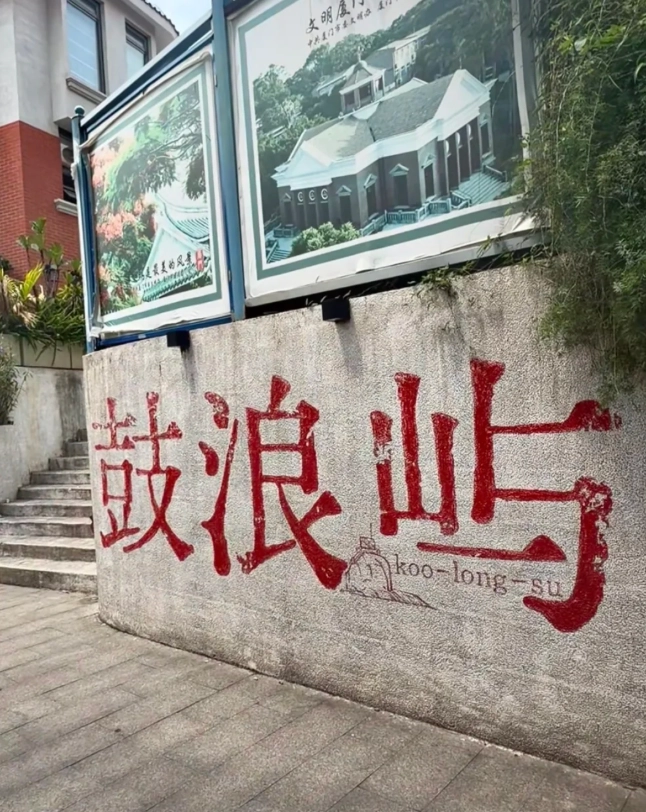
Pro Tip: The ferry ticket to Gulangyu is the most expensive ride you may not need. If you visit Xiamen during typhoon season, check the ferry status the morning of - it doesn't run at all when winds hit Force 7.
For the beaches, skip the crowded eastern shore. Walk to the southeastern edge near Hao Yue Garden. The water isn't turquoise, but the view of Xiamen's skyline framed by palm trees is much better.
2. Walk Through the Earthen Fortresses of Nanjing Tulou (南靖土楼)
The Tulou are giant round and square rammed-earth buildings built by the Hakka and Fujianese people in the mountains. They functioned as fortresses, apartment blocks and temples within one structure. The most photogenic cluster is the Tianluokeng 'Four Dishes and a Soup' (田螺坑土楼群) in Nanjing county, part of the UNESCO-listed site.
Getting there involves about 2.5 hours of hairpin mountain roads from Xiamen. I always arrange a driver via a local English-speaking tour operator. You'll see countless buses dumping tourists at a scenic platform, which is fine for a photo. But to genuinely experience it, you need to walk down into the village, through the rice paddies, into the buildings themselves.
Entry tickets are around 100 RMB for the scenic area, and you'll need your passport. Some buildings ask for a small donation if you want to climb the creaky wooden stairs. Do it - the view from the top is the classic shot you've seen on social media.
A common mistake: Most visitors try to combine the Tulou with other attractions in one day. Don't. It's a full day in a car. Also, don't be tricked into hiring a 'guide' who only walks you through the main courtyard. Ask your driver to stop at the opposite side of the valley first, so you see the famous cluster in the distance before you dive in. The light at 4 PM is unbeatable.
3. Float Down the Nine-Bend Stream at Wuyi Mountain (武夷山九曲溪)
Wuyi Mountain is a UNESCO dual heritage site - natural plus cultural. It also produces some of China's most prized oolong tea. The best way to soak it in is the 90-minute bamboo raft ride down the Nine-Bend Stream. You pass cliffside coffins and extraordinary erosion pillars that have inspired poets for centuries.
The raft ride costs about 130 RMB per person, plus the park entrance of around 140 RMB. Here's the crucial part: you must book the raft time online as early as possible, perhaps at 7:00 AM when tickets release, especially in peak season. Bring your passport and a little cash for the rowers' tip. They often sing folk songs if you tip modestly.
Don't make the same mistake I did once - I wore sandals. The rafts go over shallow ripples and you'll need dry shoes. Also, the morning sun is fierce. Take the second raft slot, around 9:30 AM, and pack a waterproof phone pouch.
4. Get Lost in Quanzhou's Pious Old Town (泉州古城)
Quanzhou was the world's largest port in the 13th century, and today it's a UNESCO World Heritage city. It's like a quiet version of Istanbul: a mosque right next to a Confucian temple, a Mazu temple behind a Gothic cathedral. The city is too well preserved for you to enjoy it in a rush.
The best thing to do is just to walk. Start at the Kaiyuan Temple (开元寺) - it's free, or asks for a small donation. Don't miss the towering twin pagodas. From there, wander into the winding lanes around West Street. Every turn reveals a hidden courtyard with a tea master or a handwritten noodle shop.
Most tourists skip Quanzhou entirely, which means the city is refreshingly uncommercialised. It also means the restaurants are usually full of locals, which is a good sign. For a quick snack, try the local fried oyster omelet (海蛎煎). The right one here has a crispy edge and a sweet chili dip.
What to Eat in Fujian: A Field Guide for Hungry Travelers
Fujian cuisine is the realm of seafood, fermented red rice, and subtle sweet-and-sour flavours. It's not as spicy as Sichuan or as oily as Hunan. Think braised sea cucumber, fish balls with popping fillings, and Buddha Jumps Over the Wall (佛跳墙) - a lavish soup with dozens of ingredients.
Don't leave Xiamen without trying Shacha Noodles (沙茶面) - a peanut-soup noodle dish. You'll find it at every corner stall. I always order mine with pork intestines and a soft-cooked egg. It's thick, savoury, slightly sweet broth that will ruin any other noodle soup for you.
In Quanzhou, hunt for the local beef noodle soup, which is intense and deeply aromatic. In Fuzhou, save time for a bowl of fish balls in the Taijiang district. 'Qingyuan' style fish balls are famous for their pork filling; the broth is light and comforting. For anything else, just point at menu photos. The Google Translate camera lens will be your best friend.
Where to Stay in Fujian: Three Bases for Different Travelers
Finding the right base can make or break your trip. I recommend staying in three different spots if you have a week: Xiamen (3 nights), Wuyishan (2 nights), and Quanzhou or Fuzhou (2 nights). This gives you a good balance of urban energy and nature.
| City | Suggested Area | Hotel Type | Price Range (RMB/night) | Good For |
|---|---|---|---|---|
| Xiamen | Zengcuo'an (coastal village) | Boutique hostel | 200-500 | Budget & beach vibe |
| Xiamen | Central Business District | Mid-range hotel | 600-1000 | Families & business |
| Wuyishan | Near Nine-Bend Stream | Resort | 800-1200 | Nature lovers |
| Quanzhou | West Street old town | Guesthouse | 300-700 | Culture & night walks |
For budget travelers, the hostel scene in Xiamen's Zengcuo'an district is buzzing with cafes and surfboards. For mid-range, I like the area around Thomas Hill. In Quanzhou, a guesthouse near West Street gives you walking access to everything. The staff in these smaller places usually don't speak English, but they are genuinely welcoming and will do the translation dance with you. Have your booking confirmation printed out - it makes check-in easier.
Fujian Travel Tips: What I Wish I Knew Before
Set your payment apps before you arrive. You'll find that most shops in Fujian don't accept cash (yes, really) and international cards are rejected in many local spots. Link your international credit card to Alipay or WeChat Pay as soon as you land. You can do this at the airport with a SIM card package. It's a 10-minute setup that saves you hours of frustration.
For navigation, ignore Google Maps. It's patchy and often shows outdated Chinese names. Apple Maps works okay when paired with a local SIM. For an alternative, download the AMap (高德地图) app. But if you're stuck, just screenshot the Chinese address from this guide to show your hotel reception. Google Translate's camera mode will handle the rest - it also works offline if you download the language pack.
Always ask for a business card with the hotel's name in Chinese characters. This is the single most important thing to do on day one. Whenever you hop in a taxi, hand over the card. It saves endless awkward moments and mispronunciations.
For attractions, the golden rule is: bring your passport. Most places will only accept it as ID, and they may need to scan it for the online ticketing system. A photocopy often doesn't cut it.
And yes, you need a VPN. Western social media and Google services are blocked. Set up your VPN before you fly, because airport Wi-Fi is a mess. I personally use a paid service that doubles as a safety net for banking apps.
Insider Advice: Download the 'Trip.com' app in your home country. Once in China, it's a lifesaver. Use it to book trains, attractions, and hotels. It operates in English and respects foreign credit cards.
FAQs: What to Do in Fujian Based on Your Schedule
Verified and fact-checked by the editorial team.








No comments yet.