 Hui Lin
First time booking a train in China? I get it. The letters — G, D, C, K — look like alphabet soup. But they actually tell you everything: speed, comfort, price, and how far the train goes. I've travelled on every single class (sometimes three in one week), and here's exactly what you need to know.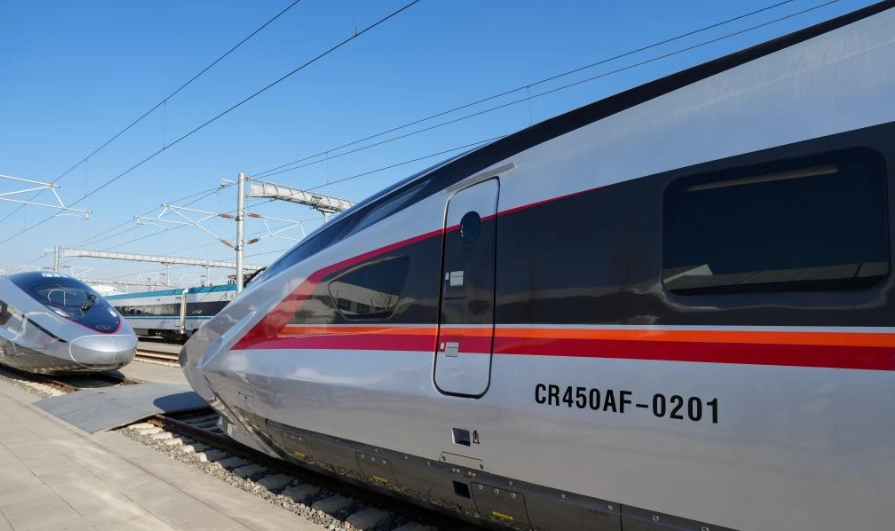
What Do G, D, C, K Stand For?
Each letter is a class, and the class determines the max speed, number of stops, and ticket price. Below is a quick comparison table I use with my clients.
| Letter | Chinese Name | Max Speed | Best For | Example Route |
|---|---|---|---|---|
| G | Gāotiě (高铁) | 300–350 km/h | Long‑distance, premium speed | Beijing–Shanghai (4.5h) |
| D | Dòngchē (动车) | 200–250 km/h | Mid‑distance, more stops, cheaper | Guangzhou–Shenzhen (1h) |
| C | Chéngjì (城际) | 200–350 km/h | Inter‑city commuter, frequent stops | Beijing–Tianjin (30min) |
| K | Kuàisù (快速) | 120–160 km/h | Budget, classic rail, not high‑speed | Kunming–Dali (6h) |
My go‑to advice: For cross‑province trips, pick G unless your budget is tight. D trains are fine if you're moving between neighboring cities — they stop more but you save 30-40% compared to G. C trains are great for day trips from big hubs (like Shanghai to Suzhou). And K? Avoid unless you're backpacking and have extra time.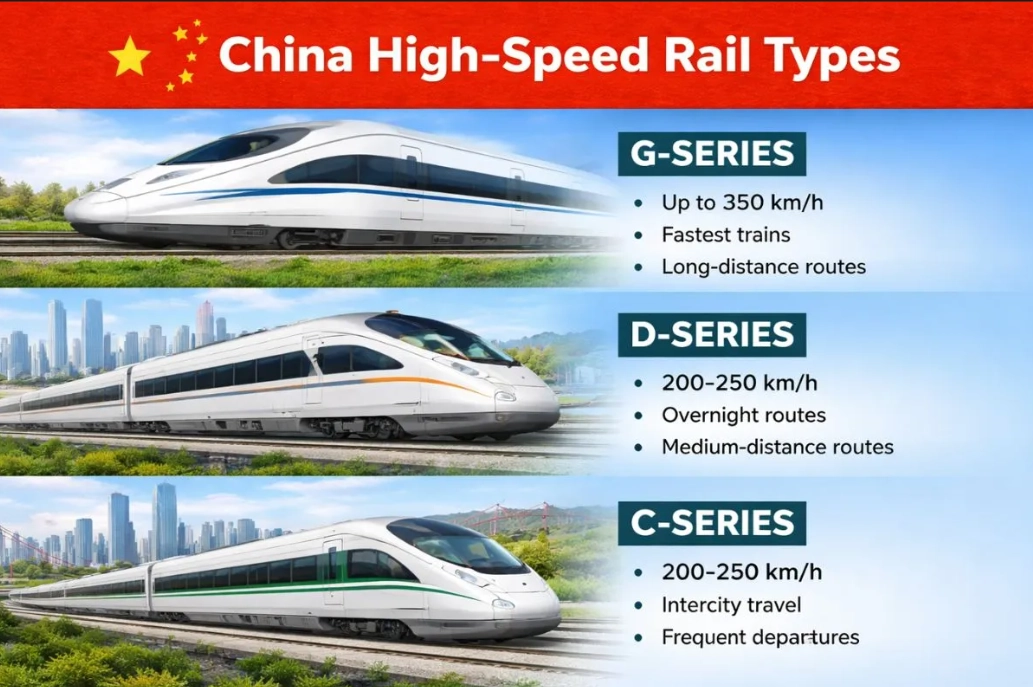
Seat Classes – Which One Should You Pick?
Inside one train, you have four main seat tiers. I'll rank them from the one I book most to the one I skip.
Second Class (二等座) – Best value
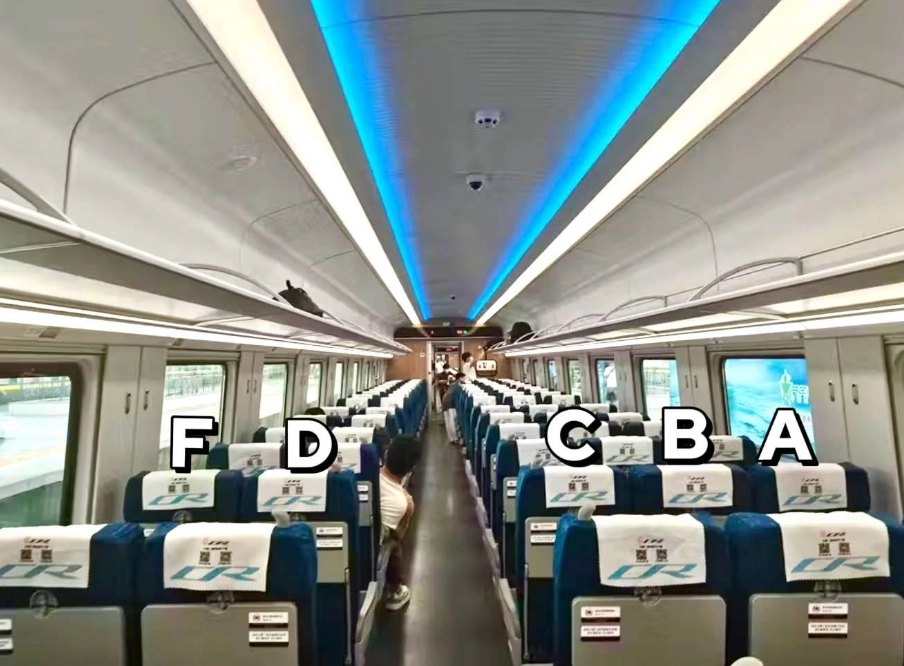
2+3 layout, reclines a bit, power outlet under the seat. Legroom is okay for a 2‑hour ride; beyond 4 hours your knees may start to ache. Price is roughly 40% of business class. I usually book this for daytime trips under 3 hours.
First Class (一等座) – Sweet spot
2+2 seats, more legroom, wider seats, personal reading light. Worth the extra ¥80-150 if you're over 180 cm (6ft). My pick for trips longer than 3 hours.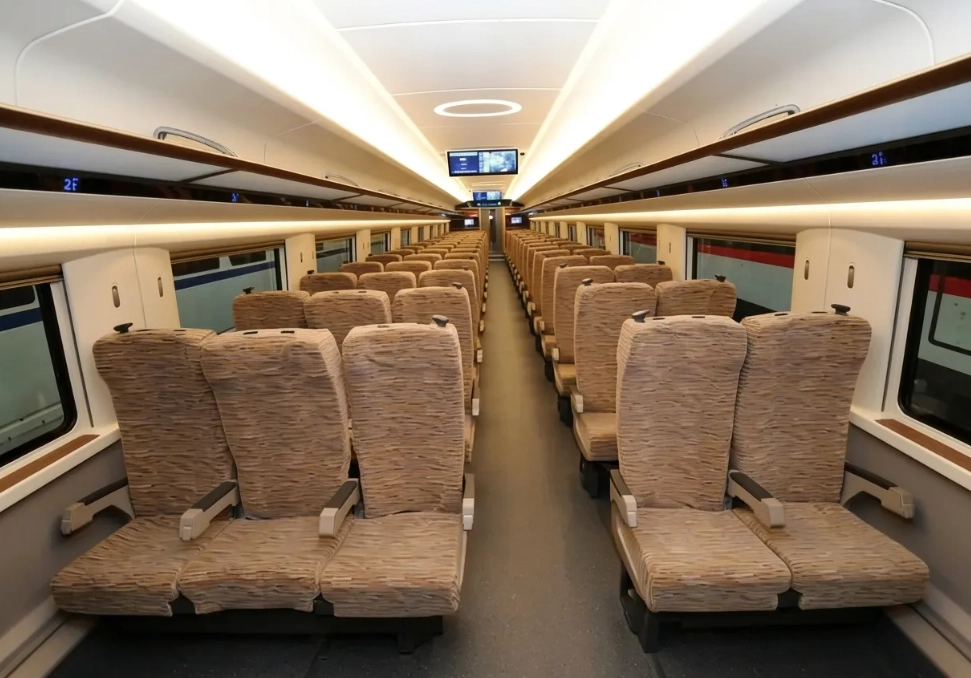
Business Class (商务座) – The splurge
1+2 lie‑flat seats (on G trains), free meal, slippers, hot towel. Perfect for overnight or if you need to sleep. But the price can be 3x first class. I only recommend this if you can expense it or have a very early morning train.
Soft Sleeper/硬卧 (on D/K trains) – For night trains
Beds in compartments of 4. Not high‑speed but can save a hotel night. Bring earplugs — snorers are guaranteed.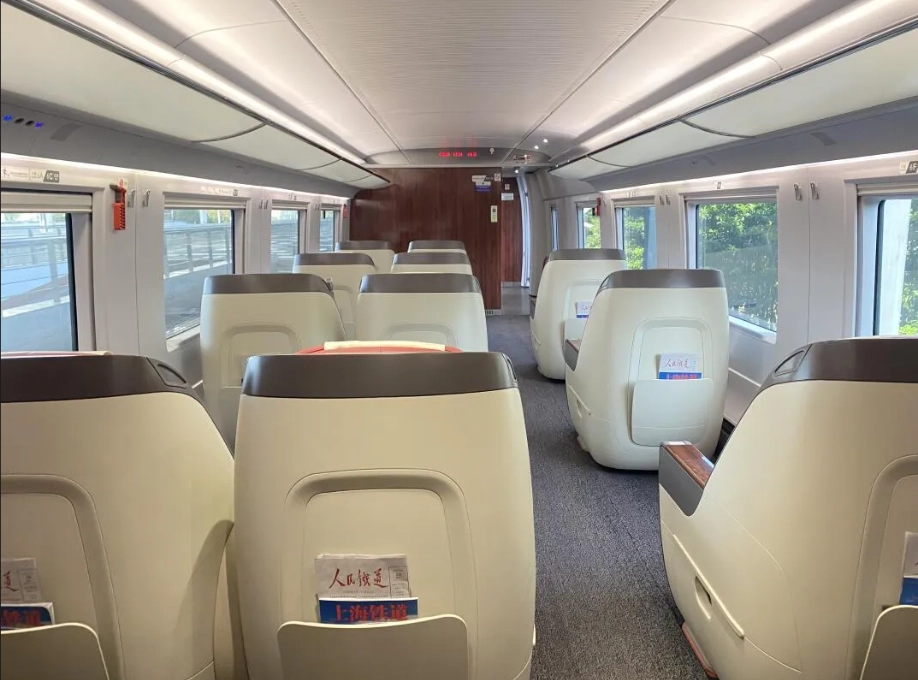
How to Buy Tickets as a Foreigner
Here's the part that frustrates most tourists. The official 12306 website and app are in Chinese only (even the English version often fails halfway). Do not rely on Google Maps or random third‑party sites.
Best options ranked:
- Trip.com – English interface, accepts foreign cards, charges a small fee (¥20-50). It's reliable. I've used it dozens of times.
- 12306 English – Available but buggy. Requires passport verification via email sometimes. Use only if you're comfortable with slow interfaces.
- WeChat mini‑program – Extremely fast but fully in Chinese. If a Chinese friend or hotel staff can help, go for it.
Step‑by‑step for Trip.com:
- Create account (use your passport number, not a Chinese ID).
- Search route (e.g., Beijing -> Shanghai).
- Select train class (G/D/C). I recommend sorting by departure time and then price.
- Choose seat class. If you're tall, pick First Class.
- Pay with Visa/Mastercard (works for me 90% of the time). American Express sometimes fails.
- Receive e‑ticket in the app. No need to print — just show your passport at the gate.
Payment Methods – What Works (and What Doesn't)
You booked your ticket online. Great. Now, what about onboard purchases? The snack cart only accepts Alipay or WeChat Pay. Cash is rarely accepted on the train itself. At station restaurants, cash might work, but change is often a problem.
My recommendation: Link your international card to Alipay before leaving home. It's straightforward: download Alipay, register with passport, add your Visa/Mastercard. Once done, scanning QR codes becomes instant. If you can't get Alipay to work, bring small bills (¥10/¥20) and accept that you'll get change in coins.
Navigating the Station – A Survival Guide
I've seen people panic at Beijing South. Let me save you that headache.
- Arrive 30‑40 min early (for domestic routes). You'll need: security check (5‑10 min), find your gate (another 10 min).
- Find your waiting area: Look for the big electronic board with your train number. It lists the gate number (usually a single digit like 3A). Follow signs — they have English.
- Board the train: Gates open 15 min before departure and close 3-5 min before. Your ticket says carriage number (e.g., 08). Stand near the right spot on the platform — there are signs.
- Check your seat: Seat numbers are on the overhead rack and also on the window frame. If someone is in yours, politely show your ticket.
Navigation hack: Google Maps is blocked and inaccurate. Download Apple Maps (it uses Chinese local data) or Baidu Maps (has an English version now). For getting to the station, use DiDi (the Chinese Uber) – you can set pick‑up and drop‑off points in English letters.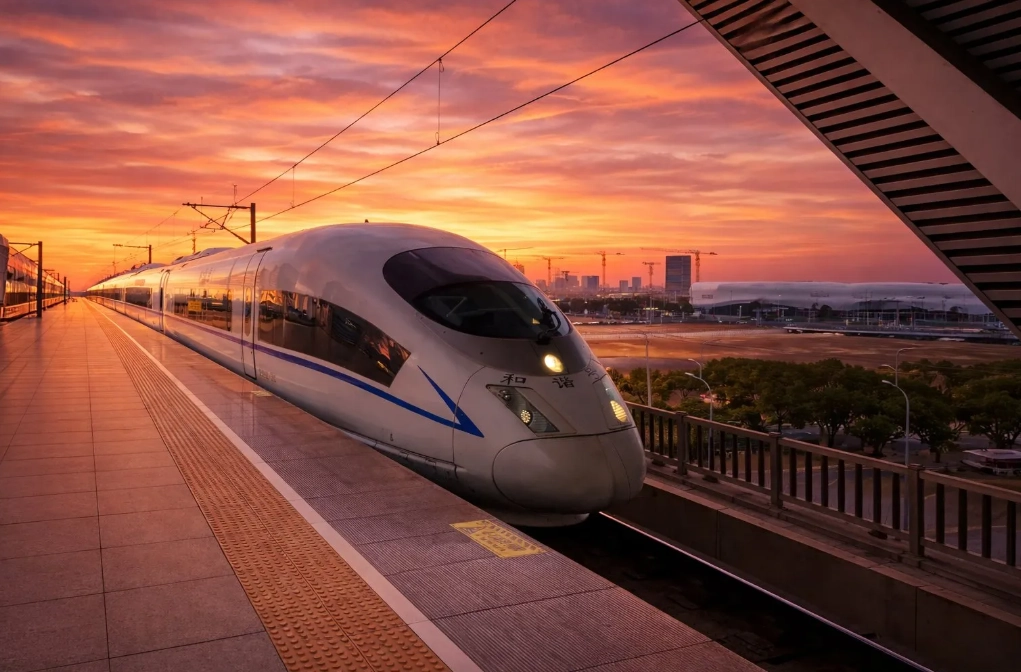
Common Mistakes and How to Avoid Them
Here are three I see almost every trip.
1. Confusing stations with the same city name. Beijing has Beijing South (for G trains to Shanghai), Beijing West (for Xi'an, Chengdu), and Beijing Station (mostly slow trains). Double‑check the station name on your ticket. I once had a client rush to Beijing South for a train departing from Beijing West. He missed it.
2. Buying a ticket for the wrong date. China's midnight is counted by the train's departure time. If your train leaves at 00:15, that's the early morning of the next day. Always confirm the date when booking late‑night trains.
3. Not bringing your passport. Chinese ID cards work for locals, but foreigners need the exact passport that was used for booking. No passport? No boarding. No exceptions.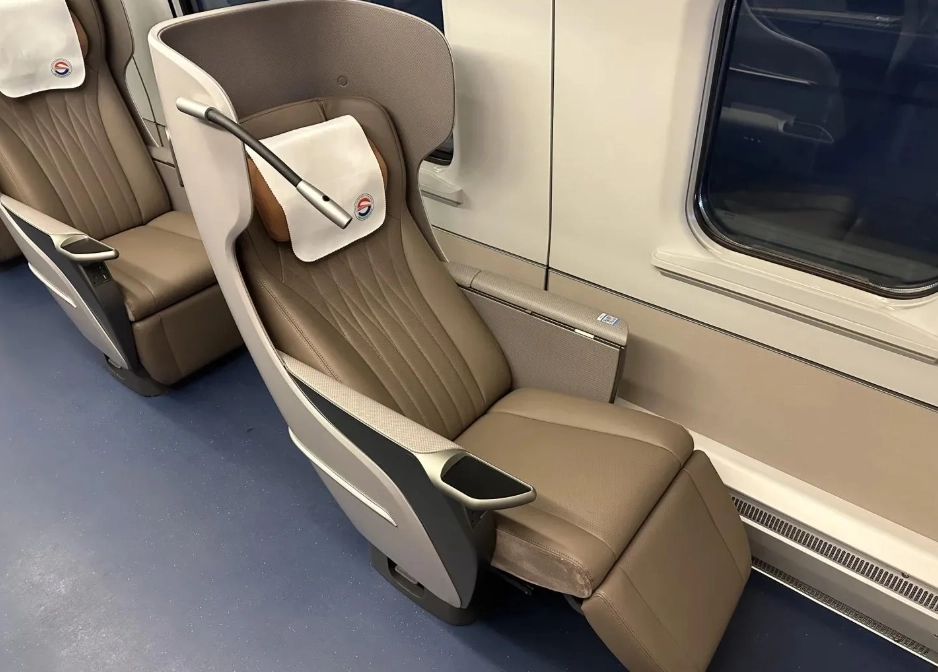








No comments yet.