 Qiang Huang
Quick Navigation
I've been guiding tours in China for years. I've seen it all—the good, the bad, and the downright sneaky. Let me save you the trouble. Here are the scams you must dodge.
1. Taxi Overcharge & Fake Meter Scam
You hop into a taxi at Beijing Capital Airport. The driver says "fixed price"—300 RMB for a ride that should cost 100. Classic. Or worse, he pushes a button on a hidden remote to make the meter run faster.
How to avoid: Always use ride-hailing apps like DiDi (Alipay or WeChat Pay, English interface available). Never take unlicensed taxis. If you must take a taxi, insist on using the meter. Check if the meter starts from the correct base fare (10 RMB in Beijing).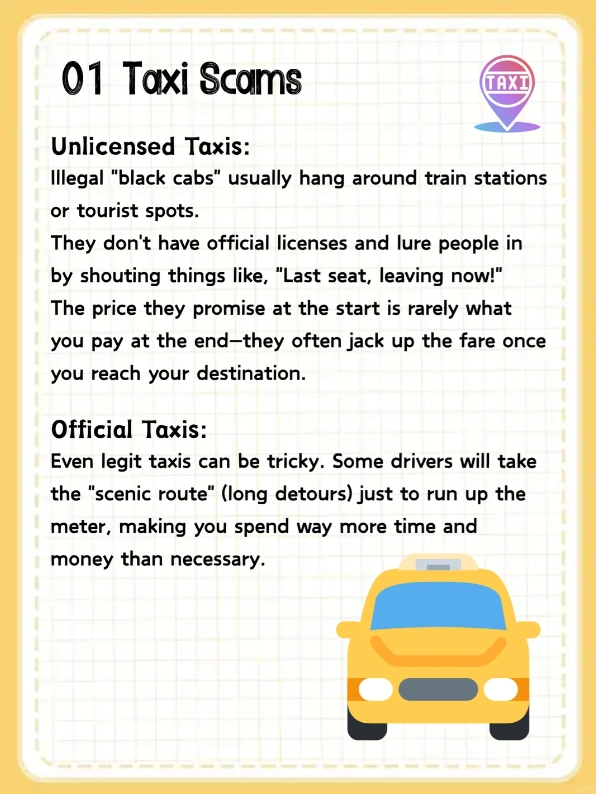
2. The Tea Ceremony Trap
A friendly local invites you to a traditional tea ceremony near popular spots like the Lama Temple in Beijing. You sip some tea, then get hit with a bill for thousands of RMB. The high-pressure sales start.
How to avoid: Politely decline any unsolicited invitation to tea shops or ceremonies. Real tea ceremonies are arranged in advance, not by random strangers on the street.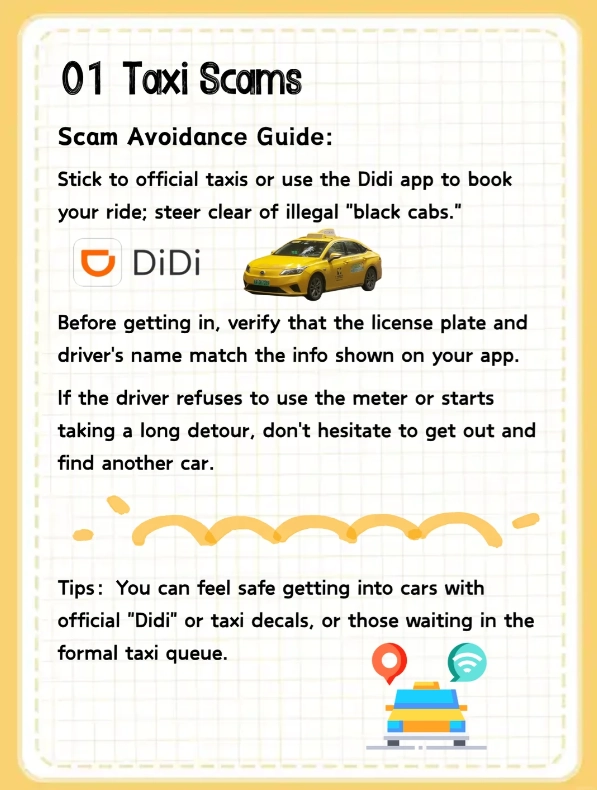
3. Fake Ticket Sellers at Attractions
At the Great Wall, a tout offers you a "special pass" to skip the line. It's a fake. You end up being turned away at the gate. I've seen it happen to my clients.
How to avoid: Buy tickets only from official sources: official website, Trip.com, or the official WeChat mini-program. Ask your hotel to help. Never buy from scalpers. Scanners at the gate can tell real from fake instantly.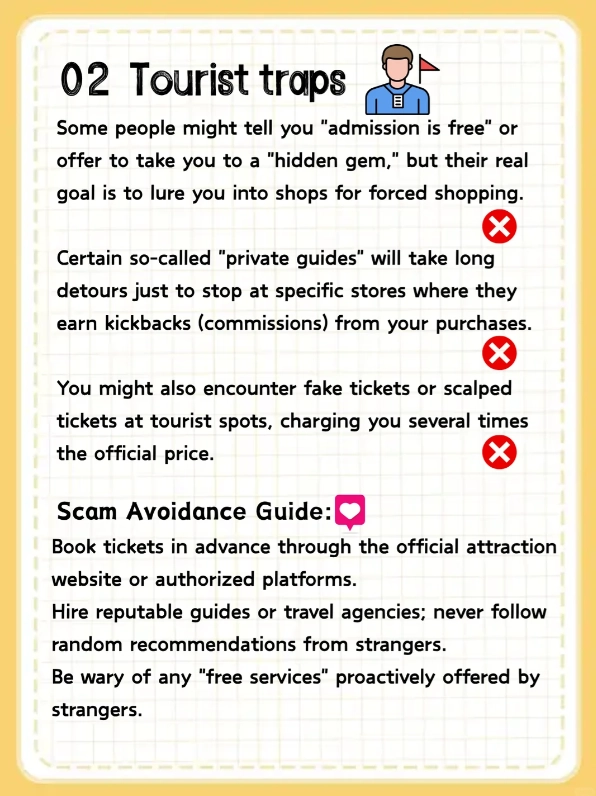
4. Money Change & Fake Bills
A taxi driver claims he has no change for your 100 RMB bill and hands you back a bunch of smaller bills—only half the value. Or you get a counterfeit 100 RMB note when you pay with a larger bill.
How to avoid: Use mobile payments (Alipay, WeChat Pay) as much as possible—no change issues. If you need cash, get it from bank ATMs inside major banks, not from street exchange booths. Check each bill: real notes have a watermark and tactile texture.
5. 'Student' Art Scam
A "student" approaches you near the Bund in Shanghai, asking for support for their art project. They show you photos, then demand a "donation" of 200+ RMB. This is a scripted con.
How to avoid: Simply say "no" and keep walking. Do not engage. The more you talk, the harder it is to escape.
Frequently Asked Questions
Verified and fact-checked by the editorial team.







Can’t recommend this enough! I’m a budget traveler and this article saved me from the infamous ‘taxi meter scam’ at Pudong Airport. The writer clearly knows their stuff—the part about fake tour guides at the Bund was eerily accurate. I also appreciated the advice on using official WeChat mini-programs for tickets instead of third-party vendors. Short, punchy, and packed with real-world examples. Printed it out and kept it in my pocket during the whole trip. Five stars!
Wish I had found this before my trip last month! The ‘teahouse trap’ described here happened to me in Xi’an—except I actually fell for it and paid $80 for a pot of cheap jasmine. Reading this article after the fact made me both laugh and cringe. It’s written in a straightforward, no-nonsense tone, and I love that they include specific prices to watch out for. Every traveler heading to China should bookmark this. Absolutely recommended.
Absolute lifesaver! I read this article the night before my solo trip to China and it seriously saved me from falling for the ‘free calligraphy lesson’ con near the Forbidden City. The descriptions of how the scammers dress and act are spot on—felt like I’d seen them before I even landed. Also loved the breakdown of common ticket resellers at train stations. Shared it with my hostel dorm and everyone thanked me. 5 stars, no question.
A pretty decent read if you’re a first-timer in China. I’ve been living here for a year and recognized most of the street cons they mentioned—like the tea ceremony scam and the fake monk donation thing. The ticket trick section was useful though; I didn’t know about the ‘reservation-only’ scam at the Great Wall. My only gripe is they didn’t include real photos or examples of the fake tickets. Would’ve made it a solid 5. Still, worth a quick skim before your trip.
I’ll give it a 3 because while some tips were solid, I felt the article was way too general. Specifically, the part about ticket tricks only covered the famous spots in Beijing and Shanghai—nothing about smaller cities like Guilin or Chengdu where I actually got ripped off by a fake ‘VIP bus’ scam. It read more like a quick blog post than an in-depth guide. Also, the formatting on mobile was a pain—text overlapping with ads. Could’ve been way more helpful.
Every backpacker should bookmark this. I followed the advice about using official taxi apps and avoided a classic 'broken meter' scam in Chengdu. The section on fake monasteries was also eye-opening. Best 10-minute read before any China trip.
Wish I had found this article before my first trip! The ticket scalper tactics explained here saved me ¥300 at the Bund. I also loved the tip about always asking for the official price list. Clear, practical, and written in plain English. Highly recommend.
This guide is an absolute lifesaver! The 'free foot massage' trap and the fake police trick were things I never would've thought of. Shared it with my entire hostel group and we all avoided getting ripped off at the Great Wall. A must-read for anyone visiting Beijing.
Honestly found this article a bit overhyped. I've been to China three times and only encountered one minor scam. The examples are real, but the tone feels fear-mongering. Could use more balanced advice on how to actually enjoy the street food scene without paranoia.
Read this before my trip to Shanghai—super helpful but I wish it had more details on the 'tea ceremony' scam. The ticket trick part was spot on though. Saved me from overpaying at a fake tour booth. Overall a solid heads-up for newbies.