 Hui Lin
Quick Jump: What You'll Learn
- Why Most Tourists Dial the Wrong Number
- The 3 Critical Numbers You Must Memorize
- What Happens When You Call? (Language Barrier)
- How to Call from a Chinese Number – Even Without a SIM
- Real-Life Scenario: A Stolen Wallet at 2 AM
- Pro Tips: Register Your Hotel and Passport Info
- Frequently Asked Questions
Let me guess — you've memorized 911, but you're in China now. I've been guiding travelers for over a decade, and the number one thing most tourists get wrong? They dial the wrong emergency number, or they freeze because they don't speak Chinese. Here's the hard truth: if you dial 911 in China, nothing happens. You're just wasting precious seconds.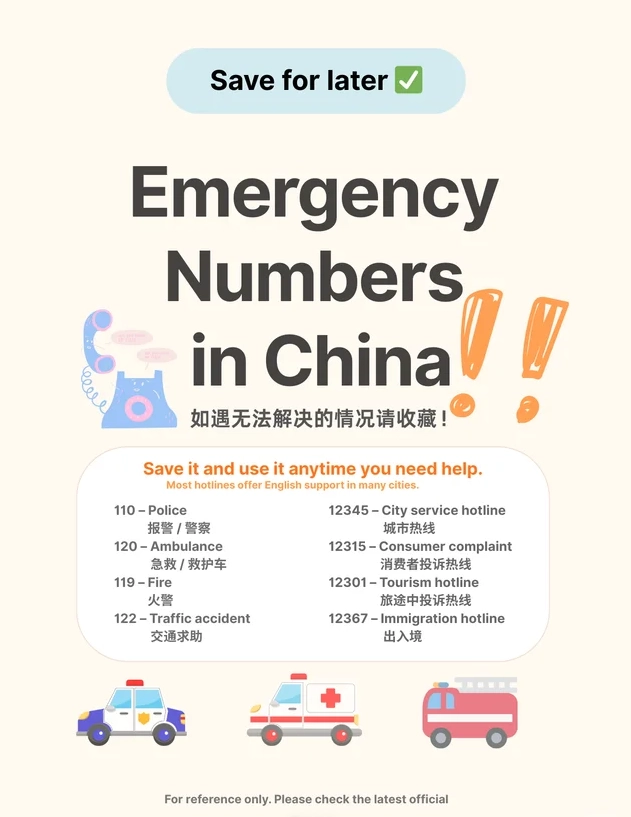
I once had a guest in Xi'an who tried to call 911 after pickpockets snatched her phone. Dead silence. She ended up running around a hotel lobby in tears until a staff member dialed 110 for her. That's a scene I never want you to experience.
So here's your cheat sheet: 110 = Police. 119 = Fire. 120 = Ambulance. That's it. But the real challenge isn't the numbers — it's what to do after you dial. Let me break down exactly how to handle an emergency in China, from language barriers to calling without a SIM card.
Why Most Tourists Dial the Wrong Number
It's not stupidity — it's habit. Back home, you've had 911 drilled into your brain since childhood. But in China, the emergency system is split into three separate numbers. And here's the kicker: many English guidebooks still print the old police number (110) but forget to mention that 122 (traffic accidents) and 12308 (consular protection) exist.
Another trap: some outdated online posts suggest dialing 110 for medical help. That's wrong. 110 is police only. If you have a heart attack or a serious injury, dial 120. If you dial 110 for an ambulance, the operator will transfer you to 120, costing you at least 30 seconds of confusion. In a true emergency, those seconds matter.
One more thing — never dial 119 for a non-fire emergency (like a gas leak without flames). Just call 110, and they'll route you. Trust me, I've seen a frantic dad call 119 because his kid locked himself in a bathroom. The fire truck showed up — and the kid was fine — but the parents got a massive lecture.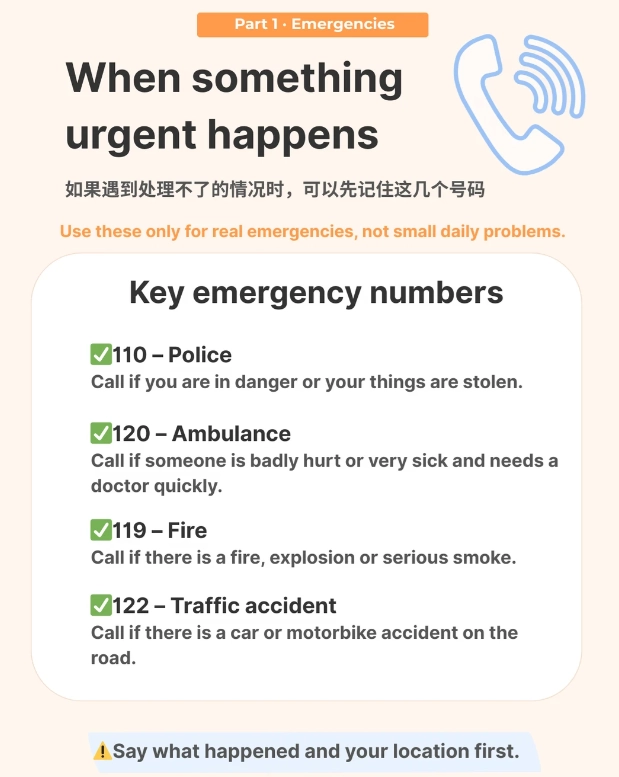
The 3 Critical Numbers You Must Memorize
Write these on your phone's lock screen or a slip of paper in your wallet. Do it now.
| Number | Service | English Support? | Best Time to Call | What to Say |
|---|---|---|---|---|
| 110 | Police (including theft, assault, lost passport) | Limited – operators have basic English, but be slow and clear | Any time – 24/7 | "Help, I need police. Address is..." |
| 119 | Fire & Rescue | Almost none – best to have a Chinese speaker on hand | 24/7 | "Fire! Please send fire truck." |
| 120 | Ambulance / Medical emergency | Very basic – expect to read your symptoms slowly | 24/7 | "I need an ambulance. I am at [hotel name / street]." |
What Happens When You Call? (Language Barrier)
You dial 110. It rings. A Chinese voice answers: "Wei, 110. Qing jiang." (Hello, 110. Speak.) If you freeze—I've seen it happen—you might hang up. Don't. Take a breath and say: "English help, please. Emergency." The operator will either patch you through to an English line or ask someone nearby to interpret.
But here's a reality check: outside Tier-1 cities, English operators are rare. In a township in Yunnan, I once had to hand my phone to a hotel receptionist to translate. That's why I always tell my clients: program your hotel's front desk number into your speed dial BEFORE you go out. If you can't communicate with 110, call the hotel and ask them to relay.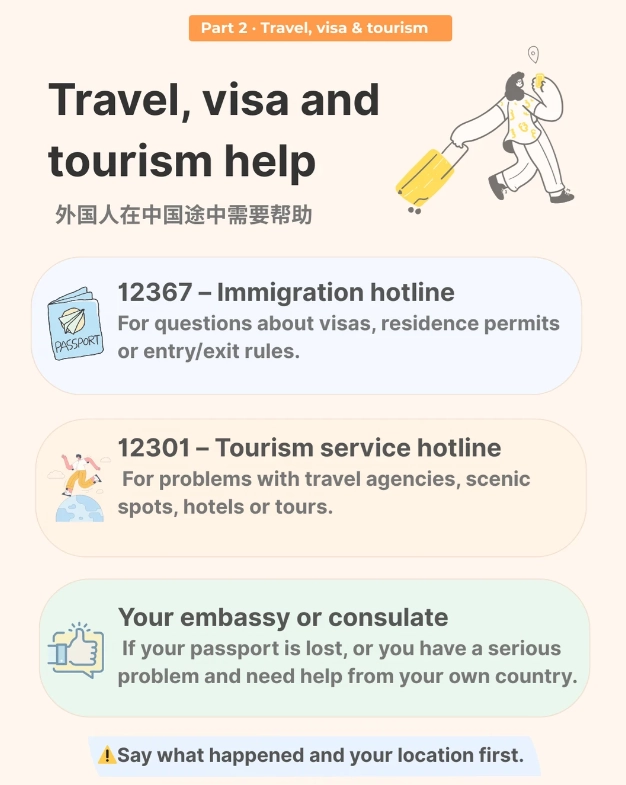
Also — Google Maps won't show your exact location to the dispatcher. Chinese emergency services don't use Google. They use Baidu Maps. If you're on a street with a long Chinese name, show the nearest landmark or a big store sign. I always ask my clients to take a photo of their hotel entrance (with the Chinese name) on their first day. That photo can save you 5 minutes when you're panicking.
How to Call from a Chinese Number – Even Without a SIM
This is a lifesaver. In China, you can dial 110, 119, and 120 even without a SIM card or with a dead battery (on many phones). The calls are routed through any available mobile network. So don't assume you're stuck if your roaming isn't working.
But there's a catch: you can't call 110 from a payphone (most are gone anyway), and you can't call from a hotel room phone unless it's a direct line. Hotel PBX systems sometimes block emergency numbers (ridiculous but true). Test it when you check in. Dial 110 and immediately hang up — the operator will call back, but at least you know it works.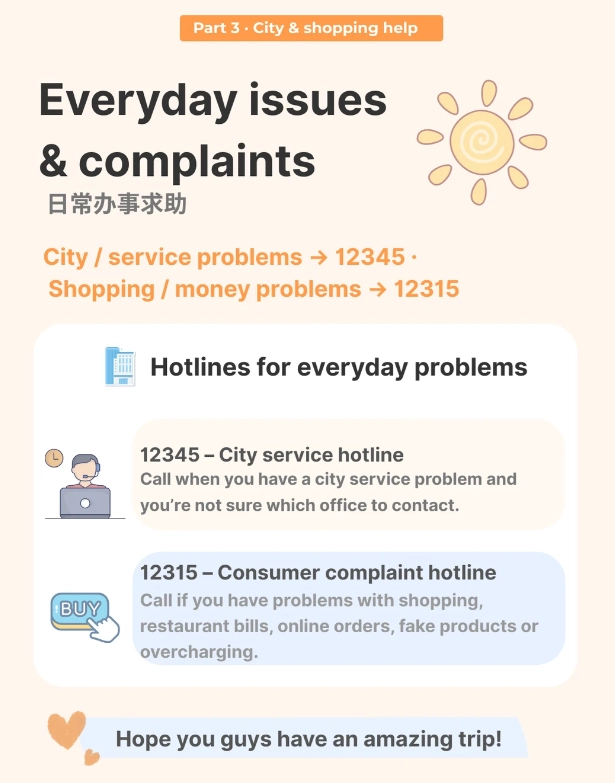
If you have a Chinese local SIM (like from China Mobile or Unicom), your call will be connected instantly. If you're roaming on an international SIM, it should also work, but I've heard cases where roaming numbers were delayed. Backup plan: buy a cheap Chinese prepaid SIM at the airport (around 50 RMB) and keep it in a second phone or dual-SIM.
Real-Life Scenario: A Stolen Wallet at 2 AM
Let me paint a picture. You're in Shanghai, it's 2:15 AM, you're walking back to your hotel near the Bund. A scooter whizzes by and snatches your crossbody bag. Inside: passport, credit cards, 1,000 RMB, and your phone. What do you do?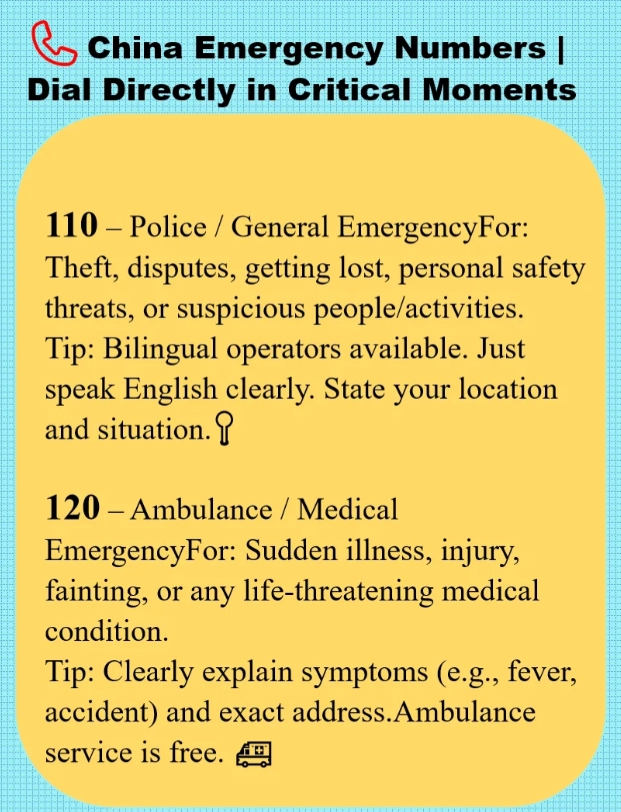
Most people panic and chase the scooter (bad idea). Instead:
- First — run into the nearest lighted hotel (any hotel, even if you don't stay there). Ask the front desk to call 110 for you. They'll have a landline and can translate.
- Second — keep your hotel room key (separate from your bag). You'll need it to get back in. If it was in the bag, ask the hotel to call your hotel's front desk to let you into your room.
- Third — the police will arrive within 5-10 minutes in central Shanghai. They'll take you to the police station to file a report. You need this report for an emergency passport replacement at your embassy.
One thing I always stress: don't expect the police to find your things instantly. In cities, CCTV is everywhere—they might catch the thief. But realistically, you're getting a paper report and moving on. Your priority is that report for insurance and the embassy.
Pro Tips: Register Your Hotel and Passport Info
When you check into any hotel in China, they're required by law to register your passport details with the local police station. This is for your safety. If you ever need to call emergency services, they can quickly find your registered address. Make sure you fill out the registration form completely.
Also, take a photo of your passport's personal info page and your visa page. Store it in a secure cloud drive (like iCloud) and email it to yourself. If your passport gets stolen, you can show the photo to the embassy.
For extra safety, I recommend downloading the "12308" app (the Chinese government's consular protection hotline for foreigners). It has an SOS button and real-time help in English. It's free. Don't rely on it for life-threatening emergencies—call 110 first—but it's great for non-urgent situations like lost luggage or visa problems.








Absolutely brilliant! I'm a nervous traveler and this article gave me real peace of mind. The part about saving the numbers in your phone with pinyin pronunciation was genius. I even shared it with my hostel group and everyone thanked me. 5 stars without hesitation.
Good resource overall, but I had a small issue. The article mentions that 110 is for police, but doesn't explain that in some cities you might get transferred to a local precinct. I called 110 once for a lost passport and had to repeat everything three times. Still, better to know the numbers than not. Solid 4/5.
Honestly, this article is a lifesaver! I had a minor accident in Shanghai and remembered exactly what to do from reading this. The step-by-step instructions on calling 120 and what to say were spot on. I printed a copy and keep it in my backpack. Truly essential for anyone visiting China.
As someone who's been living in China for a year, I found this article pretty basic. The info is accurate but nothing new—most of it you can find on any travel blog. The safety tips are fine, but I wish they'd included more about language barriers or what to do if the operator doesn't speak English. Just okay.
I read this article before my trip to China and it was super helpful. The breakdown of when to call 110 vs 119 is clear, and I liked the tips about staying calm and giving your exact location. Saved me a lot of guesswork. Highly recommended for any traveler!
I used this guide when my friend had a minor bike accident in Beijing. We dialed 120 and the operator was calm and clear thanks to the tips from this article. The description of what to expect (ambulance arrival time, what to say) was spot on. It even mentions the 122 traffic accident number as a bonus. Honestly a life-saver. Shared it with all my fellow backpackers. 5 stars!
Simple, short, and effective. I read this on the plane and by the time I landed I had the three numbers memorized. The guide even includes a little note about free calls from any phone, which is reassuring. Also love that it warns against prank calls — common sense but needed. For a free resource this is gold. Highly recommended for solo travelers like me.
This is exactly the kind of info every traveler needs before stepping foot in China! I printed it out and put it in my wallet. The instructions are straightforward, no fluff. I especially appreciated the reminder that 119 is for fire AND rescue. Plus the safety tips about staying calm and speaking slowly were super practical. 5 stars, no question. I feel much safer now.
Decent little article for someone who has literally zero clue about emergency services in China. The layout is clean and the numbers are easy to memorize. What kept me from giving a higher rating is that it doesn't mention when to use 110 versus 119 in ambiguous situations (like a car accident with fire). A quick scenario table would make it perfect. Still, I saved a screenshot just in case.
I read this guide before my trip to China and honestly, the information is solid but a bit too basic. It covers the three emergency numbers clearly, but I wish it included more details on how to actually communicate with operators if you don't speak Mandarin. Maybe some phrase tips or app recommendations? Still, it’s a good starting point for first-timers, just not as comprehensive as I hoped.