 Wei Zhang
Quick Navigation
I've been bringing travelers here for seven years. And every time someone asks: “How do I get a photo without fifty selfie sticks in the frame?” The official viewpoint at the top? It's a wrestling match. The stairs? You're bumper-to-bumper. But great shots are absolutely possible — you just need to know where to stand and when to press the shutter.
Here's the truth: most tourists arrive between 10 AM and 2 PM. That's when the sun is overhead (flat light, harsh shadows) and the crowds are thick. I always tell my groups: “We're going at 3:30 PM – and we're not walking in the main entrance.” Let me break down the exact spots I use.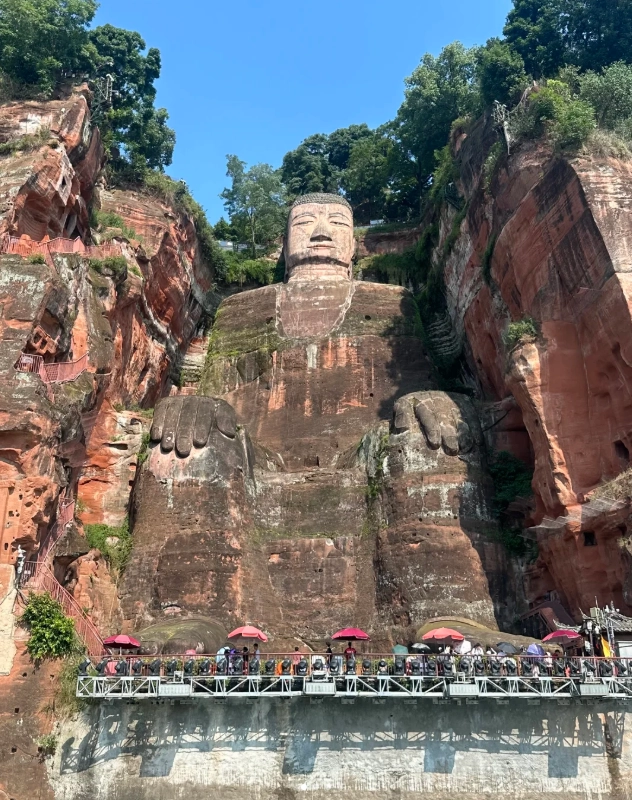
The Big Problem: Crowds & Harsh Light
Before we jump to spots, understand why 70% of visitor photos look the same. The classic path: enter through the North Gate, walk down the Nine-Bend Stairway (栈道), stand at the bottom looking up. Yes, you'll get the head-to-toe shot — but you'll also get 200 strangers in the background. And between 11 AM and 2 PM, the sun blasts directly onto the Buddha's face, creating blown-out highlights on the nose and deep black shadows in the eyes. Not great.
My rule: avoid the stairs between 10 AM and 3 PM. Instead, use the alternative spots below.
Spot 1: Queen's Pavilion – The Elevated Overview
Location: Inside the scenic area, on the west side of the cliff above the Buddha's left shoulder. Take the path after the Mahao Cliff Tomb Museum — most tour groups skip this because it's a slight uphill.
Why it works: From here you get a three-quarter profile of the Buddha, with the confluence of the Min, Dadu, and Qingyi rivers behind. It's high enough to avoid the stair crowd, and the angle separates the Buddha from the background. I use a 24-70mm lens at around 35mm.
Best time: 4:00 PM – 5:30 PM. The warm side light sculpts the cheekbones and brings out the rock texture.
Crowd situation: Even at peak, maybe 15-20 people. No queue for the railing.
Warning: There's a metal railing. To avoid it in frame, either shoot through a gap or hold the camera above the railing (use live view and a burst shot).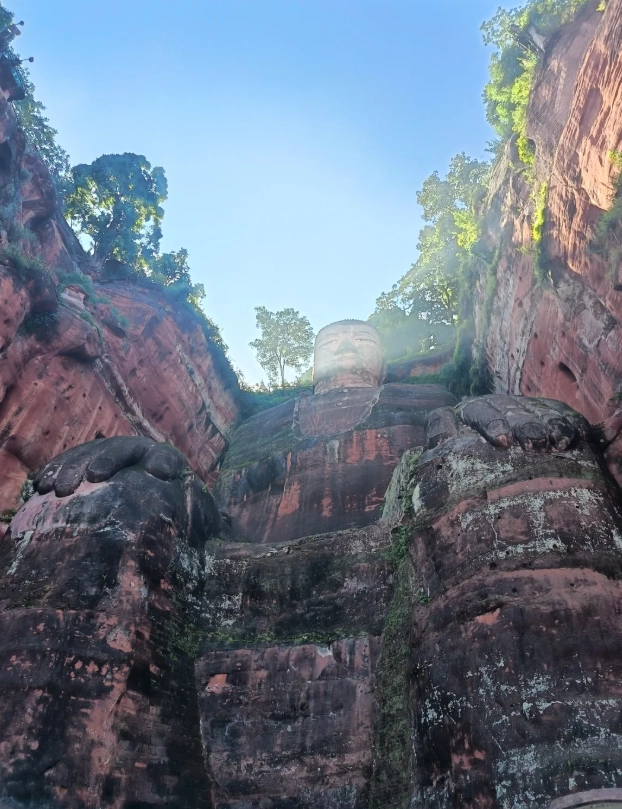
Spot 2: The Boat Escape – River-Level Angle
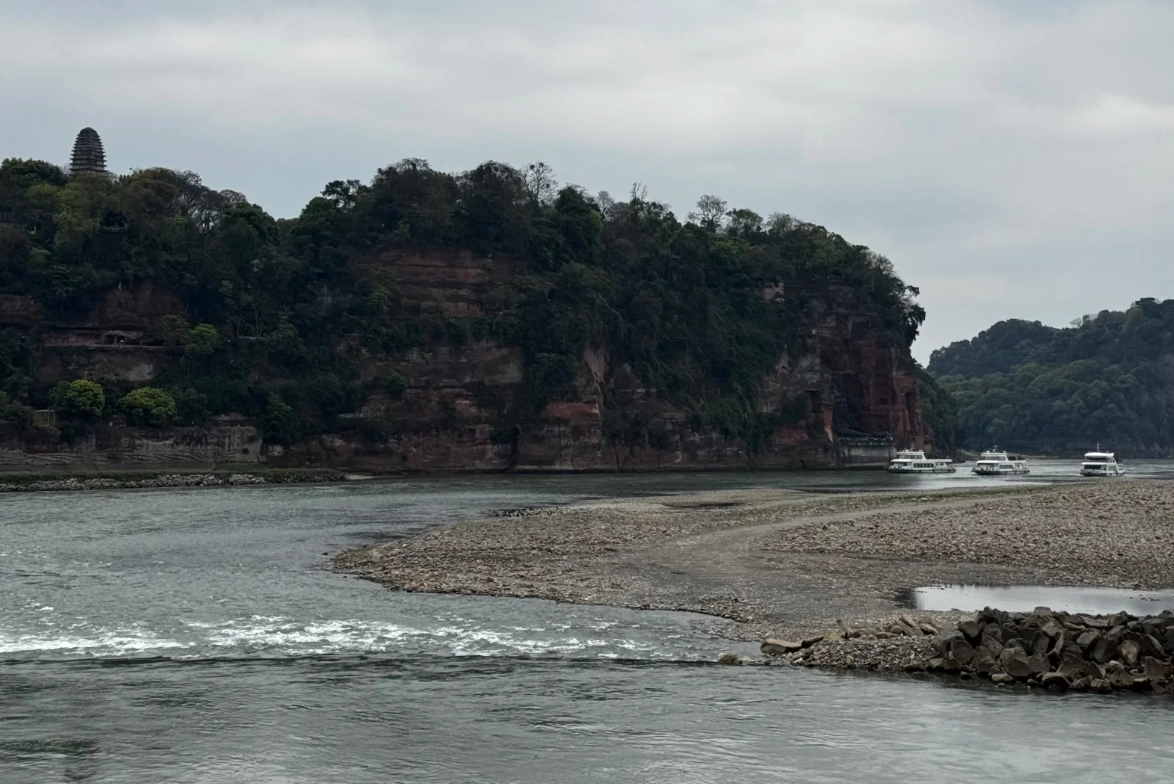
This is my secret weapon. Instead of staying inside the park, take a 10-minute local ferry from the wharf near the North Gate (not the tourist sightseeing boat, the ordinary public ferry that locals use). It costs 2 CNY (30 cents) and departs every 20 minutes. You ride it across to the south bank, get off, and walk 50 meters upstream.
What you get: The Buddha in full body, directly from the side, with the cliff and vegetation framing the composition. Because you're across the river, there's zero tourist clutter. Perfect for a clean, editorial shot.
Lens choice: 70-200mm or a zoom at 100mm+ to compress the distance.
When: Morning (8:00-9:30 AM) for the river mist, or late afternoon (5:00-6:00 PM) for golden reflections on the water.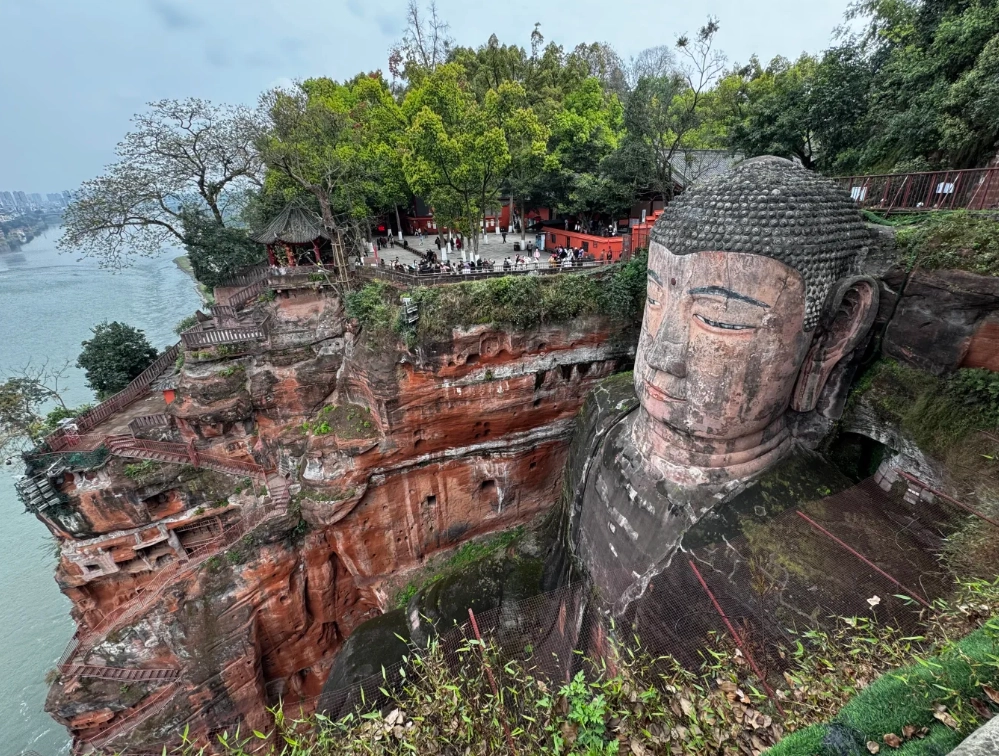
Spot 3: Down the Stairs – But at the Right Time
I know, I know — I said avoid the stairs. But if you want that epic upward angle where the Buddha fills the frame, you can't avoid them entirely. The trick is timing.
Go at 8:00 AM sharp when the park opens. The stairs are one-way (down only) from North Gate to bottom, so you'll be ahead of 90% of the crowd. You have about 30 minutes before the wave hits.
Best spot on the stairs: About 1/3 of the way down, at the first wide platform (there's a small stone railing). This gives you a straight-on view with the Buddha's face slightly elevated — the classic tourism poster look. Use a wide-angle (16-24mm) and tilt the camera up slightly.
Hazard: Security guards sometimes rush people through. But if you stop for 30 seconds and shoot quickly (use burst mode), they usually let it slide. Don't be a jerk about it.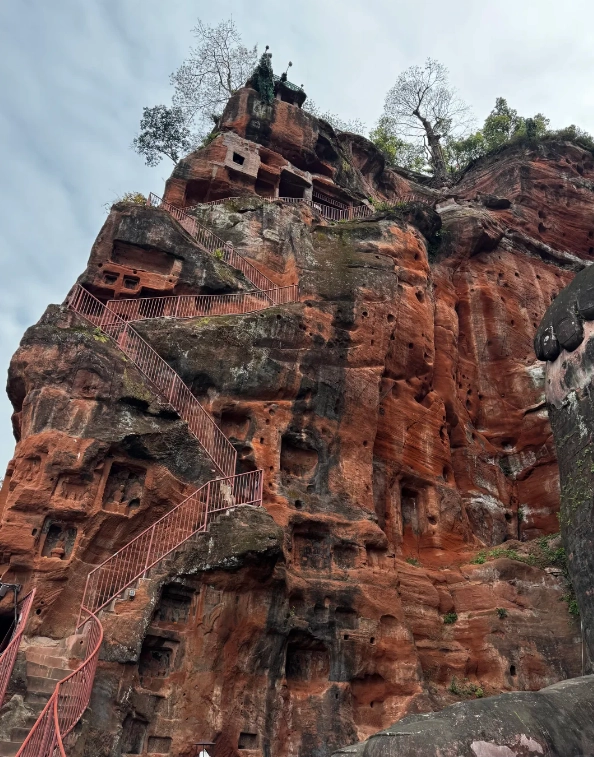
Spot 4: Xiangtan – The Fish-Scale Close-Ups
At the very bottom of the stairs, directly in front of the Buddha's feet, there's a small incense burner platform called Xiangtan. Most people just look up and snap a vertical shot. I go to the far left corner of this platform and shoot diagonally upward.
Why it's different: You capture the layered rock carvings of the Buddha's robe — the so-called “fish-scale” pattern (actually thousands of small stone folds). This texture is invisible from the overview angles. A telephoto lens (85mm or longer) isolates the pattern beautifully.
Best time: Overcast days are ideal — soft light brings out the gray and green tones of the stone. Direct sun creates too much contrast.
Light & Timing: The Only Window That Matters
Here's a concrete schedule I use with all my private groups. Stick to it and you'll get clean shots with good light.
| Time | Activity | Photography Notes |
|---|---|---|
| 7:45 AM | Arrive at North Gate (be there before opening) | Gate opens at 8:00. Be first in line. |
| 8:00 – 8:20 | Rush down the stairs (Spot 3) | Empty stairs, golden low angle light |
| 8:20 – 8:40 | Shoot at bottom (Spot 4) and on the riverbank | Soft morning light, low contrast |
| 8:45 – 9:15 | Walk to Queen's Pavilion (Spot 1) | Sun still low, good side light |
| 9:20 – 9:40 | Ferry across to south bank (Spot 2) | River mist burns off quickly — shoot now |
| 9:40 – 10:00 | Wander Ma'anshan village, different perspectives | Long lens shots with Buddha and daily life |
| 10:00 onward | Leave or explore Lingyun Temple | Light gets harsh; focus on non-Buddha subjects |
Note: If you can't start at 8 AM, the second-best window is 3:30 PM to sunset (park closes at 6:30 PM, last entry 6:00). In the afternoon, Spot 1 and Spot 2 are your best bets. The stairs after 3 PM are still crowded but manageable; you'll have to be aggressive with your elbows.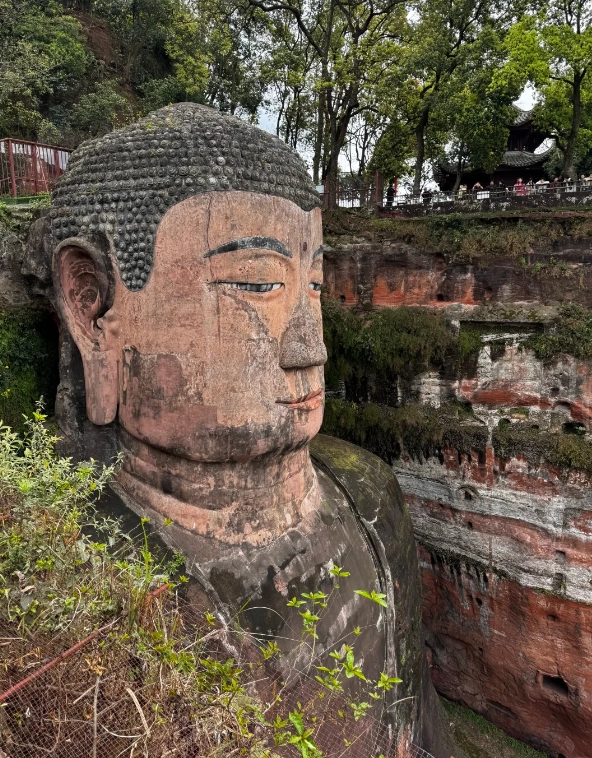
Practical Tips: Tickets & Logistics
Let's be real: Chinese scenic area booking is a headache for foreigners. Here's how to avoid the mess.
- Ticket price: 80 CNY (adult), 40 CNY (student/senior 60-69). Free for over 70s and children under 1.2m. You need to book in advance via the official WeChat mini-program “乐山大佛景区” (or ask your hotel to do it). Walk-up tickets are rarely available post-COVID.
- Payment: WeChat Pay or Alipay only. No cash, no international credit cards at the gate. I've seen travelers turned away – don't let it be you. Get a Chinese friend or concierge to prepay.
- Address: No. 2435 Lingyun Road, Shizhong District, Leshan. (乐山市市中区凌云路2435号)
- Getting there: From Leshan city center, take bus 3, 13, or K1 to “大佛寺” stop (30 min). From Leshan Railway Station, taxi costs about 30-40 CNY (15 min). Be sure to use Didi or a metered taxi – the station touts charge double.
- What to bring: Sunscreen (even on cloudy days), a hat, and two bottles of water. The stairs have no shade until you reach the bottom. There's a small shop at the base but it charges 10 CNY for a 2 CNY water.





No comments yet.