Leshan Giant Buddha Overview
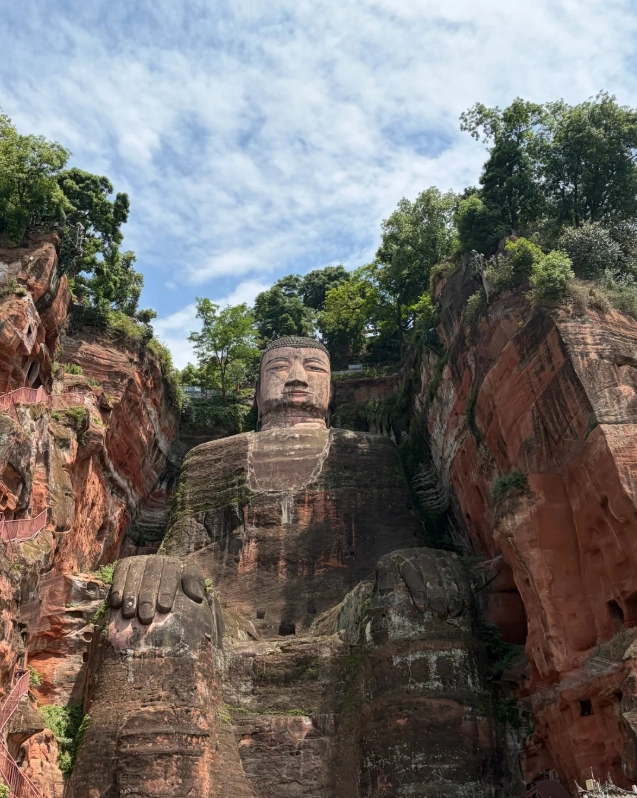
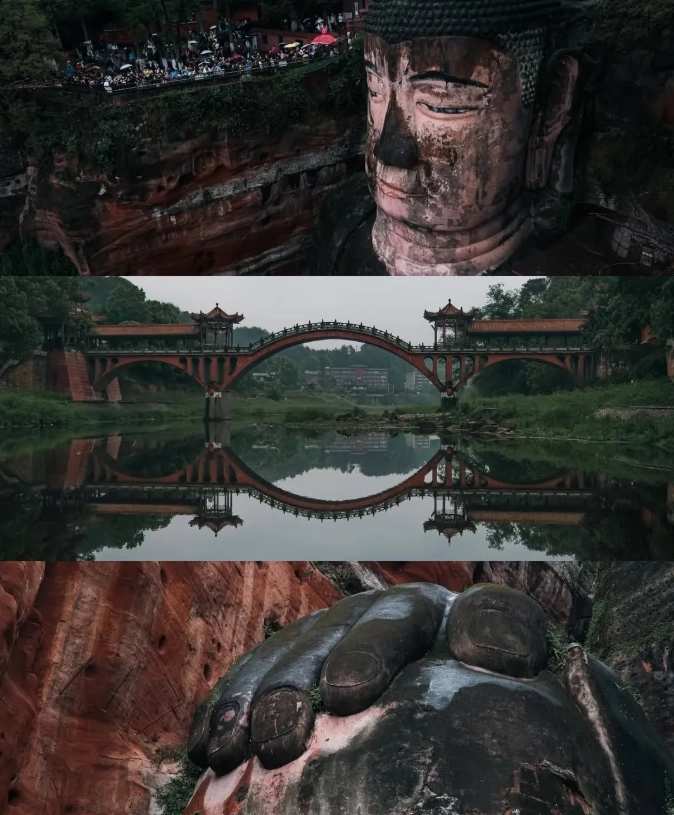
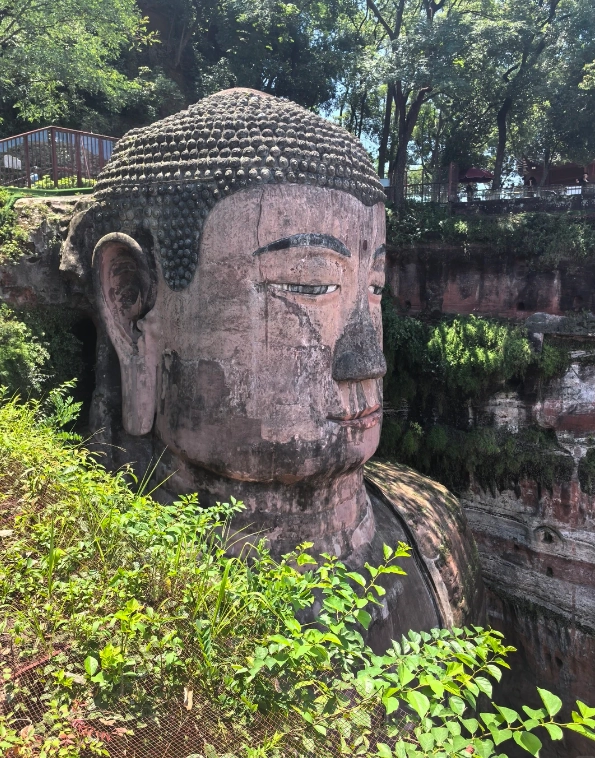
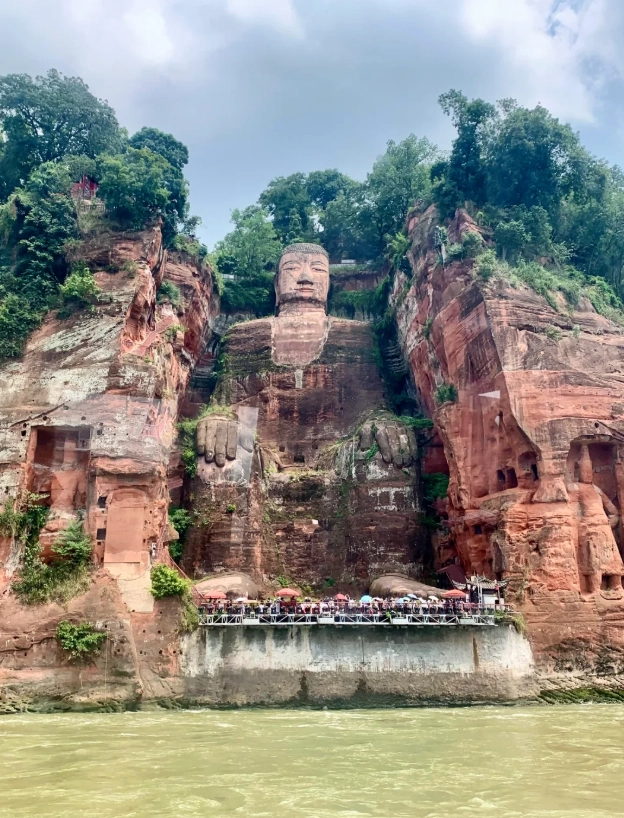
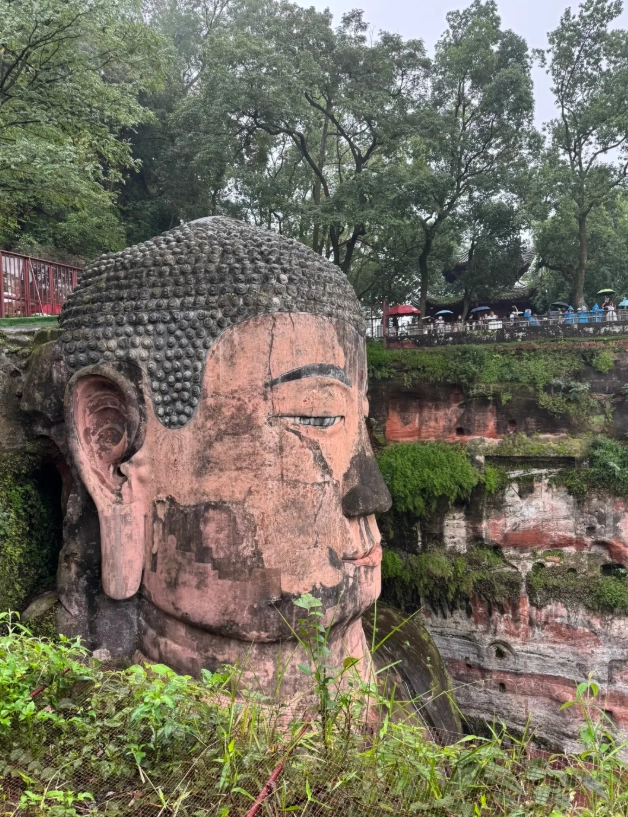
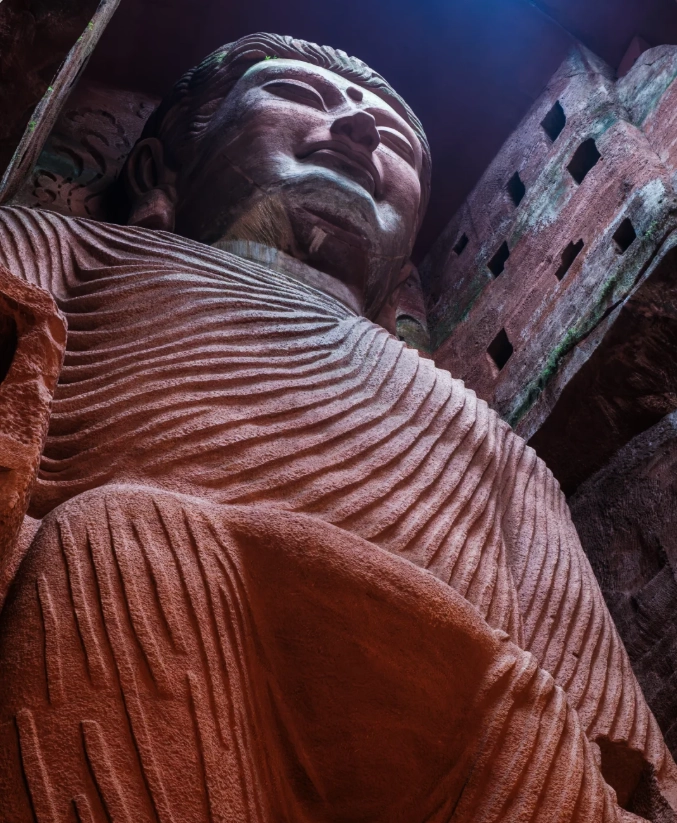
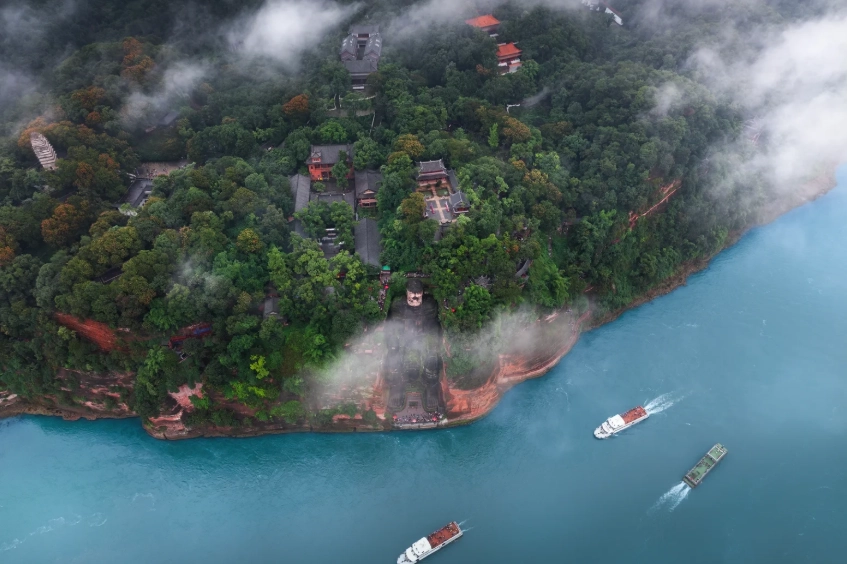
The largest and tallest stone Buddha statue in the world, carved directly into a red sandstone cliff face at the confluence of the Min, Dadu, and Qingyi rivers. Built during the Tang Dynasty, it was originally designed to calm the turbulent waters for passing ships.
Leshan Giant Buddha Opening Hours & Tickets
- 07:30–18:30 (April to October); 08:00–17:30 (November to March)
- Best season: March to May and September to November. Arrive right at the opening time to beat the massive tour groups.
- Ticket note:
Park walking entry is a flat rate. Alternatively, the sightseeing river cruise r...
Essential Leshan Giant Buddha Visitor Information
- Enquiries: +86 833 2115166
- Visitor center
- Public restrooms
- River cruise terminal
- Audio guide rentals
- Luggage storage
How to Get to Leshan Giant Buddha
Take a high-speed train from Chengdu (about 1 hour) to Leshan Station, then take bus K1 or a cheap taxi ride directly to the scenic area.
Leshan Giant Buddha Travel Safety & Advice
Dial 120. First aid stations are located near the main entrance and Lingyun Temple complex.
Leshan Giant Buddha Travel FAQ
I can't seem to book tickets for Jiuzhaigou with my credit card. What's the trick?
Don't bother with the official Chinese app unless you're fluent. Use Trip.com or Klook. They handle the passport booking and push a QR ticket to your phone. I've booked for at least 50 clients this way and it's been smooth every time.
Is it safe for a solo woman to travel around Sichuan's tourist spots?
Honestly, it is generally safe. The bigger issue is language and transport. Avoid hitchhiking, and stick to registered taxis or Didi (Chinese Uber). For evening trains, book the earliest service. And always keep a hotel card in Chinese so you can show the driver if you're lost.
How do I pay for street food if I only have cash?
You can't. Literally every street vendor, even in villages, uses a QR code. You have two options: get Alipay or WeChat Pay set up with your foreign card before you arrive, or download the Alipay 'Tourist Card' option that lets you preload cash. If all else fails, ask for a small restaurant to exchange cash — usually they'll help if you're a customer.
What's the best month to see Sichuan tourist attractions without crowds?
For Jiuzhaigou and Mount Emei, skip the Chinese national holidays in October and use late April or late September. For pandas, any weekday morning in March or November is a quiet time. Avoid summer weekends at the panda base; local families flood in.
Can I visit Leshan and Mount Emei in one day?
Technically yes, but you'll hate it. You'd need to start at 7am, fly through Leshan by 10, and then take a midday bus to Emei, which puts you hiking in the afternoon heat. I've done it with a client who refused to slow down. They ended up exhausted and missed the sunset at the summit. Spread it over two days.
Is it easy to get around Sichuan if I don’t speak Chinese?
Yes, but plan ahead. Major attractions have English signs, and you can get by with translation apps like Google Translate (with VPN) or Apple Translate (which works offline). For taxis, have your destination written in Chinese characters. For trains, use Trip.com to book in English. Just remember: cash is rarely used, so keep some for emergencies.
What’s the best way to avoid the crowds at top things to do in Sichuan?
Arrive early — before opening time. For panda base, book the first time slot; for Leshan, be at the south gate at 8:00 AM; for Jiuzhaigou, go on a weekday and skip the first shuttle stop. These small adjustments drastically reduce waiting. I’ve seen the same attractions empty at 8 AM and swamped at 10 AM.
Do I need a visa to visit Sichuan?
Most nationalities need to apply for an L visa (tourist visa) in advance. Check the latest requirements at the National Immigration Administration’s official website (www.nia.gov.cn). Visa-free transit policies change, so always confirm with the embassy. Once in Chengdu, you must register your accommodation within 24 hours — hotels do this automatically, but hostels might forget, so remind them.
Are there any safety concerns I should know about?
Sichuan is generally safe for travelers. Watch out for street pickpockets in crowded markets and never leave your bag unattended in tea houses. When hiking in Jiuzhaigou, stay on the marked trails — the forest is dense and easy to get lost. There’s also a medical center at the base, but it’s basic. Always bring your essentials like altitude sickness pills.
What payment methods work in Sichuan?
WeChat Pay and Alipay are accepted everywhere, even for a 2-yuan street snack. International credit cards are almost useless except at large hotels. To use mobile payments, link your foreign card to Alipay or WeChat Pay before arrival — the process can be done in a few minutes. Some merchants accept cash, but they might not give change for large bills, so carry smaller notes.

Recent Reviews
Went with my dad and we're both not great with crowds, but the early morning entrance around 8am made all the difference. The temple above the Buddha is calm and the smell of incense mixed with river air is lovely. The stone path down to the viewing platform is steep, but every step brought a new, jaw-dropping angle. Standing at the feet that are bigger than a car made me laugh out loud at how small I felt. Highly recommend!
Seeing this thing in person completely wrecked my sense of scale. You're walking along the cliff and suddenly boom, there's a giant carved ear and eyelashes. The construction history is fascinating — I spent an hour just reading the plaques and watching the way the stone drains work. Do yourself a favor and take the boat at the end of the afternoon; the light on the river and the Buddha's silhouette is magical. Easily a highlight of my Sichuan trip.
I wanted to love this place, but felt kind of meh afterwards. The Buddha is huge, no doubt, but half the face and arm area was under scaffolding when I visited, and the crowds made the narrow stairway a slow shuffle. The bus from the main gate feels like a money grab, and the boat ride is expensive for such a short loop. If you have limited time in China, I'd probably give this a miss. For us it was just okay.
The Buddha itself is incredible and the setting along the river is really impressive. I took the boat ride first, which gives you the classic panoramic view, but it was over in maybe 20 minutes and felt a bit too touristy. After that I hiked down the nine-turn path; yes it's steep but worth it. Only reason I'm giving 4 instead of 5 is the visitor flow can be chaotic and signage isn't great — I ended up doubling back twice. Still, a must-see if you're in the area.
Absolutely worth the climb! I went early on a weekday and had the stone path almost to myself. The scale of the Buddha is mind-blowing, but standing at its feet looking up at the enormous face is something I’ll never forget. The river view from the cliff path is also stunning — you can see where the two rivers meet. Bring water and good shoes, and use the less crowded east entrance if you can. Five stars, no question.
Maybe I came with too-high expectations, or I was unlucky with the day, but I left a bit flat. The Buddha is huge, sure, but the main face was partially covered by scaffolding when I visited, and the surrounding area felt more like a tourist fair than an ancient site — loud vendors, endless plastic souvenirs, overpriced drinks. The path down is impressive but not well explained. I'm glad I saw it, but I wouldn't rush back or recommend paying extra to be herded through.
The Buddha itself is incredible — there's no denying that. But my experience was slightly spoiled by the sheer number of people. On a Saturday in May, the queue for the boat was over an hour, and the cliff path was packed shoulder to shoulder. The site lacks clear English signage and the shuttle bus drop-off is a chaotic souvenir gauntlet. If you can visit on a weekday, it's probably a five-star place. For me, it was a four-star with a bit of patience.
Leshan was worth every second of the detour. The boat ride along the river offers the classic postcard view, and then walking the Nine-Bend Plank Road lets you really appreciate the details of the statue. It's crowded and sweaty in summer, but the breeze on the river and the Buddha's calm expression somehow cancel all that out. We even spotted the 'sleeping Buddha' formed by the mountains from the boat. A true wonder of the world.
I'm not usually one to write a review, but this place moved me. The engineering done 1,300 years ago is mind-boggling. We entered at the gate around 8am and almost had the upper terrace to ourselves. Looking down at the Buddha while the mist rose off the Min River gave me chills. The carvings on the sides and the nearby monasteries are easy to miss if you rush. Take your time and absorb the scale. Highlight of our two weeks in Sichuan, no question.
Honestly the Leshan Giant Buddha left me speechless. We took the boat from the pier first to see the full silhouette against the river, then climbed the walkway down along the cliff. Seeing the sheer scale up close — the 2-meter ears, the shoulders wider than my whole apartment — made my knees feel weak. The stairs are steep and there are a lot of them, but every viewpoint is worth it. Go on a clear morning if you can; the light makes the red sandstone glow. An absolutely breathtaking experience.
I've seen a lot of ancient wonders in Asia, and the Leshan Giant Buddha is absolutely top-tier. The scale is humbling – you can't grasp it until you're standing at its feet looking up. The audio guide is worth the extra few yuan; it tells fascinating stories about how the Buddha was built to calm the river currents. Pro tip: wear sturdy shoes because the stone steps are uneven, and bring a hat – there's barely any shade on the stairway. 10/10 would come back again!
What a masterpiece! I spent three hours just walking around the entire complex – not just the Buddha, but also the cliffside carvings and the temple at the top. The details on the Buddha's hair and face are still so sharp after 1,300 years. The best part? Watching the sunset paint the whole sculpture in golden light. I went on a weekday and it was surprisingly calm. If you love history and nature, this place delivers on every level. Highly recommend!
Honestly, I expected more. The statue is huge, no doubt, but the whole visit felt rushed and overpriced. The entrance fee is steep for what you get, and the paths are so crammed with people that you can barely stop to take a proper photo. Also, the restoration work is very visible – there's scaffolding around parts of the feet, which ruins the photo ops. I'd suggest seeing it from a boat instead of climbing down, because the stairway is narrow and feels unsafe when it's busy. For a UNESCO site, this was a letdown.
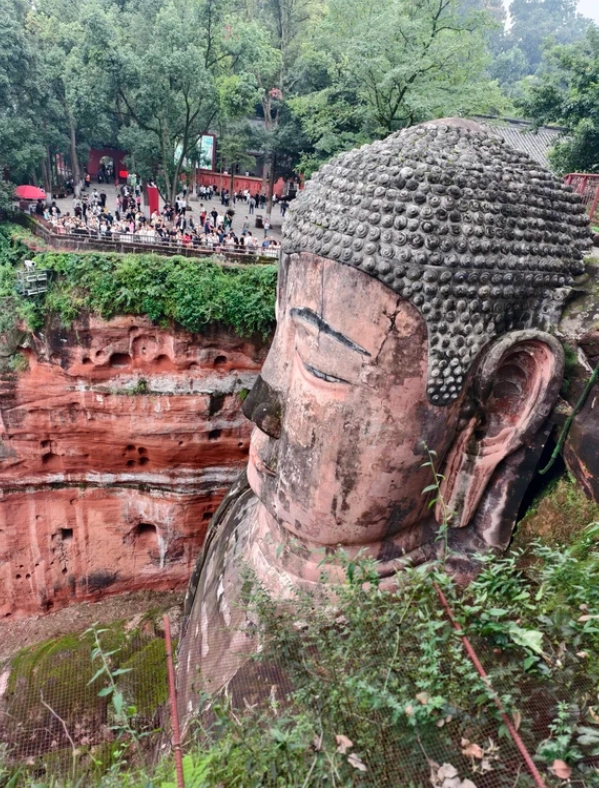
A solid 4-star experience. The Buddha itself is incredible and the engineering feat is mind-boggling for its time. However, I was a bit disappointed by how commercialized the entire site has become. There are vendors at every corner selling selfie sticks and trinkets, and the constant noise from boats honking below takes away from the serenity. Still, the view from the top where you can see the Buddha's head is something I won't forget. If you can tolerate the crowds, it's worth a visit.
Absolutely blown away by the sheer scale of this place! The Buddha is even more massive than pictures suggest. We took a boat cruise in the morning to get the full view, and the mist rising off the river made it feel almost mystical. The climb down the Nine Bend Stairway was a workout but totally worth it for the close-up shots. Bring water and go early to beat the crowds – we arrived at 7:30 AM and had some peaceful moments before the tour groups showed up. Best experience in Sichuan so far!
Incredible engineering and artistry. I'm a history buff and was blown away by the fact that this was carved in the Tang Dynasty – 1,200 years ago! The face is so serene. The best part was walking down the narrow staircase near the Buddha's head – you can see the intricate chisels marks up close. Also, the river breeze was lovely. Go early, wear a hat, and don't skip the nearby tombs if you have extra time.
Honestly a bit disappointed. The Buddha is huge, yes, but it's under renovation (I guess there's always some scaffolding?). The viewing platforms were packed shoulder-to-shoulder and it felt more like a tourist factory than a cultural site. The ticket price is steep for what you get – just one main attraction and very little interpretation. Maybe I'd feel different if I came on a weekday, but this was a 3 for me.
One of the most awe-inspiring places I've ever been. The scale is impossible to capture in photos. The way the Buddha sits in the cliff, overlooking the confluence of three rivers, is both peaceful and powerful. I loved walking around the base and seeing all the carved reliefs. Arrived around 11am and it was crowded, but everyone moves slowly so it's fine. A must-see if you're in Chengdu area.
Worth the trip, but be prepared for crowds. I arrived right when it opened at 7:30am and it was already getting busy. The Buddha itself is a marvel – you really can't grasp how massive it is until you stand next to its foot. The temple at the top is nice too. My only complaint is the lack of shade on the stairway, and some of the souvenir vendors were pushy. Still, a solid 4-star experience.
Absolutely breathtaking! The sheer size of the Leshan Giant Buddha is mind-blowing. We took a boat cruise first to get the full view from the river, and then climbed the stairs up close. The details in the stone carving are incredible, especially the hair and ears. It's a spiritual experience even if you're not religious. Bring water and wear good shoes – lots of steps! Easily the highlight of our Sichuan trip.
Leave a Review