 Fang Wang
Quick Guide: What's Inside
- Yantai Weekend Essentials: How to Handle Payments, Transport, and Entry?
- Day 1 of Your Yantai Weekend: The Historic City Center
- Day 2 of Your Yantai Weekend: Coastal Views and Wild Seafood
- Day 3 of Your Yantai Weekend: Penglai or Yangma Island – Which Side Trip Wins?
- Yantai Weekend Accommodation: Where to Stay Without the Hype
- Yantai Weekend Food Guide: What to Eat Beyond the Tourist Menus
- Yantai Weekend FAQ: What Should I Know Before Visiting?
Let me guess – you’ve already read three listicles about Yantai, and you still don’t know which pier to actually walk down or how to pay for a bowl of noodles without a Chinese bank card. I guide travelers here for a living, and the first time I brought my own cousin, we wasted 40 minutes hunting for a cash machine because nobody told us that most small shops only take WeChat or Alipay. So this guide is my unfiltered answer to the search query 'what to do in Yantai for a weekend' – built from real visits, not copied from brochures.
Here’s the honest headline: the classic two-day loop that everyone recommends actually makes you miss the best light on the coast. My rule of thumb? Do the historic quarter on the first morning, hit the east coast for sunset, and leave the famous Penglai pagoda for a third day if you can. Now, let’s get the logistics out of the way – because a 20-minute confusion about tickets can eat your whole morning.
Yantai Weekend Essentials: How to Handle Payments, Transport, and Entry?
Let’s tackle the things that can actually ruin your trip before we talk about views.
Payments: Prepare Like a Spy
Here’s the cold truth: most local shops, taxi rides, and even some ticket booths won’t accept your physical credit card. Yantai is not Shanghai – cash is still accepted in many places, but they’ll give you weird looks and often won’t have change for large bills. The one thing that works everywhere is a phone.
Before you arrive, set up Alipay or WeChat Pay and link your international Visa or Mastercard. The process takes five minutes and you can do it at the airport with a free Wi-Fi voucher that you grab from the information desk. I always tell my clients to keep 200 RMB in cash as a backup – especially for those tiny street food carts that don’t even have a QR code sticker that works with foreign accounts.
If you run into trouble, look for a Bank of China ATM – they’re the most likely to accept foreign cards. And remember, your hotel can often exchange cash as well, but the rate won’t be pretty.
Insider Advice: For every transaction, try to use Alipay – it has a built-in translator for bill details and it’s faster than WeChat Pay for foreigners.
Getting Around: Your Survival Guide
Google Maps is useless here – it barely shows the right bus stops and often places you in the middle of a park. I use AMap (the international version of the app) for navigation, and I recommend you download it before you arrive. Apple Maps actually works surprisingly well for point-to-point driving and transit in Yantai, but for walking routes inside the old town, AMap is more accurate.
From the airport, you have two main options: an airport shuttle bus that costs 25 RMB and drops you near the train station, or a Didi ride that takes 45 minutes and costs around 120 RMB. The shuttle runs about every 30 minutes, but it stops at several hotels – so you might be left walking with your bags if your hotel isn’t on the route.
For trains, Yantai South is the main high-speed rail stop. A taxi from there to the center (around Chaoyang Street) will take 25-35 minutes depending on traffic and cost about 40-50 RMB. Always use the meter – some drivers try to agree on a fixed price that’s double the actual fare.
Once you’re in the city center, your feet are your best friend. Most of the old quarter is walkable, and for longer distances, take a Didi – it’s cheaper than taxis and you can see the price before you book. For train tickets, book them on the official 12306 website to avoid queues.
Entry Tickets: The Passport Rule
Almost every major attraction now requires a physical passport for ticket purchases and security checks – your driver’s license or a photo of your passport won’t cut it. Yantai Mountain itself is free, but the lighthouse at the top costs a small fee (about 20 RMB) and they want to see your passport.
For paid sights like Penglai Geopark or the resort island if you choose to go, it’s smart to buy tickets via Trip.com or Klook – they accept international cards and you only need to show a QR code at the entrance. The official WeChat mini-programs are a nightmare to navigate with a foreign passport, so honestly, just skip them. Always have a backup copy of your passport in your phone’s notes – you’ll be asked to write down your details on paper forms. For the latest visa policies, check the National Immigration Administration website.
Day 1 of Your Yantai Weekend: The Historic City Center
Start your day late – like 9:30 a.m. – because the morning fog over the port is actually pretty, but the crowds are already queuing at the ticket gates. The trick is to hit the less famous spots first, then circle back.
Morning: Chaoyang Street and The Old Consulate Quarter
Begin at Chaoyang Street, a pedestrianized street that feels like a European postcard with its Chinese and Western mixed architecture. You’ll find charming 1920s banks, red-brick villas, and a handful of cute coffee shops that are actually decent. I always take my groups to the small courtyard at No. 42 – it has a beautiful tree and usually nobody else around.
After soaking in the details, walk five minutes to the Yantai Mountain Scenic Area. The entrance is free, but you need to show your passport at the ticket wicket. Once inside, follow the path that hugs the cliff – it leads to the old beacon tower and offers a wide view over the Huaxia (China) war memorial. Bring a windbreaker even in summer – the wind on the lookout can be fierce.
Avoid the lighthouse at midday – the line is short before 10 a.m. and after 3 p.m., but in between, you’ll be baking under the sun without shade. The fee is 20 RMB, and they’ll chase you back down if you arrive after 4:45 p.m. because they close the top at 5 p.m.
Lunch: Classic Yantai Lantern Shrimp
Right below the mountain, on Chaoyang Street, you’ll find a cluster of local restaurants. One of my favorites is a tiny place with a red lantern at the entrance – it does the best lantern shrimp (灯笼虾) in the area. The shrimp are sweet and juicy, flash-fried with garlic and served in a sizzling cast-iron pan. It’s not on the tourist menus, so point at the photo or just say 'deng long xia.' Expect to pay around 60-80 RMB per person with rice and a vegetable dish.
That place only takes Alipay or WeChat – no cards – and it gets packed by 12:30 p.m. Go early or grab the last table at 11 a.m.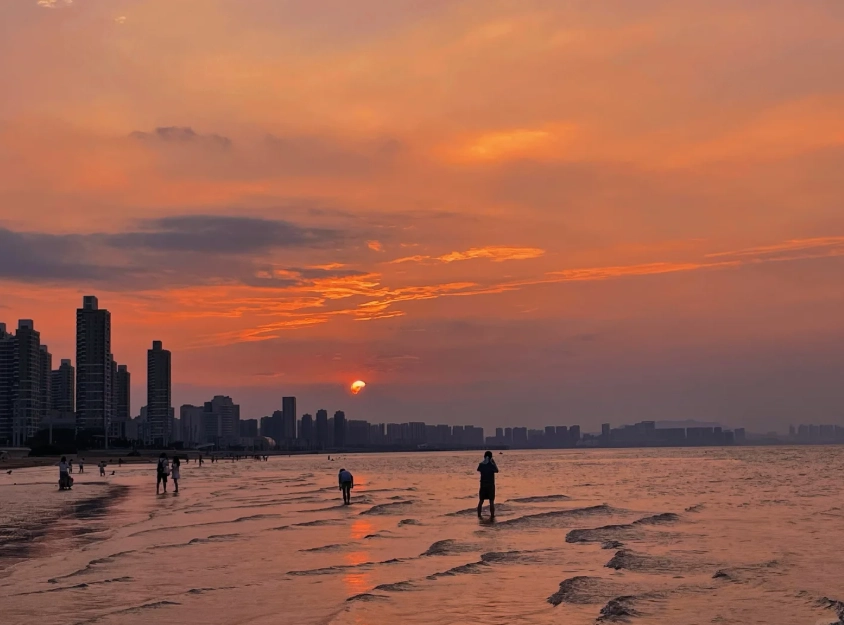
Afternoon: Suochengli – The Ancient Quarter
After lunch, walk 15 minutes to Suochengli, the original Ming-dynasty coastal fortress. It’s been restored into a living history street with shops selling everything from handmade silk to baked snacks. The charm is in the back alleys – most visitors rush down the main strip, but I always tell people to take the first right after the stone arch and go to the little Taoist temple (it’s free, just show your passport).
The temple’s courtyard has the best view of the Chinese acacia trees in late spring – but even in fall, the old wall gives you a sense of how the town used to defend its coast. There’s a small museum inside the fortress walls, but it’s mostly in Chinese. Still, it’s worth a quick look because the model of the old port explains why Yantai became a trading hub.
Sunset: The East Wall
Don’t miss the sunset from the eastern section of the city wall. It’s not on any map, but if you walk to the end of the main street in Suochengli, turn right, and follow the lane along the wall, you’ll see a gap with a set of stone steps. Climb up, and you get a perfect view of the sun sinking into the bay, with fishing boats coming back. It’s a local secret – I’ve never seen more than a handful of travelers there.
Day 2 of Your Yantai Weekend: Coastal Views and Wild Seafood
Today is all about the sea. You’ll walk a lot, but the reward is that salty breeze and some seriously underrated coastal views.
Morning: The Eastern Breakwater and Fisherman's Wharf
Get out early – by 8:30 a.m. – and head to the Eastern Breakwater (Dong Pao Tai). It's a narrow stone pier that juts into the Yellow Sea, and it offers a different perspective than the city beaches. The waves hit the rocks with a satisfying crash, and local anglers set up their poles along the edges. The walk from the Yantai Mountain area to the breakwater is about 20 minutes along the coastal path – or, if your legs are tired, take Didi and it’ll take 10 minutes and cost about 12 yuan.
Right near the breakwater, you’ll find the Fisherman’s Wharf (the one locals call 'Map of the Fisherman'). It’s a working dock with fishing boats unloading their catch in the morning. If you’re brave, buy a bag of fresh sea urchins from the vendors – they’ll even shuck them for you on the spot. In my experience, they’re ridiculously sweet and cost about 5 yuan each.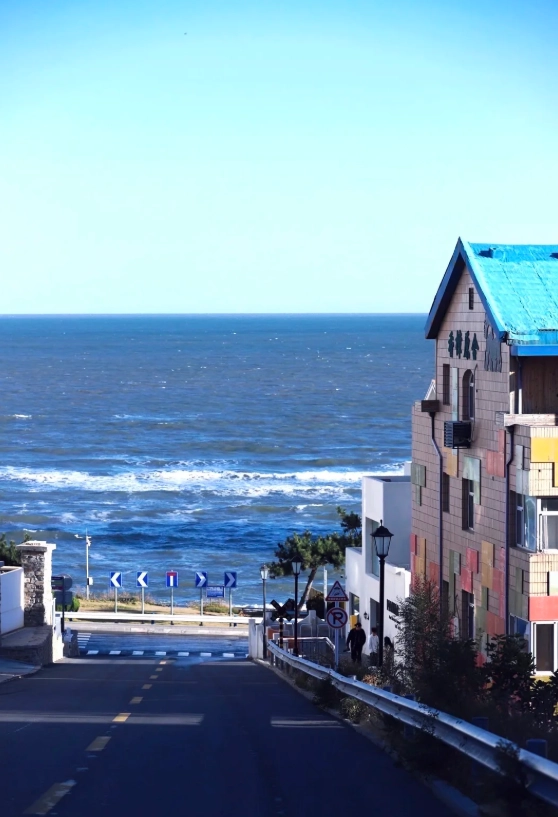
Midday: The Blue Harbor and Yantai's Best Ramen
Skip the overpriced café inside the Fisherman’s Wharf complex and instead wander over to a cozy shophouse on the main road opposite. There’s a place that does a local take on ramen – you’ll smell it before you see it. The broth is fried fish that’s been simmered overnight, and it’s a favorite among port workers. A bowl costs about 25 yuan, and they also serve a mean pickled cabbage.
The shop only has six stools, so don’t come with a big group unless you want to eat outside. It’s the kind of spot where you might be the only outsider, but the owner will just shrug and hand you a bowl with a wary smile.
Afternoon: The Silver Beach and the Famous Sunset Pier
After lunch, walk back along the coast to Yantai’s main city beach – the silver sand stretch near the Yantai University area. Locals call it 'Hai Yu Shu' (sea language tree) because of the old pine trees growing right on the sand. The beach is wide and not as crowded as you’d expect, especially on weekdays.
The real reason to be here is the time after 4 p.m. – the sunlight turns the sand a golden pink, and the silhouette of the old Zizai Mountain Pavilion makes a perfect postcard. This is also when local families start to grill seafood on the beach (it smells amazing). You can join them if you’re brave, or just buy a skewer from a vendor for 10 yuan.
If you have energy, walk all the way to the end of the beach to the Yantai Bridge – it’s the spot where the sea meets the river, and on a clear day you can see as far as the Penglai cliffs in the distance.
Evening: Seafood Cooking Class at a Local Home
One of the most memorable experiences is booking a small cooking class in an apartment near the beach. You can find them on Airbnb Experiences or Klook, and the host – a retired chef – will take you to the market to pick ingredients, then teach you how to make yantai-style steamed sea bass and clams in black bean sauce. It costs around 250 yuan per person, including the meal. It’s not a polished tourist activity, but it’s the kind of thing you’ll remember for years.
Day 3 of Your Yantai Weekend: Penglai or Yangma Island – Which Side Trip Wins?
If you’ve got a third day (or if you’re brave enough to do a full weekend with just two days), you’ll face the classic dilemma: the mythical Penglai or the laid-back Yangma Island? Here’s my honest take after doing both.
| Factor | Penglai | Yangma Island |
|---|---|---|
| Distance from Yantai | 80 km, 1.5-hour by bus/car | 40 km, 1-hour by bus/car |
| They say... | Legendary Eight Immortals crossing to the sea | Beautiful beach and a stunning coral reef |
| Entry fee | Around 100-140 yuan for the main complex | Free entry to the island, small fee for attractions |
| Best for | History lovers and photographers | Families and beach bums |
My recommendation: if you’re in Yantai only for a weekend, choose Yangma Island. Penglai is technically a separate city, and the main attraction – the mythical Penglai Pavilion – is impressive but crowded, and it feels like a theme park with the tacky additions. Yangma Island, on the other hand, is compact, easily done in a half-day, and you can swim there. The coral reef on the east side is genuinely beautiful at low tide, but you need to check the tide table before you go.
If you do pick Penglai, try to go on a Monday morning – the tour buses are gone, and you can have the main view of the pavilion almost to yourself. The ticket office loves to sell you combination tickets, but you only need the basic entry that covers the pavilion and the old fortress. Do not pay extra for the cable car.
For Yangma Island, rent a bicycle or an e-bike at the entrance (around 60 yuan for the whole day) and follow the coastal road counterclockwise. You’ll pass a fishing village where you can eat the catch of the day – try the grilled oyster with garlic, it’s 15 yuan for a dozen.
Yantai Weekend Accommodation: Where to Stay Without the Hype
Hotels in Yantai are cheaper than you think. The key is to avoid the tourist zone around the Pier and instead stay a bit further out where the real life is.
| Area | Vibe | Price range per night | Best for |
|---|---|---|---|
| Chaoyang Street / Yantai Mountain | Historic, walkable, a bit touristy | 400-800 yuan | First-timers who want to be in the middle of it all |
| Suochengli (Old Town) | Boutique, quiet lanes | 350-600 yuan | Couples and culture lovers |
| Lieshan District (University area) | Local, near beach, less touristy | 200-400 yuan | Budget travelers and those who want a real neighborhood |
For a weekend trip, my top pick is a small boutique hotel in Suochengli – the one hidden behind the old mint gate has only eight rooms, and it’s so quiet you can hear the doves in the courtyard. It costs about 450 yuan a night, includes a simple breakfast of baobing (yantai’s version of the Chinese crepe), and the owner speaks a bit of English.
If you’re on a budget, look at the chain hotels near the train station – they’re around 200 yuan a night and clean, but you’ll spend more time on transport. Also, always confirm that your hotel has an elevator – many old guesthouses in the old town don’t, and you don’t want to drag your suitcase up three flights of stairs in the humid heat.
Yantai Weekend Food Guide: What to Eat Beyond the Tourist Menus
The seafood in Yantai is legendary, but you need to know what to order and where.
The Seafood Must-Eats
Start with the uncrowned king: Lambert Shrimp (灯笼虾) – plump, sweet, and flash-fried. Then move onto sea cucumber (海参) – the local version is served braised in a rich brown sauce, a bit expensive but worth trying once. For the best value, order steamed snails (海螺) – they come with a toothpick and some soy-ginger dip.
Where to Find the Real Food
Go to the area around the vegetable market on the east side of the city. There’s a row of food stalls that only appear in the evening, and they serve everything from grilled squids to spicy conch. I always tell people to check their English menu – most stalls have a picture board, so pointing is fine. Prices are honest – a big plate of grilled shrimp goes for 30 yuan, and a local beer is 8 yuan.
If you want to sit down, look for a no-frills seafood restaurant with blue awnings – they’ll bring you a tank of live fish to choose from. Ask them to steam the flounder with a splash of soy sauce and hot pepper. It’s simple, fresh, and you’ll pay about 100-150 yuan per person.
Don't Skip the Snacks
Yantai’s sweet red bean cakes (红豆饼) are a must – they’re golden on the outside and ooze with ruby-red bean paste. You’ll find them from street vendors in the late afternoon. Also, grab a bag of locally made apple chips – Yantai’s apples are famous, and the dried version makes a perfect travel snack.
Yantai Weekend FAQ: What Should I Know Before Visiting?
Verified and fact-checked by the editorial team.








No comments yet.