 Tao Xu
Quick Takes
- Guangxi Weekend: The Smartest Way to Spend 48 Hours
- How to Build a Realistic Guangxi Weekend Itinerary
- Day 1 in Guilin: What to Do and Where to Go
- Day 2 in Yangshuo: A Field-Tested Plan
- How to Get from Guilin to Yangshuo Without a Tour Bus
- Where to Stay in Guilin and Yangshuo for a Short Trip
- Guangxi Street Food: What to Eat and Where to Find It
- FAQ: Answering Your Toughest Guangxi Weekend Questions
My hat nearly blew into the Li River last week — not the ideal start to a guiding day. But that’s the kind of surprise that keeps this job interesting. If you’re here because you’ve been searching “what to do in Guangxi for a weekend,” let me save you hours of scrolling through generic listicles.
Here is the truth: Most tourists try to cram three cities into 48 hours and end up seeing nothing but the inside of a tour bus. Don’t do that.
The winning formula is simple: Spend your first day in Guilin, your second in Yangshuo, and take the high-speed train between them. Skip the luxury cruise boats — they’re slow and expensive — and opt for a bamboo raft on the Yulong River instead. This plan is the exact one I walk through with my clients who are short on time but big on experiences.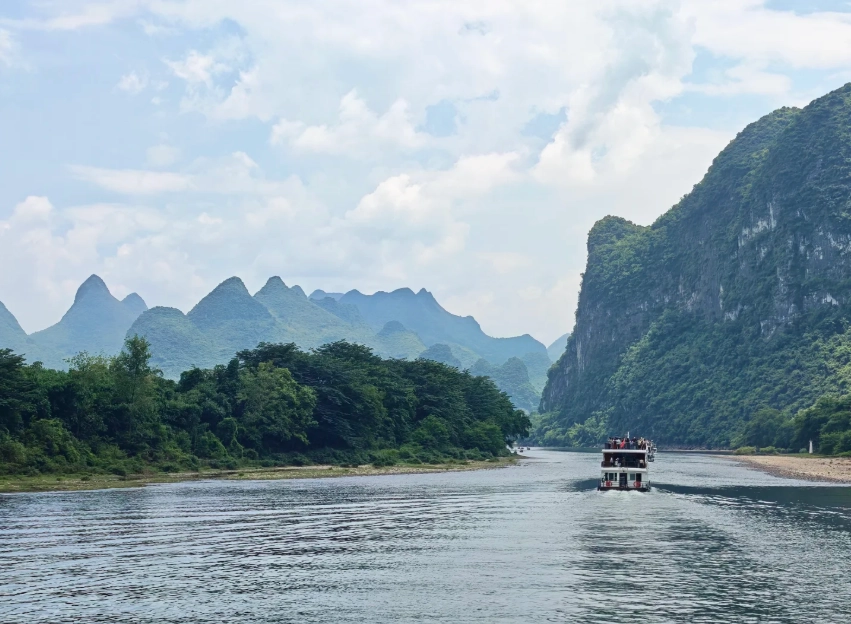
Guangxi Weekend: The Smartest Way to Spend 48 Hours
Let me be direct: If you have only one weekend in Guangxi, don’t try to see everything. Focus on two places: Guilin and Yangshuo. They’re connected by a fast and smooth rail link that makes it easy to split your time.
Guilin gives you the classic pancake-flat karst skyline blended with urban life — pagodas, riverside walks, and steaming bowls of rice noodles. Yangshuo is the countryside dream — surreal peaks, meandering rivers, and a bohemian vibe that has drawn travelers for decades.
In 48 hours, you can comfortably cover the highlights of both without losing your mind. I’ve run this exact loop with dozens of guests, including families with kids and grandparents. It works.
Here's how the time breaks down:
- Day 1 (morning to evening): Guilin — Elephant Trunk Hill, Two Rivers and Four Lakes area, and night market.
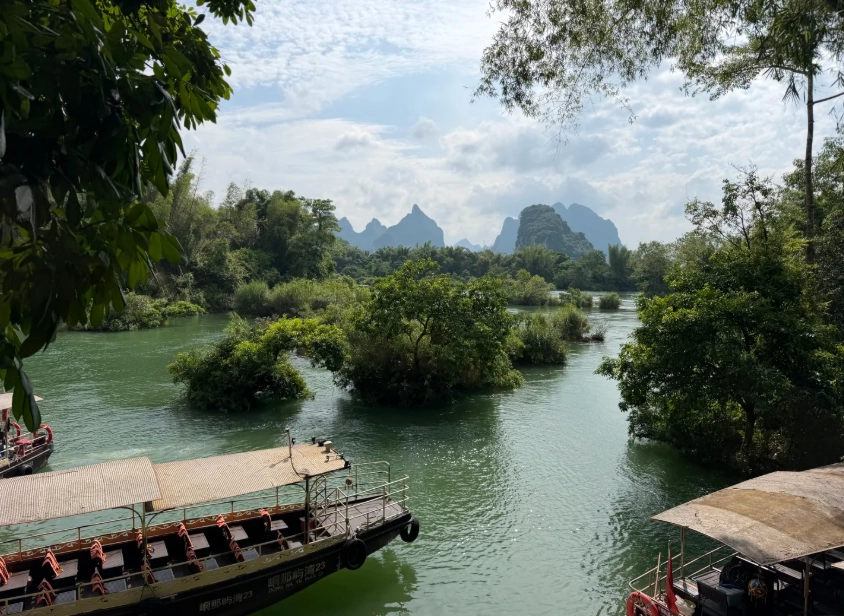
- Day 2 (early start): Yangshuo — Yulong River bamboo raft, Ten-Mile Gallery, West Street, then back to Guilin for departure.
Pro Tip: Book your high-speed train tickets at least 3 days ahead via the China Railway official website. It has an English interface, and you only need your passport. Walk-up tickets usually sell out on weekends.
How to Build a Realistic Guangxi Weekend Itinerary
I always tell my clients to treat the weekend as two half-days plus one full day. That way, you avoid the exhaustion that comes from trying to sprint through every attraction.
Here is a concrete method to plan, step by step:
- Book the high-speed rail from Guilin North to Yangshuo — it takes about 30 minutes. Once you arrive at Yangshuo station, a shuttle bus will take you to the town center (about 40 minutes). Keep this transfer time in mind.
- Reserve a hotel near Guilin’s central area for the first night. Look for something within walking distance of Two Rivers and Four Lakes — you’ll thank me when you want to stroll after dinner.
- Book a bamboo raft on the Yulong River for the morning of Day 2. This is non-negotiable if you want to glide through karst scenery without the roar of motorboats.
- Pre-download maps and translation apps. Google Maps doesn’t work properly in China, so use Apple Maps or the AMap Global app (in English). Save the offline area for Guilin.
Yes, the process can feel a little admin-heavy. But here’s the thing — putting in 30 minutes of booking before you arrive saves hours of frustration later.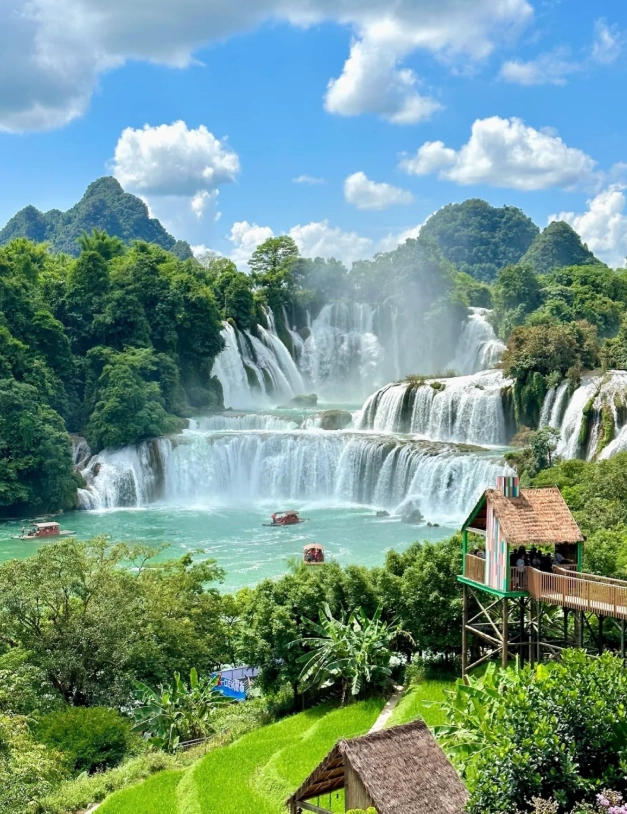
Day 1 in Guilin: What to Do and Where to Go
Let’s get straight to it. Morning is your golden window for Elephant Trunk Hill, Guilin’s most recognizable landmark. The entrance fee is around 55 RMB (children and seniors get discounts, but bring your passport as photo ID). The park is open from 7:30 a.m. to 6:30 p.m., but avoid noon — the sun is brutal and every tour group piles in.
My favorite route: Start at the main gate on Binjiang Road, walk along the river to the elephant-shaped rock, then loop through the small botanical garden. You’ll be done in about 90 minutes.
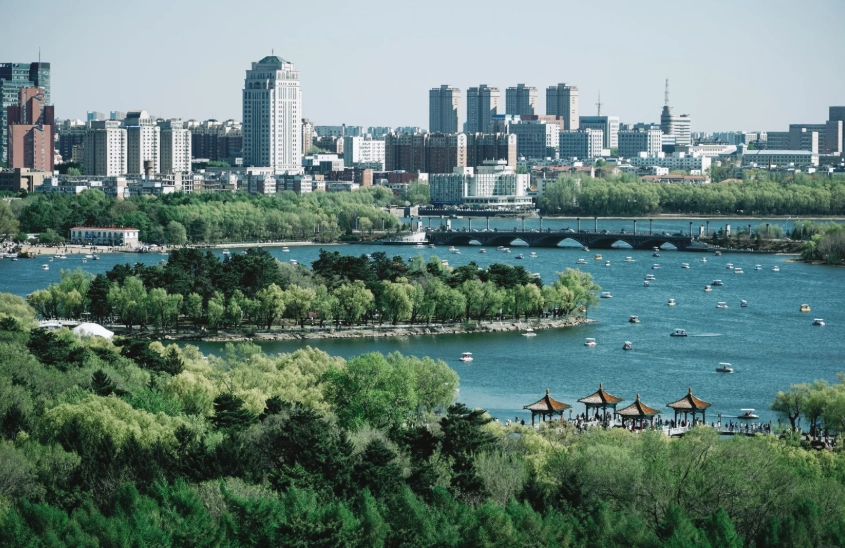
Afterward, head over to the Two Rivers and Four Lakes area — do not pay for an expensive boat ride. Instead, walk the free lakeside paths that loop around Rong Lake and Shan Lake. Around dusk, the Sun and Moon Twin Pagodas light up, making a postcard-perfect photo spot. I once watched two swans glide past while the pagodas reflected in the water — pure magic.
For lunch, walk to the nearby Zheng Yang Pedestrian Street. The energy is chaotic and lively. Try a bowl of Guilin rice noodles with pickled beans and chili oil. Look for a shop with a yellow sign saying 崇善米粉 (Chongshan Rice Noodles) — I’ve been eating there for a decade, and the broth is still the best in the city. A large bowl costs about 10 RMB.
In the afternoon, if you still have energy, visit the Detan Boat Pier area or simply relax in the riverfront park. Honestly, the best thing to do in Guilin is to slow down and soak up the scenery — not to check off every museum.
End your day at the night market on Zhengyang Road. Yes, it’s touristy, but it’s also a fantastic place to try stuffed snails (a local specialty) and sugarcane juice. Just remember: the stalls generally expect mobile payment. If you’re relying on cash, head to a bank first.
Day 2 in Yangshuo: A Field-Tested Plan
Take the first high-speed train from Guilin to Yangshuo. The station is actually in Xingping town, about a 40-minute shuttle from the main Yangshuo district. If you can, hire a private car at the station — it costs around 50 RMB and saves you waiting for the shuttle.
Your first stop: Yulong River bamboo rafting. This is the quintessential Yangshuo experience. Unlike the motorized rafts on the Li River, these are small bamboo rafts paddled by local operators. The most scenic section runs from Chaoyang Pier to Gongnong Bridge — about 90 minutes and costs around 150–180 RMB per raft (two passengers). Go as early as possible; by 10 a.m. it gets crowded and the rafts are lined up.
Insider Advice: Don’t book the long route that ends in the middle of nowhere — you’ll struggle to get a ride back. Stick to the short, loop-friendly section above.
After the raft, rent an e-bike (about 50 RMB for the day) and cruise along the Ten-Mile Gallery (十里画廊). It’s a scenic road flanked by karst peaks, rice fields, and small villages. I always tell my clients to turn off the main route and follow the narrow paths — that’s where you’ll find the farmer’s homesteads and the real feeling of rural Guangxi.
By evening, explore West Street (西街). It’s a combination of Chinese street food stalls, craft shops, and bars. The crowds can be intense, but grab a table at a rooftop café and watch the sun set behind the hills. Once, I saw a group of travelers from Belgium end the night dancing with locals under the stars. That’s the vibe.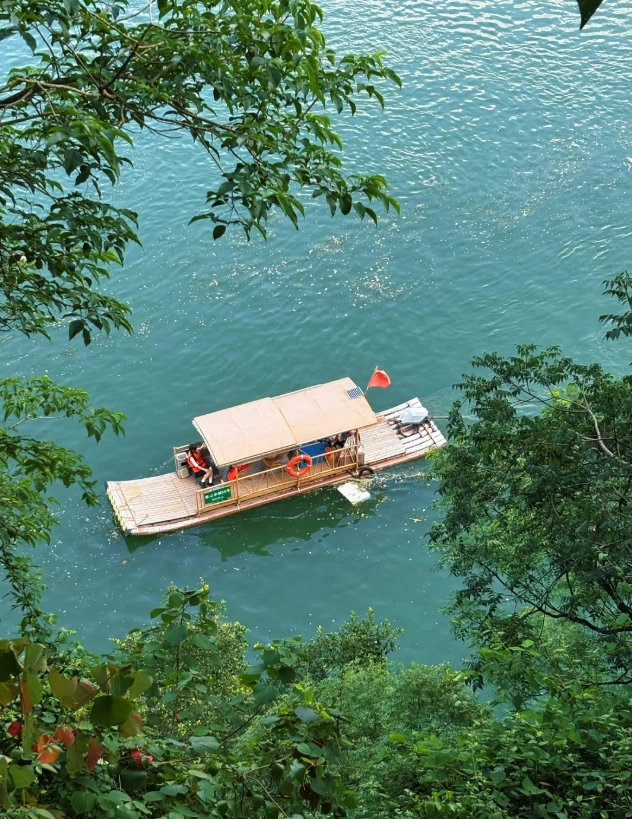
How to Get from Guilin to Yangshuo Without a Tour Bus
Trust me, you don’t want to be trapped on a tour bus that stops at every souvenir shop. Here’s the breakdown of your options:
| Mode | Duration | Cost (Approx.) | Best For |
|---|---|---|---|
| High-speed train | 30 min to Yangshuo + 40 min bus | 30 RMB + 20 RMB | Speed and reliability |
| Li River cruise | 4–5 hours | 300 RMB+ | Scenic views, slow pace |
| Long-distance bus | 1.5 hours | 25 RMB | Budget travelers |
| Private car | 1 hour | 150 RMB | Groups or early departures |
For a weekend, the high-speed train is the clear winner. It’s punctual, comfortable, and you can easily book it online. Just remember that the Yangshuo train station is in Xingping, so your total door-to-door time is around 1.5 hours — factor that into your plans.
If you happen to have a spare afternoon, the Li River cruise is stunning, but it’s not a good choice for a tight schedule. I’ve had clients who were fascinated by it, but they were the ones with an extra day.
Where to Stay in Guilin and Yangshuo for a Short Trip
I’m going to be honest with you: There’s no single “best” hotel that suits everyone. It depends on your budget and what you want after a day of exploring. Here are my tried-and-tested recommendations by area:
| Area | Nightly Price Range (Double Room) | Best For |
|---|---|---|
| Guilin city center (near Two Rivers & Four Lakes) | 250–600 RMB | First-timers who want to walk everywhere |
| Yangshuo West Street area | 200–500 RMB | Nightlife and food lovers |
| Yangshuo countryside | 350–800+ RMB | Couples and photographers seeking tranquility |
For Guilin, I usually steer my clients toward the area near Rong Lake. It’s quieter than the main hub but still a short walk to the top attractions. Many mid-range hotels there come with a decent breakfast and Wi-Fi that actually works.
In Yangshuo, staying in West Street is convenient but can be noisy until late. If you want a more authentic feel, pick a guesthouse along the Yulong River — for about 300 RMB a night, you can wake up to rice fields and karst peaks right outside your window. Just check if the place has reliable Wi-Fi and a voltage converter if you need one.
One thing that often surprises foreigners: Most hotels in this area do not accept international credit cards. You’ll need to pay with Alipay or WeChat Pay linked to a foreign card. Some upscale hotels may take card, but it’s not guaranteed — always have a mobile payment method ready.
Guangxi Street Food: What to Eat and Where to Find It
Forget what you’ve read about “spicy” Chinese food — Guangxi has its own culinary identity. The flavors are bold, slightly sour, and often numbing. I’ve spent years trying pretty much everything, and these are the must-eats:
- Guilin Rice Noodles (桂林米粉) — The ultimate breakfast. Flat rice noodles with pickled beans, peanuts, chili oil, and a rich meat broth. You’ll find shops everywhere; I’d trust a place with locals crowding outside. Prices run 8–15 RMB.
- Beer Fish (啤酒鱼) — A Yangshuo specialty. Fresh fish braised with beer, tomatoes, and spices. The best is at a family-run joint, not a fancy restaurant. My go-to is “Master Chef Beer Fish” on West Street, but be prepared to queue at dinner time. Expect to pay around 80–120 RMB for a whole fish.
- Stuffed Snails (酿田螺) — Sold at night markets and local stalls. Snails are stuffed with a mix of pork and herbs, then cooked in a spicy broth. Use a toothpick to pull the meat out — it’s messy but worth it. Try them at the Zhengyang Road night market.
- Yam Rice Noodles (山药粉) — A healthier option, made from Chinese yam, often served in a clear soup. Perfect if you need a break from heavy flavors.
Payment at these small shops is almost exclusively via mobile payment. If you’re not set up with Alipay or WeChat Pay, you might have trouble. But don’t panic — many tourists successfully set up Alipay with their international visa card on arrival. I’ve seen it work with a few minutes of setup at the airport.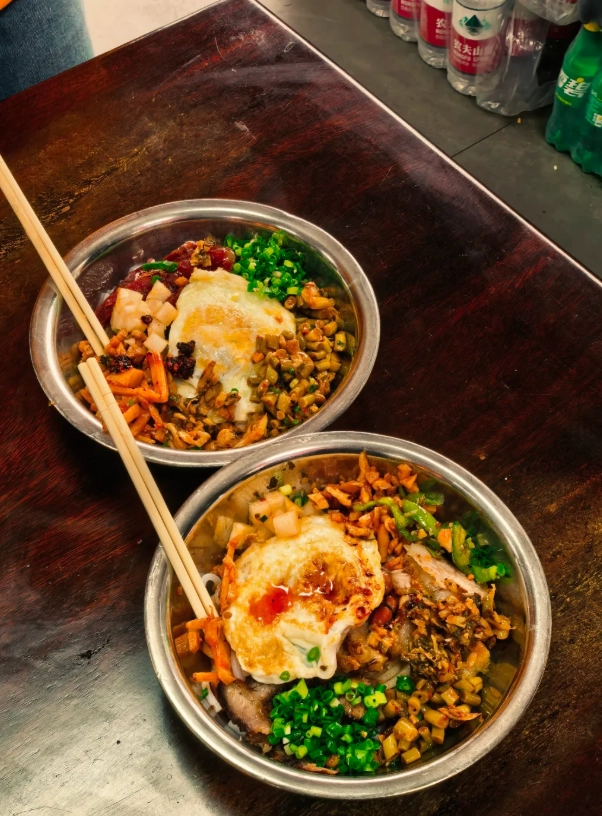
FAQ: Answering Your Toughest Guangxi Weekend Questions
Verified and fact-checked by the editorial team.







No comments yet.