 Peng Gao
Quick Escape Map
I’ve lost count of how many clients have burst into tears here — not out of sadness, but sheer awe. That’s the Terracotta Warriors effect.
But let me stop you right there: if you only follow the generic “top attractions” list, you’ll spend your day fighting crowds and missing the real magic. Here is the catch: most visitors show up at 10 AM, get baked in the sun, and leave exhausted.
So here’s my blunt truth: the best time to see the warriors is at the opening bell — 8:00 AM. And the only way to avoid the tour-group tsunami is to book your ticket for the very first slot. Period.
Now, let me save you from the rabbit hole of Chinese websites and dodgy blog posts. This Shaanxi guide gives you exactly what to do, when to go, and how to skip the nonsense — built from nearly a decade of leading curious travellers across this underrated province.
How to Plan Your Shaanxi Itinerary Without Losing Your Mind
First things first — Shaanxi is bigger than most people expect. If you base yourself in Xi’an, the capital, you can day-trip to most highlights, but you need to know the distances and the logistics. Plan around two main clusters: the city core (City Wall, Muslim Quarter, Big Wild Goose Pagoda) and the eastern outskirts (Terracotta Warriors, Huaqing Hot Springs, and Hua Shan if you’re adventurous).
The Biggest Mistake Most Foreign Visitors Make
They underestimate the reservation system. Nearly every major site in Shaanxi now requires a real-name, passport-linked booking before you arrive. Show up without a reservation and you’ll be turned away — I’ve watched this happen to countless tourists. The good news: you can book through Trip.com or Klook in English, but you’ll pay a small convenience fee. Or you can navigate the official WeChat mini-programs by asking your hotel receptionist to help — a tactic that works surprisingly well.
Choosing Your Base: Xi’an vs. Other Cities
Stay in Xi’an. No question. The city itself is a treasure chest, and the high-speed rail network makes day trips to places like Huashan or even the Ming-era Hancheng passable. For most visitors, I recommend staying within the City Wall for that medieval immersion, or just outside for better value. More on that later.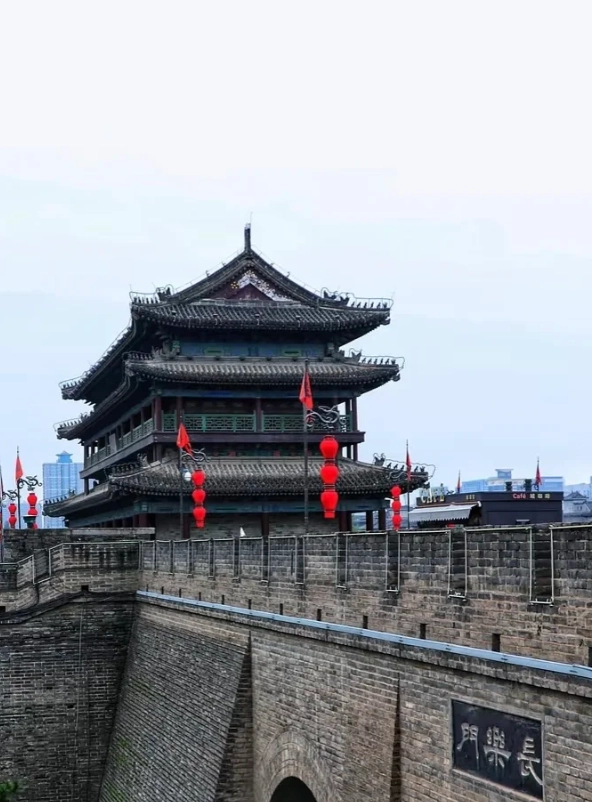
7 Unmissable Things to Do in Shaanxi
1. Stand Before the Terracotta Warriors
This is why you came, right? The Terracotta Army is the undisputed king of Chinese archaeology — a UNESCO World Heritage site that honestly looks photoshopped when you first walk into Pit 1. But it’s not just the warriors that amaze me; it’s the fact that each face is unique.
How to see them without losing your sanity:
- Ticket price: around 120 CNY for adults, but always double-check — prices can shift.
- Booking: Must be done in advance via the official WeChat account, Trip.com, or Klook. Bring your passport to scan at the gate.
- Opening hours: 8:00 AM to 5:00 PM (last entry around 4:00 PM). Aim for the 8:00–9:00 AM slot.
- Getting there: The most straightforward route is to take the tourist bus from Xi’an Railway Station (look for the official blue sign saying “游5/306”). It takes about 60–80 minutes. Alternatively, take Metro Line 9 to Huqingchi Station and grab a taxi (20 minutes, ~30 CNY).
- Time needed: at least 3–4 hours. Go straight to Pit 1 when you enter — everyone else starts there, but they also stop for selfies. Instead, walk through Pit 3 first (it’s small), then Pit 2, then circle back to Pit 1 once the initial wave has moved.
Pro Tip: The queue for the shuttle bus from the car park to the pits gets long by mid-morning. If you can walk (about 15 minutes on flat ground), you’ll beat the crowd. The walk is actually enjoyable — you pass over a bridge with a nice view of the qin tomb mound in the distance.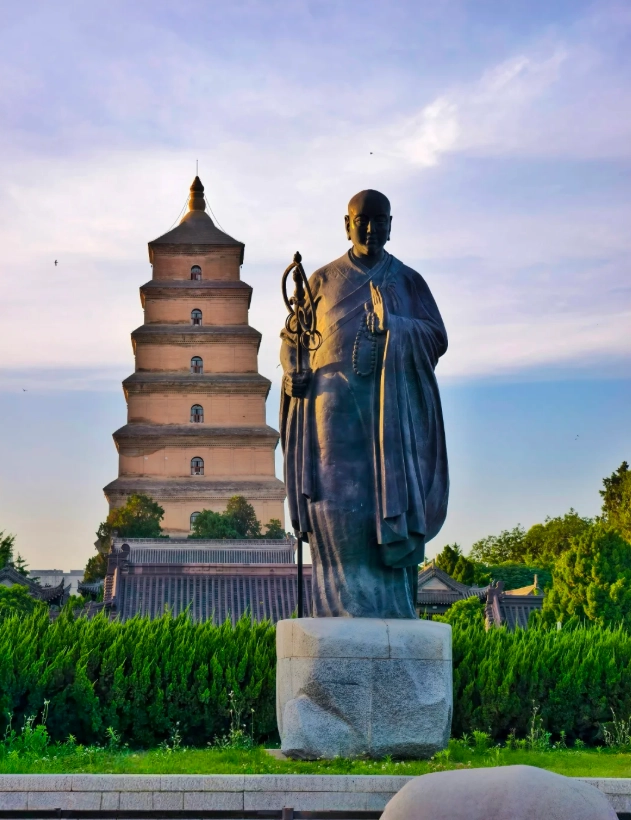
2. Walk or Cycle the Ancient City Wall
The City Wall is the most complete surviving Ming-era city wall in China. It’s massive — 13.7 km around. You can walk the whole thing (about 3–4 hours) or rent a bike (bikes are available at the South Gate). I prefer the bike — you can cover the entire circuit in 90 minutes, stopping for photos whenever you want.
Key details:
- Ticket: about 54 CNY. Rent a bike: 45 CNY for a single, 90 CNY for a tandem.
- Entrances: South Gate (Yongningmen) and North Gate (Anyuanmen) are the most convenient. South Gate is open later (8:00 AM – 22:00 PM in summer).
- Best time: go after 4 PM when the sun softens and the light turns golden. The wall is beautiful at sunset, and you’ll see both the modern city and the old rooftops within the Inner City.
- Watch out: the brick surface is uneven after centuries of wear — wear proper shoes. Also, renting a bike costs extra, and you’ll need to leave a 200 CNY deposit plus your passport.
Insider Advice: The section between South Gate and West Gate is the wildest and most photogenic. Skip the tourist touts selling “kite experiences” near the South Gate — they’re not authentic.
3. Get Lost in the Muslim Quarter (and Eat!)
Right next to the Drum Tower lies a labyrinth of alleys known as the Muslim Quarter (Huimin Street). It’s not just one street — it’s a whole district teeming with food stalls, tiny shops, and centuries-old mosques. The aroma of spiced lamb and sizzling flatbreads is insane.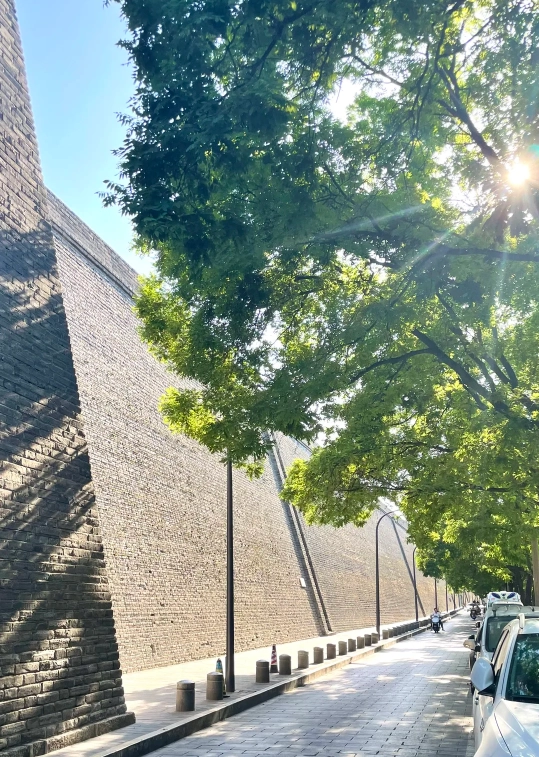
What to do here:
- Eat your way through: try roujiamo (Chinese burger with spiced meat), biangbiang noodles, and yangrou paomo (lamb soup with bread).
- Visit the Great Mosque — it’s a hidden gem blending Chinese architectural styles with Islamic traditions. Entrance is 25 CNY.
- Come in the late afternoon. The area is a ghost town in scorching midday heat, but by 5 PM the vibe explodes.
Pro Tip: Don’t buy the first stall you see — locals know that the best stands are tucked into the smaller alleys. Look for queues. If locals are waiting 20 minutes, you’ve found the gold.
4. Climb the Big Wild Goose Pagoda
The Big Wild Goose Pagoda (Dayanta) is a Tang Dynasty icon, originally built to house Buddhist scriptures brought back from India. The surrounding Da Ci’en Temple complex is beautiful, and the square in front has a famous musical fountain show at night.
Details:
- Entrance to the temple: around 40 CNY. Climbing the pagoda costs an extra 30 CNY — worth it for the view over the city.
- Opening hours: 8:00 AM to 5:30 PM (last entry 5:00 PM).
- Getting there: Metro Line 3 or 4 to Dayanta Station, Exit C. From the city wall, it’s a 20-minute taxi ride.
Here’s a non-consensus tip: most tourists visit the pagoda at noon. But the pagoda is boxed in by modern blocks, so the best light hits the south side only in the late afternoon. Plus, the fountain square’s water shows kick off around 20:00 (check the daily schedule), so time your visit to catch the sunset from the pagoda and then hang around for the fountain.
5. Shaanxi History Museum (Book This in Advance)
One of China’s best provincial museums, packed with artifacts from the Zhou, Qin, Han, and Tang dynasties. The collection is a who’s who of Chinese history. But here’s the kicker: it’s free, which means it’s insanely crowded and notoriously hard to get into.
Important:
- Free admission, but you MUST reserve a ticket on the official WeChat account “Shaanxi History Museum” up to 2–7 days in advance. Tickets often sell out within minutes.
- If you can’t get a free ticket, you can buy a paid ticket to special exhibitions (usually 30–60 CNY) which also gives you access to the main galleries.
- Bring your passport to collect the ticket.
- Allow at least 2-3 hours. The museum is not huge, but the artifacts deserve a slow look.
Pro Tip: Book the very first time slot (8:30 AM) and you’ll have the halls nearly to yourself for the first hour. The central hall with the legendary Tang horses is mesmerizing without a wall of selfie-sticks.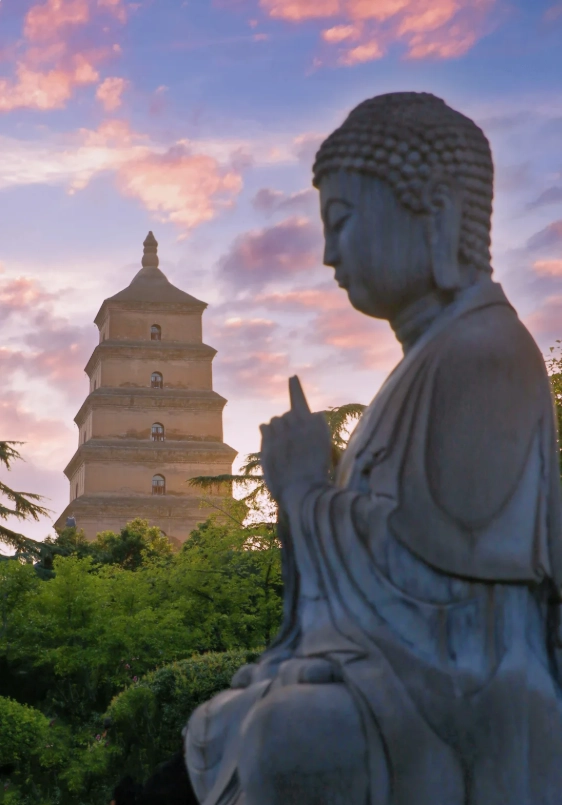
6. Take a Day Trip to Hua Shan (The Plank Walk)
Hua Shan is one of China’s Five Great Mountains and famous for the terrifying “Plank Walk in the Sky” — a narrow wooden path bolted to a cliff face. If you’re into adrenaline (or want to conquer a fear of heights), this is unmissable. But it’s a serious day trip.
Logistics:
- How to get there: High-speed train from Xi’an North Station to Huashan North Station (30–40 minutes), then a free shuttle bus to the Visitor Center.
- Tickets: Mountain ticket around 160 CNY. Cableways cost extra (West or East peak cable - about 120–140 CNY each way).
- Time required: full day. Start early, like 8 AM. The last cable car down is around 5 PM, so don’t dawdle.
Insider Advice: The Plank Walk often has a long wait (up to 2 hours) and sometimes closes in bad weather. If you’re short on time, skip the summit hikes and just do the Plank Walk — go to the West Peak cable station first, then follow the signs. Bring gloves (sold cheaply) because the chains are cold and rough.
7. Explore Tang Paradise or Catch a Tang Dynasty Show
Tang Paradise is a massive theme park-themed to the Tang Dynasty, with recreations of royal gardens, nightly performances, and a laser show. It’s a bit kitsch, but it’s surprisingly fun, especially in the evening.
Alternatively, book a seat at the “Tang Dynasty Show” (Tang Yue Gong) — a dinner theater with traditional music and dance. It’s touristy, but the costumes and choreography are stunning. Prices range from ~200 to ~500 CNY depending on dinner package.
For a less overhyped experience, walk the Grand South Lake (Qujiang Lake) — it’s free, and locals gather there to dance, sing, and do calisthenics at sunset. Absolutely free and authentic.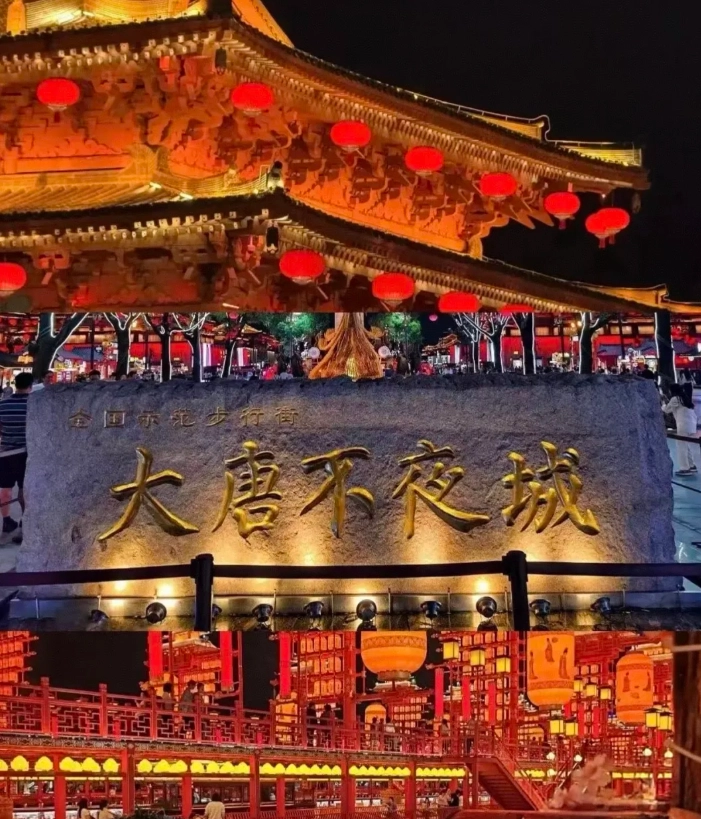
What to Do in Shaanxi on a Tight Budget?
Shaanxi isn’t expensive, but costs add up. Here’s how to stretch your yuan:
- Skip Tang Paradise (it’s pricey) and head to Qujiang Lake instead.
- Take public transportation — the metro costs only 2–6 CNY per trip.
- Eat local street food in the Muslim Quarter — you can have a filling meal for under 30 CNY.
- Visit the free parts of the City Wall: you can walk along the wider parks outside the wall without paying the gate fee.
- Take the budget bus (游5) instead of a taxi to the Terracotta Warriors.
The best free cultural experience: The Bell Tower and Drum Tower can be seen from the outside for free — they look spectacular when illuminated at night. Also, the city’s morning markets (like the small produce market near the South Gate) offer a glimpse of local life you just can’t get in a museum.
Practical Survival Tips for First-Timers in Shaanxi
Payments: Alipay or WeChat Is King
China is essentially a cashless society now. Most shops, restaurants, and even some temples accept only Alipay or WeChat Pay. Foreign credit cards only work in big hotels and a few high-end restaurants. So before you arrive, link your international credit or debit card to Alipay (the process is easy now) or team up with a local friend to transfer money. Carry a small amount of cash as backup — but note that some vendors won’t make change.
Getting Around: Subway, Taxi, and the High-Speed Rail
Xi’an’s metro is clean, fast, and has English signs. Taxis are affordable (starting at 8.5 CNY), but make sure to have your destination written in Chinese. Ride-hailing apps like Didi are a lifesaver. Google Maps is unreliable in China — use Apple Maps (which is powered by Chinese mapping data) or download Gaode Maps and use its English feature. Always carry a business card from your hotel so you can show a taxi driver when you need to get back.
Booking Tickets: What You Must Do Before You Go
Beyond the Terracotta Warriors and Shaanxi History Museum, several other sites also require advance reservation — for example, the Tang Paradise often has timed entry tickets. The golden rule: if you plan to visit a major attraction, book it at least one day ahead. For the warriors and the museum, book a week in advance if possible. If you’re nervous about navigating Chinese mini-programs, use Trip.com or Klook, but always enter your passport details correctly.
Dealing with the Crowds: When to Go Where
Weekends are busy, Chinese public holidays (like National Day) are insane. If you can, go on weekdays. For the Terracotta Warriors, book the earliest slot. For the City Wall, go in late afternoon. For the Muslim Quarter, hit it around 6 PM on a weekday — you’ll avoid the bulk of the dinner rush. And always have a “rainy day” Plan B: Xi’an has several great museums (like the Xi’an Museum) that are perfect for sheltering from a downpour.
Where to Stay: Neighborhood Guide
Where you stay can make or break your trip. Here’s my honest breakdown:
| Area | Vibe | Distance to Main Sights | Price Range (per night) | Best For |
|---|---|---|---|---|
| Inside the City Wall (near Bell Tower) | Historic, central, lively | Walk to Muslim Quarter, City Wall South Gate | 300–700 CNY | First-timers, photo lovers |
| Qujiang District | Modern, artsy, near Big Wild Goose Pagoda | 5 min walk to Big Wild Goose Pagoda | 350–800 CNY | Families, couples |
| Outside the Wall (e.g., Beidajie Area) | Budget-friendly, local feel | 10-15 min metro to downtown | 150–400 CNY | Backpackers, budget travelers |
No matter which neighborhood you choose, make sure your hotel has stable Wi-Fi and an elevator (many hostels are in walk-up buildings). Ask if the front desk speaks English — it’s more common than you think, but not guaranteed. Always have your passport handy for check-in, as it’s legally required.
What to Eat (Quick Guide)
Shaanxi cuisine is hearty, carb-forward, and absolutely addictive. You haven’t truly been until you’ve tried:
- Roujiamo — “Chinese hamburger” with braised pork or beef stuffed in a crispy flatbread.
- Biangbiang noodles — wide, hand-pulled noodles with chili oil and garlic.
- Yangrou paomo — lamb soup with torn flatbread, perfect for a chilly day.
- Liangpi — cold rice noodles in a tangy chili sauce, drizzled with sesame paste.
- Guantang bao — soup dumplings with rich broth.
Where to find them: the Muslim Quarter is the easy answer, and it’s honestly good. For a more local vibe, head to nearby Dapiyuan Street (a short walk west of the Drum Tower). Just look for the stores with the most locals — the ones with long queues and greasy hand-written menus are your golden ticket. Most places are mobile-payment only, and English menus are rare, but you can always point at what others are eating.
FAQs for Your Shaanxi Trip
This content has been fact-checked to ensure informational precision. Verified and fact-checked by the editorial team.






No comments yet.