.jpeg) Mike Sun
Mike Sun
What You'll Find Here
I've led over 40 groups through Puning Temple in the past decade, and I still get asked the same question before every trip: “Is Puning Temple worth visiting?” My short answer: yes, if you go with the right expectations and avoid the common mistakes I see tourists make every week.
Let me paint you a picture. You walk through the main hall, look up, and your jaw drops. A 22-meter tall, five-story wooden statue of Guanyin, the goddess of mercy, stands in front of you — carved from a single sandalwood tree? No, actually it's made of multiple pine and cypress pieces joined together, but the craftsmanship makes it seem like one piece. That's the centerpiece. But Puning Temple is more than just that statue. It's a blend of Han and Tibetan Buddhist architecture, a quiet escape from Chengde's summer crowds (if you know when to go), and a place where you can still feel the spiritual weight of the Qing dynasty.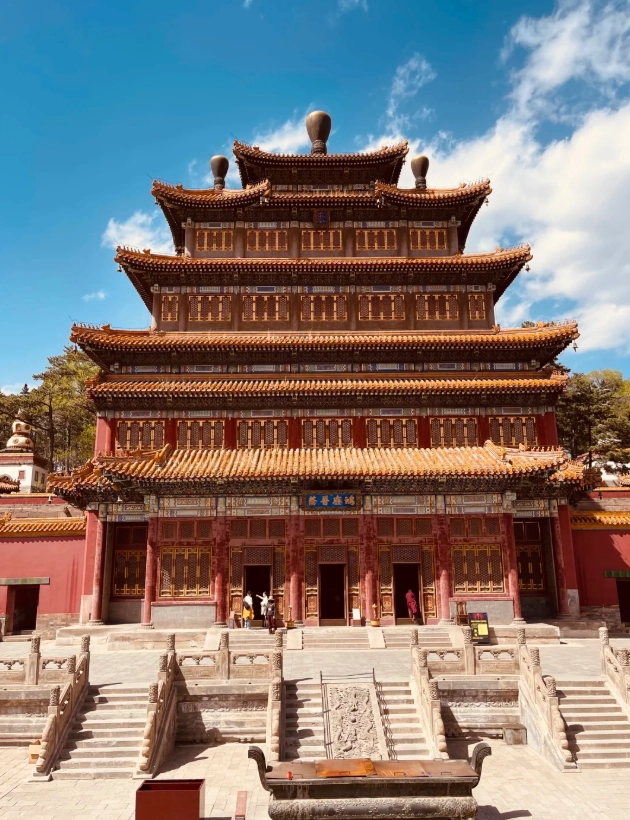
Why Visit Puning Temple
Built in 1755 under Emperor Qianlong, Puning Temple (also known as the Temple of Universal Peace) was constructed to commemorate the Qing victory over the Dzungar Mongols. Its architecture mirrors the Samye Monastery in Tibet, making it one of the “Eight Outer Temples” of the Chengde Mountain Resort complex. But what really draws people is the Mahayana Hall (Dacheng Ge), which houses the world's tallest wooden statue — a 22.28-meter, 110-ton gilded wooden statue of Avalokitesvara (Guanyin) with 42 arms. Yes, 42. The statue is a masterpiece of 18th-century wood carving, and photos simply don't do it justice.
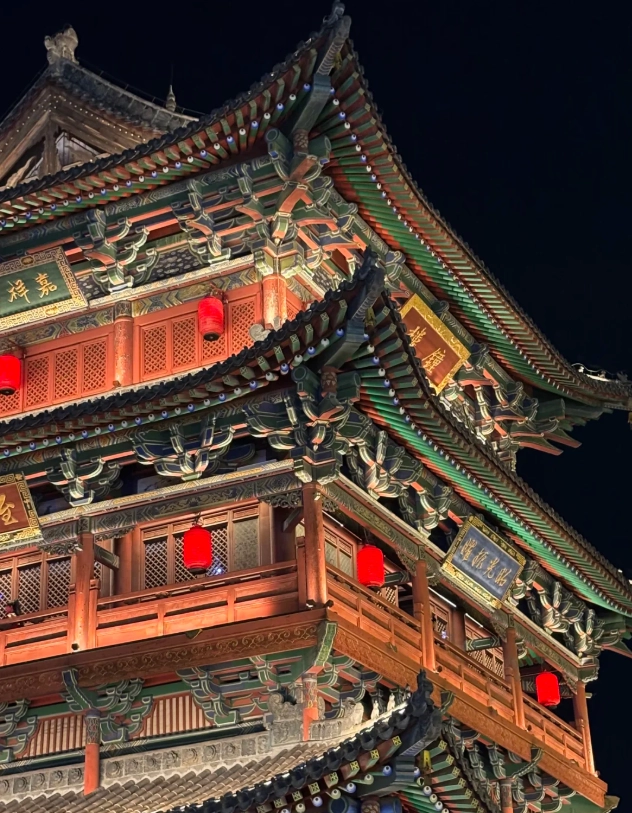
Beyond the statue, the temple grounds are peaceful, with pine trees, stone pathways, and a series of halls featuring Tibetan-style dharma wheels and colorful murals. Compared to the overcrowded Mountain Resort (Bishu Shanzhuang), Puning Temple offers a more focused cultural experience without the “theme park” feel.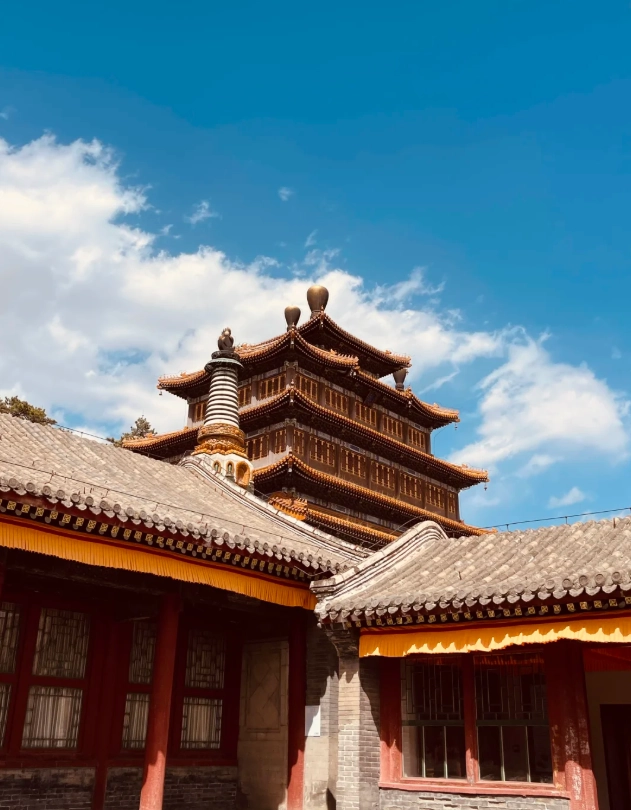
How to Get There
Puning Temple is located at Puning Temple Street, Shuangqiao District, Chengde, Hebei Province. From downtown Chengde, you have three options:
| Method | Time | Cost | Notes |
|---|---|---|---|
| Taxi / DiDi | ~15 min | 15–25 RMB | Show the driver “普宁寺” (Puning Si). Avoid rush hour (8:00–8:30, 17:00–18:00). |
| Bus #6 or #10 | ~35 min | 2 RMB | Get off at “Puning Si” stop. The temple entrance is a 5-min walk east. Bus #6 runs every 10 min. |
| Walking from Mountain Resort | ~40 min | Free | Follow the Lishui River north. Pleasant walk but no shade in summer. |
If you're coming from Beijing, take a high-speed train to Chengde South Station (2 hours, ~100 RMB), then taxi to the temple (25 min, ~30 RMB).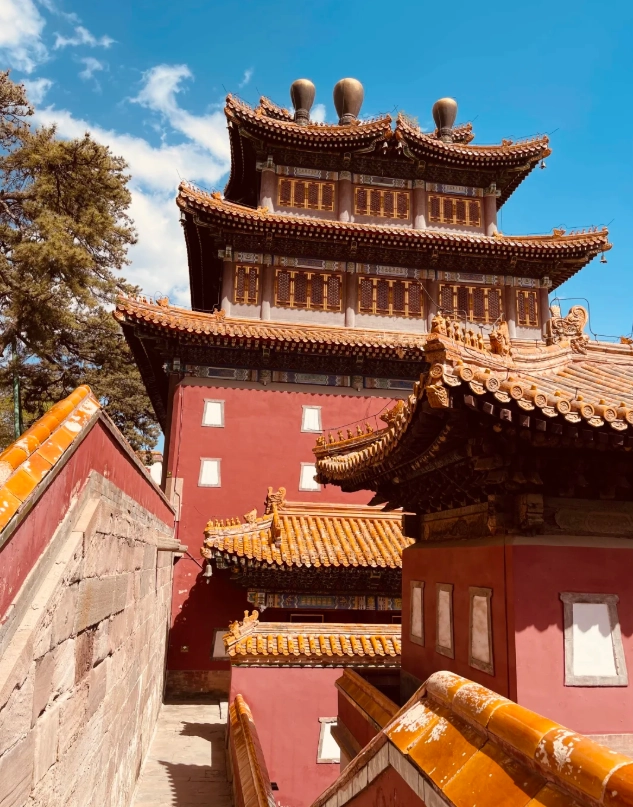
Tickets & Opening Hours
As of my last visit (double-check with official sources before going), here are the current rates:
| Category | Price (RMB) | Notes |
|---|---|---|
| Adult (peak season: Apr 1 – Oct 31) | 80 | Includes main hall and all courtyards |
| Adult (off season: Nov 1 – Mar 31) | 60 | Some side halls may be closed |
| Student (with valid ID) | 40 | Half price both seasons |
| Senior (60+ with ID) | 40 | Half price |
| Child under 1.2m | Free | Must be accompanied |
Opening hours: 8:00 AM – 5:30 PM (last entry at 5:00 PM). Off-season closes at 5:00 PM, last entry 4:30 PM. The temple is open every day, but major Chinese holidays (Spring Festival, National Day) can be packed — I'd avoid those if you can.
Booking: You can buy tickets at the gate (cash or WeChat Pay, no international credit cards most times). To guarantee entry during peak season, book through Trip.com or the official “承德避暑山庄” WeChat mini-program (search in Chinese). I've seen lines of 20+ people at the ticket window at 10 AM in July; pre-booking saves at least 15 minutes.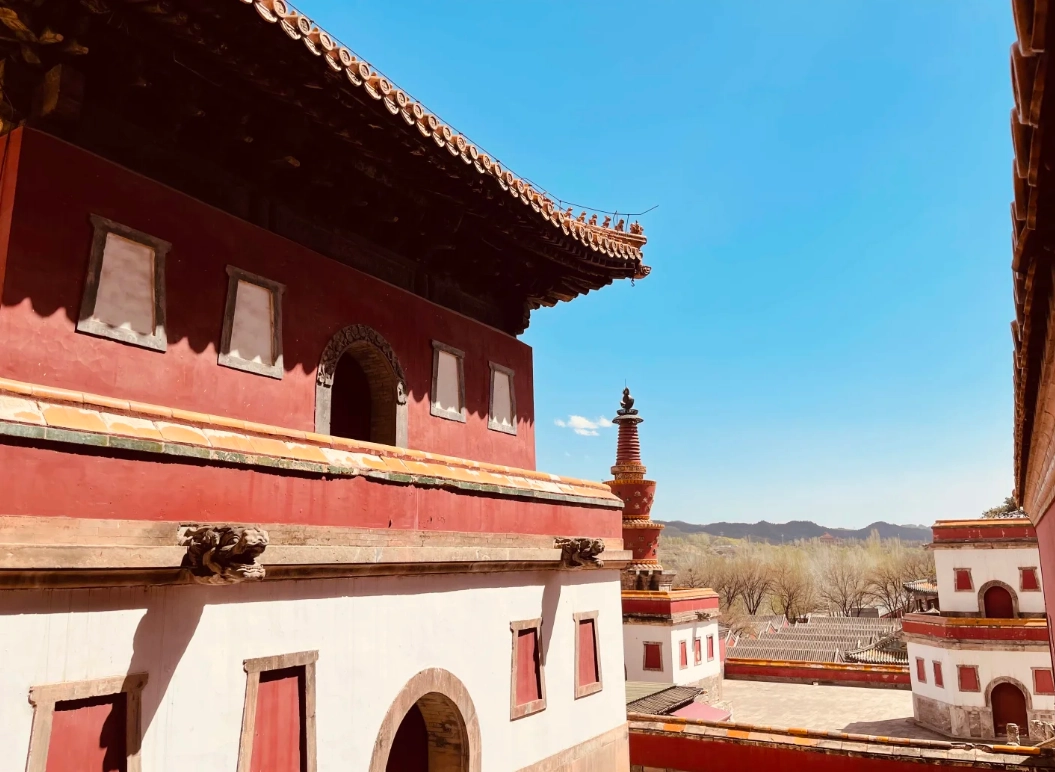
Best Time to Visit
Hands down, I tell all my groups: **arrive at 8:30 AM or after 3:30 PM**. Why?
- 8:00–9:00 AM: You'll be among the first. The light hits the golden roof just right, and the main hall is half empty. You can stand in front of Guanyin without elbows in your back.
- 3:30–5:00 PM: The tour buses – which usually arrive between 9:30 AM and 2:30 PM – have mostly left. The afternoon light creates a warm glow on the red walls. Plus, the ticket line is gone.
Avoid visiting on Chinese national holidays (Oct 1–7, May 1–5) unless you like crowds. Mid-week is always better than weekends. For the best weather, late April to early June and September to October are ideal – mild temperatures and clear skies.
What to See Inside
The Mahayana Hall (Dacheng Ge)
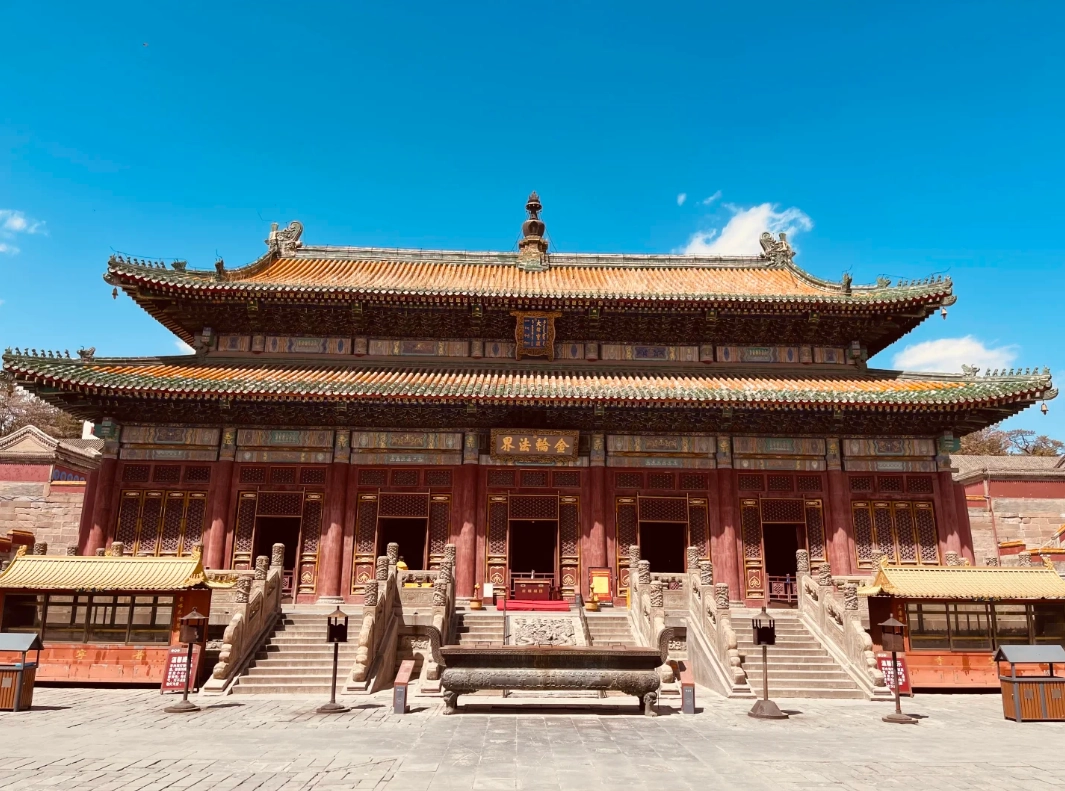
This six-story, 37-meter-tall hall is the second tallest ancient wooden building in China (after the Guanyin Pavilion in Zhengding). The Guanyin statue inside has 42 arms, each holding a different symbolic object – a lotus, a bow, a vase, etc. Look closely at the crown: there's a small seated Buddha. The statue is made from 120 cubic meters of wood, painted and gilded. Fun fact: the artist used local pine and cypress, not imported sandalwood, as many assume.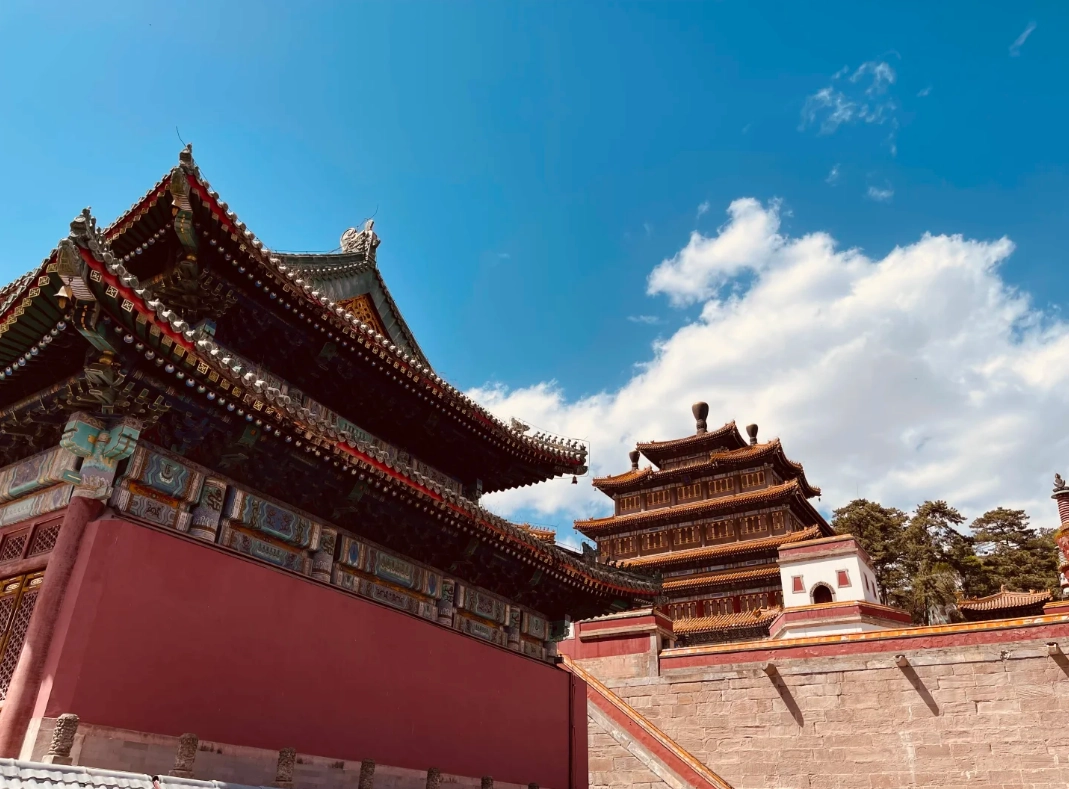
Side Halls and Courtyards
Don't miss the Hall of Heavenly Kings (Tianwang Dian) at the entrance – four fierce-looking celestial kings guard the temple. The Drum Tower and Bell Tower flank the main courtyard. In the back, there's a small Tibetan-style white pagoda (the Sumeru Pagoda) that most tourists walk past. Climb the stairs behind it for a nice overview of the temple's layout.
The Scriptural Hall (Zangjing Ge)
Houses a rotating scripture cabinet (zhuanjing) – a massive wooden cylinder filled with Buddhist texts. Turning it is said to bring blessings. Give it a spin (gently) – it's not a tourist prop, but it's allowed.
Tips from a Guide
- Bathroom break before entering: The free restroom at the ticket plaza is cleaner and less busy than the one inside near the main hall. Inside, the toilet stalls sometimes lack paper. Bring your own tissue.
- Photography inside the Mahayana Hall is strictly prohibited. Guards will whistle at you. But you can take photos from the doorway or outside – that's where the best angle is anyway.
- Dress respectfully: This is an active temple. No shorts above the knee or bare shoulders. I've seen monks politely ask visitors to cover up before entering the main hall.
- Combine with Pule Temple (just a 10-minute walk south). Pule Temple (Temple of Universal Joy) has a unique circular prayer hall and is much quieter. A combo ticket? Not officially, but you can buy separate tickets (20 RMB for Pule).
- Avoid guided tour traps: Some “free” guides near the entrance will lead you to a tea ceremony or calligraphy shop where they pressure you to buy. Politely decline unless you want a 50 RMB cup of tea.
- Wheelchair accessibility: The main path is flat, but there are steps into each hall. No ramps for the Mahayana Hall. Visitors with mobility issues might struggle.
Nearby Attractions
Puning Temple is part of the “Eight Outer Temples” cluster. Within walking distance or a short taxi ride:
| Attraction | Distance from Puning | Why Go | Ticket Price |
|---|---|---|---|
| Pule Temple | 10 min walk south | Unique circular prayer hall, few tourists | 20 RMB |
| Putuo Zongsheng Temple (Little Potala) | 15 min taxi (~10 RMB) | Imitation of Lhasa's Potala Palace, massive scale | 80 RMB |
| Xumi Fushou Temple | 20 min taxi (~12 RMB) | Similar architecture, fewer crowds | 80 RMB (combined ticket with Putuo Zongsheng available for 120) |
| Chengde Mountain Resort | 20 min taxi or 30 min walk | UNESCO World Heritage, huge imperial garden | 130 RMB peak / 90 RMB off |
If you have only one day in Chengde, I recommend: Morning at Puning Temple → Pule Temple → Grab lunch at a local restaurant near the mountain resort (try “Chengde Special Noodles” on Wulie Road) → Afternoon at the Mountain Resort (focus on the lake area, skip the uphill part).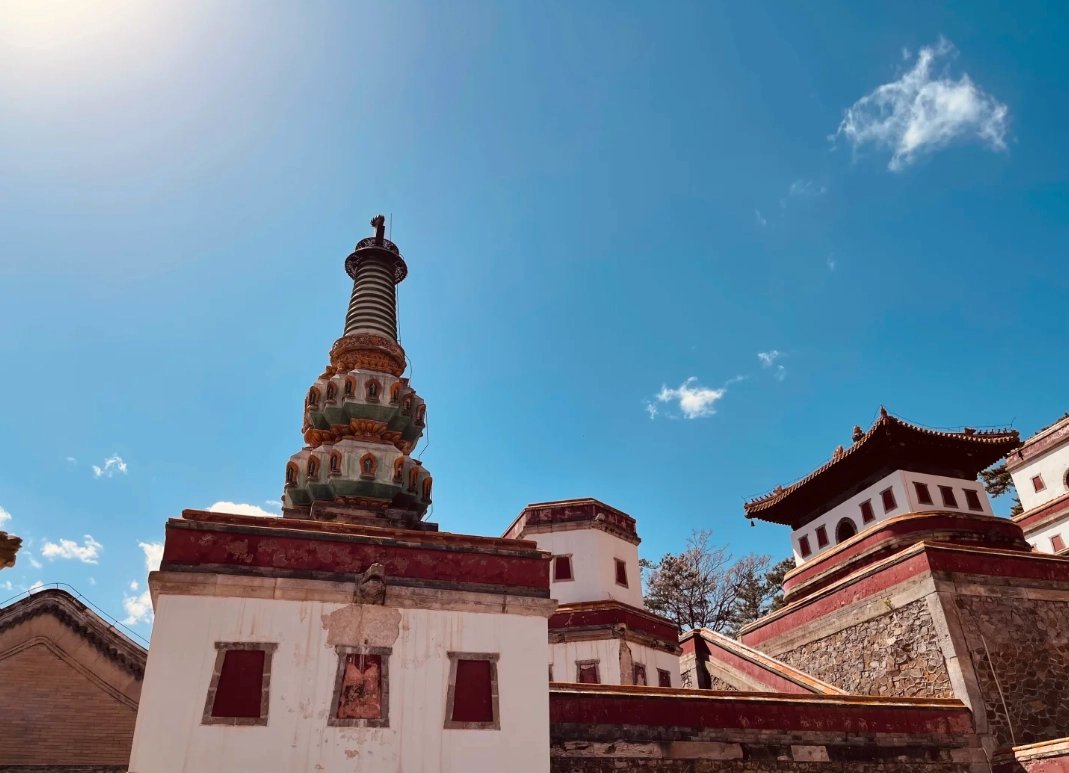
FAQ
Verified and fact-checked by the editorial team.





No comments yet.