 Chen Liu
Quick Snapshot
Last week I brought a group from the US to Haikou. One of them, a real photography buff, was dead set on getting museum shots without any tourists photobombing. I told him: “Let’s hit Hainan Provincial Museum at 3:30 PM on a Thursday.” He looked at me like I was crazy—until he saw the results. That’s the kind of insider timing you need.
Most guides will tell you to go in the morning. Don’t. The light here is brutal from 11 AM to 2 PM—harsh shadows, blown-out highlights. The real magic happens in the late afternoon. But I’m getting ahead of myself. Let me walk you through exactly where to stand, when to click, and what to ignore.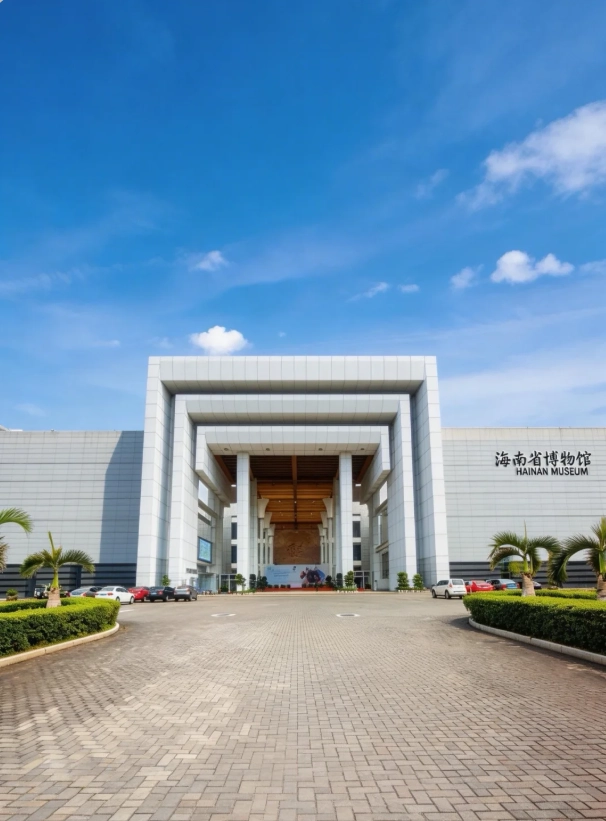
Why Shoot at Hainan Provincial Museum?
This isn’t your typical provincial museum. The building itself is a piece of art—a modern interpretation of a Hainan traditional ship, with sweeping curves and a white lattice facade. Inside, you get a mix of Hainan’s history, Li and Miao ethnic culture, and contemporary exhibition spaces. The contrast between clean white walls, dark exhibits, and natural light streams creates incredible photo opportunities.
Best Photography Spots Inside
I’ve shot here dozens of times. These are my favorite spots, ranked by uniqueness and crowd avoidance.
1. The Grand Staircase (Central Atrium)
Right at the entrance, the spiral staircase is the iconic shot. But here’s the trick: shoot from the second floor looking down. That gives you a perfect leading line. Use a wide lens (16-24mm). For a cleaner composition, wait for someone in a bright shirt to walk up the stairs—adds scale.
Address (English): No. 68 Guoxing Avenue, Qiongshan District, Haikou. Show to taxi driver: 海口市国兴大道68号海南省博物馆.
Best time: 4:00 PM – 5:30 PM. Sunlight pours through the glass ceiling creating dramatic patterns on the stairs.
Crowd hack: Most tour groups arrive at 10 AM and 2 PM. Avoid those slots.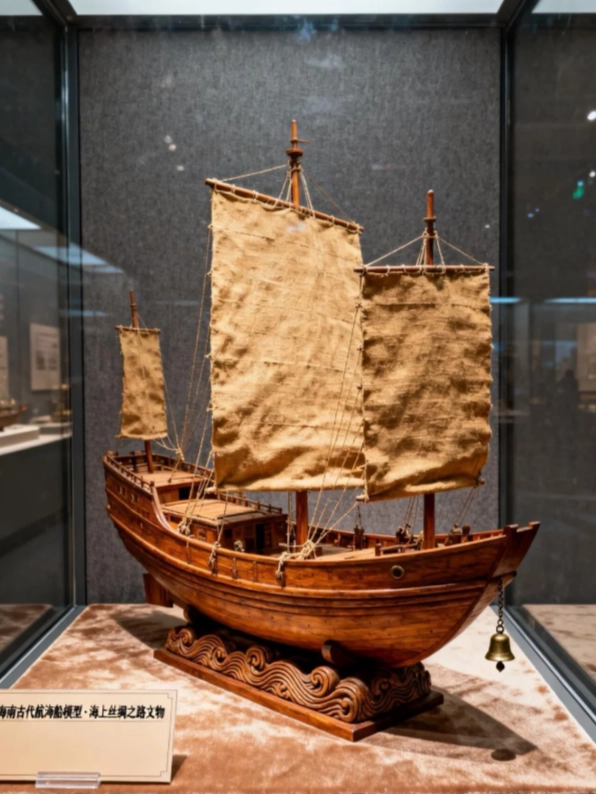
2. The Hainan History Exhibition (Hall 1 & 2)
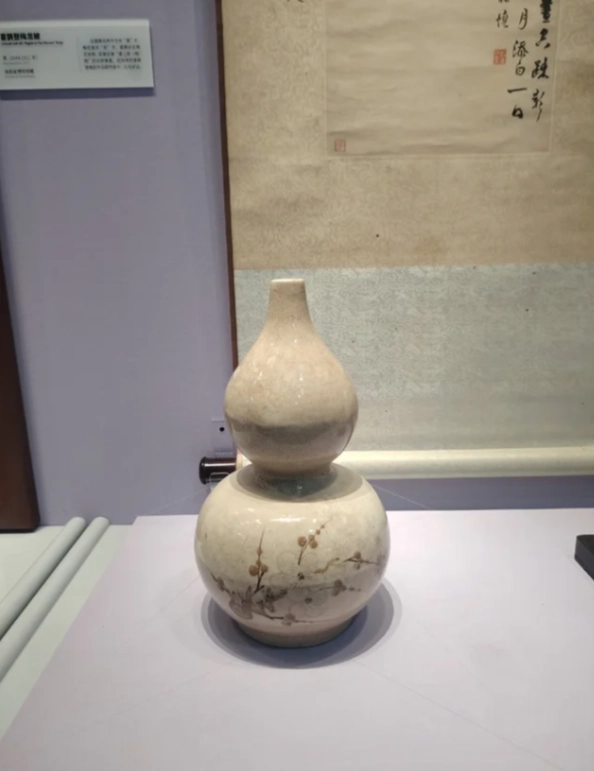
These halls have dim lighting with spotlit artifacts. Use a fast prime lens (50mm f/1.8 or 35mm f/1.4) to capture the texture of ancient pottery and maritime relics. Pro tip: Set your white balance to “tungsten” or around 3200K to keep the warm glow without making everything orange.
Don’t use flash. It’s strictly prohibited and will trigger alarms. Instead, raise your ISO to 1600-3200—modern cameras handle that noise fine.
3. The South China Sea Shipwreck Exhibit
One of the museum’s gems: a massive sunken ship replica with underwater lighting. You can shoot through glass panels that simulate looking through water. Use a polarizer filter to cut reflections. The blue-green light is surreal. Shoot at f/8 to keep the entire ship sharp.
Insider note: The exhibit is often empty around 4 PM because everyone is in the main hall. Perfect for a tripod shot.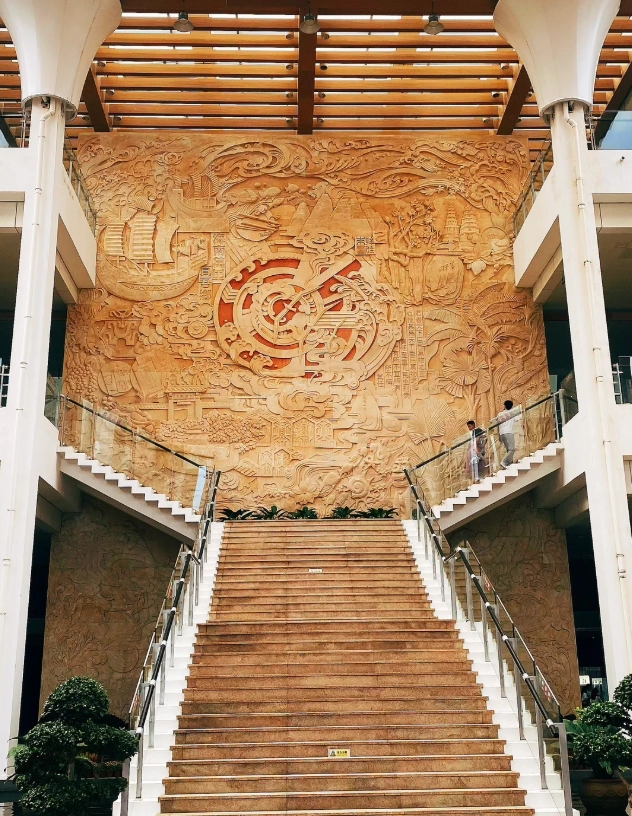
4. The Roof Terrace (Accessible via Elevator)
This is a hidden spot. Most visitors don’t know there’s an open-air terrace on the 4th floor. Great for panoramic shots of Haikou’s skyline and the museum’s roof curves. Best at sunset.
Watch out: The terrace can be locked during bad weather. Ask staff at the information desk (they speak limited English, so show this: 请问屋顶平台开放吗?).
5. The Light Tunnel (Connecting Halls)
A narrow corridor with LED-lit walls that change colors slowly. This is where you get those futuristic, fashion-style shots. Use a slow shutter speed (1/15s) and pan with a moving subject for motion blur. Or just stand still for a crisp silhouette.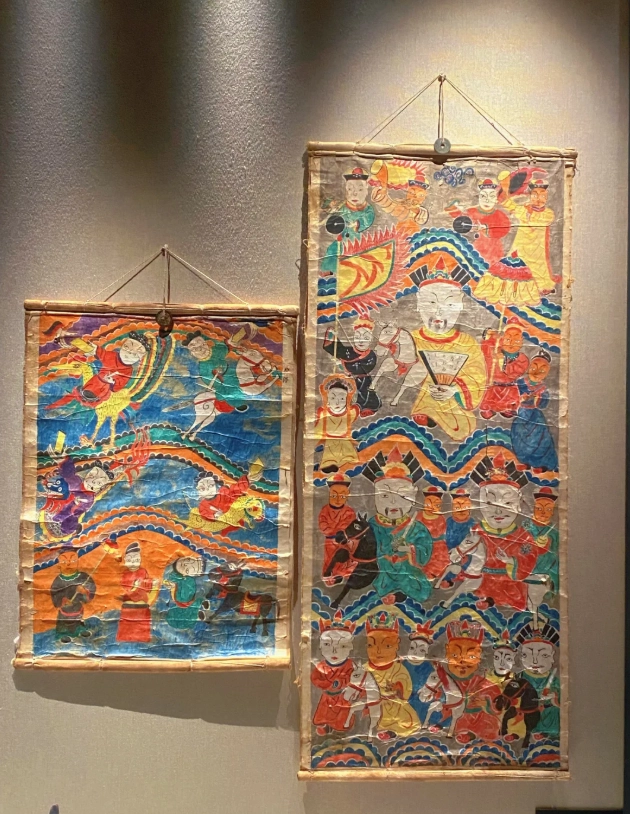
Timing & Lighting
| Time | Light Quality | Best for | Crowd Level |
|---|---|---|---|
| 9:00 – 11:00 | Harsh, high contrast | Exterior architecture (shadows) | Medium (school groups) |
| 11:00 – 14:00 | Overexposed, flat | Avoid | High |
| 14:00 – 16:00 | Soft, angled | Staircase, exhibits | Low (post-lunch lull) |
| 16:00 – 17:30 | Golden, warm | Staircase, terrace, light tunnel | Very low |
| 17:30 – 18:00 | Dim, closing rush | Last-minute shots | Medium (staff cleaning) |
Monday closure: Museum is closed every Monday (except public holidays). Don’t plan your shoot then.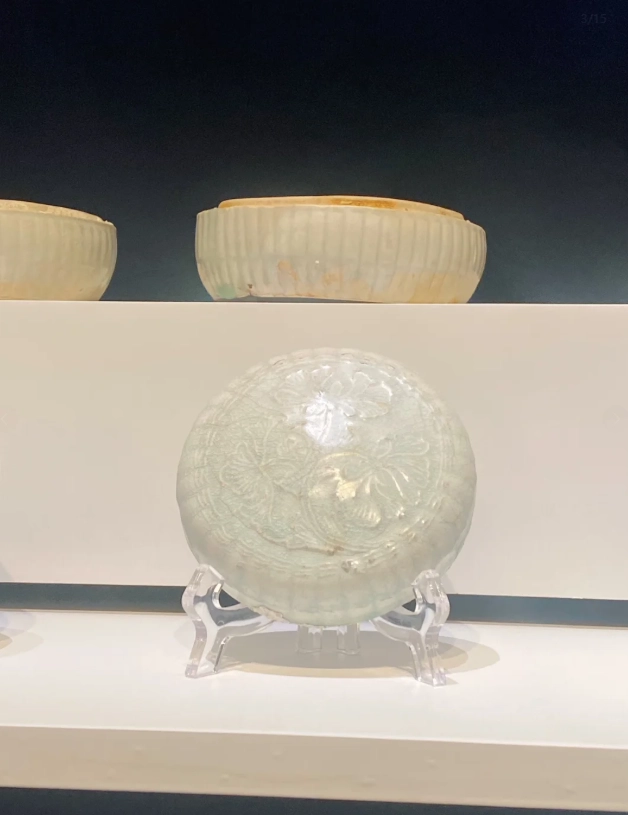
Practical Info: Tickets, Booking, Getting There
This is where most foreign visitors hit a wall. Let me save you the headache.
Tickets & Booking
Entry is free, but you need a reservation in advance. You cannot just walk in. Book through the official WeChat mini-program (all in Chinese) or via Trip.com (English interface, small service fee). You’ll need your passport number.
How to book on Trip.com: Search “Hainan Provincial Museum” → select date → enter passport details → get QR code. Save the screenshot—you’ll scan it at the entrance.
Pro tip: If you don’t have a Chinese phone number to register WeChat, Trip.com is your only option. Don’t stress.
Getting There
Address: 68 Guoxing Avenue, Qiongshan District, Haikou.
By taxi / Didi: Show the Chinese address above. From Haikou city center (e.g., Zhongshan Road), it’s about 20 minutes (20-30 RMB). From Meilan Airport, it’s about 30 minutes (60-80 RMB).
By bus: Take bus 12, 27, or 43 to “Guoxing Avenue” stop. Then walk 5 minutes.
Navigation warning: Google Maps is inaccurate in China. Use Apple Maps or Amap (GaoDe). For Didi, the app handles navigation.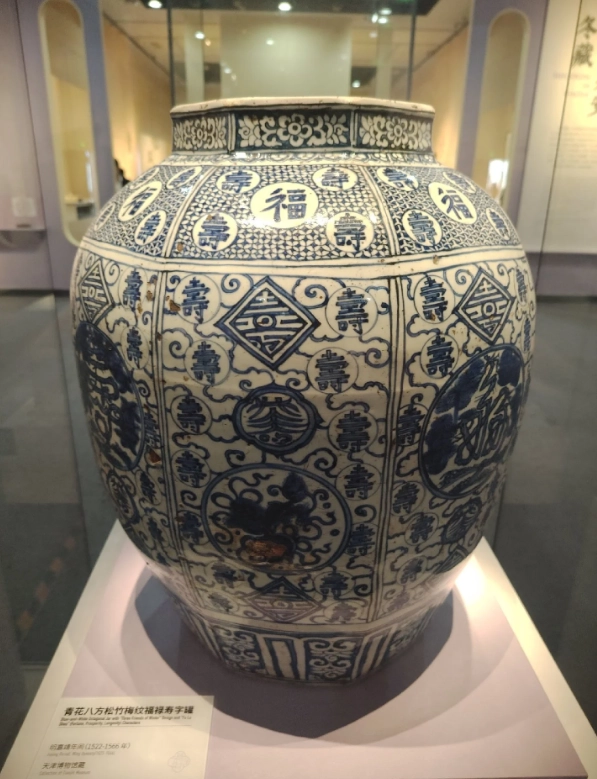
Opening Hours
9:00 – 17:00, last entry at 16:30. Closed Mondays. Arrive at least 30 minutes before closing—they start kicking people out.
Photography Gear & Tips
You don’t need a professional kit, but here’s what works best:
- Lens: Wide-angle (16-35mm) for staircase and architecture. Prime (35mm or 50mm) for exhibits and portraits.
- Polarizer filter: Essential for cutting reflections on glass display cases and the shipwreck exhibit.
- Tripod: Allowed, but you might get security glances in crowded areas. Use a small tabletop tripod on the floor in the light tunnel.
- No flash: Never. Security will stop you.
- Dust: Haikou is humid. Keep your gear in a dry bag. Bring lens wipes.
Common Mistakes to Avoid
Another mistake: ignoring the exterior. The museum’s white facade with blue sky makes for a minimalist shot. Find the spot near the main entrance where the building curves like a wave. Use a telephoto lens to compress the perspective.
Visa card trap: Bring cash (RMB) or have Alipay/WeChat Pay ready. The museum gift shop and café accept Alipay and WeChat Pay, but not international credit cards. Most international cards don’t work in China, so try linking your card to Alipay before you come.





What a hidden gem! I came for the exhibits but stayed for the photography spots. The 'ocean gallery' with its glowing blue neon is absolutely otherworldly – the pictures look like they're from a different planet. The bamboo garden near the exit is a quiet spot most tourists skip, but it's perfect for softer, natural-light shots. Even with just my basic mirrorless camera, I got frame-worthy images. The staff was friendly too, and one guard even pointed out a niche feature on the roof terrace I hadn't noticed. Can't recommend this place enough!
As a portrait photographer, I'm always hunting for clean backdrops, and this place delivers big time. The lattice screens in the ethnic minorities gallery create beautiful shadow patterns, and the warm wood panels in the Hainan history rooms give a rich, golden tone to skin. The photo guide even tells you which spots to avoid at midday, which I really appreciated. I went early on a weekday and had the main halls almost to myself – perfect for candid shots. Definitely adding this to my regular rotation whenever I'm in Haikou.
Easily one of the best museum photography experiences I've had. The 'Top Photo Locations' list was a lifesaver – it took me to this quiet spiral staircase that gets these amazing geometric shadows around 3pm. The maritime hall looks like something out of a science fiction film, and the rooftop catches a gorgeous sunset over the city. No tripods, but honestly the natural light is so good you won't need one. Spent nearly three hours here and only covered half the spots. If you love museum photography, this is a dream – highly recommended!
Pretty good spot for photo lovers – the guide they give out maps the best angles for the main halls, and I was impressed by how accurate it was. The maritime exhibition room is a standout with its deep blue lighting, and the spiral staircase near the east exit is a must. Only gripe: some descriptions are only in Chinese, so I missed the story behind a few exhibits. But if you're just there for the visuals and a few Instagram-worthy frames, it's well worth the visit. I'd give it a 4 for the overall experience.
The museum itself is gorgeous and the photo guide points out all the iconic architecture, but I was a bit let down by the practical side. The reflective glass in the main hall creates terrible glare unless you come at exactly the right hour, and they don't allow tripods anywhere – not even the rooftop terrace. Two spots on the list were blocked off for maintenance, which was frustrating since I'd planned my whole day around them. Still got a few decent shots with my phone, but don't expect to nail every location on the list.
What a hidden gem for anyone who loves photography. The natural light around late afternoon is just magical — it hits the white walls and creates all these soft, dreamy tones. I also loved that it wasn't too crowded, so I could set up my shots without feeling rushed. The staff were friendly and didn't bother me while I was taking photos. If you have a camera, head straight to the upper-level walkways and the courtyard. I came back with so many good shots!
Wow, this exceeded my expectations! The museum's architecture is the real star — the curved walls and open courtyard make for stunning photos. I loved the mix of modern design with Hainan's cultural story. The exhibitions were beautifully curated too, so I learned a lot while snapping away. My favourite spot was the balcony overlooking the city — perfect golden hour glow. Highly recommend taking your time here. Definitely a 5-star experience!
As someone who does this almost daily, this place is an absolute dream. The play of natural light through the lattice facade is incredible, and the shadows change throughout the day. I spent nearly three hours here and never ran out of angles — the spiral staircase, the coral-like patterns, the quiet corners with soft light. Every frame felt intentional. Easily one of the best architectural photography spots on the island. I’ll absolutely be coming back.
Really solid museum with some gorgeous photography spots. The atrium and the white geometric walls are the highlights — I got some beautiful wide shots there. Only reason I'm not giving it a 5 is because the lighting in the exhibition rooms made it tricky to avoid glare on the artwork, and a few areas were a bit too dark for phone photos. Still, the architecture alone is worth a visit. Just go in the morning before it gets crowded.
I came here specifically for the photo spots after seeing some cool shots online. The building itself is impressive, but honestly I felt a bit let down by the experience. The lighting inside was harsh and caused a lot of reflections on the glass displays, and there were big tour groups blocking the best angles during midday. I waited quite a while just to get one clean shot of the main staircase. It’s a nice place, but if you're coming only for photography, manage your expectations and go early.
I came expecting just another provincial museum, but Hainan Provincial Museum surprised me at every turn. The contrast between the white concrete walls and the deep blue displays of the ocean section is stunning. The indoor garden with the banyan tree is an unexpected slice of calm. Every corner feels framed. I took over 300 shots and honestly could have stayed until closing. Genuinely one of the best photo spots in Haikou.
This place is a dream for photography lovers. The highlight for me was the exhibition on maritime trade – the blue lighting makes the pearl and porcelain displays look magical. Also, the rooftop terrace gives a wonderful view over the surrounding park. I visited on a weekday morning and had the whole gallery almost to myself. If you’re in Haikou, put this on your list. Bring a mini tripod for the dark maritime halls.
Absolutely loved it! The museum’s architecture alone is worth the trip. I spent more time shooting the lobby, the spiral ramp, and the outdoor courtyard than the exhibits themselves. The natural light at around 3 PM created beautiful golden streaks across the terrazzo floor. Even the rest areas are photogenic. A hidden gem in Haikou for anyone who likes clean lines and calm spaces. 10/10 would recommend.
Great spot for a few hours of photography. The staircase with the curved wooden wall and the shadow patterns from the lattice windows are easily the highlights. I missed the top-floor exhibition because it closed early, so check the schedule before you go. Still, the permanent collection is gorgeous and the café is decent. Would definitely come back with a wider lens.
I’d seen so many stunning photos of this place that I went in with high expectations. The building itself is photogenic, but many of the top photo locations are tricky to shoot because the lighting is harsh and reflections cover the display cases. The marine gallery was lovely, but by noon the crowds made it hard to get a clean frame. Staff are friendly, yet I left a bit underwhelmed. It’s a good museum, just not the photography paradise I expected.