 Gang Zheng
Changbai Mountain in July is a coin flip. So is the weather up on the rim. I once stood there with a tour group in matching plastic ponchos, all of us staring into a solid white wall — Heaven Lake was thirty meters away and completely invisible.
If you landed on this Jilin summer travel guide because you grabbed a cheap flight to Changchun and then discovered the mountain is a long train ride away, relax. That part is normal. What is not normal is how little English-language information exists about booking the scenic area with a foreign passport, or the small detail that your Visa card will bounce at the ticket window.
So here is the short version before we get into anything else: sleep in Erdaobaihe for the North Slope, reserve your entry slot online with your passport number three to seven days ahead, and budget two mornings on the mountain instead of one. Weather ruins this trip far more often than crowds do. Everything below is the stuff I only learned by walking people through it.
Start Here: My Jilin Summer Cheat Sheet
- Why Jilin in Summer Beats the Winter Hype
- How to Get Around Jilin Without Losing a Day
- Changbai Mountain: Which Slope, Which Gate, Which Ticket
- Changchun in 24 Hours: What to See and What to Skip
- Jilin City and Songhua Lake in the Green Season
- Yanbian: Yanji Food, Tumen Border, and the Permit Question
- What to Eat in Jilin in Summer
- Where to Stay: Picks by City and Traveler Type
- Payments, Apps and Connectivity: How Not to Get Stuck
- Questions I Get Asked Every Single Week
Why Jilin in Summer Beats the Winter Hype
Everyone photographs Jilin in January. The rime ice on the Songhua River in Jilin City is genuinely spectacular, and so is the snow at the ski resorts. But you pay for it — hotel rates triple, the mountain is a wind tunnel, and half the scenic roads close.
Summer flips all of that. Changchun sits in the low-to-mid twenties Celsius for most of July and August. Erdaobaihe, the little town at the foot of the North Slope, is cooler still in the evenings. Meanwhile the rest of China is baking, which is exactly why you should book early — domestic travelers figured this out years ago.
The one thing that does not get easier in summer is the summit. Heaven Lake sits above 2,000 meters and the crater rim can drop to single digits with wind. I have watched people arrive in flip-flops and regret it within ten minutes. Pack a windproof shell even if Changchun is 28°C when you leave your hotel.
How to Get Around Jilin Without Losing a Day
Jilin Province is bigger than it looks on a map. The three anchors for a summer trip are Changchun, Jilin City, and the Changbai Mountain area — with Yanji as the food detour that most foreign itineraries completely ignore.
Trains are the backbone. Book through China Railway 12306 if you can handle the interface, or use Trip.com if you would rather pay a small markup for English support and instant confirmation. Both accept passport numbers for foreign travelers.
| Route | Best Option | Approx. Journey Time | Typical Cost | Watch Out For |
|---|---|---|---|---|
| Changchun Longjia Airport to city center | Airport shuttle bus or Didi | 40 to 60 minutes | 25 to 100 RMB | Late-night arrivals have no shuttle; Didi is the only sane option |
| Changchun to Jilin City | High-speed train | 40 to 50 minutes | 30 to 55 RMB | Some trains leave from Changchun West, not Changchun Station |
| Changchun to Yanji | High-speed train | 2.5 to 3.5 hours | 150 to 250 RMB | July seats sell out days ahead, especially weekend departures |
| Changchun to Erdaobaihe via Dunhua | High-speed train plus connection | 3.5 to 5 hours | 150 to 260 RMB | Confirm your arrival station; the area has more than one and they are not interchangeable |
| Erdaobaihe to North Slope gate | Scenic shuttle or Didi | 30 to 40 minutes | 20 to 60 RMB | The early shuttle queue is real; be outside your hotel by 5:45 AM in peak season |
Treat every number above as a planning range, not a quote. Fares move with season and demand, and I would rather you check on the day than budget off my memory.
Pro Tip: Changchun has two major rail stations and tourists mix them up constantly. Read the station name on your ticket, not the city name. Getting this wrong at 6 AM with luggage is a genuinely miserable experience, and I have talked three separate clients through it by phone.
Changbai Mountain: Which Slope, Which Gate, Which Ticket
Changbai Mountain is not one attraction. It is three separate scenic areas on three different sides of the same massif, each with its own gate, its own town, and its own way of getting you up to the crater rim. Choosing the wrong one is the single most common planning mistake I see.
North Slope, West Slope or South Slope: What Actually Differs
The North Slope is the postcard route and the busiest one. You base in Erdaobaihe, take the scenic shuttle to the gate, ride the eco-bus up, then switch to a small off-road vehicle for the final climb to the rim. It has the most developed facilities, the most restaurants, and the worst queues in late July.
| Slope | Base Town | How You Get Up | Crowd Level | Best For |
|---|---|---|---|---|
| North | Erdaobaihe | Shuttle, eco-bus, then off-road vehicle to the rim | Heaviest | First-timers who want the classic Heaven Lake view |
| West | Songjianghe | Eco-bus plus a long staircase climb on foot | Moderate | Hikers, photographers, anyone flying into Changbaishan Airport |
| South | Changbai County town | Own vehicle or organized tour | Lightest | Repeat visitors and anyone who hates crowds |
The West Slope staircase is the detail nobody mentions in photos. It is a serious climb, well over a thousand steps, and it is exposed. If your knees are questionable, that is your answer — go North.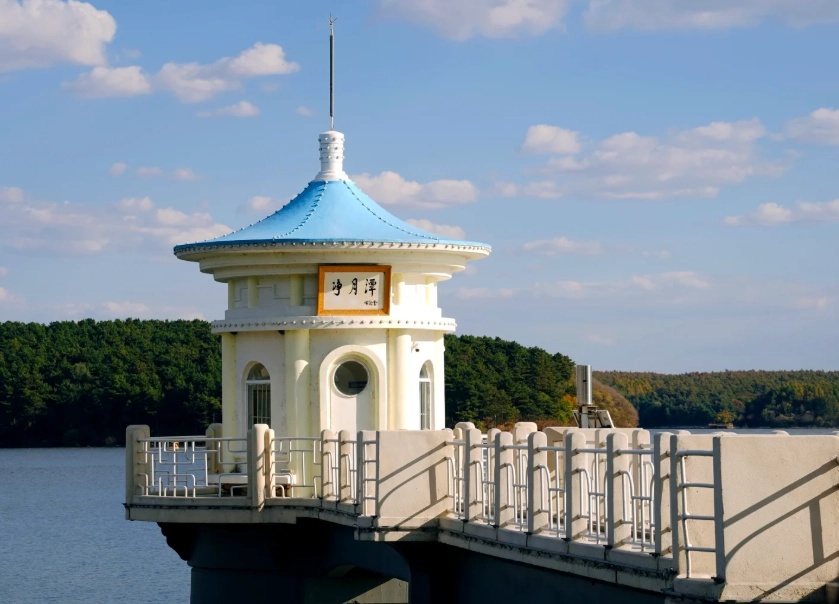
How to Book Changbai Mountain Tickets as a Foreign Visitor
Your ticket is tied to your passport number and your chosen date, so you cannot simply show up and buy one at the gate in peak season. Booking opens several days in advance and closes once the daily cap is reached.
- Official channel: the scenic area WeChat mini-program, which is entirely in Chinese
- Foreigner-friendly channel: Trip.com, which lets you pay with an international card
- What you need: passport number, full name exactly as printed, and a mobile number for the confirmation
- What the base ticket usually covers: scenic area entry plus the internal eco-bus
- What it usually does not cover: the small off-road vehicle that makes the final climb to the crater rim
Yes, wrestling with a Chinese-language mini-program to book this is a nightmare even for me, and I do it several times a season. Do not panic about it. If you are staying in Erdaobaihe, walk to reception and ask them to book it for you — they do this ten times a day and it takes them two minutes. Bring your passport so they can copy the number.
Insider Advice: Buy the off-road vehicle ticket at the same time as your entry ticket. On clear days it sells out at the mountain, and standing at the transfer station watching other people ride up while you wait for a slot is a bad way to spend a morning.
How to Time Heaven Lake Around the Weather
Cloud builds through the afternoon, so the earlier you are on the rim, the better your odds. The local saying in Erdaobaihe is that Heaven Lake shows itself roughly one day in three. I have no scientific source for that and neither do the taxi drivers who repeat it — but every experienced guide I know plans two attempts rather than one.
If you only have one morning, go on the first shuttle. If you have two, do not book them back to back. Put a town day or a Yanji day in between so you are rolling the dice twice instead of once.
What to Wear and What to Rent on the Mountain
Dress for a cold, windy autumn day, not a summer one. The rim can sit in single digits with wind chill, and there is no shelter up there.
- Windproof shell with a hood — the single most important item
- A warm mid-layer, even in July
- Thin gloves and a hat; your hands go numb holding a phone for photos
- Trainers with grip, not sandals
- Rain cover for your bag — sudden showers are normal
Padded jackets are rented near the transfer station for a modest fee. It is a decent fallback if you packed badly, but you will queue to return it on the way down, and that queue is longer than you expect.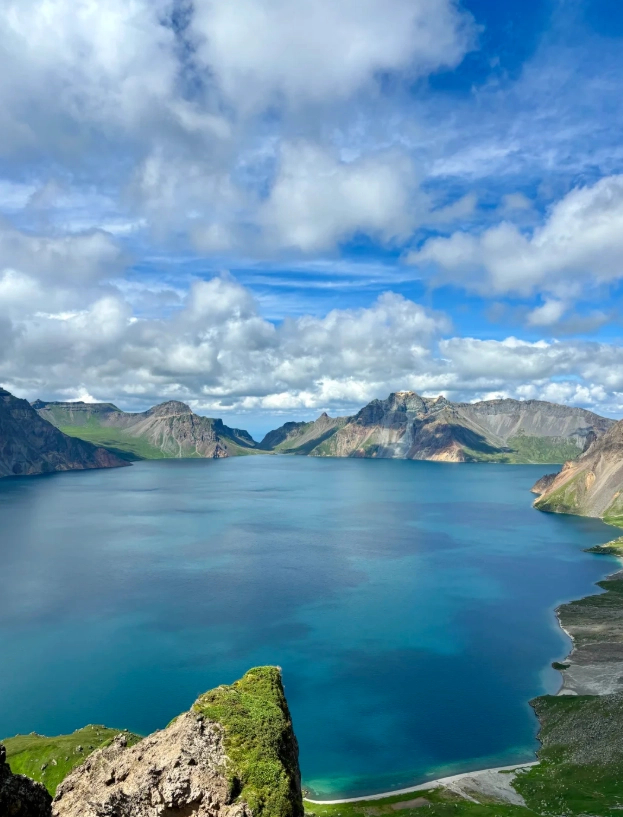
Changchun in 24 Hours: What to See and What to Skip
Most travelers treat Changchun as a train transfer and nothing else. That is a mistake, but a small one — you do not need three days here. You need one, done properly, and then you move on.
08:30 — Puppet Emperor's Palace (Wei Huang Gong). This is the reason to stop in Changchun at all. It is the former residence and office of Puyi, the last Qing emperor installed as a figurehead by the Japanese. Two hours minimum, and the audio guide is worth the extra fee. Take a Didi from People's Square — roughly fifteen minutes and a small fare. There is a metro station named after the palace on the light-rail network, but the walk from the platform to the gate is longer than the map suggests.
11:30 — Lunch near Chongqing Road. Spring pancakes are the local staple: thin pancakes you wrap around shredded vegetables, egg, and pork. Light, cheap, and almost impossible to dislike. Most branches have picture menus, which solves the language problem instantly.
13:30 — Jingyuetan National Forest Park. A large lake and forest park on the southeast edge of the city. Entry is inexpensive, and the smart move is to rent a bike at the gate and ride the loop rather than walk it. On a hot day this is the coolest place in Changchun.
17:00 — Nanhu Park. Free, central, and full of locals doing exactly what locals do: walking, fishing, arguing about card games. Not a sight, but a good hour.
Plan B for rain: swap Jingyuetan for the Changchun Film Studio Museum. It is indoor, quirky, and tells the story of the studio that shaped a generation of Chinese cinema.
What to skip: the various rebuilt man-made attraction parks on the city outskirts. They are expensive, mostly concrete, and I have never had a client come back happy from one.
Jilin City and Songhua Lake in the Green Season
Jilin City is a 40-minute train ride from Changchun and works well as a single overnight. In winter it is the rime ice capital. In summer it is a quiet river city with a big lake behind it, and almost no foreign tourists.
Songhua Lake sits roughly 20 kilometers southeast of downtown. Buses run from near Jilin Railway Station, but the schedules are not built for visitors. A Didi is the honest recommendation — it saves you an hour of standing around and the fare is reasonable.
The lakeside restaurants serve whole freshwater fish, stewed or braised. Before you order, confirm the price per unit of weight out loud. This is standard practice in China and nobody will be offended; skipping it is how people end up with a bill they did not expect.
Back in town, Beishan Park is free and pleasant in the early evening, and the riverside promenade along the Songhua is where the city actually lives. If you have a spare half day and an interest in history, the Koguryo-era sites around Ji'an in the south of the province hold a UNESCO World Heritage listing and see almost no international visitors — though getting there takes real commitment.
Yanbian: Yanji Food, Tumen Border, and the Permit Question
Yanji is the best food city in Northeast China and almost no foreign travelers know it. The Yanbian Korean Autonomous Prefecture sits against the North Korean border, and the Korean-Chinese culture here is not a theme park version — it is the real thing, from the signage to the breakfast markets.
The Water Market opens early and shuts by mid-morning. Go at 7 AM, eat standing up, and bring small cash as a backup even though most stalls take mobile payment. Around Yanbian University there is a dense cluster of barbecue restaurants and cafes that stay busy until late.
Tumen is a short trip from Yanji and sits directly on the river border. It is a strange, quiet, slightly melancholy place, and it is worth an afternoon rather than a full day.
Important for foreign passport holders: some border zones in Yanbian require advance permission, and the rules change. Do not build a border day into your plan without checking first — the National Immigration Administration publishes the current framework, and your hotel front desk will usually know the practical situation on the ground better than any website.
What to Eat in Jilin in Summer
Cold noodles are the dish of the season here, and the Korean-Chinese version in Yanji is the benchmark. But there is more to Jilin food than that, and the regional cooking is heavier on freshwater fish and forest ingredients than most visitors expect.
| Dish or Spot | Where | What It Is | Flavor | Price Range | Notes |
|---|---|---|---|---|---|
| Korean-Chinese cold noodles | Yanji, around the university district | Chilled buckwheat noodles in iced beef broth | Cold, sour, faintly sweet | 25 to 45 RMB | Vinegar and mustard come on the side; regulars add both |
| Table barbecue | Yanji, Gongyuan Road area | Marinated beef and pork grilled at your table | Sweet-savory | 80 to 150 RMB per person | You wrap it in perilla leaves, not lettuce |
| Jilin fried fen | Jilin City, street stalls near Beishan | Thick starch noodles pan-fried with egg and sauce | Savory and rich | 8 to 15 RMB | Mostly mobile payment; keep a little cash as backup |
| Songhua Lake fish | Jilin City, lakeside restaurants | Whole freshwater fish, stewed | Mild and clean | 100 to 250 RMB per fish | Confirm the price by weight before ordering |
| Spring pancakes | Changchun, multiple branches | Thin pancakes wrapped around shredded fillings | Light and fresh | 50 to 80 RMB per person | Picture menus make this the easiest meal for picky eaters |
| Forest chicken stew | Erdaobaihe | Chicken braised with wild mushrooms | Earthy and deep | 120 to 200 RMB per pot | Feeds two to three people; perfect after a cold mountain morning |
Two practical notes. First, vegetarian options exist but you have to ask explicitly and check whether the broth is meat-based — a lot of seemingly vegetable dishes are not. Second, English menus are rare outside the bigger hotels. A translation app with a camera mode solves this in about five seconds, and I use it myself when I travel outside the northeast.
Where to Stay: Picks by City and Traveler Type
Where you sleep determines how much of your trip you waste in transit. For Changbai Mountain specifically, staying in the wrong town can add two hours of driving to each mountain day.
| Base | Type of Stay | Why It Works | Price Range per Night | Best For |
|---|---|---|---|---|
| Erdaobaihe town center | Mid-range guesthouses and small hotels | Walkable to restaurants and the early shuttle pickup | 250 to 600 RMB | Anyone heading to the North Slope |
| Erdaobaihe outskirts | Larger resort-style hotels | More reliable Wi-Fi, English-speaking front desk, airport transfers | 700 to 1,500 RMB | Families and first-time China travelers |
| Songjianghe resort cluster | Resort hotels near the West Slope | Purpose-built infrastructure and shuttle service to the West gate | 600 to 1,600 RMB | Travelers flying into Changbaishan Airport |
| Changchun, Renmin Square area | Business hotels | Central, metro access, easy airport connections | 350 to 900 RMB | One-night stopovers before a train |
| Changchun, near the railway station | Budget chain hotels | Cheap and walkable to early departures | 150 to 300 RMB | Solo travelers and tight schedules |
| Yanji, university district | Boutique and mid-range hotels | Surrounded by food, lively after dark | 250 to 600 RMB | Food-focused travelers |
A few things I check before recommending anywhere in this region: whether the front desk can handle basic English or at least a translation app, whether the room has a real window, and whether the hotel can store luggage after checkout. That last one matters a lot when your train does not leave until evening.
Pro Tip: In Erdaobaihe, ask the hotel the night before whether they run an early shuttle or can call a Didi at 5:30 AM. Some smaller places genuinely cannot, and discovering that at dawn is stressful.
Payments, Apps and Connectivity: How Not to Get Stuck
Set up Alipay or WeChat Pay before you fly, and link an international card to at least one of them. In practice, almost everything in Jilin runs on QR codes — street stalls, taxis, ticket machines, temple donation boxes. Physical credit cards work at big hotels and almost nowhere else, and cash is accepted but often inconvenient for the person serving you.
Navigation is the second trap. Google Maps is not reliable inside China, and this is not a small annoyance in a province where place names repeat themselves. Use Apple Maps if you are on an iPhone, or download Amap, which has an English interface and far better local data. Keep your destination written in Chinese characters on your phone so you can show it to a driver.
Download a VPN before you arrive, not after — the app stores you need are the ones that get blocked. A camera-based translation app is close to essential here, because menus and signage outside the big cities are Chinese-only.
Questions I Get Asked Every Single Week
Can I just show up at Changbai Mountain in July and buy a ticket at the gate?
Not reliably. The daily visitor cap fills during peak summer, and the ticket is bound to your passport number and date. I have watched people drive three hours from Dunhua only to be turned away. Book online at least three days out, and if you are not comfortable with the Chinese mini-program, book through Trip.com or have your hotel do it.
Do I need a special permit for the Tumen or Hunchun border areas?
Sometimes, and it depends on your nationality and the current rules. Border zones in Yanbian are controlled areas, and permission requirements shift. Check with the National Immigration Administration and confirm with your hotel before you commit a day to it. If permits look complicated, Yanji itself is worth the trip on food alone.
Is two days enough for Changbai Mountain?
Two mornings, yes. Two days total, no. You lose most of a day getting there and another getting out, so what you actually have is one mountain morning. If the cloud rolls in — and it often does — you have nothing left. Three nights in Erdaobaihe gives you two real attempts at Heaven Lake and a relaxed pace.
What happens if my international credit card does not work in Erdaobaihe?
Link the card to Alipay before your trip and test it with a small purchase at home first. That single step solves ninety percent of payment problems. As a backup, carry a few hundred RMB in cash for the rare stall that cannot scan, and keep a second card from a different issuer in case one bank blocks the transaction.
Is Jilin safe for solo and female travelers?
Violent crime against tourists is rare here, and I have never had a client report a serious safety issue in the province. The realistic problems are petty ones: unlicensed drivers approaching you at stations, aggressive souvenir pricing at mountain gates, and scams dressed up as help. Use the official taxi queue or a ride-hailing app, agree on nothing verbally with a stranger at a station, and you remove almost all of it.
Verified and fact-checked by the editorial team. This content has been fact-checked to ensure informational precision.



No comments yet.