 Bo Wu
Bo Wu
I've been guiding international visitors across China for nearly a decade, and the #1 question I hear within the first five minutes of meeting a new group is: "Where the hell do I buy a SIM card that actually works here?"
Roaming with your home carrier is a disaster — slow, expensive, and blocked by the Great Firewall. You need a local Chinese number for everything: booking train tickets on 12306, scanning QR codes at restaurants, hailing a Didi, even logging into many public WiFis. Let me save you the headaches I've seen hundreds of tourists stumble into.
Bottom line upfront: The absolute easiest and fastest place to buy a China SIM card for tourists is at the airport arrivals hall — specifically the official store of China Mobile or China Unicom. But if you want a better deal or don't land at a major hub, I'll walk you through all your options.
Why You Need a Local SIM (and Why Roaming Isn't Enough)
Roaming is a trap. Even if your plan promises "unlimited data", most international roaming in China is throttled to 2G/3G speeds — you'll wait 30 seconds to load a WeChat message. Plus, you won't get a local Chinese number, which means you can't register for apps like Didi, Meituan, or even Alipay's full features.
A local SIM gives you:
- A real 11-digit Chinese number (required for taxi-hailing, food delivery, and many mini-programs)
- Full-speed 4G/5G on China's networks
- A stable VPN-friendly connection (just make sure your VPN is configured before you arrive)
- Affordable data packages starting at around 100 RMB for 30 days
Pro Tip: International roaming also often blocks access to local streaming sites like iQiyi or Bilibili — not a dealbreaker, but annoying if you planned to watch Chinese shows to practice your Mandarin.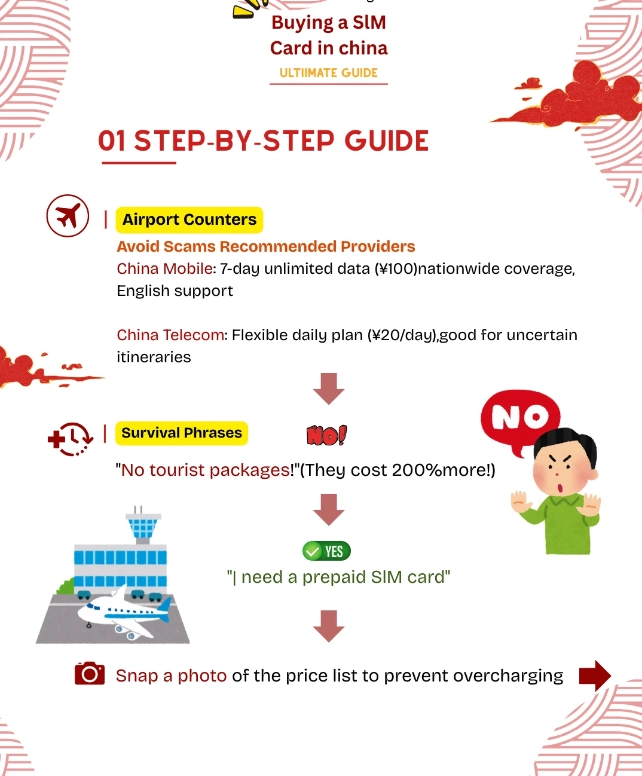
The Best Places to Buy a China SIM Card for Tourists
You have three realistic options. I'll rank them by convenience, price, and reliability.
1. Airport Arrivals Hall (Best for most travelers)
Available at: Beijing Capital (PEK), Shanghai Pudong (PVG), Shanghai Hongqiao (SHA), Guangzhou Baiyun (CAN), Shenzhen (SZX), Chengdu Tianfu (TFU) and most international airports.
Right after you clear customs and grab your luggage, just walk past the exit gates — you'll see bright-colored kiosks from China Mobile (blue/white), China Unicom (red), and sometimes China Telecom (green). They are licensed, official stores. They speak basic English, accept international credit cards (Visa/Mastercard usually work), and will handle the registration with your passport.
Packages for tourists typically cost between 100–300 RMB for 7–30 days with 10–50GB of data. I usually recommend the 30-day/20GB plan for around 150 RMB — enough for maps, WeChat, and light browsing.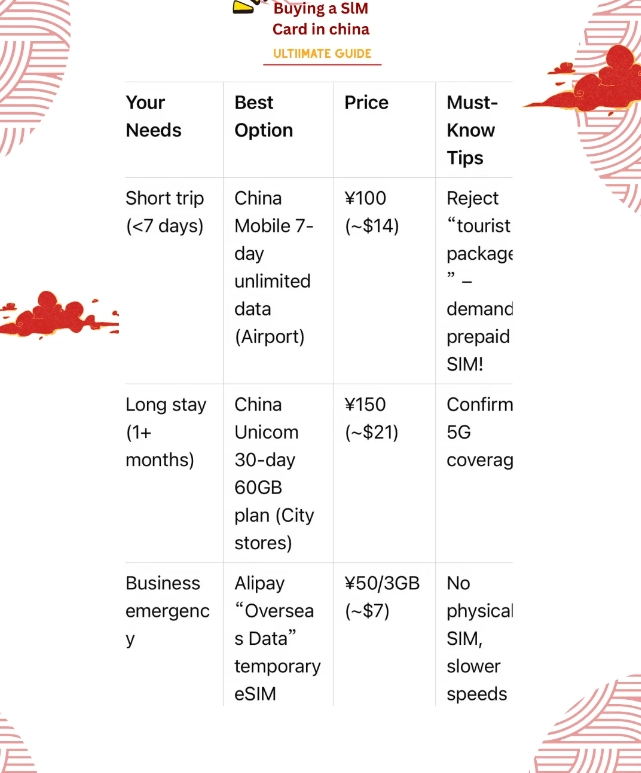
2. Official Carrier Stores in the City (Better for budget or long stays)
Where to find them: Any major shopping area or commercial street. In Beijing, try the China Mobile store on Wangfujing Street. In Shanghai, there's a China Unicom flagship near People's Square. Look for the logo — they're everywhere.
These stores often have cheaper plans (as low as 50 RMB for 30 days) but the staff may not speak English. Bring your passport, and prepare to use a translation app like Baidu Translate. Also, many of these stores do not accept foreign credit cards — you'll need Alipay (if already set up) or cash (RMB). They will also require you to register via a Chinese ID system; it's quick once you're in the system.
Insider Advice: Avoid visiting during lunch hour (12:00–13:30) or late afternoon — queues can be 20+ minutes. Go right after opening (9:00 AM) for the fastest service.
3. Online Pre-Purchase (Convenient but limited)
Sites like Trip.com, Klook, or Amazon sell tourist SIMs that you pick up at the airport or have delivered to your hotel. I've tried both. Trip.com's eSIM is decent — you get a QR code to download a virtual SIM before you land. The advantage: you're connected the second you step off the plane. The downside: eSIMs are not compatible with all phones (check your model), and they often don't include a Chinese phone number — just data. Without a number, you'll struggle with Didi and some apps.
Physical SIM delivery: Some sellers ship to your hotel. I'd only recommend this if your hotel's front desk can accept the package and you're staying at least 2 nights. Otherwise, just buy at the airport.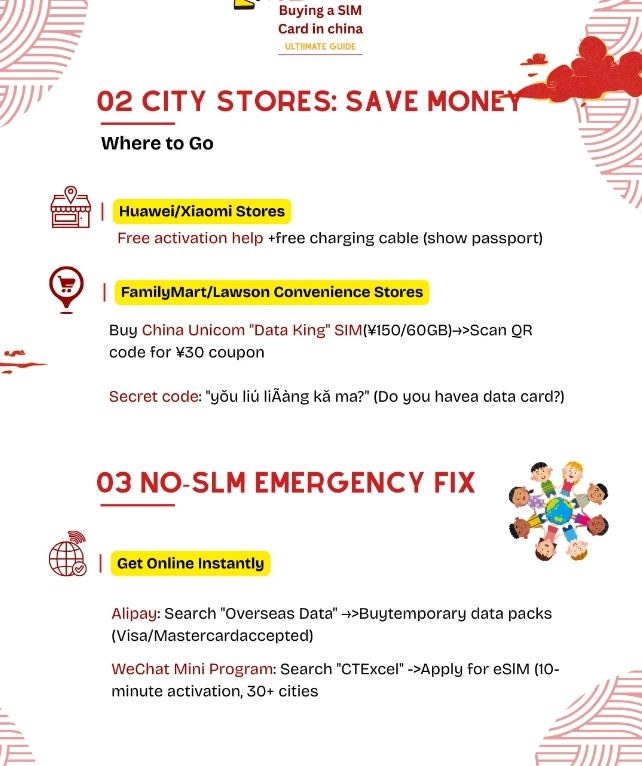
China Mobile vs China Unicom vs China Telecom: Which One is Best for Tourists?
| Feature | China Mobile | China Unicom | China Telecom |
|---|---|---|---|
| Coverage | Best nationwide (including remote areas) | Good in cities, weaker in mountains | Excellent in cities, decent rural |
| Data Speed | Stable 4G/5G | Faster in some hotspots | Comparable to Mobile |
| Tourist Packages | Very common at airports | Common, slightly cheaper | Less common for tourists |
| English Support | Some at airports & hotline | Some at airports | Limited |
| Accepted Payment | Credit cards at airport stores | Credit cards at airport stores | Usually cash/Alipay |
My verdict: For 95% of tourists, China Mobile is the safest bet. Their tourist SIMs are available at every major airport, their customer service hotline has an English option (10086 then press 2), and their coverage in underground metro stations is significantly better than Unicom's. I've had Unicom drop signal in the Beijing subway multiple times — super annoying when you need the map.
What Documents Do You Need to Buy a SIM Card in China?
Just your passport. That's it. Chinese regulations require real-name registration, so you must present a valid passport. A photocopy won't work; they need to scan the original.
If you also have a Chinese visa (tourist L visa), they might ask to see it — but usually the passport alone is enough. The entire registration process takes 5–10 minutes in an official store. At the airport kiosk, it's even faster.
Negative point: Some smaller, unauthorized phone shops might try to sell you a SIM without registration — don't do it. Those SIMs often get deactivated within hours, and you'll have no recourse. Always buy from the official carrier store or the airport kiosk.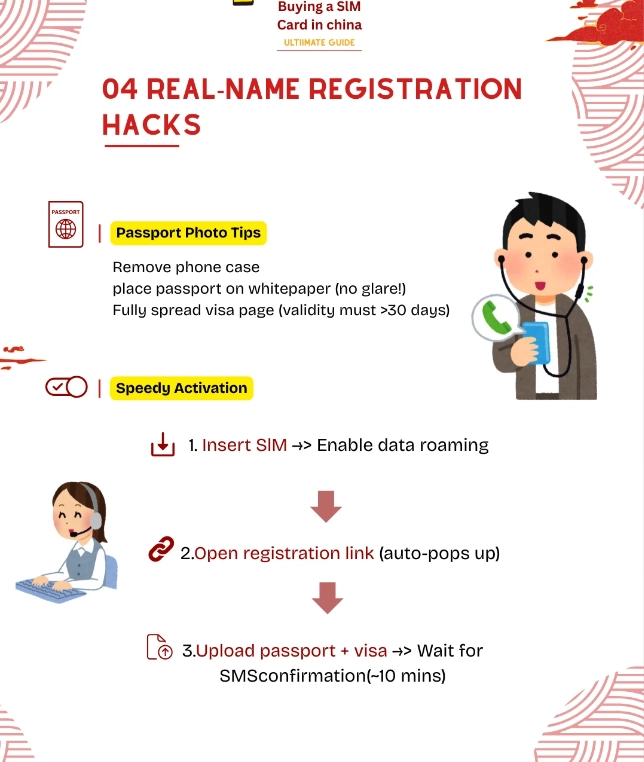
How to Activate and Top Up Your Tourist SIM
Activation is instant. Once the store staff completes the registration, they'll insert the SIM, restart your phone, and within 2 minutes you'll see signal. Ask them to test a call or open a website before you leave the counter.
Topping up: If you run out of data, you can visit any carrier store, use the carrier's official app (in Chinese, so use a translation tool), or ask your hotel receptionist to help you recharge via Alipay. Do not try to top up online from abroad — most carrier websites block international IPs.
Pro Tip: Buy a package with more data than you think you need. You'll use maps, WeChat video calls, and possibly tether a laptop. I'd budget at least 500MB per day.
Common Pitfalls and How to Avoid Them
- Your phone might be locked. If your phone is carrier-locked to your home provider (e.g., an AT&T locked phone), a Chinese SIM won't work. Call your carrier before you travel to unlock it.
- eSIM gotchas: eSIMs from Trip.com often lack a phone number. For Didi and many local apps, a number is mandatory. If you buy an eSIM, also get a physical SIM for the number — or use a dual-SIM phone (one physical + one eSIM).
- VPN required. A Chinese SIM gives you internet access, but Google, Instagram, WhatsApp, and many western sites are blocked. You need a VPN installed before you arrive. I recommend Astrill or ExpressVPN — they work reliably. Do not wait until you land to download the app, as the app stores themselves are blocked without a VPN.
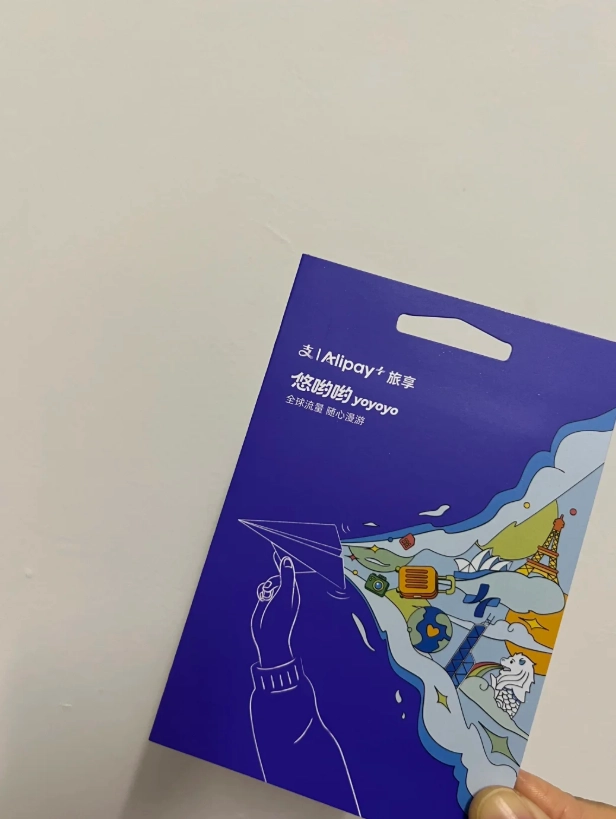
- Don't lose your SIM card package. The store gives you a card with your phone number and PUK code. Keep it; you'll need the number for registrations.
One more thing: Don't expect to walk into a 7-Eleven or FamilyMart and buy a SIM. Convenience stores in China do not sell SIM cards to foreigners (or locals) anymore. You must go to a carrier store or airport kiosk.
FAQ – Your Top Questions Answered
Final Checklist: What to Do Before You Land
- Unlock your phone – call your carrier before departure.
- Install a VPN – and test it before you leave. Make sure it works.
- Download offline maps – Apple Maps works well in China (uses local data), but have a backup like Maps.me.
- Bring your passport – keep it in your carry-on.
- Have some RMB cash – for the first taxi ride if your card doesn't work at the ATM. Most airport kiosks accept cards, but have backup.
- Set up Alipay international – you can link a foreign credit card now. It's smoother than WeChat Pay for tourists.
Remember: The moment you walk out of customs, head straight to the carrier kiosk. Get connected, then worry about everything else. Safe travels, and don't hesitate to ask your hotel staff for help — they deal with SIM questions every day.
Verified and fact-checked by the editorial team.








As a budget traveler I was worried about getting ripped off, but this listing was spot on. The China Telecom kiosk in the city center charged me exactly the posted price and gave me a proper receipt. The staff even helped me check my data balance through their official app and showed me how to top up later. Unbelievable coverage in Guangzhou and Zhuhai. Best 20 quid I spent on the whole trip.
We grabbed the 15-day SIM at the convenience stall in the arrivals hall after seeing the signs. The shop owner was super patient and set the APN settings on both our phones. It cost less than we expected and we had no issues in rural Zhejiang either. The 40GB was more than enough. If you're landing in Shanghai, don't overthink it — just get this.
This is the perfect tip for tourists! I followed the guide and went straight to the Unicom kiosk at Pudong Airport. In and out in 10 minutes, passport copied once, and the guy activated my eSIM while I waited. I paid with Apple Pay, no problem. Coverage was excellent all over Beijing, Xi'an, and even on the bullet train. Honestly the best travel purchase on my trip. Highly recommend skipping the roaming fees.
Popped into a China Mobile shop near People's Square. Staff didn't speak much English, but a younger clerk used a translator app and we got it sorted. Price was fair, around 180 yuan for 10 days. The SIM worked instantly and 5G was quick in the metro stations. Only reason it's not 5 stars is they wouldn't let me pay by card — had to get cash from an ATM across the street. Fine if you're prepared.
Bought a tourist SIM at the airport after a long flight. The counter was easy to find, but the lady seemed rushed and barely explained the data limits. I got the 15-day SIM and it worked okay in Shanghai, but speeds dropped a lot once I got to Suzhou. Also took a while to activate — needed passport scan twice. It wasn't a disaster, just not as smooth as I expected.