 Wei Zhang
Quick Navigation
Have you ever stood at a bustling Chongqing street corner, bewildered by a steaming pot of spicy broth filled with bamboo skewers? I have—and I was terrified. The bubbling red oil, the piles of bamboo sticks, and the locals grabbing handfuls like it's nothing. But now, I can't get enough. And I want you to experience the same thrill—without the anxiety.
Chongqing chuanchuan skewers (串串香) is more than street food—it's a social ritual. You pick your own skewers from a fridge, dunk them into a shared boiling pot of numbingly spicy broth, and dip them in a mix of sesame oil, garlic, and vinegar. Sounds simple? It is. But there are traps that can trip up any foreigner. Let me walk you through everything I've learned in my years of guiding tours here.
The golden rule: arrive before 7 PM or after 9 PM to avoid insane queues. Now let's dive into the details.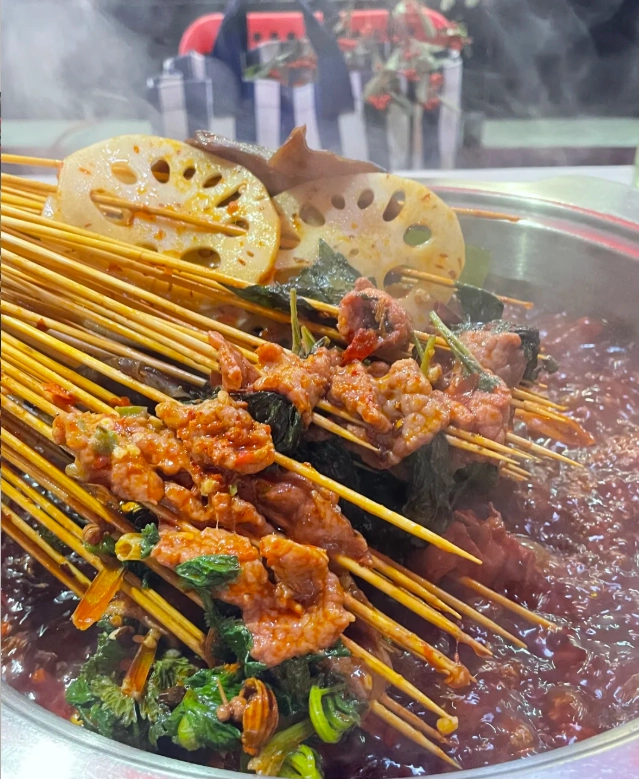
Why Chongqing Chuanchuan Skewers Are a Must-Try
Imagine sitting under neon lights with a group of friends, each grabbing a handful of skewers from a boiling cauldron. The first bite—tongue-numbing Sichuan peppercorns, fiery chili, and savory sesame oil—hits you like a flavor bomb. It's cheap, interactive, and incredibly satisfying. In Chongqing, locals treat chuanchuan as a daily comfort food. For tourists, it's a culinary adventure that defines the city's fiery spirit.
Pro Tip: Don't be afraid of the oil. The sesame oil dipping sauce actually coats your stomach and reduces the spice burn—it's a lifesaver.
What Exactly Are Chuanchuan Skewers?
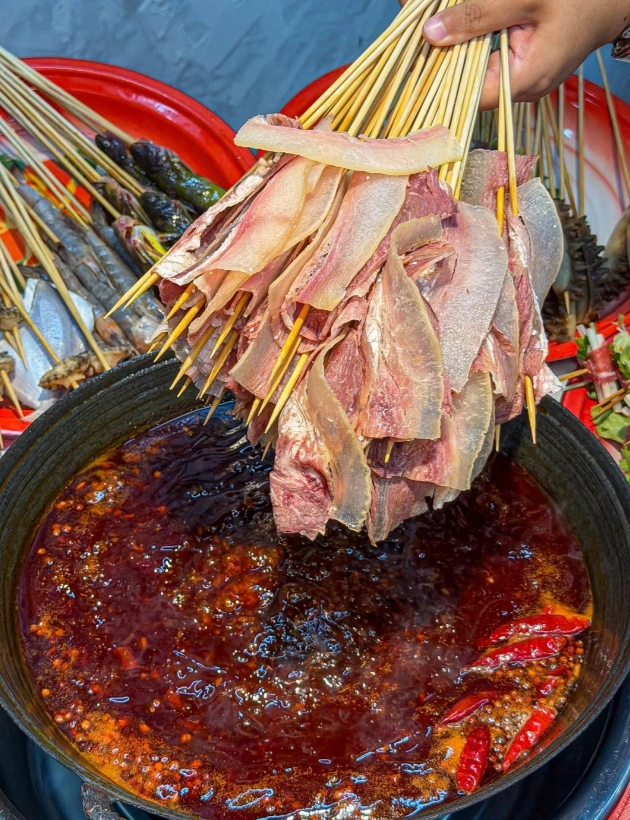
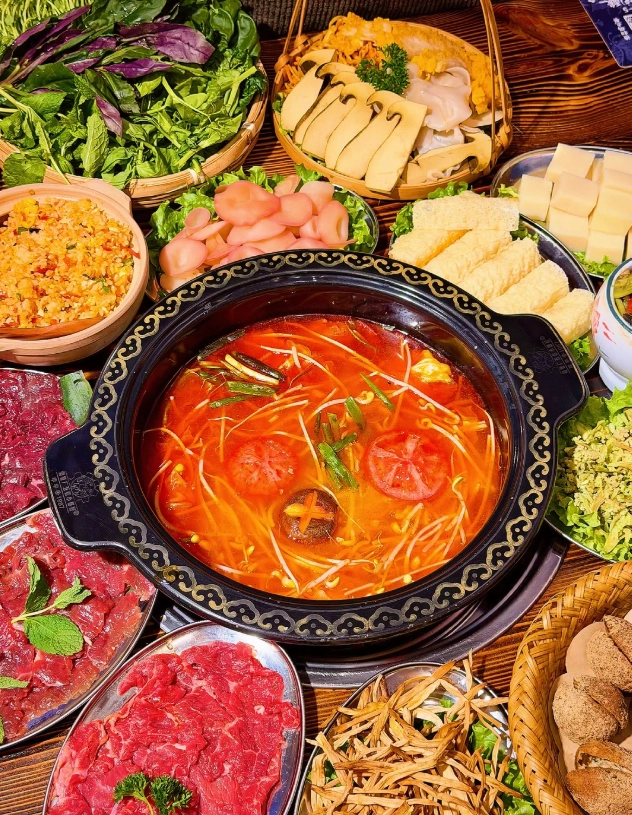
Chuanchuan skewers are bite-sized ingredients—meat, vegetables, tofu, and offal—threaded onto bamboo sticks. You choose them raw from a self-service fridge and cook them in a communal pot of seasoned broth. The broth is typically mala (numbing and spicy), but some shops offer mild or tomato-based options. Prices are per stick, usually 1 to 3 RMB (0.15–0.40 USD), making it one of the most affordable meals in China.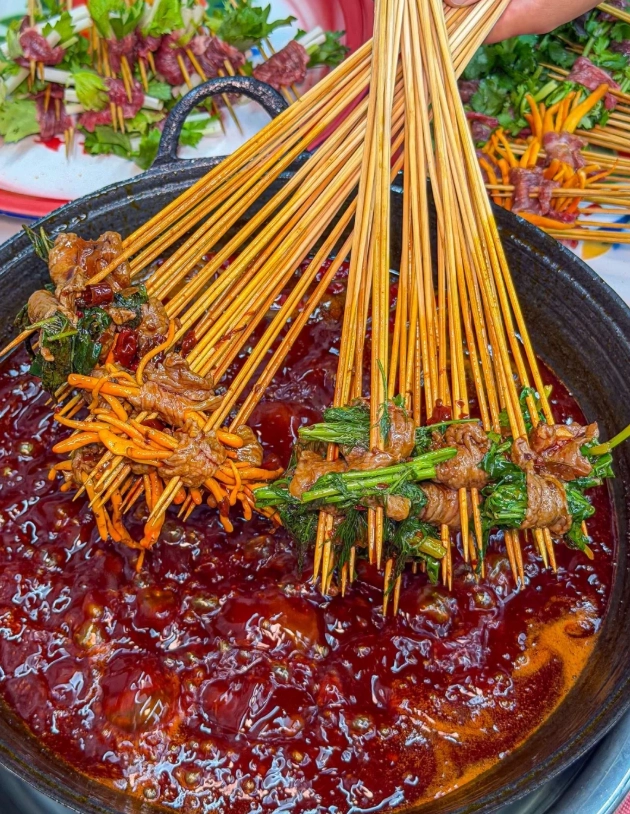
| Component | Details |
|---|---|
| Broth base | Mala (default), mild, or tomato (less common) |
| Skewer price | 1–3 RMB per stick; count at end |
| Typical ingredients | Beef tripe, chicken feet, lotus root, potato, quail eggs, leafy greens |
| Dipping sauce | Sesame oil + garlic + vinegar + cilantro (customize) |
Best Places to Eat Chuanchuan in Chongqing
You'll find chuanchuan shops on almost every street corner, but not all are equal. I've narrowed down my top picks based on atmosphere, quality, and foreign-friendliness.
1. Hot Pot Street near Jiefangbei
Location: Around Jiefangbei (解放碑) area, especially Bayi Road. English address: Bayi Rd, Yuzhong District (show taxi driver: 渝中区八一路). This is a tourist-friendly stretch with multiple chuanchuan shops. My go-to is a brightly lit place called “Chuan Chuan Xiang” (you'll see a sign with a spicy cartoon). They have an English menu with pictures—rare in Chongqing. Skewers average 1.5 RMB. Peak hours: 6–8 PM, expect 20-minute wait.
2. Hidden Gem in Nanbin Road Riverside
Location: Nanbin Road (南滨路), near the Yangtze River. English address: Nanbin Rd, Nan'an District (show: 南岸区南滨路). This area offers stunning night views of the city skyline. Look for a small, family-run joint called “Lao Chongqing Chuanchuan” (no English sign, but a red lantern outside). They use a secret spice blend that's less fiery but deeply aromatic. Cash recommended here—cards not accepted. Prices: 1 RMB per skewer.
3. University Town Budget Stalls
Location: Shapingba district (沙坪坝), near Chongqing University. English address: Near Shapingba main street (show: 沙坪坝正街). If you're on a tight budget, head to the street stalls around universities. Skewers go as low as 0.5 RMB. The broth is simple but satisfying. No English—bring your translation app. Payment: WeChat Pay or cash.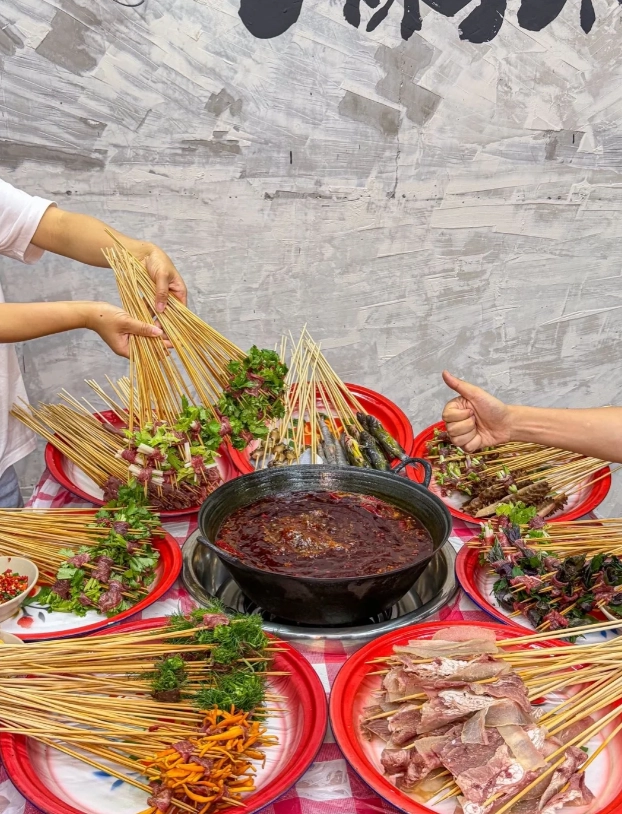
How to Order and Eat: A Step-by-Step Guide
- Find a seat. Walk in and sit at an empty table. A staff member will hand you a small plate and a bowl.
- Grab a tray. Head to the fridge and pick skewers. Take a metal tray and load it up. Go wild—but remember: uneaten skewers are still charged.
- Select your broth. Tell the staff your preference: “mala” (默认), “weila” (微辣—mild spicy), or “yuanyang” (鸳鸯—half spicy, half mild). If language fails, point at another table's pot.
- Cook and dip. Once the broth boils, plunge your skewers in. Cook for 2–5 minutes. Then dip into your sauce mixture. Repeat.
- Pay at the end. Staff count the empty sticks. Prices are per stick. Total average: 30–60 RMB per person.
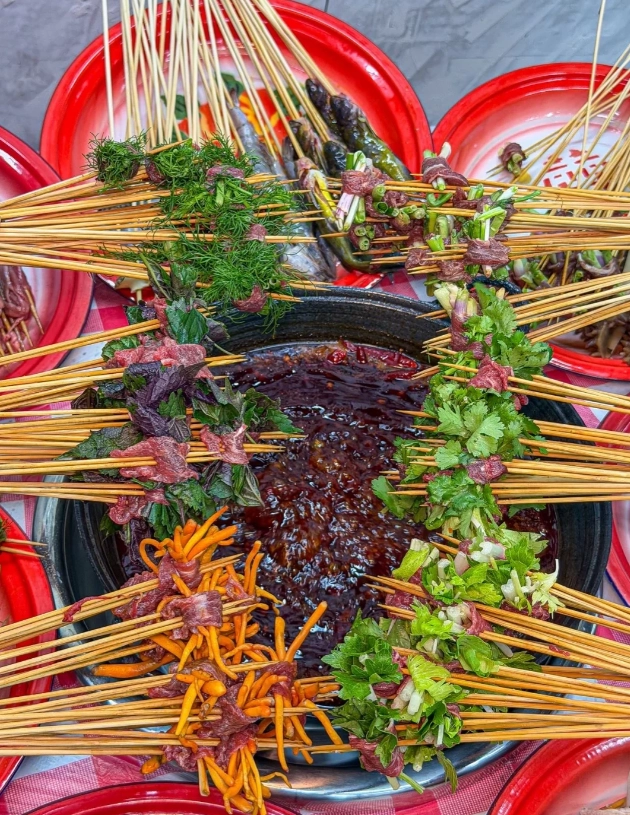
Insider Advice: Pick up a handful of raw skewers at once—otherwise you'll be waiting forever for the next batch.
Insider Tips for Foreigners
Payment: Most chuanchuan shops only accept WeChat Pay or Alipay. Some take cash, but international credit cards are almost never accepted. Before going, ensure your Alipay or WeChat is linked to your foreign card. If not, ask a local friend to pay and reimburse them.
Navigation: Google Maps is unreliable in China. Use Apple Maps (it uses Chinese data) or the Amap Global app (高德地图). For taxi rides, show the Chinese address in this article.
Language: English menus are rare. Download Baidu Translate or Apple Translate. Point to ingredients and say “zhè ge” (this one). For spicy level, show the phrase: “wēi là” (mild), “zhōng là” (medium), “tè là” (extra spicy).
Wi-Fi & VPN: Most restaurants have free Wi-Fi, but you'll need a VPN to access Instagram, Google, etc. I recommend ExpressVPN or Astrill—set it up before arriving.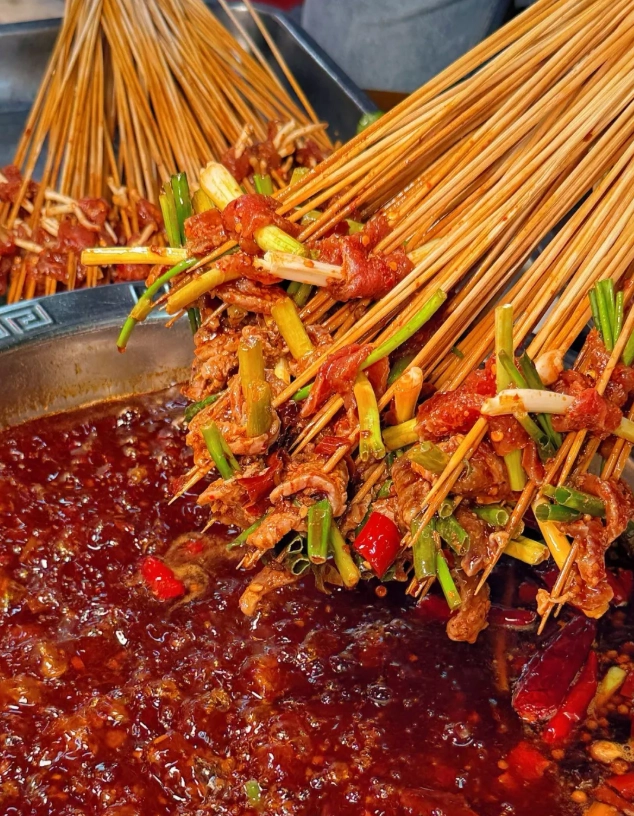
Common Mistakes to Avoid
- Taking the whole bowl for dipping. Locals use only the sesame oil mixture as a dip, not the boiling broth. The broth is for cooking only.
- Eating raw. Some skewers look cooked (like colored tripe) but are raw. Make sure everything bubbles in the pot for at least 2 minutes.
- Ordering the full menu. Just pick what you see. Don't ask for a menu—it's self-service.
- Going during peak hours. 6:30–8 PM is madness. I always take my groups at 10 AM for a late breakfast or 9 PM for a supper.
- Not counting your sticks. Staff sometimes miscount. Keep your empty sticks in a neat pile and count before paying.
Frequently Asked Questions about Chongqing Chuanchuan Skewers
Verified and fact-checked by the editorial team.





Best chuanchuan I had in three days! The place near Hongyadong had a huge skewer selection and everything is one price per stick. The cilantro beef, chicken heart, and the garlic slathered tofu are must-tries. They also gave us a free bowl of fried peas while we waited. It's chaotic, loud, and perfect. Don't go with a pristine white shirt, just enjoy.
If you are scared of spicy food, this might break you, but in a good way. The dry dipping spice mix was so fragrant I could smell it from three stalls away. We had the tripe and lotus slices, plus some mysterious green vegetable. The shop owner told us to dip in the oil on top to temper the heat. It worked. I ended up high-fiving the strangers at the next table. Best eating memory in Chongqing.
This is what I came to Chongqing for. The chuanchuan are tiny but packed with flavor. We counted 70 sticks and the bill was only like 80 RMB. Watch your paper towels though because the oil will fly. The lady at the counter gave us extra Sichuan peppercorn on request. Absolutely addictive. Jiefangbei branch was buzzing at 11pm.
Great late night chuanchuan at a random corner place. The self serve fridge was packed with options and the beef with cumin was unreal. Only reason not 5 is the seating is plastic stools and the floor was slippery. Also they don't give you options for broth spice level. Still, super fun and affordable.
The skewers were okay but honestly I don't get the hype. We waited forever for a table at a spot in Guanyinqiao and the oil was dripping everywhere. The flavor was heavy on numbing spice but I lost the taste after the first 20 sticks. Cheap though. Maybe I picked the wrong place.