 Ting Chen
What you'll learn (quick jumps)
I've been guiding tours in China for over a decade. The #1 headache every tourist faces? Paying for things.
You land, excited. Then you try to buy a bottle of water — and your international credit card gets rejected. The vendor stares at a QR code. No cash accepted. Welcome to the real China travel money tips you actually need.
Let me walk you through what I've learned from hundreds of clients — the stuff no brochure tells you.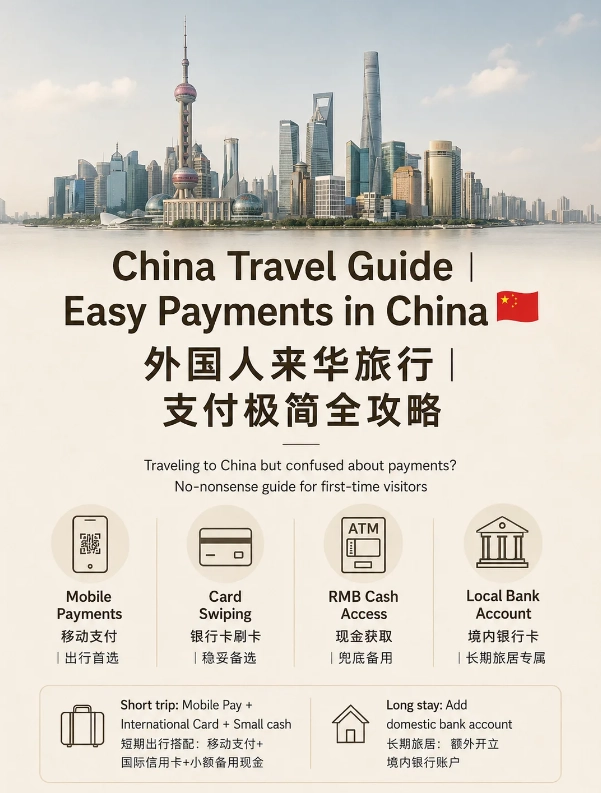
Why cash fails in China
China is a near-cashless society. Street vendors, subway ticket machines, even some taxis — they all expect QR code payments. Cash is legal, but don't be surprised if a tiny shop refuses a 100 RMB note because they can't make change.
Here's the kicker: Even if you have cash, many places won't take it. I've seen tourists waving dollar bills and getting blank stares. My advice: treat cash as a backup, not your main tool.
Alipay & WeChat Pay setup for foreigners
These two apps dominate China. Good news: both now support linking international Visa/Mastercard. But the setup can be tricky. Let me break it down.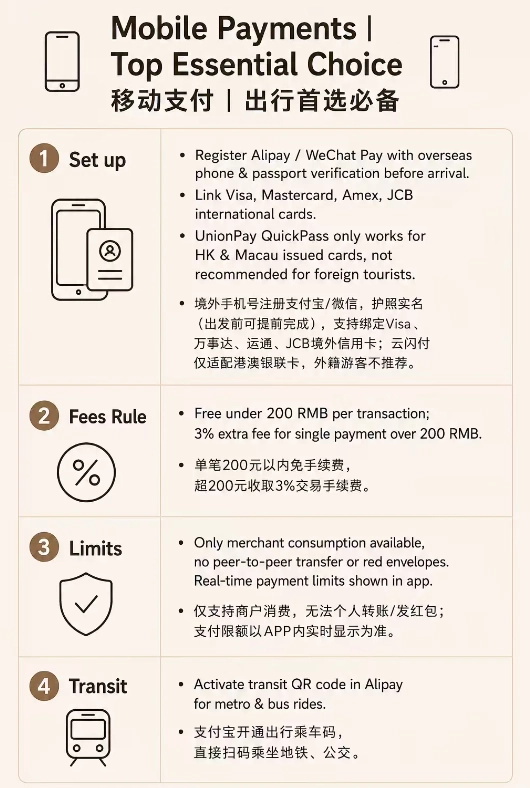
Alipay (the easier one)
Download the app, choose "Register" with your foreign phone number. Then link your card in the "Card" section. You'll get a virtual China bank account basically. For payments, show the QR code or scan theirs. Works in most stores.
Catch: Some small shops only accept the China version (Alipay CN). But Alipay's international version works at 80% of places I've tested.
WeChat Pay (the trickier one)
WeChat is a super app — messaging, social, payments all in one. To set up payments, go to Me > Services > Wallet > Add Card. But here's the nightmare: you need a Chinese bank account for full functionality… or you can use the new international card support.
My experience: Alipay is less glitchy for tourists. Use WeChat Pay only if a merchant insists on it — or for adding money to WeChat wallets from friends.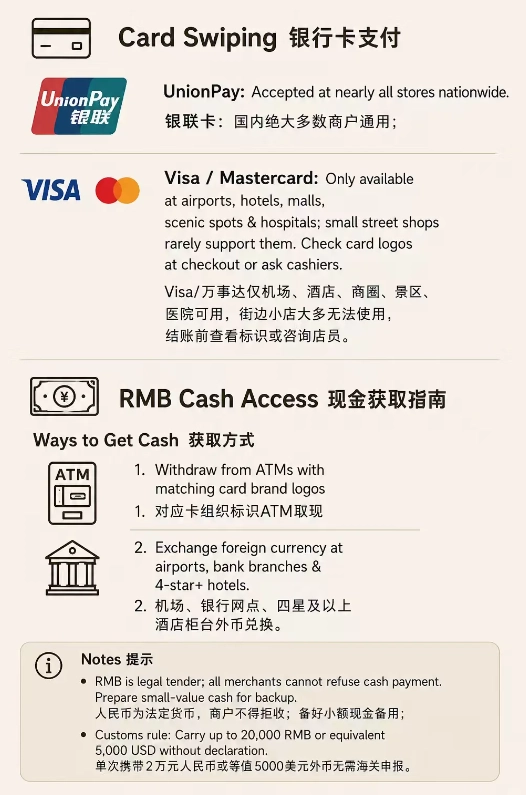
| Feature | Alipay (Intl) | WeChat Pay (Intl) |
|---|---|---|
| Card linking | Visa/MC/Amex | Visa/MC (limited) |
| Acceptance rate | ~80% | ~60% |
| Setup difficulty | Easy | Medium |
| Need VPN? | Yes (for app store download) | Yes |
Hidden fees you didn't know about
You think paying is simple. Then the fees hit. Here are the culprits:
- Dynamic Currency Conversion (DCC): When paying by card, the terminal might ask if you want to pay in your home currency or RMB. Always choose RMB! The exchange rate they offer for your home currency is terrible.
- ATM fees: Chinese ATMs charge a flat fee (usually 12-20 RMB per withdrawal). Plus your bank charges a foreign transaction fee (3% common). Withdraw larger amounts less often.
- Alipay cross-border fee: When you top up Alipay via international card, some cards charge a cash advance fee (treating it as a cash withdrawal). Check your card terms.
I always tell my clients: use a travel card with no foreign transaction fees, and withdraw once for the whole trip. But keep the cash for backup only.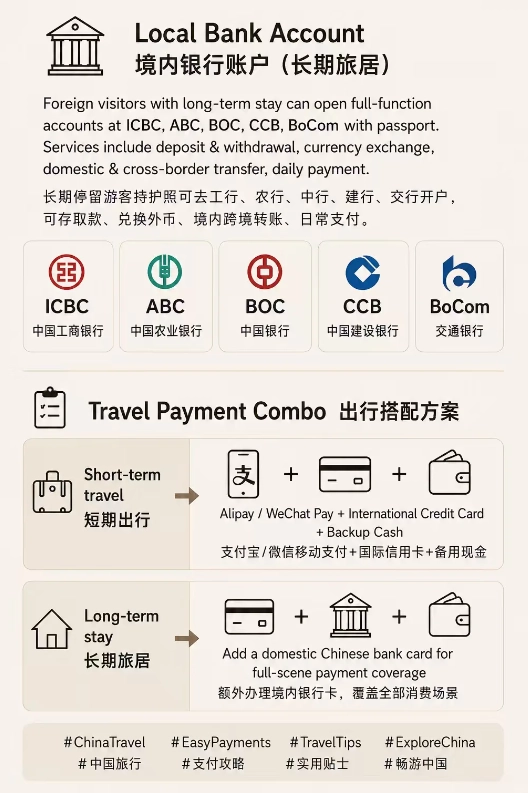
Best ways to exchange currency
Should you bring USD and exchange at the airport? No. Airport exchange booths give the worst rates. Here's what I recommend:
- Bank branches in the city: Bank of China or ICBC offer decent rates. Bring your passport. Expect a 30-minute queue.
- ATMs: Use a bank ATM (not a standalone currency exchange machine). They give the mid-market rate. Just avoid the DCC trick.
- Apps like Remitly or Wise: You can transfer money to a Chinese contact (if you have a friend) and they give you cash. But this is advanced.
One weird trick: I sometimes exchange money with fellow travelers who are leaving China and have leftover RMB. No fees! But be safe — meet in a public place.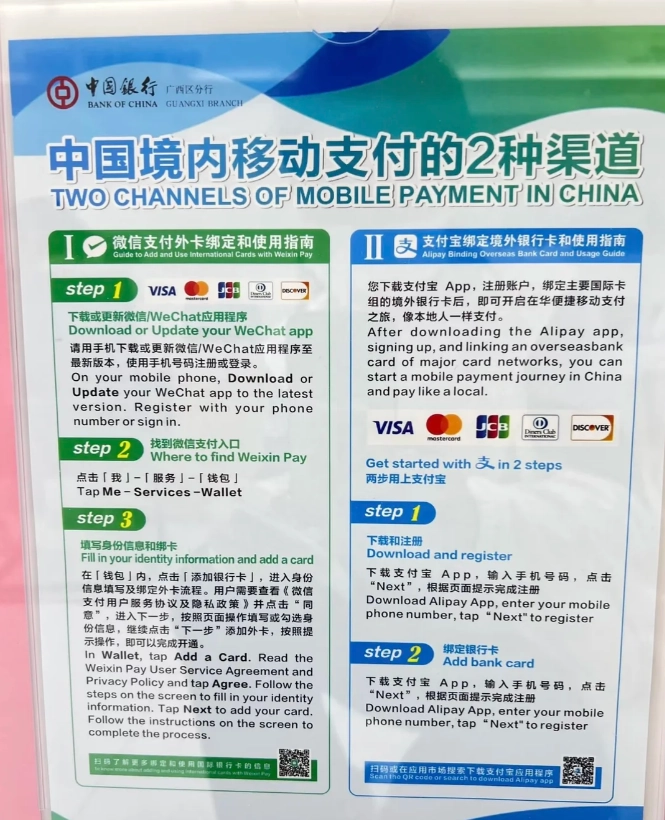
Backup payment plan when apps crash
Apps crash. Networks fail. You lose your phone. Here's your emergency kit:
- Carry two phones: One with Alipay, one with WeChat Pay. Or at least keep a screenshot of your Alipay QR code on another device.
- Keep a small stash of cash (500 RMB) hidden in your shoe or waist belt. I know it sounds paranoid, but I've seen clients stranded at subway stations with dead phones.
- Learn the phrase: "Qǐng wèn fùjìn yǒu yínháng ma?" (Excuse me, is there a bank nearby?) You can point to your phone to explain your need for cash.
Frequently asked questions
Verified and fact-checked by the editorial team.








Not bad but a bit outdated? The article says to bring cash for taxis, but in Shanghai and Beijing, almost all cabs now take digital payments. The exchange rate advice was okay but I found better rates at local banks than what was suggested. Also missing info on Apple Pay compatibility. Could use an update.
Good tips overall, but the section on UnionPay cards wasn't very clear for non-Chinese banks. Took me a while to figure out my HSBC card wouldn't work at some terminals. The Alipay and WeChat advice though? Gold. Just wish there was more detail for us European travelers.
I wish I'd read this before my first China trip! I was struggling with ATMs and exchange rates until a friend shared this piece. The tip about linking WeChat Pay to a tourist card made my Beijing museum visits so smooth. No more fumbling for cash. Highly recommend!
This is the real deal. Used the cashback hack mentioned in the article - got a decent amount back on my hotel booking via Alipay. Also the advice to keep a small stash of 100 RMB notes for rural areas was spot on. Saved me from getting stuck in a village without signal. Five stars!
Just got back from a 3-week trip across China and this article saved me so much hassle! Tried the Alipay hack for topping up with a foreign card - worked like a charm in Shanghai street food stalls. Even the tiny noodle shop in Chengdu accepted it. Absolute lifesaver for anyone visiting!