 Bo Wu
Bo Wu
Quick Look Inside
I've been guiding photographers through Yungang Grottoes for over a decade. And honestly, most first-timers mess up the light. They show up at noon, point their phone at the giant Buddha, and wonder why it's all washed out. Here's the thing — the carvings face east and west, which means unless you know exactly when to be where, you'll walk away with mediocre snaps.
Let me save you the trial and error. Below is exactly what I tell every guest before we step through the entrance.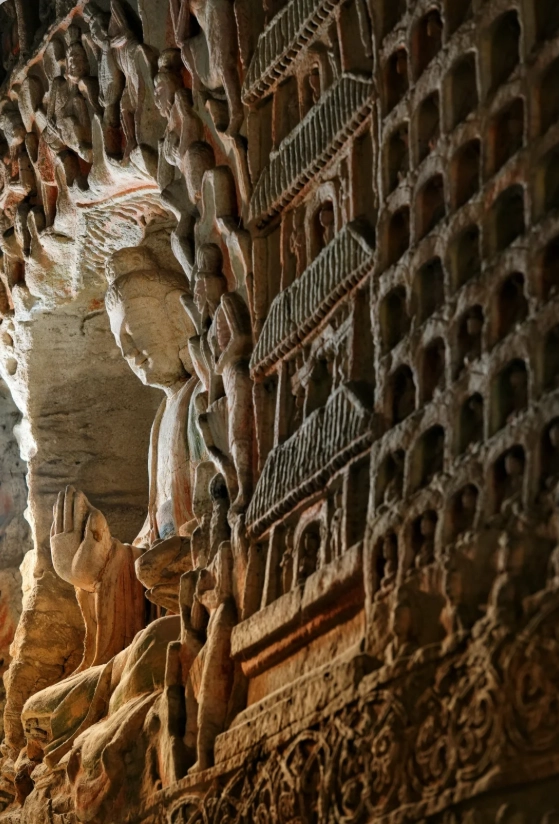
Why Timing Is Everything
Morning light (8:30-10:30 AM) hits the eastern caves beautifully — especially Caves 5 and 6. Afternoon light (3:30-5:30 PM) warms up the western section, with Cave 20's giant Buddha glowing like honey. Skip the 11 AM to 2 PM window entirely: harsh overhead light flattens the reliefs and creates deep shadows inside the niches.
But there's a catch — the site opens at 8:30, and the first busloads of tourists roll in around 9:30. If you want empty frames, be at the ticket gate before 8:15. I've done this dozens of times: you'll have the main Buddha almost to yourself until about 9:45. The weekday advantage is real — Monday through Wednesday are noticeably quieter than weekends.
Best Photo Spots Inside the Grottoes
Cave 5 & 6 — The Jewel Box
These two caves are connected and feature the tallest seated Buddha (17 meters) plus intricate narrative reliefs. Photography here is tricky — no flash allowed, and interior light is dim. Bring a fast prime lens (f/1.8 or wider) or use your phone's night mode but brace against a wall. My go-to angle: stand at the entrance of Cave 5 and shoot the giant Buddha framed by the doorway. The natural light from the opening creates a subtle rim light. Best time: 9-10 AM.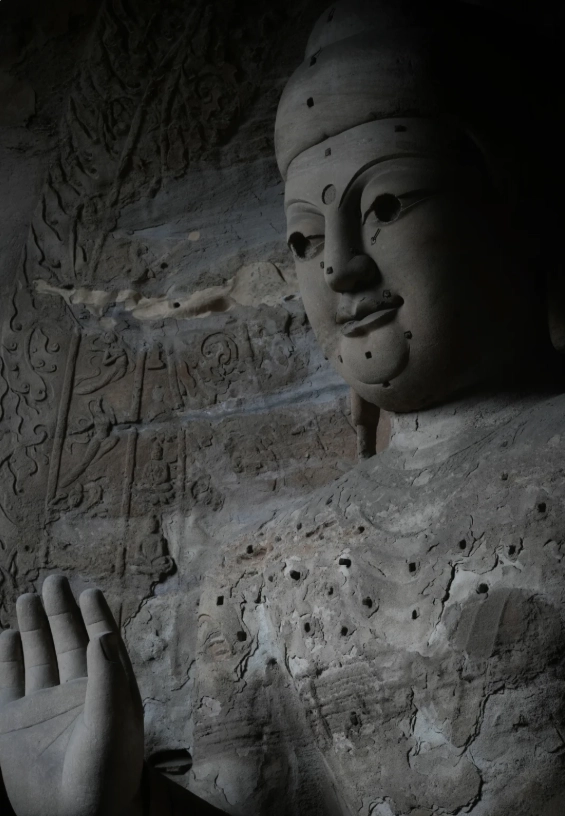
Cave 20 — The Iconic Open-Air Buddha
This is the postcard shot. The seated Buddha, framed by the collapsed cave front, sits under open sky. Sunrise light (around 8:30-9:30) hits his face directly. In the afternoon, the light comes from behind the Buddha, creating a silhouette effect — great for artistic shots but not for detail. I prefer to stand right below the wooden railing at the base of the stairs, using a 24-70mm lens at around 35mm to include the entire statue with some sky. For a different perspective, walk to the left side (facing the Buddha) and shoot from a low angle — you'll catch the folds of the robe with beautiful shadows.
The Middle Caves (8-13) — Hidden Reliefs
Most visitors rush past these, but I think they're the best for close-ups of musicians and dancers carved into the stone. The lighting here changes throughout the morning. Around 10 AM, oblique rays hit the south-facing walls. Use a telephoto (70-200mm) to isolate a single flying celestial figure. Pro tip: position yourself so that the sun lights the relief from a 45-degree angle — that brings out every chisel mark.
West End & the Museum
If you have time after the main caves, walk to the west end (Caves 21-45). These are smaller, newer, and often empty. The light here is nice in the late afternoon, and the carvings are less damaged. Also, don't skip the Yungang Museum near the exit — its modern architecture contrasts beautifully with ancient stone. Great for Instagram-style shot with Buddha silhouettes in the background through the glass walls.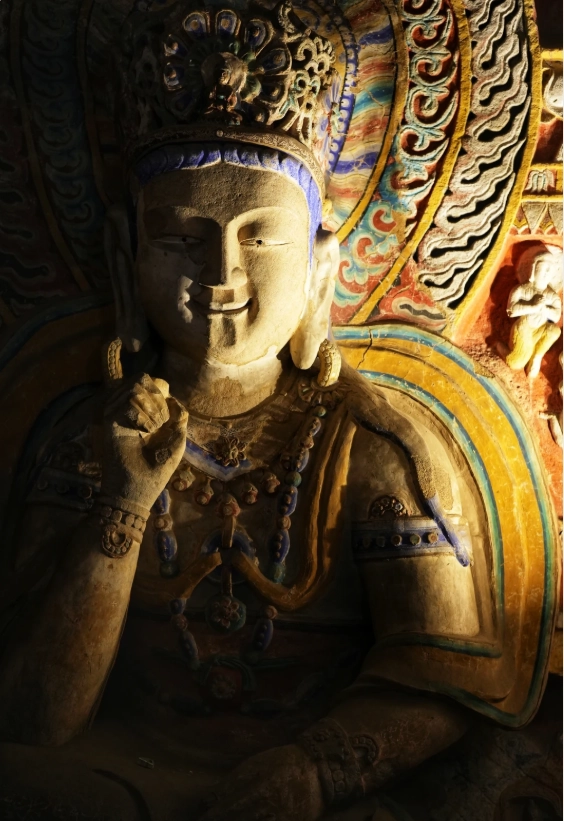
Camera Settings & Gear Tips
For interior caves without flash (which is most of them), set your ISO to 800-1600, aperture to f/5.6-f/8 for depth, and shutter speed around 1/30-1/60s. Brace your elbows against your chest or lean on a pillar. Tripods are allowed only in outdoor areas and inside the museum — they're banned in caves 1-20 to protect the paint. If you really need a stable shot inside, use a mini tabletop tripod on the floor or a windowsill.
Polarizing filter? Absolutely bring one. It cuts the glare off the sandstone and makes the colors pop — especially after rain when the stone is damp. I never shoot without it outdoors.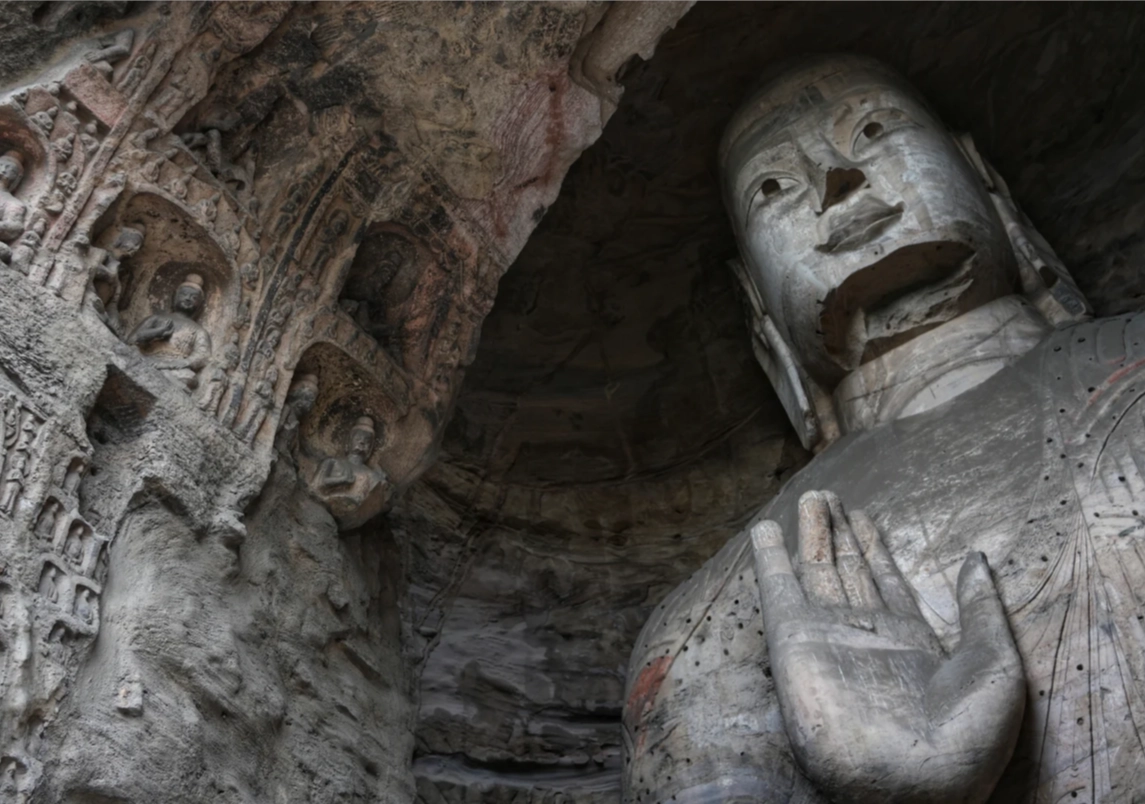
Practical Info: Tickets, Hours & Getting There
| Item | Details |
|---|---|
| Ticket price (adult) | 120 CNY (about $17 USD) — includes museum entry. Student ID holders get half price (60 CNY). Free for children under 1.2m and seniors over 65. |
| Online booking | Must book via WeChat mini-program (search '云冈石窟' or 'Yungang Grottoes'). International credit cards rarely work — ask your hotel's concierge to help if needed. Walk-up tickets are possible but not guaranteed in peak season (May-Oct). |
| Opening hours | 8:30-17:30 (last entry 16:30) in summer; 8:30-17:00 (last entry 16:00) in winter (Nov-Mar). Closed? Nope, open 365 days a year. But the caves are illuminated only until the last entry time. |
| Getting there from Datong | Bus 3 from the city center (near Datong Railway Station) takes about 40 minutes — get off at 'Yungang Grottoes' stop. Taxi costs around 30-40 CNY. If you drive, parking is 10 CNY per car. The main entrance is a 10-minute walk from the parking lot through a landscaped garden. |
| Suggested visit duration | At least 3-4 hours for photography. If you're serious about shots, plan 5 hours including the museum. |
| Best seasons | April-May and September-October: mild temperatures, low humidity, long shadows. Summer is hot (35°C often) and crowded; winter is cold (-10°C) but crisp light and very few tourists. |
Heads-up on the restrooms: the ones near the ticket office get long queues — especially for women. I always tell my clients to use the facilities at the Datong bus station before heading out. Also, there's a decent tea house inside the complex where you can recharge your phone and grab a cold drink.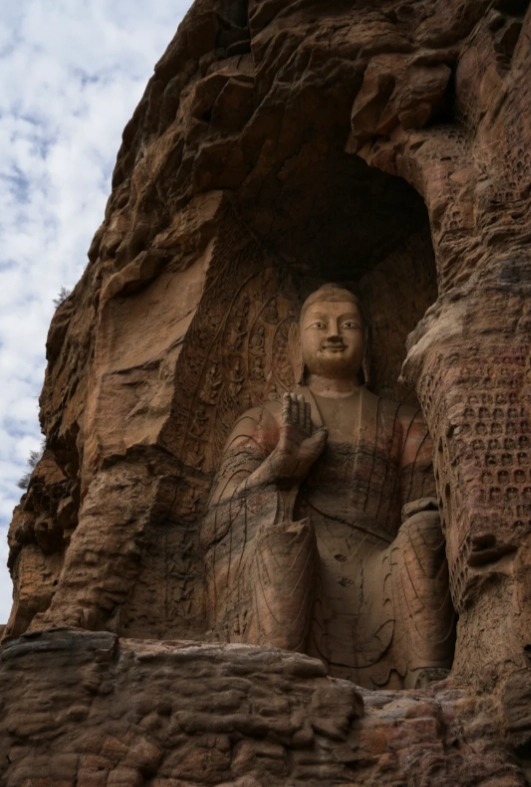





No comments yet.